Xiaomi’s 13 Ultra camera kit is more fun than it should be

Xiaomi’s 13 Ultra camera kit is more fun than it should be

Camera grips are back, baby.

As long as there have been smartphones, there have been goofy-ass mashups between phones and cameras.

We’ve had cameras that clamp to your phone or attach by magnets. We’ve had accessory lenses and shutter grips to make your phone act more like a camera. We’ve had cameras that were also kind of phones. None of them have been good enough to convince the masses, and everyone seems to have settled into an agreement that phones can just look like phones and cameras can just piggyback on your mobile data as needed. A sane world is a just world, etc.

I was ready to close that particular chapter of the digital photography history book when Xiaomi announced its 13 Ultra with a for an extra 999 yuan (about $137, though eBay resellers are asking for around $200). “Oh ho ho!” I chuckled smugly. “Not this old chestnut again!” Six months later, the joke’s on me because it’s actually really good — it’s just a shame that the camera and kit aren’t officially sold in the US and likely never will be.

Photo of Xiaomi 13 Ultra with camera grip and wrist strap attached.

Photo of Xiaomi 13 Ultra with camera grip and wrist strap attached.

a:hover]:text-black [&>a:hover]:shadow-underline-black dark:[&>a:hover]:text-gray-e9 dark:[&>a:hover]:shadow-underline-gray-63 [&>a]:shadow-underline-gray-13 dark:[&>a]:shadow-underline-gray-63″>It looks kind of normal, right?

The key to this particular phone / camera mashup’s success — and I can’t overstate the importance of this feature — is that you don’t look like an absolute dingus using it. It’s all relatively low profile, at least until you start using the filter holder, but that’s on you.

At its core, the kit includes a normal-looking phone case and a shutter grip that slides on when you want it and clicks into place. It’s easy to take the shutter off when you want to use your phone like a normal phone. The grip’s two-stage shutter connects to the camera via Bluetooth. There’s also a wrist strap attachment, and if there’s a single most underrated camera accessory, I think it’s the humble wrist strap. I want one on every phone.

There’s a mostly ornamental screw-on lens cap and the aforementioned 67mm filter adapter. I snapped the grip into place and headed to one of Seattle’s favorite tourist destinations to Do Photography for a couple of hours.

Photo of reflection of the Space Needle in a window.

Photo of reflection of the Space Needle in a window.

a:hover]:text-black [&>a:hover]:shadow-underline-black dark:[&>a:hover]:text-gray-e9 dark:[&>a:hover]:shadow-underline-gray-63 [&>a]:shadow-underline-gray-13 dark:[&>a]:shadow-underline-gray-63″>Two telephoto lenses is twice the fun.

I once heard a description from a mushroom forager that you need to “get your eyes on” when you’re on the hunt. You go to your foraging spot and start looking, but at some point, another sense kicks into gear. You start spotting the morels or whatever you’re after more easily.

In my experience, photography is like that, too. Anytime I go into a situation intent on Doing Photography, I’ll struggle for a bit, and then I “get my eyes on” and start seeing better photos. And there’s something about having a camera-shaped thing in my hand that helps me get my eyes on.

That was the case at least when I walked around Seattle Center on a sunny Tuesday afternoon with the Xiaomi 13 Ultra. Sure, the camera grip makes it more comfortable to hold the phone while you take a photo. And the physical shutter button helps you keep more attention on your subject rather than on the screen. But at least 50 percent of the kit’s utility — at least for me — is straight-up in my head. It helps put me in a photography mindset faster, much like a dedicated camera does.

Crucially, the 13 Ultra is also an absolute unit. There are four rear-facing cameras, one of which features a huge one-inch-type sensor. There are 5x and 3.2x telephoto lenses, plus an ultrawide. The main camera also includes a 2x crop zoom. It’s a smorgasbord of camera hardware, and the software backing it up ain’t too shabby, either. It’s all Leica-branded, down to the color processing, which you should take with a grain of salt. But I’ll be damned if I didn’t take some of my favorite portraits of the past year with this thing.

Portrait mode photo of a child playing with legos.

Portrait mode photo of a child playing with legos.

a:hover]:text-black [&>a:hover]:shadow-underline-black dark:[&>a:hover]:text-gray-e9 dark:[&>a:hover]:shadow-underline-gray-63 [&>a]:shadow-underline-gray-13 dark:[&>a]:shadow-underline-gray-63″>I’d be so obnoxious with this portrait mode if I had access to it all the time. I mean, come ON.

Of course, the 13 Ultra suffers from the same problems that trip up even the best modern phone cameras. It has a hard time freezing moving subjects in dim light, occasionally goes HAM on color saturation, and doesn’t always hold onto fine detail as well as a camera with a bigger sensor. (Take a look at the kiddo’s hair in the shot above.) And the vignetting in some of the portrait mode settings goes a little hard for my taste. But it’s easily one of my favorite mobile cameras of the past year, and I dearly wish we could buy it in the US.

You don’t need a top-of-the-line camera to take nice photos. You certainly don’t need a fancy camera grip for your phone to enjoy taking photos with it. But Xiaomi’s take on the old phone-is-a-camera concept is the smartest one I’ve come across, and I think it helped put me in a mindset to take better photos. If there’s an accessory — magnet, clamp, grip, or whatever — that helps you enjoy taking photos with your phone, then that’s a pretty good thing in my book. It’s just a nice bonus if it doesn’t make you look like a huge dingus.

Photography by Allison Johnson / The Verge

‘Abandoned Theatres’ Spotlights the Remains of Small-Town Midwestern Cinemas

‘Abandoned Theatres’ Spotlights the Remains of Small-Town Midwestern Cinemas

All images © Ben Geier, shared with permission

Like many sectors of the U.S. economy, movie theaters struggled during the Covid-19 pandemic. Many were forced to shut their doors after months of lockdown, an additional blow to the small, independently run spots that had been competing with multiplex chains for decades.

When the pandemic hit, Ben Geier already had his eye on local cinemas, particularly those in Midwestern areas that closed years before. He photographed the remains for Abandoned Theatres, an ongoing series that’s both a nostalgic and clear-eyed look at small-town life. As more cinemas shuttered in 2020, Geier’s subject matter became more abundant. “Covid times really allowed me to get out on the road and photograph most of the theatres without anybody around, which gave each photo an eerie quality,” he tells Colossal.

Primarily shot straight on, the images document remnants and what are now relics of an earlier era: painted plywood covers the spot where a poster once hung, metal gates rest along a drive-in wall, and a marquee advertises the phone number of the movie hotline. So far, the series includes about 20 locations with a wide variety of architecture, from the classic State Theatre to the old-world farmhouse style of the Delft.  “I really enjoy rural America and the roadside aesthetic from the ’50s to ’80s, and there’s still a lot of it hiding in small towns, so I try my best to photograph it while it’s still around,” he says. “I have a lot of interests, and the Abandoned Theatre series seemed like a perfect blend of so many of them: Americana, architecture, and neon signs.”

Geier, who’s based in Batavia, Illinois, will be traveling throughout the Southwest U.S. in the coming months, in part, to scout theatres to add to the series. You can find more of his work, including a collection that peers inside a house with impeccably preserved 1960s charm, on Behance and Instagram. (via Present & Correct)


A closed movie theatre called STATE

A closed movie theatre with a white and red facade called Majestic

Two closed movie theatres, one called Gem, the other Liberty

A closed Bavarian style movie theatre called Delft

A modernist movie theatre with large sign and pink box office

A painted brick wall that says Drive-In Theatre and another stone facade theatre that's closed with snow in the foreground

A closed movie theatre with an ELMO sigh

Do stories and artists like this matter to you? Become a Colossal Member today and support independent arts publishing for as little as $5 per month. The article ‘Abandoned Theatres’ Spotlights the Remains of Small-Town Midwestern Cinemas appeared first on Colossal.

Is Oil States’ Pivot Towards Art and Culture Succeeding?

Is Oil States’ Pivot Towards Art and Culture Succeeding?

As supply dwindles and the climate warms, oil states have promised to diversify away from fossil fuels. Building the cultural economy is part of their plan, with Saudi Arabia alone aiming to open more than 200 cultural attractions by 2030. Is it working?

Is Oil States’ Pivot Towards Art and Culture Succeeding?

Aerial view of the National Museum of Qatar, designed by Ateliers Jean Nouvel. Photo: Iwan Baan.

‘Phasing down fossil fuels is inevitable and it is essential—it’s going to happen,’ promised Sultan Ahmed Al Jaber, CEO of the Abu Dhabi National Oil Company, in an interview with The Guardian last month.

With the spigot of oil money supposedly being closed, the United Arab Emirates (U.A.E.), Saudi Arabia, and Qatar are among the countries seeking to diversify their economies, in part by developing their arts and culture industries. To that end, Saudi Arabia aims to open more than 200 cultural attractions by 2030.

A large-scale museum by Centre Pompidou is set to open in Saudi’s AlUla desert complex and archaeological site in 2028 or 2029. That same site will also feature Wadi AlFann (Valley of the Arts), showcasing public art installations by artists such as Ahmed Mater and James Turrell in 2024.

Saudi launched its first-ever art biennale, the Diriyah Contemporary Art Biennale, in 2021, which will return under the art direction of Ute Meta Bauer from 20 February 2024. The Diriyah Biennale Foundation (DBF) also produces the world’s first Islamic Arts Biennale, which launched in January 2023.

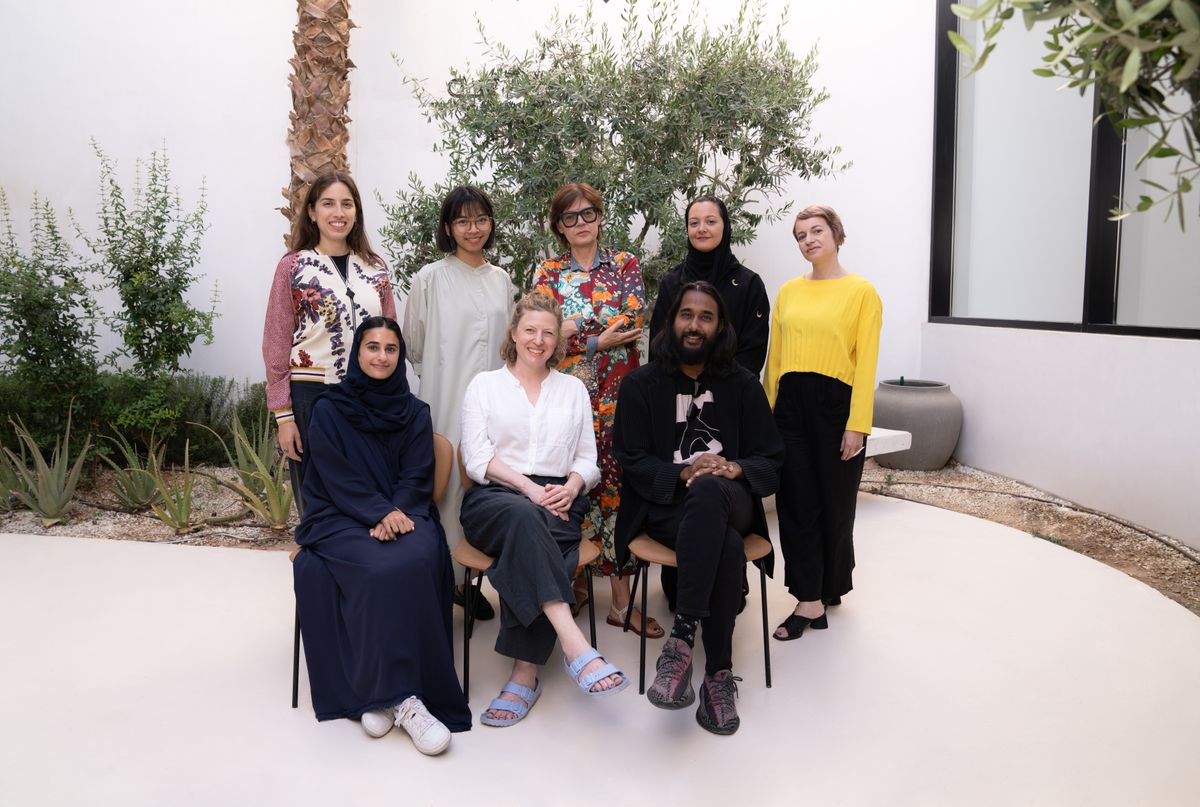
The 2024 Diriyah Contemporary Art Biennale curatorial team. Image

The 2024 Diriyah Contemporary Art Biennale curatorial team. Image courtesy of Diriyah Biennale Foundation. Top (L-R): Ana Salazar, Dian Arumningtyas, Ute Meta Bauer, Wejdan Reda, Anca Rujoiu. Bottom (L-R): Alanood A Alsudairi, Rose Lejeune, Rahul Gudipudi.

According to Aya al-Bakree, CEO of DBF, over 600,000 visitors saw the Islamic Arts Biennale, free of charge, over a four-month period. That’s right up there with the number of ticketed visitors to the 59th Venice Biennale‘s International Exhibition (800,000) and documenta 15 (738,000).

Qatar, meanwhile, has announced plans to build several new museums as part of its 25-year plan to improve cultural infrastructure in the country.

Sheikha Reem al-Thani, Acting Deputy CEO of Exhibitions and Marketing and the Director of Centralised Exhibitions at Qatar Museums, explained that Qatar began its latest cultural infrastructure push by developing museums focused on heritage and culture, and then expanded into sports and technology. New art museums are coming next.

The Art Mill Museum, an international museum of modern and contemporary art, is slated to open in a former flour mill in 2030, while the Lusail Museum will exhibit works from the Qatar Museum’s Orientalist collection from 2029.

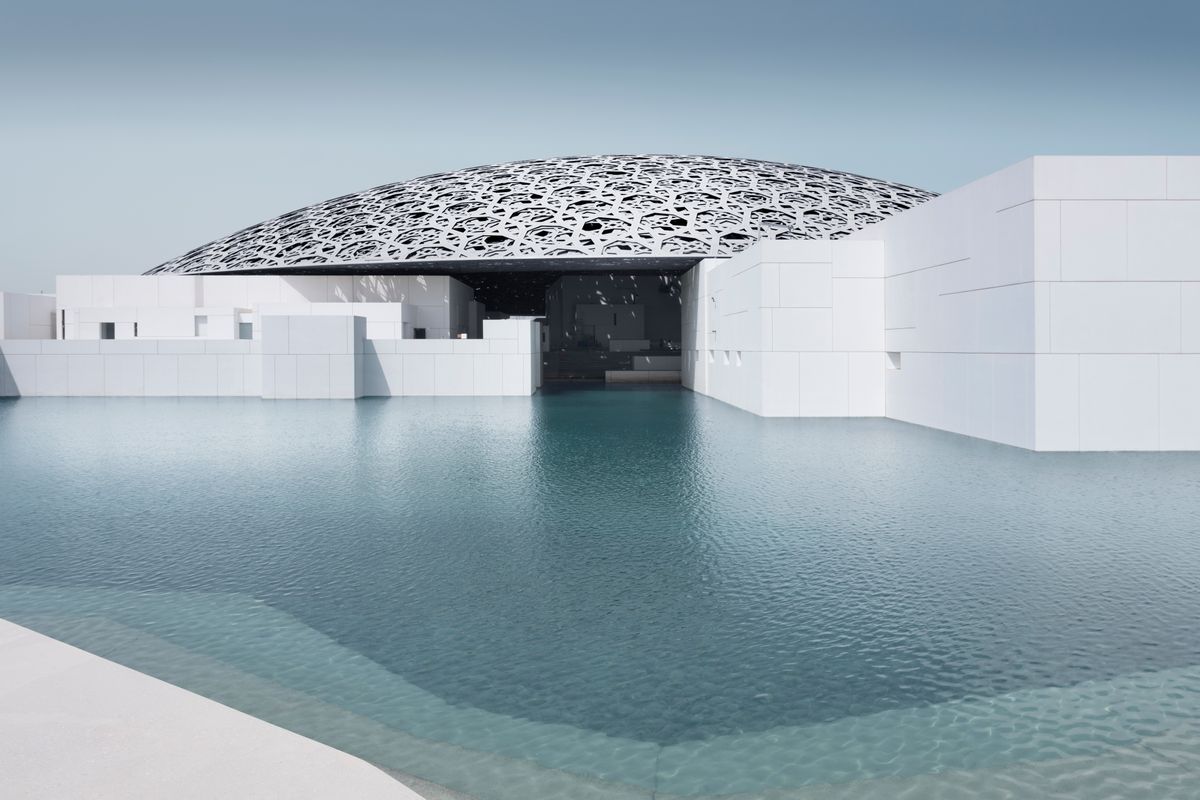
Louvre Abu Dhabi's exterior.

Louvre Abu Dhabi’s exterior. Courtesy Louvre Abu Dhabi. Photo: Mohamed Somji.

The U.A.E. has begun to see the fruits of its Saadiyat Island development, which was drawn up by American architecture firm Gensler in 2004. The Louvre Abu Dhabi opened in 2017 and by 2019 it had attracted over 2 million visitors, making it the most visited museum in the Arab world. (For comparison, almost 8 million people visited the Louvre in Paris last year alone.) The Guggenheim Abu Dhabi, designed by Frank Gehry, will open on Saadiyat Island in 2025.

In April, the U.A.E. launched the Dubai Creative Economy Strategy, aiming to double the number of creative businesses operating in the country by 2025. The Emirates also intends to build a national art collection by sourcing loans from private collectors.

Despite new strategies and the splurge of spending on art museums, arts and culture initiatives will play a negligible role in weaning Gulf economies off oil.

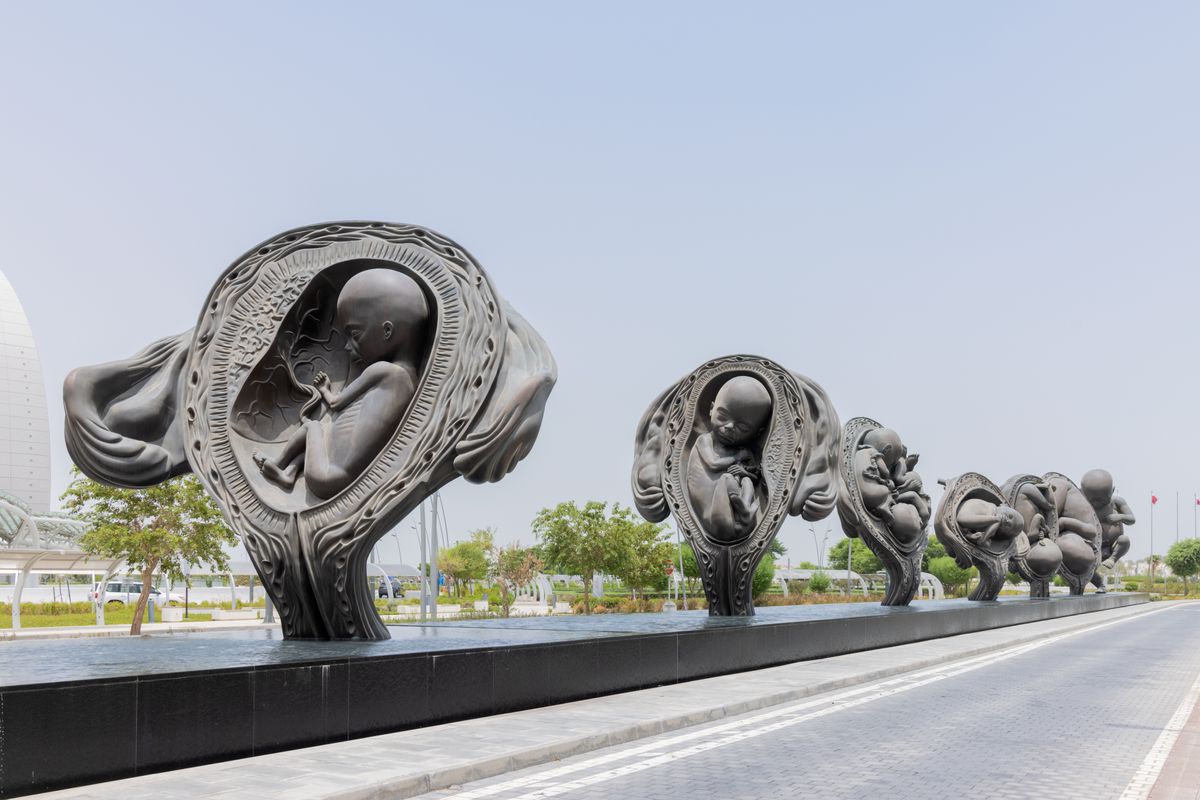
Damien Hirst, The Miraculous Journey (2013). Bronze. Sidra Medical Centre. Photo: Iwan Baan.

Damien Hirst, The Miraculous Journey (2013). Bronze. Sidra Medical Centre. Photo: Iwan Baan. Courtesy Qatar Museums.

As of 2021, arts and culture made up just 1.7% and 2.6% of GDP in Saudi Arabia and U.A.E. respectively, as reported by the World Bank. Saudi Arabia’s Vision 2030 plan would see the cultural sector bring in U.S. $20 billion, or almost 3% of GDP. By comparison, the oil and gas sector made up 42% of Saudi GDP, or $288.5 billion, in 2021. (In the U.A.E., oil and gas makes up less than 20% of GDP, while in Qatar it’s more than half.)

For now, it is difficult to see spending on art and culture as a pivot away from the fossil fuel industry when the two are so obviously entwined.

On 13 September, for example, The King Abdulaziz Centre for World Culture (Ithra) in Dhahran will launch an exhibition entitled Net Zero, a contemporary art exhibition that responds to global environmental challenges. Ithra, who also run the U.S. $500,000 Ithra Prize, is backed by Aramco, the world’s largest corporate greenhouse gas emitter.

By another metric, though—art’s ability to critique power structures and speak up for the marginalised—there is room for optimism.

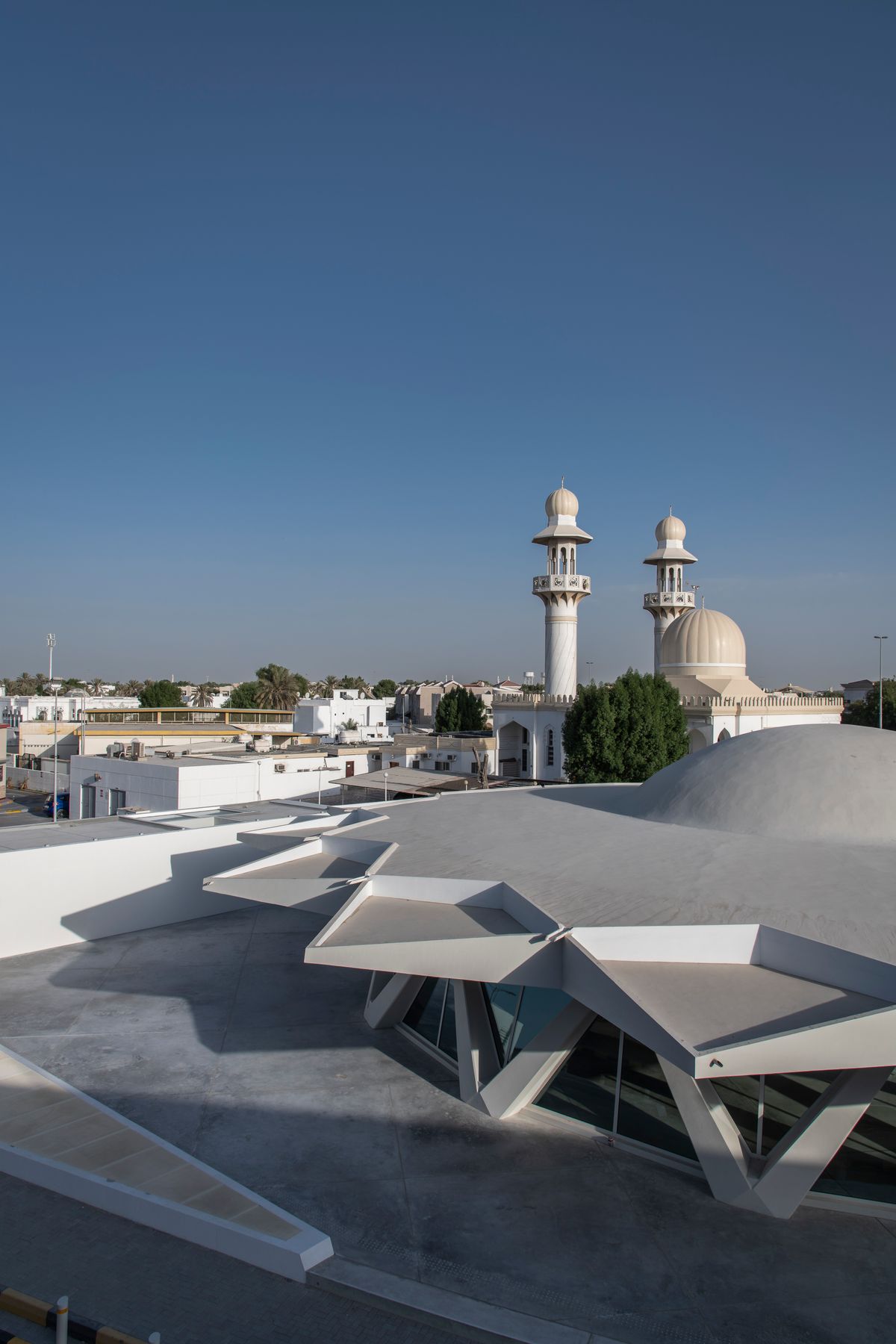
The Flying Saucer, Sharjah, UAE, 2020. Photo: Danko Stjepanovic. Image

The Flying Saucer, Sharjah, UAE, 2020. Photo: Danko Stjepanovic. Image courtesy Sharjah ArtFoundation.

Ocula Magazine’s Global Editor-at-Large, Stephanie Bailey, wrote admiringly of Sharjah Biennial 15 this year, describing the exhibition as ‘subversive’. She said the inclusion of works depicting drug use and same-sex relationships demonstrated a ‘willingness to carefully test the lines of acceptability in the U.A.E.’

At the Diriyah Biennale, she noted ‘significant, if incremental, strides’ made by the inclusion of works that depicted matrilineal family trees and moments of queer intimacy.

(Such freedoms can’t be taken for granted—Turkish curator Defne Ayas was selected to organise the next Istanbul Biennial only to be rejected this month, ostensibly for political reasons.)

While we can expect art world ‘software’ to lag behind the ‘hardware’ of rapid museumification, as happened in China during the 2000s and 2010s, art industry leaders in the Middle East that Ocula Magazine spoke to were optimistic that artists and curators would make good use of the opportunities provided by new museums and biennials.

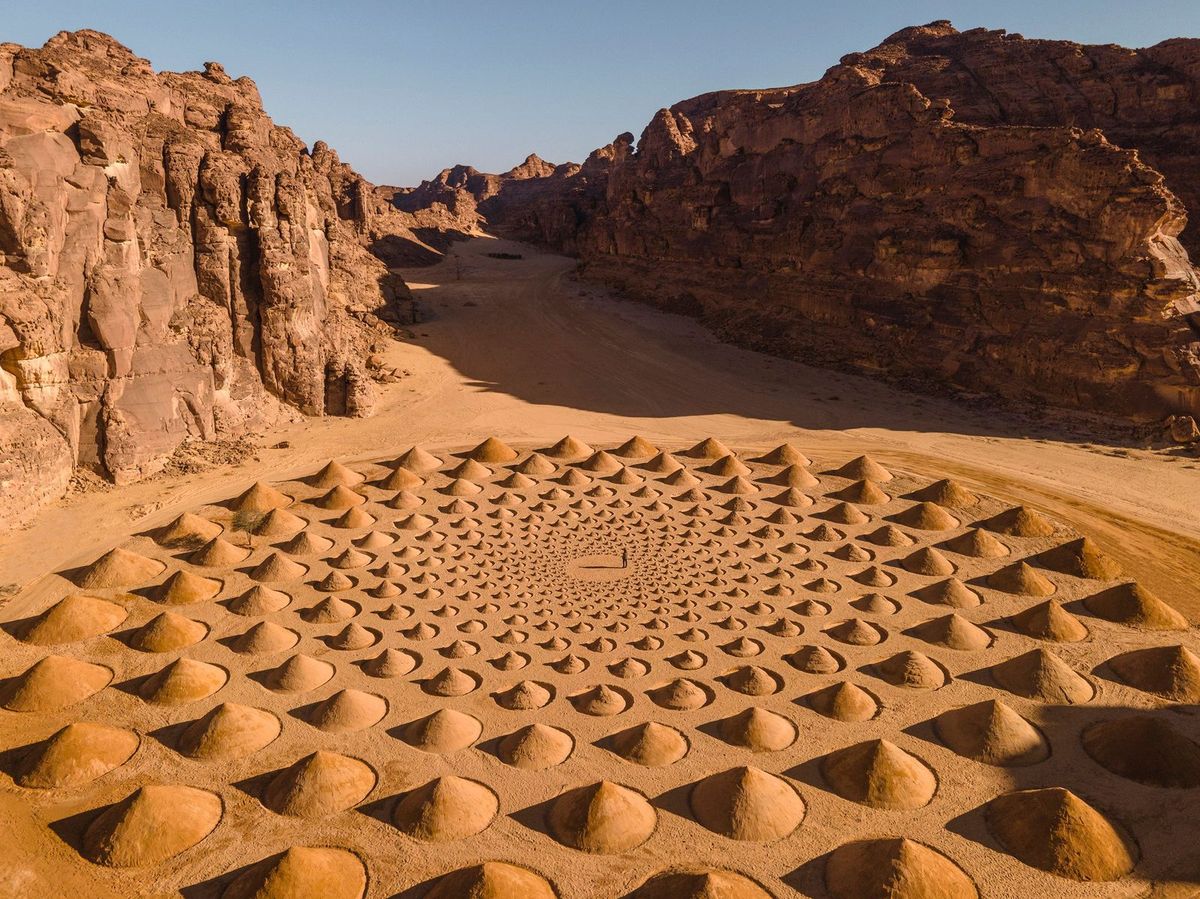
Jim Denevan, Angle of Repose. Exhibition view: Desert X AlUla 2022 (11 February–30 March 2022).

Jim Denevan, Angle of Repose. Exhibition view: Desert X AlUla 2022 (11 February–30 March 2022). Courtesy the artist and Desert X AlUla. Photo: Lance Gerber.

Sabih Ahmed, Associate Director and Curator at the Ishara Art Foundation, a nonprofit in Dubai, said investment in art infrastructure by countries in the Gulf Cooperation Council (GCC) means the younger generation does not have to go to the West to see great art, or pursue a career in the arts.

It finally allows for ‘a polyphony of centres rather than the age-old centre-periphery model for culture,’ he said.

‘I hope that alongside investments in museum-building and the art market, there will also be support for artist-run spaces, artist studios and ateliers, and magazines and publications, which are very important to the biodiversity that all arts require,’ he added.

Antonia Carver is the British-born director of the Saudi nonprofit Art Jameel. She said that, ‘if people choose not to engage with art from the GCC then they are missing out on getting to know bold, innovative cultural practitioners from a great breadth of backgrounds, positions.’

‘This is a time of cultural change, especially in Saudi and the U.A.E., with more and more efforts to promote and support a diverse range of creative expression, and a greater imperative to allocate resources to sustain our cultural landscape for years to come,’ she said. —[O]

Five best travel photography spots in Jackson Hole

Five best travel photography spots in Jackson Hole

Jackson Hole, Wyoming is one of the most beautiful, yet pricey places you might consider visiting. It’s a popular spot for wealthy millionaires and billionaires to spend a few days in their second home during summers and ski seasons, as well as ordinary folks who love the skiing and national park touring.

While winter is what Jackson Hole is known for, more people actually visit in the summer, despite the expense. Fall is an even better time to visit, before the snow starts to drop. 

So what’s the attraction for Jackson?

It’s a really fun, classic Western town that wears its history on its sleeve, (“The Last of the Old West” is the town motto). You’ll find live shootout recreations in the center of Jackson Square, the classic Million Dollar Cowboy Bay right in the heart of town, where patrons can sit at the bar on a saddle, and dozens of Western wear shops lining the streets.

Also, it’s near not just one amazing, major national park, but two. Jackson is a ten-minute drive to the Grand Teton National Park, and 40 minutes from Yellowstone National Park. The Tetons is arguably even more impressive, at least in the summer and fall. Both parks attract just under 4 million visitors yearly.

The area has “exceptional wildlife” said Zeb Hermanson, a local photographer who works at the Jackson camera store, Wyoming Camera Outfitters. “Outside of Africa or Alaska, we have some of the most diverse wildlife you’ll find anywhere.”

Wildlife and smartphones? Yes, it can be done! As always, I filmed the latest episode of #PhotowalksTV on two iPhones, the 13 and 14 Pro Max models, the Samsung Galaxy S23+, a GoPro Hero 11 and my DJI Mavic Air 2S drone.

The Galaxy really came in handy for the moose shots, as it has a stronger, 10x optical zoom that just knocks the 3x of the iPhone out of contention in these types of situations. (Note the close-up of the moose below!) The iPhones did great for the traditional widescreen landscape scenes one would associate with visiting a national park. I couldn’t fly my drone in the park (a no-no) but I got great shots in Victor and Teton Valley, over the hill.

Did I miss having the big camera and huge zoom lens? Sure, but my body appreciated not having to lug them. And besides, how much closer did I really need to be to the moose? If I zoomed in any closer, I wouldn’t catch the antlers.

Top 5 Jackson Hole photo spots

Schwabacher’s Landing

About 16 miles from Jackson, this is a popular place for picnickers to sit and watch the moose graze in the mornings and early evenings. It’s a pretty safe bet you’ll find the moose if you come during those times.

Mormon Row

Dating back to the 1870s, these old barns belonging to settlers still look incredible today against the backdrop of the Tetons.

Jenny Lake

Known as the centerpiece of the park, here you’ll get your best view of the Tetons themselves. If you want to go beyond your basic sighting, you can hop a boat here (for a fee) and take a little ride to another part of the lake, where a short hike will bring you to a wonderful, huge waterfall.

Jackson

Downtown is a fun old Western town for walking around — but hold onto your wallet! Everything is pricey. Ice cream cones at the popular Moo’s start at $7.50!

Ansel Adams

The Snake River Overlook— Ansel Adams. The Snake River Overlook is where the legendary photographer captured the image of the Teton Range meeting the waters. But when he did it, he had an unobstructed view, which today is covered in trees. A drone would solve the issue, but that’s a no-no! If you can get high (like on a stepladder) when you visit, you’ll get a better shot.

Van Life and Photography is Not an Easy Mix

Van Life and Photography is Not an Easy Mix

Between my partner blaming me for never being around, getting older and less excited about jet lag from long flights, I have been transitioning towards wedding photography. Covid most certainly strengthened my resolve as there was not much traveling going on anyway. Life is getting back to normal. I admit that I still make a small part of my income with travel photography, so I was thinking about a way to make the best of both worlds. Why not shoot weddings primarily and travel during the off-season? It would not be more than three months a year while staying close to home. This was when the idea of van life kicked in.

We hate banner ads too. Download our app for iOS, iPad, and Android and get no banner ads for $24.99/year.

I wanted to travel at a slower pace, and the idea of sleeping next to my shooting locations was appealing. I shoot a lot of early mornings. Waking up at 5am is hard enough; I don’t need to account for one extra hour of commuting from my hotel. The more I thought about it, the more a van made sense. Until I actually started experiencing the road.

I took the road last month for a week-long trip. I was excited to check whether this was doable. Being an outdoor person, being on my own and out in the wild is something I enjoy quite a bit. The van itself and the outdoor experience are not for everybody. Some people need the hustle and bustle of city life and the afternoon drinks with colleagues. But if you are more into the peaceful and quiet nature of remote places, it is lovely. The bottleneck for me was making my photography work with it.

The act of taking pictures accounts for probably 20% of my time. The rest is shared between editing, writing, marketing, and other administrative duties I wish I can delegate at some point soon. Multitasking has become a thing. I write on my notepad when I am out with friends; I edit most of my shots on Lightroom mobile while riding the metro, and I can deliver an entire wedding album if I am stuck on a plane long enough. I think we all do that one way or another. For those of us who freelance, we breathe our photography, and it becomes an integral part of our daily routine, even without a camera in our hand.

I drove a total of 15 hours on that trip. 15 hours may not sound like much for an entire week, but driving is the one thing you cannot squeeze into a multitasking routine. There is no writing when you are driving! There is no culling, editing, or answering customers’ inquiries. Suddenly, I realized 15 hours was a luxury I could not afford with my current workload. I can zombie walk to a shooting location at 5am with minimum sleep and nothing but my grit. Crossing the country at 70 mph in that shape is something I am not willing to try.

I wish my troubles stopped there, but the lack of decent wifi came to be another nail in my coffin. Once again, I rely on a lot of editing and emailing. The bandwidth required for the 200MB GFX files is massive. Do not get me wrong, you can find phone service and wifi in many places. Free ones tend to be weak and strong ones get really expensive really quick.

A lot of people are making it work. Some can focus for a few days at a time on the experience and be completely cut off from the world. I think it just requires a different organization and workflow and, in my case, mixing it with a high-volume and communication-heavy wedding business is certainly not helping. I have a little too much commitment packed in a single day. Working from the road means it will never be the absolute freedom one can imagine as you will always need to set up somewhere with a decent network service. I also understand a little more why most people I meet on the road are couples who can split responsibilities. It is a different world out there, and it requires a different organization.

Despite those two points being huge hurdles, the one thing that hurt my photography the most was the reduced social encounters. Public transportation and hotels are the best way to meet locals or fellow travelers. Out of those encounters will rise ideas, stories you are willing to tell, or recommendations of must-see locations in the area. This is, for me, what travel photography is about, not jumping from one Instagram location to the next. It is about the people.

The one benefit of spending a fortune on a van is that you do not need to pay for a hotel room, therefore, those encounters will pass you by. Besides, there are so many limitations on where you can park that you will always find yourself a little more isolated.

My dreams of van life are not dead, I will just need to look at it harder and figure out the proper workarounds for me, and when I do, you can bet I will make a blog post about it.

5 Photography Cheat Sheets for Shooting Portraits You’ll Love

5 Photography Cheat Sheets for Shooting Portraits You’ll Love

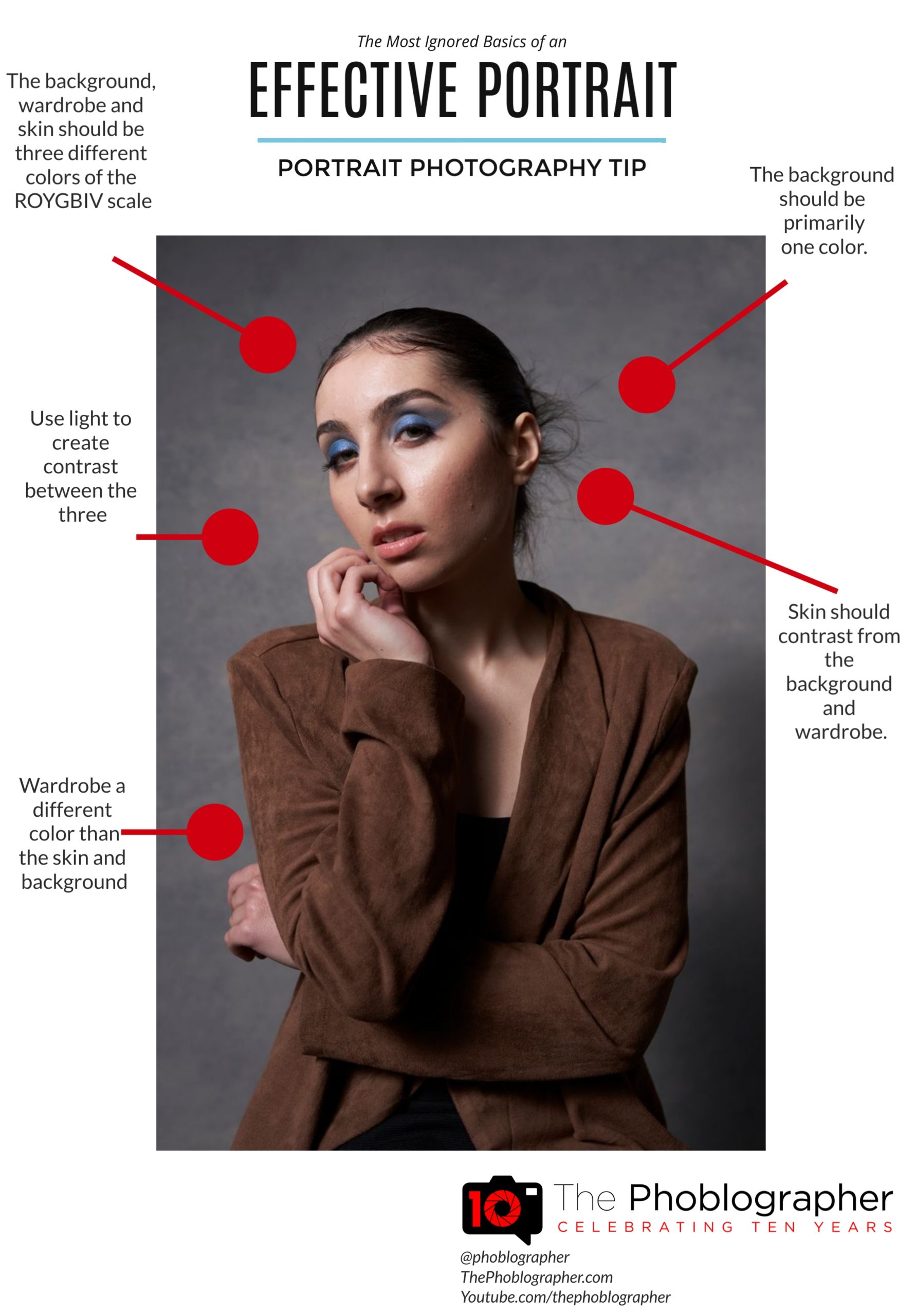
There are tons of tutorials out there for shooting portraits. But many don’t get into the specifics that help you truly love the portraits you shoot. So we dove into our archive of original cheat sheets and infographics to find exactly this sort of stuff. How many of you use the three-color portrait method? Alternatively, what do you know about placing a nose in a portrait? Or lighting?

View this article with minimal banner ads in our app for iOS, iPad, and Android. Get no banner ads for $24.99/year.

Well, guess what! Over the years, we produced all these photography cheat sheets ourselves. And we’re helping you find exactly what you want by assembling a select few. We hope you get all you need for shooting portraits right here.

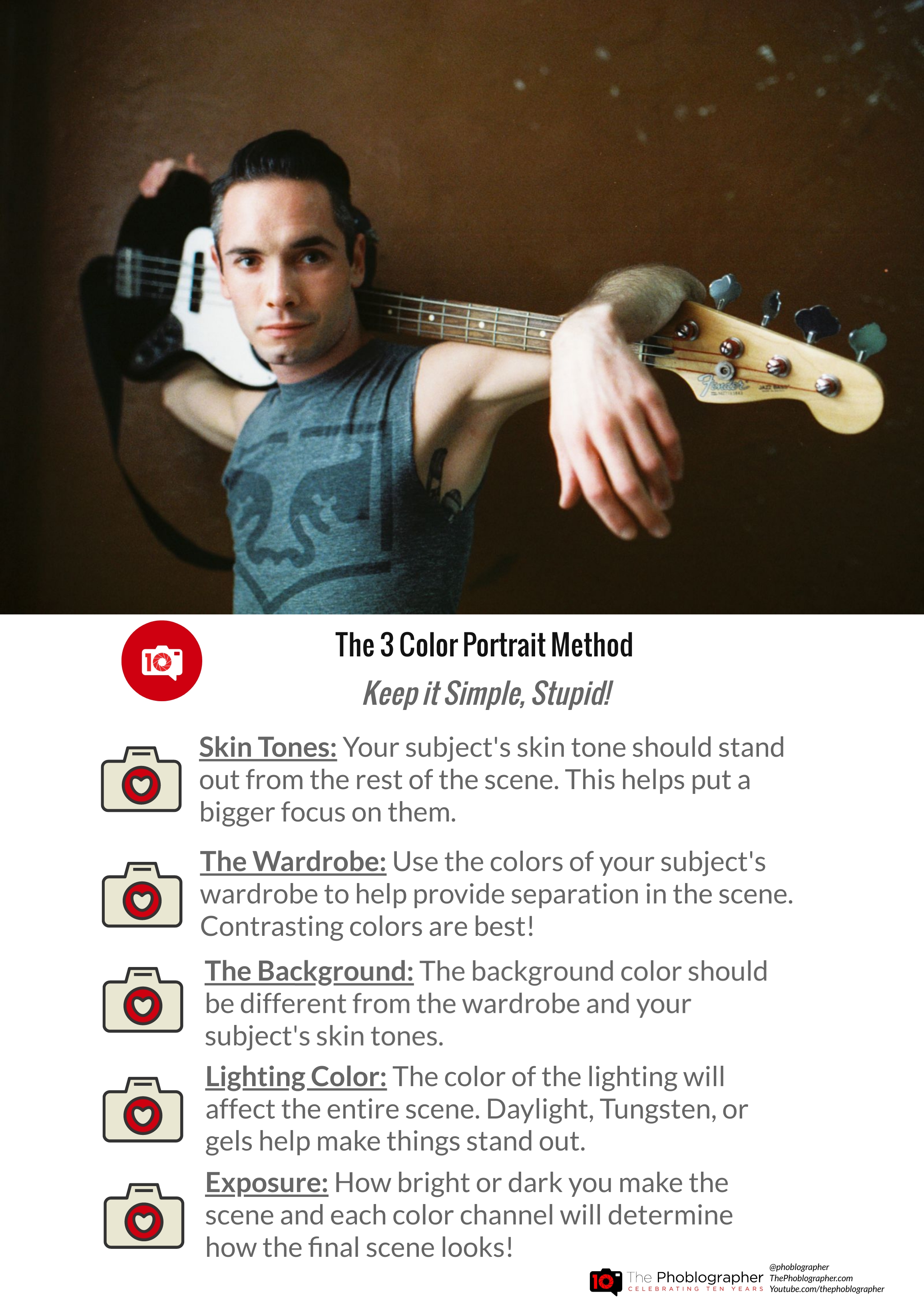
The Three Color Portrait Method

“The approach for many portrait photographers is arguably lazy. Instead of genuinely creating, many rely on the model to do something. But besides giving them instruction, try giving wardrobe input. Using the Behance platform to develop storyboards and mood boards helps a lot. It can dictate things like lighting and more. Plan to go above and beyond by using the three color portrait method. Add props into the scene to give the model something to do. Try flowers or candles. Create a story. Don’t just sit there capturing a model vibing in front of a camera. Those photographers tend to do nothing else but copy the work of others. If you’re looking to create work to feed the Instagram algorithm, stop. Put the camera down, thumb through a few photo books, and get inspired.”

Check out more in our blog post!

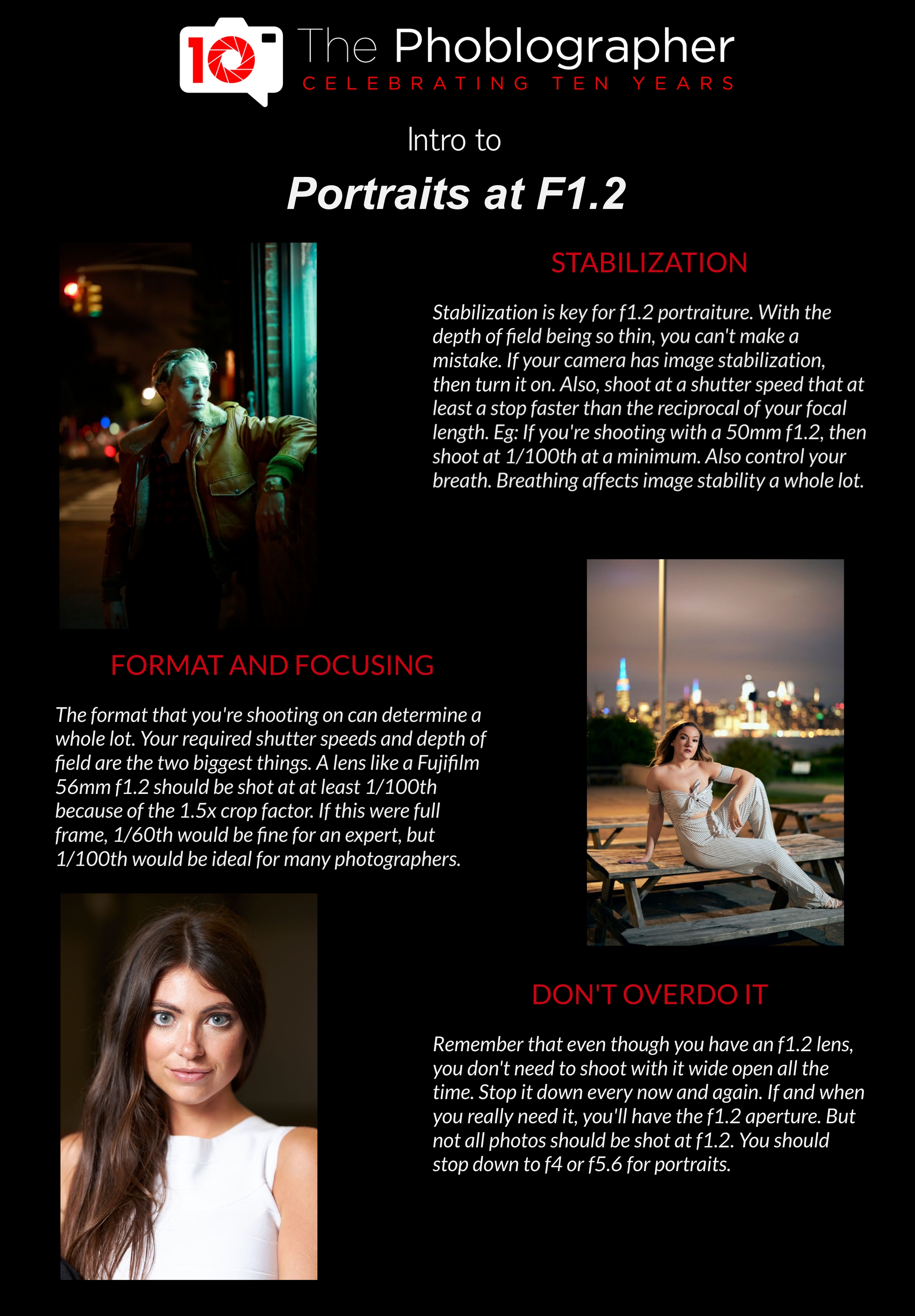
Shooting Portraits with an f1.2 Lens

“When shooting wide open with an f1.2 lens, you’ll get a sharp yet soft look. This soft look makes everyone appear lovely and it’s very addicting. But you can deliver more sharpness by just stopping down a tad. We already talked about this, but the ultimate point is to find the balance. Personally, I like the softer look with a Polarizing filter on the the lens, which enhances the colors and contrast more. It’s a similar tactic to what many f1.2 lenses have with their APD variants. With these variants, there is an extra element that brings even smoother bokeh to the photos. Give it a shot!”

Check out more in our blog post.

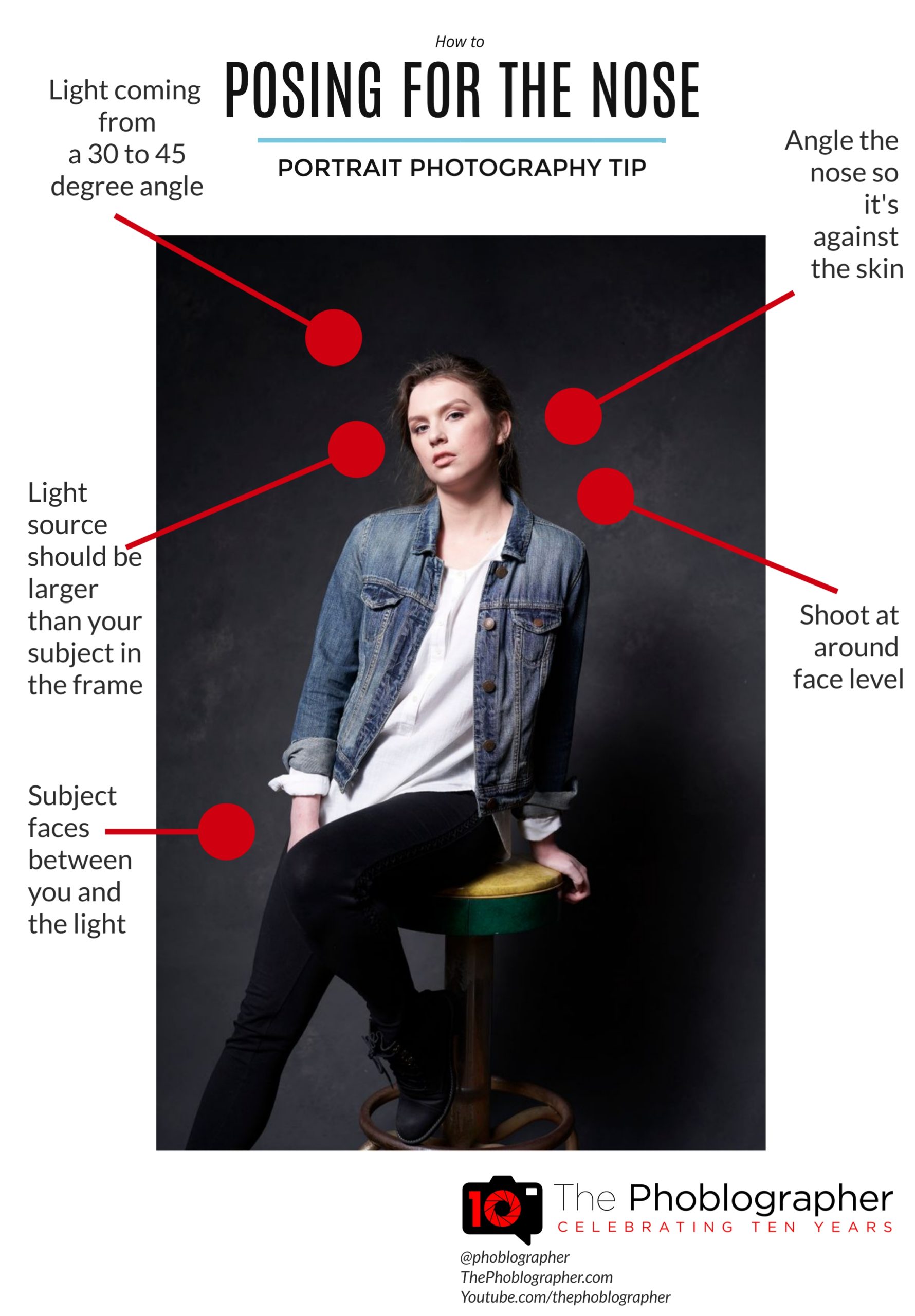
Positioning the Nose While Shooting Portraits

“In addition to this, give the nose a background. By that, we mean to place it against the skin. Notice how, in the image above and our lead image, the nose is against the cheek? That’s what you need to do. This makes the nose pop out less and makes it look more flattering. From here, you’ve got a variety of techniques and poses you can use. You can fold their arms, put their arms down, etc., but our focus here is the face, and it’s best to adjust this last. Don’t worry, that still means you’ve got a whole lot of posing options. Your subject’s face just needs to be posed a specific way.”

Read more in our blog post.

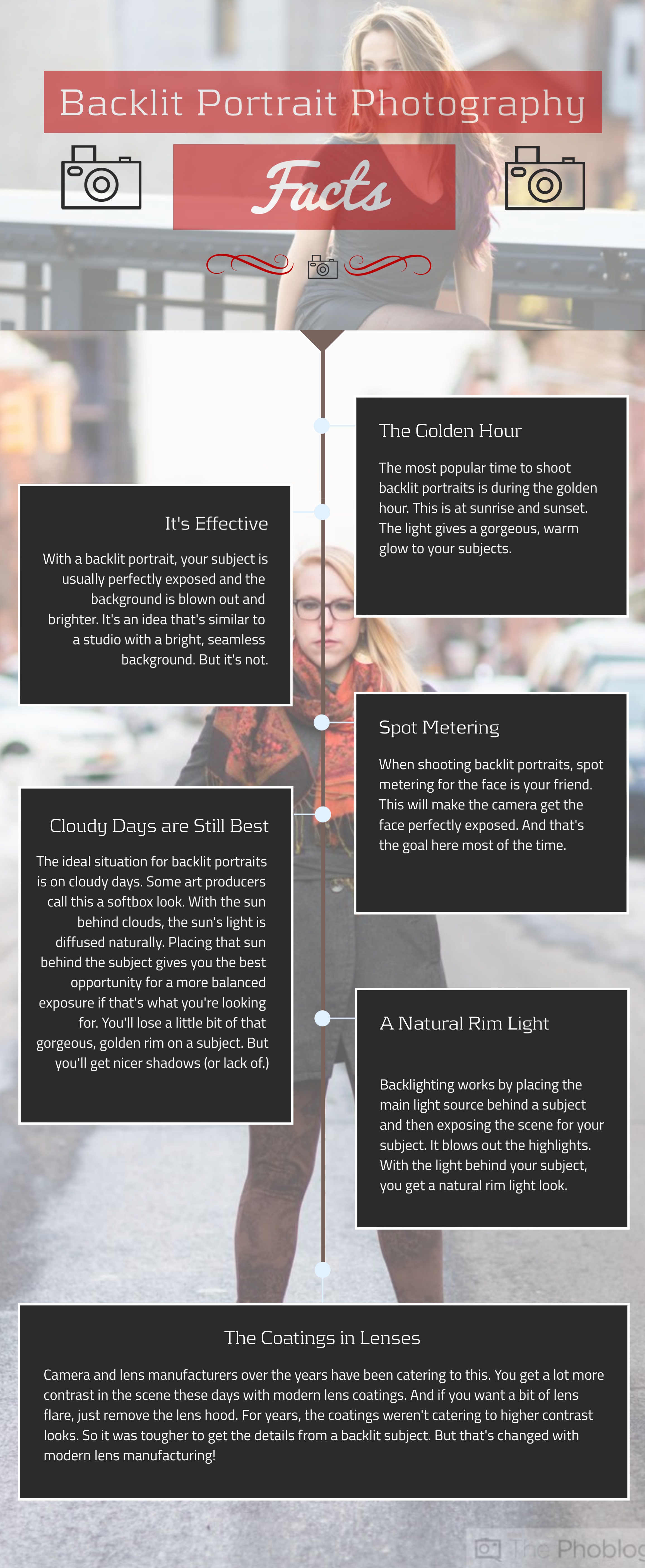
Backlit Portraits

“One of the most important elements in creating a great backlit portrait is to make sure your subject is properly exposed. The default metering mode for most cameras will meter the entire frame rather than focus on your subject. For the best results, set your camera to spot metering and meter for your subject’s face to ensure it’s properly exposed.”

Read more in our blog post.

Important Elements of Portrait Photography

“In my experience of shooting folks of every race, everyone is rendered by cameras in the orange and red channels. Those are typically associated with the skin. You need to find a color that contrasts with the skin. You’ve got five other colors or so to pick from. Once you’ve gotten that, figure out the background. A person shot against a red brick background will inevitably be affected by the red light reflecting off the background. If it’s your intention to get that effect, cool, move forward, but chances are it’s not. Lastly, you need to separate the person from the background. That’s typically done using lighting, wardrobe, and depth of field.”

Read more in our blog post!

A groundbreaking exhibition on the National Mall shows monuments aren’t set in stone

A groundbreaking exhibition on the National Mall shows monuments aren’t set in stone

Children activating the installation America’s Playground: DC by artist Derrick Adams in Constitution Gardens on the National Mall.

A.J. Mitchell/Monument Lab

A.J. Mitchell/Monument Lab

Kids are running all over a temporary playground in the middle of the National Mall. It’s part of Beyond Granite: Pulling Together, the Mall’s first-ever official outdoor show. The idea is to commemorate American stories missing from the Mall and question how history has been enshrined in stone.

These new monuments look very different from the familiar imposing white monoliths or bronze presidents in thoughtful repose. Six acclaimed artists representing a cross-section of Americans – Black, Latino, Asian and Native – from all over the country were chosen by the Philadelphia-based group Monument Lab to participate.

Artist Derrick Adams, who grew up in Baltimore, designed a working playground divided by a billboard-sized archival photograph from 1954. It shows a previously all-white park a few days after it was desegregated by court order. Joyful Black and white children are seen sliding, swinging and climbing together. Visitors are invited to use the space as it was intended.

“What does it mean to have a monument on the Mall that you can play on?” asks Salamishah Tillet. “For children to feel like it’s their space, their Mall, a site of joy and happiness, is a pretty radical intervention.”

Tillett co-curated this exhibition; she’s also a professor at Rutgers University, where she directs the New Arts Justice initiative. This monument, she says, commemorates the fight for American children to have equal access to the right to play.

Paul Farber, the director of Monument Lab, with co-curator Salamishah Tillet at Beyond Granite: Pulling Together on the National Mall.

A.J. Mitchell Photography/Monument Lab

A.J. Mitchell Photography/Monument Lab

“I appreciate the fact that it’s acknowledging both the difficulties of the past, the celebration of civil rights and ushering us into another present as well,” she says.

Beyond Granite: Pulling Together was inspired by Marian Anderson’s legendary public performance in 1939 after white supremacists banned her from singing at Constitution Hall. The Black opera star’s rendition of “My Country ‘Tis of Thee” on the steps of the Lincoln Memorial became a cultural touchstone.

YouTube

Sculptor Paul Ramírez Jonas‘ bronze bell tower plays “My Country ‘Tis of Thee.” But the bells stop tolling right before the end. Visitors must pull a lever to play the final note.

“The piece is simply saying, America is not America without you as an active citizen,” Ramírez Jonas says. “It needs you in some way.”

National identity is partly defined by what we publicly mourn, observes Monument Lab Director Paul Farber. “I think about how in this country, we’re bursting at the seams with grief, with loss,” he says. “We don’t always have a place to put it.”

Artist Paul Ramírez Jonas installing the 600-pound bronze bell that visitors are invited to activate as part of his work, Let Freedom Ring.

A.J. Mitchell /Monument Lab

A.J. Mitchell /Monument Lab

Putting memorials on the National Mall makes them matter, he says. Think of the AIDS quilt. Or a memorial in the show called Homegoing.

Ashon T. Crawley‘s maze of bright blue platforms lies in the shadow of the Washington Monument. It mourns queer musicians who directed Black church choirs, sang in their services, and died, closeted, of AIDS-related complications. Crawley, who grew up Pentecostal, honors the loss of these elders with original music playing softly from speakers. “We are your family,” a choir sings. “We love and we care and sing for you.”

Some visitors to the Mall may not think of these deaths as a defining national tragedy that pulls us together as Americans. This monument asks: Why not? Crowley, a professor of religion, illuminates how Black gospel music and the blues can be traced to the Muslim prayers of ancestors taken from Africa. “If you did not have that sonic practice of prayer, you wouldn’t have the blues,” he says. “And you wouldn’t have gospel music.”

From above, the monument spells out the Arabic word “amin,” which means ‘let this prayer be accepted,'” Crawley says. When visitors enter the maze, they join the word and the prayer by following the path.

Ashon T. Crawley’s monument Homegoing, as seen from above, lies on the south grounds of the Washington Monument.

A.J. Mitchell /Monument Lab

A.J. Mitchell /Monument Lab

Finding meaning, belonging and a balance between trauma and triumph is the heart of this project, says Monument Lab’s Paul Farber. Artists, as artists do, are finding solutions amidst all the recent handwringing about the relevance of monuments. “We’re actually looking for history to come to life,” Farber says.

“You know, I think a lot of monuments commemorate dead people,” notes artist Tiffany Chung. Her monument, For The Living, lies near the Vietnam Veterans Memorial. “I think it’s difficult to live, and when you think about war and conflict, the consequences also fall on the shoulders of the living.”

Chung was a refugee when she came from Vietnam with her family to the U.S. as a child. Her monument is a map, low on the ground, made out of thick black landscaping rubber. It shows the flight paths of migrants from Southeast Asia around the world.

Artist Tiffany Chung’s For the Living lies close to the Vietnam Veterans Memorial on the National Mall.

A.J. Mitchell /Monument Lab

A.J. Mitchell /Monument Lab

“For me, instead of erecting something to really hit the sky, I want to spread it out on the earth,” she continues. “Because this is us. This is where we will go back to after we leave the world. And this is beautiful. The grass will grow. The sun will wash the things away, maybe including the material that created this map. But that’s the brevity of life!”

The monuments of Beyond Granite: Pulling Together aspire to heal legacies of harm. But they are not permanent. Due to various regulations, they can only be displayed until the middle of September.

Gorman Museum ready to put on a show

Gorman Museum ready to put on a show

The C.N. Gorman Museum of Native American Art will unveil a new, much larger home on the UC Davis campus on Friday, Sept. 22, and Saturday, Sept. 23, coinciding with the museum’s 50th anniversary.

Converted from the old UC Davis Faculty Club, the new museum will be able to hold 2,500 pieces of contemporary art by Native American and Indigenous artists, have administration space for staff and student employees, state-of-the-art lighting for the art collection, a small gift shop, a conference room that will serve as a special collections library, public visibility into collection preservationists working and outdoor event areas that will encase the building and cascade down into the arboretum.


enit

Wendy Red Star, “enit,” 2010. Lithograph 10/101. 


rack-augW.jpg

The C.N. Gorman Museum has a collection of 2,250 artworks, most created since 1980, including paintings, photography, ceramics, textiles and original prints.