Larry Fink, acclaimed photographer of different social classes, dies aged 82

Larry Fink, acclaimed photographer of different social classes, dies aged 82
image

Larry Fink, an acclaimed and adventurous photographer whose subjects ranged from family portraits and political satire to working class lives and the elite of show business and Manhattan society, has died at 82.

Robert Mann, owner of the Robert Mann Gallery, told the Associated Press that Fink died Saturday at his home in Martins Creek, Pennsylvania. Mann did not cite a specific cause of death, but said that Fink had been in failing health.

“He was a dear friend and a real free spirit,” Mann said. “I’ve known people like Robert Frank and Ansel Adams, and Larry stood out. He was an exceptional and unique individual, a very unconventional man – not only in his personality, but in his photography.”

A “self-described Marxist from Long Island”, Fink was best known for “Social Graces”, a 1979 exhibition at the Museum of Modern Art in which black and white photos of wealthy New Yorkers were juxtaposed against shots of everyday life of families in Martins Creek, Fink’s longtime home. The series was published in book form in 1984.

He would go on to work for the New York Times, Vanity Fair and other publications, photographing such celebrities as Meryl Streep, Natalie Portman and Kate Winslet. He would also spoof former US president George W Bush and other political leaders, while remaining close to a Martin Creeks family, the Sabatines, who appeared often in his work. Fink had solo exhibitions at the Whitney Museum and the Philadelphia Museum of Art among other galleries, and he received numerous honors, including two John Simon Guggenheim fellowships.

Fink, who first took up photography at 13 and later studied under photographer Lisette Model, had a professional life that reflected the diverse outlooks of his parents. He grew up in a politicized family that scorned the free market, while also enjoying stylish automobiles and high-end parties. In the early 1960s, Fink moved to Greenwich Village in New York City, with dreams that he was undertaking not just a career, but a revolution.

“Of course the revolution didn’t quite get there so I was left with a career,” he told Blind Magazine in 2021.

Fink’s survivors include his second wife, the artist Martha Posner, and a daughter, Molly, from his marriage to painter Joan Snyder.

Pick the Best Image in This Nature Photography Contest

Pick the Best Image in This Nature Photography Contest
Image for article titled Pick the Best Image in This Nature Photography Contest
Photo: Axel Gomille / Wildlife Photographer of the Year

Online voting is now open for the People’s Choice Award winner in the Wildlife Photographer of the Year contest, an annual competition developed and produced by the Natural History Museum, London. You can chose your favorite from among 25 shortlisted photos of the near-50,000 submitted to the competition. From mudskippers and bulrushes to lions and jellyfish, the natural world has something for everyone… and it’s up to you which gets the final say.

Advertisement

You can vote for a winner online or in person at the museum. See the impressive lineup here.

Image for article titled Pick the Best Image in This Nature Photography Contest
Photo: Andy Parkinson / Wildlife Photographer of the Year

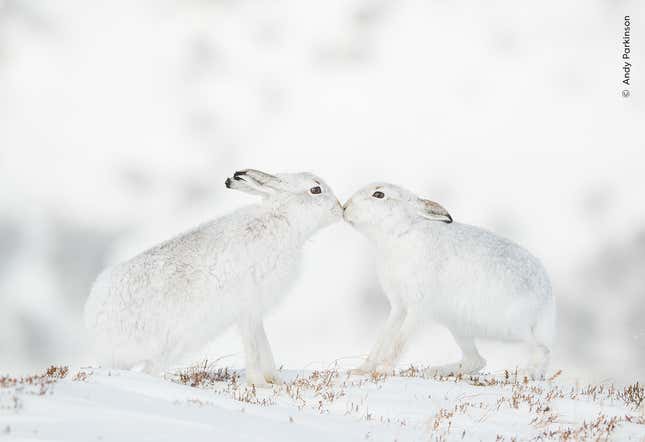
Two courting hares touch noses in the Monadhliath Mountains of Scotland.

Image for article titled Pick the Best Image in This Nature Photography Contest
Photo: Audun Rikardsen / Wildlife Photographer of the Year

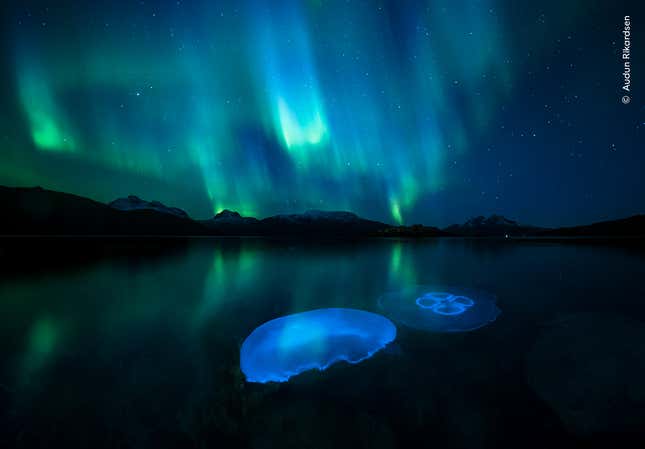
Two moon jellyfish swim under the vibrant blues and greens of the aurora borealis.

Image for article titled Pick the Best Image in This Nature Photography Contest
Photo: Axel Gomille / Wildlife Photographer of the Year

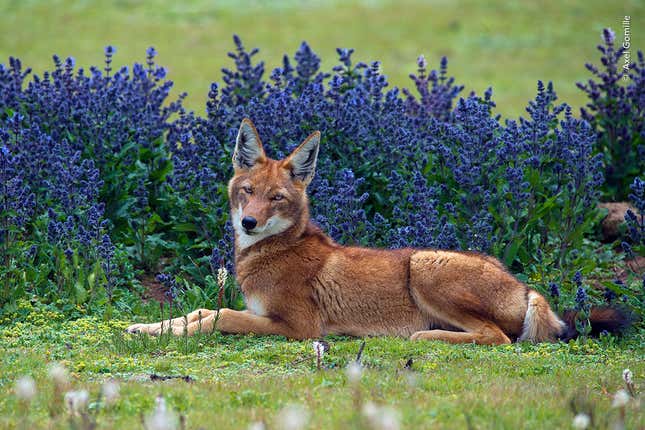
An Ethiopian wolf—an exceedingly rare species of wild dog—takes a break near wildflowers in Bale Mountains National Park.

Image for article titled Pick the Best Image in This Nature Photography Contest
Photo: Ayala Fishaimer / Wildlife Photographer of the Year

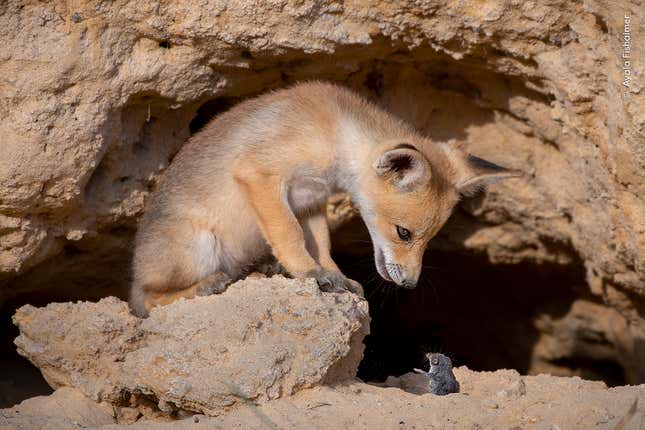
A young red fox takes a moment to study the shrew it just yanked out of the ground and threw into the air.

Image for article titled Pick the Best Image in This Nature Photography Contest
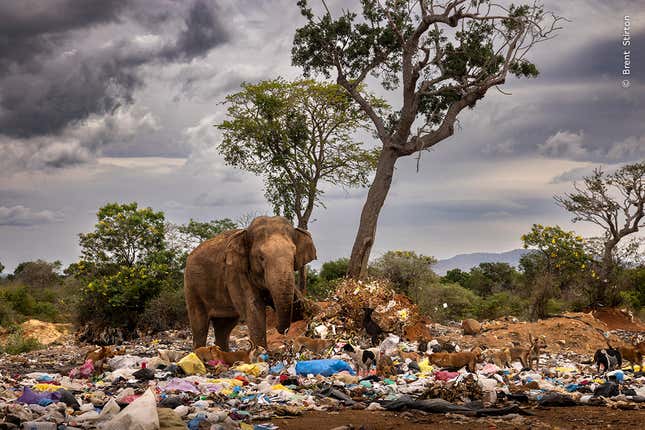
Photo: Brent Stirton / Wildlife Photographer of the Year

A crop raiding bull elephant looks for food in a garbage dump in Sri Lanka.

Image for article titled Pick the Best Image in This Nature Photography Contest
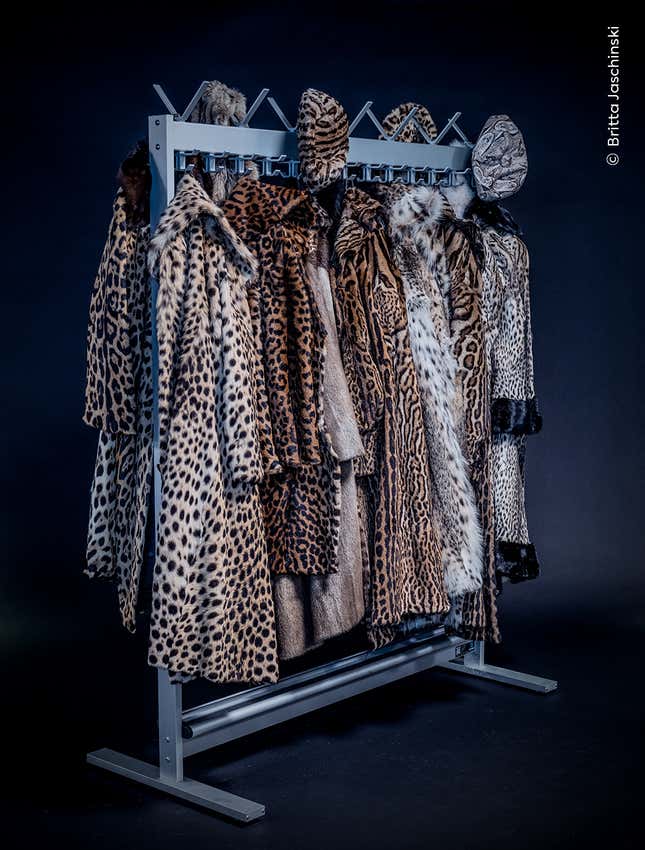
Photo: Britta Jaschinski / Wildlife Photographer of the Year

Coats made from big cat skins hang in Hamburg’s Leibniz Institute for the Analysis of Biodiversity Change.

Image for article titled Pick the Best Image in This Nature Photography Contest
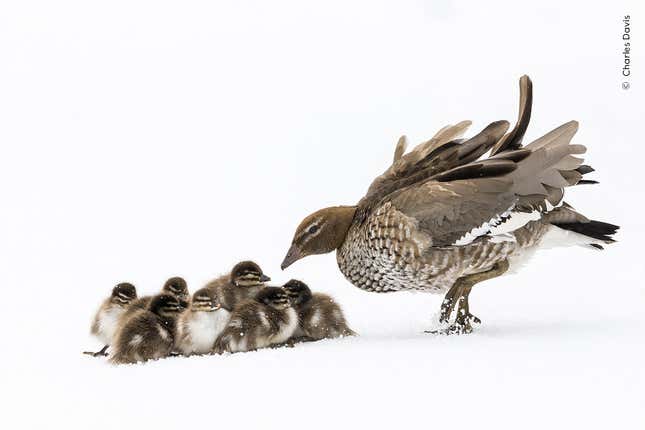
Photo: Charles Davis / Wildlife Photographer of the Year

A wood duck checks in on her chicks amid a snowstorm in Australia.

Image for article titled Pick the Best Image in This Nature Photography Contest
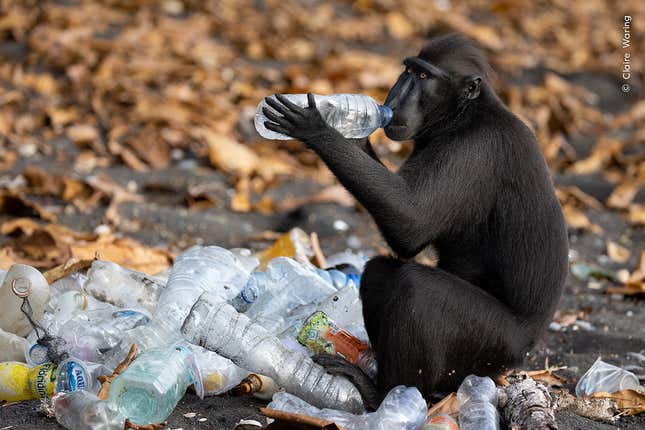
Photo: Claire Waring / Wildlife Photographer of the Year

A macaque takes a sip out of a bottle in a pile meant to be recycled on the Indonesian island of Sulawesi.

Image for article titled Pick the Best Image in This Nature Photography Contest
Photo: Daniel Dencescu / Wildlife Photographer of the Year

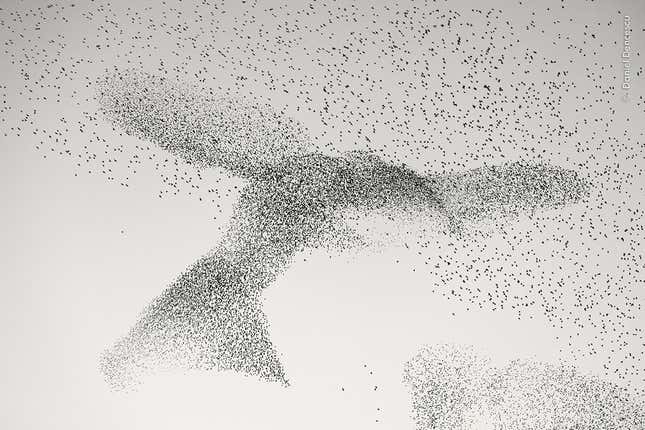
This stupefying shot captures a murmuration of starlings as they fly over Rome. In this moment, the murmuration took a shape reminiscent of a bird in flight.

Image for article titled Pick the Best Image in This Nature Photography Contest
Photo: Deena Sveinsson / Wildlife Photographer of the Year

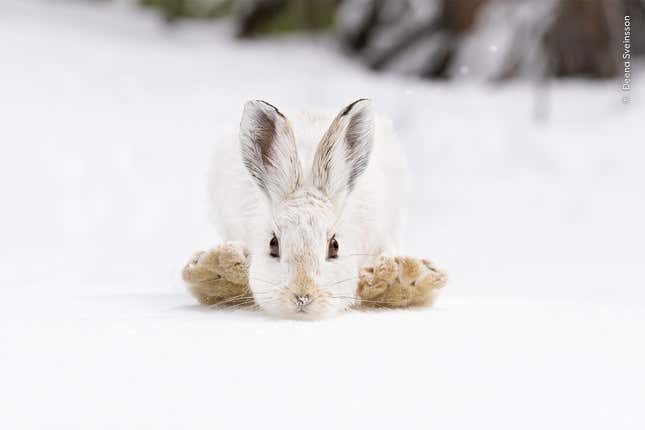
A snowshoe hare’s hind legs line up with its head in this fleeting moment, as the fluffy mammal prepares to take its next leap in Rocky Mountain National Park.

Image for article titled Pick the Best Image in This Nature Photography Contest
Photo: Dvir Barkay / Wildlife Photographer of the Year

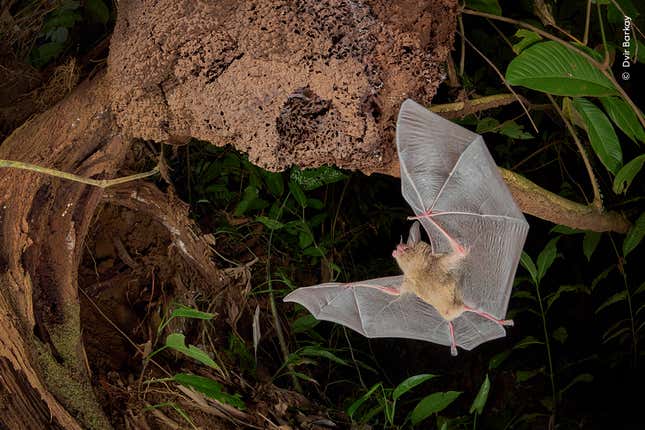
A pygmy round-eared bat returns to its nest, which is carved into the nest of a termite colony.

Image for article titled Pick the Best Image in This Nature Photography Contest
Photo: Frank Deschandol / Wildlife Photographer of the Year

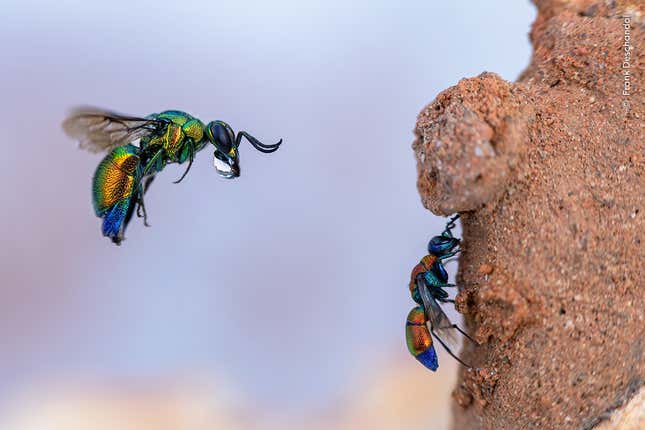
A parasitic cuckoo wasp approaches the clay burrow of a mason bee. The wasp carries a water droplet, which it uses along with its saliva to soften the clay to get at the burrow within. Once inside, the wasp lays its eggs and reseals the burrow; when the eggs hatch, the wasp progeny feeds on mason bee larvae.

Image for article titled Pick the Best Image in This Nature Photography Contest
Photo: Gerald Hinde / Wildlife Photographer of the Year

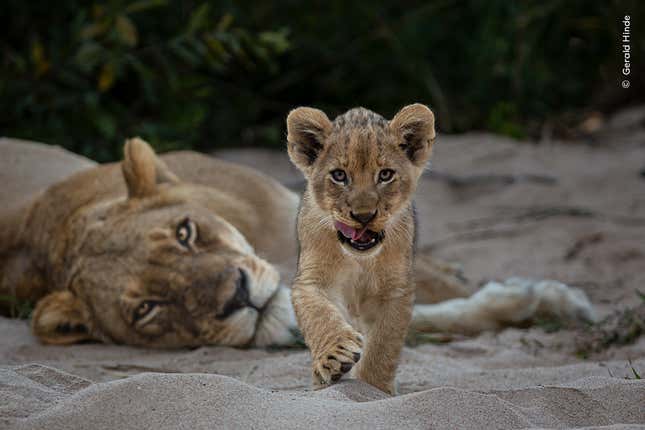
A lion cub checks out the photographer in South Africa’s Greater Kruger National Park.

Image for article titled Pick the Best Image in This Nature Photography Contest
Photo: Hermann Hirsch/Jan Lessman / Wildlife Photographer of the Year

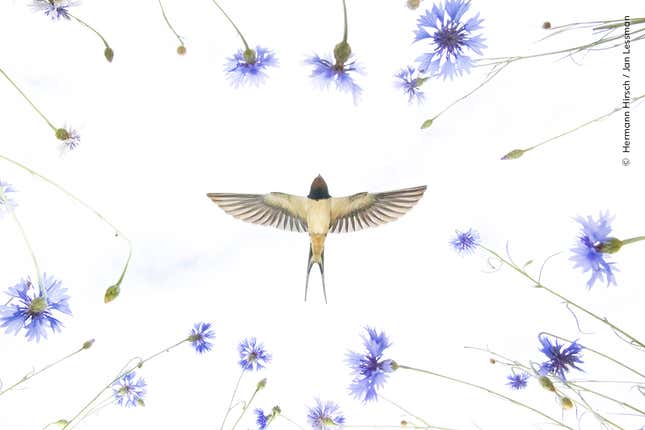
A barn swallow seen from below, flying through a field of cornflowers.

Image for article titled Pick the Best Image in This Nature Photography Contest
Photo: John E. Marriott / Wildlife Photographer of the Year

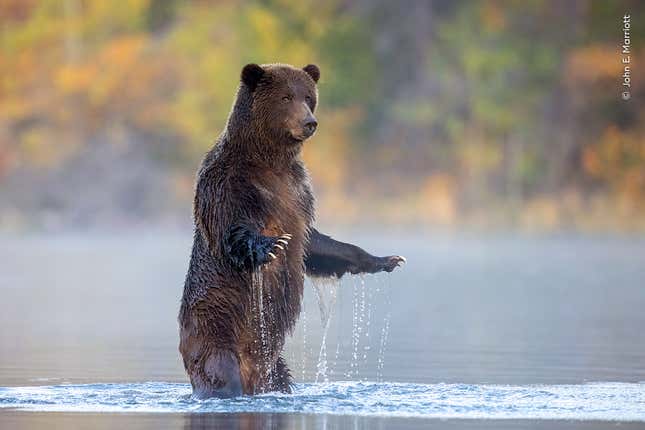
A grizzly bear looks uneasy as it’s captured in the photographer’s frame while salmon fishing in British Columbia’s Chilko River.

Image for article titled Pick the Best Image in This Nature Photography Contest
Photo: Karim Iliya / Wildlife Photographer of the Year

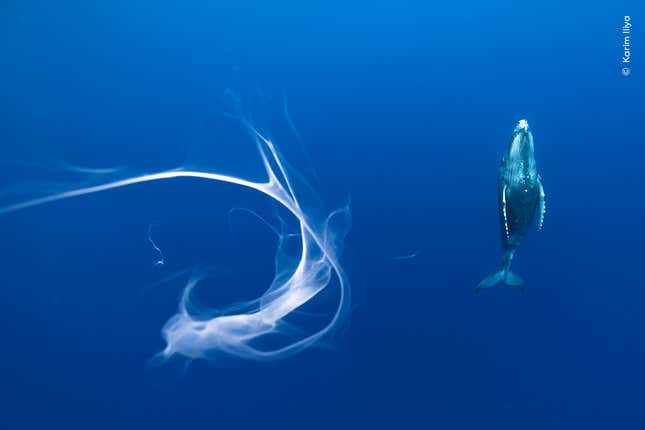
A humpback whale calf missed capturing milk from its mother, and it here swirls aimlessly in the currents off French Polynesia.

Image for article titled Pick the Best Image in This Nature Photography Contest
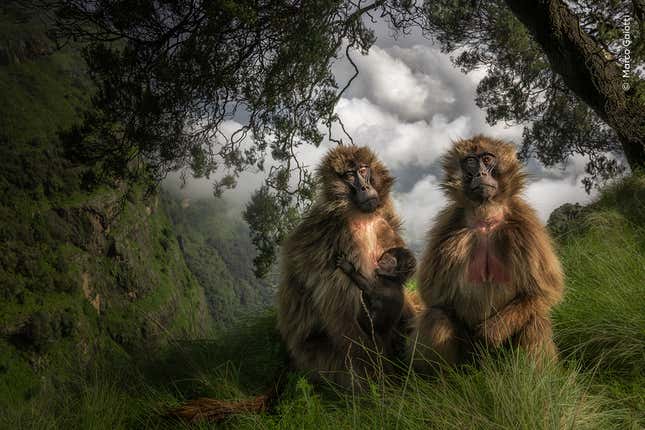
Photo: Marco Gaiotti / Wildlife Photographer of the Year

Three geladas in Ethiopia’s Simien Mountains.

Image for article titled Pick the Best Image in This Nature Photography Contest
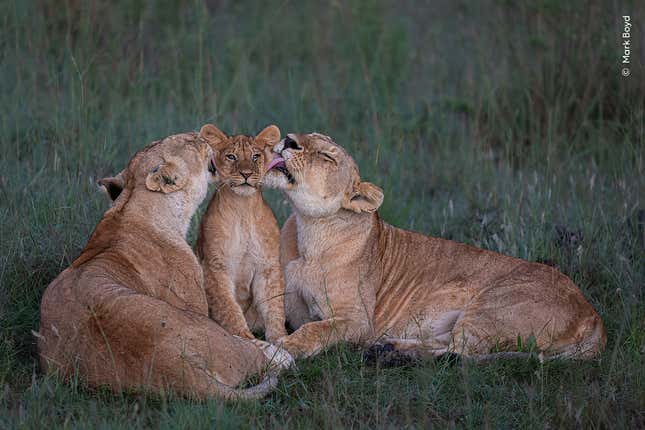
Photo: Mark Boyd / Wildlife Photographer of the Year

Two lionesses groom a lion cub in their pride.

Image for article titled Pick the Best Image in This Nature Photography Contest
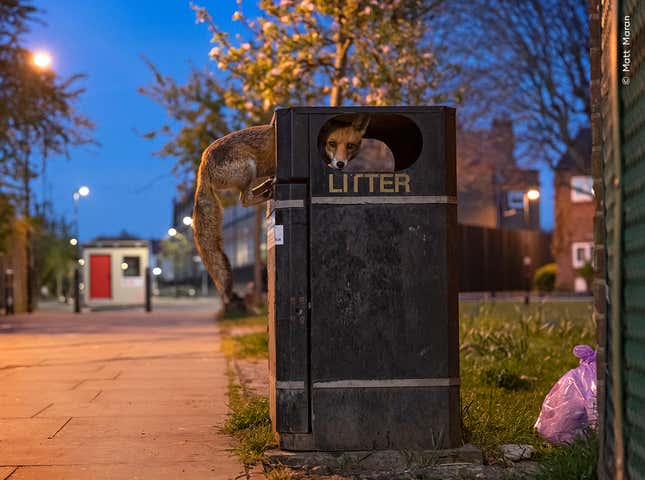
Photo: Matt Maran / Wildlife Photographer of the Year

A red fox checks out a rubbish bin in London, England.

Image for article titled Pick the Best Image in This Nature Photography Contest
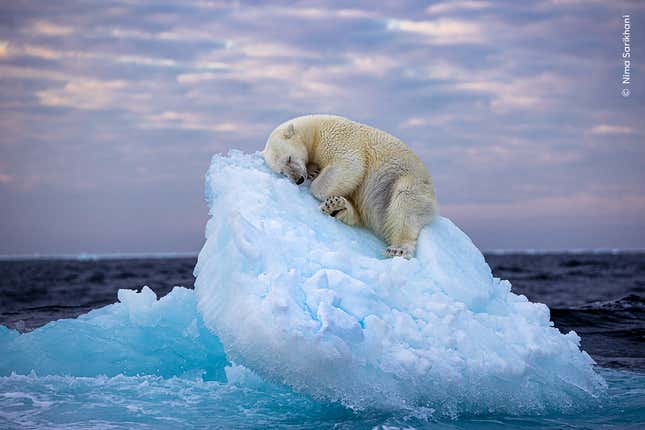
Photo: Nima Sarikhani / Wildlife Photographer of the Year

A polar bear finds a surprising place to rest on a lopsided iceberg north of Svalbard.

Image for article titled Pick the Best Image in This Nature Photography Contest
Photo: Ofer Levy / Wildlife Photographer of the Year

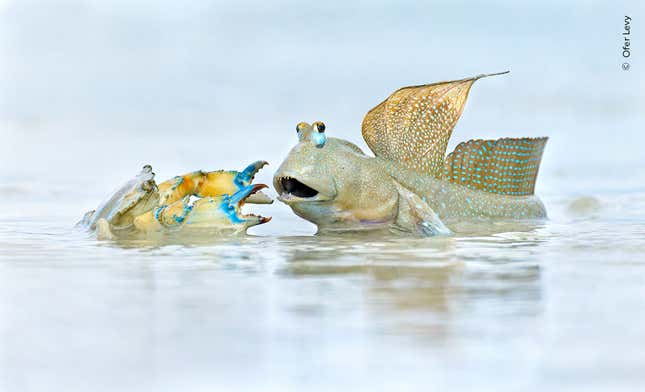
A mudskipper defends itself from a crab in Australia’s Roebuck Bay.

Image for article titled Pick the Best Image in This Nature Photography Contest
Photo: Roberto García-Roa / Wildlife Photographer of the Year

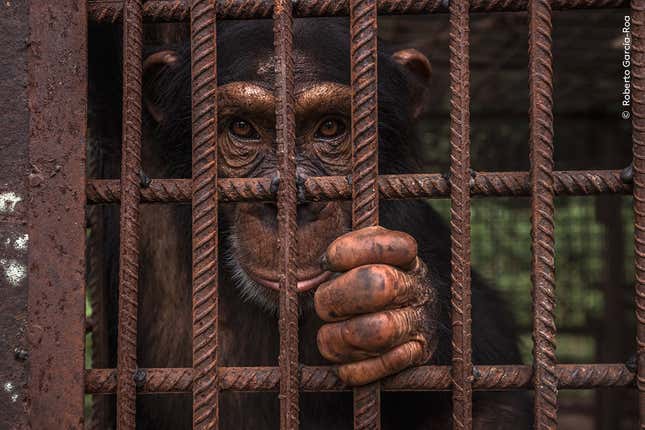
A rescued chimpanzee in the Republic of Guinea’s Chimpanzee Conservation Center. The center houses chimpanzees that were sold as pets after their mothers were killed for bushmeat, according to the Natural History Museum.

Image for article titled Pick the Best Image in This Nature Photography Contest
Photo: Stefan Christmann / Wildlife Photographer of the Year

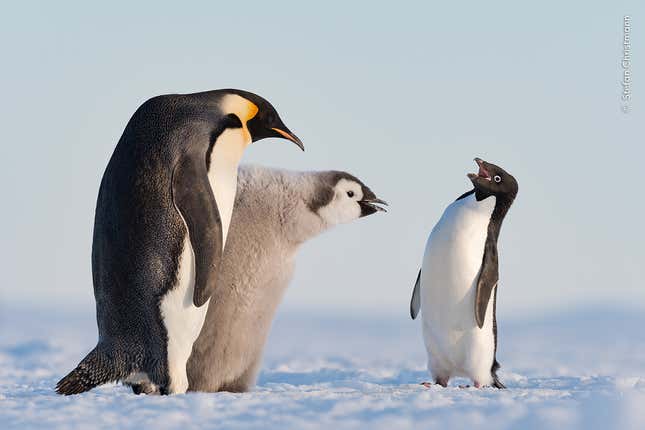
An Adélie penguin approaches an emperor penguin and its chick in Antarctica’s Atka Bay. The smaller penguins sometimes try to opportunistically steal food from the larger penguin species.

Image for article titled Pick the Best Image in This Nature Photography Contest
Photo: Tzahi Finkelstein / Wildlife Photographer of the Year

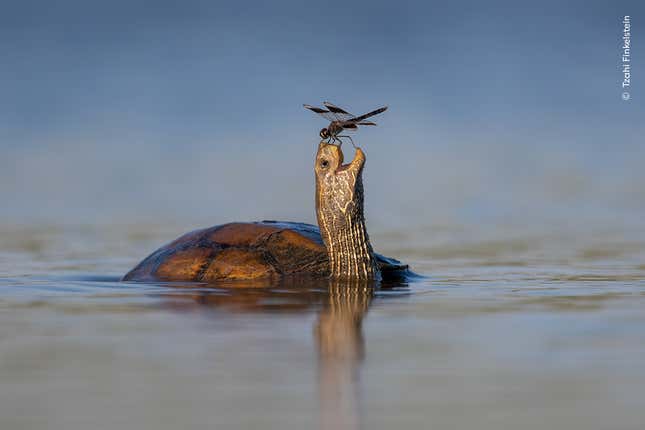
A Balkan pond turtle looks up at a dragonfly balanced on the tip of its nose.

Image for article titled Pick the Best Image in This Nature Photography Contest
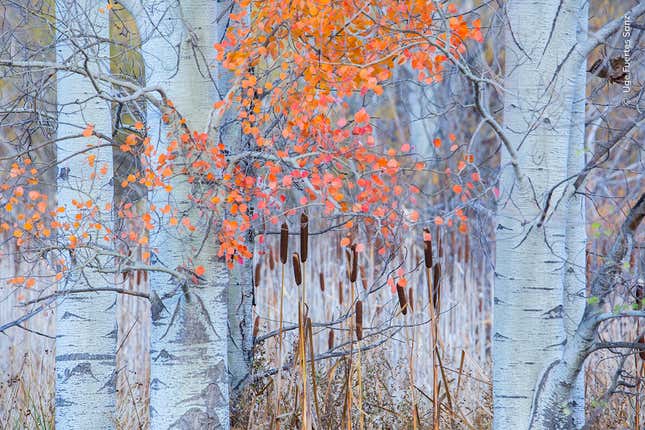
Photo: Uge Fuertes Sanz / Wildlife Photographer of the Year

Bulrushes and aspen trees in Spain show the dazzling color palette of autumn.

A sleeping polar bear and some sociable penguins are among the images shortlisted for the Wildlife Photographer of the Year People’s Choice award

A sleeping polar bear and some sociable penguins are among the images shortlisted for the Wildlife Photographer of the Year People’s Choice award

London
CNN
 — 

Will it be a picture that reflects the pristine beauty of the natural world, or one that shows the potentially devastating impact of human beings on their surroundings?

The choice is yours, as fans of wildlife photography around the world are being urged to vote for the Wildlife Photographer of the Year’s People’s Choice Award.

As always, the prestigious contest has a section that it throws open to the public, with the chance to vote from a selection of 25 outstanding images.

These were chosen by the Natural History Museum in London – which hosts the overall exhibition – and an international judging panel. They narrowed the field down from a huge 49,957 entries, sent in from 95 different countries

The public can now vote for their favorites online, choosing from a selection that includes a pair of seemingly kissing hares, a polar bear sleeping on an iceberg and an upright grizzly bear in a shimmering lake.

Also featured are an Adélie penguin approaching an emperor penguin and its chick, and a striking image of a rail of clothing fashioned from some of the world’s most endangered big cats.

Other shots that highlight the negative impact of man on his surroundings include a young fox dining on an overflowing trash can in London and a male elephant striding through a heap of rubbish.

Voting is open online until January 31. The winner and top four images will be announced in February and displayed online, as well as in the in-person exhibition at the Natural History Museum.

Call to Earth is a CNN editorial series committed to reporting on the environmental challenges facing our planet, together with the solutions. Rolex’s Perpetual Planet initiative has partnered with CNN to drive awareness and education around key sustainability issues and to inspire positive action.

North Carolina creators pay homage to Native American heritage through art

North Carolina creators pay homage to Native American heritage through art

“We’re not just a part of the history books and the movies and TV — we’re actual people,” he said. “We’re still living and breathing and we’re still singing our songs and doing our dances and living this way of life every day.”

Norma Jean Locklear-Richardson is a textile artist and a member of the Lumbee Tribe of North Carolina. She runs Skyworld Stitches with her daughter Stevie Lowry designing and sewing ribbon skirts and embroidered regalia. 

Ribbon skirts, rather than representing any one tribe, are an artwork shared by many tribes across the United States. They are a relatively recent tradition, emerging from ribbon traded from European settlers in the late 18th century. 

Locklear-Richardson, who has been making regalia for around 20 years,  said that in the past 10 to 15 years, ribbon skirts have become more casual wear, allowing Native American women a means of displaying their culture in their everyday wardrobe and saving the regalia for special events.

She incorporates an individual’s favorite colors, tribe colors and personal interests to create a personalized representation of their culture and identity. Detailed embroidery sits atop vibrant fabrics in between a rainbow of appliquéd satin and ric rac ribbons, each tailored to the wearer.

Locklear-Richardson taught Lowry to sew when she was 13 years old. Lowry danced in powwows, wearing regalia sewn by her mother, even before that. Now, as an adult, she makes her own. 

“I like having different outlets that I can use — being able to dance and create the things that I wear while I’m dancing,” Lowry said. “It really means more than anything.”

Though artists like Oxendine and Locklear-Richardson celebrate art forms with deep roots in history and cultural identity, some deviate from those art forms through new mediums and intersecting identities.

Christopher Kennedy’s drawings stray from the expectation of Native American traditional art. He is a self-taught contemporary artist and a member of the Lumbee Tribe of North Carolina.

Though several of his past drawings highlight his Lumbee heritage, he tends to focus on more technical challenges and broad themes.

Kennedy’s social media pages show the dozens of hours he spends making hyper-realistic colored pencil drawings—mostly hands—reach seemingly off the page. Several of his drawings feature other aspects of human anatomy, like eyes and faces, but hands dominate his portfolio.

“You talk with your mouth, you look with your eyes — but you touch and feel with your hands,” he said. “I think it’s just a bigger, larger universal theme about people when I think about hands.”

To get the day’s news and headlines in your inbox each morning, sign up for our email newsletters.

Though he is drawn to themes beyond race, identity and gender, he said does not identify any less with his Native American heritage.

“Because I’m Native American, the artwork that I do is Native American,” he said.

@ktrchurch

@dthlifestyle | lifestyle@dailytarheel.com

‘Photography made me a better man’: Brendan Esposito on 35 years taking photos

‘Photography made me a better man’: Brendan Esposito on 35 years taking photos

Brendan Esposito happily describes himself as a “dinosaur”.

As modern newsrooms demand a workforce of multi-skilled operators – journalists, photographers and camera operators whose roles increasingly blur into each other — Brendan Esposito has, for 35 years, remained steadfastly dedicated to one medium, one style of storytelling — news photography.

This image of a man from a Four Corners investigation into gang violence was among those that won Esposito the Walkley Photographer of the Year Award.(Four Corners: Brendan Esposito)

Starting out as a newspaper “snapper” in the 80s, he now works for the ABC News Specialist Reporting Team, taking photos for a range of digital platforms and programs from daily news to Four Corners.

In 2022, he was awarded the Walkley Press Photographer of the Year Award for a portfolio of images captured around Australia and in Ukraine.

Where once his photos were published on newsprint, now they’re showcased on a smartphone but what Esposito loves about photography has never changed – the ability of an image to grab your attention and make you feel something.

Peter Ristic looks out a screen door.

Peter Ristic was photographed as part of an investigation into the Public Trustee system.(Four Corners: Brendan Esposito)

“A still is called a still because it stops you and you take in the emotional content of that image,” he says.

“It’s a very, very powerful thing when you can hold someone on a page, they can rest, they can observe and take in emotionally what the words will support or carry.

“It’s a collaboration between journalist and photographer and when you get it right, it is extremely powerful.

“With vision, it’s transient, it keeps moving, and that’s not to say that emotionally vision can’t be just as strong as a still but the still allows a story to rest and breathe.”

Man with bright pink powder on face holding camera up to the side of his head.

Brendan Esposito photographing the Holi Festival in India during which coloured neon powder is thrown about.(Supplied: Brendan Esposito)

Over his career, Esposito has captured tens of thousands of news-making moments with his camera.

He’s won a host of awards, including the 2022 Walkley Press Photographer of the Year, 2013 Walkley Portrait Prize, 2014 Pacific Area Newspaper Publishers Photography of the Year Award and Kennedy Awards in 2022 and 2018.

He’s also published several books.

Side shot of a female soccer player yelling in joy with another player jumping on her back.

Esposito loves covering sport and captured this image of Matilda’s captain Sam Kerr celebrating at this year’s World Cup.(ABC NEWS: Brendan Esposito)

While he appreciates the professional accolades, photography has delivered him a greater prize on a personal level.

“Photography has made me a better man,” he says.

“I truly believe that because when I was young and brash and hungry to be the greatest photographer the world ever knew, I went about it the wrong way.

“It’s very, very easy to take a cheap shot, a picture that’s invasive or demeaning to someone and I have been that person.

“I have been the one chasing a career taking pictures that I thought were about them [the subject] but in fact the picture was about me.

“As I matured and understood what it is to be married, have children and to have all the trials and tribulations of a man going through life, photography helped me to be better.”

The family leans on his casket.

This award-winning image was taken while covering the war in Ukraine, a story that affected him deeply.(ABC News: Brendan Esposito)

Dropping the detached, “tough guy” façade he adopted in the early years of his career, has, Esposito says, greatly enhanced his work.

“I’m a very emotional person, I’ll cry at the drop of a hat and for many, many years that was a sign of weakness for a man and particularly in the media,” he says.

“The view was: ‘Suck it up, son, suck it up, don’t show your feelings.’

“I’ve learned that’s wrong.

“I’ve learned to show my feelings, understand I’m emotional and I use that as a force now.

“I use that to understand emotion [in others] and I have made very conscious decisions about the way I photograph.

“I like taking beautiful pictures, refined photographs where I can show how a subject matter is feeling.

“I am the conduit and I take very seriously that I need to understand my subject and allow that to come through me and go out to the public that the ABC serve and I think it was reflected in winning the Walkley last year.”

A young boy sits quietly staring at the ground.

A young boy in a quiet moment in the Lviv Railway Station.(ABC News: Brendan Esposito)

The stories that stay with him

Esposito grew up in Sydney’s western suburb of Liverpool, a place he still calls home.

He started out working as a nurse but in 1988 at age 23, newly married and wanting to buy a house, he was frustrated by the low pay.

Walking past the local Liverpool Champion newspaper office one day his wife, Cherie, suggested he consider making a career out of his hobby of photography.

Man holding a camera with a crowd in the background.

Brendan Esposito started working for a local newspaper before moving on to the Sydney Morning Herald where he became chief photographer.(Supplied: Brendan Esposito)

“I knew nothing about the newspaper industry at all, but I thought, yeah, I’m gonna do this,” he recalls.

“I was cocky, had a bit of bravado about me so I went in and asked for the local photographer and asked him if there was any chance I could do some work experience.

“You’ve got to understand it was a bit easier to do that back in the day.

“He said he needed a darkroom assistant and while I told him I don’t know anything about printing or processing film, he said, ‘no problem, I’ll teach you’.

“So that was the start and — I don’t want to sound boastful – but I was good at it, I enjoyed it and I thought, wow, this is a gateway to an adventurous and exciting life.”

firefighters stand in front of burning shed

Water bombing over homes and a monastery in Penrose, NSW, on January 10, 2020.(ABC News: Brendan Esposito)

He was then offered a cadetship with Fairfax and moved to working for the Sydney Morning Herald, then The Daily Telegraph on the crime beat.

Esposito returned to the SMH and ended up becoming chief photographer with a staff of about 20 photographers to manage and mentor alongside shooting assignments.

There was a stint with AAP and the NRL before news lured him back and he’s been at the ABC for the past five years.

A man wades kayaks through the suburb of Windsor in Sydney's west.

Documenting floods at Windsor in Sydney’s west in 2021.(ABC News: Brendan Esposito)

Over the course of his career, Esposito has covered the full range of news stories — crime, wars, politics, courts, natural disasters and a lot of sport — (Olympic and Commonwealth games, rugby league and soccer to name a few) – always a welcome respite from the death and destruction.

A female soccer players long hair blows across another woman's face and only her wide open eyes can be seen behind the hair.

Sometimes great photos present themselves but most of the time they are the result of good planning says Esposito.(ABC NEWS: Brendan Esposito)

When you meet, witness and record people in the worst of circumstances it leaves some scars on your soul.

“I covered the 2019 volcano eruption in New Zealand and also the multiple killings at Christchurch mosques and they are events that stay with you forever, simply because of the nature of them and the sorrow that occurs,” he says.

“In 2022, I travelled to Poland and Kiev to cover refugees fleeing the war and that really stayed with me because of the humanitarian crisis unfolding there — hundreds of thousands of people fleeing over the border and coming off trains.

“What I witnessed was people who looked utterly shell shocked, lost and confused about what was next.

“They told us stories of horror, how they’d left their homes, schools, businesses, families and how their lives had been destroyed.

“I put these photos out as black and white images as they reminded me of many photographic archives I had seen over the years of World War II.

“I felt like history was repeating itself and I was compelled to record it.”

Children lay flowers after Christchurch terror attack in 2019

Children lay flowers after the Christchurch terror attack in 2019.(ABC NEWS: Brendan Esposito)

While his job is to document what’s in front of him, at times he’s wrestled with photographing people in vulnerable moments.

“I used to feel that it was intrusive and voyeuristic, but news photography is an emotive art form that displays truth and honesty and that weighs very heavily on me in my work,” he says.

“If I’m on a news job and an event is happening in front of me, I capture the actuality and that is ethical.

“I’m not interfering, I’m not manipulating [an image], I’m doing the best I can to show accurately the event that has happened before me and ethically I need to reflect that.

Nicola MacGee wipes condensation away as she looks at herself topless in the mirror.

Building trust between subject and photographer is critical says Esposito. This image of Nicola MacGee was taken for a story on breast reconstruction surgery.(ABC News: Brendan Esposito)

“If I’m doing a portrait of someone, for example someone with a disability, I must always maintain their dignity.

“I give people time to get settled and we work together to produce the best content and it always comes down to truth, honesty, and trust because when you walk into someone’s life with a camera you cannot betray their trust, you cannot.”

The secret to taking a great photograph

In the days of film, which was costly to purchase and process, photographers had to be judicious in their shooting, but the emergence of digital cameras and smartphones has enabled photographers, professional and amateur, to snap away until they jag the best shot or touch it up later.

Queen under a clear umbrella, smiling.

The Queen on tour in Australia.(Supplied: Brendan Esposito, Courtesy Fairfax)

But Esposito argues tools and tech are not what make a great photograph or a great photographer.

“I remember in 2000 when digital came out and we were shooting digital at the 2000 Olympics for the first time,” he recalls.

“It was hailed as his new device that would be way easier for photographers to work and file, you could send your pictures electronically.

“But the cameras became heavier and the choice in editing became harder because you can just click away and click away click away and take hundreds and hundreds of images and most professional photographers hated it.

“So, the medium has changed but what hasn’t changed is the photography and I find a lot of people don’t speak about photography anymore, they speak about how they capture it, they talk about the latest camera, how many megabytes, what they can do in post-production.

“iPhones today have beautiful screens and the photos look unreal – I think the iPhone takes three or four pictures and splices them together so it’s hard to go wrong – but what’s missing now is the thought process.

“True photojournalism is about creating a narrative but so often now there’s no capturing of the narrative and that’s a problem because of the ease of doing it.

“I think images aren’t seen, they are felt and the best camera you will ever have is in your head.”

Boy with optometrist glasses on standing against yellow wall.

A boy at a Fred Hollows clinic in Vietnam.(Supplied: Brendan Esposito)

Capturing the narrative of a news event photographically, he says, relies on mundane practicalities as much as a photographer’s individual flare.

“The key to a great photograph is planning and knowing your subject,” he says.

“There are many great photographs that happen in front of you, but a lot of great photographs don’t present themselves, which is why planning is extremely important.

“So, at an unfolding news event you need to have the ability to position yourself at the spot where things are going to happen, you need to read the play, read the streets, you need to understand the issue, you need to talk to the journalist you’re working with.

SINGLE USE ONLY Nicole Kidman arriving at Supreme Court in NSW in 2007

Knowing where to be to get the best shot is critical, says Esposito, who captured this photo of actress Nicole Kidman leaving court in 2007 after giving evidence about a Sydney paparazzi incident. (Brendan Esposito: Courtesy of Fairfax)

“And then with portraits it’s about communication.

“It’s about me understanding the subject, talking to them and listening to them.

“Time is really important, you need time with a subject for them to actually show themselves and that comes sometimes with being around to the point that they even get bored with you and then you’re able to capture those raw moments.

“I recently spent five days with Miriam Margolyes travelling through Byron Bay and Mullumbimby, photographing her and talent being interviewed for an ABC TV show, Impossibly Australian, which airs next year, and that was memorable because I got on really well with her and I was able to get beautiful daily life and portrait images which were strong and emotive.

“It was a very successful shoot.”

Woman smiling to camera with rural background.

Miriam Margoyles during filming of an upcoming ABC TV program.(ABC NEWS: Brendan Esposito)

Whether for professional or personal use, Esposito argues everyone can improve their photos with a little thought and some simple fixes.

“People just say to someone they’re photographing, ‘stand there’ and they take a pic and there’s a pole coming out of the person’s head or a tree out of their shoulder, or they are standing against a wall where half the window is cutting across the back of their head and it doesn’t look right, or the photo just doesn’t resonate,” he says.

“The best pictures need to be well composed, visually clean and in news photography there should be no manipulation other than cropping the image or enhancing it with contrast, so it looks neat and tidy as we used to do in the darkroom.”

A man wearing a suit and open collared shirt.

Esposito has photographed many famous people over the years, including Bill Gates.(ABC News: Brendan Esposito)

At 59 years of age, when many are thinking about winding down, Brendan Esposito is still pushing himself, paying for weekly sessions with a mentor over the past six months.

He’s also keen to mentor others and one thing he’s learned over his career is not to despair over the mistake or missed shot.

“I was fortunate enough for about 15 years at the Herald to be mentored by Tim Clayton, a master craftsman who I would suggest is the best sports photographer in the world ever, he’s phenomenal.

“Tim always spoke about failing forward and I learned from that.

“I have failed many, many times but failing forward means that you learn, and you take that out of your game.

“You say, ‘OK I failed, but I won’t make that mistake again’.

“I refine my skills and I don’t continue those mistakes and that’s why I sought a mentor at my age because I need to keep evolving.”

Man jumping off horse and reaching towards a cow with horns in a rodeo ring.

Capturing the action at a rodeo.(Supplied: Brendan Esposito)

Which means this “dinosaur” continues to thrive in a constantly changing environment.

“I really enjoy the freedom of creativity that the ABC has afforded me, and I am in a very, very blessed and fortunate position that they do appreciate my skill set.

“I think there will always be a place at the ABC for quality photojournalism.”

The road to Bundanon, with trees next to it, was scorched by the bushfire.

The road to Bundanon after the Black Summer bushfires.(ABC News: Brendan Esposito)

Seaspan welcomes new shuttle buses wrapped in First Nations art

Seaspan welcomes new shuttle buses wrapped in First Nations art

Some of North Vancouver’s most compelling art isn’t always found in its galleries. Sometimes it can be spotted walking the streets or, in the case of two new Indigenous artworks, on the morning commute.

Count yourself lucky and you might just find yourself parked up at a red light during rush hour traffic alongside one of Seaspan’s new electric employee shuttle buses.

The two shuttle buses feature the custom artwork of Sḵwx̱wú7mesh Úxwumixw (Squamish Nation) artist Ray Natraoro and səlilwətaɬ (Tsleil-Waututh Nation) artist Olivia George, with each wrapped in traditional, Indigenous designs that celebrate the local waters.

Master carver Natraoro created a nautical scene that depicts a black and red killer whale set against swirling waves, chosen because the marine mammal represents “family and the unity of the sea kingdom,” he said.

“The killer whale is the protector and the one who brings balance to the sea kingdom with strong family connections. It supports knowledge sharing from one generation to the next,” he said.

The shuttle design crafted by 29-year-old George pays tribute to Chief Waut-Salk, a former chief often found at the centre of Tsleil-Waututh legends and stories. Known for drumming and singing to salmon, the scene depicts him in the centre of the Inlailwatash (Indian River) in the midst of the salmon run, surrounded by members of his Tsleil-Waututh Nation family.

“Salmon is an important sustenance to thrive throughout the winter, and Waut-Salk was a sacred protector, a keeper of knowledge, land and people,” she said. “He kept the balance with our teachings on how to treat all beings and the environment. We can strive to protect each other, the land and animals, like Chief Waut-Salk did.”

The two artists answered a call for submissions put out by Seaspan earlier this year, for two battery-electric shuttle buses that would replace the gas-powered commute buses for all North Vancouver-based Seaspan employees.

The new eco-conscious buses will shuttle staff to and from Seaspan worksites at Vancouver Drydock, Vancouver Shipyards and their head offices on Pemberton Avenue.

Natraoro, who alongside George was also chosen to create and design the visual identity for the Invictus games earlier this year, said having Indigenous design on the roads during the busiest time of the day helps educate and raise awareness of Indigenous culture.

“To create a contemporary art piece on a bus was fabulous, because it expands our art and tells stories of the people of the land, all while creating wonderful artwork for people to see,” he said. “The visibility of our people and our art in our own territory is very significant.”

Scott Boylan, transportation lead at Seaspan, said the inclusion of the two new shuttles to Seaspan’s fleet was “nothing short of revolutionary” for the marine services company.

“This represents another step forward in our sustained, continuous journey to be responsible stewards of the lands on which we call home, and what a privilege to showcase this beautiful artwork across North Vancouver every day,” he said. “We’re honoured to partner with these talented Indigenous creators and to support local artists.”

Mina Kerr-Lazenby is the North Shore News’ Indigenous and civic affairs reporter. This reporting beat is made possible by the Local Journalism Initiative.

MKerrLazenby@nsnews.com
twitter.com/MinaKerrLazenby

S.C. native Darius Rucker to receive ‘Hollywood Walk of Fame’ star next month

S.C. native Darius Rucker to receive ‘Hollywood Walk of Fame’ star next month

HOLLYWOOD, Calif. (WMBF) – One of South Carolina’s favorite sons will be honored next month with a Hollywood Walk of Fame star.

The award-winning artist will be honored with the 2,766th star on Monday, Dec. 4 along Hollywood Boulevard, according to the Hollywood Walk of Fame website.

Rucker is receiving the star in the category of Recording.

“The Hollywood Chamber of Commerce is thrilled to honor the very talented Darius Rucker,” stated Ana Martinez, Producer of the Hollywood Walk of Fame. “I think he will be happy to know that his mentor and friend Charley Pride’s star is a few feet away from his star” added Martinez.

Along with being a recording artist, Rucker has been a lifelong philanthropist.

He co-chaired the capital campaign that generated $150 million to help build the new MUSC Shawn Jenkins Children’s Hospital in Charleston.

Rucker has also raised over $3.6 million for St. Jude Children’s Research Hospital through his Monday After the Masters benefit golf tournament and concert that takes place in Myrtle Beach.

Other recording artists in the Hollywood Walk of Fame Class of 2024 are Toni Braxton, Def Leppard, Sammy Hagar and Gwen Stefani.

South Carolina native and actor Chadwick Boseman will posthumously receive a Hollywood Walk of Fame star as part of the Class of 2024.