RaMell Ross’s Poetic Photos of Black Life in the US South

RaMell Ross’s Poetic Photos of Black Life in the US South

December 04, 2023

Lead ImageRaMell Ross, Man, from ‘South County, AL (A Hale County), 2018-22From Spell, Time, Practice, American, Body (MACK, 2023). Courtesy of the artist and MACK

RaMell Ross is an artist, photographer and writer who chronicles the American South, a region that has a long and complicated history with photography. His Academy Award-nominated 2018 documentary film, Hale County This Morning, This Evening, presented the audience with an intimate view of the everyday lives of the Black community living in his adopted home of Hale County, Alabama. This commitment to creating a portrait of a place was also evident in Desire Paths at Pace Gallery in New York, one of the standout exhibitions of 2023; a two-person show where Ross’s work was presented in dialogue with pieces by the late photographer, painter and sculptor, William Christenberry, who also made work in Hale County. Although they employ different approaches, both artists’ work “grapple with the beauty of everyday life over and against the legacy of white supremacist terrorism that has shaped the history of both Hale County and the United States itself,” says Pace.

Recently, Ross released his first book, Spell, Time, Practice, American, Body published by MACK. Ross sees this publication as an opportunity to “consider the scope of his work”, featuring photography, mixed media sculpture, film stills and writing. At the centre of the book is Return to Origin, a conceptual work in which the artist shipped himself from Rhode Island to Alabama in a 4×8 foot box, “a nod to Henry Brown, who shipped himself to freedom in 1849.”

Below, AnOther spoke with RaMell about the impact of the history of photographic work based in this region, the limits of the medium, and feeling like an outsider in the South. “This is what my work is about in its essence, this insider/outsider relationship many Black folks have with the region,” he explains.

Adam Murray: Can you explain your relationship to and experience of the American South prior to making work there?

RaMell Ross: My father was born and raised in Charlotte, North Carolina in the late 1950s and early 60s. We’d visit there often, what felt like every summer, my sister, my mum, my dad and I. For me, it’s a place I have a memorialised geographically, which is possible only when you’re a child as your senses are so inexperienced and awake that they log the physical world ecstatically, indelibly. It’s also a place filled with the after-images of my father’s stories. Everything from the afternoons at the pool where he’d eventually chip a tooth to the race riots at his high school where he’d dodge a racial slur, his accounts of growing up in a slowly integrating city, attempts on his life by the bigoted, the everyday of his youth – [these things] kind of animated the region for me. That and the world of media, news and film and books, were my tie to the region.

AM: Do you ever feel like an outsider in the South?

RR: Yes. This is what my work is about in its essence, this insider/outsider relationship many Black folks have with the region. Our elders fled, but the train tracks, footprints and stains are still there. I always feel like an outsider, and insider, like one might at their own family gatherings. I’ve found only non-verbal language capable of holding the two tight enough together that they appear as one. 

AM: Spell, Time, Practice, American, Body is your first book. What motivated you to make this book now?

RR: The book started off as a catalogue for a show I had at the Ogden Museum in 2022, with the same title. Around the time, I had a conversation with Liv Constable-Maxwell at MACK. She invited me to consider the hitherto scope of my work and the possibilities of presenting it in book form as part of my art practice, less as an extension and or catalogue of it.

AM: Your work is featured in the exhibition A Long Arc: Photography and the American South since 1845, which recently opened in the High Museum of Art in Atlanta. What impact does that history of photographic work rooted in this region have on you firstly as a citizen, and secondly as an artist?

RR: I think I was unaware of the impact until I moved to Hale County. To go to a place and feel like your eyes are not yours is a hell of a feeling, a feeling once gotten inside of, and befriended, becomes a mentor of sorts. The place has an unflinching déjà vu of the real feeling about it. It’s quite difficult to succinctly talk about what that means … documentary images and perhaps images in general were more critically naked, shaping the perception of – or better yet, producing – Black Americans in the imaginaries of a national and global population.

The early ethnographic work being done was pretty damning. As a citizen in these images, I see my conceptual birthplace. Where the term Black person, Negro – all the ways of naming me – were born, forged, duplicated, fantasised about, essentialised and disseminated. Photography has made much of the meaning of me and my home. As an artist, the photographic history revealed the American South as an open-air library, a reminder of the jester of time, encouraging us to believe that history isn’t also the future, the longest theatrical performance ever produced.

AM: In 2014 you completed an MFA at the Rhode Island School of Design. How did this academic context change your understanding of what you wanted to do with your work?

RR: Going to RISD allowed me to locate where the work I was inclined to make could live. I didn’t go to art school. I was a basketball scholarship, student-athlete, and both my parents were in the military. I had a very American-programmed,, uncritical relationship to images and cultural production. At some point, while living in Hale County, I felt something click but I was genuinely unsure if my work made sense. [I was unsure] if all the things I was noticing about the documentary tradition and of images of Black people in general were communicable.

AM: Beyond place, extended passages of time are a common device central to your work. I read that you filmed 1300 hours of footage for Hale County This Morning, This Evening. The Return to Origin journey took 59 hours. You spoke in a 2019 interview about “slowness being a uniting element of rural life.” Can you expand on the role time has in your work?

RR: I think of time as I think of desire and language and our bodies; the distance between things and then things themselves, time as the unexplainable impulse that both sparks our sentience and propels this unknown world. It’s central to my work’s legibility [and] to myself; time as context, time as tutor, time as the chef of meaning. Time is there whether I need it or not, it is my most reliable collaborator. But I actively consider clock time when making work, and then slip into a relation to what time ineffably is, a divine currency.  

AM: What are the limits of photography for you?

RR: I feel like photography for me is limited by the person and or thing on the other end of it, receiving it. It almost feels like a cop-out answer though, but it seems like the limitation is a human problem. Can the limits of photography be us? I ask myself, how are we conditioned and programmed to read, engage and take in images? To make images? Formally and conceptually. From a less social angle: what does science have to say about the psychological consequences of image interaction? Of its memory intervention? What’s its evolutionary stake?

I don’t really think photography has built-in limits, more that photography has precedents and realistic uses, and while much of them are enlightening and arresting, a lot of them are concerning, given our species’ capacity to self-sabotage.

Spell, Time, Practice, American, Body by RaMell Ross is published by MACK, and is out now. 

Olympic ice dancer Alex Shibutani on photography, lessons as an athlete, choreography and more

Olympic ice dancer Alex Shibutani on photography, lessons as an athlete, choreography and more

‘I always tried to ground myself’

While Shibutani mentions toying with the idea of a return to competitive skating (“there’s definitely the possibility that we will return”), he appears firmly planted in “the life after” for an Olympic medallist, but still feels as though he and Maia are reaping the benefits of their experiences as world-class ice dancers.

“I always tried to ground myself in the present moment because it’s easy to get stuck in the future and start thinking about your goals,” Shibutani, now 32, says. “Every athlete has very specific situations; each person is different.

He continues: “But I think to start with, just on a very simple level, breath and the ability to control one’s energy, especially when there might be a heightened level of intensity, [that] is something that definitely required years of experience to be able to – I wouldn’t even say master – but to have more awareness of that.”

Shibutani participated in the IOC’s International Athletes’ Forum in October, a gathering aimed to “empower, excite and unite the global athlete community” that included a mix of current and former athletes, as well as leaders within a host of Olympic sports.

The forum represents another pillar of Shibutani’s varied CV, as he also serves on the Athletes’ Commission for the coming Olympic Summer Games LA 2028, set to be the first Olympics in the U.S. since Salt Lake 2002.  

“The job of the Athletes’ Commission is to be a voice for the athlete globally: Not just the U.S. team, not just the L.A.-based athlete, but we are trying to craft and form the Games to the best of our ability that will positively impact the athletes that compete in L.A., but also the future,” he says.

“[Our aim is] to create a defining legacy – for both Games and the city.”

Best books to give for the holidays in 2023

Best books to give for the holidays in 2023

MINNEAPOLIS/ST. PAUL (12/04/2023) — If you plan to follow the “four-gift rule” this holiday season — something they want, something they need, something to wear and something to read — experts from the University of Minnesota Libraries recommend choosing books from a wide range of new releases. 

Lisa Von Drasek, curator of the Kerlan Collection of Children’s Literature, shares book suggestions for the young people in your life. Malaika Grant, arts, humanities, and area studies librarian, shares great adult gift ideas.

Lisa Von Drasek

“We are Branches” by Joyce Sidman and illustrated by Beth Krommes

“‘Branching is nature’s most efficient way to spread something…from one central spot over a large area.’ The blood in our body branches out from arteries to veins and back again. The bones of the fruit bat branch from arms stretched in wings to their fingertips. And colorful coral branches skyward under the oceans and seas. Science writer and poet Joyce Sidman pairs again with artist Beth Krommes to create an intergenerational picture book treasure of factual information that is a joy to read aloud.”

“I’m From” words by Gary R. Gray Jr. and pictures by Oge Mora

“We follow a community of children dancing through their day as a Black child joyfully announces that they come from ‘early morning wake-ups, handcrafted blankets knitted with memories.’ All is not perfect but resilience and strength are expressed through Gray’s straightforward language and Mora’s celebratory collage illustrations reminiscent of the work of Ezra Jack Keats.”

“Paul Bunyan: The Invention of an American Legend” by Noah Van Sciver, Marlena Myles and Lee Francis, IV

“Many may believe the story of Paul Bunyan is a tall tale about a goofy oversized lumberjack and his sweet companion, Babe the Blue Ox. They would be wrong. Paul Bunyan was an invention of the timber industry whose goal was the clear cutting of indigenous lands. Noah Van Sciver with a team of experts, Lee Francis, IV, (Pueblo of Laguna), Marlena Myles (Spirit Lake Dakota/Mohegan/Muscogee), Dr. Deondre Smiles (Leech Lake Band of Ojibwe) present the true story of loggers, propaganda and the land. The cartoon graphic format and original art by Myles with additional archival materials have created an accessible and layered factual history for all ages.”

Malaika Grant

“The Comfort of Crows: A Backyard Year” by Margaret Renkl

“A wonderful gift for gardeners, birders, and nature lovers, Renkl’s book of 52 short essays is designed to be read over the course of the year. She reflects mostly on observations of the flora and fauna in her own Nashville garden, but this is also a memoir of the seasons of her life. Featuring 52 unique color artworks by the author’s brother, Billy Renkl, ‘The Comfort of Crows’ is a lovely and profoundly touching book from an insightful observer of the natural world.”

“The Creative Act: A Way of Being” by Rick Rubin

“Rick Rubin, co-founder of Def Jam records, winner of eight Grammy awards, producer of legendary musicians Jay-Z, Adele, The Beastie Boys, and many more, is a renowned artist with much wisdom to share. This is a treatise on what it means to be an artist, a contemplative guide on enhancing creative abilities, and a meaningful and useful gift for anyone on a creative path. Rubin underscores the notion that everyone possesses artistic potential, offering mental frameworks for both unleashing creativity and surmounting obstacles. It is the sort of book one will revisit over the years for inspiration and to revisit favorite musings such as, ‘artists allow us to see what we are unable to see, but somehow already know.’”

“Project 562 : Changing The Way We See Native America” by Matika Wilbur

“In this work of art and beautiful gift, Matika Wilbur, a renowned photographer and storyteller from the Swinomish and Tulalip Tribes, documents members from the 562 federally recognized Tribal Nations across the United States. Utilizing ‘indigenous photography methods,’ she prioritizes relationships and storytelling to capture hundreds of stunning portraits and compelling personal narratives of contemporary Native people, photographed in clothing, poses and locations of their choosing. Wilbur honors and celebrates the vibrant tapestry of present-day Native American life and cultures to achieve the goal in her title, truly changing the way we see Native America.”

Malaika Grant is the librarian for African American and African Studies, Cultural Studies and Comparative Literature, and English at the University of Minnesota-Twin Cities. Grant is also the selector for the Robert and Virginia McCollister Collection for Contemporary Literature and the Libraries’ online popular reading collection available through the Libby app — both collections include current literary fiction, non-fiction, biographies and graphic novels.

Lisa Von Drasek is the curator of the Kerlan Collection of Children’s Literature. The Kerlan, an internationally recognized resource in the field of children’s literature, contains six core collections and several smaller collections. Von Drasek has lectured on the topics of Writing Boxes: The Reading/Writing Connection in Libraries, Emergent Literacy, Diversity in Children’s Literature, Comics and Literacy, the New Adult, What Makes an Award Winning Book, and Children’s Choice Awards. She also conducts community workshops on creative writing, reading aloud and selecting books for children and young adults.  She is the author of “Writing Boxes: The Reading/Writing Connection,” a compendium of book suggestions and writing activities for the classroom, library or home.

About “Expert Alert”
University of Minnesota experts can provide commentary, insights and opinions on various news topics. Find selected experts on the University’s Experts Guide or send requests to [email protected]

About the University of Minnesota Libraries
The University Libraries is a strategic resource of the Twin Cities campus and also provides integral information system support for the University’s four campuses in Crookston, Duluth, Morris, and Rochester. Composed of 12 library facilities with collections of more than 8.1 million volumes — and with special collections valued at nearly $1 billion — the Libraries has a history of strength in research collections and a longstanding record of contribution to resource sharing within the state and beyond. Learn more at lib.umn.edu.

Fine Arts Student of the Week: Senior captures big moments as yearbook photographer

Fine Arts Student of the Week: Senior captures big moments as yearbook photographer

Ebanni Moore

Grade: Senior.

Age: 18.

Art focus: Yearbook photography.

Adviser nomination: “Ebanni took over covering just about every football game this year — both home and away games. She has a great eye for framing the photos and knowing where to be to get the kind of photos that capture the action that we seek for the pages of the yearbook. She’s in her fourth year as a yearbook staff member and has done a really nice job each year contributing to the creation of a quality yearbook,” adviser Rick Jensen said.

ADVERTISEMENT

Memorable fine arts achievement: Winning back to back photo of the weeks.

Artist most admired? Elsa Garrison.

Why did you join Brainonian? I joined because I was passionate about taking photos of sports.

Talk about your role on the yearbook staff: My role on yearbook staff is to take photos of events/games and work on the pages I am assigned to.

What excites you about being in yearbook? I love going through all the photos I take and sorting them out, then deciding what pictures will go on the page.

How is the yearbook coming so far? Really good, we just finished our fall pages.

Other extracurricular activities: Fastpitch softball.

Dream job: Interior design or physical therapist.

ADVERTISEMENT

Favorite movie: “Cars.”

Favorite TV show: “Grey’s Anatomy.”

Favorite book: “The Hunger Games” by Suzanne Collins.

Favorite food: Shrimp.

Favorite song: “I Remember Everything” by Zach Bryan.

Favorite singer/musical artist: Rihanna.

Favorite subject: Creative foods.

Hobbies: Softball, skiing, fishing, hunting.

ADVERTISEMENT

Parents: Kari and Shawn Arenkiel.

Our newsroom occasionally reports stories under a byline of “staff.” Often, the “staff” byline is used when rewriting basic news briefs that originate from official sources, such as a city press release about a road closure, and which require little or no reporting. At times, this byline is used when a news story includes numerous authors or when the story is formed by aggregating previously reported news from various sources. If outside sources are used, it is noted within the story.

Hi, I’m the Brainerd Dispatch. I started working a few days before Christmas in 1881 and became a daily paper two years later. I’ve gone through a lot of changes over the years, but what has never changed is my commitment to community and to local journalism. I’ve got an entire team of dedicated people who work night and day to make sure I go out every morning, whether in print, as an e-edition, via an app or with additional information at www.brainerddispatch.com. News, weather, sports — videos, photos, podcasts and social media — all covering stories from central Minnesota about your neighbors, your lakes, your communities, your challenges and your opportunities. It’s all part of the effort to keep people connected and informed. And we couldn’t do it without support.

Q&A: The Police’s Andy Summers discusses solo tour, photography, ahead of intimate Clearwater concert

Q&A: The Police’s Andy Summers discusses solo tour, photography, ahead of intimate Clearwater concert

While the name Andy Summers may not be as recognizable or roll off the tongue as easily of those of his former bandmates, it should elicit a hefty amount of praise and respect. The 80-year-old veteran artist whose musical resume had already boasted plenty of experience as a member of psych/progressing band Soft Machine and an incarnation of Eric Burdon’s Animals, but is better known for his innovative approach and his contributions to pop music as the mastermind guitarist for one of the most popular and successful rock bands of all time: The Police.

Bursting on the scene in 1977, the cusp of punk rock morphing into the easier-to-digest new wave tag, Summers, along with ace bassist and singer Sting and mesmerizing drummer Stewart Copeland, cornered the market on making smart, witty, catchy, memorable records that straddled the line between the afore-mentioned genres du jour with a good dose of reggae and world music thrown in for good measure.

Summers’ often elegant, but sometimes cryptic and experimental, guitarwork was the perfect vehicle to give color and texture to the incredible rhythm section he played alongside. Boasting five multi-million selling albums in their canon that only got better as they progressed, he and The Police were arguably the most popular band on the globe during their all-too-short tenure. The group decided to put the brakes on the ensemble, following their blockbuster 1983 album, Synchronicity and the record-breaking world tour of stadiums around the world that accompanied it. The band has since reunited for a few tours since their split—and Sting is set to play Tampa’s Raymond James Stadium next year—but its members have concentrated more on solo careers, side projects, and other ventures.

In one of the more interesting and appealing solo undertakings its members have pursued, Summers, who has quite the impressive discography as a soloist, has decided to go on the road to present an intriguing-sounding one-man show, which visits Clearwater’s Bilheimer Capitol Theatre this weekend. Besides his mastery of the guitar, Summers has had a longtime interest in photography and has published several books of his snapshots.

More recently, he’s taken to short story writing and published “Fretted and Moaning,” a collection of his works to great acclaim. For his current series of solo performances, his new series of shows, dubbed “The Cracked Lens + A Missing String” tour, Summers has developed a performance that culminates the mediums he’s worked in on his own. A combination of onstage photo displays, readings from his short stories, and, of course, plenty of music, Summers has received dazzling reviews for the show that was intended to make the rounds just before COVID hit but, in recent months, has finally gotten to play for audiences around the country.

On a short break between legs of his solo tour, Summers, who’ll see his 81st birthday on New Years Eve, took some time out to talk to Creative Loafing Tampa Bay from his home in California about his current jaunt and some of his inspirations.

Tickets to see Andy Summers play Clearwater’s Bilheimer Capitol Theatre on Sunday. Dec. 10 are still available and start at $44.50.

Event Details

What can you tell us about this tour? How is it going so far?It’s on and off; I don’t play every night. I started back in July and I play a few shows at a time, like five or six at a time. I show photos on a big screen and it’s a mixed media show. I’m telling stories and playing guitar, sometimes with backing tracks. I did 11 of these shows in the pre-pandemic days. It’s a different thing onstage. It’s a visual presentation and it’s going well. It’s carefully worked out.

You’re a renowned, respected guitarist and I know you’ve been into photography for a long time. Now you have a book of your short stories to your credit. Nowadays, of those avenues, is there one medium that gives you more pleasure than the others?

I’m a musician first and foremost. It’s music over writing and taking photos. But with photography, in the early days of The Police, it became an all-consuming passion. When I was a teenager, I saw a lot of foreign films made by the directors [Ingmar] Bergman, [Francois] Truffaut, [Federico] Fellini. In 1979, I got a black and white Nikon camera and I had this substrata of films I’d seen in my head from when I was 12 years old. I didn’t think to myself, ‘I’m a very visual person; I need to make films,’ but these visuals seemed like the next plateau, even at an early age.

How are you liking playing more intimate venues as opposed to the large arenas or stadiums you’re used to playing with The Police?

It’s a different type of freedom, ego-wise. It’s just me; no band. To some extent, it’s a work in progress but with a live audience. These venues are ideal for a performer. And, in the USA, there are so many beautiful, deco-period theaters that are so nice inside. I mean the red velvet, the oil paintings. And they are all small to mid-size. When you’re playing to 1,000 people, you feel like you can really communicate with the audience. It’s different from the huge stadium. You can put forth your personality on the stage. It’s a perfect setting. There’s a big screen and you get to be close to the audience. It’s very satisfying. Have you been inside the theater where I’ll be playing in Clearwater?

Yes! And it is, like you mentioned, a very beautiful theater. You also, on The Police’s first visit to Tampa many years ago, played at another of the gorgeous theaters we’re lucky to have here in our area, the Tampa Theater.

Who knew all these great theaters existed?

For those coming to see the show, what can be expected in terms of a setlist? I have to imagine there will be plenty of solo material but The Police’s catalog will be represented too?

Yes. There will be solo material and Police stuff as well. But it will all be worked out in a special way and with plenty of visuals.

Subscribe to Creative Loafing newsletters.

Follow us: Apple News | Google News | NewsBreak | Reddit | Instagram | Facebook | Twitter | Or sign up for our RSS Feed

Local Photographer hopes to capture the spirit of ‘The People of Beacon Hill’

Local Photographer hopes to capture the spirit of ‘The People of Beacon Hill’

SAN ANTONIO — A local photographer and business owner in the historic Beacon Hill neighborhood is working on a project to highlight the diverse and vibrant energy that made her want to call it home.

“Kind of hold your hands like this for me,” Nancy Beal Canseco said, gesturing to her subject’s paint-covered hands.

“I love that,” she said as the shutter on her Canon mirror-less camera came down.

Canseco is the owner of the Artist’s Collective, but it’s a different project that has her attention lately.

She is looking to capture the spirit of Beacon Hill.

“Lots of artists in the neighborhood,” Canseco told Liz Lindstrom, one of her subjects.

“I didn’t even know when I moved here. It’s like I moved to my dream neighborhood,” she said.

The photographer moved to San Antonio from Chicago three years ago, she says she was inspired by the atmosphere she found in the historic neighborhood.

“We were looking all over Alta Vista and Beacon Hill and found this house,” Lindstrom said. “It’s way smaller than any house I’ve ever lived in, and I love it.

She’s calling her project “The People of Beacon Hill” but she’s just as interested in photographing their homes and the local businesses she feels make the neighborhood truly special.

“I was really struck by in the neighborhood was how the houses have just stayed,” Canseco said. “Like, people don’t tear them down. They restore them calm and the character of the houses and just of the neighborhood is so special.”

Conseco spent Saturday morning taking portraits of Beacon Hill residents in front of a backdrop at Bright Coffee, but in the afternoon, she was traveling from house taking shots of her neighbors in front of the places they call home.

She also took photos of local business owners like Karolina’s Antiques Owner Maria Vega.

“We see this neighborhood changing a lot,” Vega told Canseco during their session.

Vega said she and her family have been running their business in the Beacon Hill neighborhood for 18 years and have watched it go through a lot of change.

“It’s a good feeling to see all this new stuff around like, to everything combine, like old, new,” she said.

Canseco has taken portraits of 25 of her neighbors so far and she is still looking for more people to participate.

Canseco said she is hoping to include at least 100 of her neighbors in the project, which will go on display at Bright Coffee in January and eventually become a book.

“I’m really just trying to paint the, you know, a full picture of the neighborhood in this project,” she said.

Canseco is asking beacon hill residents interested in participating in the project to reach out to her through the website of her business, The Artist’s Collective.

[embedded content]

‘It’s a start’: Gainesville drag community celebrates temporary lift on Florida ban of children at shows – The Independent Florida Alligator

‘It’s a start’: Gainesville drag community celebrates temporary lift on Florida ban of children at shows – The Independent Florida Alligator

Ethan Garrepy began doing drag with a $10 Target face paint palette, an old Halloween wig and a lot of time on their hands during the COVID-19 quarantine. Three years later, the 19-year-old UF musical theater sophomore is one of many artists and performers who make up Gainesville’s flourishing drag scene. 

On Nov. 16, the United States Supreme Court refused the state of Florida’s request to re-enact a law punishing businesses for allowing children into drag shows. Artists like Garrepy are taking the opportunity to celebrate the rare legal victory, which follows a flurry of Florida anti-LGBTQ laws passed over recent legislative terms.

Under the Protection of Children Act, filed in the Florida Senate March 2 and signed into law by Gov. Ron DeSantis May 17, the state could fine, suspend or revoke the license from any business that admits a child to an “adult live performance.” 

Although the bill does not mention drag shows explicitly, its definition of an adult live performance as including “the lewd exposure of prosthetic or imitation genitals or breasts” has levied criticism for targeting drag performance.

The bill’s House sponsor, Rep. Randy Fine, R-33, announced the bill would “protect our children by ending the gateway propaganda to this evil — ‘Drag Queen Story Time’” in a Facebook post in March.

Florida restaurant successfully sues state

Hamburger Mary’s, an Orlando restaurant that has hosted family-friendly drag events since 2008, filed a suit against the state of Florida, DeSantis and Secretary of State Melanie Griffin over the law one week after it went into effect. The law is unconstitutional under the First Amendment and portrays drag as a public nuisance rather than an age-old art form, the restaurant claimed.

U.S. District Judge Gregory Presnell sided with Hamburger Mary’s June 26 in a ruling that blocked Griffin from enforcing the act. 

Florida already has obscenity laws giving it the power to protect children from indecent shows, making the Protection of Children Act unnecessary as well as expression-stifling, Presnell wrote. Florida appealed the District Court’s judgment to the Eleventh Circuit, where it remains pending.

The state of Florida also appealed to the Supreme Court to keep the law on the books during the appeal process. The Supreme Court denied this request in a brief ruling that emphasized its decision had nothing to do with whether the law itself was unconstitutional.

The Supreme Court voted 6-3 against the state, with dissenting opinions from Justices Clarence Thomas, Samuel Alito and Neil Gorsuch.

Gainesville drag artists celebrate victory with caution

Enjoy what you’re reading? Get content from The Alligator delivered to your inbox

For Garrepy, the ability to attend and perform drag shows isn’t just a freedom of speech — it’s a freedom of protest. To be out, proud and performing in the U.S. has long been considered an act of rebellion by those in the queer community, they said. 

Aside from showing off their own drag looks on social media, Garrepy often attends shows at Gainesville’s pre-eminent queer nightclub, The University Club. Gainesville’s vibrant queer nightlife, including UC performances and even weekly drag shows at the new Libby’s Grog and Grill, makes it a uniquely safe environment for queer artists, said Garrepy, an Orlando native. 

“I was told a lot of things coming here [for college] like, ‘Oh, Gainesville is completely empty, Gainesville doesn’t have anything going on,’” they said. “The people that were telling me that were like, straight jocks … but I’ve been able to find an awesome queer community here.”

Garrepy feels cautiously optimistic following the Supreme Court ruling, they said. But people are stubborn about the issue on both sides, and it’s hard to know what will happen next, they added.

“Republican politicians are completely wanting to shut out drag as an art form, not only just in Florida but across the U.S.,” they said. “And queer people, queer activists are fighting every day to make sure that we have a spot at the table.”

Christina Guiriba, the 37-year-old founder of the first-ever sleepaway summer camp for transgender and nonbinary kids, has seen the worrying effect of recent legislation on LGBTQ+ youth, she said.

“I absolutely hate that they’re having to hear that they shouldn’t exist,” she said.

Guiriba lives in Jacksonville but performs every Thursday at the UC under her drag stage persona Faith Taylor. She also worked as a cast member at Hamburger Mary’s for 10 years and remembers seeing many young people at her shows, she said.

“I know the joy that it brings them to see just another LGBTQ person that identifies on some level with who they are,” she said. “They get so cheery and so excited and bright when they come to the shows, and I hate that they’re robbed of that.”

As a transgender woman, beginning to perform in drag as Faith was how Guiriba realized part of her was missing as a young person, she said. The law could prevent young people from recognizing drag as a potential creative outlet like she did, she said. 

Guiriba is glad Florida judges are seeing the law as the violation of rights that it is and views any victory — temporary or not — as a step in the right direction, she said. She’s hopeful courts will continue to see the law’s defects, she said.

Legal experts doubtful about the law’s future

Any law targeting a specific type of speech the government dislikes is subject to the highest level of constitutional scrutiny, said Lyrissa Lidsky, UF Raymond & Miriam Ehrlich chair in U.S. constitutional law.

“Just from my own perspective as a First Amendment lawyer, this law is pretty clearly unconstitutional,” Lidsky said.

By driving certain content out of the marketplace of ideas, the law could scare businesses from performing drag at all for fear of criminal liability or — in the case of restaurants — losing their liquor licenses, she said.

The definition of the banned “adult live performance” is vague, so businesses won’t know whether or not their performances violate the rules. But if the government tries targeting certain ideologies more explicitly, First Amendment challenges will pop up in retaliation, Lidsky said.

“One of the best arguments about these laws came from Dolly Parton,” Lidsky said. “Her argument was, under a lot of these drag ban laws, her performance would be banned.”

The preliminary injunction against the law could send it back up the appeals ladder, during which more evidence could come out at trial and more appeals could occur, she said. But the more reasonable step for Florida would be to go back to the drawing board rather than litigating a poorly drafted law, she said.

The law is still in Florida’s Eleventh Circuit U.S. Court of Appeals. The state of Florida filed its brief Nov. 24 and its appendix Dec. 1. The appeal is still awaiting its final verdict. 

Contact Zoey Thomas at zthomas@alligator.org. Follow her on Twitter @zoeythomas39.

The Independent Florida Alligator has been independent of the university since 1971, your donation today could help #SaveStudentNewsrooms. Please consider giving today.


Zoey Thomas

Zoey Thomas is a second-year media production, management and technology major, reporting for the metro desk. Other than writing, her passions include sweet potatoes, Agatha Christie and long-distance running.

East Texas photographer takes photography to ‘match-making’ level

East Texas photographer takes photography to ‘match-making’ level

An East Texas photographer is taking her skills and turning her photography into a way for clients to meet for a “blind date” photography session.

Anita McElroy, owner of A Sweet Day Photography, said she came up with the idea after a potential client asked her if she did “stranger sessions.”

“I was approached by a potential client about whether or not I did stranger sessions. I had not known about them so I looked it up and made a post about it to get some interest,” she said. “As it progressed , I liked the concept of matching people for potential love rather than just as strangers. So the blind date sessions came about; I will plan a small date activity and just let the couple connect.”

#placement_588494_0_i{width:100%;margin:0 auto;}

McElroy starts by blindfolding the clients and taking their photo together. After a few photos, she takes the blindfolds off and does another round of pictures before allowing the couple to enjoy each other’s company and get to know one another.

The photographer turned matchmaker said most of her sessions have turned into second dates.

“Most sessions I’ve done have turned into second dates so far. I know of one becoming pretty serious,” she said. “I try to give each person space and only get information that is openly given; I try to be respectful. But I also encourage all of them to tell me all the details.”


photo1.jpg

Some of the photo sessions have turned into second dates.


McElroy, who started as a professional photographer in 2011, said she has loved photography for as long as she can remember.

“I’ve loved photography since I was young. I was the girl with the disposable camera taking photos of friends in middle school,” she joked. “Then putting the photos in my binders; old school Facebook.”

@import url(https://fonts.bunny.net/css?family=ibm-plex-sans:400,600);

#_form_9_ { font-size:14px; line-height:1.6; font-family:arial, helvetica, sans-serif; margin:0; }
#_form_9_ * { outline:0; }
._form_hide { display:none; visibility:hidden; }
._form_show { display:block; visibility:visible; }
#_form_9_._form-top { top:0; }
#_form_9_._form-bottom { bottom:0; }
#_form_9_._form-left { left:0; }
#_form_9_._form-right { right:0; }
#_form_9_ input[type=”text”],#_form_9_ input[type=”tel”],#_form_9_ input[type=”date”],#_form_9_ textarea { padding:6px; height:auto; border:#979797 1px solid; border-radius:4px; color:#000 !important; font-size:14px; -webkit-box-sizing:border-box; -moz-box-sizing:border-box; box-sizing:border-box; }
#_form_9_ textarea { resize:none; }
#_form_9_ ._submit { -webkit-appearance:none; cursor:pointer; font-family:arial, sans-serif; font-size:14px; text-align:center; background:#004cff !important; border:0 !important; -moz-border-radius:4px !important; -webkit-border-radius:4px !important; border-radius:4px !important; color:#fff !important; padding:10px !important; }
#_form_9_ ._submit:disabled { cursor:not-allowed; opacity:0.4; }
#_form_9_ ._submit.processing { position:relative; }
#_form_9_ ._submit.processing::before { content:”; width:1em; height:1em; position:absolute; z-index:1; top:50%; left:50%; border:double 3px transparent; border-radius:50%; background-image:linear-gradient(#004cff, #004cff), conic-gradient(#004cff, #fff); background-origin:border-box; background-clip:content-box, border-box; animation:1200ms ease 0s infinite normal none running _spin; }
#_form_9_ ._submit.processing::after { content:”; position:absolute; top:0; bottom:0; left:0; right:0; background:#004cff !important; border:0 !important; -moz-border-radius:4px !important; -webkit-border-radius:4px !important; border-radius:4px !important; color:#fff !important; padding:10px !important; }
@keyframes _spin { 0% { transform:translate(-50%, -50%) rotate(90deg); }
100% { transform:translate(-50%, -50%) rotate(450deg); }
}
#_form_9_ ._close-icon { cursor:pointer; background-image:url(‘https://d226aj4ao1t61q.cloudfront.net/esfkyjh1u_forms-close-dark.png’); background-repeat:no-repeat; background-size:14.2px 14.2px; position:absolute; display:block; top:11px; right:9px; overflow:hidden; width:16.2px; height:16.2px; }
#_form_9_ ._close-icon:before { position:relative; }
#_form_9_ ._form-body { margin-bottom:30px; }
#_form_9_ ._form-image-left { width:150px; float:left; }
#_form_9_ ._form-content-right { margin-left:164px; }
#_form_9_ ._form-branding { color:#fff; font-size:10px; clear:both; text-align:left; margin-top:30px; font-weight:100; }
#_form_9_ ._form-branding ._logo { display:block; width:130px; height:14px; margin-top:6px; background-image:url(‘https://d226aj4ao1t61q.cloudfront.net/hh9ujqgv5_aclogo_li.png’); background-size:130px auto; background-repeat:no-repeat; }
#_form_9_ .form-sr-only { position:absolute; width:1px; height:1px; padding:0; margin:-1px; overflow:hidden; clip:rect(0, 0, 0, 0); border:0; }
#_form_9_ ._form-label,#_form_9_ ._form_element ._form-label { font-weight:bold; margin-bottom:5px; display:block; }
#_form_9_._dark ._form-branding { color:#333; }
#_form_9_._dark ._form-branding ._logo { background-image:url(‘https://d226aj4ao1t61q.cloudfront.net/jftq2c8s_aclogo_dk.png’); }
#_form_9_ ._form_element { position:relative; margin-bottom:10px; font-size:0; max-width:100%; }
#_form_9_ ._form_element * { font-size:14px; }
#_form_9_ ._form_element._clear { clear:both; width:100%; float:none; }
#_form_9_ ._form_element._clear:after { clear:left; }
#_form_9_ ._form_element input[type=”text”],#_form_9_ ._form_element input[type=”date”],#_form_9_ ._form_element select,#_form_9_ ._form_element textarea:not(.g-recaptcha-response) { display:block; width:100%; -webkit-box-sizing:border-box; -moz-box-sizing:border-box; box-sizing:border-box; font-family:inherit; }
#_form_9_ ._field-wrapper { position:relative; }
#_form_9_ ._inline-style { float:left; }
#_form_9_ ._inline-style input[type=”text”] { width:150px; }
#_form_9_ ._inline-style:not(._clear) + ._inline-style:not(._clear) { margin-left:20px; }
#_form_9_ ._form_element img._form-image { max-width:100%; }
#_form_9_ ._form_element ._form-fieldset { border:0; padding:0.01em 0 0 0; margin:0; min-width:0; }
#_form_9_ ._clear-element { clear:left; }
#_form_9_ ._full_width { width:100%; }
#_form_9_ ._form_full_field { display:block; width:100%; margin-bottom:10px; }
#_form_9_ input[type=”text”]._has_error,#_form_9_ textarea._has_error { border:#f37c7b 1px solid; }
#_form_9_ input[type=”checkbox”]._has_error { outline:#f37c7b 1px solid; }
#_form_9_ ._error { display:block; position:absolute; font-size:14px; z-index:10000001; }
#_form_9_ ._error._above { padding-bottom:4px; bottom:39px; right:0; }
#_form_9_ ._error._below { padding-top:8px; top:100%; right:0; }
#_form_9_ ._error._above ._error-arrow { bottom:-4px; right:15px; border-left:8px solid transparent; border-right:8px solid transparent; border-top:8px solid #fdd; }
#_form_9_ ._error._below ._error-arrow { top:0; right:15px; border-left:8px solid transparent; border-right:8px solid transparent; border-bottom:8px solid #fdd; }
#_form_9_ ._error-inner { padding:12px 12px 12px 36px; background-color:#fdd; background-image:url(“data:image/svg+xml,%3Csvg width=’16’ height=’16’ viewBox=’0 0 16 16′ fill=’none’ xmlns=’http://www.w3.org/2000/svg’%3E%3Cpath fill-rule=’evenodd’ clip-rule=’evenodd’ d=’M16 8C16 12.4183 12.4183 16 8 16C3.58172 16 0 12.4183 0 8C0 3.58172 3.58172 0 8 0C12.4183 0 16 3.58172 16 8ZM9 3V9H7V3H9ZM9 13V11H7V13H9Z’ fill=’%23CA0000’/%3E%3C/svg%3E”); background-repeat:no-repeat; background-position:12px center; font-size:14px; font-family:arial, sans-serif; font-weight:600; line-height:16px; color:#000; text-align:center; text-decoration:none; -webkit-border-radius:4px; -moz-border-radius:4px; border-radius:4px; box-shadow:0px 1px 4px rgba(31, 33, 41, 0.298295); }
#_form_9_ ._error-inner._form_error { margin-bottom:5px; text-align:left; }
#_form_9_ ._button-wrapper ._error-inner._form_error { position:static; }
#_form_9_ ._error-inner._no_arrow { margin-bottom:10px; }
#_form_9_ ._error-arrow { position:absolute; width:0; height:0; }
#_form_9_ ._error-html { margin-bottom:10px; }
.pika-single { z-index:10000001 !important; }
#_form_9_ input[type=”text”].datetime_date { width:69%; display:inline; }
#_form_9_ select.datetime_time { width:29%; display:inline; height:32px; }
#_form_9_ input[type=”date”].datetime_date { width:69%; display:inline-flex; }
#_form_9_ input[type=”time”].datetime_time { width:29%; display:inline-flex; }
@media all and (min-width:320px) and (max-width:667px) { ::-webkit-scrollbar { display:none; }
#_form_9_ { margin:0; width:100%; min-width:100%; max-width:100%; box-sizing:border-box; }
#_form_9_ * { -webkit-box-sizing:border-box; -moz-box-sizing:border-box; box-sizing:border-box; font-size:1em; }
#_form_9_ ._form-content { margin:0; width:100%; }
#_form_9_ ._form-inner { display:block; min-width:100%; }
#_form_9_ ._form-title,#_form_9_ ._inline-style { margin-top:0; margin-right:0; margin-left:0; }
#_form_9_ ._form-title { font-size:1.2em; }
#_form_9_ ._form_element { margin:0 0 20px; padding:0; width:100%; }
#_form_9_ ._form-element,#_form_9_ ._inline-style,#_form_9_ input[type=”text”],#_form_9_ label,#_form_9_ p,#_form_9_ textarea:not(.g-recaptcha-response) { float:none; display:block; width:100%; }
#_form_9_ ._row._checkbox-radio label { display:inline; }
#_form_9_ ._row,#_form_9_ p,#_form_9_ label { margin-bottom:0.7em; width:100%; }
#_form_9_ ._row input[type=”checkbox”],#_form_9_ ._row input[type=”radio”] { margin:0 !important; vertical-align:middle !important; }
#_form_9_ ._row input[type=”checkbox”] + span label { display:inline; }
#_form_9_ ._row span label { margin:0 !important; width:initial !important; vertical-align:middle !important; }
#_form_9_ ._form-image { max-width:100%; height:auto !important; }
#_form_9_ input[type=”text”] { padding-left:10px; padding-right:10px; font-size:16px; line-height:1.3em; -webkit-appearance:none; }
#_form_9_ input[type=”radio”],#_form_9_ input[type=”checkbox”] { display:inline-block; width:1.3em; height:1.3em; font-size:1em; margin:0 0.3em 0 0; vertical-align:baseline; }
#_form_9_ button[type=”submit”] { padding:20px; font-size:1.5em; }
#_form_9_ ._inline-style { margin:20px 0 0 !important; }
}
#_form_9_ { position:relative; text-align:left; margin:25px auto 0; padding:20px; -webkit-box-sizing:border-box; -moz-box-sizing:border-box; box-sizing:border-box; *zoom:1; background:#fff !important; border:0px solid #b0b0b0 !important; max-width:500px; -moz-border-radius:0px !important; -webkit-border-radius:0px !important; border-radius:0px !important; color:#000 !important; }
#_form_9_ ._form-title { font-size:22px; line-height:22px; font-weight:600; margin-bottom:0; }
#_form_9_:before,#_form_9_:after { content:” “; display:table; }
#_form_9_:after { clear:both; }
#_form_9_._inline-style { width:auto; display:inline-block; }
#_form_9_._inline-style input[type=”text”],#_form_9_._inline-style input[type=”date”] { padding:10px 12px; }
#_form_9_._inline-style button._inline-style { position:relative; top:27px; }
#_form_9_._inline-style p { margin:0; }
#_form_9_._inline-style ._button-wrapper { position:relative; margin:27px 12.5px 0 20px; }
#_form_9_ ._form-thank-you { position:relative; left:0; right:0; text-align:center; font-size:18px; }
@media all and (min-width:320px) and (max-width:667px) { #_form_9_._inline-form._inline-style ._inline-style._button-wrapper { margin-top:20px !important; margin-left:0 !important; }
}
#_form_9_ .iti.iti–allow-dropdown.iti–separate-dial-code { width:100%; }
#_form_9_ .iti input { width:100%; height:32px; border:#979797 1px solid; border-radius:4px; }
#_form_9_ .iti–separate-dial-code .iti__selected-flag { background-color:#fff; border-radius:4px; }
#_form_9_ .iti–separate-dial-code .iti__selected-flag:hover { background-color:rgba(0, 0, 0, 0.05); }
#_form_9_ .iti__country-list { border-radius:4px; margin-top:4px; min-width:460px; }
#_form_9_ .iti__country-list–dropup { margin-bottom:4px; }
#_form_9_ .phone-error-hidden { display:none; }
#_form_9_ .phone-error { color:#e40e49; }
#_form_9_ .phone-input-error { border:1px solid #e40e49 !important; }

McElroy shared another one of her passions — seeing people happy — and said she has always believed in “love at first sight.”

“I met my husband and married him six months after meeting. I believe in ‘when you know you know’ so being able to hopefully help someone find their person; it fills my heart,” she said. “Love fills the soul. I’ve had people say, seeing my posts make them happy. I have so many people invested in these couples, I love it.”

“To have gained popularity because of love is my favorite part,” McElroy said. “ I always loved being a photographer but my newfound passion is matchmaking and photography.”

McElroy said she never would have thought to combine her photography with matchmaking and is grateful the opportunity presented itself.

“The blind date sessions seem to really set me apart from other photographers and I’m so grateful. This has all happened so genuinely,” she said. “To have gained popularity from love and my work as a photographer truly fills my heart – I love what I do.”

While A Sweet Day Photography serves both Tyler, Longview, and several communities in between, McElroy said she hopes to expand to reach even more potential couples through her photography.

“I’m actually trying to broaden my reach so I can connect with a larger audience of potential matches,” she said.

In addition to the blind date sessions, A Sweet Day Photography also offers sessions for families, maternity, children, graduates, small events, and more.

For more information, visit the A Sweet Day Photography Facebook page.

‘One of the most valuable Old Masters to ever come to market’: Diego Velázquez portrait is unveiled in London ahead of $35 million New York auction

‘One of the most valuable Old Masters to ever come to market’: Diego Velázquez portrait is unveiled in London ahead of $35 million New York auction

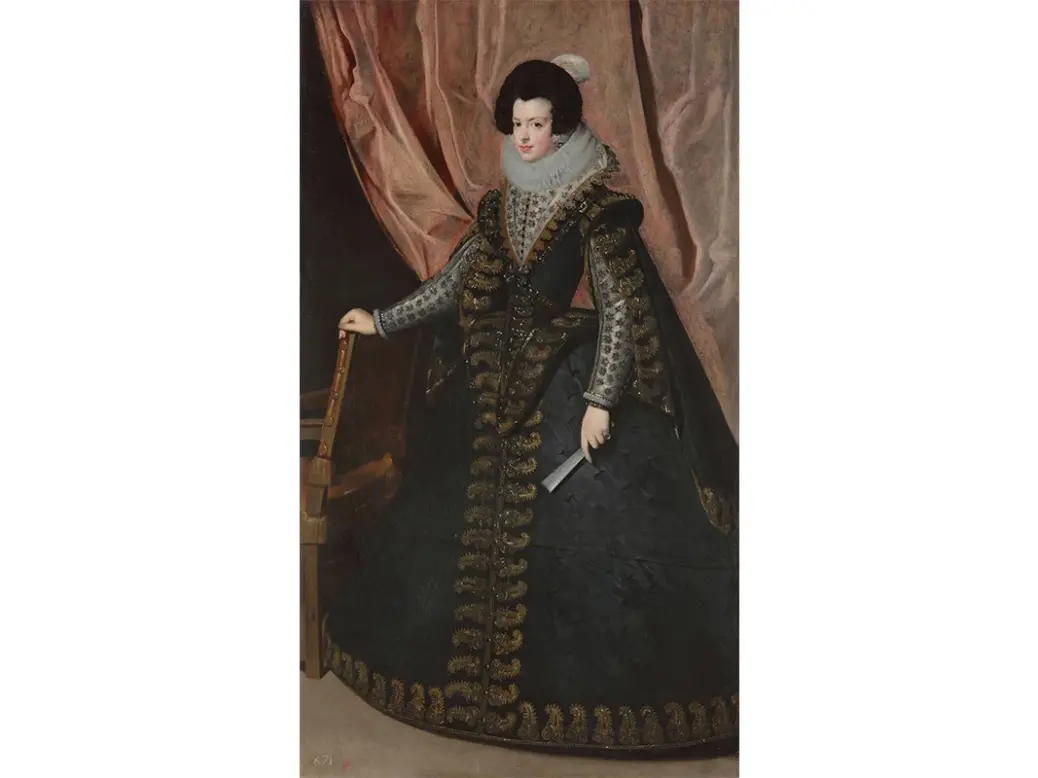
An ‘exceptional’ 17th-century royal portrait by celebrated Spanish artist Diego Velázquez has gone on display at Sotheby’s London ahead of being auctioned in New York in February.

The 2-metre tall portrait of Isabel de Borbón, wife of King Philip IV of Spain, has been described by industry experts as ‘the most important Velázquez to be sold in 50 years’ and ‘one of the most valuable Old Masters to ever come to market’. 

[See also: Picasso ‘golden muse’ masterpiece sells for $139.4 million in record-breaking New York sale]

Such portraits of royalty typically remain in royal collections and museums, meaning this sale presents a rare opportunity to own a piece of art – and royal – history. Sotheby’s anticipates the portrait will realise in the region of $35 million, more than double the current $16.9 million record for the sale of a Velázquez.

Diego Velázquez at the height of his portrait powers

‘This exceptional painting is remarkable not just for its beauty and quality, but also for its scale and subject matter,’ explains George Wachter, Sotheby’s chairman and co-worldwide head of Old Master paintings. 

‘Royal portraiture allowed Velázquez to push forward art in new and revolutionary ways and this grand portrayal of Isabel de Borbón is an exceptional example of the artist at the height of his powers, shaping the direction of portraiture for generations to follow. No other Velázquez paintings of this scale and importance have come to the market in more than half a century.’

[See also: the most outstanding art advisers for ultra-high-net-worth individuals]

This tour de force of portraiture depicts Isabel de Borbón, who as the first wife of King Philip IV of Spain (King Philip III of Portugal), was Queen of Spain from 1621 until her death in 1644, and Queen of Portugal from 1621 to 1640. She was the daughter of Henri IV of France and his second wife, Marie de Médicis, and known as Élisabeth de France prior to marriage. The union between Isabel and Philip strengthened the diplomatic ties between France and Spain.

Content from our partners
How preventative screenings can help HNWs to manage their health

Family office report: Repositioning investment portfolios to preserve wealth

High five: How to holiday without leaving home

A towering portrait of an admired queen

Isabel de Borbón, Queen of Spain, was painted by Diego Velázquez at the height of her powers in the 1620s

The queen was painted by Diego Velázquez in the 1620s, alongside a portrait of her husband, both of which hung at Madrid’s Buen Retiro Palace. (Velázquez’s Philip IV in Black, is now at the Museo del Prado). Isabel is depicted at the height of powers – a beloved and respected Queen, widely admired for her quick wit, intelligence and generous spirit. This is reflected in her stance, attire, and demure yet confident expression.

[See also: The top art finance advisers for high-net-worth individuals]

Velázquez revisited the portrait in the 1630s, reworking various aspects, including visible changes to the skirt. It is understood this revision was prompted by the artist’s recent encounter with Sir Peter Paul Rubens, then regarded as the greatest artist of the time, and still today a giant among painters.

Christopher Apostle, Sotheby’s international head of Old Master paintings, explains: ‘Though Velázquez was already widely celebrated when he painted this work, here we see him at a moment of transformation. He had already been crowned official painter to the Spanish King, but in 1628, he met, for the first time, Sir Peter Paul Rubens, whose confidence with the brush, and whose fluid style Velázquez quickly adapted, making of them something entirely his own, and – in the process – taking the art of royal portraiture to the next level.’

[See also: Sale of Rothschild treasures soars above estimates at first of-its-kind auction]

The painting has an illustrious provenance. After Napoleon’s invasion of Spain in 1808, it was taken to France, where it was later displayed in King Louis Philippe’s Galerie Espagnole at the Louvre until the king’s fall from power in 1838. It was then sold to merchant banker and noted book collector Henry Huth, who hung it at Wykehurst Park in Sussex, and in whose family it remained until it was sold in 1950 – the last time it was on the public auction market. It has been in the collection of its current owners since 1978.

Isabel de Borbón, Queen of Spain by Diego Velázquez will be displayed at Sotheby’s New Bond Street Galleries until 6 December. It will be auctioned in New York as part of the annual Masters Paintings auction on 1 February 2024. 

The auction follows the sale of Picasso’s Femme à la montre for $139.4 million at Sotheby’s New York in November.


Discover more with Spear’s: Why is wealth management becoming more progressive and ‘values-driven’?

[embedded content]