Lavazza’s 2024 calendar puts a spotlight on African photographers

Lavazza’s 2024 calendar puts a spotlight on African photographers

For “I saw you there,” Obasi was so moved by the story of one of the Lavazza Foundation’s partners, the Panzi Foundation, which supports survivors of sexual violence, that he wanted to create an image that radiates hope. “The flowers are symbolic of care, love, hope and kindness, femininity,” he said. “Whilst the butterflies mean a renewal and rebirth.”

Photo by Daniel Obasi / 2024 Lavazza Calendar

“The destruction was intense”: the photos which capture Gaza’s humanitarian crisis

“The destruction was intense”: the photos which capture Gaza’s humanitarian crisis

In February 2010, Australian photographer Jim McFarlane was documenting local children at an after-school club in Gaza City. Teachers had asked each child to bring in a sentimental item – something important to them. “One young boy, maybe 12 years old, brought along a blue plastic bag,” McFarlane tells me, his voice breaking. “Inside the bag were some bomb fragments and a tin, and inside the tin were the ashes of his father, who he saw get killed. That’s something I’ll always remember.”

The emotional encounter was one of many during a 10-day assignment in Gaza, where McFarlane was working as part of a trio of international photographers. They were there to document the lives of people in the wake of the Israeli incursion of December 27, 2008, known as Operation Cast Lead, which took place a year previously, and killed 1,417 Gazans, including 313 children. Thirteen Israelis, including three civilians, were killed in the period’s violence, four from friendly fire.

The driving force behind the photographic mission, which was supported by Save the Children, was Lebanese-English photographer Anthony Dawton, who’d been working in the West Bank with children’s charity Al Madad Foundation. Dawton brought along McFarlane, a colleague and close friend he’d met while living in Melbourne in the 1980s, and Italian photographer Giuseppe Aquili, who’d started out as Dawton’s assistant. Their backgrounds were in commercial photography, including weddings and advertising, but all found documentary photography more rewarding. “We want to show the reality of life in the places we work,” McFarlane says.

The trio’s 2010 Children of Gaza exhibition raised more than £150,000 for Save the Children in Gaza. Their images have been collected again for Ten Days in Gaza, a new book that the photographers crowdfunded after the recent Israeli offensive, following Hamas’s 7 October terror attack, with all funds from sales again going to Save the Children.

It took six months to arrange permissions for their 2010 trip, the three men entering from Israel via the Erez crossing. “The destruction was intense,” says Aquili. “It was evident everywhere we went: people trying to rebuild or places still literally falling apart. The invasion had levelled so many buildings. People were dejected.”

Currently, 2 million people live on 365 square kilometres of land in Gaza, which contains eight refugee camps. “It was dreadful to see the conditions people were living in,” Dawton tells me. “Even the houses that were still standing had nothing you could call a modern convenience. People lived on nothing but they were kind and hospitable. All they were left with was education. We went to a girls’ school that had been bombed. The teachers were still teaching in the rubble. They were reading Charles Dickens – they asked me to take the class for 10 minutes. Moments like those uplifted me.”

Photographers working together is unusual, but the trio found benefits in their partnership. “It gave me freedom and safety,” explains Aquili. “When you work on your own, you worry about missing the moment – you’re trying to capture everything. But as there were two other photographers, I knew I could open my eyes, look around more, and maybe listen to a story, instead of taking pictures of everything.”

Since Gaza, Dawton and McFarlane have collaborated on other projects, including Syrian refugee camps in Jordan, Palestinian camps in Lebanon, and the city of Cox’s Bazar in Bangladesh, home to more than 1 million Rohingya Muslims who fled Myanmar. Aquili now works as a pastry chef in Italy.

Their experiences in Gaza made a lasting impact. “It made me realise how alike we all are,” says Aquili. “If you take away the regional and cultural differences, and look at the kids and families, they’re just people trying to make the best with what they have. Even among all the destruction and sacrifices they have to make, that was what the parents were thinking about: to try to better their lives and give their children hope for the future.

Five more photographs from the book

A young boy at shelled building (his home) on the edge of Beit Hanoun, a city in the north-east of Gaza.

Anthony Dawton
“We were taken to a shelled building on the edge of Beit Hanoun. Apart from this boy, his sister and baby brother, the house seemed deserted. The boy took me to this shell hole in the wall and said the shell only just missed him. He adopted a look that made him seem older. I realised, belatedly, that I was looking at shellshock.”

Road just outside Beit Lahiya, Gaza.

Giuseppe Aquili
“I found this scene just outside Beit Lahiya. This Gaza road laid bare the contrast between the two countries, with smooth tarmacked roads and modern cars in Israel set against the scene here: donkeys pulling makeshift carts, no pavements and the piled-up steel wire evidence of severe bomb damage.”

skip past newsletter promotion

Boy with Kalashnikov, Gaza City.

Anthony Dawton
“We came across this street in Gaza City and saw a bunch of kids on our first day. It’s the cliche for photographers in conflict zones to show children reflecting the environment they have known since birth: the Kalashnikov, the stone-thrower, and the already traumatised child. Although some of that was true, we were to find the effect of growing up in Gaza was more complex and surprising.”

Bombed playground, Gaza City.

Giuseppe Aquili
“At this bombed playground, the destroyed slide looked like a stretcher. Had children been playing when the bomb fell? Would the strongest photograph involve children? After all, we had come to Gaza to photograph the children who lived there. I compromised. The children are walking in the middle distance, ghost-like.”

A young girl in the ruins of her family house, Gaza City.

Anthony Dawton
“I observed this young girl in what turned out to be the ruins of her family house in Gaza City. She had a toy mobile phone hanging around her neck. I was told her mother had been killed when the house was bombed, and that the girl had tried to call her on her ‘phone’. It was one of those photographs I felt bad about taking, about intruding, even though it was taken using my longest lens, but I knew it had to be taken.”

Main image: Jim McFarlane
“The photograph was taken in Rafah in the south of Gaza, where the tunnels were. This was an area we were asked to avoid on safety grounds but the tunnels are such an important part of the Gaza story. The boy running across my frame gave the image scale and contrast to the destroyed building, and his energy gave poignancy to the photograph, or even hope.”

Ten Days in Gaza is published on 29 February (Pallas Athene, £40). An exhibition is also planned for a London venue (TBC) in March. More of Dawton and McFarlane’s work.

Hockney’s early California dream makes a winter splash

Hockney’s early California dream makes a winter splash

Christie’s brings some Los Angeles warmth to a wintry London this week where it will show its star consignment for March: David Hockney’s “California” (1965), estimated at around £16mn. The early pool painting was made soon after the British artist first went to LA in 1964 and has “a sense of optimism in its bright, fresh colours, so different his work in the 1950s”, says Katharine Arnold, Christie’s head of postwar and contemporary art, Europe.

With its two seemingly carefree, naked figures painted on moving water, the work anticipates some of the artist’s most famed works, including his “Portrait of an Artist (Pool with Two Figures)” (1972), which made a public record for any living artist when Christie’s sold it for $90.3mn in 2018. This remains Hockney’s record price, though Jeff Koons pipped his living artist record the following year.

The significance of the latest Christie’s work goes beyond its large scale and bright colours, Arnold says. She finds that for the artist, who is gay, “the freedom of the 1960s and the liberation of living how you want to, comes through. That was what the American dream brought — as well as having a swimming pool in your garden.” 

The work has been in the same European collection since it was bought from Kasmin gallery in 1968 and has barely been displayed. It is offered with a third-party guarantee in London on March 7.


‘Opticks 147’ (2018) by Hiroshi Sugimoto, $250,000, part of a series on show at Lisson Gallery in New York

The Japanese artist Hiroshi Sugimoto, whose critically acclaimed solo show closed this month at London’s Hayward Gallery, is now represented globally by Lisson Gallery. “I feel like I have found a new family,” Sugimoto says of the move. Lisson will work alongside his other representatives, Fraenkel Gallery in San Francisco and Gallery Koyanagi in Tokyo. The artist previously showed with Marian Goodman.

Lisson’s first Sugimoto exhibition will open in its New York gallery in May and will be of the artist’s recent Opticks series of large-scale photographs that use a prism to split light into its constituent colours, creating ethereal, abstract compositions ($250,000 each, one edition of each available to buy).

In other representation news, New York’s Hollis Taggart gallery has taken on the estates of the married couple, Charles Seliger — a first-generation abstract expressionist — and Ruth Lewin, a so-called Indian Space Painter, whose abstract work was influenced by the Indigenous artists of the Pacific Northwest. The gallery opens a show of both on February 22.


Painting showing man in rowing boat surrounded by vegetation with line of figures in the foreground
‘Integral Flow of the Psychopomp River’ (2023) by Victor Bengtsson, showing works (£6,000-£18,000) at Public, east London

Hats off to Vanessa Carlos, co-founder of Carlos/Ishikawa gallery and the founder of Condo, a contemporary art gallery-sharing event that returned to London after a three-year hiatus to much praise last weekend. London’s cutting-edge gallerists voiced their appreciation for the event, which brought weekend walk-ins across its 23 spaces in the otherwise quiet winter months.

“It is such a great way to get everyone out of hibernation and kick-start the year,” said Harry Dougall, who co-founded Public in London’s East End in 2020. He is showing work by the young Danish painter Victor Bengtsson (£6,000-£18,000) and has invited Mexico City’s Peana gallery to his space. They are giving their first solo showing of the Oaxaca performance artist Vica Pacheco, whose ceramic hydraulic flutes hang to great effect from the basement’s ceiling ($3,000-$3,500).

New York gallerist Gabrielle Giattino, who runs Bureau, is at Kate MacGarry’s space in Shoreditch and notes that Condo has helped give their artists a showing while the Manhattan gallery is closed for renovation. The pairing results in a group show of three artists from each gallery, including Erica Baum and Goshka Macuga, who was at the opening. Condo London runs until February 17.


Photo of man with dark hair and beard
Gary Waterston, newly appointed as head of global sales and operations at Pace in London © Michael Halsband

Mindful of challenges to the traditional gallery model, Pace has bolstered its leadership team with the hire of former Gagosian long-timer Gary Waterston, in the newly created role of executive vice-president of global sales and operations. Waterston says that “for the bigger galleries to succeed, they need to be seen as a place where younger people and artists want to work and to stay”, something he sees as key to his managerial remit.

Waterston left Gagosian in 2020, after 18 years, latterly as its managing director for Europe, to join an art world funding start-up, Atlantic Contemporary. The pandemic-prompted move gave him time to reflect and now, he says, “I am back doing what I want to do, work with artists.” Waterston will be based in London, which he describes as a significant commitment by Pace — headquartered in New York — to “a city I believe in and the timezone centre of the global [art] industry”. He joins on February 1.

Elsewhere in London, James Richards has left Daniel Katz, where he was gallery manager and head of research, and joined Charles Ede as a director this week.


Photo of chapel building seen through archway
The Garrison Chapel, the new home for Eye of the Collector © Peter Bennett

London’s Eye of the Collector fair has changed the venue and timing for its fourth edition this year. “It’s good to do things differently and have a fresh perspective,” says founder Nazy Vassegh. This year’s fair will run on June 26-29 in the Garrison Chapel, a deconsecrated church run by the King’s Foundation on London’s Chelsea Barracks site. The venue, completed in 1859, is even older than Eye’s location for the past two years, Two Temple Pace, which dates to 1895, though the Garrison Chapel’s Romanesque-Byzantine interior has a lighter, more contemporary feel, and offers one big room for display. The fair, already one of the smallest on the circuit with 21 galleries participating last year, will shrink more, Vassegh says, but she welcomes the opportunity to be “even more thoughtful, considered and sustainable,” adding “we think small is beautiful”. 

The new timing means that rather than clash with New York’s fairs and auctions in May, the fair will instead coincide with London’s summer season. Nearby will be the second edition of Treasure House fair, which runs June 26-July 2 in the Royal Hospital Chelsea site that used to house Masterpiece.

Find out about our latest stories first — follow @FTWeekend on Instagram and X, and subscribe to our podcast Life & Art wherever you listen

The Incredible Fashion Photographer You Should Know About

The Incredible Fashion Photographer You Should Know About

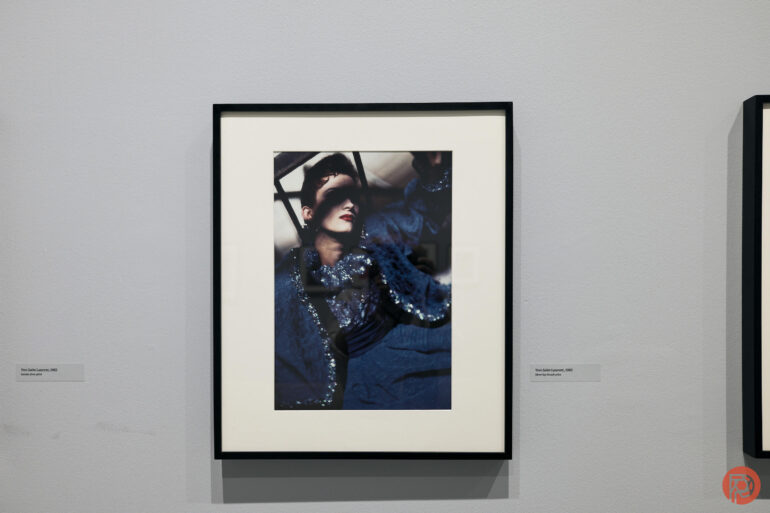
I know that fashion photographers often have to hold back on their own creativity to please clients. And we rarely get to see them realize their fullest strengths and potential — therefore embracing their truest selves with a sense of unconditional safety. It’s a beautiful thing that photographer David Seidner did for brands like Yves Saint Laurent and international editions of Vogue. His presence is felt in the work of photographers like Aline Smithson. And more importantly, his work is something that must be experienced in person. In fact, it’s the saving grace of the 2024 Winter Exhibitions for the International Center of Photography in NYC.


Many who’ve read this site are aware that I’ve had many issues with ICP. We can start by talking about the poor quality museum glass they use — which creates tons of reflections even at fair viewing distances. Let alone, there’s their lack of adherence to their mission around “concerned photography.” ICP is celebrating its 50th anniversary this year by displaying an exorbitant amount of photographs from its archives — complete with reflections and ill-advised use of its space. Transparently, the archives break my heart in a manner similar to how you’d feel if you found a close family member was involved in murder. Tucked away in the corner of the 2nd floor and seamlessly blending into the 50th-anniversary exhibit at one point is the work of fashion photographer David Seidner.

I’m in Love With Portraits by David Seidner

If the entire two floors were dedicated to just his archives, I would make weekly visits to sit, shut off mobile notifications, meditate, pay money, and become inspired by David’s phenomenal work. I’m sure that with each visit, I’d find something new to ponder to expand my creative brain.

Several photographers that we’ve interviewed on this website are inspired by paintings. We can see that in the work of Christy Lee Rogers and Mariska Karto just to name two. But when you actually look at David’s work, you’d think you were looking at a hyperrealistic painting. This is partially because of his printing process — which he was very much involved in and considered to be a part of the whole creative process. Here’s a quote from ICP’s description:

“Seidner made these portraits using platinum printing, a process invented in the late nineteenth century in which the image is absorbed into the paper rather than suspended in the emulsion that coats its surface, as with gelatin silver printing. Moreover, he opted for a textured and uncoated paper, to which he hand-applied the emulsion, leaving the brushstrokes visible at the edges of the image. Seidner thereby emphasized the handmade quality of the photographs. This devotion to making is also evident in the books and maquettes for the series (on view nearby), which he diligently preserved in his personal archive.”

International Center of Photography

This is art. It’s inspired by the past and translated through a photographer who channeled adoration of the scene in front of them with equal amounts of respect for the artists who have long passed. And it shines through in every step of the process into the final print — very much so in the same way that Michelin Star chefs use only the finest ingredients.

You Should Check it Out

There’s a lot to love here: photographs with beautiful colors that look like paintings due to the film stock, bleached prints, reflections that force you to stare at the photographs and wonder how the shot was achieved, fine details that are sharp and uncaring of MTF charts, and creativity that isn’t seen very often anymore. David Seidner passed a few years before social media took off. And considering the work that he’s done, I’m sure that he’d feel great sadness at the monotony that algorithms play with silencing the artistic self.

Best of all, there are far fewer reflections on David Seidner’s work — and I hope that his ghost visited the gallery and gently guided the setup crew to ensure this.

David Seidner: Fragments is on display at the International Center of Photography until May 6th 2024. I strongly recommend that you go check it out to understand and appreciate true fashion photography art.

Infrared Adirondacks, a photography exhibit by Phil Gallo, opens Feb. 2 in Saranac Lake

Infrared Adirondacks, a photography exhibit by Phil Gallo, opens Feb. 2 in Saranac Lake

SARANAC LAKE — Viewers may feel they’ve wandered into a dream when contemplating “Infrared Adirondacks,” a collection of photographs by Phil Gallo, which will be the featured show at the Adirondack Artists Guild located at 52 Main St., Saranac Lake.

The exhibit opens on Friday, Feb. 2 with a reception from 5 p.m. to 7 p.m. and will run through Sunday, March 3.

Gallo, a Saranac Lake resident, used to see infrared photos in various magazines back in the ‘70s and when he was in college in the ‘60s.

“Scientific types of photos that showed different forests types and that kind of thing,” he said.

“The color ones were just off-the-wall weird looking. There was really not much in the way of color to them that was any kind of true color. There was a lot of magenta and that kind of thing. But the black-and-white, they had black-and-white infrared, that’s what really captured my attention because, again, there’s a lot of work that’s still done with infrared photography in forestry to determine the health of the trees and that sort of thing and the different species.”

Many of these images were aerial photographs, but there were others that were ground level.

“I just thought that the contrast in them was really appealing,” Gallo said.

“It was so very different, very high contrast. As I say in my statement, there is living deciduous foliage and also things like grasses and herbaceous plants and those kind of things that are very highly reflective of the infrared spectrum.

“So 80 % or more of the infrared light that hits those things bounces off and is reflected back to the viewer if there is viewer, a photographer, whatever.”

Water and sky absorb infrared rays and come out very, very dark, and in some instances, just black.

“Whereas the trees and grasses are just gleaming white,” he said.

“That is at the extreme end. A lot of my photos are sort of in between because the intensity of that contrast varies from by time of day, the time of year, the intensity of the sunlight. There are lot of factors, so you don’t have that stark black-and-white effect in every photo. But, you do get it. Other trees, like the evergreen for instance, they are not as reflective of infrared so they tend to be more mid-range.”

Gallo started playing around with infrared film around 1975. He found it awkward and expensive to send away to get developed and printed. He didn’t stick with it, and he revisited it in the ‘90s with large-format film and that was even more expensive.

“I just couldn’t afford it at the time,” he said.

Gallo crossed the digital divide, and when he owned his second digital camera, he had a conversation with Henry Kopf, who ran a photo shop in Saranac Lake.

“Henry had mentioned to me something about you could get filters for the camera that can filter out the visible light spectrum and the ultraviolet light spectrum and let the infrared in,” he said.

DIGITAL BREAKTHROUGH

Gallo was eager to try the process free of film, developing and chemicals.

“You screw up one roll of film, and you lose 36 pictures,” he said.

“Now with the digital stuff, it’s much easier. There are two ways to approach altering a digital camera so that you can do infrared photos.

“One is most digital cameras the sensor that’s in the camera has several coatings on it or filters they call them. They filter out different things so that the colors that the camera eventually provides to make an image are more true.”

These filters filter out infrared, but they don’t succeed in filtering it all out.

“They filter out a large percentage of it,” he said.

“Some will get through, but it won’t be enough to make a visible difference in the visible light spectrum image that results. So, you can have that removed from the sensor in your camera at which point you’ve got a camera that’s going have to be solely dedicated to that kind of photography, infrared photography.”

Gallo uses the second technique and uses screw-on glass filters.

“Which will do the same job, but because you still have that filter on the center that’s filtering out infrared, you have to let a lot more infrared into the camera.”

Gallo finds the filters very dark, hard to see through. He sets his aperture at F-9, the sweet spot for him. He also uses long exposures 12 to 20 seconds, and the camera is on a tripod.

Anything moving gets blurred.

There is a contrast between objects that are stationary and objects moving.

“It provides as almost surrealistic dynamism to the image,” he said.

Gallo kept doing it and has built a body of work over the last decade and a half. He’s entered the images in many shows and posts on Facebook to share with friends.

He’s never put together a group of images together, 18 for this show, that are printed on 13-by-19 inch paper and are framed.

“They have a real impact,” he said.

“I got hooked on this. I do other kinds of photography also, but this has become one of my favorites. You don’t do much in the winter, but I have done a few. They’re nice, but because of the lack of the kind of vegetation that summer provides, they lack that impact of spring, summer and fall. Interestingly, some people think it is the chlorophyll in the leaves and grass and that kind of thing that causes objects to reflect so much infrared.”

But vegetation photographed with autumnal colors exhibits the same amount of reflectivity, even though they are not green anymore.

Gallo gets three seasons. He’s done some studies of human subjects, but it’s hard a person to stay motionless for a long time.

“Something moves,” he said.

“Whereas with the wind moving something or water flowing and that being moving or those kinds of things, when a person moves it tends not to be as attractive. It doesn’t look good. It can, but on the whole it’s a lot more challenging, and I just haven’t spent that much time doing it. I have done a few, but they are not going to be in the show. One of them was in my nude show back in 2014.”

POINT OF FOCUS

The point of focus for infrared light spectrum is different from what it is for the visible light spectrum.

“You can re-calibrate your lenses and things like that so that they are more accurate in finding that point, but another problem is that point of focus shifts with the angle of the sun, time of day, and that kind of stuff,” Gallo said.

“So because your filter is so dark, if you have your camera stopped down, you can’t see anything. So you have to have it wide open as far open as it will go to let in maximum amount of light.

“You still can’t see real well but you can see well enough that you can sort of focus. But a lot of times you get it wrong.”

Gallo checks his image after every exposure to see what he’s got. That is something he couldn’t do with film.

“You can go back and you can look at what you just photographed in the camera and magnify it and do all that kind of stuff,” he said.

“To see, did I get this? What I do, I try to focus with the lens wide open and to take a picture I stop it down.

“The reason why I use a smaller aperture is because you get greater depth of field, which makes you get a longer focusing range. You’re more likely to have things the way you want to see them more properly in focused.”

Landscapes require a long range of focus. For close-ups, a blurry background is fine.

“But if you’re taking a scene and you’ve got a stream or lake in the foreground and a mountain in the background, at least for me, my aesthetic is I want them both to be in focus,” he said.

“So, I have to use that smaller aperture for the actual photo, which gives me a better chance of hitting that focus, but the thing is I still might not because I don’t really know where the focus point is.”

What Gallo sees with the lens wide open is still the minuscule of physical light getting through the filter.

“What I am focusing on is really as much as the visible spectrum as it is the infrared. It’s a real trial-and-error thing,” he said.

“Sometimes you it it right on the first time, and sometimes it’s four, five, six different attempts before you get it right. It takes a lot of patience. But the interesting thing is you kind of get a feel for the type of conditions that will give you an easier task with that.”

Late mornings and mid-afternoon is much easier than early morning or late afternoon.

“The funny thing about that is late afternoon and early morning are the sweet spots for visible light photography because your shadows are longer.

“The light has more red tones in it, especially in the afternoon they call it the ‘golden hour’ when you get closer to sunset for photographing.

“But it’s the opposite for infrared. You don’t just go out there, take a picture and go home. You have to try, try and try again. A lot of time you’re spending quite a bit of time getting bug-bit.”

‘A SENSE OF ENIGMA’

His infrared images convey at their best, a sense of enigma.

“That is something that’s always appealed to me since I was old enough to start appreciating art that was more than just stick figures,” Gallo said.

“I was always attracted to the surrealists and symbolists and those folks.”

Georgio de Chirricio, an Italian painter noted for his metaphysical works, predated the surrealist movement and was inspirational to them.

“One of his guiding lights had been to convey a sense of enigma in his images,” Gallo said.

“I find that rich ground. I really when you look at a picture and you are intrigued but you’re not really sure what’s going on but it’s cool. Some things aren’t quite right. When you look at one of these pictures, this is raw. If you look at it with the same criteria that you would judge a standard black-and-white image, this doesn’t look the way it should. That’s good.”

Photographer Charles Ebbets: The Hemingway of the Everglades

Photographer Charles Ebbets: The Hemingway of the Everglades

In the 1930s, during the Great Depression, South Florida was home to two highly adventurous sportsmen, one a writer who you probably know all about, the other a photographer who you probably know only by his work.

Ernest Hemingway is remembered as a sportsman as much as he is known for the novels he wrote in Key West. Charles Ebbets, who shared Hemingway’s thirst for adventure in pioneer-era South Florida, was more at home deep in the Florida Everglades with a camera in his hands. Ebbets’ most famous photograph, Men on a Beam, of 11 New York City steelworkers sitting along a steel beam in 1932, has achieved fame comparable to that of Hemingway’s most famous novels. But for most of Ebbets’ life, the photograph – one of the most famous in the world – has not borne his name. Even today, Ebbets’ name is often not attached to his iconic image. But Ebbets’ daughter, Tami Ebbets Hahn, is making a determined push to change that. On Wednesday, January 18, at the Museum of the Everglades, she shared Charlie Ebbets’ fascinating story with a very receptive standing-room-only audience.

Ebbets Hahn said much of her father’s lack of notoriety can be tied to the traditions of the day.

“Unlike today,” she said, “back then, individual photographers rarely got a published byline. Most often, it would say something like New York Times photo or Associated Press, or in the case of the Men on a Beam shot, it said Herald Tribune, Acme.”



2. As an advocate.jpg

As an advocate for the Seminole Tribe, Charlie Ebbets was trusted to capture many iconic images of tribe members in the Everglades.


3. An iconic photograph.jpg

An iconic photograph of a Seminole in the Everglades by Charlie Ebbets.


While Men on a Beam may be Ebbets’ most famous photograph, it’s just one of thousands of iconic photographs he captured. Much of his finest work was done in the Everglades. 

“He said the first time he went deep into the Glades he felt he was home at last,” Ebbets Hahn told the audience. “For 50 years of his life, he would become an integral part of the culture of the Florida Everglades. He was honored to be acknowledged as a fellow Gladesman by those who called the region home. In the years between 1927 and 1977, he used his pictures to document the natural wonders of the Everglades as no one had ever seen them before. He photographed animals of every species. He went deep into the bird rookeries of the 10,000 Islands region. His images were featured in newspapers and magazines across the country. The Audubon Society often used his pictures to promote wilderness and conservation.”

In her exhaustive archiving of her father’s life in photography, Ebbets Hahn has uncovered an historically important body of photographic work – much of it focused on the Everglades. She has documented over 200 front page photographs from major newspapers across the globe, captured by her father. Ebbets already had over a dozen front page photographs by the time he was 25 years old. 

Ebbets frequently fished with famous baseball star and World War II hero Ted Williams. He photographed President Harry Truman at the opening of Everglades National Park in 1947. He was prizefighter Jack Dempsey’s official photographer. He photographed the famous gangster Al Capone. 


4. Charlie Ebbets captured.jpg

Charlie Ebbets captured a swimming Florida Panther.


5. The past 20 years.jpg

 “The past 20 years have been a labor of love,” said Tami Ebbets Hahn on researching and documenting her father’s photographic work.


“He told us a story about Al Capone’s bodyguard stuffing a $100 bill – which was a lot of money at the time – in his top jacket pocket,” said Ebbets Hahn. “He said, ‘Charlie, you need to go fishing for a few days.’ Capone was really mad because he did not want his picture taken, and Dad would find him and get his picture.”

From the 1930s to the 1970s, Ebbets was one of the most widely published photographers in the United States, yet few today know his name. According to his daughter, he was hired as an independent contractor by the Rockefeller Center’s public relations firm to be their photographic director, documenting the construction of what was then the largest construction project in the world. Ebbets was known to perch on 12-inch beams, 700 feet in the air, 69 stories high to capture his subjects.



6. Unlike today.jpg

Unlike today, photographers were not given credit for their images. Hahn looks to change that. She holds a poster of her father’s most famous photograph, Men on a Beam.



“In 1932, he took a series of photographs highlighting the working men who were behind the project,” Ebbets Hahn said. “It was a shoot that brought together all of the elements of Charlie’s creativity staging shots and his talent with a camera. The most famous image, known as Lunch Atop a Skyscraper, or Men on a Beam, was taken on what would become the 69th floor of the GE building. It was taken in the worst year of the Great Depression. The photo captures a world without safety nets, where workers had to court danger to survive. There’s also a whimsy to this scene, very characteristic of Dad’s work, of the men eating lunch. We see a camaraderie, a humor and daring – the very qualities needed to rebuild a broken nation. That image and the others in the series were a huge success, advertising the tallest building in the world. They accomplished exactly what the Rockefellers had in mind and gained worldwide attention as they ran with stories about the project.”

While Ebbets Hahn carries on the good fight for father’s most famous photograph, she hasn’t ignored the rest of his large body of work. She was surprised to discover the depth and breadth of her father’s work when she began her archiving project 20 years ago.

“My father died when I was only 18,” Ebbets Hahn said, “so I had no idea, honestly, of the scope of his work. He developed cancer, and his goal was to live to see me graduate high school, which he did. He passed two weeks later.”

In addition to his work at the Miami Times, he was also the publicity director for the City of Miami for over 20 years and was the official photographer for the Miami Metropolitan Fishing Tournament. But his most special work may be his images from his beloved Everglades.

“Because of his extensive work in the region,” Ebbets Hahn said, “and his knowledge of the people and the wildlife, the Department of Interior, the Fish and Wildlife Services, the US Department of Agriculture and the Audubon Society all used Charlie’s pictures for their research and their documentation of the region from the 1930s to the 1950s.”

Ebbets Hahn remembers her father trekking to the Everglades during her childhood.

“Every chance he got,” Ebbets Hahn said, “he would load up his station wagon with his cameras, camping and fishing gear, and a small aluminum punt boat strapped to the top.”

A punt boat is a flat-bottomed boat with a square-cut bow designed for use in small rivers and shallow water. Exactly what Ebbets needed for exploring the Everglades.

“He was widely respected as an authority in the region,” Ebbets Hahn said, “and he would often disappear into the deepest glades for days on end to shoot photos of wildlife, to hunt and to fish, and to spend time with the Seminole Indians and the other Gladesmen who lived in the remote area. He would emerge covered with muck rashes and insect bites, or worse, but invariably with a remarkable set of images and always tales of high adventure to go with them.”

Ebbets Hahn recalls an incident in the Everglades when her father was bitten by a large Florida Cottonmouth that could have ended his photographic career. The doctors wanted to amputate his right thumb.

“That adventure cost him half of his thumb on his right hand to gangrene,” she said, “and left him fighting for his life for ten days from severe blood poisoning and venom sickness. Luckily, he recovered. He said, ‘Leave me something I can brace the camera against.’ And that’s what they did. And from 1938 on, Dad had a little nub for his right thumb. And that was where he would brace the camera. Less than a week later, he was back out in the Everglades hunting snakes with his buddies again, with his hand still in a sling. That is classic Charlie.”

Ebbets gained the trust of the Seminole Indians through his work in the Everglades.

“Dad’s trust by the Seminoles led to some of the rarest pictures that have ever been seen,” Ebbets Hahn said, “a series of 15 photographs of what is known as the Seminole Green Corn Dance are the rarest of the rare. These are the first known pictures ever taken of the Green Corn Dance. It is one of their most revered ceremonies. And tribal leader Charlie Billie personally invited Dad to document it. A few years back, my family and I, including my mom, were here filming parts of a documentary, and we met up with members of the Seminole Tribe. And they were shocked to hear that we had pictures of the Green Corn Ceremony. In fact, they kind of thought we were lying. I went back and got one of the albums that I was carrying with me. They were flabbergasted. It’s a beautiful series of pictures.”

Ebbets Hahn said her father became a public advocate for the Seminoles.

“He documented their treatment at the hands of the Bureau of Indian Affairs,” she said. “He also wrote articles. He was a member of the Outdoor Writers Association of America, and he wrote articles to go along with his pictures to explain to people what they were facing out there.”

Ebbets Hahn said her father would often hunt and fish with the Seminoles. He even became blood brothers with Bobby Tiger.

“Bobby Tiger was also bitten by a cottonmouth moccasin,” she said.

A highlight for Ebbets came during the dedication of Everglades National Park in 1947.

“Dignitaries from across the country came to town for the dedication of Everglades National Park,” Ebbets Hahn said. “Dad had been licensed to be the official photographer for the park during its development, and he was the lead pool photographer for the dedication. He was given first crack at photographing President Truman on that day. But Dad’s love affair with the park in the Everglades went way beyond the wildlife and the natural beauty. He may not have been born there, but he was an accepted Gladesman, and for over 50 years, he built lasting friendships with the people of the region, including many of the members of the Seminole Tribe. My dad had a huge, deep respect for their culture and their resilience and was one of the few white men of his time that was befriended and trusted by the elders of the tribe.”

Charles Ebbets died in 1978 at the age of 72.

“His career may have fallen into relative obscurity after his death four decades ago,” Ebbets Hahn said, “but he was, in fact, one of the most widely published photographers of the 20th century. The past 20 years have been a labor of love, and I have found many treasures during this journey archiving my father’s work, the treasure being able to save and preserve his body of work for future generations. Of rediscovering and documenting his authorship of one of the most famous photos in the world, and perhaps most importantly, the treasure of getting to discover the history and artistry behind a man that I just knew as a wonderful father. He was lost to me before I was old enough to really appreciate all that he was. As I have poured over the thousands of images he left to us, I found that more than any one photograph alone, his camera and the body of work that he has produced are like a needle and thread fit together with his love for life, have woven a magnificent visual tapestry of a life well-lived.”

To learn more about the life and career of Charles Clyde Ebbets, visit www.ebbetsphoto-graphics.com.

Cake smash sessions prove popular for photographer who followed her dream

Cake smash sessions prove popular for photographer who followed her dream

Children are encouraged to ditch the cutlery and dive into cakes at a business that offers a smashing celebration for families – with a twist.

Moonlight Photography, in Spalding, has been providing ‘cake smash’ sessions – with the activity quickly becoming one of its most popular attractions.

Business owner Andriana Green, 31, was inspired to pursue her hobby of photography and turned it into a full-time job two years ago. She followed her dream in a studio in her back garden, with the messy fun cake sessions proving one of her favourite things to capture on camera in the last year.

A cake smash session captured by Moonlight PhotographyA cake smash session captured by Moonlight Photography
A cake smash session captured by Moonlight Photography
Moonlight Photography is based in SpaldingMoonlight Photography is based in Spalding
Moonlight Photography is based in Spalding

She said: “It sometimes takes people a few years to find their purpose and a job that will make them happy. I was the same and I feel like I’ve now found my own niche.

“Photography has always been a passion as a hobby and after having my daughter, the insight into motherhood inspired me to do it full time – I just thought why not.

“I mainly work with newborns and children but I also offer family and pet sessions.

“I absolutely love it. I have definitely found my thing that makes me happy.”

Business founder Andriana Green, 31, with husband and daughter Nicole Green, 3Business founder Andriana Green, 31, with husband and daughter Nicole Green, 3
Business founder Andriana Green, 31, with husband and daughter Nicole Green, 3

The modern cake smash craze has become a rite of passage for many babies who are set to celebrate their first or second birthday.

Andriana said: “ The cake smashes are so much fun. We do normal portraits with the families to mark the celebration, and then after that it’s the big smash.

“It is really messy. I’ve had cake on the ceiling and it goes everywhere but it’s really fun.

“These sessions are definitely one of my favourite ones to do.

Moonlight Photography offer cake smash sessions from £190 – £250Moonlight Photography offer cake smash sessions from £190 – £250
Moonlight Photography offer cake smash sessions from £190 – £250

“I add my own little twist into the cake smash sessions for people who might want something different.

“Some parents don’t like the idea of a cake or the children might be dairy intolerant or gluten free, so we offer fruit as an alternative – we’ve done a session with a watermelon before and that was great fun too.”

Get the news delivered straight to your inbox every morningsign up to The Briefing here

The origin for cake smashes remains unknown, but there are some suggestions that it originated from Mexico, where there is a tradition for babies who are celebrating their first birthday, to take the first bite of their cake whilst guests chant -”Mordida!” – which means bite.

Moonlight Photography is preparing for Easter - Andriana's daughter, Nicole Green, 3, is always up to help with the modellingMoonlight Photography is preparing for Easter - Andriana's daughter, Nicole Green, 3, is always up to help with the modelling
Moonlight Photography is preparing for Easter – Andriana’s daughter, Nicole Green, 3, is always up to help with the modelling

Other theories are that the tradition could come from Rome or America.

Moonlight Photography offers cake smash sessions for between £190 and £250, depending on the amount of pictures the customer would like.

The business also does newborn photography, baby sittings, special occasions, themed photo shoots and outdoor photography.

If you are interested in booking a session or would like more information, contact Andriana on 07480 199227.

Alternatively visit the Moonlight Photography Facebook page.

Have you and your family embraced the cake smash craze? Tell us in the comments below…