Photographer essentials: What to pack for a road trip

Photographer essentials: What to pack for a road trip

It’s that time of year when those of us who go wandering start to turn our thoughts to traveling again. Exploring the great outdoors, looking for wide open vistas, or perhaps looking for exotic locations. Holidays are a time for adventures (for many of us), not sitting by a pool drinking cocktails. I recently took a road trip (the best kind of adventure, I think), where we spent two weeks exploring South East South Australia and Kangaroo Island. Ahhh bliss! But what did I pack?

Apart from the essentials like clothes, food and toiletries, there are several other necessities for a keen photographer. So I thought I’d put together a video on what I packed, as I packed it.

[embedded content]

Laptop bag

The first thing to go into my laptop bag was my laptop and cables. But I also had my backup hard drive, drawing tablet and pen (which I never used this last trip). I also use a mouse.

Small day bag

My PGYTech ONEMO Sling bag 7L is the perfect day bag (in my opinion). I use it all the time and this trip was no different.

Tech Pouch

This Tech Pouch by Peak Design is truly fabulous, as it holds so much stuff. It’s like the TARDIS, so much room on the inside! Once packed this fits inside my larger backpack.

Big bag

I don’t use this as a bag as a backpack as once full I can barely lift the Peak Design Everyday 20L Backpack Zip. I’m not very strong but can carry it for short distances. The multiple carry handles make it super easy to use and the fact that I can cram it full of gear is fabulous. I store all the stuff I might need in this and then take it out for day trips or certain shooting conditions. Like extra filters and remotes for sunset etc.

Don’t forget to pack good sturdy shoes, throw in an old towel and a small brush (for sand and dirt etc). We also carry a few plastic garbage bags in the pod for dirty shoes and tripods, etc. Oh and don’t forget to clean things down, if you’ve had your tripod in sand or water, for instance.

Betty Boo the Subaru is looking a little dirty!

Did I use everything I packed? No there were a few things I didn’t end up needing (listed above). But I’d rather have them and not need them, than need them and not have them. Also, not everyone wants to carry so much gear. If I was flying I certainly couldn’t take this much. My hubby (also a keen photographer) took almost as much as I did! However, as it was just the two of us and ALL our camera gear and the open road we figured we’d take as much as we wanted.

CIRCULATION(S) 2024 European Young Photography Festival

CIRCULATION(S) 2024 European Young Photography Festival

CIRCULATION(S) 2024 European Young Photography Festival
6th April, 2024 to 2nd June, 2024
CENTQUATRE-Paris
5 rue Curial
75019 Paris

At the heart of the 14th edition of the Circulation(s) festival resonate the pulsations and demands of emerging European photography. The selection presented this year is punctuated by unprecedented fluidity and an ever-increasing propensity to experimentation.  

CIRCULATION(S) 2024 European Young Photography Festival
Maryna Brodovska, I joke therefore I am

The 24 artists, of 14 different nationalities, rethink the image. It evolves from fixed to animated without constraint, emanates from ancient techniques and artificial intelligences, and takes over historical and popular, digital or archival, personal or universal sources. The supports and the genera are also porous. Literature and photography intertwine, performance and gesture nourish or stretch the narrative, the video creates combinations and complementarities.

Fluidity also goes through the themes addressed. Queer identities and paths are embodied, reaffirming the necessary inclusiveness and representation. Forms of colonial impact and invisibility of ethnic minorities are explored. The absurdity of authoritarianism is decorated and the protest becomes a matter. Both the intimacy and the collective are political, and remain at the heart of our programming in a desire to show, to make understood and reflect the multiplicity of concerns of the emerging photographic scene.

CIRCULATION(S) 2024 European Young Photography Festival
Jérémy Ilinx, APPERT

In this context, and within a European territory marked by a long-term war, the focus we are dedicating to Ukraine this year makes sense. It reveals a glimpse of a photographic ecosystem that has constantly adapted, to face, with strength and lucidity, taking the face of identity, territorial and geopolitical issues.

See also

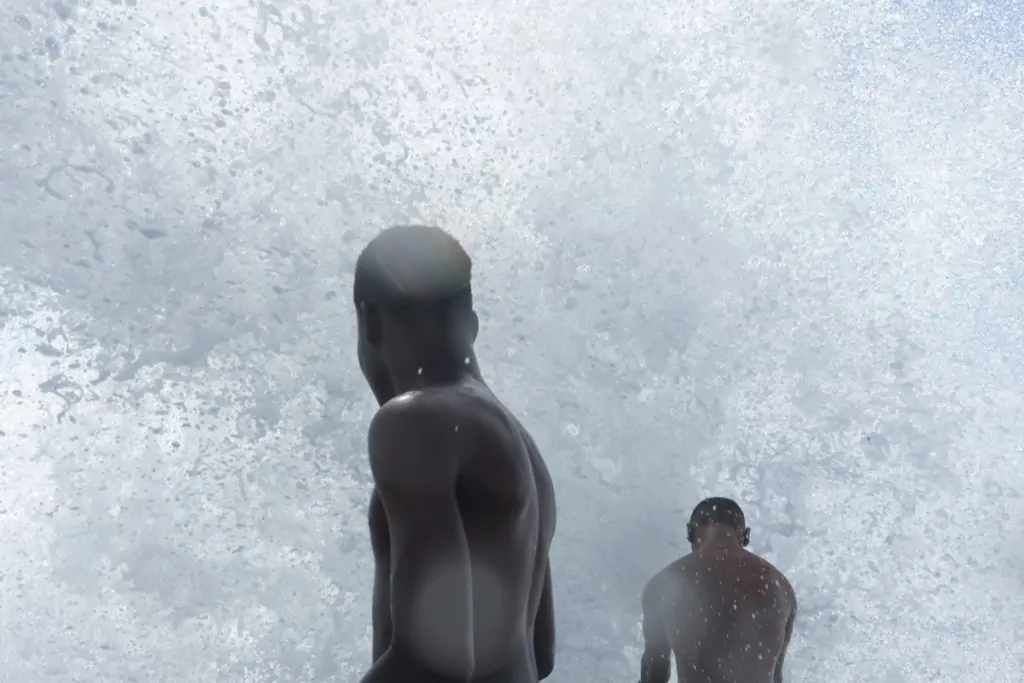
Serge Attukwei Clottey: TETTEH NTENI

At the dawn of our 15th anniversary, this edition takes the form of what has become of the festival and what it stands for. Multidirectional and innovative, it reflects our appetite for plurality, fragility and perpetual transformation. In this respect, it reflects the very functioning of the festival, carried out by a collective commission of eight artistic directors, an associative structure and a very largely voluntary team, which we warmly thank.

CIRCULATION(S) 2024 European Young Photography Festival
Tom Kleinberg – Forgotten in The Dark Last time I left

In the 2,000 m2 of the CENTQUATRE-PARIS that welcomes us, we invite you to discover the exhibitions, with a new scenographic principle designed alongside the talented studio BigTime, and the event programme that accompanies them. Have a good visit.

CIRCULATION(S) 2024 opens on the 6th of April, 2024 until the 2nd of June, 2024 at CENTQUATRE-Paris

©2024 CIRCULATION(S)

Art Plugged is a contemporary platform inspired by a relationship with the broader arts communities. We provide our audience with curated insight into the world of art, from exhibitions to artist interviews and more.

University student has work featured in exhibition alongside world famous photographers

University student has work featured in exhibition alongside world famous photographers

Aleesha Coker, 18, has her ‘pay phone’ photo featured alongside photography greats in the David Hill Gallery’s ‘Street Life’ exhibition.

The exhibition features 30 photos from 18 photographers and showcases street and documentary photography.

Opened to the public on March 1, the exhibition is in collaboration with Framelines, a quarterly magazine, with a large YouTube presence.

Aleesha said: “I was excited when I found out that I was going to be in the David Hill gallery, and I am proud of myself.

Aleesha poses next to her photo.
STANDING PROUD: Aleesha is proud of her achievement (credit David Hill)

“It has been a journey and there have been times where I have given up, but ultimately decided to get back up.

“There have been times where I asked myself why am I doing photography, but I told myself I just need to keep going.”

Some of photography’s greats feature in this exhibition such as Larry Fink, Baldwin Lee and Aleesha’s inspiration Nico Froehlich.

NICO FROEHLICH's  work features in the exhibition
ALEESHA’S INSPIRATION NICO FROEHLICH: Froehlich’s work features in the the exhibition (credit David Hill)

During A-levels Aleesha embarked on a series of work where she was taking pictures of people though glass, so this was part of a body of work she was doing.

Aleesha currently studies photography at the University of Westminster.

Aleesha said: “I Just wanted to continue my photography journey and have others look at my work, it’s my passion and the main thing I enjoy.

“You are surrounded by other people who are genuinely passionate about photography, you can learn from other people and lecturers.”

Aleesha was out with her two sisters and on the way to the shop, when she decided to take picture.

The ‘Pay Phone’ image was shot through glass, from exterior to the interior, to illustrate how the surface of glass can interact with the atmosphere’s elements in different ways.

Aleesha recounts how when she first took the photo, she instantly knew that it was a good one.

A common theme in Aleesha’s work is the veiled component to her work.

”Aleesha’s has kindness and warmth to the way she shoots”, Hill added.

Aleesha said: “I like to portray an interaction between people and the world.

“There’s always a narrative but the audience can determine what they see and feel”.

the gallery featuring the exhibition
STREET LIFE EXHIBITION: Street Life pictures on display in the David Hill Gallery (credit David Hill)

Aleesha visited the gallery in 2022 as part of an A Level school trip and recounts how her teacher, Joseph Cartwright, has played a key role in her photography journey thus far.

Cartwright believed in Aleesha even when she didn’t believe in herself and ultimately brought the attention of Aleesha’s photography to Hill.

Her family have also played major supportive role and are very proud of Aleesha’s achievement.

Although only becoming interesting in photography during sixth form, Aleesha has identified as a creative, studying graphics at GCSE and drawing from a younger age.

Hill recounted his background in photography as he studied photography for three years.

Hill has had the gallery for nine years, after previously working in music industry for 25 years, owning a record label and producing music too.

Larry Fink works features in the exhibition
LARRY FINK: Photography legend whose work features in the exhibition passed away in November 2023 (credit David Hill)

Hill wanted a range of pieces to be represented in the exhibition and explained how everyone who visited the exhibition has a different favourite, which indicates the balanced selection of photos.

Aleesha has lofty ambitions in photography as in the future she has dreams of seeing her work featuring in exhibitions in America.

All images courtesy of the David Hill

Working-class photographers start their UK tour in Coventry

Working-class photographers start their UK tour in Coventry
Eddie Otchere, MC GQ, Elvis Meade, Stoke Newington, Hackney, 1995, Courtesy the artist

A new travelling exhibition explores what it means to be a working-class photographer documenting the working-class experience in post-Thatcher Britain

In summer 1989, political scientist Francis Fukuyama wrote: “What we are witnessing is not just the end of the Cold War, or a passing of a particular period of postwar history, but the end of history as such: that is, the end point of mankind’s ideological evolution and the universalisation of western liberal democracy as the final form of human government.” The quote is from Fukuyama’s essay The End of History?, published amid a swathe of anti-communist protests across the former Soviet Union, just months before the Berlin Wall fell. As communism came to an end in Europe, his words ushered in a new era of neoliberalism.

In the years preceding Fukuyama’s text, unemployment had soared and strikes had dragged on in Margaret Thatcher’s Britain. A generation of politically engaged working-class creatives documented the changes, with photographers such as Chris Killip and Tish Murtha capturing working-class experiences at the sharp end in classic, still-celebrated black-and-white documentary images. But as the 1990s arrived – bringing much of what Fukuyama predicted, and an extended version of his essay minus the qualifying question mark – the figure of the working-class hero began to vanish from books and magazines.

© Kavi Pujara

© Sam Blackwood

“Neoliberalism’s privatisation of public services, reductions in government spending, and cultural shift towards individualism helped shift the way British working-class communities were perceived”

Neoliberalism’s privatisation of public services, reductions in government spending, and cultural shift towards individualism helped shift the way British working-class communities were perceived – and photographed. The classic documentary style faded, and in its place another generation of working-class practitioners emerged. A new exhibition, curated by photographer and author Johny Pitts in collaboration with the Hayward Gallery, gives these artists centre stage. After the End of History: British Working Class Photography 1989–2024 explores what it means to be working class in a post-Thatcher world, presenting images that capture a wide range of experiences and styles.

Elaine Constantine’s Northern Soul confirms that the dance subculture – raucous, joyful and nonconforming – continues to flourish in working-class communities. Serena Brown celebrates the innovation and authenticity of working-class style, meanwhile, railing against its appropriation by high-end brands. Kavi Pujara’s This Golden Mile celebrates the multicultural community found around Leicester’s Melton and Belgrave Roads, the final stop on a long journey for generations of immigrants.

© Elaine Constantine

Photographed between 2018 and 2022, as an increasingly polarised UK exited the European Union, Pujara’s work explores the impact of changing political climates on working-class neighbourhoods. The same can be said of JA Mortram’s series Small Town Inertia, which has documented the often- marginalised lives of people in a market town in Norfolk since 2006. Mortram’s images are stylistically akin to the black-and-white masters of the 1970s and 80s, but they show the effect of a whole new dip in the economic cycle, exacerbated by the 2008 financial crisis.

Over three decades on from Fukuyama’s essay, as world powers once again toy with vast political and economic changes, it is poignant to reflect on the impact of neoliberalism on the British working class. After the End of History does so through these images, but also through the working-class artists who made them. In the intervening years it has become harder for working-class people to become artists, their numbers in creative jobs halving since the 1970s, according to the Office for National Statistics (2022). Working-class history has not ended, and this exhibition prompts questions about both the future of this community, and the artists who may or may not be able to emerge from it.

No Newer Articles

Creatives of Lehigh capture students’ passion for photography

Creatives of Lehigh capture students’ passion for photography

A blend of creativity and entrepreneurial spirit brews within the Creatives of Lehigh club, a community fostering the growth of photography skills among students. 

The club has embarked on the initiative to make freelance photography accessible to its members through the provision of freelance camera kits.

They have identified a key challenge: the high demand for event photography on campus despite limited access to professional camera equipment. 

Recognizing this, the executive board is looking to secure funding and resources for freelance camera kits. 

These kits would not only include cameras but also essential accessories. High-quality lenses, flashes, tripods and lighting equipment can elevate the cost of entry into professional photography to unattainable levels.

Daniel Simboli, ‘24, president of Creatives of Lehigh, said a primary limitation for those who have an interest in photography is knowing where to get started.

“There is a supply of people who are interested in photography and want to take photos for money, and there’s also the flip side where there’s clubs and organizations that want those photos, but they don’t know about each other and there’s not a way to connect them,” Simboli said. “That is the purpose of this freelance program that we’re working on, to try and connect that supply and demand.” 

Creatives of Lehigh is not only about fostering a love for photography, but also about equipping members with tangible skills and opportunities for career development. 

Simboli said the vision extends beyond merely capturing images; it’s about creating a sustainable model where students can learn, earn and contribute to the vibrant tapestry of campus life through their work. 

Along with the freelance initiative, the club has proposed a certification program that aims to standardize the quality of photography services provided by its members, ensuring that organizations and clubs on campus receive high-quality documentation of their events.

Marcus Smith, ‘25, an executive board member of Creatives of Lehigh, joined the club a year ago with no prior photography experience. However, he is now a key player in the initiative and highlighted the transformative impact of having access to the right tools and training. 

“You know, I don’t know how to sing,” Smith said. “I’d love to, but I know how to take a photo, so that’s kind of where I found my little niche. I ask, ‘How can I provide the most value here?’ Creatives of Lehigh was that club for me.” 

His story underscores the initiative’s potential to not only ignite a passion for photography among students, but also to open doors to freelancing opportunities that were previously out of reach.

“It’s what we live and breathe, and there’s a huge supply of photographers who want to do this and then eventually expand and have it truly be a creative of Lehigh,” Smith said. 

Christa Neu, the advisor for Creatives of Lehigh, believes the evolution of the club and strategic thinking behind the initiative reveals a deeper mission: to enhance campus life through storytelling and to create a sense of belonging among students by showcasing campus events and activities. 

“The drive to equip students with both the gear and the know-how to capture and tell these stories is a testament to the club’s commitment to inclusivity and empowerment,” Neu said.

By lowering the barriers to professional photography, the club enriches the student experience while paving the way for the next generation of photographers to emerge, learn and thrive within the Lehigh community. 

Astronaut Tried to Photograph Mt. Fuji, Snapped Picture of Space Junk Instead

Astronaut Tried to Photograph Mt. Fuji, Snapped Picture of Space Junk Instead

“It’s actually quite challenging if you’re trying to capture a specific target.”

Laugh It Off

Spending time in space can provide both good and bad experiences for the astronauts who live aboard the International Space Station — and it apparently provides some laughs, too.

As Space.com reports, the international crew that hitched a ride back to Earth on a SpaceX Crew Dragon said during their first post-flight press conference that Japanese Aerospace Exploration Agency astronaut Satoshi Furakawa was embarrassed by a photography gaffe at one point during their stay.

“We were in Node 1, I think, having lunch or dinner, and Satoshi had been out in the Cupola taking pictures,” the mission’s commander, European Space Agency astronaut Andreas Mogensen, recounted. “He comes in and he’s like, ‘Well, you know, I’m very, very, very sorry. But you know, I took this picture.’ And we were all thinking, ‘What’s going on?'”

“He had managed to take a picture of the tool bag as it was transiting Mount Fuji,” Mogensen continued. “He had been trying to take a picture of Mount Fuji and ended up with a picture of the tool bag.”

This isn’t the first time we’ve heard of the errant toolbag that Furakawa photographed, either.

The toolbag was apparently dropped during a spacewalk conducted by NASA’s Jasmin Moghbeli and Loral O’Hara, and as EarthSky reported at the time, the now-space junk fell into Earth’s orbit and became bright enough to see from the ground.

Keeping Track

Even more hilariously, the toolbag was given an orbital number, 58229 / 1998-067WC, and is still being tracked as it floats above us.

As Mogensen said in the more recent news conference, the accident of photographing the toolbag was a mistake that anyone aboard the ISS could have made.

“I found one of the big challenges was trying to take a photo of a spot [on Earth] that you want to photograph, and you try to time it out, you try to plan your day, and then you make your way to the Cupola or one of the other windows and you get set, you get ready and then it’s just a little bit cloudy,” said the commander, who was the first ESA astronaut ever to hold that position on the ISS. “Even if it’s not cloudy, maybe it’s a little bit misty or the air isn’t quite as clear, and then you don’t get a good photo.”

“So it’s actually quite challenging if you’re trying to capture a specific target,” he continued.

While getting an off-Earth photo of Mount Fuji would no doubt have been cool for the Japanese astronaut, capturing a pic of the orbital toolbag is, to our minds, a lot more iconic.

More on the ISS: Woman Wins Contest, Blasts Off and Docks at Space Station

Share This Article