The big picture: Lydia Goldblatt’s reflection on family and absence

The big picture: Lydia Goldblatt’s reflection on family and absence
image

Lydia Goldblatt describes her book Fugue as a “story about mothering and losing a mother, intimacy and distance, told through photographs and writing”. It is a companion volume, in some ways, to an earlier project, Still Here, about the unsettled, intense landscape of love and loss generated by her father’s death. “The cultural silence around these emotions,” Goldblatt writes, by way of introduction, “the difficulty of navigating and giving voice to them, has made me want to suffuse them with colour and light.”

The pictures in Fugue were made over four years, beginning in 2020. The world of some of them is circumscribed by lockdown, life narrowing to the bubble of family. The photographer’s young daughters are insistently present in the pictures, climbing and clinging and needing notice. “Abundant” is her word for them. Her mother is already an absence; the words in the book chart not only her loss but also the responsibility of clearing and decanting her London home.

Goldblatt and her partner, as here, seem to exist halfway between those two states; wearied by care and by reflection, not as corporeal as their children. When Goldblatt first became a mother, a few years earlier, she was suddenly unable to take pictures at all, caring was “so much that it was too much”. It was only when her mother died that she wanted to pick up a camera again, to find a visual language honest to “feelings of claustrophobia and rage as much as intimacy and love”. She worked on medium-format film, often waiting appropriate months for those images and those emotions to be processed. Fugue indicates both a brief snatch of musical harmony, and in psychiatry, a sudden loss of awareness of identity. Both meanings seem fitting for the forthcoming exhibition of Goldblatt’s pictures and the subsequent book.

‘The art market needs to be strengthened’—Artists recommend more opportunity for the creator economy

‘The art market needs to be strengthened’—Artists recommend more opportunity for the creator economy

Launched in 2014, PhotoSparks is a weekly feature from YourStory, with photographs that celebrate the spirit of creativity and innovation. In the earlier 765 posts, we featured an art festival, cartoon gallery. world music festivaltelecom expomillets fair, climate change expo, wildlife conference, startup festival, Diwali rangoli, and jazz festival.

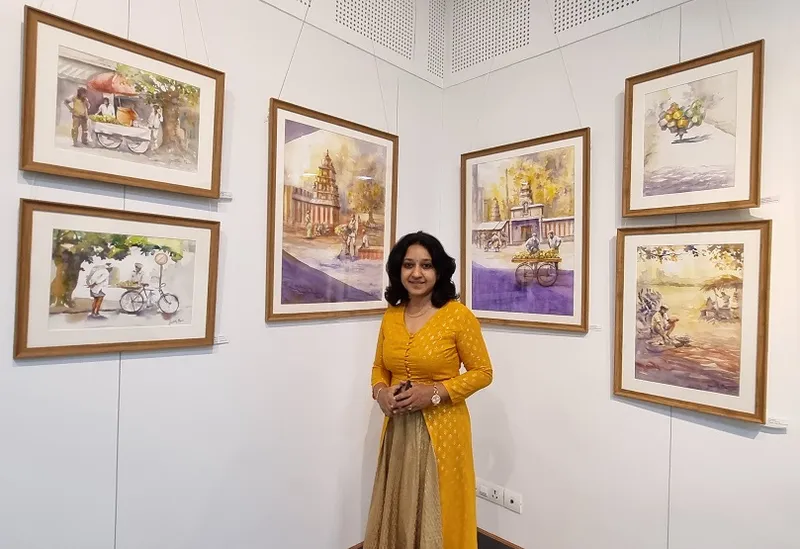
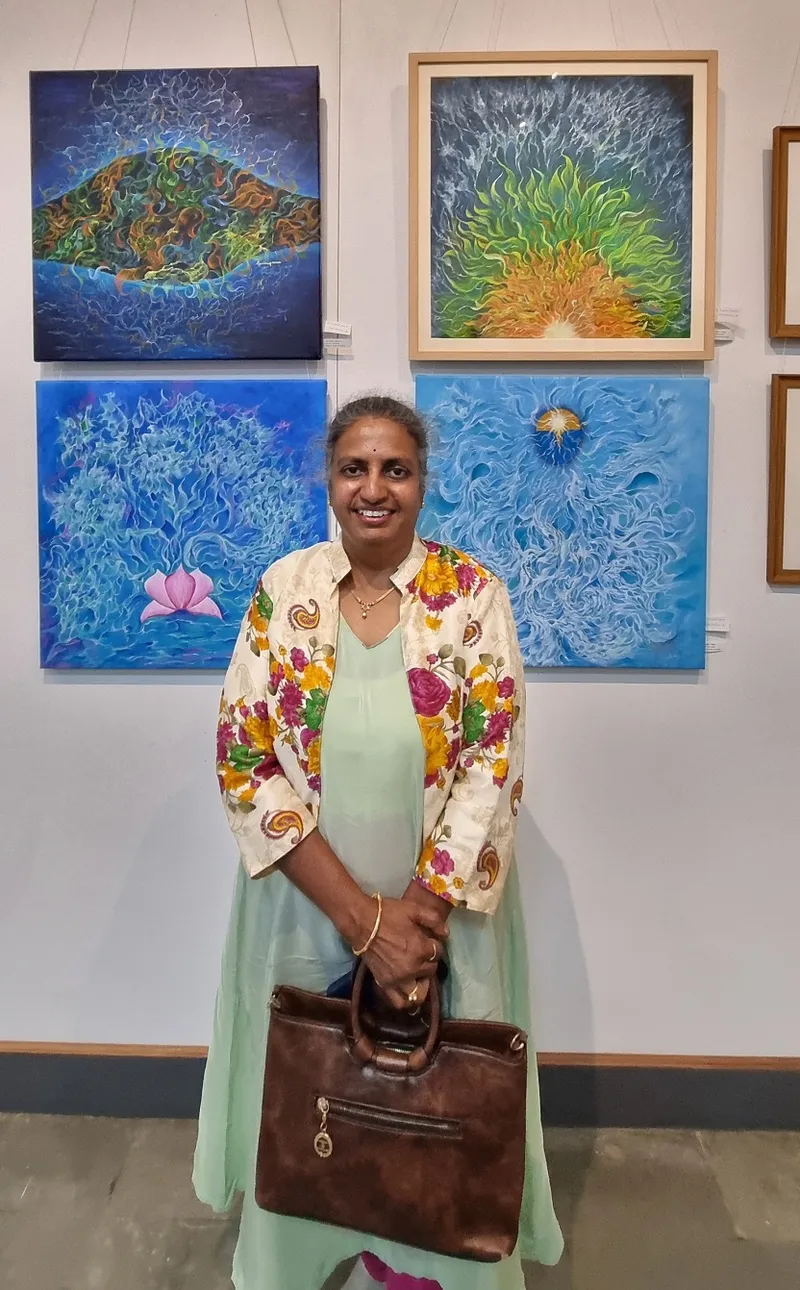
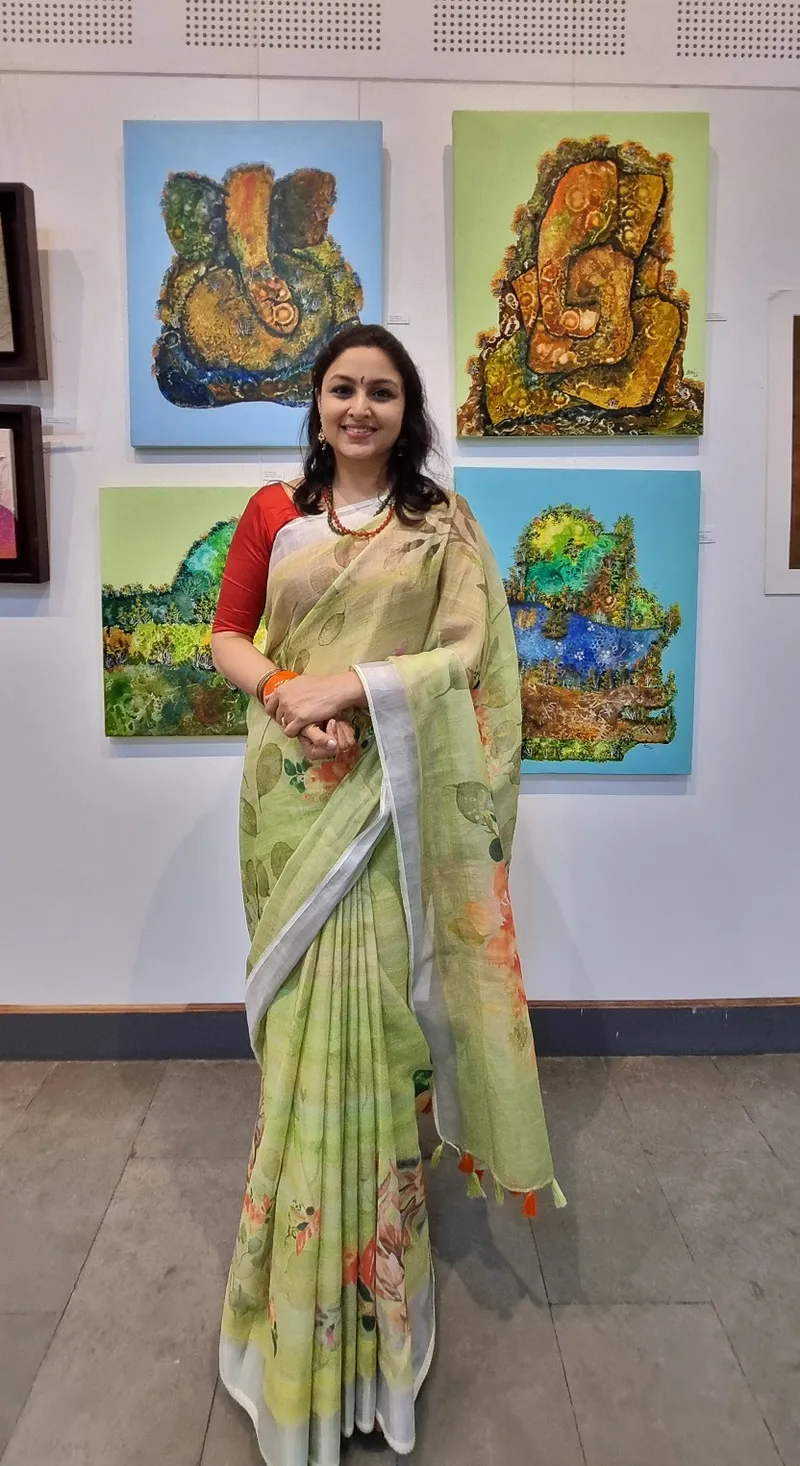
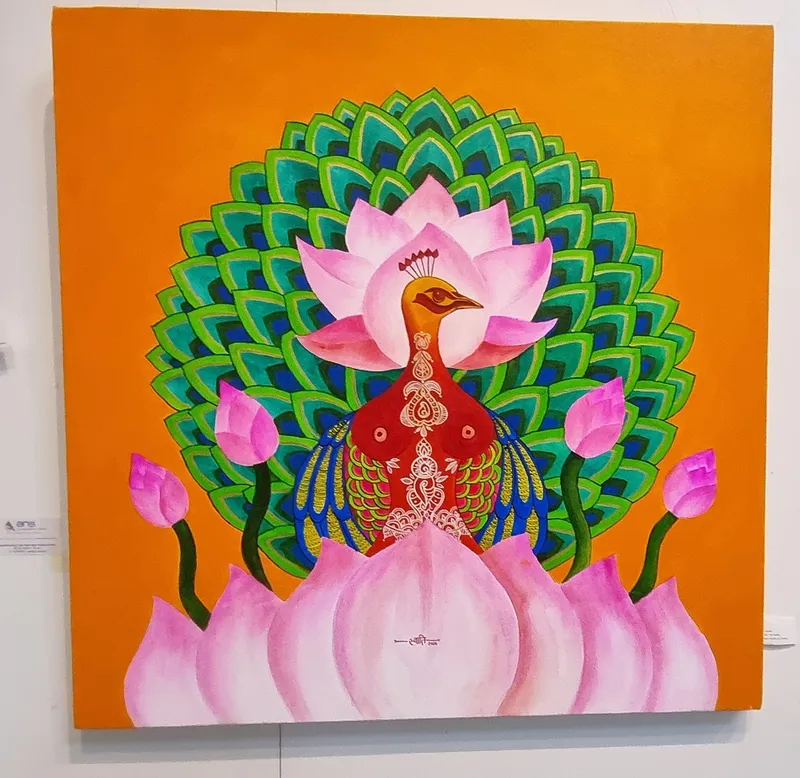
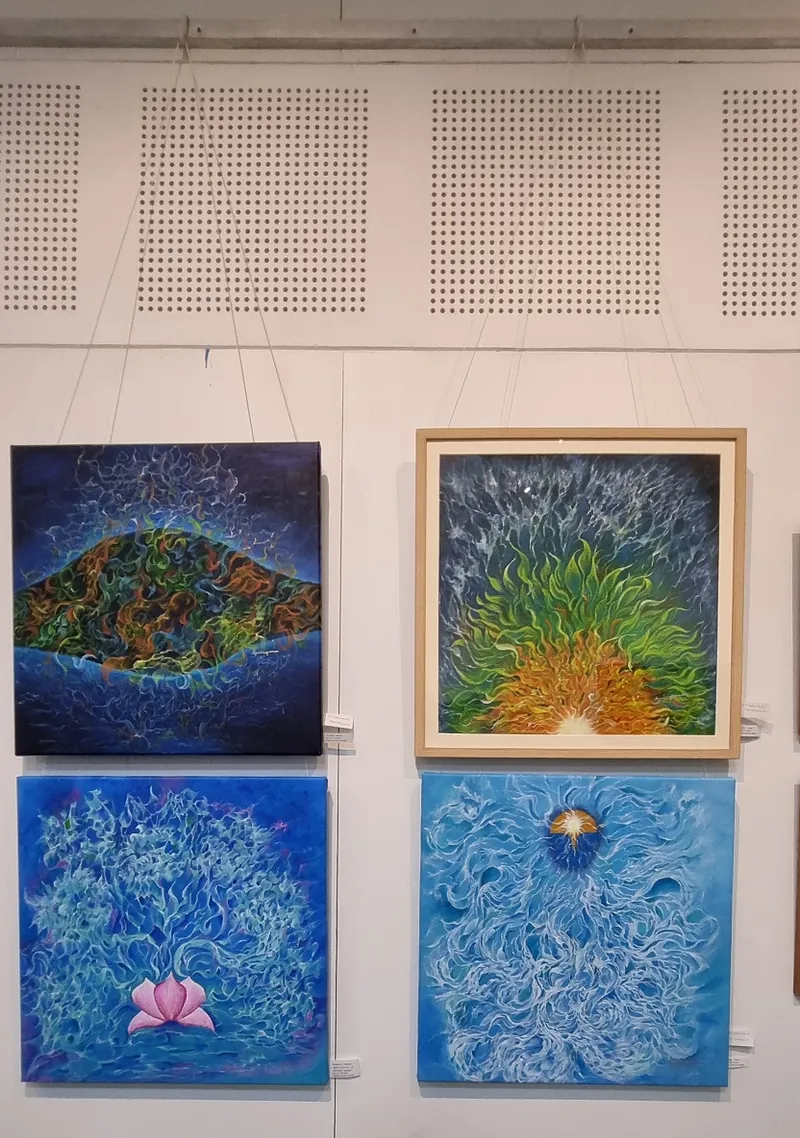
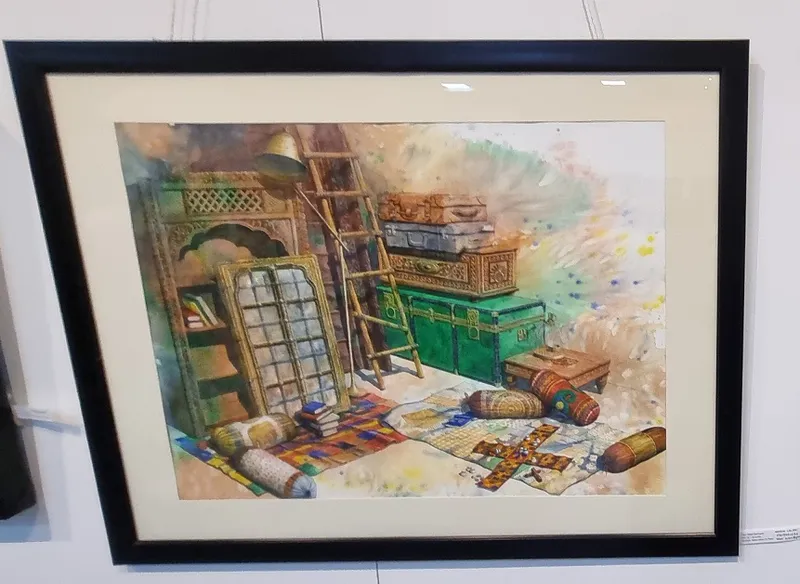
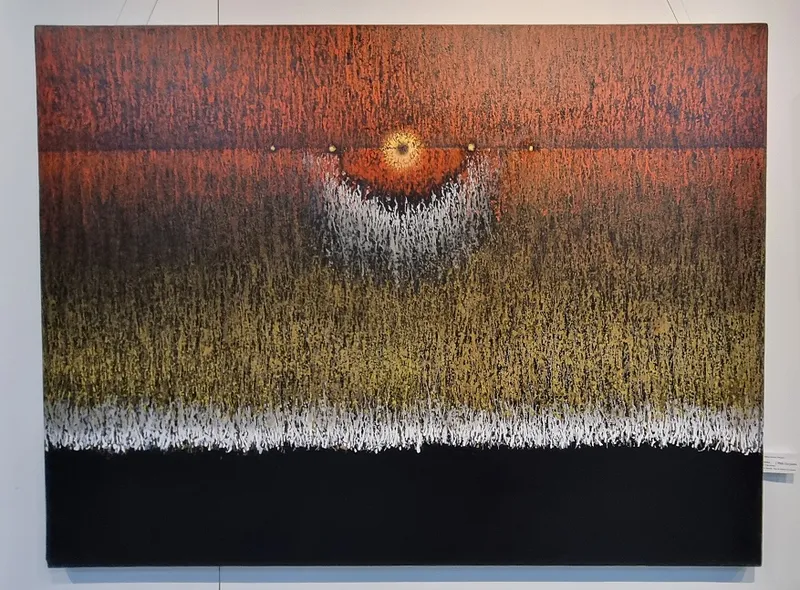
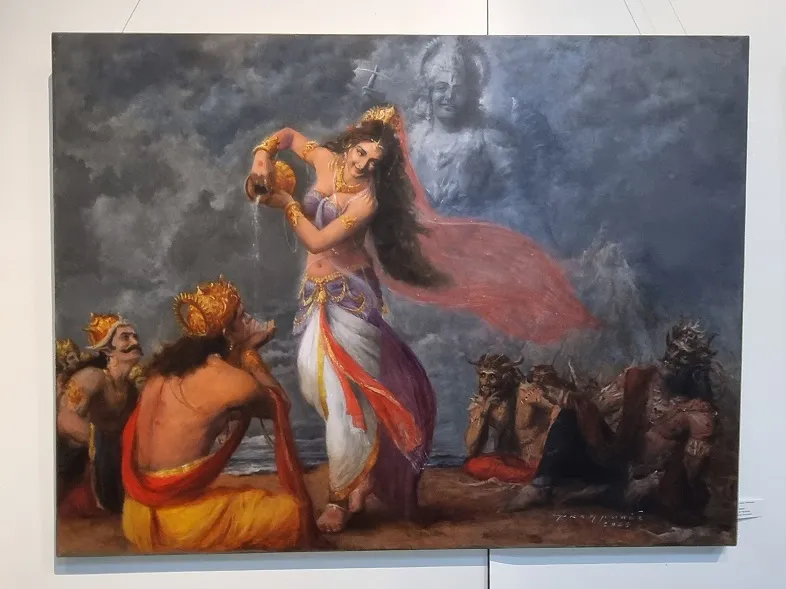
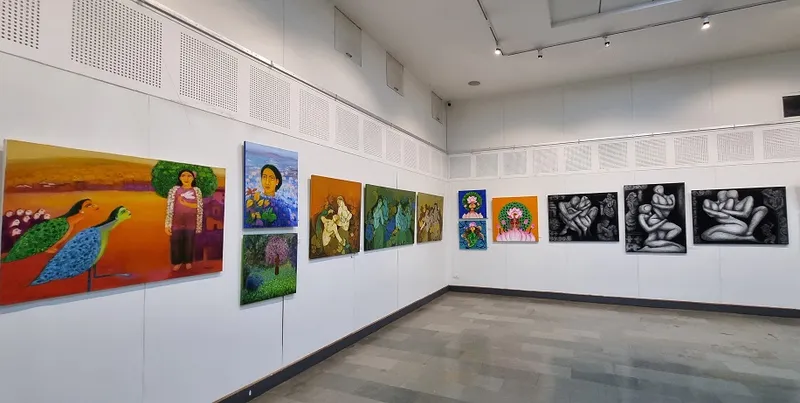
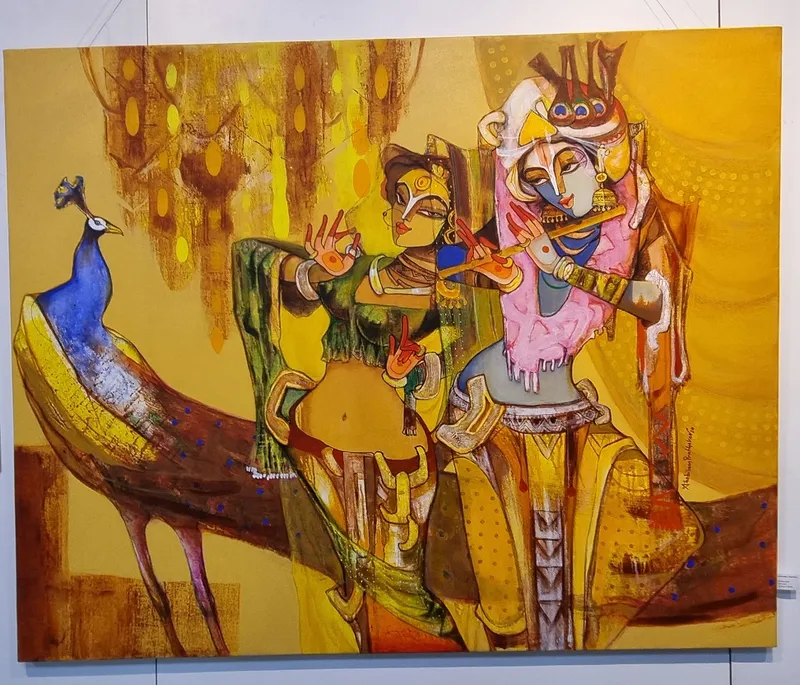
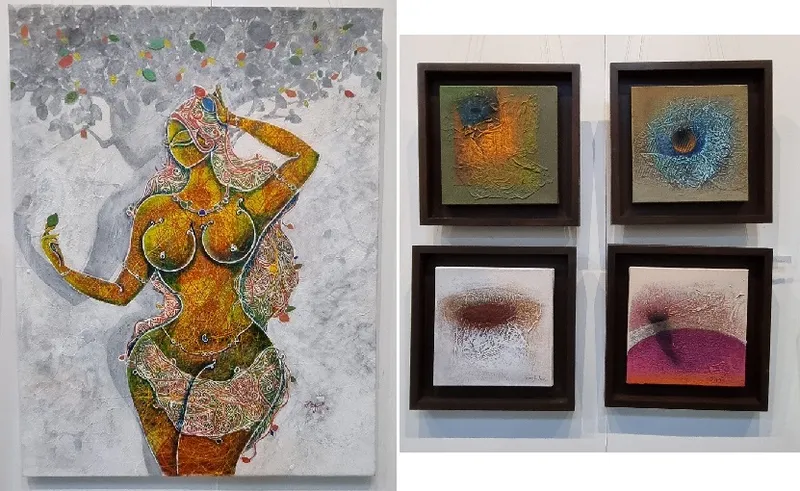
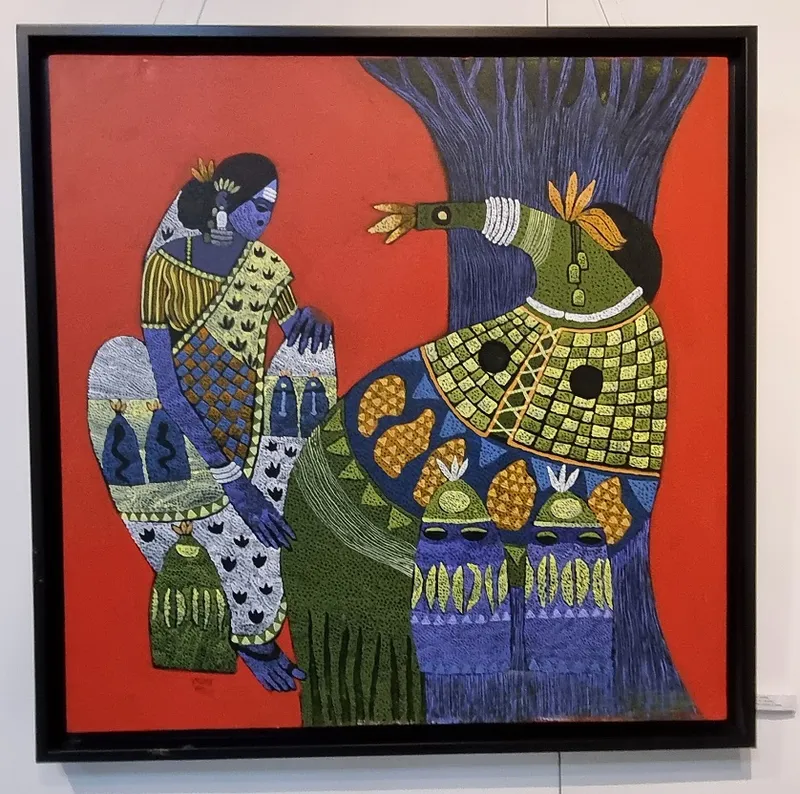
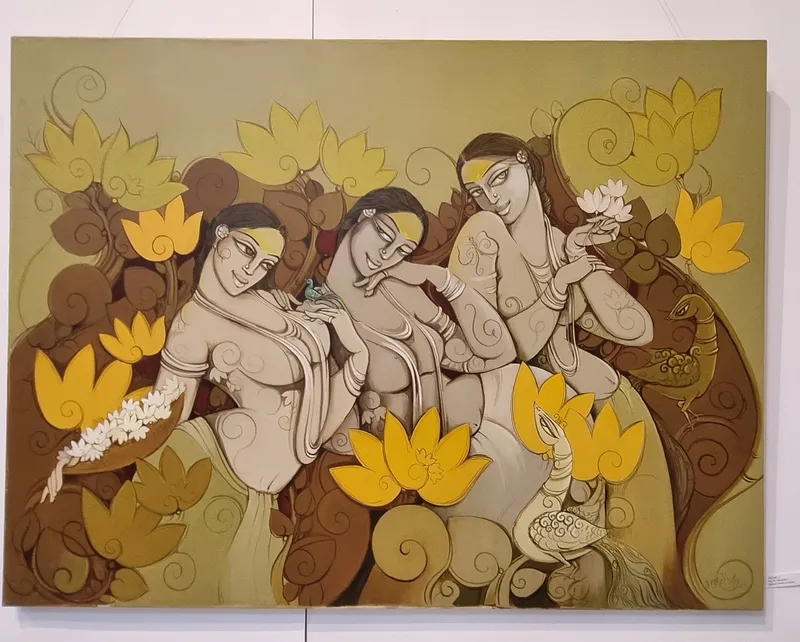
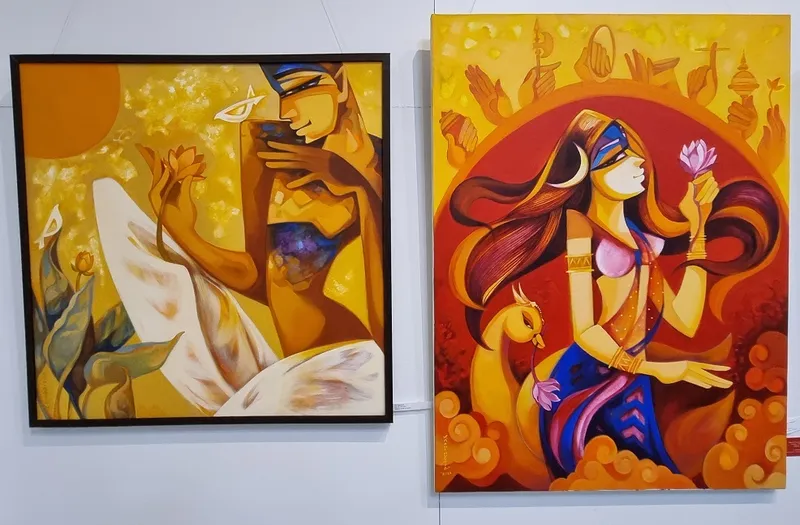
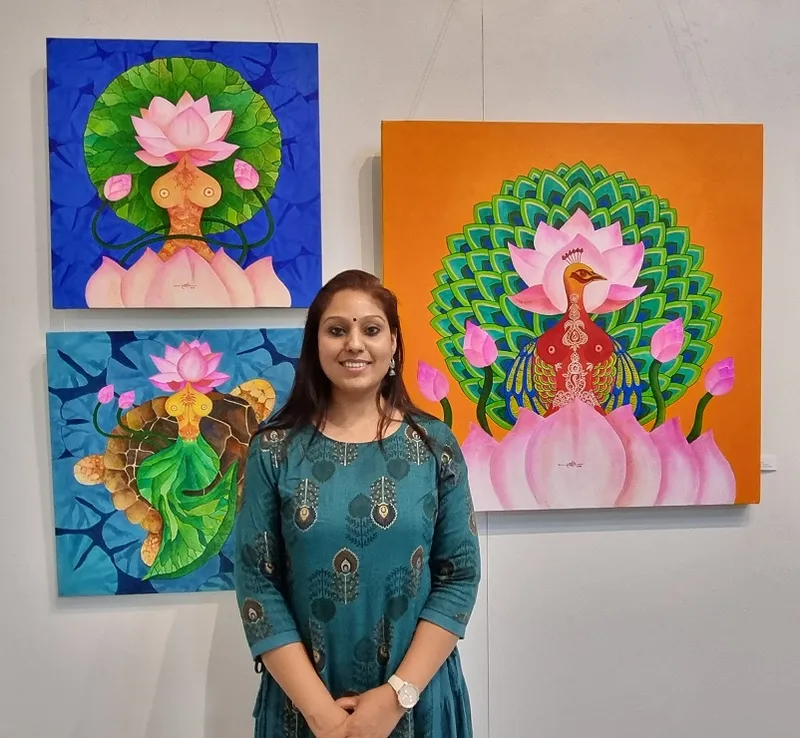
Karnataka Chitrakala Parishath in Bengaluru recently hosted the exhibition titled Charvi (‘something beautiful and intelligent’), curated by Sydney-based Car Street Studios. In this photo essay, we showcase some of the paintings along with artist insights on their creative process.

“Art helps me live each moment deeply, and assimilate and document my experience,” Spoorthy Murali tells YourStory.

Spoorthy Murali” align=”center”>Spoorthy Murali

Spoorthy Murali

She has been painting for around 12 years now. “I am happy to have been a part of several reputed projects and shows, many of which are fundraisers for worthy causes,” she proudly says.

“To me, life is a journey to deconstruct and free the constraints that we put around ourselves. Life is about experiencing this journey fully in all its glory,” Nirupama SP observes.

Art is one of the modes to achieve absolute chaos or absolute stillness. “With each work, I try to break free of a barrier and become just a piece of life,” she adds.

Nirupama SP” align=”center”>Nirupama SP

Nirupama SP

Nirupama has held a solo show and a number of group shows. They include the Karnataka Lalith Kala Academy annual show in 2022.

“Art is an exploration of the soul. My journey as an artist began at a young age when I discovered my fascination for colours and their ability to convey emotions beyond words,” Anupama PG describes.

She experimented with various mediums and techniques, developing a distinctive style that merges realism with an ethereal touch. “My works often feature intricate details that showcase an unwavering commitment to craft,” she says.  

Anupama PG” align=”center”>Anupama PG

Anupama PG

She has won a string of awards over the years from the Gulbarga Academy of Art and Culture, Parameshwara Pulakeshi Award (2018) from the Akhila Karnataka Kannada Chaluvali Kendra Samiti in Bengaluru, and Nammoora Saadhaki award from Kartikeya Charitable Trust in Kasaragod.

Other awards include the Women Achievement Award (2019) from Nava Bangalore Club, Art Legend Golden Mayuri Award (2023) from Konaseena Chitrakala Parishath Amalapuram, and Gold Medal at the 19th annual Royal Academy National Awards (2023) in Kalburgi.

The exhibitors suggest different means to increase and improve art appreciation in society. “Broader art education is needed at the elementary level. More eminent people should come forward and express their opinions on art,” Anupama suggests.

0

Murali advises that more events should be facilitated where the public and the art world interact with each other.

Nirupama recommends that art appreciation should start early in life by exposing children to the art world. “They should be encouraged to express themselves freely through art, and see how such expression works through regular visits to art galleries,” she says.

“The art market needs to be strengthened so that artists can depend on it for their bread and butter,” Nirupama signs off.

Now what have you done today to pause in your busy schedule and harness your creative side for a better world?

1
2
3
4
5
6
7
8
9
10
Swati Tiwari” align=”center”>Swati Tiwari

Swati Tiwari

(All photographs were taken by Madanmohan Rao on location at the exhibition.)

IN PHOTOS | The Encampment: Day Three – The Cornell Daily Sun

IN PHOTOS | The Encampment: Day Three – The Cornell Daily Sun

The encampment on Cornell’s Arts Quad has now continued for almost 72 hours. Here’s some of what The Sun has seen on the third day.

11:15 a.m., April 27 | “Quiet”

In the morning, the encampment is quiet with few onlookers. (Nina Davis/Sun Photography Editor)

11:45 a.m., April 27 | “First Aid”

Encampment members pass out ponchos at the first aid stand within the encampment. (Nina Davis/Sun Photography Editor) 

12:05 p.m., April 27 | “Staying Dry and Blessed”

An encampment member reads the Quran under the “People’s Library” tent to stay dry from the rain. (Nina Davis/Sun Photography Editor)

12:25 p.m., April 27 | “Protected”

As the dry weather turns to rain, the encampment prepares to stay dry. Organizers ask outside community members to provide tarps and other supplies for the encampment. 

3:12 p.m., April 27 | “#Landback” 

Encampment members meet after Vice President for University Relations Joel Malina released a statement on previous and imminent suspensions. (Nina Davis/Sun Photography Editor) 

4:05 p.m., April 27 | “Ceasefire”

A new banner is raised on the encampment’s fence perimeter, reflecting the protest’s demand for the University to call for a ceasefire in Gaza. (Nina Davis/Sun Photography Editor) 

4:15 p.m., April 27 | “Covered”

The encampment’s mural is covered for protection from the rain. The group that sponsored its installment, Climate Justice Cornell, has been suspended for filing for a permit under false pretenses. (Nina Davis/Sun Photography Editor)

Emerging visual artists showcase Lakota culture through photography

Emerging visual artists showcase Lakota culture through photography
image

RAPID CITY, SD – The Rapid City Arts Council is thrilled to announce the upcoming Emerging Visual Artist exhibition, “WICOWOYAKE ITOWAPI UN OYAKAPI Photographic Storytelling,” featuring artwork from the Boys and Girls Club of Rosebud and Five Corners Collective. The exhibition will debut with an opening reception on May 3 at the Bruce H. Lien Cultural Café & Gallery located at the Dahl Arts Center. One of the highlights of the exhibition is a stunning 31-foot-long and 10-foot-wide visual representation of a Lakota kinship circle embracing technology.

For the past six years, Lakota youth from the Boys & Girls Club of Rosebud have collaborated with teaching artists from Five Corners Collective to share their stories through photography. These captivating artworks offer a unique perspective into their lives and cultural heritage. Through innovative portraiture, the young artists invite viewers to delve into their identities and values. The exhibition explores themes of the celestial realm, drawing from the ancient wisdom of Lakota Star Knowledge, which emphasizes the interconnectedness of earthly and cosmic elements, shaping traditional beliefs and guiding meaningful lives. This showcase reimagines storytelling, transforming narratives into catalysts for profound societal reflection and transformation.

Five Corners Collective, a non-profit teaching and exhibition collective, was founded by graduates of the Hartford Art School’s MFA program in photography. Their mission is to impart the love of photography and visual storytelling to others. The Collective partners with community groups to teach photography skills, empowering individuals to tell their own stories. They then collaborate with these groups to create opportunities for members to share their stories locally and beyond.

The Boys & Girls Club of Rosebud plays a vital role in the community, providing mentoring, sports, scouting, academic tutoring, and arts education to children and teens residing on the Rosebud Reservation. The club helps young individuals develop essential skills, resilience, and self-confidence, nurturing them to become healthy young adults. Annually, the club serves around 300 youth aged five to eighteen.

Established in 2013, the Emerging Visual Artists (EVA) Program by the Rapid City Arts Council supports visual artists venturing into gallery exhibitions for the first time. The RCAC’s education staff guides artists through the entire process, from selecting works to receiving critiques, pricing, writing statements, and creating and promoting exhibits. The program accepts EVA proposals from individual artists and groups throughout the year and is currently accepting applications for the 2025 exhibition calendar.

The Emerging Visual Artists program is a rotating exhibition proudly supported by local donors and presented by the Rapid City Arts Council. For more information or to apply as a participating artist, please visit rapidcityartscouncil.org or contact education@thedahl.org.

The Worst Advice You’ve Been Given as a Photographer

The Worst Advice You’ve Been Given as a Photographer

As a follow up to my article on the best advice in respect of turning pro, I thought it would be fun to dig into the worst advice we’ve ever received as photographers. As Oscar Wilde wrote, “one might consider always passing on good advice. It is the only thing to do with it. It is never of any use to oneself.” So, what’s some of the worst photography advice you’ve ever received?

Jeffrey Garriock: Pro Bono Does Indeed Have Value

Photographer and cinematographer Jeffrey Garriock (who I work with at G Adventures as a photo guide) was quick to point out that the worst advice he’s ever been given: “don’t do anything for free.” As much as Garriock champions the value of photography, he’s still of the opinion that there’s a time and place to work for free. Garriock told me that he’s done some wonderful work for NGOs when no money exchanged hands. What else are you going to do when you believe in the work that’s being done and there is truly no money to go around? Related, these experiences afforded Garriock the incredible opportunities to shoot the type of stories he wants to be involved in. The experience he gained on these pro bono shoots has in turn improved his marketability when a related paid job comes along. Pro bono photography has resulted in Garriock working and connecting with like-minded people, helping to amplify certain voices, and improving his skills in ways he might not have been able to otherwise. 

Michelle Valberg: Don’t Rest on Your Laurels

Michelle Valberg, Nikon ambassador and stellar wildlife photographer, was once told that if you achieve success within the first five years, you’re guaranteed long-term success. Today, Valberg would be the first to point out that sustained success in photography requires ongoing dedication, adaptability, and the ability to navigate a constantly changing industry. A drive for success should not be limited to a specific timeframe but should instead be viewed as a continuous journey of growth and evolution. In the end, it is your entire body of work that will define your photographic success, not your first victory.

John and Veronica Park: Story Over Gear

For wedding photographers John and Veronica Park, the omnipresent narrative and online marketing that constantly suggests that the latest and most advanced equipment is a prerequisite for exemplary work is the worst advice they’ve ever received. Contrary to this belief, while contemporary tools might streamline processes or expedite tasks, they are by no means necessary for achieving excellence. The Parks exercise discretion in updating their equipment. They opt to upgrade only when the new gear addresses specific requirements or offers efficiency gains that are significant enough to substantially benefit their workflow.

Trevor Sherwin: No Short Cuts / One Size Doesn’t Fit All

Trevor Sherwin of boudoir studio Provocateur Images told me that listening to the one-size-fits-all approach from people who sell you marketing solutions is far and away the worst advice he’s ever heard. Sure, you can buy a modicum of success, but rarely do those plans ever work the way you need them to. There is a whole ecosystem out there that knows photographers will buy a get-rich-quick type solution. Of course, there are a handful of instances where this works, but, for the rest, it’s bad advice that will take you away from the task of building your business in a bespoke and sustainable way.

Aris Apostolopoulos: Look Outside Of Golden Hour

Aris Apostolopoulos, another photography guide I work with at G Adventures, was quick to point to a very common piece of advice as the worst he’s ever received: “the best light for landscape photography is during golden hour.” For Apostolopoulos, this limits photographers too much. For example, if you want to convey a dramatic feeling with your images, Apostolopoulos suggests that maybe it might be better to take a photo during midday with strong light, creating high contrast between shadows and highlights. Everything doesn’t have to be golden.

Related, Apostolopoulos was also told that the best portrait light comes from a soft box. Again, it depends on what you’re trying to achieve. You have to choose between the soft light of a soft box or the harsh light of a direct flash depending on the mood you’re looking to convey.

Apostolopoulos wanted to make it clear, there is not a “best light” in photography, but there is the best light in relation to what you want to achieve.

Esteban Toro: Put Your Name Behind Your Values

Early in his career, travel photographer and Sony Ambassador, Esteban Toro was told that it didn’t matter so much if you identified with a brand. If you were asked to represent a brand, you should jump at the chance for exposure and a payday. For Toro, this was terrible advice that he’s glad he didn’t act on. Instead, Toro chose to represent a camera manufacturer that wasn’t very popular, at the time. Had he followed this advice and started representing another more popular brand that did not align with his values, his career would have been entirely different. For Toro, the lesson is clear: always be honest with yourself and only represent companies that align with your values. 

Mike Gere: Maybe There Is No Such Thing As Bad Advice

I work with Mike Gere at Frontiers North Adventures as a photography guide. Gere also runs Jasper Photo Tours. We have a lot of time to chat away the evenings as we’re waiting for the aurora borealis to come out and put on a show for our guests. Gere gave me a bit of a different answer that I’d like to conclude with. Gere explained that he couldn’t think of any truly bad advice.

There was nothing that Gere had been told or taught that he regretted learning. Even the bad advice taught him a lesson. Gere considers himself a collection of guidance he’s learned from the good advice he’s received and the lessons he’s learned from the bad advice and the mistakes of others.  

I’m a collection of other people’s lessons and mistakes.

The trick here would be to know what advice to take at face value and what advice to learn from without acting on. It’s a special skill to recognize what advice you shouldn’t go too far down the road with as your companion.

What about you? What’s the worst advice you’ve ever received?

All images provided by and attributed to the credited photographer. Lead image provided by Jeffrey Garriock.

50 Years of Photography

50 Years of Photography

Disconnected in its genesis, conceptual, fine art, and journalistic work, from Weegee to Guanyu Xu, from Samuel Fosso to Gerda Taro, gives life to a myriad of echoes and a cross-section of influences that take the viewer through crucial moments of the recent American and world history.