Beautiful poppies border hi-res stock photography and images – Alamy, perfect poppies – readingagency.org.uk

Beautiful poppies border hi-res stock photography and images – Alamy, perfect poppies – readingagency.org.uk

Types of poppies – 16 of the most beautiful annual varieties to

650 Poppy Border Stock Photos, High-Res Pictures, and Images

Poppy field flanders belgium hi-res stock photography and images

22,770 Poppy Border Images, Stock Photos, 3D objects, & Vectors

Beautiful Border Poppies: Over 3,552 Royalty-Free Licensable Stock

Red poppy with white border hi-res stock photography and images

Poppy flower plantation hi-res stock photography and images – Page

6,100+ Poppies Border Stock Photos, Pictures & Royalty-Free Images

650 Poppy Border Stock Photos, High-Res Pictures, and Images

Poppy border Stock Photos, Royalty Free Poppy border Images

Poppies Stock Photos, Royalty Free Poppies Images

Poppy garden border hi-res stock photography and images – Alamy

6,800+ Poppy Border Stock Photos, Pictures & Royalty-Free Images

Closeup poppy border over white hi-res stock photography and

Red poppies. Floral seamless horizontal border with hand-painted

Related products

California Poppy Seeds – Formula Mix

Poppy Plant: How To Grow Poppies Perfect For Picking

Beautiful Poppy in Fields Near Our Home

Watercolor Illustration Poppy Flowers Perfect Greeting

Poppy (Wild) – Seeds

Photographer Nikita Teryoshin pulls back the curtain on the global arms business

Photographer Nikita Teryoshin pulls back the curtain on the global arms business

In today’s world, we are constantly bombarded with images of war and destruction, and this is in no small part due to the global expenditure on arms increasing year on year. Perhaps surprisingly, the global arms business gets very little media exposure – which makes the new photography book by photographer Nikita Teryoshin all the more striking. 

Nothing Personal: The Back Office of War by Nikita Teryoshin is a new release published by Gost, and turns what little knowledge we do have about the arms business completely on its head. Teryoshin traveled to 16 arms fairs across each continent between 2016 and 2023, to investigate what happens before wars take place. The resulting body of work is presented in the book and provides an insight unlike any before. 

A Belarusian officer and a satellite dish (Image credit: Nikita Teryoshin)

The scenes presented in the book are as far removed from a warzone as one might imagine, with exhibition halls filled with the rich and important seemingly window shopping for their preferred tools of destruction. 

Nothing Personal shows the back office of war, which is the complete opposite of a battlefield: an oversized playground for adults with wine, finger foods, and shiny weapons,” says Teryoshin.

“Dead bodies here are mannequins or pixels on screens of a huge number of simulators. Bazookas and machine guns are plugged into flatscreens and war action is staged in an artificial environment in front of high-ranking guests, ministers, heads of states, generals and traders.” 

Missile models Python Derby and Spike ER (Image credit: Nikita Teryoshin)

A trader locks away two anti-tank grenades (Image credit: Nikita Teryoshin)

Teryoshin intentionally obscures faces, leaving the attendees anonymous, which acts as a metaphor for the cloak-and-dagger way in which the business operates.  

The photography in the book is outstanding. The use of composition, color and form all come together to highlight the message. Flash is used to enrich this further, shining a light on the shadowy underworld and adding saturation and hue to a dim and dull theme. 

“The casual nature of his observations combined with the bright innocent color palette which runs throughout the imagery is a sinister contrast to the goods on sale,” states the publisher.

Model of a Swedish Bofors 57 Mk3 naval gun (Image credit: Nikita Teryoshin)

A photo stand of the Indian Army (Image credit: Nikita Teryoshin)

What Teryoshin manages to capture is the sense of the ridiculousness of the arms fairs and the characters in them, all with a humorous touch. Humor is not in the sense of subject matter, but in the observed normality of the shows. Much like any other trade show, attendees wander around with global political tote bags, missiles are carried from the stock room to the show floor so they can be handled by prospective customers, and demo areas showcase the destructive power of some of the goods available for order. 

Yet after the initial impression of great photography and storytelling, the humor fades and you’re left with a sense of realization of why these people are at such a show. The juxtaposing nature of the work to its message is an effective one, and makes you question how such a ‘trade’ exists and how the attendees can be so blasé about what it is they are doing.  

This has been one of my standout books of the year so far, both for the photographic quality and the effective way the message is delivered. 

Nothing Personal: The Back Office of War by Nikita Teryoshin is published by Gost and is available now in the UK for £45, and will be released in the US on April 16 2024 for $60. Order and pre-order links can be found below. 

Saudi visitors watching the air show (Image credit: Nikita Teryoshin)

You might be interested in the best photography books, along with the best coffee table books on photography, encompassing genres like the best fashion photography books and the best street photography books.

Week of April 1: Film Festival, Hogs for the Cause and an Art Market

Week of April 1: Film Festival, Hogs for the Cause and an Art Market

If you love scary movies, the Overlook Film Festival is for you. The film fest for all things horror returns this weekend (April 4-7) with movie screenings and frightfully fun interactive events at locations across the city. Check out the full schedule here.

To celebrate the Overlook’s return to New Orleans, Rahm Haus Ice Cream, Cottage Magick and Courtyard Brewery are hosting the Night of the Living Art Market this Friday, April 5, 6 to 10 p.m. Local artists and craft vendors will have plenty of spooky treats, plus food, elixirs and much more. Check out the full line up and information here

The annual BBQ bonanza Hogs for the Cause is this weekend (April 5 and 6) as well at the UNO Lakefront. Per usual, there will be lots of tasty barbecue to sample, a celebration of all things bacon, live music, liquid refreshments and more. And it’s all for a great cause, raising, to date, more than $11 million for families and programs battling pediatric cancer.

Kicking off the “Hogs” week, Cochon de LEAAF will be slinging pork pops and jalapeno poppers on Tuesday, April 2, 5 to 9 p.m. at Ecology Beer Creative. Enjoy some good eats (for a good cause), sample some craft beer and stay for the taproom’s weekly trivia night at 7:30 p.m. Cash prizes will be awarded!

Head over to the Lafitte Greenway (1900 Lafitte Ave.) this Saturday, April 6, 10 a.m. to 3 p.m. for the unveiling and a community celebration of the Nanih Bvlbancha. The project is a result of an intertribal collective “to highlight the cultural importance of earthen mounds and the history of the indigenous people of Bvlbancha, what is now known as New Orleans.”

We are feeling refreshed just by the sight of this purple frozen drink from Bar Brine NOLA. It’s go-cup season! Grab one to go, but also be sure to sample some snacks before you do. Open Wednesday through Sunday, 5 p.m. to 10 p.m.

Huh? Pentax announces a new daguerreotype camera!

Huh? Pentax announces a new daguerreotype camera!

Ricoh/Pentax announced a daguerreotype camera, catching the film industry off guard. “It’s 1830s specs, but with some modern touches,” designer Takeo Suzuki stated via Instagram.

While the video doesn’t reveal many details or a launch date, Suzuki stated that the camera is in development. “We have wanted to embrace analog technology. The Film Camera Project was just stretching a bit and warming up. Pentax is now seriously throwing down.”

A just-revealed artist's rendering of a possible Pentax daguerrotype camera in development.
A just-revealed artist’s rendering of a possible Pentax daguerreotype camera in development. This might be the first daguerreotype camera that can be charged via USB-C.

Following the design of inventor Louis Jacques Mandé Daguerre

A just-revealed artist's rendering of a possible Pentax daguerrotype camera in development.
Another just-revealed artist’s rendering of a possible Pentax daguerreotype camera in development.

Pentax went on to say that their daguerreotype uses the same process as the original 1830s design. “Young people have increasingly shown interest in these kinds of cameras, and we want them to experience the joy that the early pioneering photographers felt.”

With traditional daguerreotype cameras, the photographer polished a silver-plated copper sheet until it was like a mirror. Then they zapped it with iodine and bromine vapors to make it light sensitive. After that, they inserted the sheet into the camera, where the exposure was made. The photographer then placed the exposed plate over heated mercury fumes until the image appeared. This produced a surprisingly detailed, one-of-a-kind image.

What are some of the updates to the original daguerreotype design?

A just-revealed artist's rendering of a possible Pentax daguerrotype camera in development.
Even one more just-revealed artist’s rendering of a possible Pentax daguerreotype camera in development.

Since the daguerreotype camera is still in development, Ricoh/Pentax offered few other details. However, they did state that they were exploring various materials. “The original wooden housings were often very large and cumbersome,” Suzuki stated, “so we are exploring other materials, including innovative inflatable housings.”

The company also noted that they were looking into using heated fumes “other than mercury,” noting that customers shouldn’t breathe toxic fumes.

Ricoh/Pentax is also looking at creating silver-plated copper sheets with wifi and Bluetooth connectivity so the photographer can upload their daguerreotype prints to social media easily.

Is this news an absurd head-scratcher? Yep, we got you! Happy April Fools’ Day!

These are the best photography April Fools we’ve ever seen

These are the best photography April Fools we’ve ever seen

For decades, the April Fools’ Day tradition has given journalists around the world permission to write a little fake news every April 01. And there has been plenty of photography-related fooling over the years.

We remember one from the Eighties when Olympus (now OM System) claimed that photography had been first discovered by a Japanese monk in the 18th Century, over a hundred years before Daguerre and Fox Talbot. 

And there was the one about the 16-2000mm zoom for your SLR that a magazine reported was going to go on sale from April 01. Of course, nowadays the joke is on that writer with cameras like the Nikon Coolpix P1000 with its 24-3000mm lens!

In recent years, the internet has brought a new level of sophistication and fun to the April Fool – as you can reach more people on the right day, and support your fictitious tales with links and videos. We’ve trawled through the last few years to bring you seven of our favorites… 

1. Kodachrome makes a comeback

(Image credit: Chris Hondros/Getty Images)

Everyone just wishes that this one were true… and this was therefore an inspired news story from The Phoblographer on April 01 2018. Fujifilm, Kodak and others have all been re-introducing silver halide films that they had previously discontinued. But the death of Kodachrome back in 2009 was a particularly painful one for professionals and enthusiasts that had cut their teeth on this classic yellow-boxed emulsion. 

“Rejoice, photographers: those of us who never got to shoot Kodak Kodachrome seem to be getting a chance after all,” went the news piece. 

“Almost 10 years after the company announced the death of the beloved film emulsion, Kodak is letting the world know that Kodachrome is indeed going to be returning to shelves very soon after Ektachrome hits stores.” 

If only it were true… but the specialist chemistry used to develop Kodachrome, which was done in a handful of Kodak sites around the world, is reason enough why this analog reincarnation will never come to pass.

2. Underwater instant camera

This one dates from 2014 from the fun-loving crew at Lomography. Instant cameras were at that point starting their meteoric return to people’s affection – and Lomography had entered the market with its own retro-inspired range of instant print models. But this Fool’s jape involved the idea that they were launching an underwater instant camera, that spurted out the prints as you swam around in the pool or sea. Called the Lomo’Instant Caribbean it even had its own launch film to make the idea that bit more credible.

“Following the incredible response and enthusiasm on our Kickstarter campaign, we are thrilled to say ‘Ahoy mateys!’ with the release of the Lomo’Instant Caribbean Edition,” began the fiction. 

“The world’s first and only dedicated underwater instant camera, the Lomo’Instant Caribbean Edition opens the door to the exciting world of underwater instant fun. Test the waters and take it for a dive with the turtles in Barbados or catch the waves on your next surf trip in Maui!”

3. Rogge & Pott’s Re-35

image

This is one of the most sophisticated April Fool tomfooleries of recent years. The Re-35 was an ingenious hoax that claimed that a company had invented 35mm canisters that would bring digital imaging to your old analog SLRs. The canisters came with their own patented scratch-resistant Flexisensor that pulled out to replace the silver halide film, and then recorded the image onto the digital memory. The Re-35 canister then hooked up to your computer using a convenient USB connection.

A pop-up message on the website now explains all: “Some things are too good to be true! Re-35 does not really exist. We (the design company Rogge & Pott) created Re-35 as an exercise in identity design. We invented the ‘product’ because it was something that we had wished for for a long time (as many others). We launched the website and sent out ‘press releases’ on April first – thinking, that the date would make clear, that Re35 is just wishful thinking – a classic April Fools’ Prank!”

However, the joke is now on Rogge & Pott – the I’m Back company now produces digital backs and film canisters that really do bring old film cameras back to life.

4. GoPro’s handy accessory

With over three million Instagram followers, Murad Osmann‘s #FollowMeTo project became well-known the world over – and was much copied by others. But the trouble with this style of selfie is that you need a friend or assistant to be able to get the shot, which shows you holding hands with the person holding the camera. 

GoPro‘s April Fool solution in 2018 was to suggest a new addition to the army of existing GoPro accessories

“We’ve all been there: picturesque view, perfect light, exotic location…but you’re solo. It’s just you and your GoPro. Sure, you can frame in a nice landscape shot, or even snag a classic selfie, but expectations are looming,” read the GoPro news release

“Your parents have been hounding you for years about settling down with ‘the one’, and lately, even your friends are starting to drop subtle jabs about your choice for independence. Why not continue to enjoy the journey alone while giving the impression of companionship? Introducing Armie, the ultimate mount for living up to expectation.” Not bad for $59.99!

5. DSLR for left-handers

Head back to 2013 and The-Digital-Picture.com came up with a great idea for the 10% of the population that are left-handed. It was the ‘news’ that Canon was introducing a new special-edition of its EOS 7D DSLR, which had the grip on the left-hand side of the body rather than on the usual right-hand side, offering ‘reversed ergonomics’ for long-suffering southpaws. 

“Canon has been a world leader in innovation for over 65 years – and the EOS 7D L is another innovative product that we are proud to have associated with that heritage,” said the made-up company executive.

However, southpaw cameras do exist – take a look at Yashica’s real-life left-handed camera!

6. Mirrorless camera for left-handers

Dutch retailer Kamera Express took the left-handed baton and ran with it in 2023, going so far as to list an actual pre-order page on its store website for the Sony A7L V – a supposed leftie version of the Sony A7R V. Then it went even further and posted a straight-faced video preview to YouTube! 

Making use of a 3D-printed mockup of an A7R V for southpaws, the retailer really went the extra mile in its commitment to the bit. It was so well done that we wonder how many people clicked the pre-order button when it was live… or how many people were so tickled by the store’s sense of humor that they ended up placing orders with it for real cameras!

7. Medium format disposable camera

April Fool: Fujifilm GFX Disposable camera

(Image credit: Fujiaddict.com)

We loved this very-credible hoax from 2021. Disposable film cameras have been very popular in last few years, and the Fujifilm GFX series has created renewed interest in medium format cameras. So why not combine to the two and make a medium format disposable camera? 

This April Fools’ jape was dreamt up by Fujiaddict.com. The Fujifilm GFX Disposable would come with “a 60mm f/4 lens and 25 frames of 400H 1600 ISO 645 film inside. If the program is popular Fujifilm will also offer ACROS 645 inside as an option for $6.45 more”. 

The blog suggested that Fujifilm would be sold with the addition of a deposit that would cover the development cost of the 120 film, but would also cover you receiving 102MP scans of your images (and therefore encourage you to buy a Fujifilm GFX100 or GFX100S digital camera)!

2023 All WNY Award: Best Photographer: Julie LaCrout

2023 All WNY Award: Best Photographer: Julie LaCrout

Congratulations to Julie LaCrout, winner of the 2023 All WNY Award in the Best Sounds Person category. Congratulations also go to second-place winner, Meredith Snow and third-place vote-getter Matt Shotwell.


All WNY is made possible thanks to coffee and sleep deprivation.
We appreciate your readership. We like money, too.

The Sony A9 III is the best camera I’ve ever used for flash photography portraits

The Sony A9 III is the best camera I’ve ever used for flash photography portraits

After a recent portrait shoot on location, I can say with confidence that the Sony A9 III is my new favorite camera for flash photography, and I’ve only scratched the surface of what it can do. 

Sony‘s new $6,100 / £6,000 mirrorless camera hit the headlines as the fastest camera ever with blazing 120fps burst shooting at full quality, but what excites me more, after completing an exhaustive A9 III in-depth review, is what this sports shooter does for flash photography. 

Why is the A9 III so much better than other mirrorless and DSLR cameras for flash photography? It packs new tech – a global shutter and Sony’s best-ever autofocus – that makes capturing portraits with flash on location so much easier. 

Let’s just say that the next time I’m out on a portrait shoot or wedding that needs flash and I don’t have the A9 III, I’ll cry a little inside.

Flash photography portrait taken with the Sony A9 III at first light with golden hour background reflected in a lake

At dusk, the A9 III’s intelligent subject and eye detection autofocus worked a treat and I could illuminate my subject with flash and still use a wide f/4 aperture to soften the dark background.  (Image credit: Future | Tim Coleman)

The freedom a global shutter brings for shooting portraits with flash on location

The photo above was shot with the A9 III set to 1/2000 sec and the FE 70-200mm F4 G OSS lens at its maximum f/4 aperture, with an off-camera Sony HVLF46RM flash positioned in a softbox firing at full power and remotely triggered using the Sony FA WRC1M wireless radio commander attached to the camera. 

Sounds simple, right? Well, yes, it was, but it’s only thanks to the tech inside the A9 III – namely the new global shutter, which I’ll unpack later – that I could use these camera settings and achieve a shallow depth of field portrait with accurate focusing. There’s no stress about camera settings. Put simply, I can choose whatever camera and lens settings I like without any restriction, which can’t be said for almost any other camera. With the A9 III, I’m enjoying the most reliable autofocus system in the world to boot.

The above example is just for a simple on-location flash portrait shoot. I haven’t even touched on high-speed action photos with flash, which is where the A9 III tech really is a game changer.

For flash portraiture with other systems, I’d have to reduce the lens aperture to around f/11 because the standard maximum flash sync speed is about 1/250sec (or less). If I shot at f/4 (or wider, like f/1.8, for an even shallower depth of field) at 1/250sec, my subject would be totally overexposed. And I don’t want f/11 because the background defocus is less extreme and my subject doesn’t stand out.

I’ve used an ND filter to reduce light intake as a workaround before using an f/4 or wider aperture. But it’s a faff, and can adversely affect the camera’s autofocus performance and color accuracy. And what if I take the filter on and off regularly like at a wedding when switching between natural light and flash?

I thought pairing the A9 III with a flash for such quick flash sync speeds would be a bit of a minefield, and you do need to play around with camera settings a bit, but in reality, it’s not that complicated. Put simply, the A9 III is the most versatile camera I’ve ever used for flash, and I wouldn’t think twice about hiring it for location portrait shoots. 

Sony A9 III with wireless radio commander alongside the Sony HVL 46RM flash on a wooden table

Dream camera gear for flash photography: Sony A9 III, wireless radio commander and a flashgun.  (Image credit: Future | Tim Coleman)

Limitless flash sync speed

Shooting with flash usually comes with unhelpful limits because of the brightness it emits combined with the maximum shutter speed you can use to sync with the flash of light. A regular DSLR or mirrorless camera flash sync speed tops out at 1/250sec, some slower than this. 

Under these restrictions you have various choices when using flash. Close down the aperture to around f/11, or if you need a large aperture for shallow depth of field portraits, you can throw an ND filter in front of your lens to reduce light intake and get the right exposure. Otherwise you’ll get overexposed blown out highlights on subjects illuminated with flash.

Not all cameras have such flash sync speed restrictions. Another versatile alternative for flash portraits is the Hasselblad X2D 100C. It uses a mechanical leaf shutter that is built into its lenses instead of the sensor and can also sync flash with any shutter speed, though its shutter is limited to 1/2000 sec at the fast end, whereas the A9 III’s maximum shutter speed is 1/80,000sec. Furthermore, its autofocus is simply no match for the A9 III and you can’t rely on it for accurate focusing. Yes, you get excellent image quality for portraits, but the X2D 100C is harder to use especially on location.

Sony A9 III with wireless radio commander alongside the Sony HVL 46RM flash on a wooden table

(Image credit: Future | Tim Coleman)

Why is the A9 III unrestricted? It’s the first mirrorless camera to feature a sensor with a global shutter which reads every pixel simultaneously. Most other mirrorless and DSLR cameras feature an electronic sensor with rolling shutter that reads pixels line by line, plus a mechanical shutter. 

In almost all DSLR and mirrorless cameras, flash is deactivated when using the electronic shutter because of the limited sensor readout speed – it has to be the mechanical shutter instead. The Nikon Z8 and Z9 are exceptions, relying entirely on stacked electronic sensor and boasting the quickest sensor readout speed (rolling shutter) of 1/250 sec, but their maximum flash sync speed is only 1/200sec.

This isn’t the place to get bogged down further in the technicals – why and when you use a mechanical shutter or electronic shutter. Suffice to say that the A9 III’s sensor with global shutter is a revelation for high-speed photography, especially flash photography, offering the best of both mechanical and electronic shutter worlds. 

For those who are into flash photography in particular, the A9 III opens up a whole other realm of creative possibilities, cleanly freezing fast action with no motion blur. It also makes portraits with flash a breeze. Whenever I’ve got a flash photography gig, the A9 III will be the first camera that comes to mind.

You might also like

In Alaska, a crackdown on misrepresented Indigenous art is testing a unique U.S. law

In Alaska, a crackdown on misrepresented Indigenous art is testing a unique U.S. law
image
Open this photo in gallery:

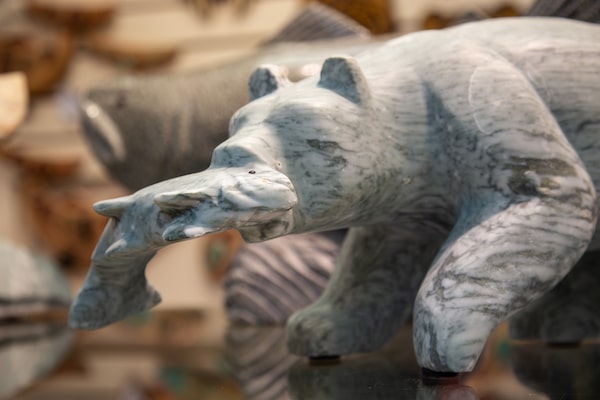
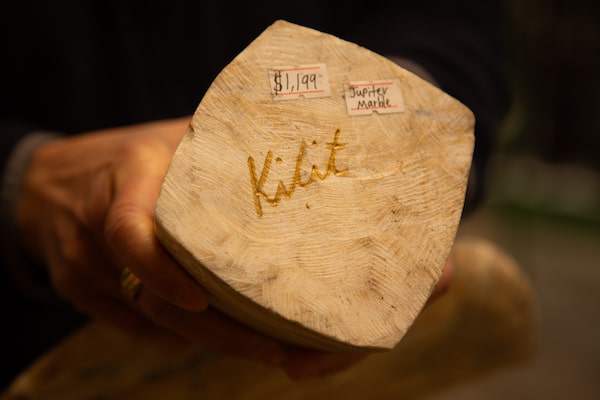
This carving at a shop in Ketchikan, Alaska, was made in the Philippines and engraved with the name of a nonexistent Tlingit artist, part of an operation that ran afoul of the U.S. Indian Arts and Crafts Act. The artist’s two-year prison sentence is the longest of its kind in U.S. history.Photography by Nathan VanderKlippe/The Globe and Mail

The stone carving depicted a bear grasping a fish in its mouth, its supposed authenticity sealed with the engraved name of its Tlingit artist, Kilit. It was sold at a shop in Ketchikan that catered to the millions of cruise ship tourists who pass through this coastal town eager to bring home a piece of coastal Alaska. The price: US$3,200.

But Kilit did not exist, and the carving did not originate in Alaska. It was made in the Philippines, as part of a sophisticated operation that, for many years, stocked two shops in Ketchikan with humpbacks, bears, dolphins and eagles sculpted 10,000 kilometres away.

The arrest of the family accused of misrepresenting the sale of Indigenous-made goods, a violation of the U.S. Indian Arts and Crafts Act, marks a milestone in the prosecution of a crime that, for many decades, has had little enforcement. It comes at a moment when Indigenous groups in the United States are taking new interest in enforcing artistic traditions they see as their intellectual property, with lucrative potential.

Open this photo in gallery:

Artworks like the ones sold in Ketchikan have become test cases for how to enforce U.S. laws around Indigenous craftsmanship.

The case has underscored the potential effectiveness of a unique U.S. law designed to protect Indigenous-made art, a law nearly a century old.

It has also brought to the fore the complexity of enforcing rules based on artistic identity, and the limitations of legislation without enforcement.

According to the U.S. Attorney, Cristobal Rodrigo, the real identity behind Kilit, began to teach Alaskan art styles to Filipino artists beginning a quarter-century ago, in 1998. He and his wife, Glenda, then formed a company in the Philippines that manufactured carvings and totem poles and shipped them to the U.S., where his store staff told customers, including undercover federal agents, they were made by local artists.

The stone was marble rather than soapstone, the wood mahogany instead of cedar. But the designs were often well crafted, and the price negotiable. Tourists bought pieces by the hundreds.

Open this photo in gallery:

U.S. authorities discovered that ‘Kilit’ is a pseudonym for Cristobal Rodrigo, who is now serving prison time.

Mr. Rodrigo is now serving a two-year sentence in an Oregon prison, in what the U.S. Justice Department called a “monumental sentence” that is the longest of its kind in U.S. history. His wife and son, Christian, await sentencing later this year. An employee, Jessie Reginio, was ordered to pay a fine for calling himself an Indigenous carver named Sonny. At least three others have been charged.

“It’s good to see the powers of the state are being activated, as they should have been for almost 100 years now, to use this law,” said Jacob Adams, an attorney who has worked with Sealaska Heritage Institute, a non-profit dedicated to furthering the cultures of Alaska’s Tlingit, Haida and Tsimshian people.

“It’s nice. Is it making an impact on the market? No.”

The drafters of the U.S. Indian Arts and Crafts Act, first enacted in 1935, were concerned that rampant theft of Indigenous designs and motifs could “lead to the loss of entire peoples and cultures. And that’s not hyperbole,” said Mr. Adams. The law, updated in 1990, mandates truth in advertising: Art must be made by Indigenous hands if it is marketed that way.

For much of its existence, however, it has been little enforced. A 2011 report by the U.S. Government Accountability Office found that from 2006 to 2010, 649 complaints were made to the Indian Arts and Crafts Board, which concluded that 150 appeared to be violations of law. It referred 117 of those to law enforcement, “but no cases were filed in federal court as a result.” No one knows the size of the market for such art, nor the extent of misrepresented works, the report found.

The years since have brought some new enforcement. In 2019, two men in Albuquerque, N.M., pleaded guilty to selling jewellery fashioned in the Philippines and agreed to US$300,000 in fines, as well as community service hours. In 2021, a Juneau man forfeited carvings worth more than US$1.5-million and was fined for selling Philippines-made art. Last year, a man selling art near Seattle’s Pike Place Market was sentenced to 18 months of federal probation after misrepresenting himself for a decade as a member of the Nez Perce peoples.

Indigenous organizations have contemplated more assertive action. Sealaska is moving toward an “offensive approach,” said Lee Kadinger, the institute’s chief operating officer. Lawyers have begun to examine the potential for trademark and copyright claims to certain designs. Civil suits, however, can be expensive.

Building recognition of intangible properties amounts to a new frontier in assertion of Indigenous rights. First came steps to secure land and resources. “But there’s only so much land. There’s only so much natural resources,” Mr. Adams said. Indigenous intellectual property – culture and artistic traditions – provides the potential for “unlimited economic growth and economic foundation for Indigenous groups.”

But fakes, like those that were being sold in Ketchikan, have proliferated. Mr. Rodrigo, according to a charging document, formed a company in the Philippines in 2003 to manufacture carvings. Work on the totems began in 2015. The family did a robust business. The imported carvings were cheap, but sold for thousands. In one year alone, they made at least US$1-million in sales, according to Assistant U.S. Attorney Jack Schmidt.

Other local vendors were furious, but powerless. “Look at the money he’s making. Unbelievable profit margin there, it’s hard to fathom,” said Michael Peters, who owns Scanlon Gallery in Ketchikan. It features works from 120 Indigenous artists.

Indigenous art sales in southeastern Alaska total tens of millions of dollars a year, Mr. Schmidt told the sentencing hearing last year for Mr. Rodrigo. But knockoffs are “way more widespread than your typical white-collar offence,” he said. “Half the businesses probably misrepresent at some point or another to make a sale.”

At the hearing, Richard Peterson, president of the Central Council of the Tlingit and Haida, removed his shirt to show his traditional tattoos. “This tells you who I am,” he told the court. “Our art is everything to us. It’s not just symbols. They are not just items.”

Tlingit totem carver Wayne Price, who teaches at University of Alaska Southeast, was among those who spoke to the court. The visual traditions of the northwest peoples are “hallowed ground,” he said in an interview. “Our art is our culture and it belongs to us.” Yet deciding who can legitimately make that art, he said, is not simple. His students include people who are not Indigenous. “I know a lot of non-natives doing art, and they’re my friends. We’ve done a lot of art together. Is that right or is that wrong?”

Open this photo in gallery:

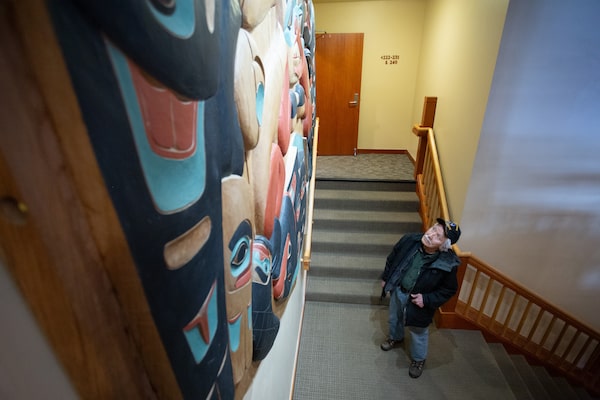
Nathan Jackson designed this cedar panel in Ketchikan, where he lives. The Tlingit artist is wary about using a standard of Indigenous identity to police other artists: ‘I can’t be discriminatory and I would like to stay that way.’

In Ketchikan, the Totem Heritage Center displays work by Nathan Jackson, a Tlingit man who lives in Ketchikan and is celebrated as one of Alaska’s most influential Indigenous artists. It also includes an intricate Chilkat robe woven by Mr. Jackson’s wife, Dorica. She is not Indigenous, but is credited with being one of the first contemporary weavers to complete such a robe, at a time when that art form was considered all but extinct.

Mr. Jackson, 85, has personal experience with fakes. Counterfeit jewellery bearing his name has appeared in Ketchikan. Early in his career, he remembers trying to sell small totem poles to shops, only to be turned away. His finely-honed creations were too expensive and so well-crafted they made other work look bad.

“It was a lot of trials trying to do my own work,” he said. Years later his art, now coveted, is displayed at the local airport, on city property, in totem parks and in local hotels.

Yet he preaches caution about aggressively targeting work produced by people based on meeting a standard of Indigenous identity. One of his own ancestors is Black. “I can’t be discriminatory and I would like to stay that way. Because to me, it makes sense to not stir the water,” Mr. Jackson said. “For me, it’s one of those things where you wrestle water, it gets pretty rough.”

Even sales staff selling Mr. Rodrigo’s Philippines-made art were native Alaskans.

Open this photo in gallery:

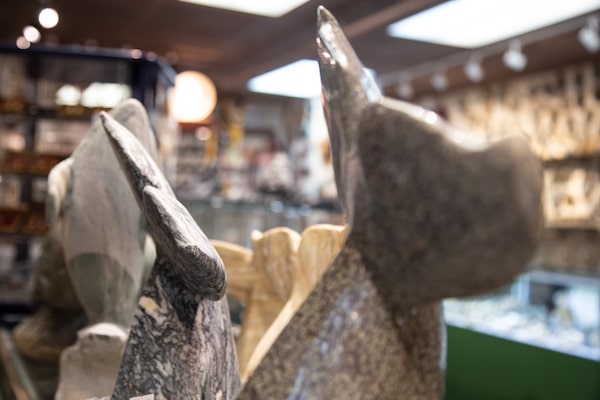
Filipino-made art is still available at Ketchikan stores, though explaining their real origin is likely to reduce the chance of a sale.

The family’s two Ketchikan stores are now closed. Some of their art, however, remains on display. At Tom’s Treasures, bears and whale tail carvings sit on glass shelves, some signed with the false Kilit name used by Mr. Rodrigo.

Shop owner Tam Rayner is quick to tell a visitor they are made in the Philippines, saying Mr. Rodrigo fooled her, too, about their origins. If she lies about where they come from, “I’m finished,” she said. But customers lose interest when they discover the pieces are foreign-made.

“I can’t sell them,” Ms. Rayner said.

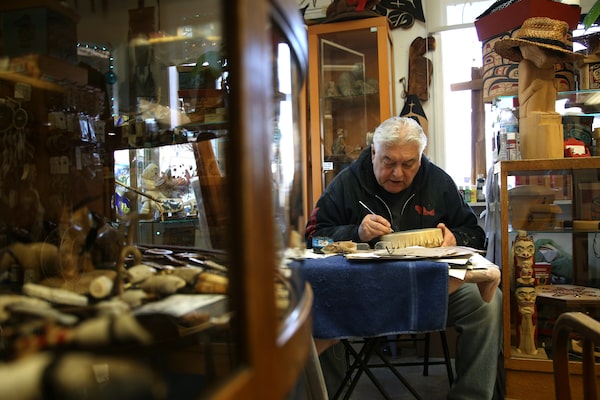
Ken Decker, a Tsimshian carver who owns the Crazy Wolf Studio down the street, welcomes the scare caused by recent enforcement, although he doubts it will last. “As soon as things cool off, people will go back to their old ways again,” he said.

He regularly confronts inauthentic art, often in the hands of customers demanding to know why his goods, like the drum he was painting on a recent afternoon, are so much more expensive.
“It’s killing me, all that fake stuff,” he said. “There’s so much junk out there.”
Open this photo in gallery:

Ken Decker paints a drum at the Crazy Wolf Studio in Ketchikan store, where he has to field quetions about why his wares are more costly than inauthentic art. ‘It’s killing me, all that fake stuff,’ he says.