About

Posts by :

Gorman Museum of Native American Art Reopening in New, Expanded Home

Gorman Museum of Native American Art Reopening in New, Expanded Home

The Gorman Museum of Native American Art at the University of California, Davis — unique in focusing on, exhibiting and collecting contemporary Native American art — will reopen in a new, greatly expanded location with a celebratory weekend Sept. 22 and 23 (Friday and Saturday). The occasion also marks the museum’s 50th anniversary.

After a ribbon-cutting ceremony at noon Friday, Sept. 22, the museum will open to the public at 2 p.m. The following day’s events will include music, dance and other performances from noon to 4 p.m. The museum will be open noon to 5 p.m. on weekends and 11 a.m. to 5 p.m. Wednesday, Thursday and Friday. Admission is free.

Gorman Opening at a Glance

Friday, Sept. 22: ribbon-cutting ceremony at noon, museum open to public at 2 p.m.

Saturday, Sept. 23: Events include music, dance and other performances from noon to 4 p.m.

Museum will be open noon to 5 p.m. on weekends and 11 a.m. to 5 p.m. Wednesday, Thursday and Friday.

Admission is free.

“Since its founding, the museum has been a unique and important place for telling the story of the continuing artistic accomplishments of Native Americans,” said Estella Atekwana, dean of the UC Davis College of Letters and Science, of which the museum is part. “The greatly expanded museum in a more visible and accessible location stands to make an even greater impact during the coming decades.”

New location — 4 times the space

The museum, located in the UC Davis Gateway cultural corridor along Old Davis Road, has 4,000 square feet of gallery space — nearly four times more than its former home on campus. Along with space for temporary exhibitions, it features a gallery displaying works from the collection on a rotational basis and visible storage to give visitors access to the collection.

“UC Davis has a long history as a home for Native American artistry, including visual and performing arts,” said Chancellor Gary S. May. “This spacious location near the campus gateway is an ideal place to showcase the influence and contributions of Native people for generations to come.”

The Gorman Museum is committed to contemporary Native American art that enacts visual sovereignty through politically and socially engaging exhibitions.

The museum has a collection of 2,250 artworks, most created since 1980, including paintings, photography, ceramics, textiles and original prints. Among the artists represented in the collection are Kenojuak Ashevak, D.Y. Begay, Rick Bartow, Robert Davidson, Oscar Howe, Lucy Lewis, Lee Marmon, George Morrison, Bill Reid, Jaune Quick-to-See Smith and Kay WalkingStick.

Since its founding in 1973, the museum has shown works by a wide range of established and emerging artists, with 225 group and 88 solo exhibitions, and has also developed touring exhibitions.

“The year 2023 marks the 50th anniversary of the Gorman Museum and continuing supporting contemporary Native American artists who create art as a continuum of Native American presence,” said Hulleah Tsinhnahjinnie, museum director and professor in the Department of Native American Studies. “The renovated space was manifested and realized into reality by a dedicated community of local, inter-tribal artists and allies who embrace the power of Native American art as a site to continue the creative and intellectual conversations that were interrupted by tropes and bias.”

Entrance features Native design

Those coming to the museum will be greeted by a large, circular public artwork based upon Native American basketry designs that was created by Tsinhnahjinnie, who is also an artist. The pavilion honors the late Bertha Wright Mitchell, a Patwin basket weaver who in the late 1990s was the only documented fluent speaker of the Patwin language.

The building, a single-story structure with deep eaves common in California architecture, is painted with bands of green representing tule grass, a once-common plant in California used by Native American people to make baskets, clothing, tents, houses and boats.

The museum provides learning resources for classes and research opportunities for students and faculty across many UC Davis disciplines, as well as for other scholars and educational institutions.

Carl Nelson Gorman, Native American studies

The museum is named in honor of the late artist Carl Nelson Gorman, a founding faculty member in the UC Davis Department of Native American Studies. The department, founded in 1969, is one of the oldest Native American studies programs. UC Davis is one of three U.S. universities offering a doctorate in Native American studies.

The museum is an integral part of the UC Davis Gateway cultural corridor connecting UC Davis cultural gems: the Robert and Margrit Mondavi Center for the Performing Arts and the Jan Shrem and Maria Manetti Shrem Museum of Art. The Gorman Museum also physically links the Gateway with the departments of Art and Art History, Music, Theatre and Dance and the UC Davis Arboretum and Public Garden. The museum is easily accessible from Interstate 80.

Opening exhibition

The opening exhibition “Contemporary California Native Art” will include about 40 works by 20 artists, all members of California tribes. Prior to European contact, there were about 500 tribes in California, which has the largest population of Native Americans — about 760,000 — of any state.

UC Davis and Patwin land

UC Davis is located on land that has for thousands of years been home to the Patwin people. There are three federally recognized Patwin tribes: Cachil DeHe Band of Wintun Indians of the Colusa Indian Community, Kletsel Dehe Wintun Nation and Yocha Dehe Wintun Nation. The full land acknowledgment statement is available here.  

Directions and parking

  • From I-80 West (from Sacramento): Take UC Davis exit and turn right onto Old Davis Road. Continue past the Manetti Shrem Museum and Hyatt Place hotel. The museum is located on the left/north side of the road at 181 Old Davis Road.
  • From I-80 East (from Bay Area): Take UC Davis exit and turn left on Old Davis Road. Continue past the Manetti Shrem Museum and Hyatt Place hotel. The museum is located on the left/north side of the road at 181 Old Davis Road.
  • From Highway 113 (from Woodland): Take the I-80 East/Sacramento exit, then the UC Davis exit. Turn left on Old Davis Road. Continue past the Manetti Shrem Museum and Hyatt Place hotel. The museum is located on the left/north side of the road at 181 Old Davis Road.
  • The closest parking is just past the museum on the right in Visitor Parking Lot 5, and there is additional visitor parking in the Gateway Parking Structure next to the Manetti Shrem Museum. (Parking payment information.)

Check Out The Finalists for Ocean Photographer of the Year

Check Out The Finalists for Ocean Photographer of the Year
image
Advertisement

Every year, Oceanographic magazine holds a competition for best ocean photographer of the year, and the finalists for 2023 are pretty incredible. Judged by a panel of some of the world’s leading ocean image makers, the competition has nine categories that encompass a wide range of styles and subjects, including Ocean Conservation, Adventure, Wildlife and Fine Art photography. Last year, the award was won by French surf photographer Ben Thouard with a photo of a surfer getting held under in Tahiti.

All category winners, as well as the overall winner, will be announced in September. They will then be featured at an exhibition in Sydney, Australia. The details of the exhibition are to be announced along with the winners.

A selection of the photos are featured above, with a full list of finalists and more information on them available in the Winners Gallery on the Oceanographic magazine website. Of particular interest is the entry from Gergo Rugli. His piece, entitled Warrior, depicts a surfer dropping in to some dramatically stylized Sydney surf.

“This afternoon was one that I am never going to forget,” writes Rugli in his description of the piece, “A big swell reached Sydney’s coastline with some waves reaching over 10 feet in height. Very few surfers had the courage to fight with these monsters. It was just before sunset, and the sky was covered with clouds. I didn’t expect any colors, but just before the sun reached the horizon, a gap opened up, and the setting sun painted the whole sky with mysterious red light. I wanted to create a dreamy feeling and started to shoot with a slow shutter speed to capture the unique scene.”
⁠⁠

An Abandoned Cabinet Unearths a Trove of Unseen Kodachrome Slides Documenting 1960s San Francisco

An Abandoned Cabinet Unearths a Trove of Unseen Kodachrome Slides Documenting 1960s San Francisco

All images courtesy of David Gallagher, shared with permission

There’s a Vivian Maier-esque story out of San Francisco that’s drawing attention to a newly discovered body of work from a largely unknown photographer.

Back in 2020, David Gallagher, who runs the historical archive known as SF Memory, received a hefty cabinet that was found abandoned in San Francisco’s Mission District. Inside were 920 Kodachrome slides capturing life in the California city throughout the 1960s, with no identifying details about the photographer.

The images document a period of major infrastructural development in the area, including the construction of the Bay Area Rapid Transit (BART) system and the subway beneath Market Street, in addition to quieter moments. There are children at play, an officer showing off a chunky, white rabbit, and families swimming in Fleishhacker Pool before the public saltwater complex closed in 1971. Together, the collection creates a distinct photographic tapestry of life in the city during a time of massive change and growth.


Families swim in the water

Earlier this month, Gallagher spoke to the San Francisco Chronicle about the findings and their mysterious origin, and very quickly, a local named Ted Martin identified the images as those of his late father, James A. Martin. Ted shared that the cabinet was purged from the family’s possessions following James’ death in 2019 along with two others just like. That pair, which presumably holds more photos, is still missing—Gallagher has been feverishly searching for the remaining cabinets and plastering signs throughout the city asking about their whereabouts.

According to his son, James was a teacher and technophile who “loved San Francisco. He lived here his entire life, all 90 years. He was a big sports fan: Giants, Warriors, 49ers. He worked hard. He did his day job and then did night school and other things for extra money.” Those odd gigs included photography for weddings and other local happenings. He developed the images in his home dark room, and apparently, stored the slides in the aforementioned metal cases where they remained hidden.

Now, there’s growing interest in James’ photos and in locating the rest of the collection. While the search continues, Gallagher has been sharing some of the slides on SF Memory, which is definitely worth a look. (via PetaPixel)


A man holds a white rabbit with a gray rabbit in a nearby open cage

Two workers chat on a trolley

A man smoking a cigarette lifts a tray of fish up to a person wearing an apron

Massive pipes fill a construction site on the water

A man holding crabs shows them to children

A file drawer opens to reveal slides

A gray file cabinet

Firefighters spray water on a smoky rig

Do stories and artists like this matter to you? Become a Colossal Member today and support independent arts publishing for as little as $5 per month. The article An Abandoned Cabinet Unearths a Trove of Unseen Kodachrome Slides Documenting 1960s San Francisco appeared first on Colossal.

Why this British photographer has spent a decade dressing like Dolly Parton

Why this British photographer has spent a decade dressing like Dolly Parton


CNN
 — 

Alice Hawkins has never photographed her idol, Dolly Parton, but she has photographed many Dollys.

One Dolly is on horseback, red heels in stirrups and blonde curls piled high on her head. In another image, two Dollys link their arms around each other’s waists, fingers fanning out with long acrylic nails. Elsewhere, another Dolly — Hawkins herself — dons a crisp white skirt suit to pose outside of the small chapel in Dollywood, the Pigeon Forge, Tennessee-amusement park owned by the Queen of Nashville herself.

Hawkins is a British photographer, born more than 4,300 miles from Memphis, where Parton broke into the music industry. But she’s spent the past decade-plus dressing up as the singer, making multiple series about her own sense of self — and that of other Dolly superfans — through the glittering facet of Parton’s image.

Hawkins’ collaborators have become her friends — all are Parton superfans, and some are impersonators.
Hawkins has photographed “Dear Dolly” in both the UK and the US.

Emulating Parton’s flamboyant style has given Hawkins “a lot of self-belief,” she said in a phone call with CNN, teaching her to “embrace” her femininity and sexuality in a way she hadn’t always felt comfortable with.

Hawkins has long loved the extravagance of Parton’s Americana, and was already a fan of her music when she first saw the country star perform in 2002 at a small venue in London. But there, she found herself “spellbound,” she explained. “I left knowing that I’d found my idol.”

Hawkins says she’s had to deal with assumptions about her intelligence and her ability since she was a teenager, in part because of her blonde hair.

“I’m a country girl myself, from Suffolk,” Hawkins said of the kinship she feels with Parton, despite their geographical and generational distance. “I grew up in a village, didn’t have much money. And I moved to London, my own ‘cup of ambition,’” she explained, quoting the lyric from Parton’s classic 1980 song “9 to 5.” Today, she lives just outside of the city, raising her children while working as a photographer.

Earlier this year, she released “Dear Dolly,” a book that presents several Parton-inspired photo projects, from sumptuous, staged portraits of Dolly impersonators to stripped-down nude self-portraits of Hawkins’ own pregnancy, in which she channels the singer through voluminous hair.

Defiant glamour

Through Hawkins’ lens, being unapologetically feminine can be an act of defiance against gendered stereotypes.

In the intro of “Dear Dolly,” Hawkins writes on some of the moments that have undercut her self-worth: a relative describing her “like a tart in season,” when she dressed for a night out as a teenager; a headmaster questioning her intelligence before an important exam. “(There’s) lots of negative judgments and assumptions, on your intelligence on your ability,” she told CNN. Women like Pamela Anderson and Anna Nicole Smith, whom she also idolized in her younger years, “stuck two fingers up” with their platinum hair and comfort with their sexuality, she wrote.

In “Dear Dolly,” the touchstones of Parton’s style and career, from her guitar to her signature hair, form a visual lexicon.
Stepping into Parton’s shoes has given Hawkins more “self-belief,” she says.

In the blush-hued, bedazzled world of “Dear Dolly,” Hawkins and the other Dollys — Kelly O’Brien, Trixie Malicious and Claire Moore — radiate a sense of joy, freedom and self-assuredness. It’s both a love letter to the country superstar and the sisterhoods formed in her name. For Hawkins, the work has also been an outlet she could turn to in difficult times.

Hawkins first traveled to Dollywood following the funeral of a close friend in the US, and she felt a particular emotional connection to the chapel on the park grounds.

“I’ve made the work when I felt quite desperate or full of grief, or terrified about my future and my identity,” she said.

Hawkins first visited Dollywood in 2010 at the suggestion of her husband while traveling to the US, following the unexpected death and funeral of her closest friend. She was deeply depressed, she said, but found solace in her experience at the park, located near the small cabin where Parton was raised in the foothills of the Great Smoky Mountains. “It was healing,” Hawkins recalled.

The following year, after one of her editors at the early 2010s British fashion magazine Ponystep unsuccessfully pitched a shoot with Parton, Hawkins instead suggested an editorial where she could “walk in her footsteps” in Dollywood, prompting the first project where she began to dress like the country star.

But Hawkins doesn’t consider herself an impersonator, and she doesn’t “go fully Dolly” on a day-to-day basis, she said. “It’s not really me, it’s my work. Sometimes I have acrylic nails, but I’m not that hyper-glamorous. That’s just my fantasy.”

Hawkins doesn't dress as Parton day to day, but says it's more of a “fantasy” she's adopted for the project.
On a trip to Nashville, Hawkins stepped onstage to sing “In My Coat of Many Colors” by Parton.

One of her collaborators, O’Brien, meanwhile, is a Parton impersonator — and a convincing one, at that.

“I’ll never forget that we were in her pub in her little village in the English countryside. She was Dolly down to a tee, sitting at the bar, having a drink while I was shooting,” Hawkins recalled. “And this customer came in, and he was completely convinced she was Dolly Parton. We just could not burst his bubble.”

“She stayed in character, and she was like, ‘Well, thank you, honey,’” she continued. “I hope nobody told him otherwise.”

Kelly O'Brien, pictured here, is a Parton impersonator often mistaken for the country star.

Photographing “Dear Dolly” has changed Hawkins life in many ways, she said. She “found a sense of belonging” through the friendships she’s made through a shared love for Parton. She has memories of things she never would have thought she’d do, like stepping on stage in Nashville to karaoke “In My Coat of Many Colors,” which “was terrifying,” she said with a laugh. “I can’t actually sing but I went for it and (the audience) were very kind to me.”

Hawkins has met Parton, too, several times at her shows, and she hopes she’s seen the book.

“She has taught me that I can be blonde, sexy, and almighty at the same time — and respected,” Hawkins said.

She knows she can always turn to Parton when needed, and step into a pair of rhinestone high heels. “I’m lucky that I’ve got that — her music will be forever.”

Artist asks for return of donated sculpture

Artist asks for return of donated sculpture
DOWNEY — An artist is asking the City of Downey to return a donated sculpture after it was removed and stored in a public works yard. The artwork, titled “Hole in One at Rio Hondo,” was donated to the City of Downey by artist Arlene Cartozian in 2004. It had been on display at the Rio Hondo Event

DarkSky International Announces Winners of Fourth Annual Capture the Dark Photography Contest

DarkSky International Announces Winners of Fourth Annual Capture the Dark Photography Contest
image
image

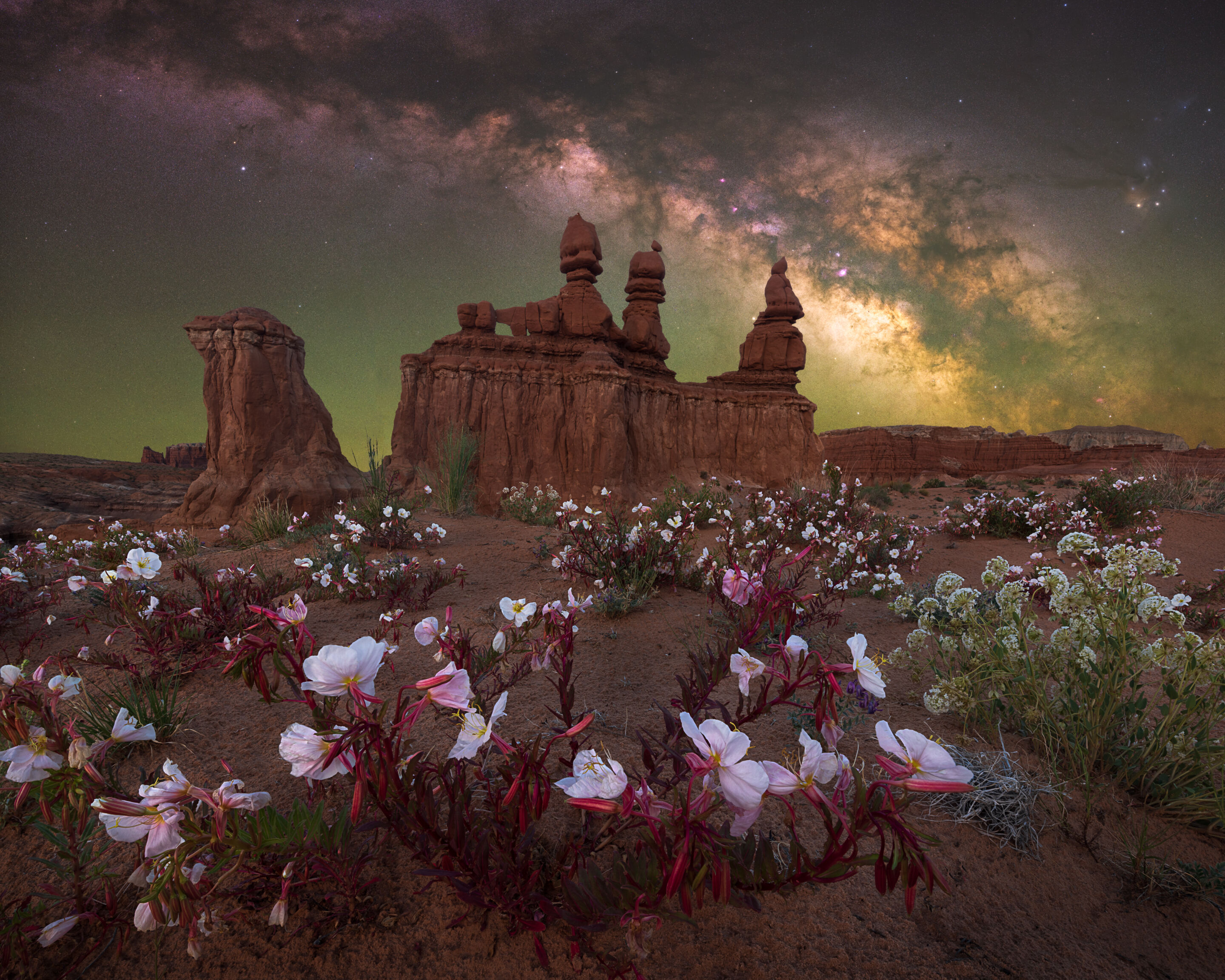
Desert Bloom by Marcin Zajac, 2023 First Place Winner in the Utah Dark Skies Category.

image

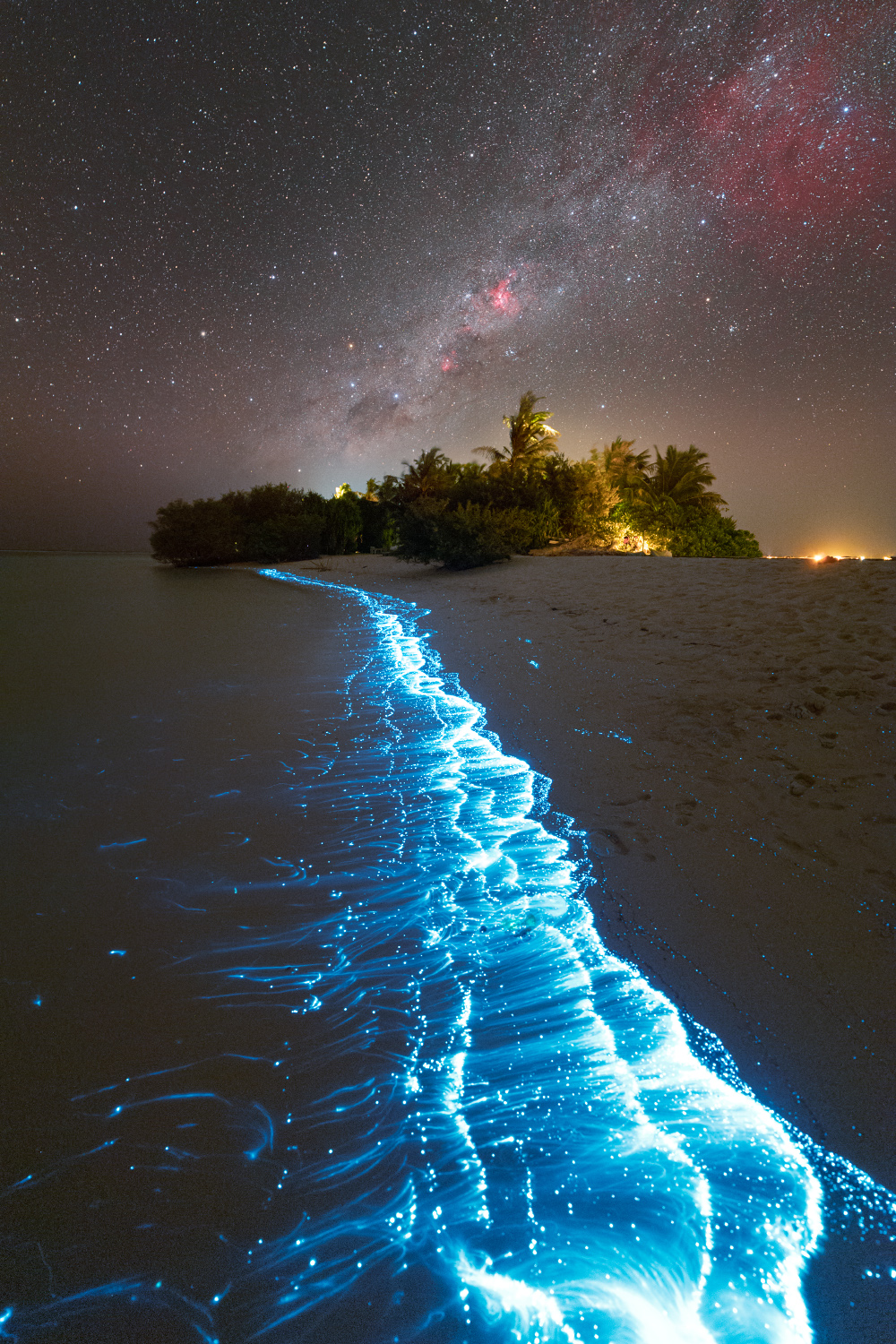
Milky Way above the Turquoise Wonderland by Petr Horálek, 2023 First Place Winner in the Creatures of the Night Category.

image

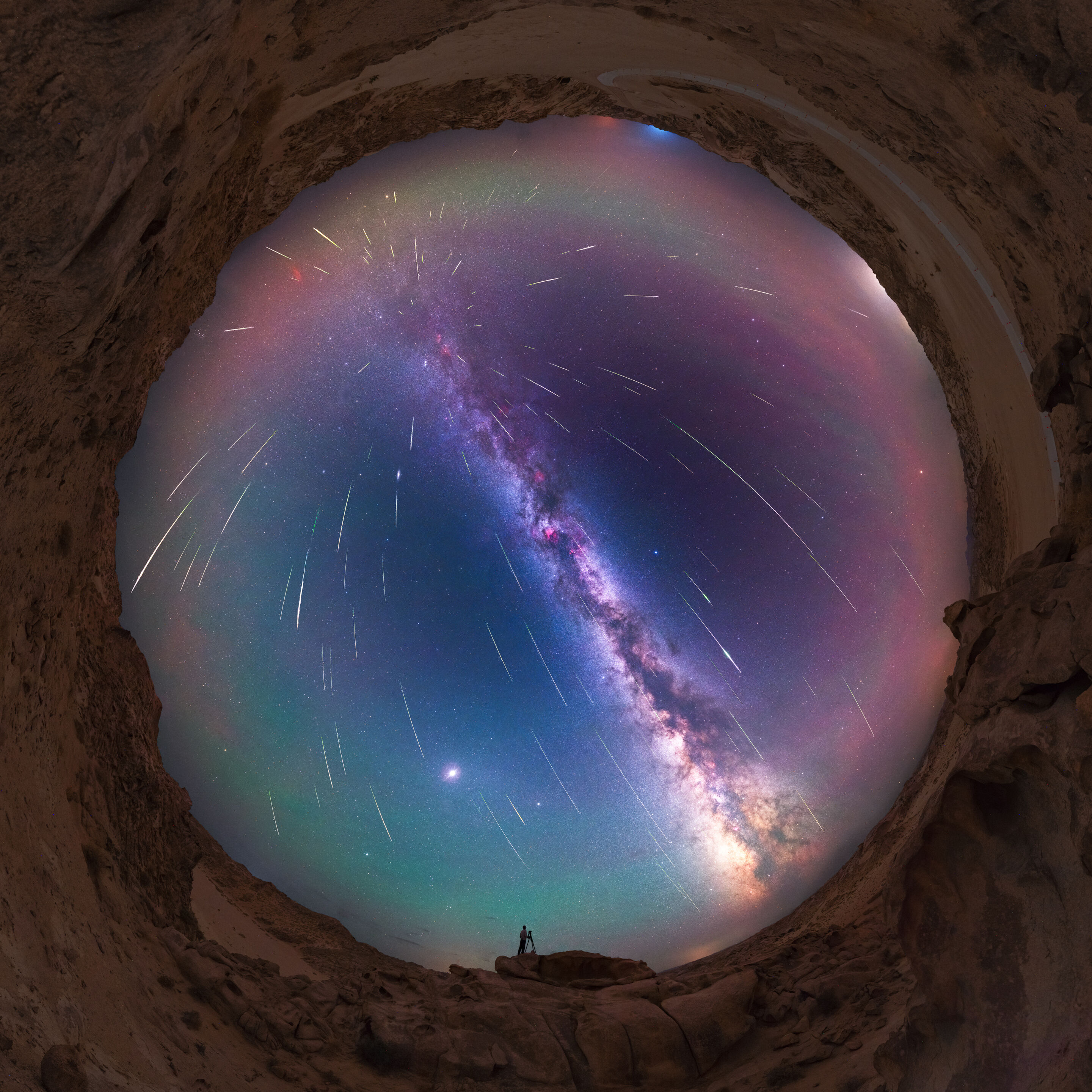
The sky is like a dome, covering field by Wang Tianwei, 2023 First Place Winner in the Connecting to the Dark Category.

The Capture the Dark Photography Contest celebrates photography’s important role in the dark sky movement.

TUCSON, ARIZONA, UNITED STATES, August 22, 2023/EINPresswire.com/ — DarkSky International recently hosted its Fourth Annual Capture the Dark Photography Contest, presented by Visit Utah, to celebrate photography’s important role in the dark sky movement. The contest received 494 entries from participants worldwide to the ten categories:

● Connecting to the Dark – Experiencing a natural night provides perspective, inspiration, and leads us to reflect on our humanity and place in the universe.

● International Dark Sky Place – Now over 200 protected lands and municipalities worldwide have been certified by DarkSky as an International Dark Sky Place, creating havens for astrophotographers.

● The Impact of Light Pollution – Light pollution can significantly impact the environment, human health, and our access to the night sky. This category also includes images of terrible lighting, glare bombs, etc.

● The Bright Side of Lighting – Light pollution can give artificial lighting a bad reputation, but lighting that follows DarkSky’s Principles for Responsible Outdoor Light can be beautiful, healthy, and functional.

● Creatures of the Night – Light pollution doesn’t only erase our view of the stars; scientific evidence suggests that artificial light at night has adverse and deadly effects on wildlife, including amphibians, birds, insects, and mammals.

● Deep Sky – For thousands of years, humans have looked to the night sky and wondered what is out there. Today, we can take photos of deep space objects from our own backyards.

● The Mobile Photographer – No big camera? No problem! A photo from any of the above categories that was taken with a cell phone, tablet, or GoPro. No DSLR, mirrorless camera, or drone shots.

● Youth – A shot for any of the above categories taken by someone 17 years old or younger.

● Utah Dark Skies – A photo taken in one of the most popular destinations to capture dark skies — Utah, U.S.

● People’s Choice – Voted on by the public.

“This year we saw some of the most beautiful photos from around the world that we have ever seen,” said DarkSky International Program Associate Michael Rymer. “These brilliant views of the night sky show how our place in nature does not stop at the horizon, and that the sky above is as much a delicate and beautiful resource that we must protect and reclaim.”

“Congratulations to this year’s Capture the Dark Photography Contest winners and the awe-inspiring photos,” said Vicki Varela, managing director of the Utah Office of Tourism. “Astrotourism and dark sky messaging complement our Red Emerald Strategic Plan, which aims to elevate life in Utah through responsible tourism stewardship. Preserving dark skies helps communities establish long-lasting tourism economies and keeps our places Forever Mighty®.”
– Vicki Varela, managing director of the Utah Office of Tourism

A global panel of esteemed judges composed of Imma Barrera, Ian Lauer, Jeff Dai, Parisa Bajelan, Ben Coley, Dr. Lin Qing, reviewed the photos using criteria that included technical skill, composition, connection to the category theme, and ‘wow’ factor and we have the results!

Winners of each category will receive a prize package that includes a feature in DarkSky’s Nightscape publication, DarkSky’s blog and social media, a DarkSky membership, DarkSky and Visit Utah swag, and a Peak Design Field Pouch. Additionally, one photograph will be presented with a “People’s Choice Award” based on votes by the public. This winner will receive a prize package that includes a $250.00 gift card to B&H, a feature in DarkSky’s Nightscape publication, the organization’s blog and social media, a DarkSky membership, and DarkSky and Visit Utah swag. Review the official contest rules and eligible photographs here.

To see the winning photos, visit the official website for the photography contest at capturethedark.darksky.org and check out the official announcement on the DarkSky blog.

About DarkSky International

DarkSky International, headquartered in Tucson, AZ, USA, is a recognized global authority on light pollution, empowering a global movement to protect the night sky. DarkSky restores the nighttime environment and protects communities from the harmful effects of light pollution through outreach, advocacy, and conservation. Since 1988, our global community of dark sky advocates have protected more than 200 International DarkSky Places, enacted dozens of responsible lighting policies, and raised awareness of light pollution on every continent.

Susan Serven
DarkSky International
susan.serven@darksky.org
Visit us on social media:
Facebook
Twitter
LinkedIn
Instagram
YouTube

image

Chasing M2S: a new drone for underwater photography by Jose Antunes

Chasing M2S: a new drone for underwater photography by Jose Antunes
Support ProVideo Coalition
Shop with
Filmtools Logo

What Do You Think? Let Us Know.