About

Posts by :

Commentary: What it feels like to have your history-making play canceled during the Taper’s closure

Commentary: What it feels like to have your history-making play canceled during the Taper’s closure
image

I am a Los Angeles-based playwright. My new play, “Fake It Until You Make It,” commissioned by Center Theatre Group, was about to go into production at their Mark Taper Forum. Two weeks before my director, Michael John Garcés, began rehearsal, the organization “paused” the theatrical season at the Taper. However, at this time there is no date or guarantee of “unpausing,” so it is effectively canceled.

This play was going to be the first by a Native American playwright on that stage and the last play of a historic all-female/gender nonbinary season. Also canceled was Chay Yew’s production of Lauren Yee’s “Cambodian Rock Band.” I am writing because canceling these productions has done real damage to communities here in Los Angeles and nationally, and that damage has to be acknowledged.

“‘Cambodian Rock Band’ was birthed in Southern California, home to our country’s largest Cambodian American population. It’s a community we’ve forged a deep and meaningful relationship with — the community is part of this show,” Lauren tells me. Chay shared what actor Joseph Ngo posted online: “This is heartbreaking news for my Khmer community. For at least a year now, they have been planning to see this production…We wanted to be seen, known, and have our story heard.”

In my case, I heard from Native American people across the country about the anger and hurt they feel at the news. This is more than a play to us. We have been erased on our own lands for centuries. It is not just my voice as a Lakota woman that was silenced, but the voices of two Southern California Native actors (among other Native artists) who were going to reclaim the Taper stage for their own people. This cancellation is part of a legacy that constantly reasserts that we have no power here. That we are never safe. Once again, our stories are disposable or just not relevant.

My family and my team lost a considerable amount of money due to this decision. In addition, I forfeited a Broadway co-commission (more money) to do this play on CTG’s expedited timeline because I wanted this production to premiere at my hometown theater. CTG also turned down a co-production with another theater that may have given us enough support to continue next week. At least it would have guaranteed us a production elsewhere. It is sobering to discover that, regardless of having a play produced on Broadway this season and a national tour in the works, my play was canceled with only three hours’ notice before the public announcement.

This is hard to write because I was on the Theater Communications Group board with both Meghan Pressman and Snehal Desai and consider them friends. I spoke with them before writing this, so I know how deeply both of them care about art, artists and audiences. I know that it was their board of trustees that made the extreme, unexpected decision to cancel. I also know the financial situation at CTG is truly dire. Ticket sales are low. Giving is down. Jobs were lost. But this does not relieve them, or their board, of their responsibility to the artists and communities that are affected. The board needs to support Snehal, an incoming artistic director of color who is being handed the keys to a mess. A mess on fire. He’s going to need help from all of us to put the fire out.

I went online and reread CTG’s 2020 “Commitments to Change,” and their follow-up posts of failed promises from the institution. That led me to the words of Rachel Davidson, daughter of Founding Artistic Director Gordon Davidson: “My father knew that for the Taper to have meaning, the plays had to have purpose. His dream was a theater that both builds community and made Angelenos aware that they are all part of a community. It was a place to give voice to those not yet heard.” That hit me hard because that is what both Lauren and I seek to achieve with our work.

I believe that this moment, as painful as it is, is an opportunity for a true reset at CTG. Playwright Jeremy O. Harris, who instigated this season of women/nonbinary playwrights, commented: “I hope that CTG is putting all of their resources into returning next season with a diverse audience foaming at the mouth to see your show. With other femme and Indigenous artists around the work to support it.”

As CTG rebuilds financially, it must invest in programs that actually listen to communities and include their voices. Invest in the community, not to make them patrons but to make them partners. Change the culture of the spaces to be welcoming to all peoples. This theater is built on Native land. For years, commitments to the community have been made, promise after promise has been broken. The land is gone, the trust is gone, our Khmer and Native plays have now been taken away. It is time for better.

Begin the process of reparations with an actual reset, back to Gordon Davidson’s mission of this theater. Show us with specific, targeted action. Make the new budget reflect their core values to win back our trust. I have other productions, but I intended this project to be a production entirely made up of Los Angeles artists for the Mark Taper Forum. This is the stage it belongs on. Invite all of us in so that Lauren and I can successfully bring our plays home.

Canadian captures extraordinary beauty of ordinary pigeons in award-winning photo

Canadian captures extraordinary beauty of ordinary pigeons in award-winning photo

As It Happens6:09Canadian photographer captures extraordinary beauty of ordinary pigeons with award-winning shot

Liron Gertsman usually doesn’t bother taking pictures of pigeons.

But when he spotted a pair of them preening each other affectionately in White Rock, B.C. — their iridescent green and purple feathers shimmering in the sunlight — he was moved to take out his camera. 

“I definitely overlooked pigeons for a while. But that changed when I captured this picture because I just saw them shining in a new light,” the Vancouver wildlife photographer told As It Happens host Nil Köksal.

“When you take a moment to appreciate a bird like that closely, there is so much subtle beauty to be enjoyed.”

Gertsman’s instinct to capture that tender moment has paid off. The image is the grand prize winner at the National Audubon Society’s annual photography awards, which honours Canadians and Americans whose work “highlights the beauty of birds and the joy of capturing them through photographs and videos.”

Gertsman — who often goes to great lengths to photograph rare and beautiful birds in far-flung places — says he’s honoured that such an effortless image took home the prize.

“These are rock pigeons. This is not some rare species that you need to travel the world to see. I mean, anyone really could have taken this image. And I think that’s what kind of makes it special,” he said.

The National Audubon Society’s Preeti Desai, one of the contest’s judges, agreed.

“I hope photos like this will lead to more appreciation for pigeons and other common birds we see daily,” Desai told Audubon Magazine.

‘Puffin fever’

While Gertsman captured his award-winning photo while out for a stroll close to home, his fellow Vancouverite Shane Kalyn had to go much farther to get his award-winning shot.

Kalyn won in the Audubon Photography Awards’ professional category for his image of a solitary Atlantic puffin perched on an algae-covered cliff in Iceland.

“This was actually the first Atlantic puffin I’ve ever seen in my life,” Kalyn told CBC. 

An Atlantic Puffin sits on the edge of a craggy cliffside, its head turned to the left, its white breast in sharp contrast to the gray background. Lime green algae and small purple wildflowers drape the cliff, breaking up the otherwise dark image.
Vancouver’s Shane Kalyn is the 2023 Audubon Photography Awards professional winner for this picture of an Atlantic puffin in the Westman Islands, Iceland. (Shane Kalyn/Audubon Photography Award)

He was visiting Iceland with his wife, he says, and they took a ferry to the Westman Islands, in the south of the country, so he could photograph some nesting seabirds.

He wasn’t expecting to find puffins there, he said, as their colony was located elsewhere. But his award-winning subject was one of the very first birds he spotted.

“Just by chance, [I] happened to see this one sitting in the most perfect spot,” he said. “He was just perched on this, like, beautiful lava cliff with blue wildflowers and colourful algae. It was super dark, kind of a gloomy morning, which made, like, the colours pop in the photo, I felt. So, yeah, I was pretty excited.”

Desai said the image “evokes a painting.”

“I love the soft, pastel colours and especially how they pop against the gray backdrop,” she said. “Another judge also pointed out that the upper rocks almost form a puffin head with a bill sticking out, and I love that.”

It may have been Kalyn’s first puffin, but it was certainly not his last. Later on the trip, he spent time photographing the little seabirds at a colony in Iceland.

His image of a male puffin holding a seagull feather in its beak — a gift for its mate — was a finalist at last week’s Big Picture Natural World Photography Awards.

Kalyn says he’s hoping to keep the “puffin fever” going with a trip to Canada’s east coast next summer.

“They’re a pretty charismatic little bird, right?” he said. 

WATCH | 2023 Audubon Photography Awards video winner:

Short-eared owls meet in the sky

5 hours ago

Duration 0:08

Steven Chu of Mahwah, N.J., won best video at the 2023 Audubon Photography Awards for this clip of two short-eared owls locking talons mid-flight over the Shawangunk Grasslands National Wildlife Refuge in Wallkill, N.Y.

Gertsman also got an honourable mention in the professional category for his image of a northern hawk owl perched at the top of a snow-covered tree in Thompson-Nicola, B.C.

While his grand-prize-winning pigeon picture took zero planning, this one, he says, was “the exact opposite.”

“I covered tens of miles over a few days tracking down northern hawk owls … when I saw this bird just perched beautifully at the tip of this tree,” he said.

“It was the middle of winter. There was tons of snow on the ground, so I was snowshoeing around and the snow was so soft and so powdery that even with snowshoes on, I was sinking down to my knees at almost every step.”

A Northern Hawk Owl looks directly into the camera as it perches at the tip of a frost-covered tree. Dark pine cones on the bare branches stand out against a white background, mirroring the pattern of the owl’s dark breast feathers.
Gertsman earned a professional honorable mention for this snap of a northern hawk owl in Thompson-Nicola, B.C. (Liron Gertsman/2023 Audubon Photography Awards)

But the effort is always worth it to showcase the beauty of birds, said Gertsman, adding that he’s pleased to see a real rise in birdwatching since the pandemic. 

“I think the more people that are out there enjoying birds, the better hope we have for the future where we can protect birds and by protecting birds, protect the entire ecosystem that they rely on, and that, of course, we as humans rely on as well.”

Nature Photography Adult Workshop

Nature Photography Adult Workshop

Join us for an introductory workshop focusing on nature photography on July 8! Get a chance to explore the basic functions of a camera and how each can influence the photographic process. Learn how compositional elements can affect the final product, and then put it all together with practice outdoors! Wrap up with a conversation on editing tools, and leave knowing that you can approach nature photography with a new level of confidence!

Notes about this workshop:

Participants will spend some time outdoors taking photos- be ready to walk around outside.

Participants should bring a camera or device for taking photos: a digital camera would be better for this workshop than a phone, but all are welcome regardless.

If you have a laptop or tablet for editing photos, bring this along. We will discuss editing software (including free trials of paid software, as well as free software).

This is intended as a beginner workshop. We will not be covering advanced topics.

Participants should bring a sack lunch.

Presenter Bio: Jackson Steinmetz is a 5th year senior at Goshen College double majoring in film production and communication, from Bluffton, Ohio. He has spent semesters studying in Ecuador and Los Angeles, both of which experiences were formative for his worldview and career aspirations. He loves to run, play soccer and other games outside and really enjoys taking photos, especially of teammates while they are racing. He aspires to work in documentary film making or for non-profits as a digital creator working with film, photography, and graphic design.

Years before Titan sub went missing, OceanGate was warned about “catastrophic” safety issues

Years before Titan sub went missing, OceanGate was warned about “catastrophic” safety issues

Years before a tourist submersible went missing on an expedition to explore the Titanic shipwreck with five passengers on board, red flags about safety issues emerged about the company that designed and operated the vessel. 

OceanGate, which charged $250,000 per person for the Titanic voyage, is a privately held company that touts its “innovative use of materials and state-of-the-art technology” in developing submersibles that can fit five passengers. 

But behind the marketing lingo, lawsuits and industry experts had raised serious safety concerns about the project years before the sub’s disappearance. In 2018, a professional trade group warned that OceanGate’s experimental approach to the design of the Titan could lead to potentially “catastrophic” outcomes, according to a letter from the group obtained by CBS News.

That same year, an employee of OceanGate raised safety concerns about the Titan’s design and the company’s protocol for testing the hull’s reliability. That employee, David Lochridge, was fired by OceanGate after airing his complaints to government regulators and OceanGate’s management, with the latter then suing him for breach of contract. 

In response to OceanGate’s lawsuit, Lochridge counter-sued, airing his concerns about Titan’s safety in a 2018 court document. 

Lochridge claimed he believed the company could “subject passengers to potential extreme danger in an experimental submersible,” according to the legal filing. 

In February, the CEO of OceanGate, Stockton Rush, was sued by a Florida couple after they struggled to get a refund on their deposits for several canceled trips on the Titan. The pair, Marc and Sharon Hagle, said in their lawsuit that OceanGate canceled one expedition saying it hadn’t had enough time to certify that the Titan could reach the depths of the Titanic. Another trip was canceled because of “equipment failure,” according to a copy of the Hagles’ lawsuit published by the Fort-Myers News Press. 

Attorneys for the Hagles didn’t immediately return a request for comment.

OceanGate didn’t respond to requests for comment about the lawsuits and allegations. In a statement to CBS News, Lochridge’s attorney said he had no comment regarding his allegations. “We pray for everyone’s safe return,” the attorney said.

Certification issues

One of the red flags about the Titan was its certification — or lack thereof. 

The 2018 letter from a professional trade group, the Marine Technology Society, flagged the company’s marketing materials which advertised that the Titan’s design would meet or exceed a certification called DNV-GL. Stemming from the independent Norwegian foundation Det Norske Veritas, or DNV, the certification is considered the gold standard for marine equipment. 

But, the Marine Technology Society noted, “it does not appear that OceanGate has the intention of following DNV-GL class rules.” Such representations would be “misleading to the public and breaches an industry-wide professional code of conduct we all endeavor to uphold,” the letter added.

A factsheet about the Titan on OceanGate’s website doesn’t mention if the vessel had received DNV certification.

“Refused to pay”

Certification and testing was also a focus of Lochridge’s countersuit, in which he refuted OceanGate’s claims that he breached his employment contract when he filed a whistleblower complaint with the Occupational Safety and Health Administration. 

Lochridge wrote that he learned the viewport on the sub was only built to a certified pressure of 1,300 meters, even though the Titan intended to go down to 4,000 meters in depth. He also urged OceanGate to use an agency such as the American Bureau of Shipping to inspect and certify the Titan.

“OceanGate refused to pay for the manufacturer to build a viewport that would meet the required depth of 4,000 meters,” Lochridge’s filing alleges. 

He claims that rather than address his concerns or use “a standard classification agency to inspect the Titan,” OceanGate immediately fired him. 

OceanGate’s lawsuit against Lochridge stresses that he wasn’t an engineer, and that he refused to accept its lead engineer’s “veracity of information,” leading to his firing. In his legal response, Lochridge admitted he wasn’t an engineer, but noted that “he was hired to ensure the safety of all crew and clients during submersible and surface operations.”

‘We never taught you this’: DOCG’s culture wanted him to be a doctor, lawyer or engineer but he chose his own path

‘We never taught you this’: DOCG’s culture wanted him to be a doctor, lawyer or engineer but he chose his own path

From a young age, DOCG was taught he should become a doctor, lawyer or engineer.

Born to Sri Lankan immigrants, the Melbourne-based artist — who wants to go by his artist name, DOCG — said his cultural upbringing never gave him room to explore other career paths.

Like many Asian-Australian migrants, DOCG’s parents wanted him to chose a stable, high-paying profession.

“All my cousins were becoming engineers and doctors,” he told the ABC.

But as DOCG grew up, he realised that he did not like the expectations of what he was meant to do with his career, and wanted to carve his own identity as an artist.

“Finding out you could become a designer, graphic designer or a photographer were intriguing to me because they were so unknown,” DOCG said.

“I’ve never seen someone have that kind of career path, especially in our culture.”

DOCG says he did not like the cultural expectations of becoming a doctor and wanted to pursue his own interests.()

After seven years working as a creative director, stylist, artist and photographer, DOCG has collaborated and worked with big brands including Platypus, Adidas, Reebok and New Balance.

He said his parents were initially confused by his artistic career path.

“They just looked at themselves, like what did they do wrong,” DOCG said.

“They were like, ‘Where did this come from, who were your friends, who have you been listening to, we never taught you this.'”

DOCG (left) collaborating with Adidas for the Adidas Forum Newsroom in 2021.()

However, DOCG said that as he grew older, he began to have “a lot of empathy and understanding” for his parents’ reasoning for wanting him to pursue a different career.

He said the culture had taught people, like his parents, that only those with professional jobs could make a living.

DOCG said people who grew up in a developing country would also have different views on art and design compared to those from a Western culture.

“[My parents] were unaware of how important art and design is in Western society,” he said.

Having designed and released everything from clothes and jewellery to hosting international shows and exhibitions, DOCG said he enjoyed the sense of expression and freedom of doing something he loves.

“I’d rather be unbounded from social norms and build my own path than to follow a template that was provided to me when I was a kid,” he said.

And although the artist did not become a doctor, the creation of his moniker “DOCG”, allowed him to turn this cultural expectation into a name that he has made on his own.

“I just want to have fun. I want to be able to make things and hope that when people see what I make as an individual, they become inspired to do that for themselves,” he said.

“I want to expand, grow and evolve — and I hope that’s what the future for others will look like.”

‘Staying true to yourself’

Many Australians from Asian backgrounds have reported experiencing cultural and social barriers when choosing a career in the art industry.

Diversity Arts Australia chief executive Lena Nahlous said Australia’s art and cultural practices were deeply rooted in the Euro-American model, which could exclude many migrants.

Ms Nahlous says Asian-Australians are sometimes under-represented in the creative sector.()

Ms Nahlous said they were often unable to access funding, not recognised for the work they produced and had limited access to opportunities and work.

Many were also under-represented and “historically excluded and marginalised” in these workplaces, she said.

Research from Diversity Arts Australia revealed that only 9 per cent of the 1,980 leaders of the country’s institutions are culturally and linguistically diverse (CALD) Australians, even though the Australian Human Rights Commission found 39 per cent of the Australian population have a CALD background.

“Research tells us that culturally diverse people have struggled to find work in the sector and that there is an over-representation of people from Anglo-Celtic backgrounds in the arts, screen and creative sectors,” Ms Nahlous said.

“Calling-out and countering this exclusion and opening pathways into the funded or mainstream creative industries for historically excluded people is critical to our work at Diversity Arts Australia.”

The under-representation of CALD Australians in creative roles has discouraged many aspiring Asian-Australian artists from pursuing a career in the industry.

But Asian-Australian artists like musician Grant Perez say it’s time for that to change.

Perez, who is also known as grentperez, is a Sydney-based musician who has performed across Australia and in Europe and the United States.

Perez performing at his tour “I’m cool I promise” in London last year.()

The indie pop artist has more than 2 million monthly listeners on Spotify and has released his latest EP, When We Were Younger, earlier this month.

When asked about his musical journey, Perez told ABC News that he did not think people like him could succeed in the industry.

“Growing up, I was just unaware of other Asian-Australian artists. I think I wasn’t presented enough with it compared to the Western American pop music scene,” Perez said.

“I always thought that it was so interesting because other than Bruno Mars and people from the Philippines, I haven’t really seen people like me out there when I was younger.”

Despite this, Perez never gave up on his dream.

“I am a big believer of staying true to yourself,” Perez said.

“And I always pictured myself performing on stage and singing stuff that I made in front of people.”

Perez will be joining American music company, 88rising, for their annual musical festival, Head in the Clouds, later this year.()

And with the success of his YouTube covers and debut single, Cherry Wine, Perez believed he could impact communities as a young Filipino artist.

“I really try to convey the message of being yourself because that’s what makes you unique,” Perez said.

“It makes me really happy to see more Asian people come into the industry — that’s a big motivator.

“I just tell them to just go for it because there’s nothing stopping you.”

‘Steer the boat to where you want it to go’

Many first-generation migrants who worked in industries such as IT, medicine and accounting in their home countries had to chose lower qualification jobs in Australia to meet visa requirements, according to Nick Parr, professor of demography at Macquarie University.

Those migrants would often encourage their children to pursue the professions they originally had back home, but their children have more freedom to chose what they want to do, Professor Parr said.

Professor Nick Parr says first-generation immigrants are more restricted in what jobs they can do compared with their children.()

“It has been suggested that parents from Asian countries have tried to influence their children’s choice of degree programs, educational qualifications and occupations,” he said.

“[Their children] don’t have the same constraints on their choice of occupation as opposed to their parents’ generation.

“It shouldn’t be surprising if there is more diversity in occupations.”

Luisa Brimble says it is never too late for people to pursue their dream.()

Melbourne-based photographer Luisa Brimble said at one point in her career, she was pressured to become a nurse.

She then studied banking and finance at college for two years in the Philippines before migrating to Australia with her family, and eventually worked in marketing.

However, when Brimble decided to pick up her old DSLR camera and started taking photos of her family and friends, she quickly realised that photography was her passion and left her marketing job of 10 years.

As a food photographer for more than 15 years, Brimble has worked with leading publishing houses including Penguin Random House and Hardie Grant Publishing, and was a James Beard nominated photographer in 2019.

An image shot by Luisa Brimble that featured in the Gourmet Traveller.()

Brimble told the ABC that sometimes people did not listen enough to what they love to do.

“It’s a much different generation [now] because we don’t have the pressure to be a person [working] in the stock exchange or nursing — you don’t have to wait for others to tell you,” Brimble said.

“You can do things on your own.”

Overcoming Creative Challenges in Fine Art Nude Photography |

Overcoming Creative Challenges in Fine Art Nude Photography |

Things don’t always go as planned during photoshoots. Here are five questions to ask yourself when trying to overcome a creative challenge. 

Creativity and adaptability are essential elements in any artistic pursuit. With photography, unexpected obstacles are bound to arise, challenging us to adjust, pivot, and stay true to the integrity and concept of our photoshoot. That’s what makes a great photographer. 

I recently worked on a fine art nude photoshoot where I was reminded of this. My husband and creative partner, David, and I built a custom set for a photoshoot. However, halfway through the build process, we realized that the set would be too small to achieve the desired shots and poses. This presented a huge problem that needed immediate attention. We were confronted with the reality that we had to find a solution within our given deadline, without compromising the creative vision of the shoot. Pivoting to overcome a creative challenge is absolutely necessary sometimes.

Here Are Five Questions to Ask to Help Overcome a Creative Challenge

Is the Integrity of the Concept at Stake?

The first question to ask when facing a creative challenge is whether adapting and pivoting would compromise the overall integrity of the concept. In our case, we understood that the essence of the project depended on the unique shots and poses we had envisioned. Recognizing this, we knew that making a pivot was crucial to preserve the original artistic intent of the shoot.

Can the Existing Resources Be Repurposed?

When confronted with limitations, it is essential to assess the resources available and explore how they can be repurposed to meet the creative demands. In our situation, we examined the materials and components of the original set and brainstormed ways to rearrange and modify them to accommodate the required shots. This allowed us to leverage existing resources. 

Are Alternative Approaches Feasible? 

Flexibility involves considering alternative approaches or techniques that can achieve similar or even enhanced outcomes. We brainstormed different shooting angles, explored different lighting setups, and even reconsidered the overall composition of the shots. By embracing alternative approaches, we discovered new perspectives that added depth and creativity to the project.

Will the Pivot Enhance the Creative Vision? 

Sometimes, a pivot can lead to unexpected opportunities that enhance the creative vision. Reflect on whether the proposed adaptations can elevate the final result. In our case, the redesign of the set not only addressed the space constraint, but also introduced new elements that added visual interest and augmented the overall impact of the images.

Can the Pivot Be Implemented Within the Given Constraints? 

While creativity knows no bounds, practical considerations such as time, budget, and resources must be taken into account. Evaluate whether the proposed pivot can be realistically implemented within the given constraints. In our scenario, we carefully evaluated the feasibility of the revised set design, ensuring it could be executed within the remaining time frame without compromising the quality of the final product.

Remember, when confronted with creative challenges it is through adaptability, thoughtful consideration, and strategic decision-making that we transcend limitations. Check out the video above for more. 


Indigenous festival ʔəm̓i ce:p xʷiwəl (Come Toward the Fire) releases 2023 lineup, with headliners Black Belt Eagle Scout and Reservation Dogs’ composer Mato Wayuhi

Indigenous festival ʔəm̓i ce:p xʷiwəl (Come Toward the Fire) releases 2023 lineup, with headliners Black Belt Eagle Scout and Reservation Dogs’ composer Mato Wayuhi

THE CHAN CENTRE for the Performing Arts at the University of British Columbia and Musqueam today announced initial details about the second annual Indigenous festival, ʔəm̓i ce:p xʷiwəl (Come Toward the Fire).

Taking place on September 16, just ahead of the National Day for Truth and Reconciliation (September 30), the event will highlight a vast range of Indigenous artists from Musqueam and Indigenous nations across Turtle Island (North America). With a mandate to celebrate Indigenous culture, creativity, and community, the festival will feature free outdoor programming from 1 to 5:30 pm then a ticketed evening festival concert from 6 pm, all at Chan Centre for the Performing Arts.

The gathering’s hən̓q̓əmin̓əm̓ name was provided by Musqueam and elder Larry Grant, with thanks to Musqueam artist Miss Christie Lee Charles for suggesting the name “move toward the fire.” The fest’s overarching goal is to support the movement to return Indigenous voices to the forefront and bring them back to the centre—the fire—and the heart of the community, following generations of erasure through colonization and Indian Residential Schools.

“Musqueam is excited to partner with the Chan Centre for the Performing Arts and welcome Indigenous performers to our territory for the second year of ʔəm̓i ce:p xʷiwəl,” yəχʷyaχʷələq, Chief Wayne Sparrow, Musqueam Indian Band, says in a release. “In our culture, fire is the centre of our longhouses, where our ceremonial work takes place. Being called ‘toward the fire’ is a call to join us in this celebration of Indigenous cultural expression. We look forward to strengthening our relationship with the Chan Centre to continue uplifting Indigenous voices for many years to come.”

The 2023 lineup is loaded with changemakers and top talent.

Headlining act Black Belt Eagle Scout, aka Katherine Paul, is a Swinomish/Iñupiaq singer-songwriter and multi-instrumentalist. Paul, who was born and raised along the Skagit River on Puget Sound in the Swinomish Indian Tribal Community, grew up immersed in the musical traditions of her culture, performing as a jingle dress dancer with her family’s drum group, the Skagit Valley Singers. Her musical style has been compared to that of Feist, Snail Mail, and Julien Baker, with Pitchfork saying her “reverberant, wide-open sound suggests a sense of possibility and the broad sweep of history” Paul’s 2023 album, The Land, The Water, The Sky, was made in honour of her ancestral lands.

“Through gauzy instrumentation and driving percussion interspersed with hints of the Coast Salish music tradition, Paul paints the soundscape of the Pacific Northwest with an impressive clarity,” according to a release. “The album is a testament to community and the power of coming home, as she reflects on her COVID-era move from Portland, Oregon, back to Swinomish and the healing that followed. The Land, The Water, The Sky recognizes not only her own lineage but the history of the land itself. The music invites listeners to take a journey of healing and resistance through Paul’s eyes.”

This evening performance will be hosted by Musqueam’s Christie Lee Charles, who goes by the stage name Miss Christie Lee. A direct descendant of the great warrior Capilano, Charles is the City of Vancouver’s first Indigenous poet laureate as well as a rapper, storyteller, Coastal hand-drum singer, filmmaker, and speaker for her ancestors. (Charles will also perform a set during the day.) The xʷməθkʷəy̓əm artist and mother incorporates traditional knowledge and ancient hən̓q̓əmin̓əm̓ dialect into her work as a hip-hop artist and emcee, rapping about life, culture, and empowerment while encouraging Indigenous youth to be proud of their roots.

Today’s Photo from Ted Grussing Photography: Now … Then

Today’s Photo from Ted Grussing Photography: Now … Then

… continuing the review of older photos in the portfolio today and a look at some recent ones … the photo above is an azalea plant at Filoli Gardens in Woodside, California that I shot last month when I was up there for a presentation to the Padre Trails Camera Club. I love shooting flowers and the very short lived beauty that they bring to those who take the time to look around. The bloom is gone, but the beauty shared will be here for a while.

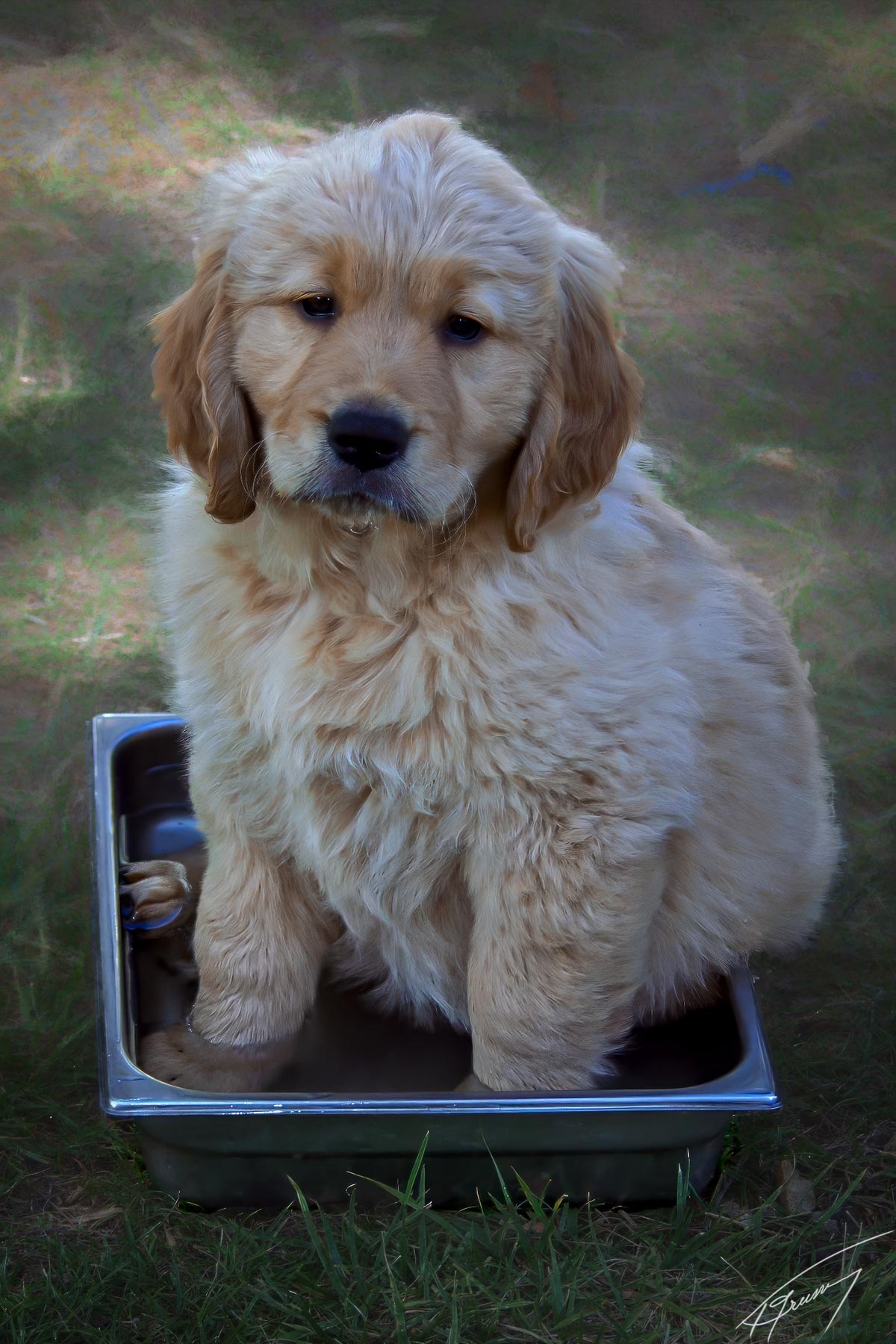
Below is a shot of a golden retriever puppy that was calling it quits on being in the warmth of the day … drinking water or not be darned, it was a place to cool down. Hard to believe that it is 21 years since I took this shot … the puppy was trained to be a service dog and during his life I am sure he brought a great deal of happiness to whomever was fortunate to have ended up with him.

Closing it out … have to be up in four hours and it is down to Lake Pleasant whilst the water levels are up then to Lake Mary in Flagstaff for the summer.

Have a beautiful day, keep smiling and for sure do the breathing thing … my plan is to do it every day until I don’t 🙂

Cheers,

Ted

To-morrow, O to-morrow!
Fast fall the fading years. A thought, a dream
Of gentle words; of faith and love a theme;
A smile, a step or two, and all is done.
Quick is the veering stream of life full run;
Yet in the crimson west still gleam
To-morrow and to-morrow’s endless dream.

excerpt from To-morrow by Max Ehrmann

###

photo_tedgrussingThe easiest way to reach Mr. Grussing is by email: ted@tedgrussing.com

In addition to sales of photographs already taken Ted does special shoots for patrons on request and also does air-to-air photography for those who want photographs of their airplanes in flight. All special photographic sessions are billed on an hourly basis.

Ted also does one-on-one workshops for those interested in learning the techniques he uses.  By special arrangement Ted will do one-on-one aerial photography workshops which will include actual photo sessions in the air.

More about Ted Grussing


Healing Paws

Healing Paws

This is an advertisement