About

Posts by :

Savor Extraordinary Journeys, Wildlife, Photography With Netflix’s New ‘Our Planet II’

Savor Extraordinary Journeys, Wildlife, Photography With Netflix’s New ‘Our Planet II’

Wander the world with wide-eyed wonder from the ease of your armchair, as Our Planet II, an inspiring new Netflix four-episode docuseries (premieres June 14), unveils answers to mysteries about why and how billions of animals relentlessly migrate — phenomenal travel adventures that have criss-crossed our globe for millennia. Silverback Films and its Emmy Award-winning team behind Planet Earth and Our Planet dazzle once again with gorgeous swoop-and-soar, dive-and-discover, cutting-edge cinematography, which showcases intimate storylines that are pulse-racing, perilous, enlightening, tender and joyful. “Only now are we beginning to understand that all life on Earth depends on the freedom to move,” declares narrator Sir David Attenborough, British author, biologist, broadcaster and natural historian, whose famously gold-standard soothing voice resonates. “Experience the extraordinary journeys that shape our world,” he invites. “For many animals, the instinct to move is overwhelming, despite the dangers. But for every trip that ends in tragedy, countless millions reach their destination.” This is an opportunity to peek at far-flung getaways and creatures that you might otherwise never see. Orchestrating this ambitious project, the program’s crew touched down in 21 countries on seven continents, tallying up 934 filming days, 292 travel days and 85 quarantine days. More than 200 people were involved in creating the show, including 50 camera operators. Special kudos to music composers Jasha Klebe and Thomas Farnon, who have scored stellar high notes for this production; the official soundtrack (released June 14) is available to stream/download on Amazon and other major digital music services. Series Producer Huw Cordey and Executive Producer Keith Scholey share their personal behind-the-scenes insights below.

Four thematic narratives — World on the Move, Following the Sun, The Next Generation and Freedom to Roam — weave this extravaganza together. Each episode covers three months of Earth’s orbit, celebrating key animal movements. At every hour of every day, astonishing masses of animals — gigantic and minuscule; in the air, on the ground, throughout the seas — are guided by instinct, sun position and a compass-like mental-mapping agility that is intrinsic to their essence, replicating the same often arduous routes that their ancestors followed eons ago, seeking havens to eat, drink, breed, give birth and secure safety. Each episode culminates with a cliffhanger.

Elegant drone shots record landscapes’ grandeur, as well as ride the skies alongside flocks of birds, so proximate that you can stare at their eyes and almost sense the air currents uplifting their wings. Newly advanced low-light camera technology now makes possible documentation of night activities and the infiltration of darkest rainforest hideaways. Underwater camera submergence spotlights splashy revelations.

For travel lovers, destinations abound. Among the favorites: lions and buffalo in Botswana; humpback whales in the Bering Sea; Laysan albatross and tiger sharks in the Northern Hawaiian Islands; lions, zebras and wildebeests in Tanzania’s Serengeti; rarely seen Tawaki penguins in Fiordland, New Zealand; elusive pumas in Patagonia; nesting turtles on Mexico’s Escobilla Beach; elephant seals in the Falkland Islands; Gentoo penguins in Antarctica; gray whales off the coasts of California and Mexico; orcas (killer whales) hunting in California’s Monterey Bay and, in the Himalayas, Demoiselle cranes that forge the most strenuous migration of any bird species, navigating at heights of almost five miles above sea level over the stupendous Asian mountain range and continuing across the desolate Gobi Desert in Mongolia before wintering in Khichan, India, where villagers kindly welcome them.

Understanding The Importance of Migration

Huw Cordey, Series Producer: “The integrity of every habitat is dependent on the animals moving in and out of it, particularly those in the more Northern and Southern parts of our planet. But, even in jungles along the Equator, you have animals moving very large distances. Movement is absolutely fundamental to every single habitat on Earth.”

Keith Scholey, Executive Producer: “It’s also about the life cycles of animals, and how crazy they sometimes are. The journey of the sockeye salmon is familiar, but I think a lot of people don’t realize that they are actually programmed to breed and die. They spend their life as an ocean fish until that one journey up the river.”

Embracing a Team Spirit

Scholey: “The scientists in the field, the ones who live in these remote places, are the people who know those stories. We are totally dependent upon their knowledge and their skills. Once we actually get on location, our experienced producers, directors and cinematographers can jump in and choose which of those stories to follow.”

Cordey: “That’s why I don’t believe in storyboards for wildlife films. It’s not that we don’t think very carefully about the sequences that we’re going to film, but if you go into a shoot with a storyboard, you will miss important things. Animals don’t read scripts. They do unexpected things and you have to be prepared. I try to get my teams to tear up the shot list at the airport. But we can’t make films without the scientists, or at least the scientific information that they provide.”

Scholey: “When that perfect combination of scientists and filmmakers come together, it’s really powerful. Sometimes the scientists even look at our footage and say, ‘Wow, I never knew that. That’s really helpful.’”

Cordey: “Obviously this is an entertainment series, and we do need to get the big iconic animals in there. But while the audience might come to it for polar bears and lions, I always think the things they remember are the smaller stories. Locusts, for example. Christmas Island crablets. When it comes to migrating animals, some of the best stories are birds, because of the distances they travel. We tried to use a balanced approach, and keep in mind that some shoots won’t work out the way we hoped they would. Although I have to say that for a project that was three years in the making, covering many different species across every single continent, there was very little that didn’t work out – which is, in my experience, quite unusual. I think we got a little lucky with some of the stories, but our research was also very good.”

Excelling at Exciting Film Advances

Cordey: “Nighttime and drone technology have vastly improved in the last five years. Macro technology, too – there are some very, very innovative macro lenses out there. Our bee shoot is a good example of a very special grip. It was designed by the cameraman that shot the bee story, and the whole shoot was probably a year in the planning. We were working with some very experienced beekeepers in Germany, as well as a photographer who has done an amazing book on bees and a scientist who had been studying bees for years. That was a classic example of where we’re dipping into years of experience to try to film the very best sequence we possibly can.”

Surprising With Spectacular Animal Stories

Cordey: “In the case of the Laysan albatross, we had the rare opportunity to spend almost the entire shoot following the trials and tribulations of a single chick. There it was — this big, chunky chick — and we could just stick with it for six weeks. The shoot itself was very interesting: It took six days to sail there from Hawaii, and I believe we are the first natural history series to film the maiden flight of a Laysan albatross. They’re the longest-lived birds of all, and they take this enormous journey around the planet for years before they breed for the first time. The original idea was to do an underwater shoot with the tiger sharks waiting in the shallows at Laysan, but the first day the tiger sharks were around, the crew got into these inflatable boats — and two sharks attacked them. It was like something out of Jaws. The crew was panicked, and basically made an emergency landing on the sand.”

Talking About The Impact of Climate Change

Cordey: “The changing world is very noticeable at the poles, the ends of the world. We were on a boat in the Arctic for a month, and our sightings of polar bears were virtually nil. We got [an] amazing sequence in the last 48 hours — the crew came across that mother and her two cubs and they were immediately on it. The audience is almost seeing it unfold in real time. The polar bear mother climbs on the island, followed by one cub, and the second cub just couldn’t do it. There were hardened Arctic watchers on that boat who were in tears, because they thought it was just so sad…. In the narration, I think David [Attenborough] handles it very well, because he tells you what’s going on. But as is always the way with David, he doesn’t push it. He just says, ‘Look, this is how it is.’ Where we witness unsettling scenes, we think sometimes you have to show the audience for them to really understand. It’s a delicate balance though, across the whole show. I think we have a duty of care.”

Cordey: “Animals move for a better life. As climate change makes things more difficult, the need to move is even greater. Of course, there’s a huge analogy there with humans, and it’s pretty understandable. If you grow up in a place where you can barely grow food to feed your family, you’re going to want to move.”

Scholey: “The underlying environmental story of Our Planet II is that to have a healthy planet, you can’t have borders. You have to let life roam. We as humans like to divide the world. We like to have territory and we like to protect our borders and stop movement. We have to use our intelligence to look at the natural world and compensate for this tendency of ours, if we want to actually allow the natural world to function. Because so many ecosystems on which we ultimately rely for our agricultural health need to have this movement of nature.”

Balancing Tourism and Conservation

Scholey: “Through my career, I’ve seen this really interesting scenario happen with the natural world. The big picture is that habitats are being destroyed, and there is less wildlife in the world than when I started. So that’s the downside. The upside is that there have been more people studying the natural world, and in some places, there has been intense conservation. That has led to two things: more knowledge, but actually more habituation.”

Cordey: “Places that become more protected get tourism, and through tourism, animals become more used to humans. They don’t see us as a threat. But it is the most extraordinary thing to get that close to a large, dangerous predator on foot, like a puma. That’s the most surprising thing. The crew did come across a male puma that was on a kill. It wasn’t one of the habituated animals, and he looked extraordinarily angry. They had to back off really, really quickly. So it’s not the species, it’s individuals.”

Bringing back “the magic” of film photography

Bringing back “the magic” of film photography
image

The rise of digital photography seemed to signal the end of analog for a Longview resident but he’s aiming to change that by bringing film back to the community in a familiar way.

Jamie Maldonado is a local photographer with a masters degree in Studio Art from Texas A&M Commerce. He previously served as an assistant at Kilgore College where he said he fostered his love of photography. Now, Maldonado wants to give back to the community by opening a nonprofit community darkroom he’s calling the Piney Woods Darkroom.

Over the last several years, he’s been thinking of ideas related to film photography and the one he kept returning to was of a film lab, he said. After speaking with a fellow photographer friend who runs a community darkroom in California, Maldonado was struck by the similarity to what he used to do at Kilgore College.

#placement_588479_0_i{width:100%;margin:0 auto;}

“We had a darkroom and classes and everything and I’m like, we don’t have that anymore, all those are gone and there’s nowhere to even buy film anymore and I started thinking about if there’s enough activity and action in East Texas that this could work and I started looking around,” he explained.

He knows several photographers who shoot film and have recently got into the practice and realized there may be a market locally for film photography and development, he said.

In Maldonado’s opinion, digital photography definitely has its merits as a faster medium that lends itself to assignment work like journalism, quick turnaround commercial portraits and general photography. However, while snapping unlimited photos sounds like a great idea, it can create its own issues, he said.

Digital photography allows for capturing thousands of photos quickly, most of which don’t end up being used and only the best few make it through, he said. This can lead to losing faith in one’s ability as a photographer and prioritizing quantity over quality, he said.

“It becomes almost a frantic concern that you’re gonna miss a moment and you gotta keep shooting,” he said.

Shooting with a film camera brings back the “magic” of not knowing how a photo turned out until it’s been developed, which makes the photographer have to trust themselves again, he said.

Younger generations are also discovering the tangible benefits that come with film photography, he said. 

“For people who grew up with things only on their phones, it’s a different thing to hold a picture in your hand,” he said.

Not only does film photography not come with the distractions of screen notifications or charging a battery, film cameras are also safe from being hacked and having its photos stolen, he said.

“There is the novelty factor for young people but I noticed older people also are rediscovering it and appreciating that it’s more stripped down (than digital photography),” he said.

Maldonado plans to teach workshops and courses at the darkroom including basics like how to manage the lab. The darkroom would provide access to specialized sinks, photo enlargers, developing tanks, scanners, books, photo editing software and more, he said. It would be open to adults 18 years of age and older, with younger photographers potentially having access via parent accompaniment, he said.

While there would be a session fee to use the darkroom, he wants the facility to be accessible and aims to make it as affordable as possible.

Maldonado has launched a fundraiser to help get the Piney Woods Darkroom established and on its feet. According to him, the project could cost anywhere between $5,000 and $20,000 depending on what’s included. He’s set a flexible goal of $10,000 which would go toward renting a space and building it up with all the needed materials. 

Since starting the fundraiser, he’s raised $4,200 through an Indiegogo page and his website, he said. Once the darkroom is established and operating for a period of time, he’ll be able to apply for grants and establish a funding base, he said.

Two local fundraising events are set to come up, one on Friday at The Foundry in Tyler and one at the next Longview ArtWalk on July 6 at Silver Grizzly Espresso. The fundraiser will include 8×10 inch polaroid portraits with the proceeds going to fund the darkroom, he said.

To donate or for more information visit tinyurl.com/fa7p2tvm or pineywoodsdarkroom.org

Fordism Comes to the Gallery—and AI Comes for the Artists

Fordism Comes to the Gallery—and AI Comes for the Artists

“The keyword of the new [20th] century was modernity. Modernity meant believing in technology and not craft, human perfectibility, not original sin. And above all in a ceaseless consumption of things and the images of things.”

—Robert Hughes, The Shock of the New,
Episode One: “Mechanical Paradise”

In recent years, the tech industry’s tendency towards promotional mania has accelerated at a rate of speed that might have surprised even Gilles Deleuze and Félix Guattari. From crypto to NFTs to the metaverse, there have been successive waves of supposedly bold futures ushered on and off stage as if through a revolving door.

Enter AI art, stage left. From The New York Times to the Los Angeles Times, to The Atlantic and many more besides, the topic of AI art is nearly impossible to avoid in media. Unlike previous waves however, AI art shows signs that it will have a more lasting and profound impact.

In preparation for writing this essay, I did a bit of searching on Twitter (that carousel, spinning ever faster, in a burning house) for the phrase “AI Art.” Although, as a technologist and critic of the tech industry generally—and its so-called “AI” manifestation specifically—I am familiar with the mechanics of systems such as Dall-E, and products such as Microsoft Designer, I was curious to see how the application of algorithmic systems to the creation of art was being discussed and presented.

Judging from the results (and here you may assume the usual caveat about my method being “unscientific”), there are two opposed camps, shouting past each other, with clashing incentives: the artists who, rightfully, understanding that systems such as Stable Diffusion are built upon using their work without payment or attribution, are raising alarms, and the AI enthusiasts, companies, and camp followers declaring that the sci-fi future of their dreams has, at long last, arrived.

My own sympathies are entirely with the artists, whom I see as fellow workers and targets of exploitation. Besides, it’s difficult to have too much fellow feeling for whoever is behind efforts such as “Dream Girl AI” or “taylor swift ai art” producing an unending stream of synthetic images, each different in setting and yet identical in dull affect.

But if we can leave questions of aesthetics—and, for the moment, exploitation (or, as many artists unequivocally describe it, theft)—aside, the questions that next come to mind are: Why is this happening? And why is it happening now? Why, to put it in material terms, was Stability AI, (for example)—the organization behind Stable Diffusion—recently able to raise $ 101 million in funding? Who is looking to benefit from so-called AI art—and how?

The answer can be found in Fordism—the application of industrial methods of production and consumption named after Henry Ford—to the creation of art or, more precisely, images. This has been tried in the past: Andy Warhol’s Factory, nearly anything by Jeff Koons, and the mass reproduction of Keith Haring’s “Dancing Man” are three celebrated examples. But with the creation of systems for ingesting existing art as patterns, and then, using those patterns as the raw material for generating “new” images via text prompt, this is being industrialized on a scale Warhol’s Marilyn only hinted at.

Walter Benjamin, in his 1953 essay “The Work of Art in the Age of Mechanical Reproduction,” described the 20th-century social and technological conditions that, in time, would inform the work of these later artists as they (very deliberately) embraced the age of mechanized reproduction:

In principle a work of art has always been reproducible. Man-made artifacts could always be imitated by men. Replicas were made by pupils in practice of their craft, by masters for diffusing their works, and, finally, by third parties in the pursuit of gain. Mechanical reproduction of a work of art, however, represents something new.

Later in his essay, Benjamin defines the “newness” of mechanical reproduction as being its impact on a key aspect of art across time—“authenticity”:

The authenticity of a thing is the essence of all that is transmissible from its beginning, ranging from its substantive duration to its testimony to the history which it has experienced. Since the historical testimony rests on the authenticity, the former, too, is jeopardized by reproduction when substantive duration ceases to matter. And what is really jeopardized when the historical testimony is affected is the authority of the object.

By applying computation on a massive scale, in an updated application of Fordist methods, to the creation of art, Silicon Valley completes this break with authenticity. There is, for these systems, no artist (besides those whose body of work form the foundational data sets); there are only images.

By using the term “Fordism” to describe AI art, I’m not merely employing a (hopefully) clever metaphor, but also recentering the role of profit incentives—always at the heart of capitalist activity—in this still unfolding story. I’m thinking of the art market and the fact that, even at its most exploitative, prior to the creation of Fordist image production via algorithm, there was still the requirement to involve and pay an actual human artist. If you wanted a reproduction of a Caravaggio fresco on the wall of your McMansion, you had no choice but to find a talented artist to paint it for you. Gallery owners needed a stream of work from both new and established artists to attract sales. Though deeply flawed in ways artists are very familiar with, the art market still demands what could be called bespoke creative labor in much the same way auto manufacturing, prior to Ford’s Taylorist innovations of the early 20th century, required skilled artisans who shaped materials into moving machines.

Whether high art or low, kitsch or avant-garde, the production of art remained safe at the point of creation (if not reproduction) from being consumed by automation—and protected, therefore, from the tech industry’s well-worn rentier tactic of imposing itself between us and the things we need. (Not to mention the things we merely want, from the ability to create and record texts to the music we wish to listen to.) The application of machine learning methods such as diffusion (which, in brief, uses a process of iterative processing—diffusion—matching output to text input) to image creation threatens to disrupt (in a real, and not simply a marketing sense) the relationship between artist and creation. Not by using machines that can match, let alone exceed, human creativity but by narrowing the definition of art to fit within the confines of what image synthesis systems can do.

To get a better understanding of what I mean by the term “Fordist image production,” consider the system, DALL-E, produced by OpenAI. Like other such systems, DALL-E (and it’s still-in-development successor, DALL-E 2) can produce visuals based on text prompts. You can, for example, type as input, “a dog, playing with a ball in the style of Picasso” and the system, using its combined corpuses of text and images, will output a synthetic result that more or less meets the criteria (more information about how DALL-E works is here).

As part of the DALL-E 2 development program called “Extending Creativity” (the use of “extending” here is intriguing, suggesting something in need of amplification or modification—much the way binoculars extend the range of vision), OpenAI stated that it enlisted the help of “more than 3,000 artists from more than 118 countries [who] have incorporated DALL·E into their creative workflows.” One effort was OpenAI”s collaboration with Austrian artist, writer, and curator Stefan Kutzenberger which OpenAI describes as

a project conceived by Austrian artist Stefan Kutzenberger and Clara Blume, Head of the Open Austria Art + Tech Lab in San Francisco, DALL·E was used to bring the poetry of revolutionary painter Egon Schiele into the visual world. Schiele died at 28, but Kutzenberger—a curator at the Leopold Museum in Vienna, which houses the world”s largest collection of Schiele’s works—believes that DALL·E gives the world a glimpse of what Schiele’s later work might have been like if he had had a chance to keep painting. The DALL·E works will be exhibited alongside Schiele’s collection in the Leopold Museum in the coming months.

The project uses DALL-E to create new works in the style of an artist who died over a hundred years ago. One of Kutzenberger’s prompts was “A painting of tall trees walking along a road, with chirping and trembling birds in front of a white sky in them in the style of Austrian expressionist Egon Schiele.” Time has, sadly but quite naturally, deprived us of Schiele himself. But through the use of DALL-E as an image production assembly line, the relationship between artist and image is deconstructed and used as raw material—like parts in a Ford assembly plan—for the manufacture of supposedly new images. Yet the resulting images, forever dependent on the past—on Schiele’s existing work—are actually old, trapping the viewer in a time loop of kitsch, presented as brilliantly new.

In 1928, construction of the Ford Motor Company’s sprawling River Rogue facility was completed. As an integrated manufacturing complex, River Rogue combined the ingestion and processing of raw materials with the production, via assembly line, of automobiles. So-called “AI art” systems such as DALL-E are also integrated manufacturing complexes (data centers instead of auto plants) ingesting our text and images as raw material to create a method for removing the artist from the art. And unlike River Rouge, whose workers’ efforts to organize in 1936, under the slogan “Unionism, Not Fordism,” were met with brutal beatings—a public relations disaster for the company that helped lead, within just a few years, to the recognition of the United Auto Workers—DALL-E’s employers never have to worry about strikes. Which perhaps is also the point.

Explorations of Color and Surface Illuminate MoCA Westport’s Summer Exhibitions; Artists Tsao & Sao Opening June 29

Explorations of Color and Surface Illuminate MoCA Westport’s Summer Exhibitions; Artists Tsao & Sao Opening June 29

Westport, CT – MoCA [Museum of Contemporary Art] Westport announces its Summer Exhibitions featuring the works of contemporary artists Richard Tsao and Sao.

Tsao (born in Thailand, lives in New York City) and Sao (born in Portugal, lives in Southport, CT) both work with color. Either through accumulative (Tsao) or layered washes (Sao), color, pigment and surface are modes in which emotions are conjured, metaphor explored and a sensory experience entices the viewer.

An opening reception will be held on Wednesday, June 28, 2023 from 6 – 8 PM. The event is free for MoCA Members and $10 for the general public. Advance registration is requested on mocawestport.org

Richard Tsao: The Constant Gardener

On view June 29 – August 20, 2023

In Richard Tsao’s well-known flood room paintings on canvas and wood, his unrestrained use of color seems to appropriately present itself in just the right balance. He manipulates pure pigment with an alchemist’s instincts in an approach that leaves his work vibrantly colored. With pigment thoroughly encrusting the canvas or wood supports, and with sections of the encrustations sticking out well beyond the supports’ edges, Tsao’s works are less painted than accumulated—they may be years in the making.

Tsao’s Rectangle series of the 1990s does not seem fixed in the physical world. These superb monotypes take full advantage of the possibilities of transferring an oil painting onto paper. In Tsao’s paintings on canvas, the physicality of brilliantly colored paint also becomes architecture; in contrast, these Rectangle works are the distillation of the spirit of color. 

These lushly layered abstract works are closely linked to Tsao’s signature vibrantly colored multi-layered flood roompaintings that evoke the lush nature of his native Thailand. Those familiar with Tsao’s color saturated paintings will recognize his unrestrained use of color in Rectangle works and feel enlivened by the luminosity of the accumulated colors. 

Sao: Inner Landscapes

On view June 29 – August 27, 2023 

Sao’s Inner Landscapes is a collection of large-scale paintings on canvas that showcases the artist’s unique approach to creating meditative spaces. The artist’s compositions use horizontal lines and gestures suggestive of landscapes, while layers of refined colors are applied to create luminous washes. Through this technique, Sao evokes a sense of depth and serenity within each work.

Sao’s keen sensitivity to color relationships and the distilled paint application engage the viewer’s senses and bring about an overall contemplative atmosphere to the paintings. Light within each artwork emanates serenity, spirituality and light–these meditative spaces invite viewers to explore and engage with the paintings on a deeper level, both visually and emotionally.

“Richard Tsao and Sao create a spiritual, joyous experience with each artwork, and present the depths of meanings, feelings and relationships we have with color in our lives and in the world at every moment,” explained Liz Leggett, MoCA Westport’s Director of Exhibitions. 

MoCA’s new summer gallery hours as of June 29, 2023 are Thursday – Sunday from 12 – 4 PM. Docent-led gallery tours are available on Thursdays and Saturdays at 1 PM.

To learn more about MoCA’s Summer Exhibitions and supporting programming, contact Liz Leggett, MoCA Westport’s Director of Exhibitions, at 
This email address is being protected from spambots. You need JavaScript enabled to view it.
 or 203/222-7070.

MoCA wishes to thank Expand Media for sponsorship of the Inner Landscapes exhibition.

MoCA Westport also thanks Björn Sao; Jung Lee Sanders, Founder and Director of Art Projects International, NYC; Lilly Wei; and Flynn Thomas for helping to bring this exhibition to fruition.

More About Richard Tsao

Born and raised in Bangkok, Richard Tsao moved to New York in 1976, where he currently lives and works. His 1995 breakout first solo exhibition in New York at the Queens Museum featured Tsao’s color saturated multi-layered paintings described as “chromatically opulent, process-intensive abstraction” by Holland Cotter who reviewed the show in The New York Times. Since the mid-1990s, Tsao has shown extensively in the United States and Asia. Recent solo exhibitions include: Richard Tsao: Green Acres, Art Projects International, New York (2021) and Richard Tsao: Monotypes, Art Projects International, New York (2020). His work is represented in major collections including the Weatherspoon Art Museum, Arkansas Museum of Fine Arts Foundation Collection, and Montefiore Fine Art Collection, New York.

More About Sao

Sao has been an artist and designer for over 30 years. A native of Portugal, Sao studied art and design in Denmark before moving to America to pursue her career. Her paintings and textiles have been exhibited at the Smithsonian Institution’s Renwick Gallery, The Textile Museum, the Corcoran Gallery in Washington DC, the American Center for the Arts in Paris, the Gulbenkian Foundation and the American Embassy in Paris, the Amphitheater in Arles, France, Rhode Island School of Design’s Museum of Art, and at the American Craft Museum, NYC and Museum of the City of New York. She was represented by the Fendrick Gallery in Washington DC and New York. Sao has received a grant from the National Endowment for the Arts, and was awarded The Washington DC Commission on the Arts and Humanities Award and Women in Design International Award. Sao created costumes for the Gulbenkian Ballet in Lisbon and The London Contemporary Dance Theatre and had her own store in Soho, NYC for ten years, exhibiting both her art and couture fashion line. She has lectured extensively on her art and design, and her book Wearable Art: Innovative Designs for Clothing and Fibers was published by Viking Press in 1980. She currently paints full time at her studio in Southport, Connecticut.

About MoCA Westport

MoCA Westport is a non-profit visual and performing arts organization that has been a cornerstone of the Westport, Connecticut community for over 50 years. In 2019, MoCA Westport underwent a significant expansion in order to bring extensive programming to the local community and greater New York and New England regions.

In addition to hosting contemporary art exhibitions and performing arts events, The Academy at MoCA Westport provides arts classes for all ages.

MoCA Westport is thankful for its generous Supporters, including Bill and Jodi Felton, Joyce Pauker, Eric Bernheim, Gary Cosgrave, Michael Delgass, Paul Efstathiou, Kristin Foster, Derek Goodman, Elizabeth Gorayeb, Tom Hofstetter, Pamela Hovland, Shari Lebowitz, Adam Moore, Deborah Murtaugh, Rachel Pencu, Dogan Perese, Jane Preiser, Oliver Pursche, Elizabeth Strick, Joyce Thompson and Lucien Vita. 

MoCA Westport is also thankful for the dedication of its generous Sponsors, including the Artur and Heida Hermanns Holde Foundation, Inc.; The Bafflin Foundation; Bank of America Museums on Us; Beechwood Arts and Innovation; Wendy and Jacques Bouthillier; The Law Offices of Cohen and Wolf; The Cornelia T. Bailey Foundation; The Cup Bearer; Richard Epstein and Ina Chadwick; Expand Media; Fairfield After Dark; Fairfield County Bank; FLB Law; The Girlfriend Fund; The Hofstetter Baron Group of Wells Fargo Advisors; The Dale & Laura Kutnick Foundation; Marcia Selden Catering & Events; Lance Lundberg and Terry McGuinness; Meadow Ridge, A Distinctive Lifecare Community; The Russell Insurance Agency; Suzanne and Norman Sorensen; SRI Fine Art Services; The Union House; Cindy and John Vaccaro; Wealthspire Advisors; Wells Fargo Bank; Westport Lifestyle; WPKN; MoCA Westport operates with the support of the New England Foundation for the Arts; the Department of Economic and Community Development, CT Humanities, Connecticut Office of the Arts, which also receives support from the National Endowment for the Arts, a federal agency.

Decoding the art of collaboration with Sriram Padmanabhan, Danone India

Decoding the art of collaboration with Sriram Padmanabhan, Danone India

Sriram Padmanabhan, marketing director, Danone India

This week’s episode features Sriram Padmanabhan, marketing director, Danone India, who emphasises the importance of independence in marketing, allowing teams to think freely and challenge preconceived notions, providing support for teams during difficult times and constantly evolving with the changing markets and consumers.

He stresses on the need to challenge traditional notions and work together across different functions within the organisation.

Padmanabhan believes that the strength of the marketing function lies in its ability to be close to market reality and be the voice of the consumer. However, the weakness of being inundated with data and the threat of being unable to keep pace with the fast-evolving consumers are also some points he touched upon.

He believes that it is of utmost importance to be open to new ways of thinking in order to keep up with rapidly changing markets.

Padmanabhan further emphasises the need to work together across different functions within the organisation and to give teams the freedom to experiment and fail fast. Additionally, he highlights the importance of collaboration with external partners in order to build something larger and better.

Watch the full episode here:

Power of simplicity and common sense is immense if applied with creativity: Tushar Malhotra, Bisleri International

Tushar Malhotra, head of marketing, Bisleri International highlights the power of simplicity mixed with creativity can make a big impact in marketing.

“,”next_sibling”:[{“msid”:100981305,”title”:”Fuel companies on ‘convenience’ drive to draw in buyers”,”entity_type”:”ARTICLE”,”link”:”/news/marketing/fuel-companies-on-convenience-drive-to-draw-in-buyers/100981305″,”category_name”:null,”category_name_seo”:”marketing”}],”related_content”:[],”msid”:100987057,”entity_type”:”ARTICLE”,”title”:”Decoding the art of collaboration with Sriram Padmanabhan, Danone India”,”synopsis”:”In this weeku2019s episode of u2018The Independent Marketer, Sriram Padmanabhan, marketing director, Danone India highlights the importance of collaboration with external partners in order to build something larger and better.”,”titleseo”:”marketing/decoding-the-art-of-collaboration-with-sriram-padmanabhan-danone-india”,”status”:”ACTIVE”,”authors”:[{“author_name”:”BE Staff”,”author_link”:”/author/479256949/be-staff”,”author_image”:”https://etimg.etb2bimg.com/authorthumb/479256949.cms?width=100&height=100&hostid=281″,”author_additional”:{“thumbsize”:false,”msid”:479256949,”author_name”:”BE Staff”,”author_seo_name”:”be-staff”,”designation”:”Staff Writer”,”agency”:false}}],”Alttitle”:{“minfo”:””},”artag”:”ETBrandEquity”,”artdate”:”2023-06-14 13:33:24″,”lastupd”:”2023-06-14 13:33:33″,”breadcrumbTags”:[“danone india”,”sriram padmanabhan”,”independent marketer series”,”independent marketer”,”Sriram Padmanabhan danone india”,”danone cmo”,”independence in marketing”,”marketing function”,”collaboration”],”secinfo”:{“seolocation”:”marketing/decoding-the-art-of-collaboration-with-sriram-padmanabhan-danone-india”}}” data-authors=”[” be data-category-name=”Marketing” data-category_id=”381″ data-date=”2023-06-14″ data-index=”article_1″ readability=”2.837094017094″>

In this week’s episode of ‘The Independent Marketer, Sriram Padmanabhan, marketing director, Danone India highlights the importance of collaboration with external partners in order to build something larger and better.

BE Staff

  • Updated On Jun 14, 2023 at 01:33 PM IST

imageSriram Padmanabhan, marketing director, Danone India”>
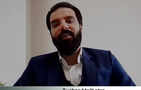
Sriram Padmanabhan, marketing director, Danone India

This week’s episode features Sriram Padmanabhan, marketing director, Danone India, who emphasises the importance of independence in marketing, allowing teams to think freely and challenge preconceived notions, providing support for teams during difficult times and constantly evolving with the changing markets and consumers.

He stresses on the need to challenge traditional notions and work together across different functions within the organisation.

Padmanabhan believes that the strength of the marketing function lies in its ability to be close to market reality and be the voice of the consumer. However, the weakness of being inundated with data and the threat of being unable to keep pace with the fast-evolving consumers are also some points he touched upon.

He believes that it is of utmost importance to be open to new ways of thinking in order to keep up with rapidly changing markets.

Padmanabhan further emphasises the need to work together across different functions within the organisation and to give teams the freedom to experiment and fail fast. Additionally, he highlights the importance of collaboration with external partners in order to build something larger and better.

Watch the full episode here:

Power of simplicity and common sense is immense if applied with creativity: Tushar Malhotra, Bisleri International

Tushar Malhotra, head of marketing, Bisleri International highlights the power of simplicity mixed with creativity can make a big impact in marketing.

  • Published On Jun 14, 2023 at 01:33 PM IST

Join the community of 2M+ industry professionals

Subscribe to our newsletter to get latest insights & analysis.

Download ETBrandEquity App

  • Get Realtime updates
  • Save your favourite articles


Scan to download App


Sriram Padmanabhan, marketing director, Danone India

This week’s episode features Sriram Padmanabhan, marketing director, Danone India, who emphasises the importance of independence in marketing, allowing teams to think freely and challenge preconceived notions, providing support for teams during difficult times and constantly evolving with the changing markets and consumers.

He stresses on the need to challenge traditional notions and work together across different functions within the organisation.

Padmanabhan believes that the strength of the marketing function lies in its ability to be close to market reality and be the voice of the consumer. However, the weakness of being inundated with data and the threat of being unable to keep pace with the fast-evolving consumers are also some points he touched upon.

He believes that it is of utmost importance to be open to new ways of thinking in order to keep up with rapidly changing markets.

Padmanabhan further emphasises the need to work together across different functions within the organisation and to give teams the freedom to experiment and fail fast. Additionally, he highlights the importance of collaboration with external partners in order to build something larger and better.

Watch the full episode here:

Power of simplicity and common sense is immense if applied with creativity: Tushar Malhotra, Bisleri International

Tushar Malhotra, head of marketing, Bisleri International highlights the power of simplicity mixed with creativity can make a big impact in marketing.

“,”next_sibling”:[{“msid”:100981305,”title”:”Fuel companies on ‘convenience’ drive to draw in buyers”,”entity_type”:”ARTICLE”,”link”:”/news/marketing/fuel-companies-on-convenience-drive-to-draw-in-buyers/100981305″,”category_name”:null,”category_name_seo”:”marketing”}],”related_content”:[],”msid”:100987057,”entity_type”:”ARTICLE”,”title”:”Decoding the art of collaboration with Sriram Padmanabhan, Danone India”,”synopsis”:”In this weeku2019s episode of u2018The Independent Marketer, Sriram Padmanabhan, marketing director, Danone India highlights the importance of collaboration with external partners in order to build something larger and better.”,”titleseo”:”marketing/decoding-the-art-of-collaboration-with-sriram-padmanabhan-danone-india”,”status”:”ACTIVE”,”authors”:[{“author_name”:”BE Staff”,”author_link”:”/author/479256949/be-staff”,”author_image”:”https://etimg.etb2bimg.com/authorthumb/479256949.cms?width=100&height=100&hostid=281″,”author_additional”:{“thumbsize”:false,”msid”:479256949,”author_name”:”BE Staff”,”author_seo_name”:”be-staff”,”designation”:”Staff Writer”,”agency”:false}}],”Alttitle”:{“minfo”:””},”artag”:”ETBrandEquity”,”artdate”:”2023-06-14 13:33:24″,”lastupd”:”2023-06-14 13:33:33″,”breadcrumbTags”:[“danone india”,”sriram padmanabhan”,”independent marketer series”,”independent marketer”,”Sriram Padmanabhan danone india”,”danone cmo”,”independence in marketing”,”marketing function”,”collaboration”],”secinfo”:{“seolocation”:”marketing/decoding-the-art-of-collaboration-with-sriram-padmanabhan-danone-india”}}” data-news_link=”https://brandequity.economictimes.indiatimes.com/news/marketing/decoding-the-art-of-collaboration-with-sriram-padmanabhan-danone-india/100987057″>

Walk-in camera obscura features in V&A Photography Centre

Walk-in camera obscura features in V&A Photography Centre

British studios Gibson Thornley Architects and Purcell have completed the V&A Photography Centre in London, which includes a double-height library and a walk-in camera obscura.

Located in South Kensington, the centre is part of the Victoria and Albert Museum‘s extensive Future Plan – a project involving the upgrade of its visitor facilities and galleries while also preserving its original historic structure.

Double-height library inside Victoria & Albert Photography Centre by Gibson Thornley Architects and PurcellDouble-height library inside Victoria & Albert Photography Centre by Gibson Thornley Architects and Purcell
The V&A Photography Centre has been completed

Gibson Thornley Architects and Purcell‘s involvement marks the final stage of the V&A Photography Centre project, bringing it to a total of seven rooms intended to “democratise” the collections for a new generation of visitors.

Its new entrance leads directly into a multimedia room for large-scale, immersive projections, which sits alongside a double-height reading room housing the library of the Royal Photographic Society.

Shelves of double-height libraryShelves of double-height library
It includes a double-height library space

Gibson Thornley Architects worked with Purcell to provide additional roof space while revealing and restoring parts of the original building, before introducing contemporary elements that reference and complement the museum’s existing fabric.

“The V&A is one of the UK’s most beautiful and innovative museum sites, and so the design process became a conversation between past and present, celebrating all of the original detail, while enhancing these historic spaces with the very best modern design,” said Gibson Thornley co-founder Matt Thornley.

“We were interested in the idea of layering and depth at a variety of scales, from the experience of passing through the enfilade of rooms to the detailed consideration of separation and exposure of public and private space,” Thornley continued.

In the reading room, new elements are cantilevered from the walls to avoid overloading the existing floor. An elevated walkway has been added, lined by balustrades finished with brass rods that references the V&A ironwork collection.

Victoria & Albert Photography Centre by Gibson Thornley Architects and PurcellVictoria & Albert Photography Centre by Gibson Thornley Architects and Purcell
V&A Photography Centre features a walk-in camera obscura

Linings of walnut burr in the library space echo the V&A’s National Art Library. They wrap a small study area and librarian workspaces, designed to “intertwine” the centre’s public and private uses.

A highlight of the galleries is a walk-in camera obscura, or pinhole camera – a box with a small hole through which light enters and creates an inverted image on the opposite side.

Developed with British artist Richard Learoyd, it allows visitors to experience and experiment with the fundamentals of photography alongside examples of historic cameras.

Gallery interior in LondonGallery interior in London
The gallery spaces are united by parquet flooring. Photo is by Jim Stephenson

The gallery spaces are united by parquet flooring selected to complement the historic structure, while a series of archways connecting the gallery spaces were designed to create a series of vistas that unfold as visitors move through the space.

The first phase of the V&A Photography Centre saw the creation of a series of three galleries designed by David Kohn Architects, which were completed in 2018.

Gibson Thornley Architects also worked with the V&A in 2018 when it designed the exhibition Frida Kahlo: Making Herself Up alongside set designer Tom Scutt.

The photography is by Thomas Adank unless stated otherwise.