About

Posts by :

Native Artists Display Basketry and Beadwork at Ukiah’s First Friday

Native Artists Display Basketry and Beadwork at Ukiah’s First Friday
Basket weaver Corine Pearce stands next to a cradle basket by Tanya Ruiz, one of her longtime students [Photo by Sarah Reith]

First Friday in Ukiah included a pop-up display of basketry, beading, and other artwork by Native American artists who spent a year using a California Creative Corps grant to teach their craft to students in the community, hone their traditional skills, and have fun with found and harvested materials.

Corine Pearce, a Pomo basket weaver from Redwood Valley, covered a wall with work by her students. “Every completed basket up there is just magic,” she declared, including a fully functional cradle basket that was made by her goddaughter, Tanya Ruiz, for her own son. “I started weaving with her when she was nine,” Pearce recalled. She hopes this basket inspires the beginning weavers. “Here’s your beginning, your crooked beginnings,” on one end of the wall, all the way “to your perfect basket,” she said with an encouraging laugh.

Monique Sonoquie (Chumash, Apache, Yaqui, Zapotec and Irish), whose artist bio is printed on a  banner from a residency years ago, invites her students to join her in using recycled materials. That includes books of poetry, music, photography, and some lighter reading. “We take pages from books,” she explained. “You make poetry out of the page that you’re given, and then you can do art around that poetry…It depends on what book you have, too. At one of the events, the book was The Devil Wears Prada. Thank goodness it was mostly adults at that event.” For an MMIP/MMIW event, students put handprints made with beet juice on sepia-toned vintage photographs of Native Americans from around the country. 

Monique Sonoquie with her work at the Grace Hudson Museum pop-up display of work by Native American artists [Photo by Sarah Reith]

Sonoquie’s kelp baskets were also featured at the Mendocino Art Center and the Noyo Center for Marine Sciences field station during kelpfest last month. She started making them one day when she was gathering seaweed for food and had too many things to carry in her hands and her pockets. In a moment of inspiration, she wove a basket with what she had at hand, which was bull kelp. She has been selling and displaying them ever since.

For her traditional Pomo baskets, Pearce said she used some borrowed materials and some from the wild gardens at Grace Hudson Museum. Her display includes photos of a work party at a basket weaving garden she helped start on tribal land in Redwood Valley not quite thirty years ago. She said the weavers built their own sand bed on the acre-and-a-half site to cultivate sedge, and brought in three kinds of willow, redbud, dogwood, and mock orange. It all burned in the 2017 Redwood Complex fires, “And since California plants are really raised on fire, it was very beneficial for the whole garden,” she recalled. “We were able to not only revive the basket garden, but we also added in traditional plants for medicine and for food. It’s very fancy.” She believes it is “the first dedicated traditional garden on Indigenous land for community use that has been done in California.” Gesturing to the wild gardens behind her, she added, “This isn’t Indigenous land. This is a museum. Same thing in Santa Rosa. They have it at museums, but not on tribal land.” With access to traditional basket-making materials on private property generally impossible, she concluded, “That’s a big deal.” 

Michael Racho showcases a tiny medicine basket pendant along with some of his other beadwork [Photo by Sarah Reith]

Michael Racho is a Dry Creek member who has been doing beadwork and basketry “for the last 20 years at least.” He showcased a beaded necklace with a pendant that is a tiny basket, topped with an acorn cap, that has a very special purpose.

– Advertisement –

“These are considered medicine baskets for tribal community members or whoever needs a blessing or some care in their life,” he explained. “This one’s out of reed and raffia.” The tiny fingertip-sized basket is stuffed with angelica root and sage, two of the herbs that are used in cultural blessings and prayers. “When we present it to that person in need, it will actually give them some form of relief,” Racho promised. “We don’t know what, but you know, to the person that’s holding it, they love it.”

Racho starts his classes by teaching students how to make a rough draft of their beadwork by lining up their beads before they commit to stringing them. And he shared a key tip about making sure heavy abalone medallions stay in place. “You take your sinew on a needle and you come from behind the medallion and then run it through,” he said patiently. “Then you lay a bead on it and then run it back through the hole, so the bead will hold it. That way, it’ll stay flat on your chest. It’ll be presented flat.” He reported that all of his students, including the young ones, made beautiful necklaces. Most importantly, though, “Everybody had an extreme amount of fun…And just shared their love.” 

Pearce has noted something of a renaissance in traditional basket weaving. “There was nobody doing it for 20 years,” she recalled. She kept offering classes, “and there was nobody coming, but now they’re doing it!” Her ultimate goal is that there will be a weaver in every Pomo family again. “That might be a pipe dream,” she qualified; “But I’m seeing it….We’re almost up to 20, when we went from three. It’s amazing. There’s no limit. Everyone will have a weaver soon.”

– Advertisement –

Discover the Honor 200 Pro: Elevate your portrait photography with ‘AI-empowered’ device

Discover the Honor 200 Pro: Elevate your portrait photography with ‘AI-empowered’ device
Honor 200 series

Honor has introduced its latest lineup of AI-powered smartphones, bringing cutting-edge artificial intelligence (AI) technology to the mid-range market with the launch of the Honor 200, Honor 200 Pro, and Honor 200 Lite. 

The new lineup aims to set a new standard for smartphones in their category by combining powerful AI features with eye-catching exteriors. 

First impressions

The Honor 200 Pro differentiates itself by promising flagship-level performance and looks in the mid-market segment. It features a striking curved screen, great battery life, rapid charging capabilities, and a sophisticated AI-powered camera system. 

The device’s 6.78-inch display is particularly eye-catching, complemented by a unique cameo brooch-shaped camera module inspired by Gaudi’s “Casa Milá” and a mother-of-pearl finish on the back panel. 

Overall, the Honor 200 Pro presents a compelling package, both inside and out.

Camera: Honor ties up with Studio Harcourt

One of the standout features of the Honor 200 Pro is its camera system. It is equipped with a triple 50MP studio-quality lens combination that includes a main portrait camera with an f/1.3 aperture, a telephoto camera offering 50X digital zoom, and an ultra-wide 12MP macro camera.

This setup is ideal for capturing a variety of scenes with clarity and DSLR-level detail.

Image credit: Supplied

The main camera is optimised for low-light conditions, offering a 105 per cent improvement in noise reduction, making it perfect for capturing live music and concert photography. 

Image credit: Sourced

Additionally, the camera system includes the advanced Harcourt Portrait modes, developed in collaboration with the renowned Studio Harcourt in Paris. These modes allow users to take celebrity-quality portraits by leveraging AI to enhance image quality and settings automatically.

Users can choose between three modes – vibrant, colour or classic black-and-white styles for portraits.

Image credit: Supplied

The Honor 200 Pro also excels in dark conditions due to the ‘AI-enhanced Night Portrait mode’, capturing clear and detailed photos even in dim lighting.

Image credit: Supplied

It supports 8K video recording, enabling users to create high-resolution videos with stunning detail.

AI-powered performance 

Earlier this year, Honor introduced a groundbreaking ‘Four-Layer AI’ that focuses on ‘On Device-AI’. It starts with Cross-device and Cross-OS AI, creating an open ecosystem for sharing computing power. The Platform-level AI layer personalises the operating system for intent-based interactions. 

Next, app-level AI drives innovative applications, enhancing user experiences. At the top, interface to Cloud-AI services provides access to extensive cloud services with a focus on privacy protection.

This AI architecture, combined with the Snapdragon 8s Gen 3 mobile processor and operating on the AI-enhanced MagicOS 8.0, ensures an extremely smooth performance and intuitive, efficient multitasking capabilities.

AI-empowered Magic Portal

One of the key AI features introduced in the Honor 200 Pro is the AI-empowered Magic Portal. Honor promises intuitive identification and understanding of a user’s needs and presents the required services without any prompts. 

For example, Magic Portal can recognise addresses in text messages and direct users to Google Maps for easy navigation. It also simplifies interactions on social media platforms, allowing users to share booking details or search results, effortlessly. Additionally, it brings to fore the possibilities of AI-enabled experience with image-based shopping experiences. 

Display and build quality

The Honor 200 Pro features a 6.78-inch AMOLED quad-curved floating display, housed in an ultra-thin 82mm body, and weighs just 199 grams. This makes it extremely handy and easy to navigate. 

The display offers a sharp 2,700 x 1,224-pixel resolution with a 120 Hz refresh rate, and it provides excellent brightness, making it readable even in bright outdoor conditions. The stereo speakers deliver impressive sound quality, enhancing the multimedia experience.

The device also includes the AI Circadian Night Display, which adjusts the screen’s colour temperature based on the user’s environment and habits, reducing blue light exposure to promote better sleep. 

Additionally, the AI Natural Tone 2.0 feature automatically adjusts the screen’s colour temperature and brightness according to the surrounding ambient light.

Battery and charging 

The Honor 200 Pro is equipped with a powerful 5200mAh silicon-carbon battery that supports 100W wired charging, 66W wireless charging, and reverse charging capabilities. 

The phone can be fully charged in approximately 45 minutes using the included USB-C cable and 100W charger. For wireless charging, the device supports up to 66 watts but requires Honor’s specific charger for maximum efficiency.

Image credit: Honor

In the crowded device market, the Honor 200 Pro stands out with its elegant design, powerful performance, and advanced AI capabilities.

Top 8 Nikon Cameras for Beginners and Travel Photography Enthusiasts

Top 8 Nikon Cameras for Beginners and Travel Photography Enthusiasts
image

Explore Nikon’s offerings designed to empower your photographic endeavours. Whether opting for the robust functionality of a DSLR or the portability of a mirrorless camera, Nikon ensures reliability and performance. Choose a Nikon camera that aligns perfectly with your vision and captures every moment with clarity and brilliance.

1. Nikon D7500 DX-Format Digital SLR Body (Black)

The Nikon D7500 is a powerful DSLR camera that offers exceptional image quality and performance. With a 20.9MP sensor and 51-point autofocus system, this camera is perfect for capturing stunning photos and videos. Its 3.2-inch tilting touchscreen makes it easy to compose shots from any angle, while its robust build ensures durability for travel and outdoor use.

Specifications of Nikon D7500 DX-Format Digital SLR Camera:

  • 20.9MP sensor
  • 51-point autofocus system
  • 4K UHD video recording
  • 3.2-inch tilting touchscreen
  • Weather-sealed body

Reasons to buy

Reasons to avoid

Exceptional image quality Relatively high price point
Fast and accurate autofocus Heavier than some mirrorless options
Tilting touchscreen for versatile shooting angles

2. Nikon D7500 20.9MP Digital SLR Camera (Black) with AF-S DX NIKKOR 18-140mm f/3.5-5.6G ED VR Lens

The Nikon D7500 with 18-140mm lens kit is a versatile option for photographers who want a single solution for a wide range of shooting scenarios. With the same powerful features of the D7500 DSLR, this kit also includes a high-quality 18-140mm lens, allowing for greater flexibility and convenience in capturing different subjects and scenes.

Specifications of Nikon D7500 DX-Format Digital SLR Camera with 18-140mm Lens:

  • 20.9MP sensor
  • 18-140mm lens included
  • 4K UHD video recording
  • 3.2-inch tilting touchscreen
  • 51-point autofocus system

Reasons to buy

Reasons to avoid

Versatile lens kit for different shooting scenarios Higher price due to lens kit
High-quality 18-140mm lens included Heavier and bulkier than some mirrorless options
Same exceptional image quality as the D7500 DSLR

Also Read: DSLR cameras for high-definition images: Check out top 10 options in 2024

3. Nikon Store COOLPIX P950 Digital Camera – Black

The Nikon COOLPIX P950 is a high-performance digital camera with a powerful 83x optical zoom lens, perfect for travel photography and wildlife enthusiasts. With a 16MP sensor and 4K UHD video recording, this camera offers incredible versatility and image quality in a compact and portable package.

Specifications of Nikon COOLPIX P950 Digital Camera:

  • 16MP sensor
  • 83x optical zoom lens
  • 4K UHD video recording
  • 3.2-inch tilting LCD
  • RAW shooting capability

Reasons to buy

Reasons to avoid

Incredible 83x optical zoom range Smaller sensor size
Compact and portable design Limited manual control options
High-quality 4K video recording

Also Read: Best cameras for beginners in 2024: Top 8 user-friendly and affordable options for novice photographers

4. Nikon Z6 II Mirrorless Camera Z 24-70mm Lens with Additional Battery, Optical Zoom, Black

The Nikon Z6 is a full-frame mirrorless camera that offers exceptional low-light performance and image quality. Paired with a high-quality 24-70mm lens, this camera is perfect for professional photographers and enthusiasts looking for the best in mirrorless technology.

Specifications of Nikon Z6 Mirrorless Digital Camera with 24-70mm Lens:

  • 24.5MP sensor
  • 4K UHD video recording
  • 5-axis in-body image stabilization
  • 273-point hybrid autofocus system
  • Weather-sealed body

Reasons to buy

Reasons to avoid

Exceptional low-light performance Higher price point
High-quality 24-70mm lens included Limited native lens options compared to DSLR
Compact and lightweight design

Also Read: Best cameras for photography: 9 top-rated DSLR and mirrorless cameras for high-quality shots

5. Nikon Mirrorless Z fc Body with Z DX 16-50mm f/3.5-6.3 VR [SL] Lens with Additional Battery, Camera Bag & 64 GB SD Card, SmallRig L-Shape Grip,Optical Zoom,Black

The Nikon Z50 is a compact and lightweight mirrorless camera that delivers exceptional image quality and performance. Paired with a 16-50mm lens, this camera is perfect for travel and everyday photography, offering versatility and convenience in a portable package.

Specifications of Nikon Z fc Body with Z DX 16-50mm Lens:

  • 20.9MP sensor
  • 4K UHD video recording
  • 209-point hybrid autofocus system
  • 3.2-inch tilting touchscreen
  • Compact and lightweight design

Reasons to buy

Reasons to avoid

Compact and lightweight design Smaller grip compared to DSLR
Versatile 16-50mm lens included Limited native lens options
High-quality 4K video recording

Also Read: Camera buying guide for amateurs, professionals, creators, and enthusiasts: All you need to know before buying

6. Nikon Z50 Mirrorless Camera with Z DX 16-50mm f/3.5-6.3 VR & Z DX 50-250mm f/4.5-6.3 VR Lens with Additional Battery

The Nikon Z50 with dual lens kit offers the ultimate versatility for photography enthusiasts. With both 16-50mm and 50-250mm lenses included, this camera provides a wide range of focal lengths for capturing everything from wide-angle landscapes to distant subjects. Its compact and lightweight design makes it perfect for travel and everyday use.

Specifications of Nikon Z50 Mirrorless Camera with 16-50mm and 50-250mm Lenses:

  • 20.9MP sensor
  • 4K UHD video recording
  • 209-point hybrid autofocus system
  • 3.2-inch tilting touchscreen
  • Dual lens kit included

Reasons to buy

Reasons to avoid

Dual lens kit for ultimate versatility May require additional lens options for specific needs
Compact and lightweight design Smaller grip compared to DSLR
High-quality 4K video recording

Also Read: DSLR cameras for beginners are affordable and easy to use: Here are top 10 picks

7. Nikon Mirrorless Z6 II Body Only with Additional Battery, Optical Zoom, Black

The Nikon Z6 II is the next-generation mirrorless camera with improved performance and features. With a 24.5MP sensor, 4K UHD video recording, and 5-axis in-body image stabilization, this camera is perfect for professional photographers and enthusiasts who demand the best in mirrorless technology.

Specifications of Nikon Mirrorless Z6 II Body Only with Additional Battery:

  • 24.5MP sensor
  • 4K UHD video recording
  • 5-axis in-body image stabilization
  • 273-point hybrid autofocus system
  • Dual memory card slots

Reasons to buy

Reasons to avoid

Improved performance and features Higher price point
High-quality 4K video recording Limited native lens options compared to DSLR
Dual memory card slots for backup and overflow

Also Read: Best cameras for professional photography: 10 options to choose from

8. Nikon Z30 Kit with Z Dx 18-140Mm Lens,64Gb Uhs-I Sd Card,Bag,&Mh-32-Creator-Ready Digital Camera,Black

The Nikon Z30 with creator kit is a compact and versatile mirrorless camera designed for content creators and vloggers. With an 18-140mm lens and essential accessories included, this camera provides everything you need to start creating high-quality content for your audience.

Specifications of Nikon Z30 Kit with Z Dx 18-140Mm Lens,64Gb:

  • 20.9MP sensor
  • 4K UHD video recording
  • 209-point hybrid autofocus system
  • 3.2-inch tilting touchscreen
  • Creator kit with essential accessories

Reasons to buy

Reasons to avoid

Compact and versatile design for content creators Limited native lens options
High-quality 18-140mm lens included May require additional accessories for specific needs
Essential accessories for vlogging and content creation

Top 3 features of best Nikon cameras:

Best Nikon Cameras Resolution Autofocus System Video Recording
Nikon D7500 DX-Format Digital SLR Camera 20.9MP 51-point 4K UHD
Nikon D7500 DX-Format Digital SLR Camera with 18-140mm Lens 20.9MP 51-point 4K UHD
Nikon COOLPIX P950 Digital Camera 16MP 83x optical zoom 4K UHD
Nikon Z6 Mirrorless Digital Camera with 24-70mm Lens 24.5MP 273-point hybrid 4K UHD
Nikon Z50 Mirrorless Camera with 16-50mm Lens 20.9MP 209-point hybrid 4K UHD
Nikon Z50 Mirrorless Camera with 16-50mm and 50-250mm Lenses 20.9MP 209-point hybrid 4K UHD
Nikon Z6 II Mirrorless Camera Body 24.5MP 273-point hybrid 4K UHD
Nikon Z30 Mirrorless Camera with 18-140mm Lens and Creator Kit 20.9MP 209-point hybrid 4K UHD

Best value for money of Nikon camera:

The Nikon COOLPIX P950 Digital Camera offers the best value for money, with its powerful 83x optical zoom lens, 4K UHD video recording, and compact design. It provides incredible versatility for travel photography and wildlife enthusiasts without breaking the bank.

Best overall Nikon camera:

The Nikon Z6 II Mirrorless Camera Body stands out as the best overall product in this category, with its improved performance, 24.5MP sensor, 4K UHD video recording, and 5-axis in-body image stabilization. It’s a top choice for professional photographers and enthusiasts seeking the best in mirrorless technology.

Factors to keep in mind while choosing the best Nikon camera:

Camera type: Decide between DSLR or mirrorless cameras based on your photography style, preferences, and portability needs.

Sensor size and resolution: Evaluate sensor sizes (APS-C or full-frame) and resolution (megapixels) for image quality and low-light performance.

Lens compatibility: Check lens compatibility with Nikon’s F-mount or Z-mount system, ensuring availability of lenses for future expansion.

Features and technology: Look for features like autofocus system, image stabilization, video capabilities, and connectivity options (Wi-Fi, Bluetooth).

Budget and value: Balance your budget with camera features, opting for the best value that meets your photography goals and financial considerations.

Similar articles for you

Best cameras for beginners in 2024: Top 8 user-friendly and affordable options for novice photographers

Best cameras for photography: 9 top-rated DSLR and mirrorless cameras for high-quality shots

Best cameras for professional photography: 10 options to choose from

FAQs

Question : What is the price range of Nikon cameras?

Ans : The price range of Nikon cameras varies depending on the model, features, and included accessories. Entry-level DSLR cameras start at around Rs. 30,000, while high-end mirrorless cameras can go up to Rs. 3,00,000 or more.

Question : What are the key features to look for in a Nikon camera?

Ans : When choosing a Nikon camera, look for features such as high-resolution sensors, advanced autofocus systems, 4K video recording, compact and lightweight designs, and versatile lens options to suit your specific photography needs.

Question : How effective are Nikon cameras for travel photography?

Ans : Nikon cameras are highly effective for travel photography, offering a range of compact and lightweight options with powerful features such as high-resolution sensors, 4K video recording, and versatile lens kits for capturing stunning travel moments.

Question : What is the newest release in Nikon cameras this year?

Ans : The newest release in Nikon cameras this year is the Nikon Z30 Mirrorless Camera with 18-140mm Lens and Creator Kit, offering a compact and versatile design for content creators and vloggers, along with essential accessories for creating high-quality content.

Disclaimer: At Livemint, we help you stay up-to-date with the latest trends and products. Mint has an affiliate partnership, so we may get a part of the revenue when you make a purchase. We shall not be liable for any claim under applicable laws, including but not limited to the Consumer Protection Act, 2019, with respect to the products. The products listed in this article are in no particular order of priority.

3.6 Crore Indians visited in a single day choosing us as India’s undisputed platform for General Election Results. Explore the latest updates here!

Catch all the Technology News and Updates on Live Mint.
Download The Mint News App to get Daily Market Updates & Live Business News.

More
Less

Published: 08 Jul 2024, 10:00 AM IST

Duluth Folk School hosts smartphone photography class

Duluth Folk School hosts smartphone photography class

DULUTH, Minn. (Northern News Now) – Many people have a camera with them at all times, in the form of a smartphone.

While using it may seem second nature to some, others may want to learn a few tricks from a pro to get their shots looking their best.

The Duluth Folk School held a special class Sunday to teach people smartphone photography.

Instructor Mark Bergman has been taking pictures for close to 60 years and has seen the art form change from black and white, to color, to digital.

He said getting a good shot requires a blend of of technology and choosing how the shot will be laid out.

”The technology side really determines how good the picture is taken, the artistic about the composition. We go into both of those,” said Bergman.

Bergman said one way to make your smartphone photos look better is to turn on the grid feature in the camera, which can help with composition.

He also suggests not turning on your filters before taking pictures, urging people to wait and do that after you’ve taken the shot.

For more information about classes offered at the Duluth Folk School, click here.

Click here to download the Northern News Now app or our Northern News Now First Alert weather app.

Stampede is here: What our photographers saw during this first weekend

Stampede is here: What our photographers saw during this first weekend

THIS CONTENT IS RESERVED FOR SUBSCRIBERS ONLY

Subscribe now to read the latest news in your city and across Canada.

  • Unlimited online access to articles from across Canada with one account.
  • Get exclusive access to the Calgary Herald ePaper, an electronic replica of the print edition that you can share, download and comment on.
  • Enjoy insights and behind-the-scenes analysis from our award-winning journalists.
  • Support local journalists and the next generation of journalists.
  • Daily puzzles including the New York Times Crossword.

SUBSCRIBE TO UNLOCK MORE ARTICLES

Subscribe now to read the latest news in your city and across Canada.

  • Unlimited online access to articles from across Canada with one account.
  • Get exclusive access to the Calgary Herald ePaper, an electronic replica of the print edition that you can share, download and comment on.
  • Enjoy insights and behind-the-scenes analysis from our award-winning journalists.
  • Support local journalists and the next generation of journalists.
  • Daily puzzles including the New York Times Crossword.

REGISTER / SIGN IN TO UNLOCK MORE ARTICLES

Create an account or sign in to continue with your reading experience.

  • Access articles from across Canada with one account.
  • Share your thoughts and join the conversation in the comments.
  • Enjoy additional articles per month.
  • Get email updates from your favourite authors.

Cody Stampede Launched ‘Click’ Thompson’s Career As Top Rodeo…

Cody Stampede Launched ‘Click’ Thompson’s Career As Top Rodeo…

CODY — Two-time National Finals Rodeo Photographer of the Year Christopher “Click” Thompson has returned to this legendary Western Wyoming town that helped launch a rodeo photography career that has exceeded even his own wildest dreams.

Thompson returned this week to shoot the Cody Stampede Rodeo.

While he was here, he took time to give a little something back to the town that helped him get his start by hosting an exclusive photography seminar for rodeo shutterbugs.

Thompson has captured artistic, gritty shots from hundreds of rodeos, and he’s a regular at some of the best rodeos in the world. That includes Cheyenne Frontier Days and the Cody Stampede, as well as the Calgary Stampede and the Pendleton Roundup.

“It’s a surreal moment being back here,” Thompson told Cowboy State Daily. “Five years later, the resume looks quite a bit different than it did then.”

Then, Thompson was flat broke. He barely had enough money to buy a camping tent, and he wasn’t exactly sure how he was going afford gas to get back home to Texas.

He needed to shoot five Professional Rodeo Cowboys Association (PRCA) rodeos to become a card-carrying photographer on the circuit. A friend of his, who was the main photographer at the Cody Nite Rodeo and the Stampede Rodeo, invited him to come out and work with him to complete that task.

He’d been looking at a cheap hotel in the area, but it seemed pretty sketch. His friend suggested camping instead.

“I had never camped before,” Thompson said. “But they had their RV here at the Ponderosa campgrounds, and you can tent camp there as well. I”m like, ‘Well it saves me money, so why not?’”

His friend did a lot of work at the time for Coleman, an outdoor outfitters company, so they went to Walmart to buy Coleman camping gear, and Thompson placed his tent at the bottom of the hill at the campground, so it would make a cool photography shot.

“I was right by the river,” Thompson recalled. “And there were some 4H kids there.”

Thompson realized, watching the 4H kids working on their camps, that he probably didn’t know as much about camping as those youths.

He also had even less money than when he’d landed in Cody.

But there was a shower upstairs and he just had to have faith that all was going to be well. All his needs were being taken care of, somehow some way. All he had to do was concentrate on his best photography while he was here at the Cody Stampede Rodeo.

  • Click Thompson brought an impressive array of lenses and camera bodies to an exclusive seminar for rodeo shutterbugs.
    Click Thompson brought an impressive array of lenses and camera bodies to an exclusive seminar for rodeo shutterbugs. (Renee Jean, Cowboy State Daily)
  • Two-time Rodeo Photographer of the Year Christopher “Click” Thompson watches the action while Carrie Mazelin takes a few photos during a photography workshop with Thompson for rodeo shutterbugs. (Renee Jean, Cowboy State Daily)
  • That rope looked like it was going to land — but looks can be deceiving in rodeo. That's all part of the challenge when it comes to taking great photos at the Cody Stampede Rodeo.
    That rope looked like it was going to land — but looks can be deceiving in rodeo. That’s all part of the challenge when it comes to taking great photos at the Cody Stampede Rodeo. (Renee Jean, Cowboy State Daily)
  • The Cody Stampede Rodeo hosted Two-Time Rodeo Photographer of the Year Christopher “Click” Thompson, who also gave a seminar for rodeo shutterbugs while he was in Cody. (Renee Jean, Cowboy State Daily)

The Check Was In The Mail

Thompson had second-guessed leaving his Department of Defense job to chase photography dreams many times.

The time he spent in Cody was no different. Being flat broke, not knowing exactly how he was going to get back home, was a scary place to be in life.

“I think part of the reason my Plan A was successful was I really didn’t have a Plan B,” he said. “I mean, I knew that I would be OK if it didn’t work out. I knew there were other ways I could go, but I was kind of all in on this deal.”

About the time he was doubting his path the most, his mom called to tell him a check had arrived in the mail for him. It had $150 on it.

“Put that check in the bank,” he told her. “That is how I’m getting home.”

To this day, he doesn’t know where that check came from. Maybe he’d paid too much in taxes. But it didn’t matter. It was the boost he’d needed, right when he’d needed it.

“Every time I would maybe kind of second guess or doubt what I was doing, God would give me some reason, or there would be some sign that like, I’m on the right path,” Thompson said. “This was that moment in Cody.”

Camping in Cody was the first and the last time he ever had to sleep in a tent, Thompson said.

“Now I’m sleeping at the Holiday Inn, and I”m teaching people how to do what I do,” he said.

Home At The Rodeo

For Thompson, Rodeo has been one the most welcoming of environments. That’s part of the reason he fell in love with the sport while he was in Virginia.

A friend had invited him out to take photographs at a rodeo. Thompson arrived without expectations — but was almost immediately hooked.

There was the movement of the bulls — those muscles rippling under the surface, that power in their eyes. Each had a different personality. A personality he could capture with his camera.

They were captivating — and that was before he even saw bull-riding.

“Then a downpour came and here I am standing under a tent with a bunch of people I don’t know,” he said. “And it’s just a bunch of cowboys.”

But Thompson had this feeling that somehow he’d come home. This was where he was meant to be.

After that, he’d do a rodeo as often as he could. He was obsessed.

The bulls were raw power. Forces of nature.

And the cowboys who rode them …

He couldn’t get enough.

Before too long, Thompson’s photos were getting a lot of attention, and he got a couple of rodeo gigs over the course of a year, which made around $20,000.

“I thought if I could just string a couple more of these events together and do a few things on the side, maybe I might have something here,” he said. “I mean, it ain’t going to be the luxury lifestyle, but the freedom and the quality of life is definitely going to change.”

  • Two-time PRCA Rodeo Photographer of the Year Christopher “Click” Thompson shares tips for shooting the Cody Stampede Rodeo. (Renee Jean, Cowboy State Daily)
  • Christopher “Click” Thompson talks about making this photo, an award winner of a cowboy riding a horse that looks like a hurricane. (Renee Jean, Cowboy State Daily)
  • Two-time PRCA Rodeo Photographer of the Year Christopher “Click” Thompson talks about shooting the Cody Stampede Rodeo for an exclusive photography workshop for rodeo shutterbugs. (Renee Jean, Cowboy State Daily)
  • Action is fast at the Cody Stampede Rodeo — even when its during what’s known as “slack.” (Renee Jean, Cowboy State Daily)

That Gold Buckle Feeling

When Thompson shows up for a photography seminar, he brings an impressive array of telephoto and wide angle lenses. There’s at least 16 on the table and that’s not even all of the lenses he has.

But what really makes the difference is not the equipment. It’s his mindset.

He’s going to change his location. He’s going to think like the bulls and the cowboys, so he can anticipate where the action that makes the best photo is likeliest to happen.

He also knows the cowboys well. He knows their habits. He knows which ones are going to jump off the horse and fly through the air and which ones are going to take that moment to pump their fist when they taste victory in the dusty air.

The technical understanding of his equipment is important, but it’s the emotions he captures that makes a photographer of the year.

It’s an approach he freely shares with other rodeo shutterbugs during his seminars. It’s his way of giving back what he feels the universe of rodeo has given to him.

Being named PRCA Photographer of the Year for two years in a row was an awesome feeling, Thompson said.

But what really gives him the gold buckle feeling is knowing that he isn’t a Ferrari in first gear any more.

He’s in full throttle, chasing after his dreams, and, in doing that, he’s found his place in the world.

“No day is the same,” he said. “Each day is different. And there’s always new opportunities and I get to share what I do with people. So that’s pretty cool.”

Renée Jean can be reached at renee@cowboystatedaily.com.

In case you missed it

Photographer of the Year 2024: Earlybird entries closing soon

Photographer of the Year 2024: Earlybird entries closing soon

8 July 2024

Earlybird entries for our flagship photo competition, Photographer of the Year presented by Ted’s Cameras, close on 21 July. 

Image by 2024 entrant Joy Kachina, captured in Cradle Valley Tasmania.

For 2024, entrants will compete for a prize pool valued at more than $16,000, and a selection of the winning and runner-up images will be exhibited at Ted’s World of Imaging in Sydney. 

Photographer of the Year includes six portfolio categories – Landscape, Animal & Nature, People, Aerial, Travel and Black & White – and three single-image categories – Single Shot, Creative and Junior (for entrants under 18).

In addition, winners and runners up, as well as a selection of the best entries in each category, will be published in a special Photographer of the Year edition of Australian Photography magazine in February 2025. Last year we published 400 images from the competition over 60 pages.

Earlybird pricing of $25 an entry ends on July 21. You can enter the competition here. 

Google’s Pixel 9 Might Take Its Cameras to a Place iPhone Would Never Dare

Google’s Pixel 9 Might Take Its Cameras to a Place iPhone Would Never Dare

With an event set for August 13, Google is finally ready to share its take on a Pixel phone with even more AI sprinkled into every corner of Android. I’m sure Google will have plenty of new Gemini-powered generative AI features to announce, but its plan to stand out from Galaxy AI and Apple Intelligence is apparently by leaning even harder into the Pixel’s reality-altering camera abilities.

Leaks have revealed what the Pixel 9 looks like. If true, we should see at least four different phones (a Pixel 9, 9 Pro, 9 Pro XL, and 9 Pro Fold), with the regular, non-folding models looking iPhone-like with rounded corners.

If the AI camera and editing features introduced in the Pixel 7 and Pixel 8 started to dissolve what truth existed in smartphone photos, the details that have leaked out about the Pixel 9 could push things even further, making any image that passes through Google’s newest phones worthy of skepticism.

“Studio,” “Add Me,” and More

Magic Eraser is just one of Google’s reality altering editing tools.

Google

The Pixel 9 phones will ship with several AI-powered features, at least three of which are entirely new, according to leaked screenshots obtained by Android Authority. Under the umbrella of “Google AI” these include things like Circle to Search, which was originally introduced on the Galaxy S24 line and then later added to Pixel phones and the Pixel Tablet; Gemini, which is the AI assistant available on all Android 14 phones; and new features called “Add Me,” “Studio,” and “Pixel Screenshots.”

Pixel Screenshots sounds a bit like Microsoft’s Recall, but designed to only analyze and mine information from screenshots you take yourself, rather than passively capturing everything on your screen in the background (and with weak security by storing it in plain text, hilariously). Per the report, when you take a screenshot, a Pixel 9 will reportedly use on-device AI to add relevant metadata like web links, app names, and the date you captured the image will be attached to it to make it easier to look up later. From there, a Pixel 9 can then answer questions about the images you capture.

Add Me, a feature for the Pixel’s Camera app, is only described as being able to “make sure everyone’s included in a group photo.” Considering how Google does this with Best Take on the Pixel 8, which combines multiple photos into one “best” photo where everyone is looking and smiling at the camera by letting you literally swap heads, Add Me seems like it could go further. Maybe Google’s found some way to add someone — maybe even the photographer — to group photos after the fact. Or maybe it’s just a version of Best Take with more customization.

Studio, which has reportedly appeared in strings of code in Android 15 betas as “Creative Assistant,” lets you use generative AI to create images from scratch. These could be for stickers in Google Messages, but it’s possible the feature could be part of the system-wide Markup function in Android 14 or even get its own standalone app. That would mirror how Apple is approaching image generation in Apple Intelligence, with a standalone Image Playground app and image-creating abilities available in other apps like Messages or Notes.

While these features might not be major in their own right, they compound the already flexible approach to reality that Google’s enabled with things like Magic Eraser and Magic Editor, and subtler AI-enhancing features like Video Boost and Photo Unblur. It’s a bit wild when you say it out loud, but Google seems committed to giving you complete control over the images you capture, to the point where what you actually capture barely matters.

How Far Is Too Far?

The Pixel 8 back and cameras.

Google prides itself on doing a lot with simple camera sensors.

Photograph by Raymond Wong

It’s easy to get concerned about the philosophical implications of Google’s approach to image-making. As Google’s head of Pixel cameras told Inverse earlier this year, they’re designing Pixel cameras to go “beyond physics” with software-enhancing features (many of which use AI). That guiding principle means it’s not just about creating a Pixel camera that can replicate a scene exactly as it happened in reality, but instead, one that lets you capture your “memories” as you want to remember them.

“We’re not really competing with SLRs,” Google Group Product Manager Isaac Reynolds told Inverse while outlining the company’s approach to photography. “We’re competing with an entire workflow.”

If the Pixel’s camera experience is an attempt to swallow Photoshop and digital cameras in one bite, something like Studio just makes the bite a bit bigger, maybe big enough to swallow something like Illustrator or Procreate, too.

Ultimately, these are just tools, and it’s not clear how many people are actually getting wild with Magic Editor every day and passing altered images as genuine. It’s probably not as many as I fear, despite agreeing with the general sentiment that it’s not quite accurate to call what happens on the Pixel “photography” in the traditional sense. But this discomfort seems to be part of the plan. If there’s anything that makes the Pixel different from Samsung’s Galaxy phones or Apple’s iPhones, it’s that Google’s phones dance on the edge of what feels acceptable for a phone to be allowed to do.

Shifting the Definition of Photography

Galaxy AI's photo editing features.

Photo editing features inspired by what Google’s done on the Pixel are everythwhere.

Photograph by Raymond Wong

This boundary pushing has already had an impact on Google’s competitors. Galaxy AI relies in part on Gemini, and basically all of the AI-powered photo editing features Samsung introduced in early 2024 copied what Magic Editor and Magic Eraser do. Apple barely touched on it during its WWDC keynote, but one of Apple Intelligence’s features is a new function in the Photos app called Clean Up that lets you remove people and objects from photos, just like Magic Eraser.

It’s not hard to imagine the rest of Google’s AI features making their way to Samsung and Apple’s devices down the road. But by diluting the hard boundaries of what a smartphone camera is supposed to do (capture snapshots), Google’s starting to shift the definition of photography and what’s acceptable for phone photography for everyone. Unless there’s some major pushback from consumers, there doesn’t seem to be an end in sight to Google’s mixing of more AI-powered features and computational photography into Pixel hardware.

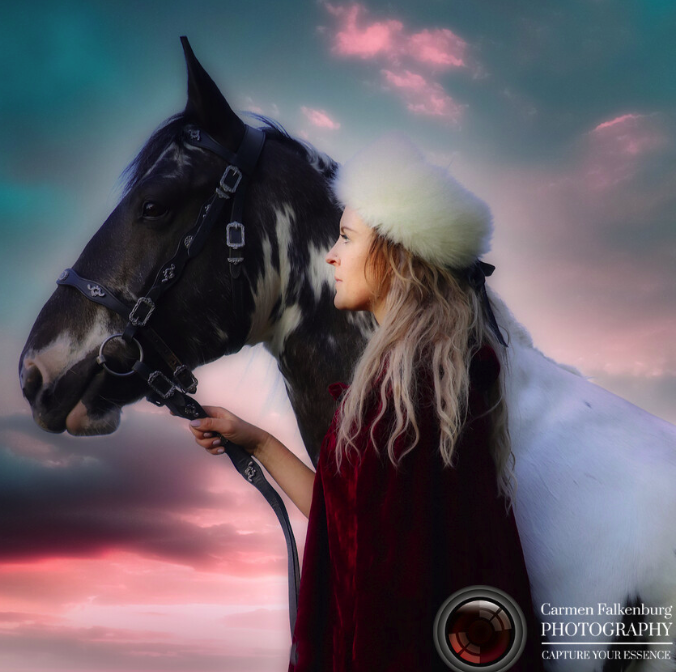
Introducing WWW.CARMENFALKENBURGPHOTOGRAPHY.COM: A New Destination for Captivating Photography

Introducing WWW.CARMENFALKENBURGPHOTOGRAPHY.COM: A New Destination for Captivating Photography
image

WWW.CARMENFALKENBURGPHOTOGRAPHY.COM

image

Carmen Falkenburg

image

Professional Portraiture Photography

YORK, UK, July 7, 2024 /EINPresswire.com/ — Carmen Falkenburg, a talented photographer with a passion for capturing the beauty of the world, is excited to announce the launch of her new website, WWW.CARMENFALKENBURGPHOTOGRAPHY.COM. This online platform will serve as a hub for her stunning photographs, showcasing her unique perspective and artistic vision.

With a keen eye for detail and a love for exploring new places, Carmen’s photography transports viewers to breathtaking landscapes, vibrant cities, and intimate moments. Her website features a diverse collection of images, ranging from natural landscapes to urban street scenes, all captured with a sense of wonder and curiosity.

Visitors to WWW.CARMENFALKENBURGPHOTOGRAPHY.COM will not only be able to view and purchase Carmen’s photographs, but also gain insight into her creative process and inspiration. The website also offers a blog section where Carmen shares her experiences and tips for aspiring photographers, making it a valuable resource for both art enthusiasts and professionals.

Carmen is thrilled to share her passion for photography with the world through her new website. She hopes that her images will inspire others to appreciate the beauty of the world and see it through a different lens. With WWW.CARMENFALKENBURGPHOTOGRAPHY.COM, Carmen aims to connect with a wider audience and continue to grow as an artist.

For more information and to view Carmen’s stunning photography, please visit https://www.carmenfalkenburgphotography.com/ Follow her on social media for updates and behind-the-scenes looks at her work.

David Wiltsher
Radio Pluggers
+44 7552 531612
email us here

image