
The Salt Lake City Arts Council unveiled the design of a new traffic circle sculpture slated to be installed on the city’s west side.
Salt Lake City unveils renderings of a new traffic circle sculpture


It is always with great excitement that we announce the winners of our emerging talent competition. Not only is it absolutely humbling to see how incredible the up-and-coming new wave of architectural photographers are, but I get to spend time with the winner each year in a one-on-one workshop in order to develop their business skills and photography practice. This year we had an absolute blast with Laura Deus of Portugal – it was one of the most fun weeks of my life, and it’s always great to hang out with other architectural photographers. I’ve said it before and I’ll say it again, this field is filled with genuinely good people and it’s one of my favorite parts of being an architecture photographer.
Our top five winners each get a trophy – but one ‘takes home’ the grand prize. I look forward to following each and every one of your careers, as I am sure you are all destined for incredible success if you keep at it.
-Mike Kelley, Architectural Photography Almanac founder
For over 10 years, Vancouver-based Graham Handford has worked as a graphic designer for architects. Recently, he’s shifted his focus to documenting the built environment through photography. With his design background, Graham is able to layer design fundamentals with elements that make for an engaging photograph: scale, depth, lighting, atmospheric conditions, animation, and context.
As the grand prize winner, Graham will receive a trophy and all expenses paid trip to California for a private workshop with AP Almanac founder Mike Kelley.


“These images do a great job at selling the buildings they depict, which is often our team’s main challenge–how do you capture the story of a building with only a single image? I think each of these succeeds in doing just that while also demonstrating how these buildings interact with their physical context and surrounding community.” – Allison Ball
After graduating as an Architect with a mild interest in photography, a stranger on the internet suggested that Ekansh explore architectural photography and in 2020, he began his architecture photography journey. Through my photographs, I try to capture stories that emerge within a space. The interaction of the built with its human inhabitants not only adds scale but also establishes a meaningful connection.
Ekansh will be recognized with a trophy from AP Almanac.


“The ability to capture the built environment under intriguing light and to include people without staging the photography is excellent.” – Silvia Kuhle
Sami is a photographer based in Helsinki, Finland who primarily photographs architecture and interiors. He aims to show the buildings as breathing objects in harmony with their users, materials, and light.
Sami will be recognized with a trophy from AP Almanac.


Based in Spokane, Washington, Patrick approaches each project with the intention of blending client expectations with his personal creative aesthetic. Patrick relies heavily on the human form to help convey purpose and scale.
Patrick will be recognized with a trophy from AP Almanac.


“For exterior architectural photography, the timing is paramount. and with image no 1, this photographer has clearly demonstrated their extraordinary ability. The dynamic and captivating impact of this dusk shot stands out, suggesting that, based on this single image alone, the photographer could have easily taken the top prize. The image’s compelling composition and lighting capture the essence of dusk, making it truly arresting and a testament to the photographer’s skillful execution and artistic vision.” – Gerry O’Leary
Kathy Wallace is a Sydney-based paralegal who has taken up architecture photography as a passion project. This set was taken across Australia and New Zealand and focuses on colors in architecture.
Kathy will be recognized with a trophy from AP Almanac.


“Color, composition, and geometry are on point. These photos work beautifully as a triptych. The pictures are vibrant and give me a sense of playfulness.” -Valéry Augustin

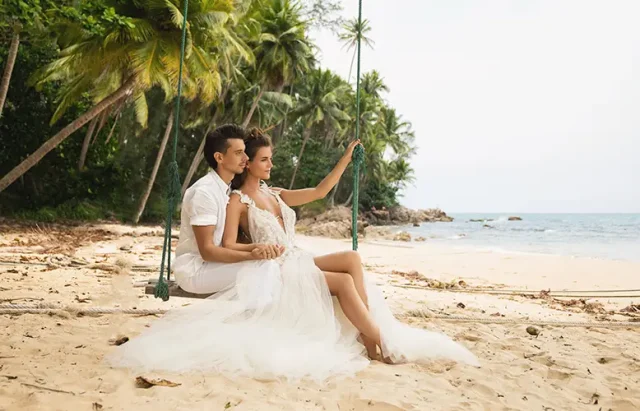
Planning a destination wedding combines the excitement of travel with the joy of celebrating your special day in a unique setting. While the allure of a picturesque location is undeniable, organizing a wedding from afar comes with its challenges. One key aspect is capturing the occasion’s beauty and essence through photography. Here’s how using a platform like Wedissimo can be instrumental in finding the perfect local wedding photographer for your destination wedding.
Destination weddings require meticulous planning and coordination. You’re dealing with remote vendors, unfamiliar local regulations, and perhaps even a language barrier. Among the most crucial vendors for your wedding is the photographer, who will capture the memories you’ll cherish for a lifetime.
Hiring a local photographer for your destination wedding offers several advantages:
Wedissimo streamlines the process of finding and booking a local photographer in several ways:
Founded by serial entrepreneurs Andrew Bowker and David Clark as an end-to-end platform for couples to check availability and pricing, browse portfolios and book online. wedissimo is AI-enabled with book-a-call features, and since its launch in September has attracted thousands of bridal couples.


Dsto Moore loves photography about as much as he loves his hometown of Macon. He’s also a huge fan of Macon’s rich music history, which is why he started the Macon Music Project.
“Macon is known for its music history and I love good stories, so I started the project. I had an old speaker that my uncle Jerald gave me for a prop when I had a studio,” he said. “I had a vision to photograph musicians from all genres of music and people who are affiliated with the Macon music scene on the speaker in different places around Macon that have meaning to them.”
Moore said he got into photography around 10 years ago and found his purpose — allowing people to see the beauty and smell the flowers through his work and document moments that would live on forever.
So with the speaker in hand, Moore went all over Macon taking photographs of local musicians — all with a unique story to tell that Moore was able to capture with brilliance.

Whether the musician was sitting on the speaker, standing on the speaker or simply had the speaker nearby in the photograph, Moore made masterpieces — and history — with his lens.
Moore started the Macon Music Project in 2019 with his grandfather Buddy Barron as his first subject.

Moore said his grandfather was a gospel singer in the 1920s and came to Macon in the 70s. Moore said he wanted his grandfather to be his first subject because he was 97 when Moore started to project and wanted to make sure he was a part of it.
“I really wanted to give him his flowers while he could still smell them,” he said.
The project currently has 50 musicians. Moore said as a documentary photographer he believes that the musicians’ stories are valuable and needed to be documented for future generations.
Three musicians who took part in the project already have died.

“The stories that I have heard from the people I have photographed are amazing and need to be heard,” he said. “This is one of the most diverse photography projects I have done so far because it involves people from all demographics, religions, genders, races and sexuality – the one thing they all had in common was their love of music.”
Moore found the musicians on social media and also went to music venues like historic Grant’s Lounge, Back Porch Lounge, JBA, Serenity Entertainment Complex and other places where live music is played to recruit people for the project.
Although he currently does not have additional musicians lined up for the project, Moore said he hopes to photograph more artists to make the project even more diverse to include Macon’s Jewish, Hispanic, and Asian communities, as well as others, so their voices can also be heard.
“I would like to see it go as long as possible because Macon has so many talented people connected to music living here in the area — 100 musicians would be great though,” he said.

Moore said all 50 musicians that he photographed for the project have signed the speaker. He believes the speaker will one day be part of a museum exhibit and that the photographs are part of the speaker’s story that will live on in Macon’s legendary music history.
“I believe we are making history right now and I’m just grateful to have the ability to document what’s going on now so future generations will know about it,” he said. “And, the biggest thing I’ve learned from this project is just how powerful music can be.”
Moore recently announced his latest photography project SMILE BLACK MAN. Inspired by the timeless smile of his grandfather Buddy, the project celebrates the resilience and joy found within the Black male experience.
Moore owns Dsto Moore Photography in Macon. His other projects include Macon Choose Me, We Are Pleasant Hill, Macon Hidden Gems, and more.


LONG HILL TWP. – Long Hill’s open space was represented on the cover of the April 2024 edition of the NJ Municipalities magazine.
Meyersville resident Ed Zindel won the NJ Municipalities magazines’ annual “Show Off Your City” photography contest with his picture of the Great Swamp National Wildlife Refuge.

The shutter drag/slow shutter trend has found its way into any niche in photography but particularly amongst wedding photography. But is the trend a clever use of camera techniques to add a different feeling or is it overrated?
This is one camera technique that I’ve seen popping up more and more recently, and I’ve noticed very mixed feelings about it. The slow shutter/shutter drag technique is where you use a slow shutter speed (usually while photographing people) to add a bit of motion blur and thus a sense of movement. I find using a shutter of 1/8-1/20th of a second or so is the ideal speed for achieving this look.
This hasn’t necessarily been a new technique, but it’s definitely one that has gained a lot of popularity, especially with the return of the film aesthetic. That said, we have seen it more with a rear curtain sync method, or used with flash where you have the subject exposed with strobe, and let the ambient light and the slow shutter create a blurred effect that still has the subject sharp.
Although the slow shutter trend does work with flash as well, a lot of shots simply use ambient light as the only source. Unlike the technique mixed with flash, where the subject is still sharp, the subject is generally blurrier here.

Now, with a gauge of what this trend is, perhaps you’ve already seen it, and chances are you’ll be seeing it more. A few years ago there was an emphasis on everything being overly sharp, we reached a level of clinical sharpness and detail that the industry has almost over corrected into the opposite. With the resurgence of film photography, the less technically perfect, more authentic feeling aesthetic has become more popular, which is where I speculate this came from.
It is worth noting I have experimented with this in the past to see what all the hype is about. I’ve also had my fair share of slow shutter shots mixed with flash, which of the two I definitely have more of an appreciation for. I think this technique can have a place in a photographer’s arsenal of creative techniques to bring out when the moment calls for it. The danger is in overusing it.
I’ve never been much of a wedding shooter, personally. Sure, I’ve shot a handful and have been a second-shooter even more so. If you are the type that second shoots weddings, or even the odd large weddings where there are three photographers, then perhaps there are moments where this method can be incorporated effectively. Almost as an extra spice. But you don’t add that extra spice if you don’t have those base ingredients. Ergo, get the main shots you need, get the primary shots and consider this one to be more of a secondary creative type shot to add variety if the “filmic vibe” is something the client is into. Because it’s not for everyone. Many people would simply say it’s blurry, why would you send me this? Which, honestly, is fair. But for those who enjoy the art of it, why not add it sparingly? The tricky thing is most of the shots are not going to be keepers. Because there has to be just the right amount of blur to make it work. Too much, and you can barely discern what’s happening. Too little, and the photo just appears out of focus, and the effect doesn’t really work.

I’ve seen this be more effective when it’s used with still and moving subjects or in a panning setting. An example is having your couple walk parallel to you and pan with them, almost like automotive photographers do, making them generally sharper and the background out of focus. The other option, and I’ve even used this in fashion shoots with multiple models, is having your main person/people static and having the extra surrounding people moving past the frame. Just make sure to tell your static subject to stand as still as possible for the effect to work best. In my opinion, both of these use cases are generally better than simply catching a couple walking or moving about with a general blur not in any particular direction. Again, it can be cool in the right setting, but be careful not to overuse it.
The issue with many popularized photography trends is that they become the forefront of mind for many photographers and they can forget about the fundamentals. Speaking when I was newer to photography, I am definitely guilty of this myself. So, through my past regrets with trying trends, do so carefully, and use it as a way to add a little extra beyond the main shots you already have. Consider it if you have time and everyone is down to experiment. I wouldn’t recommend making it a key aspect of your style as, in my experience, trends like this that come up and are really popular overnight don’t really last. We saw it with the heavy HDR, with the teal & orange, fairy lights, smoke bombs, milk baths, the list goes on and on and on. Now, while I enjoy this trend a little more than in the past, only time will tell if it will hold up or not.
Whether you’re into this trend or not, I do think it’s important to let other photographers experiment, as that’s the best way to learn. Experiment and take inspiration from what’s current, but don’t let it stray you from your path. You will find your distinct way of shooting if you go with what speaks to you more as opposed to trying to keep up with the latest photography trends. It will help you create your own voice as an artist and allow you to become a trusted leader in the field versus following the heard and constantly jumping to what’s next. Ultimately do what you’re called to, shoot with intention, with feeling, and you should be just fine, trend or no trend.







