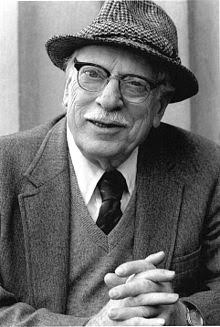
From his iconic Beatles’ Sgt Pepper cover to his latest sculptures, the pioneering artist has always been ahead of the curve. He talks to BBC Culture about his life and work.
British Pop artist Peter Blake on his ‘last necessary show’


Fujifilm invited me to London last week for breakfast and a first look at the exciting new Instax Mini 99 instant camera. I’ve thoroughly enjoyed testing out the new features with this latest Instax, and it trumps my Instax Mini 40 in every way possible. The colour effect dial is a standout feature and fun to experiment with, but my favourite creative element is the double exposure mode.
My first impressions of the Instax Mini 99 were great, the design is gorgeous and I love how it feels to shoot with. It’s not too heavy, easy to operate, and it uses a rechargeable battery which is much more reliable than having to use alkaline batteries. Some advice: If you’re new to photography, don’t be put off by the new control dials. They’re easy to use and will help you get better prints.

I think The Mini 99 is a game-changer for Instant photography and caters to those looking for a beginner-friendly camera, while offering advanced control options for pro photographers to get the ultimate shot. This makes the Mini 99 ideal for casual and pro photographers alike, yet still appealing to those who enjoy the instant gimmick, plus the all-black design is perfect for wedding photographers too.
What’s not to love about the Instax Mini 99? Well, there are a few things to nitpick about, and I’ll deep dive into these as we go on. But for a quick rundown – the new dials are excellent, the LCD screen is great for settings, and the camera overall makes photography enjoyable again. Although, I wish it had a mirror for selfie mode, and more hybrid digital elements – and that Instax film was more affordable.
| Film Type: | Fujifilm Instax Mini film |
| Print size: | 62mm x 46mm |
| Lens: | Retractable lens, 2 components, 2 elements, f = 60 mm, 1:12.7 |
| Shooting range: | Manual 3-point switching type (0.3m to 0.6m/0.6m to 3.0m/3.0m to ∞) Shooting range: 0.3m to ∞ |
| Film Developing time: | Approx. 90 seconds (varies depending on the ambient temperature) |
| Flash: | Automatic flash (automatic light adjustment) Indoor Mode (slow synchro flash), Fill-in flash, Flash off, Red-eye removal |
| Battery: | Battery NP-70S, charged through USB-C |
| Dimensions: | 103.5 mm × 117.5 mm × 60.0 mm |
| Weight: | 340g |
A sort-of successor to the Instax Mini 90, instant camera fans will notice how the design of the 99 has been revamped with added control dials and function buttons, plus a sleek and stylish all-black design, which strays from the silver panels and two-tone vibe of the Mini 90 – while still branding that retro-vintage appeal.
In other words, the design of the Instax Mini 99 is GORGEOUS. I was never a fan of the bubblegum pastel Instax Mini 11 and Instax Mini 12 models, which are aimed at teenagers and promote the cute selfie aesthetic. The Instax Mini 99, on the other hand, is stripped back and subtle, with a much more professional look.
It feels less awkward shooting with the Instax Mini 99 in public thanks to the sleek design, and more like I’m out with my ‘proper’ camera. Maybe that’s just me, but one of the things I hate about street photography is having any kind of attention drawn to me or my camera, in fear of the images feeling more posed than candid. Instant cameras aren’t known for being inconspicuous, but the Mini 99 certainly helps with blending in better.
Another nice design appeal of the Mini 99 is that it has two shutter buttons, making it easier to shoot in landscape orientation rather than portrait. Landscape Instax Mini prints aren’t all that common, and I think that’s because Instax Mini film has been optimised for portrait shots with the thicker white border of the film at the bottom for writing on or adding a date. See our best Instax film designs guide for help with choosing film for a professional look.
In terms of layout, the Mini 99 prioritises right-handed photographers. You have the main shutter button situated on the front of the camera on the right-hand side of the lens, just below the viewfinder and flash. This positioning is comfortable to press and offers easy access, just be careful not to block any part of the lens as you press it. The other shutter button is also located on the right-hand side of the camera but has been neatly incorporated into the centre of the exposure dial.
On the opposite side of the exposure dial, you have the colour effect dial, and on the back of the camera, you have your viewfinder, LCD display, three function buttons, and the panels for inserting the lithium-ion battery and your pack of Instax film using the top slider. On the lens itself, there’s a manual vignette switch for applying a creative vignette (dark border) to your images, and there’s also a tripod mount on the bottom of the camera body to attach the included base grip.
It’s clear that Instax has thought of everything, and carefully considered the design of this new camera, given that it seems to function seamlessly with each mode and setting. One thing that I do wish Instax had included was a mirror on the front of the lens unit, exactly like it has on the Instax Mini 40, as this makes it so much easier to align the shot when taking a selfie rather than it being guesswork and a potentially wasted shot.
One last design nitpick is the ease with which the dials can shift out of place between uses. For example, I was shooting down a dark tunnel when I accidentally knocked the exposure dial a little with my thumb, moving it to a darker setting. The control dials are definitely sturdy enough to not break, although a lock mechanism to keep settings in place could be a welcome feature.
The Instax Mini 99 has some exceptional new features that make instant photography a lot of fun. I’ve mentioned a handful of these in the design section above, but the real stars of the show are the two control dials for exposure compensation, and switching between the six new colour effects.
Filters you find on social media can sometimes look a little excessive, but these colour effects built into the Instax Mini 99 don’t overdo it, and the dial allows you to switch between six analogue colour effects powered by colour-changing LEDs located in the four corners inside the camera.
There’s Light Leak (LL), Sepia (SP), Soft Magenta (SM), Light Blue (LB), Warm Tone (WT), and Faded Green (FG) to choose from – or keep it on ‘N’ for none. I really enjoyed using the light leak feature, and this is definitely the effect that I’ve used the most while testing the Instax Mini 99. It looks like you’ve caught the sun in a natural light flare, and adds that extra cherry on top if you’re going for a vintage print vibe.
Five levels of exposure control can be changed using the exposure dial, and these essentially allow for more or less light to be present in your prints, the same way that exposure compensation works on a digital camera. The dials turn quite easily without force, so double-check your settings before you shoot to make sure you haven’t accidentally knocked them out of place.
Other notable features of the Instax Mini 99 include the mode buttons that allows you to change between indoor mode, sports mode, bulb mode, and double exposure. Shooting in indoor mode will give you brighter interiors, and sports mode reduces blur for subjects that move. I found that this was also a great mode to be in for taking photos of dogs.
Bulb mode allows you to keep the shutter open for a longer duration, letting in more light, and creating effects like light trails and night shots. Keep in mind that you’ll need a tripod for this to be successful, and you can press and hold the shutter button to activate it. Double exposure mode is activated by pressing the shutter button twice, or selecting the mode using the LCD screen. This allows you to blend two images together by shooting two exposures.
@swaagrid_
♬ Dancing In The Moonlight – 苏颜悦
Another nice touch is the rechargeable lithium-ion 680mAh battery that is included with the camera, which is more reliable than using alkaline batteries and easy to charge on the go with the included USB-C cable.
There’s also the option to control flash settings, by turning it off completely or reducing red eye, and you can set a self-timer too for hands-free shots. If you plan to take a selfie, you’ll need to be in macro mode for this (unless you use a tripod and stand further back from the camera). You can switch focusing modes by rotating the control ring around the lens, with macro being the furthest away.
I think there should’ve maybe been a separate on/off button to activate the camera for a beginner-friendly design, since it’s not immediately obvious to new Instax owners how to actually turn the camera on (you twist the lens). This can easily be discovered by reading the device manual – but who reads manuals these days?
I do think it makes sense how Instax has the camera activation set up, since you need to choose a shooting mode (landscape, standard, or macro) depending on your focal length before you can start shooting. Doing this as you activate the camera saves you from forgetting to change it later, and getting a blurry image as a result.
The general guide is to use landscape mode (three meters to infinity) when shooting a subject that is more than 3 meters away and to use macro mode for clear shots of subjects that are 30-60 centimetres (0.3-0.6m) away. Standard mode is for mid-range lengths between 0.6 to three meters.
As you can see from the image gallery above, there are a ton of ways to get creative with your prints using the new features of the Instax Mini 99. Double exposures took a lot of experimenting to get a decent shot, with my checkerboard floor being a little too dominant and masking the subject (my dog Tilly) quite heavily.
Once I got the hang of double exposures, my next favourite thing to play around with was the light leak feature on the colour dial. I’m not sure how Fujifilm has managed to get this mode so accurate, but it really does look like a streak of light has infiltrated the print and creates a nice summer glow which I really like.
Up until now, the Instax Mini Evo has been the showrunner for those wanting a digital instant camera, but the new Instax Mini 99 is by far the most advanced Fujifilm instant camera we’ve seen yet. It differs from the Evo in that it doesn’t have the option to shoot digital images, and you can’t preview the shot before it gets printed, but as far as analogue features go – the Mini 99 takes the crown.
For £174.99 / $199.95, the Instax Mini 99 isn’t the cheapest, especially compared with the typical £70-£100 price range for other Instax Mini models. It’s also the exact same price as the Instax Mini Evo, with which you can arguably get more for your money as it doubles as a digital camera.
The Instax Mini Evo is what’s known as a hybrid digital instant camera, which essentially means that it works as a smart digital printer, and you can browse through and edit your captured photos in-camera or via a smartphone app before you choose to print them (as opposed to it being printed instantly). Although as a standalone digital camera, the image quality is nothing to shout about.
You could argue that this defeats the gimmick of owning an ‘instant’ camera that’s more spontaneous, but the price of film is pretty expensive these days, so it’s sometimes good to be a bit more selective of which images deserve to be printed and which are scraps.
Overall, I think the new Instax Mini 99 strikes the perfect balance of instant cameras with digital photography, allowing for much better control over the exposure and the colour of your printed images – while still retaining the fun novelty of blindly shooting without a care in the world.
I had a lot of fun shooting and experimenting with this camera, and Instax seems to be embracing digital elements into its instant range lately, to keep things modern with a nostalgic twist, which I think the Mini 99 does excellently.
It’s important to remember that the quality of Instant cameras will never match the resolution you get with professional-grade DSLR or mirrorless cameras, so really it’s all about the fun of making memories and less about getting a gallery-worthy shot.
The portability of this camera is another factor that makes it great for short getaways, summer vacation snaps, and taking to a house party. Anywhere that you maybe wouldn’t take your ‘proper’ camera is where an instant camera comes in handy. If you’re looking for a digital camera that can fit in your back pocket, take a look at the Instax Pal camera (which admittedly I still think is a bit ugly). It works based on app integration and prints your images through a Fujifilm Link printer.
Made your mind up? The new Instax Mini 99 is available to preorder now via Amazon or directly from Fujifilm, as well as retailers including Adorama (US), and Jessops (UK) with orders expected to ship from April 04. There’s also a new film pack too, the Instax Mini ‘Photo Slide’ film, costing £8.99 for a pack of 10 prints.

Just over 100 years separates the creative lives of Julia Margaret Cameron and Francesca Woodman, one a Victorian pioneer of imaginative photographic portraiture, the other a 20th-century American artist who made performative and mysteriously elusive self-portraits. Though neither received the recognition they deserved in their lifetimes, they seem at first glance to be defined more by their differences than their similarities. Now, though, an ambitious exhibition at the National Portrait Gallery brings together the work made by both photographers in their short but incredibly productive working lives.
Cameron (1815-79), who was from a privileged colonial background, came late to the medium, having been given a camera in 1863, aged 48. A self-taught photographer in a still nascent medium dominated by men, she created her body of work in the final 15 years of her life. Woodman (1958-81) was art-school educated, from an artistic family: her father was a painter and photographer, her mother a ceramicist. She became fascinated with photography as a precocious teenager at private boarding school, hand-printing her first realised self-portrait in 1972, aged 13. Her intensely productive creative journey lasted just nine years and ended shockingly when she took her own life, aged 22.
Cameron and Woodman’s respective ways of working were defined to a degree by the technology available to them. Cameron used an unwieldy box camera placed on a tripod and painstakingly created prints from glass plate negatives. Woodman mostly used relatively lightweight medium format cameras and hand-printed her small silver gelatin prints in a darkroom. And yet, as this deftly curated show illustrates, the two shared certain defining preoccupations – not least their embrace of post-production processes as a conduit for their restless imaginations. As curator Magdalene Keaney puts it in her illuminating catalogue essay: “Neither was concerned with producing technically perfect prints, and darkroom manipulation was shared as an integral aspect of creative image-making.”
The subtitle of this exhibition, Portraits to Dream In, alludes to their shared interest in portraiture as a means of imaginative experimentation and transformation. Often viewed as a genre defined by its limitations, Keaney notes that, in their work, it is instead a vehicle to explore “a broad range of ideas related to picture making, appearance, identity, self-representation, the muse, gender, archetypes and storytelling”. We tend to think of these creative preoccupations as essentially modern – certainly more Woodman than Cameron – but they are present, albeit in a less mischievous and provocative way, in the latter’s often idealised allegorical portraits drawing on literature, myth and religious iconography.
The show begins with a pairing of the first portraits that each of the artists declared themselves satisfied with. Cameron’s is a closeup of a young girl in half-profile, created in 1864 and titled, with obvious satisfaction, Annie, my first success. Interestingly, it differs in tone from Cameron’s myriad portraits of cherubic young women, the girl’s sideways gaze and calm expression imparting an unadorned naturalness. Alongside it, Woodman’s 13-year-old self-portrait seems almost postmodern, an indistinct study in grey in which her face is hidden by a mane of hair and her process foregrounded literally and metaphorically by the shutter release cable that extends from her hand to the bottom right foreground of the frame in an expanding blur. As early statements of intent go, they could not be more different, even as each announces the journeys to come.
Keaney has structured the show around loosely thematic headings, some of which are self-explanatory – Picture Making, Nature and Femininity, Models and Muses – and others more indicative of the unlikely pair’s shared interest in ethereal subject matter: The Dream Space, Doubling, Angels and Other Otherworldly Beings. The creative dialogue that follows, across eras, styles, subject matter and approaches, is always fascinating, if sometimes a little tenuous, highlighting the artists’ differences as much as their creative connections.
The section that addresses their shared fascination with the archetype of the angel is a case in point. Cameron’s angelic beings are rooted in Christian iconography and classical mythology, whether an elaborately dressed and beautiful-looking angel in mourning at the tomb of Christ or an almost pre-Raphaelite Venus removing the infant Cupid’s wings. Woodman’s angelic self-projections are altogether more earthly and untamed, her wildly animated body constantly in motion. In one image she levitates with outspread arms beneath makeshift wings, bleached sunlight bleeding from a large window into her spartan studio.
In one wilfully overexposed print, titled On Being an Angel, Woodman frames her arched body from above, her mouth agape and her naked torso bathed in white light. The sense of carnal ecstasy is somewhat undercut by the mundanity of the setting: the camera equipment on the bare floorboards in the background and the dark silhouette of an umbrella leaning against a bare wall. As with all her most haunting images, there is a hint of the surreal here; a sense that she while is powerfully present as a guiding spirit, she is elusive as a subject: a shadow figure, rendered indistinct and unknowable by her constant use of the self-portrait as a form of self-concealment.
Portraits to Dream In is punctuated by surprises: Cameron’s always startling portrait Iago (Study from an Italian) dramatically disrupts the surfeit of images of idealised femininity and childhood innocence with its brooding intensity. One room contains a triptych of large-scale diazotype colour prints that Woodman made towards the end of her life, in which she takes the form of a caryatid – a draped female statue that the ancient Greeks place in their temples. They hover above the space like the ghosts of an unrealised future, emphasising the momentum of Woodman’s creativity and its sudden, terrible termination.
There is a lot to take in here in one viewing, but the intriguing pairing of two disparate female pioneers is a quietly subversive way of exploring their work anew, from a perspective that elevates and contrasts their imaginative strategies rather than their respective life stories. While Julia Margaret Cameron’s guiding presence is palpable in all her portraits – their compositional skill, elaborate tableaux and allegorical resonance – Francesca Woodman is a more complex and shapeshifting author of her own mystery. She once said: “You cannot see me from where I look at myself.” As this creative coupling makes clear, that remains the case.

The Process
When Gerard first dipped his toes into this medium, he learned the ropes from scratch. They say everyone has to start somewhere and what matters most is enjoying things while learning. Line training, according to him, is the best practice for beginners.
Line training in diving, especially in freediving, entails descending and ascending along a weighted line secured either to the surface or the seabed. It’s a crucial exercise aimed at refining equalization techniques and enhancing breath-holding capacity.
Gerard, affiliated with Pacific Blue Freediving, a freediving school, said that participating in introduction or enrollment clinics is an excellent method to gain immersion in the world of underwater photography.
“Pacific Blue Freediving, where the team offers free line training after you took the intro classes to freediving. To enjoy a fun dive is we need to be as relaxed as possible, release all the tension in our body and to trust our own self and our equalization,” said Gerard.
Once he learned the breathing and techniques, Gerard began to push the limits of his camera’s capabilities. Underwater, his essentials include a low-volume mask, a trusty camera and a pair of fins.
“Action cams, SLR, DSLR, with underwater housing of course and try to master what you have. Explore more about your camera and know more about how to handle your camera. It’s not necessary to upgrade, but if you have the funds, then go where your heart feels at ease,” said Gerard.
Light behaves uniquely underwater, presenting challenges for photographers. Understanding the science of it is key to creating good shots. Factors like depth, water clarity and time of day all influence how light interacts with your subject.
Aside from that, unpredictable currents add complexity to underwater photography according to Gerard. These challenges demand both defiance and adaptability that will push the photographer to make room for creativity and unique perspectives.
The Places
Gerard’s underwater photos are a colorful journey through the ocean. He has a collection of underwater photos ranging from portrait shots of divers, sports diving, expansive underwater scenes, close-up shots, action shots of divers going up and below and split-level shots.
His exploration of pristine reefs and hidden caves in the southern region of Cebu led him to discover thriving coral reefs and largely uncharted underwater landscapes.
Gerard’s journey of mastering his craft has taken him on a thrilling adventure through Moalboal, Catmon, Tabogon, Boljoon, Oslob and Lapu-Lapu. He believes in the potential of these areas to emerge as sought-after destinations for both freedivers and scuba enthusiasts in the years to come.
Now, his page @rardough on both Instagram and Facebook is a living memory of shots that serve as a reminder of how passion and enjoyment for underwater photography can change a person’s world. In the end, it is the depths of silence where beauty speaks the loudest and Gerard has found a way to capture that. S

TOTTORI – Twenty artists from 12 countries are working to finish sand sculptures for an exhibition depicting the history of France from its founding through modern times, as well as iconic French architecture, at the Sand Museum at the Tottori Sand Dunes.


LUFKIN, Texas (KTRE) – A new art space has emerged in Deep East Texas.
The Lufkin Art Guild celebrated the grand opening of its new art market at the Angelina Farmers Market on Saturday.
East Texas News Weekend’s Shaquiena Davis spoke with visitor Anya Lundberg, who expressed her appreciation for the guild having a community space where people could regularly find artists and their artwork.
To learn more about when and where to find the art market, click here.
Copyright 2024 KTRE. All rights reserved.

Frederick Douglass understood the power of photography.
He was the most photographed man in the United States in the 1800s — yes, even more than Abraham Lincoln — and he believed that crafting a striking public image for himself could help move the abolitionist movement forward.
That power, along with Douglass’ legacy, is brought into focus through two exhibits at Skidmore College’s Tang Teaching Museum and Art Gallery.

“Recapture 1846 (Lessons of the Hour)” by Issac Julien.
The first, titled “Studio/Archive” on the ground floor, offers a feast of photography from the museum’s impressive collection, including daguerreotypes, a form of portraiture with which Douglass was well familiar.
It was one of the earliest forms of photography, invented in 1837, and it helped make portraiture more accessible to the masses. There are just over a dozen on display at the Tang and each pocket-sized portrait is set in an ornate case. None of the subjects is identified, though each piece is distinctive. Some figures look hauntingly at the viewer, while others gaze just off to the side as if talking to the artist.
The daguerreotypes are a good segue into the rest of the show, which in part focuses on how artists use photography to shape their images and capture the spirit of their communities. Alice O’Malley’s striking work, which hangs nearby, does this most directly. Called “Community of Elsewhere,” the black-and-white series spotlights artists and performers in O’Malley’s circle, particularly the Lower East Side of New York City.

“The Lady of the Lake (Lessons of the Hour)” by Issac Julien.
The poses are powerful and largely directed by the subjects themselves rather than the artist. In one, a figure sits tall on a high chair wearing only a corset, spotlighting tattoos on their arm and chest.
Elsewhere, artist Huang Yan juxtaposes the history of China with its future, putting children in front of the lens. In a triptych, a brother and sister are shown with faces painted in traditional shan shui ink brush style, with a white background ornamented with flowers and other natural imagery. It’s set against their modern school uniforms and accessories, including the soccer-ball-laden hair ties worn by the sister.

“The North Star (Lessons of the Hour),” by Issac Julien.
The “Archive” portion of the show delves into images we hold onto and questions why that might be. One standout work revisits the famous Dorothea Lange photograph “Migrant Mother,” which illustrated the hunger and desperation felt by people across the country during the Great Depression. Artist Vik Muniz, a Brazilian immigrant to the United States, offers a refreshing take on the image and recreates the portrait using thick dots of ink, the style reminiscent of comic books and newspapers. His version brings the image of the mother further into focus, blurring out the two children almost entirely.
A similar dot-matrix style is echoed in a brooding landscape nearby. Capturing the visage of Saint Malo, artist Elger Esser took a postcard of the city, photographed it and enlarged it. The piece plays with the idea of a souvenir, questioning what we can take with us.

Installation shot of “Studio/Archive” at Skidmore College’s Tang Teaching Museum.
Filling another gallery wall are hundreds of identically sized photographs, grouped by theme. The artist, Joachim Schmid, collected the images from flea markets and magazines, and incorporated his photography into the series. Each grouping can be read as an archive of the theme (sunsets, German Shepherds, etc.) and a commentary on the way we frame our world.
That theme plays out across 10 screens, hung salon-style, upstairs. The film installation, titled “Lessons of the Hour,” was created by London-based artist Isaac Julien. It features Douglass, portrayed by Ray Fearon, delivering snippets of speeches on the importance of photography for furthering the abolitionist cause. Douglass is also seen with powerful women and activists of the time, including Susan B. Anthony and Ottilie Assing.

“140, Saint Malo,” by Elger Esser, on view in “Studio/Archive.”
The film is captivating, with vibrant, saturated colors and an aesthetic that weaves together the historical and contemporary. In some shots Douglass is in the studio, curating his image, while in others he’s speaking to crowds of people drawn to him in part because of that arresting image.
“Lessons of the Hour” will be on view through May 19. “Studio/Archive” will be up for a bit longer, running through June 9. The museum is open Tuesdays through Sundays. For hours and information, visit tang.skidmore.edu.

Installation shot of “Studio/Archive” at Skidmore College’s Tang Teaching Museum.

On March 26, it will be the 79 years since the island of Iwo Jima was declared secure. The bloodiest battle in US Marine Corps history was winding down. A month earlier, a photo of six Marines raising the flag on Mount Suribachi raised the spirits of Marines still fighting on the island, and touched the hearts of Americans on the Homefront, where it ran on the front pages of 200 Sunday newspapers.
The photographer, Joe Rosenthal, won the Pulitzer Prize in 1945, and got a bonus from the Associated Press and a camera magazine. But while Rosenthal’s iconic photo is the most reproduced shot in history, his name and the rest of his long photography career is being lost to the sands of time.
A small group of veterans and civilians is trying to change that as the 80th anniversary of Iwo Jima and Rosenthal’s photo approaches in 2025.
The Joe Rosenthal Chapter of the USMC Combat Correspondents Association is pulling out the stops to recognize their hero, undertaking efforts on local, state and federal levels.
One statewide effort is nominating Rosenthal for the California Hall of Fame for 2025. This honor is for state residents (of at least five years) who make a lasting impression on the state, the Nation and the world; embody the California Dream; and inspire people to further their own dreams. Rosenthal’s iconic photo; his long career as a San Francisco newspaper photographer; and his work inspiring young photojournalists at the Eddie Adams Photo Workshop, checks all the boxes. Rosenthal also inspired generations of Americans and US Marines by his powerful photo. “It touched the soul of a nation,” one camera magazine rightly said.
Joe Rosenthal (1911-2006), was a San Francisco newspaper photographer when news of Pearl Harbor hit the West Coast. He tried to enlist as an Army photographer, but was turned down due to his poor eyesight. Instead, he joined the Merchant Marine and photographed in the Atlantic, North Africa and in London during the Blitz. But, always the newsman, he felt sidelined and missing the real action. The Associated Press offered him an assignment in the Pacific, and his life changed to storming beaches along with soldiers and Marines. His final island landing was on Iwo Jima, the first Japanese territory the US attacked in WWII.

On the fifth day of the five-week battle, Rosenthal joined a Marine patrol heading up 550-foot Mt. Suribachi, the highest point on the small, volcanic island. Much has been written (and rumored) about what happened next, but we know that moments after reaching the summit, Rosenthal took what is arguably the most important photo in history.
For a 19-year-old from Washington, D.C., who followed his California Dream and never looked back, his induction into the California Hall of Fame seems a fitting final honor. Next year is also the 80th anniversary of other WWII battles and the end of the war itself. And it’s the 250 birthday of the US Marine Corps, which considers Iwo Jima as one of its most significant battles. After 2025, it’s expected that interest in WWII and its history will dissipate. That’s why the Joe Rosenthal chapter is now pushing for increased recognition for the photographer, before his name is lost along with the names of the many island battles the US fought in the Pacific during WWII.
Only two photographers, Ansel Adams and Dorothea Lange, are currently in the Hall among the 169 inductees. Other members include politicians and statesmen like Ronald Reagan and George Shultz; visionaries like Walt Disney and Steve Jobs; athletes like Brandi Chastain and Willie Mays; and many from the entertainment industry including Steven Spielberg, Elizabeth Taylor and Clint Eastwood.
It is this last group, the entertainment industry, who the Joe Rosenthal Chapter is especially calling on for letters supporting Joe Rosenthal’s nomination.

Rosenthal’s photo and its spirit permeate Hollywood heroics. It’s hard to forget John Wayne as Sgt. Striker in the Sands of Iwo Jima, or Clint Eastwood’s 2006 Flags of Our Fathers and Letters From Iwo Jima, which told the story of the battle from both sides and is said to have brought the history of the battle to Japan, where it had not been well known.
Hollywood can’t pass up a good story, and the heroics of those who fought on Iwo Jima, and the exquisite symbolism of Joe Rosenthal’s famous photo, make for enduring stories. Rosenthal’s induction in the California Hall of Fame is an important step to make sure the stories continue to be told.
Letters of endorsement can be emailed to the Joe Rosenthal Chapter Historian at: Tom@tomgraves.com
* * * * *
The Joe Rosenthal Chapter of the USMC Combat Correspondents Association is the sole local chapter of a national organization of retired and active duty Marine journalists, photographers, videographers, TV and radio personnel and public relations professionals. Civilian journalists are also admitted as members. At one time 40 or more members would fill a dining room for monthly meetings. Many had been veterans of Iwo Jima: Marines who fought there, Navy JASCO members who coordinated artillery, aircraft and naval bombardment, and a B-29 pilot who landed his crippled bomber on the island while the fighting was still goin on. Now the former San Francisco Bay Area Chapter (renamed in honor of its most famous member) is made up of mostly Vietnam-era veterans, and has members from Hawaii to Illinois, and even one in France. As the Chapter’s numbers shrinks, its members are committed to keeping Rosenthal’s name and his contributions to the war effort, alive.