
Being able to see all the different pieces of scrap metal — including gears, rods, and metal sheets — is incredible!
Artist Upcycles Scrap Metal Into a Menagerie of Animal Sculptures


All images © Alex Trice, shared with permission
Prismatic pools, strings of pearls, seashells, and elemental interactions characterize the work of Alexis Trice, whose oil paintings illuminate both the beauty and the brutality of nature. Sly predators take the form a spirits or totems in a dreamlike world, their tears gushing into oyster shells or glowing bodies of water.
“(This series) is about energy: emotional and molecular. And the transference and its impact when it ripples outward,” Trice says. “The water is a source of our own universal untapped emotion. Joy, trauma, fear, ecstasy, and all the feelings that bring tears, which at times we try to keep hidden away.”
Pearls, symbols of purity and wisdom, illustrate the passing of time. The artist likens the precious material’s slow growth process to a “hardened memory,” revealed upon prying open its shell. And she visualizes the “endless, crucial dance of evaporation and condensation” in zoomorphic form, each creature’s expression treading the boundary between ecstasy and agony. She adds, “This energy releases and ultimately recycles in a continuous and painfully beautiful pattern.”
If you’re in L.A., you can see Trice’s work in Potluck at Hashimoto Contemporary through March 2. Find more on the artist’s website and Instagram.


Do stories and artists like this matter to you? Become a Colossal Member today and support independent arts publishing for as little as $5 per month. The article Alexis Trice Treads the Line Between Beauty and Brutality in Otherworldly Oil Paintings appeared first on Colossal.

Last Updated on 02/21/2024 by Chris Gampat
You might not care about Micro Four Thirds, but you should be paying a lot of attention to what’s going on right now. A while back, we reported on the new OM System OM1 Mk II — which we called the world’s most expensive firmware update. We said this because we sincerely felt that most of the updates to the camera could’ve really been a big firmware update that the brand could’ve charged a bit of money for. Apparently, we weren’t alone in this thinking. A new petition has appeared online after the announcement of the camera from OM System users demanding more.
43Rumors reported that OM Digital heard the complaints of users and offered a firmware update to the award-winning OM System OM1 in the Autumn of this year. In 2022, this was an incredible camera. And it still is in some ways, but the world has moved on since then, and it’s now 2024.
Some of the most honest conversations a photographer can have are in a room occupied by them and their own voice. When Sony, Canon, Nikon, or even Fujifilm release a new product, there are many paid statements out there obfuscated by the fact that they’re paid. And as we saw yesterday with the new Fujifilm release, we can’t even tell — and often, those paid voices are trying to drown out the ones who are a lot more brutally honest.
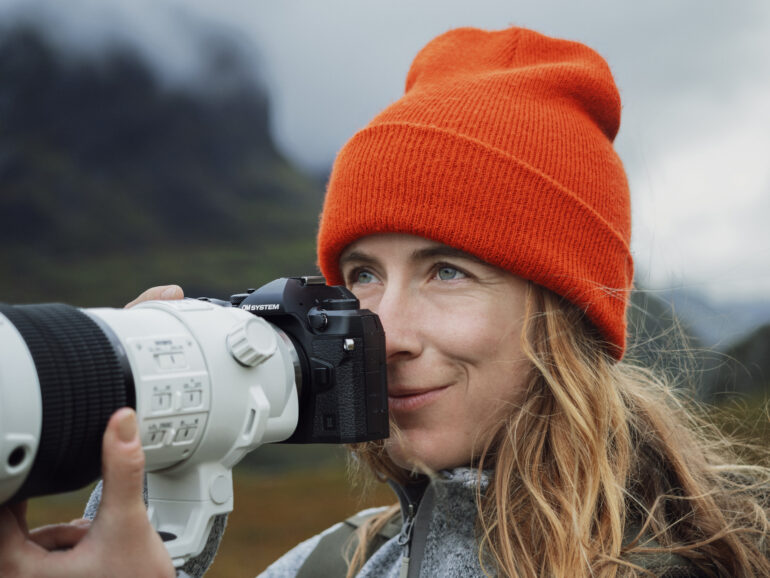
“First of all: We are not asking for a ‘free upgrade to the full Mark II,’” says photographer Michael Braun to the Phoblographer in an email about the new petition. “We just ask for the things to which OMDS had hinted already in the 2022 imaging-resource interview which is quoted in the petition, where they said that this can be done with a firmware update. Personally, I hope to see primarily a more reliable AF, suffering too often from things like ‘AF shows focus on the bird, but afterwards in the jpg/RAW, the grass in front of the bird is sharp,’ kind of things.” He continues to state that he doesn’t understand why there is no human subject recognition when other brands did it years ago without AI. But he also understands that some things, like the digital graduated ND filter, might need new hardware.
Michael is a photographer who uses full-frame cameras along with Micro Four Thirds. “I was tired of always having to carry 5-10 kgs of white glass on my back, especially when traveling,” he tells us about getting older. “Searching in the beginning for a complementary travel solution, I bought at the time an Oly M5 II with the 12-100/f4; later added a light bag where I could carry a range from 14-600mm FF equivalent in a small, light bag – Subsequently switched to the 150-400/f4.5, which convinced me.” Today, he uses Micro Four Thirds for his everyday and travel photography, while full-frame is for portraits and such.
With the new OM System OM1 Mk II, we didn’t get all that much of a splash that we’d get from other companies. And in turn, the user base rose up. An online petition is circulating demanding more from OM System.
In an advanced statement given to the Phoblographer, the group behind the petition is saying the following:
In a public announcement and in emails to customers, OM Digital System has announced today “ ….We are planning to release a new firmware update for the “OM-1” in the fall of this year….“ and given a preview of what updates OM Digital Solutions plans.
With great pleasure our firmware petition team has learnt from this that OM Digital Solution recognizes that firmware-based improvements of the original OM-1 are indeed possible.
However, why shall such firmware updates be released only in Autumn? In our view, this devalues such an update considerably, because at that time, photographers‘ summer season will be over and the OM-1 will approach an age of 3 years, where a possible successor camera with new hardware might come closer and closer.
For these reasons, we maintain our petition open for further signatures to highlight our pleas (1) for an OM-1 firmware update now, and (2) to make sure that a new firmware release goes beyond a “cosmetic” update and addresses in the best possible way the improvements for which we have asked in the petition already!
Furthermore, we would like to encourage OM Digital Solutions again to engage in a direct dialogue with its customers – beyond reacting with “one-way” communication in press releases, etc. In this spirit, we had alerted OM Digital Solution’s CEO already in a letter, which was delivered to headquarters February 9. that we are planning this petition and about the reasoning outlined now in the petition.
Their statement leads us to believe that the new firmware will come so that the brand can prioritize the new camera instead.
I’m going to start this statement by saying that OM System is a smaller company than all the others out there. Them, Hasselblad, and Leica aren’t even billion-dollar companies. So, I’m willing to cut them a bit more slack. But photographers should be demanding a lot more of their cameras. This isn’t going for just OM System — which has proven that angry fans can do something. And even yesterday, Fujifilm showed a bit of empathy for their users by giving new firmware updates and film simulations to older cameras. But other brands can give us a lot more via firmware updates. Canon doesn’t do much for their R8 — and the Canon EOS R5 should’ve received the autofocus the R6 II has. Leica should’ve given the SL2 and SL2s the Leica Looks the Q3 got.
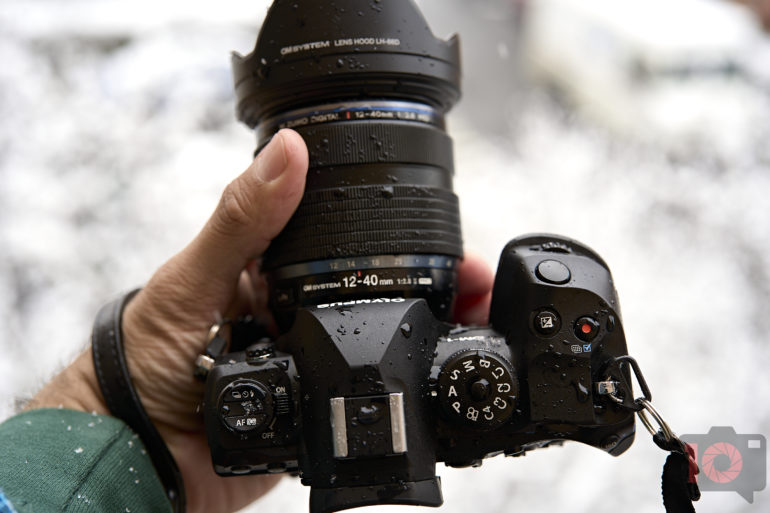
The problem is that photographers are too busy fighting amongst one another and championing their brand over another instead of worrying about the bigger, actual threats to them. I’m talking about content creation, social media algorithms, AI imaging platforms, and the manufacturers making many claims and never holding themselves accountable. How about claims around weather resistance and build quality? Or on firmware updates?
The fact is that many brands are making a ton of money and reporting record profits while photographers keep buying new cameras only to feel robbed of features that they should’ve had.


A collection of classic and unseen portraits by renowned photographer Gered Mankowitz will go on display at the Gibson Garage London launching on Saturday, 24th February. For over 50 years, Mankowitz has helped shape the iconic images of the music industry’s key players. The Rolling Stones, Marianne Faithfull, Jimi Hendrix, PP Arnold, Kate Bush, Elton John, The Jam, Eurythmics, Oasis, and many more have all looked down the lens of his camera.

Mankowitz was The Rolling Stones’ official photographer from 1965–67, producing iconic album covers, and capturing the band onstage, and at home.
Mankowitz: “The privilege of being around extraordinary talents like Keith Richards with his exquisite Gibson Hummingbird and Brian Jones with his astonishing Firebird guitar are moments to treasure and I will never forget how lucky I have been.”
Exclusive signed prints by Mankowitz are available to purchase in-store and online at redhouseoriginals.com.
Opening in London on 24th February 2024, the Gibson Garage London is the ultimate guitar and music experience and features uniquely British cultural discoveries around every corner. It marks the first-ever Gibson flagship store outside of the U.S. and follows the successful opening of the Gibson Garage Nashville.
Mankowitz: “I am so pleased to be the first featured photographer to show my work at the amazing Gibson Gallery at the Gibson Garage London and delighted to have had the opportunity to put together such a varied selection of images from my archive.”
On Friday, 8th March from 7:30-9:30pm the Gibson Garage London will host a special “In Conversation” event, with Gered Mankowitz and London’s “First Lady of Soul” PP Arnold. Attendance is limited, RSVP to [email protected] to attend.
Gered Mankowitz at The Gibson Gallery is curated by RedHouse Gallery in association with Iconic Images. For the exhibition catalogue or to view and purchase online visit Gered Mankowitz at The Gibson Gallery.
The Gibson Garage London is located at 61-62 Eastcastle St, London, UK (one block from Oxford Street) and is open daily Monday-Saturday from 10:00-7:00pm and from 12:00-6:00pm on Sunday.


Thanks to AI image generators, the most brilliant and absurd images can now be created in seconds with a simple text prompt.
Ever wondered what a giant red panda riding a mongoose into a sunset might look like? Well, you don’t have to leave it to the imagination, just take a look at the image below:
If you’ve kept an eye on AI developments over the past year, you’re likely aware of the buzz around image generators like DALL·E 3, Midjourney, and Stable Diffusion. They’ve stirred up their share of controversies, from copyright concerns to deepfake implications, and even fears about the future of the creative industries.
However, if we step away from these headline-dominating, potentially society-altering AI tools, we discover a whole other world of AI applications. These don’t conjure new images from thin air but rather empower you to edit your own photos effortlessly. But where exactly do you find these AI editing tools, and more importantly, do they really make your photos better?

Editing tools that use some sort of AI to enhance your images aren’t new. For example, Adobe’s Photoshop Content Aware Fill, filling gaps on a canvas or over imperfections based on the surrounding image data, has been around for years. It allows you to remove an unwanted element – say, a dog photobombing your perfect beach sunset shot – and seamlessly fill in the gap with the surrounding scenery, like sand and sea, making it look as though your new furry friend was never there.
But recent advances in AI have revolutionized photo editing, with a growing number of apps and software programs now incorporating smart tools similar to, even exceeding the capabilities of, Content Aware Fill. These require minimal editing skills and take little time to use.
While these AI tools don’t create images from scratch like DALL·E 3 (yes, the one behind our red panda on a mongoose image), they’re incredibly handy for tasks such as adjusting lighting, smoothing skin, or conjuring up new backgrounds and objects.
You’ll find these AI wonders in many apps, catering to everything from sprucing up selfies to more sophisticated tasks, like social media content creation, professional photography, product shots, or advertising campaigns.
Now, we’re using ‘AI’ a bit broadly here, as is the norm these days. It implies some form of artificial intelligence at work, but its functionality varies. For example, Photoshop employs generative AI, which can create new outputs (like texts or images) based on learned patterns and features. It ‘knows’ what a wall looks like because it’s been trained on numerous wall images. Other tools might use simpler algorithms for tasks like identifying blurry areas in a photo and suggesting fixes.
Although AI is a broad term, it’s become a widely accepted catch-all in many areas, especially in image editing. It typically refers to using an AI tool for smarter, automated tasks that would otherwise require professional expertise.
Is AI making our photos better? For many purposes, the answer is a resounding yes, especially for specific tasks. Let’s dive into some of the coolest AI photo editing features available in top apps today.
These tools can sharpen blurry images, remove or add backgrounds, isolate subjects, enhance lighting uniformly, tweak facial features (like smoothing skin and brightening eyes), colorize black and white photos, and even suggest optimal edits based on the photo type.
Using a decent app makes photo editing not just easy, but also fun. It’s great for selfies, of course, but the benefits extend to professional work as well. For pros, tasks like manually cutting out objects or choosing new backgrounds with realistic lighting can be time-consuming. AI streamlines these processes, enhancing workflow and reducing headaches.
Now, let’s dive into the latest and greatest in AI tools offered by popular apps. They’re incredibly fun to explore but do warrant a thoughtful approach. My current favorite? The Generative Expand and Fill features in Photoshop.
These features harness the power of generative AI technology. In essence, when you provide a text prompt, Photoshop taps into its extensive knowledge base to generate a visual interpretation that closely aligns with your request. It’s like having a digital artist at your fingertips, ready to transform your ideas into visual realities.
Take the portrait of me above the ‘Does AI make photos better?’ heading. I upload it to Photoshop, expand the crop, and instead of being left with white space, I can add a text prompt like ‘in a bright co-working space wearing a futuristic black outfit.’ The results, as you can see in the image above, are impressive for something that takes just 30 seconds.
This tech is great for headshots, mock-ups, spicing up selfies, or just for fun – like the ‘engineering room of a spaceship from the future’ image at the top of this article. The angles, lighting, and color palette look believable. But perfect? That’s up for debate.
Consider another example below with the prompt ‘on a yacht sailing in the sea.’ Someone with editing skills could refine it further, but for a novice like me, the outcome is decent, albeit a bit eerie.
So adding new elements to an image is one thing; ensuring alignment, realistic lighting, and a natural look is another.
This applies to my experiments with Generative Fill above, but I also find this applies to selfies too sometimes. The changes can look real, but go overboard with skin smoothing or eye brightening, and there’s an unsettling ‘uncanny valley’ effect.
In the world of image editing and even on social media platforms, especially those focused on selfies (I’m looking at you, TikTok), AI is quietly at work. Some apps may not heavily promote their AI features, while others boast them as their unique selling point.
But certain tools excel in specific areas. Take Facetune, for example. It’s fantastic for subtle selfie enhancements – although remember, moderation is key. It suggests optimal adjustments, some of which look incredibly natural. Lensa is another top choice in this category.
Then there’s Canva, primarily a design app, which boasts AI features like background removal. It’s also recently launched Magic Design. Input a brief, like ‘Instagram post for a beach holiday travel company,’ add a relevant photo, and it suggests numerous templates and designs. They’re not flawless and may need a bit of tweaking, but they’re an excellent starting point. Canva also has a generative AI feature for creating images from text prompts – think ‘cat eating birthday cake’ for party invites.
Pixlr is an affordable, user-friendly option with nifty AI tools, including template designs similar to Canva, straightforward object selection and removal, background removal, and batch editing. It’s free with limited features, but a subscription unlocks more.
For those willing to invest time and effort, apps like Luminar Neo shine, especially with AI-powered features like sky replacement, making it a solid choice for editing selfies and portraits. And then, of course, there’s Adobe Photoshop – the gold standard in photo editing, packed with advanced AI tools, like the Generative Expand and Generative Fill features I mentioned above, as well as many more. It’s not free or the easiest to use, but it offers unparalleled performance and control for those seeking professional-quality results.
Deciding whether to use AI photo editing tools really comes down to your objectives and the nature of your photos.
AI image generators have sparked controversy, and there’s a growing concern among creative professionals that larger editing tasks traditionally outsourced to experts are now being handled by apps.
The debate extends to the ethics of image editing. How much is standard tweaking, and when does it become potentially harmful manipulation – not just to viewers but also to those who frequently edit their own images?
Some experts believe that constant exposure to edited faces, especially through highly refined TikTok filters like ‘Bold Glamour’, could skew our perception of reality. These filters, powered by machine learning and AI, subtly yet significantly alter skin texture and facial features, potentially fueling dissatisfaction with real-life appearances and reinforcing unrealistic beauty standards.
Despite these challenges, it’s undeniable that AI-enabled apps can significantly enhance your photos – to an extent. Many common edits are just a tap away. Especially straightforward tasks like smoothing skin or erasing a photobombing dog. If that’s all you want to do then today’s AI tools are efficient, effective, and enjoyable.
But for miraculous transformations that don’t look creepy, you might need to invest in more advanced tools like Photoshop, learn the ropes and remember that when enhancing photos for a natural, believable look, less is more.
This feature is part of iPhone Photography Week 2024. Expect new posts to appear daily, focused on making your photos shot with iPhone better than ever before.
Share your photos with iMore on X (Twitter) using #iMorePhotographyWeek

Editor’s Note: In Snap, we look at the power of a single photograph, chronicling stories about how both modern and historical images have been made.
(CNN) — The basketball player floats in the air, his arms out-stretched wide, frozen in a position that evokes both athletic motion and stillness — perhaps even religiosity. His face is angled, obscured in shadow; absent are the name and number that would normally identify him on his stark white jersey. Several clues allude to the time period, however: His basketball shorts fall just below the top of the thigh, inches shorter than the nearly knee-length style favored today; his sneakers are Converse Chuck Taylor low-tops, a popular basketball shoe that debuted in 1957 before becoming obsolete amongst NBA players by the late 1980s. And a foggy haze wafting above the audience is cigarette smoke, with smoking only legal during NBA games before the ’80s.
The picture, “Four Horsemen of the Apocalypse (30),” is a 2015 work by the Filipino-American artist Paul Pfeiffer. He discovered the original image, a 1967 photograph by famed basketball photographer Walter Iooss Jr., on the NBA’s online archive. (It featured Boston Celtics players Bill Russell and John Havlicek as they rebounded against the Philadelphia 76ers’s Wilt Chamberlain during the NBA Eastern Division Finals at Boston Garden that year, though in Pfeiffer’s reimagining, only Russell is present.)
Pfeiffer’s unsettling, evocative manipulation of Iooss Jr.’s photograph, along with eight other basketball-inspired images from his ongoing series, “Four Horsemen of the Apocalypse,” is currently on display at the Museum of Contemporary Art, Los Angeles (MOCA) in “Paul Pfeiffer: Prologue to the Story of the Birth of Freedom,” a retrospective of the artist’s practice that also spans sculpture, videography, and original photography.


Pfeiffer selects images that are part of the zeitgeist, and that we might recognize in our memories, or place in the broader cultural consciousness. By removing specific elements of a photograph, though, his work reveals the relationship between its subject and scene — and the viewer. “They’re really like two sides of the same coin,” explained the artist. “The idea that what appears as the figure is only possible because of an intrinsic relationship with a supporting background.”
Pfeiffer described his process of retouching the original photos as a “camouflaging” — which he does meticulously using Photoshop and the help of skilled retouchers. “The Photoshop process ultimately reads like an eraser, but in fact is more like an act of camouflage,” he said over a video call with CNN. “To do that requires a choreographing of both the figure and the background.”
Having earned his MFA at Hunter College in New York in 1994, Pfeiffer was working at a post-production house, alongside teaching a digital photography class at the Parsons School of Design, when he first started experimenting with this process. He remembers becoming particularly inspired by a glossy reproduction of a classic Marilyn Monroe portrait he found on display in a Chelsea photo store while combing the city for photographs for his students to discuss.
In the photo — originally taken by photographer George Barris in 1962 — Monroe is smiling playfully as she cavorts in the water at Santa Monica Beach. It marked the actress’s last photo shoot weeks before her untimely death.

Equipped with a knowledge of printmaking and access to flatbed scanners at his job, Pfeiffer slowly “camouflaged” Monroe away, leaving the unremarkable barren beach behind — or, rather, in the foreground. The project grew into a collection of anonymized images known as Pfeiffer’s “24 Landscapes” series, in which viewers are encouraged to explore the tension apparent in the otherwise banal coastal scene, and challenge their expectations as to its value, with or without Norma Jean.
The series “raises questions about what ‘landscape’ even is,” Pfeiffer explained. “Is it an absence that we can project onto? What is its psychological meaning?” In other words, is a landscape already inhabited, or is it meant to be claimed?
In fact, the “Four Horseman of the Apocalypse” series also started out with five other studio-shot portraits of Monroe. (Pfeiffer again camouflaged her out entirely; his final images feature the monochromatic studio backdrop alone.) He later pivoted to basketball as a theme after seeing a game at Madison Square Garden. “Everything I think about in terms of film celebrities, is even more apt if we think of it in relation to athletes,” said Pfeiffer. “They have such a commercial, monetizable status in society and, at the same time, are totally interchangeable, totally dispensable… The simple act of erasing their name and number renders (them) anonymous.”
Though Pfeiffer has been working on his series’ for over 20 years, it remains potently relevant today. Pfeiffer relates the fleeting relationship between stardom and anonymity to the age of influencers and social media stars in particular. “There’s an odd tension in it… that spoke — and still speaks to — the kind of celebrity (culture) that we’re in currently.” he said. “The hyperinflation of the individual identity and at the same time, total replaceability.”
Its title, “Four Horsemen of the Apocalypse” addresses a similar duality, he explained, chosen because it “could speak to multiple histories… the intention was the disconnect between the title and the image, which was meant to provoke questions.”
“The very idea that you can erase the human digitally, the moment we’re in now,” Pfieffer added, “that feels like an end of the world moment.”


Imagine a world where the click of a shutter not only captures a moment but launches careers. This isn’t a distant dream but the reality Lisa Saltzman is crafting with the Saltzman Prize, a beacon of hope for emerging photographers. In a landscape often overshadowed by financial and visibility hurdles, this award emerges as a lighthouse, guiding talents towards the shores of recognition and prosperity. As we delve into the narratives behind the prize, the nominees, and the visionary patron herself, we uncover a story of legacy, innovation, and artistic emancipation.
At the heart of the Saltzman Prize is Lisa Saltzman, whose journey is not just about art patronage but a homage to a familial legacy. Inspired by her late parents, Ralph and Muriel Saltzman, notable art patrons in their own right, Lisa embarked on a mission to continue their legacy through the Saltzman Family Foundation, established in 2020. This initiative, however, isn’t just about financial support; it’s a platform aimed at nurturing and propelling emerging photographers into the limelight, offering them a $10,000 award and the opportunity for solo exhibitions at PHOTOFAIRS New York, in a groundbreaking collaboration with the Center for Photography at Woodstock (CPW). The prize stands as a testament to Lisa’s dedication to fostering artistic talent and offering a springboard for photographers to leap from obscurity into recognition.
The inaugural nominees for the Saltzman Prize paint a vibrant tableau of diversity and ingenuity, featuring artists from the icy expanses of Alaska to the bustling streets of Ghana. Among them, Eric Gyamfi and Patrice Aphrodite Helmar stand out, not just for their geographical origins but for their unique ability to weave compelling narratives through their lenses. These nominees, selected by a panel of luminaries in the photography and art world, including MoMA curator Oluremi Onabanjo and photographer Deana Lawson, represent the future of photography. A future where boundaries are blurred, and stories from the fringes are brought to the forefront. The selection process, spearheaded by a jury of esteemed figures such as MacArthur fellow Deborah Willis and Susan Meiselas, President of the Magnum Foundation, underscores the prize’s commitment to excellence and diversity.
As the winner of the inaugural Saltzman Prize gears up for the announcement in March, followed by a celebration at the CPW Vision Awards, the anticipation builds not just among the nominees but within the larger artistic community. This prize is more than an award; it’s a beacon that shines on the untold stories and unsung heroes of the photography world. Lisa Saltzman’s initiative, inspired by a rich familial legacy of art patronage, sets a new standard for how we support and celebrate emerging talent. It’s a narrative of hope, innovation, and the unyielding belief in the power of art to change lives and perspectives.
In the end, the Saltzman Prize isn’t just illuminating the paths of emerging photographers; it’s casting a light on the future of photography itself. A future where artists, irrespective of their background or geography, are given a platform to share their vision with the world. As we await the announcement of the inaugural winner, one thing is clear: the Saltzman Prize is not just awarding talent; it’s nurturing the very soul of photography.


CRITICALLY ENDANGERED, ENDANGERED, VULNERABLE
Spotting the so-called Big 5 remains a popular goal for those on safari in South Africa, Botswana or one of the other African countries blessed with extraordinary wildlife. But the term was first coined by travellers with a darker motive. The original Big 5 (the lion, leopard, rhinoceros, elephant and African buffalo) were the animals most difficult – and therefore most exciting – for colonial hunters to shoot and kill for trophies. This is also why we still refer to ‘game drives’. With this in mind, wildlife photographer Graeme Green started the project the ‘New Big 5’ to reclaim the gruesome term. To do so, he asked people around the world to vote on the five animals they most like to photograph and see in photos. More than 50,000 people voted. The New Big 5, a book that brings together 165 of the world’s greatest wildlife photographers and conservationists, celebrates the winners (elephants, polar bears, lions, gorillas and tigers), while also raising awareness about the issues that affect these creatures and many others like them.


Late photographer Elliott Erwitt was perhaps best known for his humorous images of dogs taken on the streets of New York City but his body of work is an important documentation of the Big Apple.
Starting his picture-taking career in the late 1940s, Erwitt began capturing his adopted city. His black-and-white photos freezing a bygone era.


Erwitt’s masterful photos are being released in a revised book simply entitled New York which features images of mid-20th century daily life and a few well-known faces such as Marilyn Monroe.


“A beautiful way to celebrate Erwitt’s legacy, the photo book perfectly reflects New York and its soul,” writes a press release for publisher teNeues.
“Celebrities stand alongside everyday New Yorkers, everyday moments shaped contemporary history in a cheerful and sometimes slightly quirky manner, characteristic of Erwitt’s work.
“It’s no wonder he is considered one of the best street photographers in the world. His images are not only vivid and authentic but are also characterized by a special irony derived from the everyday situations they originate from. This photo book is enjoyable to look at time and time again, always offering fresh surprises.”


Not all of the photos are from the 1940s and 1950s. Erwitt lived in New York most of his life and there are photos taken later on — including an amusing one of a gaggle of photographers jostling for a vantage spot,


Erwitt died last November aged 95 years old. He was born Elio Romano Erwitt in Paris on July 26th, 1928, to Jewish-Russian parents. After spending his childhood in Milan, Italy, his family emigrated to the United States with his family in 1939 when he was ten years old. In 1953 he joined Magnum Photos as a freelancer photographer and served as Magnum’s president for three years in the late 1960s.
PetaPixel recently reported that Erwitt’s fabulous Long Island home that comes complete with a photo studio is on the market.

Elliott Erwitt’s New York is on sale for $60 now and os published by teNeues.
Image credits: Photographs by Elliott Erwitt





