Native

Native American Heritage Month events in DC, NYC and online

Native American Heritage Month events in DC, NYC and online

Native Knowledge 360° and Teaching for Change Virtual Teach-In: Indigenous Education

Saturday, Nov. 4, 12:00 p.m.–3:00 p.m.

Online, Cost is $15, and registration is required.

Register Now

Join the Smithsonian’s National Museum of the American Indian and Teaching for Change for a day of online conversation, curriculum highlights, and ideas exchange. The teach-in will be held virtually via Zoom. Educators will take part in workshops that include relevant and resource-rich training experiences to support effective use of American Indian-focused classroom lessons, and resources from Teaching for Change and the museum. Find more information and register here. 

Artist Raven Chacon in Concert and Conversation

Saturday, Nov. 4, 2:00 p.m.–5:00 p.m.

Washington, D.C.

Artist Raven Chacon is joined by Joy Harjo, Candice Hopkins, Ange Loft, Laura Ortman, and Olivia Shortt to present selections from his work, For Zitkála-Šá (2020). A Pulitzer Prize-winning composer, Chacon dedicated this portfolio of scores to contemporary Native American and First Nations women to celebrate their contributions to music. Following this piece, a local ensemble will perform …lahgo adil’i dine doo yeehosinilgii yidaaghi (2004), which is held in the collection of the National Museum of the American Indian. This program marks the first time each of these compositions will be performed before a live audience in Washington, DC. The event will conclude with a conversation among the five For Zitkála-Šá performers, moderated by Chacon. A selection of works from this portfolio of thirteen lithographs is currently on view in SAAM’s Musical Thinking: New Video Art and Sonic Strategies.

This program is co-presented by the National Museum of the American Indian and the Smithsonian American Art Museum, with funding support from the Smithsonian American Women’s History Initiative. 

Honoring Native Veterans

Saturday, Nov. 11, 10:00 a.m.–5:30 p.m.

Washington, D.C.

Join the museum on Veterans Day 2023 to recognize and honor the military service of Native Americans. Events include family activities, a special presentation about the National Native American Veterans Memorial by the designer, Harvey Pratt (Cheyenne and Arapaho Tribes of Oklahoma), and Curator Rebecca Trautmann, special hospitality for veterans, and a wreath-laying ceremony at the memorial, preceded by the presentation of colors by the Kiowa Black Leggings Warrior Society.

SCHEDULE

10:00 a.m.–5:30 p.m.: Veterans Hospitality Suite, Patrons Lounge, Level 4

Veterans are invited to enjoy light refreshments in the museum’s Hospitality Suite.

2:00 p.m.–5:30 p.m.: Memorial Information and Family Activities, Potomac Atrium, Level 1

Veteran bookmarks: Learn more about Native veterans who have served throughout history at the Veterans Profiles Teaching Cart and take home a veterans profile bookmark.

Veteran postcards: Write a postcard to a veteran or active-duty service member and the museum will send it for you.

3:00 p.m.–4:00 p.m.: Meet the Memorial Designer, Rasmuson Theater, Level 1

Memorial designer and veteran, Harvey Pratt, and Curator Rebecca Trautmann discuss the design process and creation of the National Native American Veterans Memorial. The conversation will be webcast at AmericanIndian.si.edu/livestream.

4:00 p.m.–4:25 p.m.: Screening of Why We Serve (25 min.), Rasmuson Theater, Level 1

4:30 p.m.–6:30 p.m.: Presentation of Colors and Wreath-Laying Ceremony at the National Native American Veterans Memorial

The Kiowa Black Leggings Warrior Society will present the colors to open a wreath-laying ceremony lead by Director Cynthia Chavez Lamar at the National Native American Veterans Memorial. The Memorial Flame will be lit from 4:30 p.m.–6:30 p.m.

Major support provided by The Boeing Company.

Native Cinema Showcase 2023

Friday, Nov. 17, to Friday, Nov. 24, 12:00 a.m.–11:59 p.m.

Online

The National Museum of the American Indian’s Native Cinema Showcase is an annual celebration of the best in Native film. For this year’s theme, we highlight films of Indigenous perseverance that inspire, uplift, and triumph against adversity. The showcase provides a unique forum for engagement with Native filmmakers from Indigenous communities throughout the Western Hemisphere and Arctic.  

This program is funded in part by the San Manuel Band of Mission Indians.

Mexico Now: The Present and Future of Ancestral Practices

Saturday, Nov. 18, 1:00 p.m.–3:00 p.m.

New York, NY

Learn how Chef Diana Wangeman preserves ancestral Oaxacan food practices. Following Wangeman will be a performance in the Diker Pavilion by Maya rapper Pat Boy, who uses music to preserve the Mayan language and teach rap to youth in his rural community in the Mexican state of Quintana Roo.

SCHEDULE

1:00 p.m.–2:00 p.m.: Maize and Traditional Ingredients with Chef Diana Wangeman, Auditorium, Lower Level

Diana Wangeman was born and raised in Oaxaca, Mexico, where she learned the traditional practice of processing corn from her mother, who is the chef and owner of the restaurant Tierra Antigua in Oaxaca. As the owner of the Brooklyn, NY, restaurant Sobre Masa, Wangeman works to raise awareness about ancient forms of maize cultivation and doing business in a responsible way.

2:00 p.m.–3:00 p.m.: Maya Hip-Hop with Pat Boy, Diker Pavilion, Level 1

Jesús “Pat Boy” Chablé started his solo career in 2009 mixing genres such as reggae, pop, and reggaeton in the Yucatec Mayan language. His work was recently featured in the Marvel blockbuster film Black Panther: Wakanda Forever. He is the co-founder and producer of ADN Maya Producciones, which nurtures young talent across the Yucatan Peninsula. He also produces the Ko’one’ex K’aay Rap Ich Máaya Festival and fosters Rap Ich Máaya T ́aan, a methodology he created for bilingual youth that promotes the Mayan language through rap improvisation and rhyming.

Native American Heritage Day: Honoring the Jingle Dress Dance

Friday, Nov. 24, 2023, 11:30 a.m., 12:30 p.m., 1:00 p.m., 3:00 p.m., and 4:00 p.m.

Washington, D.C.

Learn about the origin and significance of the jingle dress and Jingle Dress Dance with dancers Misty Solorio (Brokenhead Ojibway First Nation/Roseau River Anishinabe First Nation), Jennifer Night Bird Miller (Red River Métis), and Nathan Solorio (Brokenhead Ojibway First Nation/Roseau River Anishinabe First Nation). The dancers will be accompanied by father-and-son duo Ralph Zotigh (Kiowa/Ohkay Owingeh Pueblo/Isante Dakota Indian) and Dennis Zotigh (Kiowa/Ohkay Owingeh Pueblo/Isante Dakota Indian).

Image credit: Damon Bowe for the Smithsonian’s National Museum of the American Indian

Native American Heritage Day: Akwesasne Women Singers

Friday, Nov. 24, 12:00 p.m., 2:00 p.m., and 4:00 p.m.

New York, NY

The Akwesasne Women Singers are a group of young women, mothers, aunties, and grandmothers who came together to form a singing society. The group joins the museum on Native American Heritage Day to share their original compositions, written in a combination of English and Kanien’kéha, as well as traditional songs, accompanied by dance performances. The significance of each dance will be shared, and attendees will be invited to join the circle during Social Dances.

Directly after the conclusion of Native American Heritage Month, the museum hosts the yearly Art Market in Washington, D.C. and New York at the beginning of December.

Native Art Market

Saturday and Sunday, Dec. 2–3, 10:00 a.m.–5:00 p.m.

New York, NY

The museum’s annual Native Art Market features award-winning and innovative Indigenous artists from across the Western Hemisphere. This weekend event invites lovers of art and craftsmanship to meet Native artists and learn about traditional Native arts and contemporary Native creativity. Visitors will have the unique opportunity to purchase traditional and contemporary handcrafted artworks, including beadwork, jewelry, paintings, photography, pottery, and sculpture.

Fall 2023 Tack Faculty Lecture to recenter Native American narratives

Fall 2023 Tack Faculty Lecture to recenter Native American narratives

When anthropologist Danielle Moretti-Langholtz started investigating the history of the Brafferton Indian School, she knew earlier scholars viewed the school as a failed enterprise. However, she didn’t expect to find that it had been both an instrument of British colonial policy and a place of Native American agency. 

To uncover this complex story, she assembled a research team of scholars and students to search archives on both sides of the Atlantic and engaged Native communities with identified historical links to the 18th-century Indian school. This work led to a new perspective on the Brafferton Indian School placing Indigenous voices front and center.

This year commemorates the 300th anniversary of the completion of the Brafferton Indian School on the William & Mary campus, marking the perfect time to share new findings about this story. Moretti-Langholtz, the Thomasina E. Jordan Director of the W&M American Indian Resource Center, will deliver the fall 2023 Tack Faculty Lecture “Reconnecting Native Narratives to the Brafferton Indian School.” Taking place on Nov. 14 at 7 p.m. in the Sadler Center’s Commonwealth Auditorium, the event is free and open to the public with a reception to follow. Attendees are asked to RSVP

“The Brafferton is part of a larger story connecting settler history, Indigenous labor and lifeways,” the anthropologist said. “Part of the work of a university is to reconsider topics that have been obscured, and this is such a story.”

She highlighted how Native Americans were at the genesis of her research, crediting her mentor, the late Thomasina E. Jordan, for encouraging her to look more closely at the history and connections of the Indian school to living tribal communities. 

At the start of more than a decade of research, Moretti-Langholtz found evidence that that the Brafferton Indian School did not conform to accepted notions about Indian boarding schools. Surprisingly, she said, some Native students were sent to Williamsburg and were enrolled at the Brafferton Indian School by their communities to learn to read, write and speak English to aid in negotiations with the British on behalf of their tribal communities. 

“My conclusions were validated when speaking to members of Native communities whose ancestors had been at the Brafferton,” she said. “One line I heard many times was, ‘We used to be there.’”

Working with descendant communities and other scholars, she reexamined fragments of documents from the colonial era, and started asking new questions about the place of Indigenous communities in the trans-Atlantic networks of trade and power.

Tribal communities were integral components of the networks of power and money that contributed to the funding of the university. The alliances that some Native tribes made to navigate a challenging landscape need to be understood in the context of the shifting power dynamics of the 18th century.

“My interest is very much in putting Native history into a much larger context,” said Moretti-Langholtz. “We have still a lot of work to do reconnecting that building to those communities.”

Establishing a Native studies minor at William & Mary, a direct outgrowth of her research, has been part of that effort. 

For several decades the American Indian Resource Center and colleagues in the Department of Anthropology have engaged in community-driven work that has built strong partnerships with Native communities in the region and beyond. Additional initiatives in the Office of Strategic Cultural Partnerships also see to cultivate reciprocal relationships with Native communities. 

Moretti-Langholtz stressed the importance of bringing the findings back to the Indigenous communities whose ancestors had attended the Indian school at William & Mary. She managed to retrace the tribal affiliations of four of the Brafferton students to their respective communities — Pamunkey, Nottoway, Wyandot and Cherokee — and credited Buck Woodard M.A. ’07, Ph.D. ’13, now an anthropologist at American University, for the actions that came next.

“Buck suggested that we seek funding to offer artists from the four communities to create individual works of art to express their community’s perspective on the Brafferton Indian School,” she said. “The Muscarelle Museum of Art generously stepped up, providing the funds for this part of the project. The artists were given full authority to create a response to the Brafferton story: whatever response their communities wanted.” 

It was a really emotional moment when these artworks came back, said Moretti-Langholtz. While embodying Native narratives of the Brafferton Indian School, these objects also represent a point of connection between these communities and the university: On Nov. 14, she will shed more light on their significance. 

The Tack Faculty Lecture Series is made possible through a generous commitment by Martha ’78 and Carl Tack ’78. Initially launched in 2012, the Tacks’ commitment has created an endowment for the series of speakers from the W&M faculty.

, Senior Research Writer

Indigenous Artists on Killers of the Flower Moon

Indigenous Artists on Killers of the Flower Moon
image

Photo: Apple TV

Martin Scorsese’s Killers of the Flower Moon, based on David Grann’s 2007 book of the same name, tells the true story of the Osage Nation and the crimes committed against their people in 1920s Oklahoma. Scorsese’s goal in telling the story was to refocus the narrative on the Osage themselves, rather than the early days of the Federal Bureau of Investigation. Despite having an endorsement from Principal Chief Geoffrey Standing Bear of the Osage Nation, the film, in its second week of release and trailing closely behind Taylor Swift: The Eras Tour, is beginning to widen into a bigger and deeper conversation about, as Chief Standing Bear calls it, “challenging history.”

Devery Jacobs, who starred in Hulu’s acclaimed Reservation Dogs, critiqued the film, calling it “painful, grueling, unrelenting and unnecessarily graphic.” Jacobs, who is a Native actress from Canada and activist, shared “strong feelings” in a Twitter thread on October 23. “I don’t feel that these very real people were shown honor or dignity in the horrific portrayal of their deaths,” she wrote. “Contrarily, I believe that by showing more murdered Native women on screen, it normalizes the violence committed against us and further dehumanizes our people.”

“Indig ppl exist beyond our grief, trauma & atrocities,” she said. “Our pride for being Native, our languages, cultures, joy & love are way more interesting & humanizing than showing the horrors white men inflicted on us.”

In a statement from October 20, Chief Standing Bear said the atrocities laid bare the truth. “Killers of the Flower Moon is an Osage story of trust and betrayal as directed by Martin Scorsese,” Standing Bear in a statement. “While watching, you need to know that this is a true story. Many Osage lives were lost, and whole family trees were forever altered. The film lays bare the truth and injustices done to us, while challenging history not to be repeated. We honor our ancestors who endured this time by continuing to survive and ensuring our future, guided by our Wahzhazhe culture and traditions.”

Gianna Sieke, an Osage Nation princess from 2021 to 2023 who worked on the film, discussed the difficulty of the history portrayed with Today. “It does tell our dark history, but it’s also including things that no one really knows, and it hasn’t been expressed to Osage people and anyone because it’s a dark history,” Sieke said. “People don’t really talk about it that much. And because of that, [the movie] has made a really big impact. Families are learning to cope and understand.” Regarding a scene in which Mollie Burkhart (Lily Gladstone) learns about a family tragedy, Osage Nation Congress member Brandy Lemon, who worked as a liaison between the film and the Osage community, told Today she “still wasn’t ready for it.” “It just hit me in the gut so hard, and every time I watch it, it still does,” she said.

Another point of discussion became Scorsese’s choice to make Ernest Burkhart, a white man who committed the film’s central crimes played by Leonardo DiCaprio, the main character. Christopher Cote, an Osage language consultant on the film, told The Hollywood Reporter on October 19 that “Martin Scorsese, not being Osage, I think he did a great job representing our people, but this history is being told almost from the perspective of Ernest Burkhart — they kind of give him this conscience and kind of depict that there’s love,” he said at the film’s Los Angeles premiere. “But when somebody conspires to murder your entire family, that’s not love. That’s not love, that’s just beyond abuse.”

“I think in the end, the question that you can be left with is: How long will you be complacent with racism?” Cote said. “How long will you go along with something and not say something, not speak up, how long will you be complacent? I think that’s because this film isn’t made for an Osage audience: It was made for everybody, not Osage. For those that have been disenfranchised, they can relate; but for other countries that have their acts and their history of oppression, this is an opportunity for them to ask themselves this question of morality, and that’s how I feel about this film.”

Native American Festivals in California

Native American Festivals in California
image

Appreciating Native American culture isn’t just about learning its history, but also about embracing its present. You can do some of both by going to Pow Wows in California—celebrations with traditional dancing, singing, drumming, and feasting—and also by participating in annual festivals that celebrate art, crafts, and contemporary films made by Native American artists. Some events honor elders or the acorn harvest, while others have been known to showcase rising comedians.

Many annual events happen in November, during Native American Heritage Month, as well as in September, to coincide with California Native American Day (always on the fourth Friday of that month). Check out these events for your own enrichment, and keep in mind that exact dates may vary from year to year.

April: Redding Rancheria Earth Day, Redding

Observe Earth Day on the grounds of the Win-River Casino, located on the Redding Rancheria that is the reservation home of descendants of the Pit-River, Wintu, and Yana tribes. Learn about eco-friendly practices while shopping vendors offering Native American clothes, jewelry, and cuisine.

June: Honored Elders Day, Sacramento

Elders are revered within Native cultures as the keepers of history and traditions, and this annual event honors tribal elders from all over California. While they enjoy a lunch and ceremony inside Sacramento’s State Indian Museum, the general public is invited to the museum grounds for performances, artisan vendors, and Indian tacos.

June: American Indian Arts Marketplace, Los Angeles

Shop for Native artwork, jewelry, and fashion at this annual event at the Autry Museum of the American West in Los Angeles, taking breaks to watch live performances by Native Voices, the museum’s resident theater company. This museum in Griffith Park is home to one of the nation’s largest collections of Native American art and artifacts, so check the museum’s exhibitions or events pages for more Native art exhibits or performances throughout the year.

June: Native American Arts Festival Week, Idyllwild

This week at Idyllwild Arts—an acclaimed arts center in the San Bernardino County town of Idyllwild—celebrates Native American–made art that spans the generations, from bird singing to stand-up comedy. During the summer, check the calendar for more Native craft workshops on basketmaking, jewelry-making, and cooking.

June: California Native Ways Festival, Berkeley

Learn about the intricate details and artistic flair involved in creating native baskets, tule canoes, and other crafts at this festival in Berkeley’s Ohlone Park. The day typically features artists from tribes including the Pomo, Mewok (also spelled “Miwok” and “Me-Wuk”), and Karuk, as well as a panel discussion about the significance of California Indian place names.

September: Me-Wuk Acorn Festival, Tuolumne

Join the Tuolumne Band of Me-Wuk Indians to celebrate the annual harvest of local black oak acorns in Tuolumne County. The festivities include dancers, craft vendors, and hand games.

September: California Native American Day, San Bernardino

Observe California Native American Day on the campus of Cal State University, San Bernardino, where the San Manuel Band of Mission Indians will throw a party of music and dancing. The free event often features Miwok and Yurok singing and dancing, as well as Cahuilla birdsongs.

September: Round Valley Indian Tribes California Indian Days, Covelo

Come for the parade, cultural dances, a chili cookoff, and more at this reservation in Mendocino County. Stay for the Western Play Day at the local rodeo grounds, and make the most of gaming at the reservation’s Hidden Oaks Casino.

September: Moompetam Festival, Long Beach

Visit the Aquarium of the Pacific for a celebration of several local Native cultures. Check out craft demonstrations, storytelling sessions, and music and dance performances from a variety of coastal indigenous tribes, including Tongva, Chumash, Luiseño, and Kumeyaay. Festival admission is included with your ticket to the Long Beach aquarium.

October: Morongo Music & Cultural Fest

Camp on the grounds of the Morongo Casino & Resort during this weekend in Greater Palm Springs that blends Native culture with global good feelings. In between musical acts, spend the night in an on-site teepee, take a sacred poetry lesson, or bliss out in drum, meditation, or yoga sessions.

October: Indigenous Peoples’ Day, Berkeley

Celebrate October’s three-day weekend in Berkeley, which was the first town to celebrate Indigenous Peoples’ Day in 1992, 500 years after Christopher Columbus arrived in the Americas. A few years after that first observance, Santa Cruzadopted the holiday and other cities have since followed suit. The original party is still in Berkeley at MLK Civic Center Park, and features both a Pow Wow and Indian market.

To celebrate in Southern California, head to Santa Ana in Orange County, where the Plaza of the Sun at the Santa Ana Civic Center hosts a free community event over the weekend with music and dancing.

October: Native Arts Expo, Mendocino

Browse Native-made art and jewelry at the Mendocino Art Center. The weekend typically includes musical performances, workshops, panel discussions, and a film screening.

November: Ridgecrest Petroglyph Festival

Learn about the Coso Petroglyphs—one of the finest collections of ancient drawings in the world—at this annual festival in the Kern County town of Ridgecrest. Enjoy a street fair, live Native American music, and tours of Petroglyph Park to learn more about these thousands of carvings of animals and abstract designs, which are usually off limits to visitors.

November: California American Indian & Indigenous Film Festival, San Marcos

Located in north San Diego County, the California Indian Culture and Sovereignty Center hosts this festival of new films from Native American filmmakers, producers, directors, and actors. Along with screenings, the festival at California State University–San Marcos includes panel discussions, dialogues with film industry pros, and post-screening Q&A sessions.

November: American Indian Film Festival, San Francisco

Watch screenings and panels at the world’s longest-running festival dedicated to films by Native Americans and First Nations people of Canada. The San Francisco festival lineup often includes other culturally minded events, too, such as a cooking demo by chef Crystal Wahpepah from Wahpepah’s Kitchen in Oakland.

November: LA Skins Fest, Hollywood

Catch screenings of indigenous artist–made films at Hollywood’s famous TCL Chinese Theater. The festival, which has been running since the early 2000s, gives out awards for documentary, animated, and narrative films, as well as special awards for actors, writers, and directors.

Lily Gladstone Is Using the Red Carpet to Spotlight Indigenous Designers

Lily Gladstone Is Using the Red Carpet to Spotlight Indigenous Designers

Thanks to her breakout role in Martin Scorsese’s Killers of the Flower Moon, Lily Gladstone is a major Oscars contender this year. And the Indigenous actor (and British Vogue cover star) has the A-list red carpet style to match her awards season buzz. Though she hasn’t had a traditional press tour for the film—in compliance with the SAG-AFTRA strikes—Gladstone has been intentional with her select appearances on the step and repeats this year. Whether at fashion month, or last night’s Time100 Next event in New York City, Gladstone has been using her moment in the spotlight to uplift and support the Indigenous designers within her community.

Working with stylist Jason Rembert, Gladstone started her thoughtful approach to red carpet attire back at this year’s Cannes Film Festival (before the SAG-AFTRA strike was put into effect). At the premiere of her Scorsese film, the star wore a floral Valentino gown punctuated with a pair of tiered dentalium earrings by Jamie Okuma—the first Indigenous designer to be inducted into the CFDA, hailing from the La Jolla Indian Reservation in southern California. Later that week, for the film’s official photo call, Gladstone wore a black caped Chanel ensemble, accessorized with a pair of beaded and dentalium earrings by Shelby LeeAnn Gorman. Her jewelry choices, including a copper Jennifer Younger necklace for the premiere after-party in Cannes, were a stylish nod to her own heritage.

In Valentino and Jamie Okuma earrings

In Valentino and Jamie Okuma earrings

Photo: Getty Images

Even in the absence of a full press tour, Gladstone has continuously worn pieces from Native artists. At Louis Vuitton’s spring 2024 show in Paris, for one, Gladstone wore an ensemble from the French house finished with a pair of dangly steel earrings by Woempe Designs. At Loewe, she chose golden El Techichi earrings resembling a calla lily. Just last night, at the Time100 Next event in New York, Gladstone wore a printed dress by the Indigenous label Burning Wagon Designs, finished with an Hermès coat and Jennifer Younger earrings.

Gladstone’s approach is commendable, since so few Indigenous designers are spotlighted on the red carpet. It also serves as a snapshot into what could have been on a Killers of the Flower Moon press tour. If the Oscars end up happening next year, pending strike negotiations, you can bet that Gladstone will deliver another spectacular Native fashion moment. And we simply can’t wait for it.

Below, more of Gladstone’s best red carpet looks.

University Galleries to Host 2023 Alumni Art Exhibition with Featured Artist Jackson ‘21

University Galleries to Host 2023 Alumni Art Exhibition with Featured Artist Jackson ‘21

EAST GREENSBORO, N.C. (Oct. 25, 2023) – The University Galleries at North Carolina Agricultural and Technical State University will host the 2023 Alumni Art Exhibition during its homecoming celebration. Set to present a diverse range of styles, subjects and mediums, the group exhibition will showcase alumni artists from the university’s Visual Arts Program.

The exhibition’s opening reception is Thursday, Nov. 2, at 5:30 p.m., and will be on display through Dec. 13.

“Over 100 works of art are being exhibited from more than 50 A&T visual arts alumni,” said Roy Carter, A&T associate professor and director of the Visual Arts Program. “This is a massive collection of work from our visual arts graduates who are recognized artists across the nation and the globe.”

The exhibition will spotlight the work of numerous outstanding alumni, including Durham, North Carolina native Jalen Jackson ‘21, the featured artist for the show. He has been highlighted in Walter Magazine and various group exhibitions across North Carolina, including 311 Art Gallery, Anchorlight Studios, Wake Tech, The Fruit and Artspace, where he’s the 2023 Artspace HBCU Artist-in-Residence in downtown Raleigh, North Carolina.

For this exhibition, Jackson captures his childhood memories in oil paintings that resonate with cultural experiences, especially growing up as a son of a single mother. He said his paintings are the best way to show his appreciation toward his mother and his motivation throughout his journey as an artist.

“The woman who raised me has been the best mother, teacher, role model and muse I could ever ask for,” said Jackson. “My goal is to create a sense of nostalgia while giving a representation of Black soul for whoever interacts with my work.”

Other highlighted artists in the alumni exhibit include Charles Joyner, a North Carolinian who portrays images that document various genres of African American and African culture. His artwork is a transparency of his life growing up in rural North Carolina that has been strongly influenced by his travels in West Africa. A retired professor of design at North Carolina State University, Joyner has been creating, exhibiting and teaching art for more than thirty years. His works have won numerous awards in national exhibitions and are exhibited in museums and galleries throughout the southeast. Joyner earned a B.A. in art and design from A&T and an MFA from the University of North Carolina at Greensboro.

“These artists and others that have come through this program are why we have been able to be successful as a historically Black college/university art program,” said Carter. “Our job is to mentor, guide and develop them as professionals.”

Another well-known artist showcased in the exhibition is Vandorn Hinnant, a visual artist, poet and educator based in Durham. He received a B.A. in art and design from A&T. His works of art are in private collections in Africa, North America and Europe, and public collections across North America. Hinnant leads hands-on workshops on “The Geometry of Art and Life” for learners of all ages. He is co-author with Robert Powell Sr. and Robert Powell Jr. of the book: “The Rest of Euclid: An Ancient Architecture of Arithmetic and the Modern Theory of Number.”

The exhibit will be open to the public during normal University Galleries hours, Monday through Friday, 10 a.m. to 5 p.m. and Saturday by appointment. Exhibitions are free. Group tours are welcome. For more information, call Carter at 336-334-3209.

Nov. 2

Alumni Panel Discussion, 11 a.m.-noon

Opening Reception, 5:30 -7:30 p.m. (Greetings begin at 6 p.m.)

North Carolina Agricultural and Technical State University

Henry Clinton Taylor Gallery, Dudley Building

202 University Circle

Greensboro, NC 27411

Student Workshops

Alumni artists will hold workshops and portfolio presentations throughout the exhibition.

In addition, the University Galleries feature virtual exhibitions, which include:

“Black Art Matters,” https://www.ncat.edu/cahss/gallery/black-art-matters.php

“Rosa: The Works of Bryan Collier,” https://www.ncat.edu/cahss/gallery/collier/index.php

“Songs from the Motherland: Musical Instruments from the Permanent Collection,” https://www.ncat.edu/cahss/gallery/songs-from-the-motherland/index.php

To learn more, visit the University Galleries website.

Native photographer breaking boundaries with new Mia exhibit

Native photographer breaking boundaries with new Mia exhibit

CATHY WURZER: A new art exhibition at MIA in Minneapolis is breaking some boundaries. It’s the museum’s first show featuring photography of exclusively Native people by exclusively Native photographers. In Our Hands, Native Photography 1890 to Now opened Sunday, runs through January 14. Jaida Grey Eagle is a Saint Paul-based documentary and editorial photographer and cocurator of the exhibit. Jill Yohe is MIA’s associate director of Native American Art. And Jaida and Jill are both on the line. Glad to have you both here.

JILL YOHE: Thank you.

JAIDA GREY EAGLE: Thank you so much for having us.

CATHY WURZER: Oh, I’m excited that you’re both here. Jaida, what’s the story behind this exhibit?

JAIDA GREY EAGLE: Yeah. So in 2019 after graduating from the Institute of American Indian Arts, I came on at the Minneapolis Institute of Arts as a curatorial fellow under the Shakopee Mdewakanton Fellowship Program. And Jill, who’s on the line, and Cassie Riley, we all came together and were interested in talking about having a Native photography show.

And so that was kind of the first, I believe, it– I started around March, 2020. And then COVID happened, and so these conversations moved to Zoom. And Jill correct me, but I believe it was that October we had our first meeting with our curatorial council.

JILL YOHE: Yes.

JAIDA GREY EAGLE: And yeah, it’s been on the go since. [LAUGHS]

CATHY WURZER: Jill.

JILL YOHE: Yeah. I think that Jaida coming was a wonderful experience. Shakopee Mdewakanton Fellowship has been extraordinary offering these opportunities. And Jaida has been thinking about photography for a long time, as Cassie Riley, our curator of photography. And we have a great collection of photography at MIA. But we have had little representation of Native photography. And so we thought, let’s do an exhibition.

We pitched the show during the beginning of COVID. And we knew what was required to do a show of this breadth and scope was to understand that we need to draw upon the experience of those who have dedicated their lives. So we created a council of 14 curatorial council members from all over, what is now US and Canada. And they helped create this exhibition from the very onset to the culmination of the exhibition that you can come and see now.

CATHY WURZER: Say, let me ask you a little bit about the history of photography of Native Americans. I mean, if I’m thinking back to some of my art classes, it dates back to what the 1850s, some of the earliest photos of Native Americans. And some photographers became quite famous for their depictions of Native Americans. What’s your view of the body of work of those photographers? And are they included in this exhibit? Jill, I’ll start with you.

JILL YOHE: Those photographers, including Edward Curtis, they’ve had many exhibitions. And our council decided this is a time for us to see what Native photographers of that contemporaries with people like Edward Curtis, the weight and beauty and power of that kind of photography. We placed this show in the hands of our curatorial council. And we asked the question, what happens when a camera is placed in the hands of Native artists and community members?

CATHY WURZER: So let me get this right. Jaida, there are more than 150 images over more than 100 years in this exhibition. And I was a little surprised to hear that this is the museum’s first show featuring exclusively Native photography, right? So what did you make of some of the images that you’ve seen so far?

JAIDA GREY EAGLE: Oh, I think that they’re so incredibly inspiring. For myself, as an emerging photographer, to see the work of people who have dedicated their lives to this medium in conversation with people that are my age or even younger in this exhibition, it’s so special. And I think it’s just– I mean, I keep saying it over and over again, but it’s incredibly inspiring.

CATHY WURZER: Jill, going back to maybe some of the earlier photos in the exhibit that were taken decades and decades ago, at the turn of the century, the 20th century, Native American photographers kind of took the representation of their people into their own hands, right? So is that clear in this exhibit?

JILL YOHE: Absolutely. Some of the photographs that you see are historic photographs show Native photographers beautifully using the medium in different ways and focusing on that which is important for those photographers at the time, family, working with the medium itself, understanding self-representation like Benjamin Haldane who has a great self portrait of him in his studio in the late 19th century. Just an extraordinary glimpse into Native life from Native eyes.

CATHY WURZER: And how different is that versus what many of us saw, as they say in our art classes, with photos taken from, say, predominantly white photographers? Can you explain that to people?

JILL YOHE: I feel when you enter the galleries, you’re going to feel something special. You’re going to see Native presence, you’re going to feel Native presence, you’re going to understand Native presence in an entirely different way. You’re going to see the ingenuity of Native photographers stretching the medium, indigenizing the medium, staking claim to issues that are important for all people like social justice, environmental justice. And that was created as long as photography has been in the hands of all people.

CATHY WURZER: Jaida, do you want to make a comment on that?

JAIDA GREY EAGLE: Yeah. I hope that when people enter that they spend time with it. They spend time with each theme. They spend time with our media. They listen to our guides. Because this was a process created in community for the community. And I think that that’s really represented and reflective with not only the work but with the scholarship that was created during this.

CATHY WURZER: Say, Jaida, do you have a favorite photo from the exhibition? I suppose that’s really hard, but I’m going to ask you that anyway. I know. I know.

[LAUGHTER]

JAIDA GREY EAGLE: I say something different every time because they are all my favorite. I am stunned by the opening image that we have from Ryan RedCorn, which is from a series that he did called Osage Cooks. And it is of a woman named Selena White and she– as soon as you come down that main hallway at the MIA, you see her image.

And I believe it’s 10 foot tall. And it just takes up space and you just see her. And for myself, I’m just drawn to her. She is wrapped in several blankets, several shawls, and just the color of the portrait is so striking. And yeah, that’s probably my favorite image at the– today. Today, that is my favorite image.

CATHY WURZER: It can always change, and that’s OK. Jill, how about you? Just curious.

JILL YOHE: Oh, yeah. I will say, I have favorites like Jaida every single day. I was just giving a gallery talk upstairs and I found a new favorite. But I think the thing that is the most favorite for me is seeing in many times for the first time ever, these works in conversation with each other over decades, over centuries. And something special happens, they’re together. And they’re bringing life to each other, and they’re dialoguing and talking with each other. That’s my favorite part.

CATHY WURZER: It sounds beautiful. I’m so glad that you both took time to talk with us about it. Thank you so much.

JILL YOHE: Thank you so much.

JAIDA GREY EAGLE: Thank you for having us.

CATHY WURZER: Jaida Grey Eagle has been with us. Jaida is a Saint Paul-based documentary and editorial photographer. Jill Yohe is MIA’s associate curator of Native American art. Both are curators behind the new exhibit In Our Hands, Native photography 1890 to Now, opened Sunday at MIA, runs through January the 14th.

Banner [Virtual] Art Gallery – The Bay State Banner

Banner [Virtual] Art Gallery – The Bay State Banner
Banner [Virtual] Art Gallery

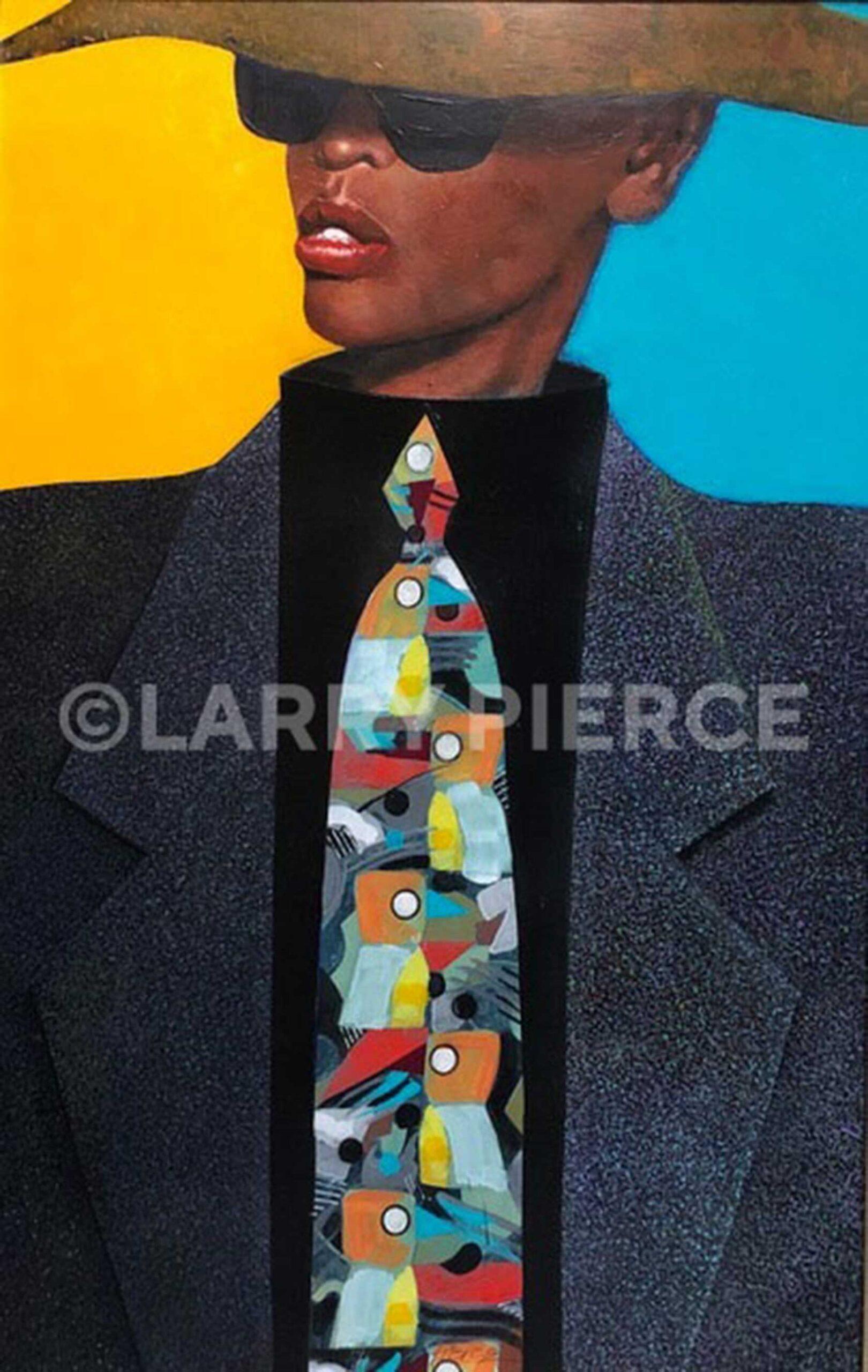
“Jazz Trio” by Larry Pierce

Sponsored by MFA/Boston

This is the third in a weekly series presenting highlights of conversations between Boston artist Paul Goodnight and leading Black visual artists in New England. In this week’s podcast, Goodnight interviews Larry Pierce. The interview has been condensed and lightly edited. 

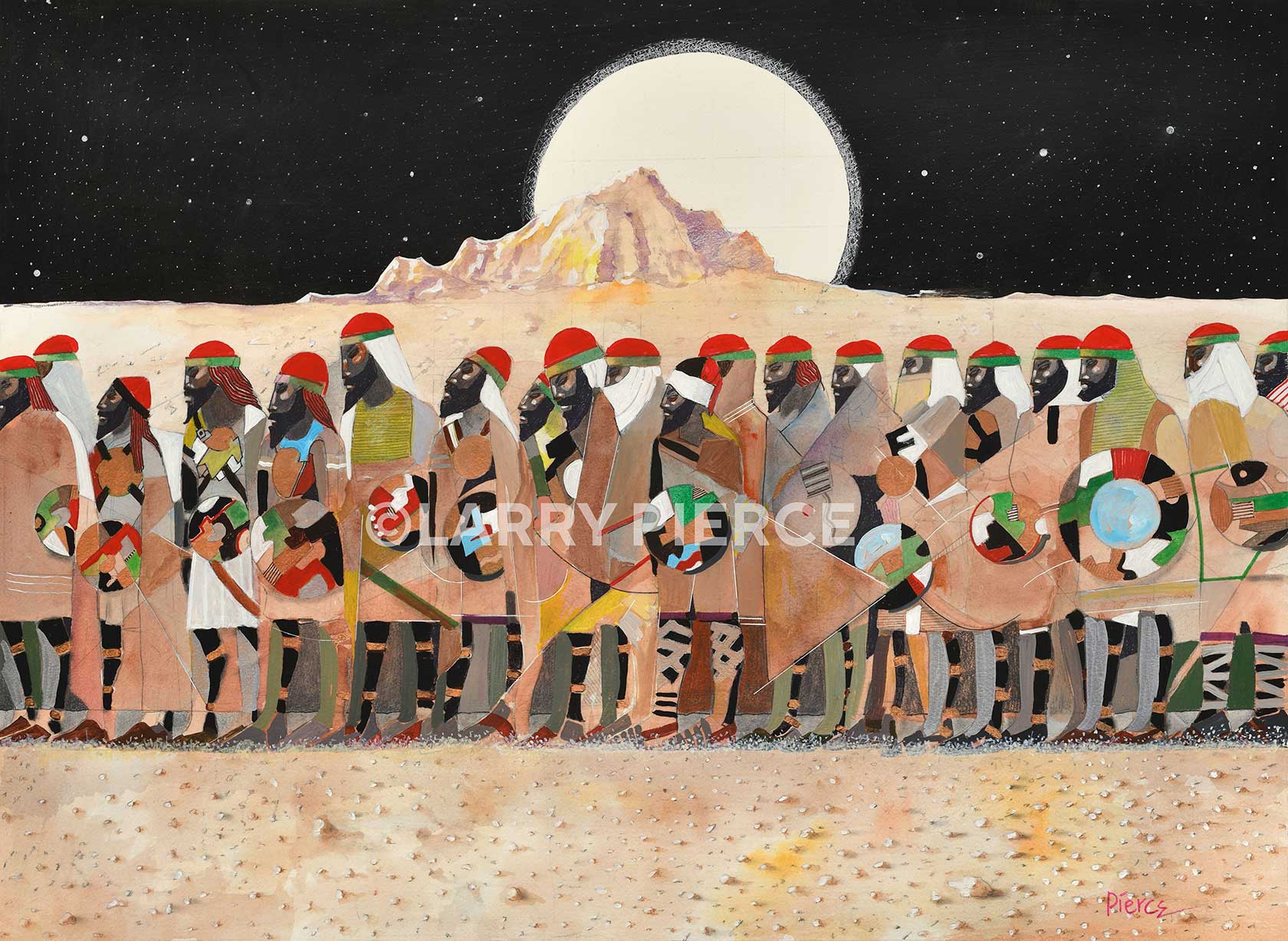
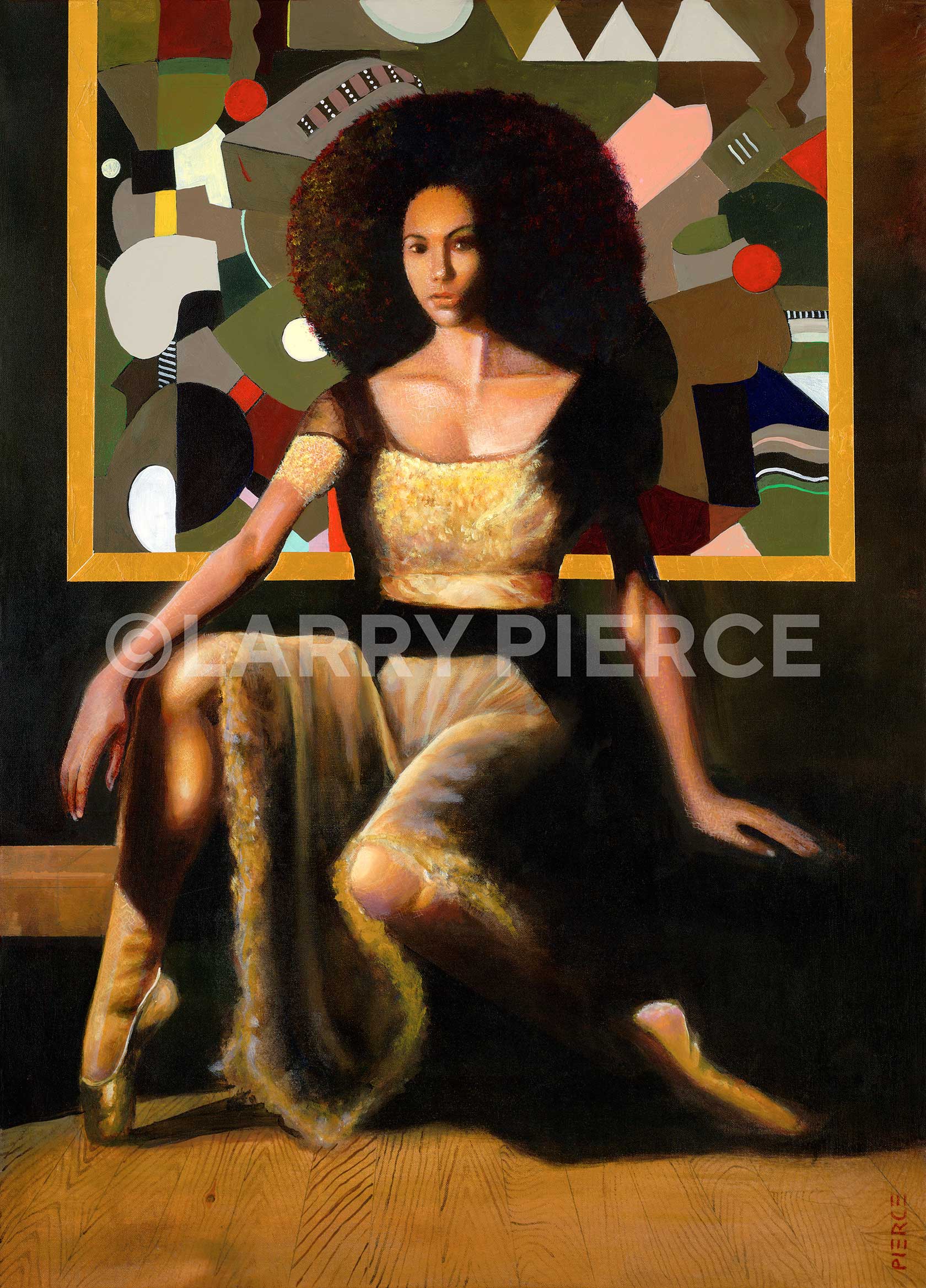
A Bronx native, Navy veteran and graduate of the School of Visual Arts in New York, Pierce is a painter and sculptor who believes art is a record of and testimony to every aspect of the human condition and should be accessible to all. In 2005, he created the AfricanWinter Gallery in Dorchester.

Paul Goodnight: There’s a piece that I can’t keep out of my mind, this sculpture that you were doing in memory of Art Tatum. Tell us a little bit about that.
Larry Pierce: He was one of the most phenomenal pianists ever. He was praised by classical musicians. Arthur Fiedler said when he first heard him on the radio, he thought there were three people playing the piano at the same time. That’s how good and how fast he was.

“Woman with Loud Tie” by Larry Pierce

There was a series of paintings that you did called “When They Were Young” — I think you’ve done Dizzy Gillespie, Melnea Cass and some others?
I’m kind of a time traveler. And when you see Melnea as a young woman, people are shocked that she was so beautiful, but she was more than beautiful. She was a firecracker. She was the mayor of Roxbury. Just like Rosa Parks. Everybody thinks Rosa was a tired old lady who didn’t want to give up her seat. Rosa was a revolutionary as a young woman. I like for young people to know that these are people in their senior years and they’re successful at whatever they do, but everybody had a starting point. Everybody looked like you when you were 12, 14, 15 years old.

How many pieces did you do in that series?
It’s still ongoing. I’m looking for a really good reference for Billie Holiday. But I did Count Basie. I did Nelson Mandela.

That’s basically documenting our history, too.
Yes. It appalls me how poorly young people are educated, and now there’s an attempt by the powers that be to make them even less (familiar with) our history. I think that it’s incumbent upon artists of color, not just Black artists, to make sure that our history is alive and kicking.

“The Meii” by Larry Pierce

I remember the one piece with Vladimir Putin and Donald Trump.
I did a piece called “Bedbugs.” It has a double meaning because I have Trump and Vladimir Putin in the same bed together. Putin has on earphones, and they’re looking at each other, and at the bottom of the blanket it says Doral — (Trump’s hotel) in Florida. Remember, they were closed down because they had a bedbug problem. There’s a lot of meaning in that piece. It’s one of the most powerful pieces I’ve ever done, and it got kicked out of the show at Northeastern (University).

Don’t you think there should be artistic freedom — that whatever we hang, we shouldn’t have to apologize for our commentary?
You have to put it out there no matter what. If the powers that be can’t deal with it, OK. But at least I did my part.

Do you feel as though you don’t have to worry about what you say when you’re creating it?
Not yet. The Chinese have a curse: “May you live in interesting times.” These are very interesting times, because they’re trying to move closer to fascism. The orange man almost got us there. They go after the intellectuals and artists, and it’s our job to hold back that tide.

“Reena” by Larry Pierce

Do you have any preparation rituals?
What I do is dream very lucidly. I have had dreams where the image was so powerful that I would jump right up — I keep a sketchpad by my bed — and I would just do a quick sketch before that curtain of forgetfulness closes. That’s one of my processes.

Were your parents supportive of you growing up in the arts?
Absolutely. It didn’t really dawn on me until later that I come from a family of artists. My mother was a beautician. My father was a master upholsterer. My sister’s a fantastic interior designer, and my late brother Mike was a drummer.

What’s it like when you see your imagination played out on the canvas?
I hit the usual brick wall that a lot of artists do. I pull myself out of it through dream time and visual stimulation. For instance, I did a painting of a sister who was in the waiting room at Whittier (Street Health Center). She was in hijab, so you could only see her eyes. But she was talking on her cellphone. And I’m like, wow, this is the juxtaposition of that old culture and the future. I took a picture before she knew I was doing it.

Did you paint it?
Yes, I did. It’s one of my favorite paintings.

Student-led group aims to decolonize UM campus art

Student-led group aims to decolonize UM campus art

October 25, 2023 — 

The Indigenous Student-Led Indigenous Art Purchase Program (ISLIAPP) is looking for passionate Indigenous students at the University of Manitoba to join a committee that aims to decolonize art collections on UM campuses.

The ISLIAPP’s goal is to transform the composition of university art collections by adding contemporary Indigenous art each year, selected by a committee of five to seven Indigenous students.

This committee will engage with artists and curators and select works for acquisition. The new additions will receive exhibitions in the School of Art Gallery at the Fort Garry campus.

The ISLIAPP is looking for five to seven committee members who meet the following criteria:

  • Current Indigenous students at UM, from any faculty
  • Students with knowledge and experience with Indigenous cultures, communities, protocols and practices
  • Students with an interest in art and contemporary Indigenous artists; experience in an arts-related field is an asset
  • Preference will be given to individuals who are First Nations, Métis or Inuit

Applications are requested in the form of a letter of interest, which should include some biographical information, an explanation of why you want to sit on the committee and some artists you’re excited about.

The deadline to apply is Nov. 9, 2023. For complete information and to apply, please visit the ISLIAPP web page. Students can also fill out the online application form.

SkasdiCon returns for 2nd celebration of Native perspective, impact on comic con scene

SkasdiCon returns for 2nd celebration of Native perspective, impact on comic con scene

#inform-video-player-1 .inform-embed { margin-top: 10px; margin-bottom: 20px; }

#inform-video-player-2 .inform-embed { margin-top: 10px; margin-bottom: 20px; }

Cherokee Nation is once again celebrating Native perspective and influence on the comic con scene with the return of SkasdiCon.

The family-friendly event will take place on Nov. 4 from noon to 7 p.m. at Northeastern State University in the University Center Ballroom at 612 N. Grand Ave. The event is free to attendees 18 and under, students with a school I.D., and those dressed in cosplay costumes. General admission is $5.

More than 40 Indigenous artists will be sharing their work alongside Native pop culture panels, film screenings, and a cosplay competition. This year, the competition categories have been expanded to also include a youth division.

“SkasdiCon Vol. II is shaping up to be an incredible event. We were blown away by the reception of this event last year, and we’ve worked hard to expand our panels, special guests list, entertainment and activities,” said Callie Chunestudy, cultural programs and events project manager for Cherokee Nation Cultural Tourism. “We hope the public joins us for an exciting day with talented artists and vendors who are eager to share their passion and love for both Native culture and pop culture alike.”

The word “skasdi” is Cherokee slang. It’s a playful word that represents pride, impressiveness, awesomeness, fierceness, or feistiness, which can all describe many comic book and video game characters represented by artists and cosplayers that participate at comic cons.

Guests can expect appearances from special guests, such as Jhane Myers and Kaniehtiio Horn. Myers is most known for her many productions, including “Prey,” “1883,” “Magnificent Seven,” and more. Horn has also spent time in the film industry in her recent role of Deer Lady in “Reservation Dogs” and her role in “Letterkenny,” for which she was awarded a Canadian Screen Award.

Guests can also expect an appearance from special guest Jana Schmieding. Schmieding is known for her breakout role as “Reagan” on Peacock’s “Rutherford Falls.” Schmieding frequents on FX’s “Reservation Dogs” and voices Zelda Fox on Fox’s animated sitcom “The Great North.”

For more information, including a full event schedule, cosplay rules and regulations, and a list of participating artists, creators, and cosplay judges, visit https://skasdicon.com/.

#inform-video-player-3 .inform-embed { margin-top: 10px; margin-bottom: 20px; }