Native

French Stylist Elena Mottola on Why Taking Items Off Is as Important as Putting Them On

French Stylist Elena Mottola on Why Taking Items Off Is as Important as Putting Them On
elena-mottola
Portrait of Elena Mottola by Melissa de Araujo. All images courtesy of Mottola.

Welcome to Rules To Live By, where CULTURED asks sartorial voices—renegades, visionaries, and annotators—to unpack their style DNA and share the edicts they follow (and break) in the absurd game of life.

Elena Mottola broke into the world of fashion when she was still in high school. She may not have known who Anna Wintour was, but with her boyfriend, Pierre Kaczmarek, the Paris-based teen made waves with the deconstructed chic clothes of their en vogue clothing line Afterhomework. Four years into the adventure, which Mottola considers just as formative as fashion school, she decided to change course. “Having a brand was about imposing a vision two to four times a year, and I was more interested in sharing a vision many, many times a year,” she says over Zoom. “It’s like being a DJ versus creating an album. When you’re a DJ you can change songs every night, whereas a musician has to sing the same songs over and over again.” The equivalent of a DJ in fashion? Being a stylist. Five years into her new career, she’s accumulated editorials and collaborations with publications and brands such as Vogue Italia, Dazed, CR Fashion Book, Nike, and Bulgari, and cemented a tongue-in-cheek, character-driven approach to styling. For CULTURED, Mottola dishes on believing in obvious beauty, staying home if she doesn’t find the right outfit, and unpacking effortlessness. 

CULTURED: Who taught you how to dress?

Elena Mottola: The women in my family! Dressing in a fashionable way was a means to define my personality. It was so hard for me to express myself through language growing up. It was way easier to express myself through clothes, hair, and makeup.

CULTURED: What stylistic phases did you go through as a kid?

Mottola: Like many people in the fashion industry, I’ve been through every phase. I had this dark moment where everything I wore was black and by Japanese designers like Comme des Garçons and Yohji Yamamoto. Before that, there was the cowboy moment, the girly moment, the princess moment—I passed through all of them. When I was a kid, the thing I looked forward to the most was my dance recital at the end of the year. Getting into a costume on stage—this for me was happiness. The costumes and the performance aspect marked me back then, so it’s funny that now it’s my job to create these “characters” from scratch. As a stylist, you build a world, which is also why it’s so linked to the movies. 

CULTURED: What are some movies that have shaped you?

Mottola: I love obvious beauty, something that anyone can like. A democratic, legible beauty. So in that way, I really love Paolo Sorrentino, Terrence Malick, and Wes Anderson. The characters are so fucked up but so charismatic and you get attached to them. Like Song to Song, 2017, by Terrence Malick, when I watched it I felt like I was on drugs. His film The Tree of Life, 2011, made me feel the same thing. These films and these directors reassure me about life. 

CULTURED: Are there people in your day-to-day life who you find inspiring?

Mottola: I’m half Italian, and most of the people I find inspiring are in Italy. Just the way that people express themselves… In France, it’s way more about what you think, what your politics are. French culture is more about the brain, and Italian culture is way more about appearance. There are these intense characters, like ladies walking down the street with dogs that match their clothing, or a 90-year-old grandpa in a full suit on his way to go grocery shopping. Any moment they go out, they have to look good. And that for me is everything. 

CULTURED: What was your breakout moment as a stylist?

Mottola: It was with the musician Lous and the Yakuza. We worked together for three years, and still a bit now … What’s important to me about my job is making things that my grandmothers could understand. And in that way, styling is a bit weird because nobody understands the job, so working with celebrities or working with publications like Vogue Italia is so important because they make what I do legible.

CULTURED: How do you get dressed in the morning?

Mottola: Depends on the vibe. Sometimes it can take literally hours. I can try 20 looks before finding the right one. Sometimes it’s the first one. But I just cannot go out if I don’t feel good in my outfit. I’d rather stay home.

Elena-mottola

CULTURED: What would someone have to wear on a first date for you to walk out?

Mottola: For a first date, wow them with effortless sexiness.

CULTURED: Effortlessness is a construction, though. It’s never that easy. 

Mottola: Effortlessness is like mastering nothing. That’s the key to fashion. On shoots, I always end up taking layers off, even if it means I’m leaving a model in just a tank top instead of some fancy outfit. When you overdress, you’re not in control of the message you’re trying to share. Striking the right tone is the chicest thing. In this way, I’m quite French

CULTURED: Whose closet would you want to pull a Bling Ring for?

Mottola: Madonna. Someone who’s had thousands of lives. 

Elena Mottola’s Rules to Live By:

1. Always adapt to the situation. 

2. Always prioritize creativity.

3. Never restrict yourself to seeing the same people all the time. Anybody can be inspiring.

4. Always mix generations and cultures. 

5. Always question your own beliefs.

6. Combine the uncombinable, but always stay chic.

7. Never stop learning. 

8. Always take care of the way you present yourself to the world.

9. Never stick to the norm. 

10. Never be late. 

Sign Up for the Cultured Newsletter

Sure, we can be close friends. Unfiltered access awaits.

Writer Liara Roux Finds Spiritual Protection in a $165 Bottle of Perfume

Writer Liara Roux Finds Spiritual Protection in a $165 Bottle of Perfume
All photography of Liara Roux by Bao Ngo and courtesy of Roux.

This is the Art of Living Well, a column from CULTURED that explores how tastemakers think about luxury: the luxuries that are free, the ones that cost way too much, and the little ones that punch above their weight.

In the 2021 memoir Whore of New York, Liara Roux recounts their journey growing up in a conservative Christian household and finding a career in sex work, sex-worker advocacy, and writing. Their creative practice often explores issues of labor and femininity—which also happen to make them a connoisseur of taking care of themselves in ways that feel authentic and grounding. Here, Roux offers insight into the perfume that feels like spiritual armor and their favorite after-Thanksgiving ritual. 

What product do you use every day that instantly improves your mood?

I adore Marissa Zappas’s perfumes. They’re a critical part of my morning ritual, what I put on after I’m fully dressed and made up. Recently I’ve been loving her scent Maggie The Cat is Alive, I’m Alive!—it is incredibly luxurious-feeling. Unlike many unisex perfumes, it’s both very masculine and very feminine. Putting it on feels like spiritual protection.

What’s your favorite small luxury to give to someone else?

I really love giving people a box of tea from Tea Dealers, who sell a variety of beautifully packaged and very high-quality tea. Tea is a wonderful gift because nearly everyone drinks it—there are even herbal options for those who are avoiding caffeine—and because it’s meant to be consumed, it won’t unnecessarily clutter their home. I think there’s no better way to start the day than with a delicious cup of tea, and I love to share that with others.

liara-roux-writer

What do you do when you need to feel grounded?

I draw a hot bath with Bath Roman bath salts. They have one called Muddy Blue that is very warming. Nothing relaxes me faster than an hour or two in the bath with a good book. 

What is something you’d love for someone to buy for you, but would never buy for yourself?

Jewelry!

What’s a luxurious ritual you inherited from someone in your life?

My grandmother let me in on the secret that cherry pie is always better the day after it’s made. On the morning after Thanksgiving, she and I always ate a slice of cold pie from the fridge and it’s one of my favorite memories. 

liara-roux-whore-of-new-york

What is the best thing you’ve put on your face recently?

Biologique Recherche Masque Vivant.

What is your favorite luxury that costs less than $20?

Pastries from Des gâteaux et du pain in Paris! They’re never too sweet and always have the most delightful textures.

Sign Up for the Cultured Newsletter

Sure, we can be close friends. Unfiltered access awaits.

12 Essential Art Exhibitions Worth Traveling For This Fall

12 Essential Art Exhibitions Worth Traveling For This Fall

Museums and art organizations around the globe are putting their best foot forward this fall with fresh takes on outdated histories and new, thrilling discoveries. Outside the well-trodden hubs of Los Angeles and New York, the coming season boasts a vibrant celebration of women artists, from historically misunderstood figures to contemporary creators. The work of Native and Indigenous artists is also the subject of growing, overdue attention. And of course, it wouldn’t be a fall art season without a few boldface names getting deliciously ambitious retrospectives. Here, CULTURED selects 12 shows worth the trip this autumn. 

35th-bienal-sao-paulo-curator
Curatorial collective of the 35th Bienal de São Paulo, from left to right: Manuel Borja-Villel, Diane Lima, Grada Kilomba, and Hélio Menezes. Image courtesy of Levi Fanan/Fundação Bienal de São Paulo.

Choreographies of the Impossible” 
The 35th Bienal de São Paulo, São Paulo
September 6-December 10, 2023 

The four-person curatorial team behind the 35th Bienal de São Paulo—Diane Lima, Grada Kilomba, Hélio Menezes, and Manuel Borja-Villel—has compiled an ambitious show based around the theme of resilience. It includes the work of 120 artists, from rising talents like Igshaan Adams, Dayanita Singh, and Luana Vitra to historical figures such as Charles White, Elizabeth Catlett, and Wifredo Lam. The city will also host an action-packed slate of museum and gallery exhibitions. Don’t miss “Indigenous Histories” (October 20, 2023-February 25, 2024) at Museu de Arte de São Paolo Assis Chateaubriand, an ambitious presentation of Indigenous cultural production from around the world.

mickalene-thomas-yale
Sarah Goodridge, Rose Prentice (1771–1852), 1837–38. Image courtesy of the Yale University Art Gallery.

Mickalene Thomas/Portrait of an Unlikely Space
Yale University Art Gallery, New Haven
September 8, 2023–January 7, 2024

In something of a departure from her vibrantly decorated paintings and photographs, Mickalene Thomas has created an installation that imagines living-room-like interior spaces during the pre-Emancipation era. Inspired by a miniature painting of a formerly enslaved woman, Rose Prentice, who lived from 1771 to 1852, the artist places engravings and daguerreotypes of Black women, men, and children in dialogue with her own work and the work of her contemporaries.

annika-kahrs-film
Annika Kahrs, Gravity’s Tune (Film Still), 2023. Image courtesy of the artist and Produzentengalerie Hamburg.

“The World’s Quietest Concert Hall” by Annika Kahrs
Schering Stiftung, Berlin
September 13-November 27, 2023

What do gravitational waves sound like? German artist Annika Kahrs makes art out of that question. Her intriguing piece, Gravity’s Tune, is inspired by the sound created when two black holes orbit and collide. The culmination of over three years of work at the U.S.-based Laser Interferometer Gravitational-Wave Observatory (LIGO), this new sound and video performance (coinciding with Berlin Art Week) is based on a 2015 scientific breakthrough, when experts converted cosmic waves into acoustic signals for the first time.

niko-pirosmani-giraffe
Niko Pirosmani, Giraffe. Photography by Roberto Bigano. Image courtesy of the Collection of Shalva Amiranashvili, Museum of Fine Arts of Georgia, and Infiniarts Foundation.

Niko Pirosmani” 
Fondation Beyeler, Basel
September 17, 2023-January 28, 2024

Though this exhibition started its tour at Denmark’s Louisiana Museum of Modern Art earlier this year, the survey of the Georgian modernist, 1862-1918, hasn’t gotten the attention it deserves. The show represents a rare opportunity to see a large body of work by an artist who enjoys cult status in his home country. Pirosmani is a self-taught enigma who spent his life doing odd jobs, from working as a railroad conductor to a dairy farmer, and rose to prominence posthumously. Discover some 50 paintings in what is described as the largest exhibition of the artist’s work to date.

indigenous-artwork-exhibition
Cara Romero (Chemehuevi), Indian Canyon, 2019. Image courtesy of the artist and the National Gallery of Art.

The Land Carries Our Ancestors: Contemporary Art by Native Americans” 
The National Gallery of Art, Washington, D.C.
September 22, 2023–January 15, 2024

While art lovers swooned over the first retrospective of Jaune Quick-to-See Smith, a citizen of the Confederated Salish and Kootenai Nation, at the Whitney Museum in New York earlier this year, the octogenarian artist was busy curating an unprecedented show of her peers. “The Land Carries Our Ancestors” features some 50 living Native American artists working in the U.S. Quick-to-See Smith has supported the visibility of Native artists for decades, despite a pitiful lack of attention from the established art world. Now, she shares the spotlight with figures including Marie Watt, Gerald Clarke Jr., and Cara Romero. 

marina-abramovic-performance
Marina Abramović, Nude With Skeleton, 2005. Photography by Attilio Maranzano. Image courtesy of the Marina Abramović Archives.

Marina Abramović
The Royal Academy of Arts, London
September 23, 2023–January 1, 2024

The twice-postponed retrospective of Serbian artist Marina Abramović is one of the season’s most talked-about art events—and rightly so. The performative and participatory nature of the exhibition resulted in multiple pandemic delays, while also stoking anticipation for the artist’s live performances. Expect to see restagings of pioneering works like The Artist is Present and The House with the Ocean View. “No two visits will be the same,” promise the organizers.

artemisia-gentileschi-judith-maidservant
Artemisia Gentileschi, Judith and her Maidservant with the Head of Holofernes, 1623-25. Image courtesy of the Detroit Institute of Art and Baltimore Museum of Art.

Making Her Mark: A History of Women Artists in Europe, 1400-1800” 
Baltimore Museum of Art, Baltimore
October 1, 2023-January 7, 2024

Women artists have always been integral to Europe’s artistic and cultural production. They just haven’t gotten appropriate credit for it. While the Baltimore show’s organizers acknowledge they are joining a wave of new scholarship on women in art history, they claim that other “investigations remain largely focused on an elite group.” This show, co-organized with the Art Gallery of Ontario, is distinguished by its wider aperture, embracing artistic, cultural, and entrepreneurial innovations by both acclaimed and lesser-known women through 175 objects. Works range from portraiture, sculpture, tapestries, drawings, metalwork, and more.

john-biggers-kumasi-market
John Biggers, Kumasi Market, 1962. Image courtesy of the Collection of William O. Perkins III and the Phillips Collection.

African Modernism in America, 1947-67” 
The Phillips Collection, Washington, DC
October 7, 2023–January 7, 2024

This traveling exhibition revisits important ‘60s presentations of modern African art in America to consider how the fruitful dialogue shaped art history. Curators are zeroing in on the transcontinental exchanges between African artists and American patrons, artists, and cultural organizations amid the context of the Civil Rights movement, decolonization, and the Cold War. The show, co-organized by the American Federation of Arts and Fisk University Galleries, includes work by 50 artists from Papa Ibra Tall to Suzanna Ogunjami. 

marison-mi-mama-y-yo
Marisol, Mi mama y yo, 1968. Photography by Brenda Bieger. Image courtesy of the Buffalo AKG Art Museum, Estate of Marisol / Artists Rights Society (ARS), and the Montreal Museum of Fine Arts. 

Marisol: A Retrospective” 
Montreal Museum of Fine Arts, Montreal
October 7, 2023–January 21, 2024 

This retrospective, organized with the Toledo Museum of Art, the Buffalo AKG Art Museum, and the Dallas Museum of Art, digs into an artist described by the curators as “the most intriguing and least understood artist associated with Pop art.” The show surveys the 60-year career of the Venezuelan-American Marisol, 1930-2016, who became famous in the 1960s for her striking assemblage sculptures influenced by Pop and Pre-Columbian art. The exhibition also revisits her post-1970s work, when the artist fell out of the limelight.

mike-kelley-artwork
Mike Kelley, Ectoplasm Photograph 13, 1978/2009. Image courtesy of the Bourse de Commerce.

Mike Kelley: Ghost and Spirit
Bourse de Commerce, Paris
October 13, 2023-February 2024

The Tate Modern-organized retrospective, which begins its international run amidst Paris’s fall art fairs, has our attention. The in-depth show will include a sure-to-be-memorable presentation of the artist’s “Kandors”—sci-fi fantasy cities under bell jars—in the Bourse’s spectacular rotunda, as well as Kelley’s final work, Day is Done, 2005. Plus, visitors will get a better understanding of Kelley’s highly influential but lesser-shown drawings, photographs, and writings.

mark-rothko-painting
Mark Rothko, Red on Maroon, 1959. Image courtesy of the Tate and Fondation Louis Vuitton.

Mark Rothko” 
Fondation Louis Vuitton, Paris
October 18, 2023-April 2, 2024

The Fondation Louis Vuitton knows how to do a blockbuster exhibition—and Mark Rothko’s first retrospective in France promises to be no exception. Mounted in time for the opening of the Paris+ by Art Basel fair, the show gathers some 115 works from major institutions, encompassing the artist’s early figurative paintings as well as his iconic and influential abstractions. The exhibition will also include the first “Rothko Room,” from the Phillips Collection, completed in close collaboration with the artist in 1960. 

Marie Laurencin, In the Forest (Dans la forêt), 1916. Image courtesy of the Barnes, McNay Art Museum, and Fondation Foujita / Artists Rights Society.

Marie Laurencin: Sapphic Paris” 
The Barnes, Philadelphia
October 22, 2023–January 21, 2024

If you haven’t seen the arresting work of French artist Marie Laurencin, 1883-1956, in person, this fall offers a ripe opportunity. Although historically best known as the lover of Apollinaire and a secondary member of the Cubist movement, Laurencin developed a distinct artistic style and became part of interwar Paris’s vibrant lesbian literary and artistic network. For her first solo American museum exhibition in 30 years, the Barnes will bring together more than 50 paintings that offer discreet evocations of queer affection and a uniquely “sapphic modernity.”

Alaska Native youth to carve two dugout canoes with federal education funding boost

Alaska Native youth to carve two dugout canoes with federal education funding boost
People canoeing with Goldbelt Heritage Foundation, the first recipient of the Native Hawaiian and Alaska Native Culture and Arts Development grant program. (Photo courtesy of Goldbelt Heritage Foundation)

Federal money for arts, culture and educational programs will fund the creation of two dugout canoes in Southeast Alaska.

Goldbelt Heritage Foundation, the nonprofit arm of Goldbelt, Inc., will teach Alaska Native youth how to carve canoes with nearly a quarter million dollars in grant funding from the National Park Service. The goal is to teach Tlingit culture while applying the principles of science, technology, engineering and math education to canoe making.

The National Park Service awarded the grant of $243,457 to Goldbelt Heritage Foundation on Aug. 15.

Desiree Jackson, Goldbelt Heritage Foundation executive director, said the four-year grant will be the start of a continuing education program that will uphold canoe stories behind the traditional use of the canoe.

“We want to grow this momentum around youth paddling and utilization of the yaak’w (canoe) because this is another sport and activity youth should be engaged with,” she said.

Goldbelt Heritage Foundation will create courses around the building of dugout canoes.

“There is so much undocumented curriculum around navigation,” she said. “How did we use the stars? How did we use waypoints?

The program is called “Daak Yaylatsaak,” which means “push the boat out” in the Tlingít language. Jackson said the goal is for the program to be run through classrooms in Southeast Alaska during school, which she said is important for Alaska students as part of place-based education.

The group aims to host a regional youth canoe gathering within the next few years.

The money is part of the first round of awards for the Native Hawaiian and Alaska Native Culture and Arts Development grant program. The National Park Service administers the grant on behalf of the Secretary of Interior, Deb Haaland, using funds appropriated by Congress.

National Park Service Director Director Chuck Sams said the project will provide educational programming while it continues traditional practices for youth in Southeast Alaska.

“The National Park Service is committed to supporting Native Hawaiian and Alaska Native culture and art programs, including traditional and contemporary expressions of language, history, visual and performing arts, and crafts,” said Sams.

The National Park Service awards the grants for scholarly study and instruction of contemporary arts and culture, to establish educational programs that lead to degrees in Alaska Native and Native Hawaiian art and culture programs or to develop arts in the community. Private, nonprofit groups that primarily serve Native Hawaiian or Alaska Native communities and are recognized by the governor of Hawaii or Alaska are eligible.

Alaska Beacon is part of States Newsroom, a network of news bureaus supported by grants and a coalition of donors as a 501c(3) public charity. Alaska Beacon maintains editorial independence. Contact Editor Andrew Kitchenman for questions: info@alaskabeacon.com. Follow Alaska Beacon on Facebook and Twitter.

Exhibition honors Catawba Nation’s artistry and culture

Exhibition honors Catawba Nation’s artistry and culture

Depending on how you want to look at it, the Columbia Museum of Art’s exhibition Resurgence
and Renaissance: Art of the Catawba Nation Since 1973 could be thought of as a few
years, 50 years or a few millennia in the making.

Stroll through the exhibition space for just a few minutes, though, and one thing
is clear: The attention that Catawba artists are getting is overdue.

A collaboration between USC Lancaster’s Native American Studies Center and the CMA,
the exhibition, which runs until Sept. 3, features 82 items — primarily pottery but
also quilts, hats, baskets and photos of some of the Catawba potters.

All of the pieces on view are from the collections of the Native American Studies
Center, which was established in 2012 for the study of South Carolina’s Native American
peoples, their histories and their cultures. The center features archaeology, language,
and folklore and oral history labs; primary and secondary texts on Native Americans
in the Southeast; classes and programs for both students and the public; and, perhaps
most notably, the largest collection of Catawba pottery in existence.

Catawba pottery bowl with a carved bird sitting on the left of the bowl

But to understand today’s exhibition, one must first look back several decades more,
at least. This year marks the 50th anniversary of the museum’s first Catawba pottery
exhibition, in 1973. It was organized by a USC Columbia graduate student, Steve Baker,
who recognized the pottery as a traditional art form.

Stephen Criswell, director of Native American studies, professor of English and folklorist
at USC Lancaster, discussed the impact of the 1973 exhibition at a recent lunch and
learn conducted by the NASC.

“It was the first time that outsiders began to see Catawba pottery as art, and collectors
began to see it as art,” Criswell said. “And the price of the pottery reflected that,
and the reverence for the pottery began around this time. Potters had been working
for, what, 5,000, 6,000, 7,000 years making this pottery. They’d been doing this for
generations and generations, and the pottery was sold for very, very meager prices,
and often traded for goods or services.”

Catawba pottery had been exhibited at museums before, but typically at natural history
museums, “sort of exoticizing the Catawba instead of seeing this work as art,” Criswell
said. But Baker did see it as art.

This marked a monumental shift in attitudes regarding Native American skills and artistry.
Presenting the pottery as art changed people’s perceptions, and it opened up a market
for the Catawba thanks to newfound demand for their craft.

As a result, at a time when some, including Baker, were beginning to wonder how much
longer these ancient techniques would survive, production increased, helping to breathe
new life into a time-honored tradition.

As evidenced by the pieces featured at the CMA, today’s Catawba potters still use
the techniques passed down from generation to generation for some 5,000 years or more,
even while they explore their own creativity. The pottery is made from traditional
clay resources, time-honored fire methods are used, and mostly traditional forms are
still seen as well.

Their processes also carry some traits that are distinct from modern pottery making.
The elements within the clay used affect the final colors of the art, so there is
often distinct coloring that is a result of the firing process and different types
of clay. Additionally, Catawba pottery is unglazed, which affects both the creation
process and the finished product. The results are fascinating and beautiful.

Catawba pottery bowl with image of a chief's head on the side

Resurgence and Renaissance, however, is about more than just the pottery, and about
more than 1973. “It was important for us to let the experts and the citizens of Catawba
Nation take the lead,” says Jackie Adams, director of art and learning at the CMA.
“We wanted to center Catawba voices not just through the objects, but with the design
of the show.”

So, in addition to the works of art, elements of storytelling, folklore and language
were brought into the exhibition. Even the color of the walls — a rich blue — represents
water, specifically the Catawba River. There are also graphic elements to the show
created by Alex Osborne, a Catawba citizen, designer and featured artist. Osborne’s
work includes a large, striking image of a Catawba chief’s head and a genealogy tree
of artists and potters that goes back generations.

It all makes for a captivating, entertaining and highly educational experience that
must be seen in person to be truly appreciated. “I remember Beckee (Garris, NASC program
assistant and Catawba artist) said something: ‘People still think we walk around in
leathers and feathers,’ ” Adams says. “There are these really perpetual stereotypes
that still exist, and we need to counter those. And the show does that.”


If you’re going

Resurgence and Renaissance: Art of the Catawba Nation since 1973 is on display at
the Columbia Museum of Art, 1515 Main St., through Sept. 3.

Gorman Museum of Native American Art Reopening in New, Expanded Home

Gorman Museum of Native American Art Reopening in New, Expanded Home

The Gorman Museum of Native American Art at the University of California, Davis — unique in focusing on, exhibiting and collecting contemporary Native American art — will reopen in a new, greatly expanded location with a celebratory weekend Sept. 22 and 23 (Friday and Saturday). The occasion also marks the museum’s 50th anniversary.

After a ribbon-cutting ceremony at noon Friday, Sept. 22, the museum will open to the public at 2 p.m. The following day’s events will include music, dance and other performances from noon to 4 p.m. The museum will be open noon to 5 p.m. on weekends and 11 a.m. to 5 p.m. Wednesday, Thursday and Friday. Admission is free.

Gorman Opening at a Glance

Friday, Sept. 22: ribbon-cutting ceremony at noon, museum open to public at 2 p.m.

Saturday, Sept. 23: Events include music, dance and other performances from noon to 4 p.m.

Museum will be open noon to 5 p.m. on weekends and 11 a.m. to 5 p.m. Wednesday, Thursday and Friday.

Admission is free.

“Since its founding, the museum has been a unique and important place for telling the story of the continuing artistic accomplishments of Native Americans,” said Estella Atekwana, dean of the UC Davis College of Letters and Science, of which the museum is part. “The greatly expanded museum in a more visible and accessible location stands to make an even greater impact during the coming decades.”

New location — 4 times the space

The museum, located in the UC Davis Gateway cultural corridor along Old Davis Road, has 4,000 square feet of gallery space — nearly four times more than its former home on campus. Along with space for temporary exhibitions, it features a gallery displaying works from the collection on a rotational basis and visible storage to give visitors access to the collection.

“UC Davis has a long history as a home for Native American artistry, including visual and performing arts,” said Chancellor Gary S. May. “This spacious location near the campus gateway is an ideal place to showcase the influence and contributions of Native people for generations to come.”

The Gorman Museum is committed to contemporary Native American art that enacts visual sovereignty through politically and socially engaging exhibitions.

The museum has a collection of 2,250 artworks, most created since 1980, including paintings, photography, ceramics, textiles and original prints. Among the artists represented in the collection are Kenojuak Ashevak, D.Y. Begay, Rick Bartow, Robert Davidson, Oscar Howe, Lucy Lewis, Lee Marmon, George Morrison, Bill Reid, Jaune Quick-to-See Smith and Kay WalkingStick.

Since its founding in 1973, the museum has shown works by a wide range of established and emerging artists, with 225 group and 88 solo exhibitions, and has also developed touring exhibitions.

“The year 2023 marks the 50th anniversary of the Gorman Museum and continuing supporting contemporary Native American artists who create art as a continuum of Native American presence,” said Hulleah Tsinhnahjinnie, museum director and professor in the Department of Native American Studies. “The renovated space was manifested and realized into reality by a dedicated community of local, inter-tribal artists and allies who embrace the power of Native American art as a site to continue the creative and intellectual conversations that were interrupted by tropes and bias.”

Entrance features Native design

Those coming to the museum will be greeted by a large, circular public artwork based upon Native American basketry designs that was created by Tsinhnahjinnie, who is also an artist. The pavilion honors the late Bertha Wright Mitchell, a Patwin basket weaver who in the late 1990s was the only documented fluent speaker of the Patwin language.

The building, a single-story structure with deep eaves common in California architecture, is painted with bands of green representing tule grass, a once-common plant in California used by Native American people to make baskets, clothing, tents, houses and boats.

The museum provides learning resources for classes and research opportunities for students and faculty across many UC Davis disciplines, as well as for other scholars and educational institutions.

Carl Nelson Gorman, Native American studies

The museum is named in honor of the late artist Carl Nelson Gorman, a founding faculty member in the UC Davis Department of Native American Studies. The department, founded in 1969, is one of the oldest Native American studies programs. UC Davis is one of three U.S. universities offering a doctorate in Native American studies.

The museum is an integral part of the UC Davis Gateway cultural corridor connecting UC Davis cultural gems: the Robert and Margrit Mondavi Center for the Performing Arts and the Jan Shrem and Maria Manetti Shrem Museum of Art. The Gorman Museum also physically links the Gateway with the departments of Art and Art History, Music, Theatre and Dance and the UC Davis Arboretum and Public Garden. The museum is easily accessible from Interstate 80.

Opening exhibition

The opening exhibition “Contemporary California Native Art” will include about 40 works by 20 artists, all members of California tribes. Prior to European contact, there were about 500 tribes in California, which has the largest population of Native Americans — about 760,000 — of any state.

UC Davis and Patwin land

UC Davis is located on land that has for thousands of years been home to the Patwin people. There are three federally recognized Patwin tribes: Cachil DeHe Band of Wintun Indians of the Colusa Indian Community, Kletsel Dehe Wintun Nation and Yocha Dehe Wintun Nation. The full land acknowledgment statement is available here.  

Directions and parking

  • From I-80 West (from Sacramento): Take UC Davis exit and turn right onto Old Davis Road. Continue past the Manetti Shrem Museum and Hyatt Place hotel. The museum is located on the left/north side of the road at 181 Old Davis Road.
  • From I-80 East (from Bay Area): Take UC Davis exit and turn left on Old Davis Road. Continue past the Manetti Shrem Museum and Hyatt Place hotel. The museum is located on the left/north side of the road at 181 Old Davis Road.
  • From Highway 113 (from Woodland): Take the I-80 East/Sacramento exit, then the UC Davis exit. Turn left on Old Davis Road. Continue past the Manetti Shrem Museum and Hyatt Place hotel. The museum is located on the left/north side of the road at 181 Old Davis Road.
  • The closest parking is just past the museum on the right in Visitor Parking Lot 5, and there is additional visitor parking in the Gateway Parking Structure next to the Manetti Shrem Museum. (Parking payment information.)

Philly native gives a special performance for William Edmondson exhibit

Philly native gives a special performance for William Edmondson exhibit
image

In the early 20th century, sculptor William Edmondson was recognized as one of the most important Black American artists of his time. Since then, in-depth attention to his artwork and practice has been sporadic, with few museums devoting shows to his sculptures.

But today, bringing together more than 60 works by the artist, the Barnes exhibition “William Edmondson: A Monumental Vision,” on view in the Roberts Gallery, is the first major East Coast exhibition dedicated to the self-taught artist in decades.

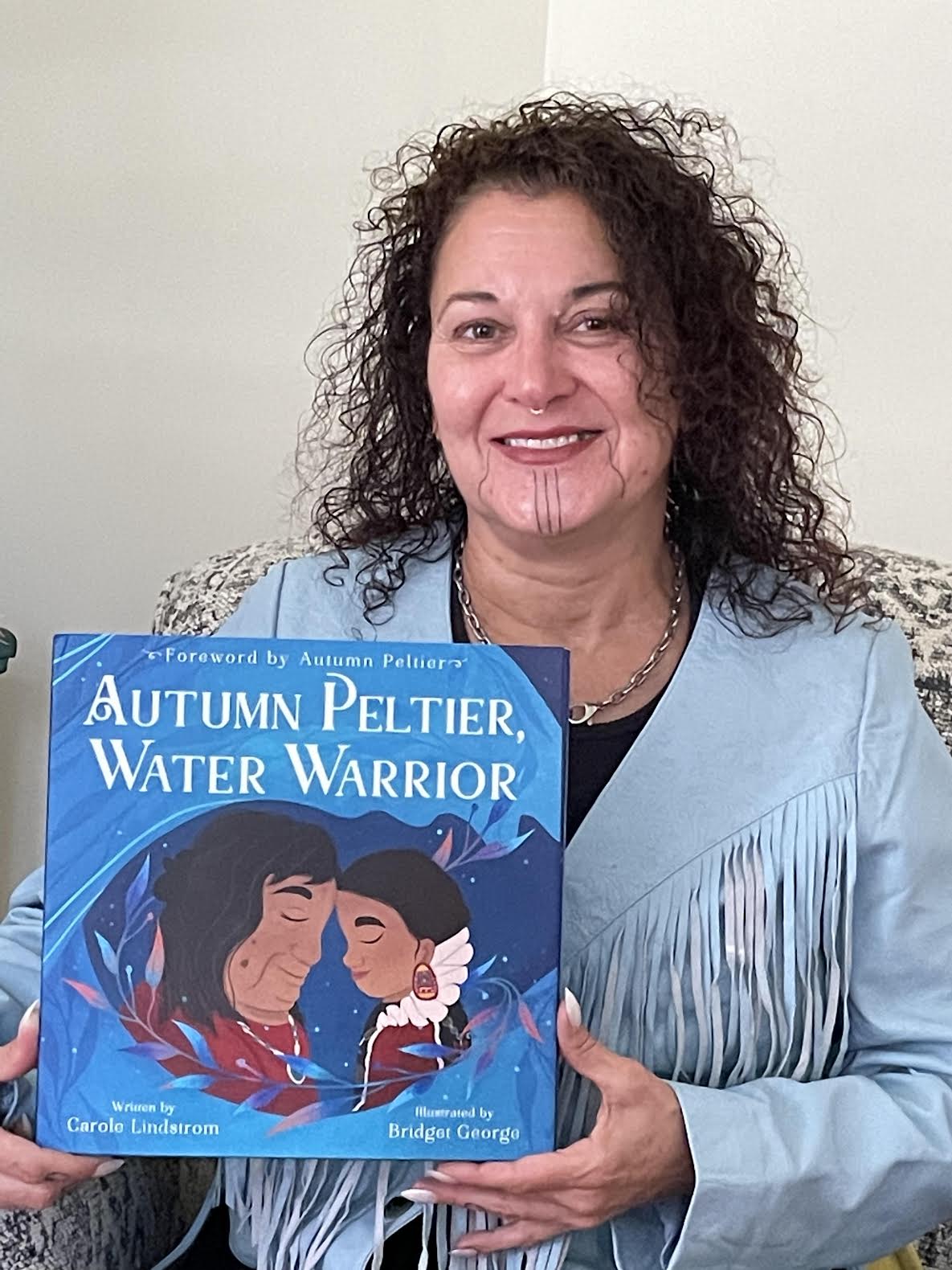
Water is Life: A Deep Dive Interview with Carole Lindstrom On Her Upcoming Dual Biography

Water is Life: A Deep Dive Interview with Carole Lindstrom On Her Upcoming Dual Biography

I grew up not far from Lake Michigan, so it did not seem strange to me that a lake could stretch so far that it resembled an ocean. Now I live close beside it at a time when abundant fresh water is much on the minds of people everywhere. And I think that no picture book author has done more to talk of water, Water Rights, and the Indigenous activists fighting for it, more than author Carole Lindstrom. No doubt you remember her work on the Caldecott Award winning title We Are Water Protectors. That book took much of its inspiration from the members of the Standing Rock Sioux Tribe who fought against the Dakota Access Pipeline. Now she returns to us with the true story of Grandma Josephine and her great-niece, Autumn Peltier. If you’re unfamiliar with them, Josephine Mandamin or “Grandma Josephine” was a respected Anishinaabe elder from Canada who was an internationally recognized Water Rights and Indigenous activist. Her niece Autumn would go on to become the youngest Chief Water Commissioner for the Anishinabek Nation.

Today, Carole herself joins us to discuss Autumn Peltier, Water Warrior (out everywhere September 19th):


Betsy Bird: Carole! It’s so lovely to get a chance to talk to you about AUTUMN PELTIER, WATER WARRIOR. So let’s just start at the very beginning. First and foremost, how did you personally first hear about the work of Josephine Mandamin and Autumn Peltier?

SCROLL TO KEEP READING THIS POST

ADVERTISEMENT

ADVERTISEMENT

Carole Lindstrom

Carole Lindstrom: When I was doing research for WE ARE WATER PROTECTORS I learned about Grandmother Josephine and her great niece, Autumn Peltier and all they were doing to protect the water. I knew after learning about these important Anishinaabekweg that I had to write a story about them.

BB: I’m always interested in that point where vague notions circulating in an author’s brain coalesce into a comprehensible story. Where did that moment happen for you? When did merely knowing about Josephine and Autumn turn into a real book?

CL: I just know that when I read about people and things that are doing big things and aren’t recognized for it – that there’s a story there. I also knew as I began to think about the story arc and what the actual story would be, when I realized that it must be told through the viewpoint of nibi (water) that it was a story.

BB: There are so many different ways to write a biography for kids. You can take just a slice of a subject’s life or encompass it entirely. You had the extra added challenge of having two different biographical subjects. How did you prefer to tackle the material? And was it hard working two people’s stories into a single book?

CL: I knew that Grandmother Josephine and Autumn’s story were intertwined so that necessitated a story that intertwined their lives When I came upon the idea of telling it through nibi’s viewpoint, that’s when the story began to flow, so to speak.

BB: The theme of protecting water comes up time and time again in your books for children. Could you speak a little to why this topic interests you so specifically? Why do you return to the theme of water repeatedly?

CL: For many reasons, but I feel from a spiritual place that as Anishinaabekweg we are considered the keepers of the water. It feels important to my heart and myself as a person to honor that place and I do that by telling these stories. Water is life. It is essential to us all. It is neglected and taken for granted, we can see that today in the lakes drying up in 2023. These are all warning signs and nibi could not be any louder in it’s cries for needing care and nurturance.

BB: Tell us about some of the choices you made in writing this book. Were there things you initially hoped to include but that had to be cut?

SCROLL TO KEEP READING THIS POST

ADVERTISEMENT

ADVERTISEMENT

CL: No, there was not anything that I cut when writing the story of Autumn. My writing style is to keep words to a minimum and let the illustrators work shine through the details. Children are also brilliant with inferences, so I find making the best word choices to pack the most punch also to be very helpful.

BB: This book is illustrated by Bridget George. Were you aware of Bridget’s work before this book? What are your thoughts on the final product?

Bridget George

CL: Yes, I was aware of Bridget’s brilliance before the book. I am very fortunate that I have a large say in the illustrators of the stories that I write. I am extremely grateful for this privilege and do not take it lightly. It’s very important to me, as Native woman, to uplift and bring up new voices in illustrating books for young people. Graphic design and the like would not have been something that a lot of Native students would study in school because it was not awfully long ago that these types of books were not looked at as “to the trade.” They were viewed at as more niche markets; therefore, many Native artists would have done just that with their creative talents. They would have been painters, sculptors, bead workers and the like. It is only in the last few years that Native books have found themselves on bookshelves everywhere, YAY!!!

So the publishers I work with are all very kind and gracious in offering to work with new artists to help them develop their skillset for illustrating children’s books. I have been so very honored to work with some amazing publishers which has allowed me to work with some INCREDIBLE illustrators, like Bridget.

I am blown away by the final artwork. I just love it so much and think the words and art go perfect together.

BB: Finally, what else do you have coming up next? What can we hope to see from you?

CL: I am working on a middle grade historical fiction book with Bloomsbury. I’m excited about this story. It’s based on my Metis ancestry and the Northwest Resistance.

I am also working on a YA graphic novel and several picture books in various stages of revisions.

Miigwech for having me, Betsy.

BB: Thank YOU for talking with us today!


image

A great deal of gratitude to Carole for answering my questions today, as well as Chantal Gersch and the folks at Macmillan for setting this up. Autumn Peltier, Water Warrior is on shelves everywhere September 19th. Look for it soon!

Filed under: Interviews

Makeup Artists From ‘The Idol,’ ‘Euphoria,’ ‘The Bear,’ and More on What Goes on Inside the Beauty Trailer

Makeup Artists From ‘The Idol,’ ‘Euphoria,’ ‘The Bear,’ and More on What Goes on Inside the Beauty Trailer
lilly-rose-depp-the-idol
Lily-Rose Depp and Kirsten Coleman on the set of The Idol. Image courtesy of Coleman.

A side effect of being chronically online this summer included the words “I’m just a freak, yeah” running through your mind in an infinite loop. Content warnings and obligatory critiques aside, The Idol‘s daring and glitzy approach to fashion and beauty gave a Euphoria-deprived public something to stylistically cling to. After Sam Levinson debuted his first HBO hit in 2019, sculptural eyeliner and rhinestones became everyone’s business. 

In the past four years, highly stylized makeup has burst out of runways, TV screens, and movie theaters, with teens, tweens, and makeup fiends across the country whipping out eccentric looks. Productions like Daisy Jones and The Six and Everything, Everywhere All At Once have encouraged people to swap out their usual routine for more adventurous styles. 

The creative minds responsible for this seismic shift deserve the spotlight more than ever, so CULTURED chatted with four makeup artists on the key role glitter, gloss, and sweat play in telling a story, onscreen or IRL. Here, Kirsten Coleman from The Idol and Euphoria, Rebecca Wachtel from Daisy Jones and The Six, Ignacia-Soto Aguilar from The Bear, and Michelle Chung from Everything Everywhere All At Once share their wisdom. 

rebecca-wachtel-alexa-demie-euphoria
Kirsten Coleman and Alexa Demie on the set of Euphoria. Image courtesy of Coleman.

Kirsten Coleman, The Idol, Euphoria, and Don’t Worry Darling 

CULTURED: Aside from the standard beauty tools and cosmetics needed to create a full look, do you have a secret ingredient you use on set? 

Kirsten Coleman: Preparation H. It helps with de-puffing eyes. We also always have hand-held fans to cool actors, but my most-used item is a palo santo spray to keep my energy clean. 

CULTURED: Do you notice any striking differences between working in runway/editorial makeup and makeup for a set? 

Coleman: Each environment has its own level and type of stress. Usually editorial is one eight-hour day, maybe longer depending on how many looks you are doing. With film/TV, you are generally going to work 12 hours, and possibly more. It’s a game of endurance, whereas editorial can be “go go go” in a smaller time frame. 

CULTURED: What product were you reaching for most on set for The Idol

Coleman: Lip liners, a mirror, hand sanitizer, and eye drops. 

CULTURED: Do you go for eye-shadow for more innocent looks and eyeliner for more intense characters or situations? 

Coleman: With narrative-based work, the look has to make sense for the character and their backstory as well as where the story takes them. Geometric liner is very modern and on the forefront of fashion, so it would have to be on a character who is aligned with that world. Softer, blended looks can be for characters that are maybe more subdued or less outgoing. But that being said, I have broken all of these “rules” of thumb when the story calls for a very interesting kind of character that doesn’t adhere to these general makeup ideas. Fun fact about using rhinestones: we started using them as well as glitter on characters in season one of Euphoria because the lighting was so dark and moody we couldn’t see the makeup.

CULTURED: Do you have any predictions on what route makeup will take in the next five years? 

Coleman: I believe we are headed to less structured makeup, things being less perfect and defined. Messy, smudged eye makeup that’s uneven, and more painterly applications of color. 

the-bear-makeup-artist
Will Poulter on the set of The Bear. Image courtesy of Ignacia Soto-Aguilar/Instagram.

Ignacia Soto-Aguilar, The Bear and The Hunger Games

CULTURED: What’s your secret ingredient on set?

Ignacia Soto-Aguilar: Post-It notes are great for cheating straight lines while still being gentle on skin. Also, regular tape to pick up any shimmer fallout without ruining makeup. And Pears soap! It’s a great brow soap.

CULTURED: How is working for a runway different than working on set?

Soto-Aguilar: Runway/editorial makeup is all about creating a look that complements the designer’s vision for the clothing line or the concept of a photoshoot. The makeup often has to be bold and dramatic to stand out. This can be a high-pressure environment because you’re expected to work very quickly, often on multiple models, and the makeup has to be spot on as there are no opportunities for touch-ups during the show. On the other hand, makeup for a film or TV set is about creating a look that fits a specific character and is consistent throughout the shooting, which can often take weeks or even months. This requires a deep understanding of the character and often involves research and preparation. The working hours can be long and irregular depending on the shooting schedule.

CULTURED: What is your biggest regret in terms of makeup? What would you never dare to do again?

Soto-Aguilar: Early in my career I worked on a popular network dating reality series when smudge-proof mascara was all the hype. However, smudge proof is exactly that—it’s not finale-night-tears-proof. The temperature in human tears after hours of shooting made the mascara slide off each lash hair onto the cheek of our leading lady, and it looked like I drew lashes on her with a sharpie. I was mortified. Luckily, the show runner was thrilled with how much more dramatic it made it look, and I was actually praised for it. But it taught me to never use something on camera without testing it first, even if it has glowing reviews.

CULTURED: Walk me through how you represented Carmy on The Bear’s emotions or personality. 

Soto-Aguilar: Character development, personality traits, emotional state, social status, time period, health condition, symbolism and foreshadowing, character history. Makeup is a crucial tool to deliver that information to the viewer. It also may assist in informing the actor on how to deliver the character on screen if they’re a newer addition to the cast.

Carmy, for instance, we wanted the audience to be curious about him before getting to know him, and makeup had a big role in that. Benny Shields, an incredible tattoo artist, got involved during prep and designed the images for all of his trendy and highly popular tattoos. Once I had those files we were able to decide placement, the aging of each according to when he would have gotten them in his life, etc. For example, the area code on his bicep was aged more than others since we decided that was a young Carmy tattoo decision. Carmy’s tattoos get more intricate as he levels up as a chef, and viewers that know about tattoos will recognize which tattoos are more “expensive” than others. And burn scars! We designed multiple scar transfers for his arms and hands. Any legit chef knows kitchen scars are street cred, and it doesn’t get more legit than Carmy Berzatto.

CULTURED: What product were you reaching for most on set for The Bear?

Soto-Aguilar: I really owe it to Tatcha Luminous Dewy skin mist. It’s amazing for giving skin the perfect amount of glow for a starting point in the kitchen. As the scenes progress and storyline tensions elevate, Evian facial spray is an industry standard—it’s perfect for sweat touch-ups before camera rolls, and Tatcha Skin Mist’s ability at keeping Evian in place while also protecting the makeup is unmatched.

daisy-jones-and-the-six-rebecca-wachtel
Still of Suki Waterhouse and Riley Keough filming Daisy Jones and The Six. Image courtesy of Rebecca Wachtel.

Rebecca Wachtel, Daisy Jones and The Six and Pretty Little Liars 

CULTURED: Are there any tools on set that aren’t talked about enough because they aren’t as marketable or glamorous as cosmetics? 

Rebecca Wachtel: Blood, sweat, and special effects of that sort. Not to get disgusting, but you have to think about things like what you’re going to use if somebody is throwing up. You go to craft service and then you put things together. For Daisy, it was all about creating a sweaty illusion. I like to try to use products that are cleaner for the skin. Jones Road’s Miracle Bomb is really nice. It gives the skin a sheen. I would put that all over for a first layer of glow, even on the guys. I really like Josie Maran’s Creamy Oil. It smells like lemon balm, very nice and clean. I use that for shine and sweat. 

CULTURED: Do you notice any striking differences between red carpet makeup and makeup for a set? 

Wachtel: Red carpet looks generally tend to be a little heavier—everything can be read because of the flashes. But if we’re filming for a show, it’s HD, and they’re going to be right up in the talent’s face. If you want them to look like they have no makeup on, you have to do a really flawless job. For Daisy, I wanted it to look realistic—I didn’t want the makeup to be perfect, which in some way is harder. The other makeup artists and I would often avoid touch-ups; we would leave their eyeliner even if it was messy. Something about that makes it more relatable. 

CULTURED: What’s your trick for making base makeup look natural? 

Wachtel: You have to approach every person with what is gonna work for them. There are certain products that are more sheer. With Riley, I used the Koh Gen Do Aqua Foundation, two different colors to brighten and contour. I used the Beauty Blender wet and really buffed it into the skin. Also lots of cream bronzers with no shimmer in them and cream blushes. And I used a highlighter from Evan Healy that’s like a cream—there’s no shimmer in it; it just makes the skin look dewy.

CULTURED: Were there specific styles you experimented with that you wouldn’t see in today’s makeup trends? 

Wachtel: Facial Hair. The lead band guys couldn’t have anything too crazy because it would be distracting, but there was a lot of long sideburns action. Sometimes I would tell all the guys to come to set without shaving and we would make some really funky facial hair.

CULTURED: What product were you reaching for most while on set for Daisy Jones and The Six? 

Wachtel: Chantecaille Future Skin Foundation for the three ladies. I also love Julie Hewitt’s Cheekies—they’re lip and cheek bombs. They have camellia oil in them and give a very nice sheen. Also the Endura SKIN tattoo cover.

everything-everywhere-all-at-once-makeup
Stephanie Hsu behind the scenes on the set of Everything Everywhere All At Once. Image courtesy of Michelle Chung/Instagram.

Michelle Chung, Everything Everywhere All at Once and Booksmart

CULTURED: What’s your secret ingredient on set?

Michelle Chung: I like to be as prepared as possible on set, so I have a lot of things that aren’t necessarily cosmetics, like earplugs, a first aid kit, Advil (I get asked for this the most I think), tampons. I’m basically a traveling pharmacy. Baby wipes are always on me, for cleaning hands, changing a lip color, and so much more. Snacks are a big thing I keep in the trailer and on set. We work such long hours, and yummy snacks make the day feel better. As far as tools, every job is so different. I do keep an array of facial tools, from rollers, gua sha, facial massagers, essential oils on hot towels, and sometimes even a bowl of ice. In my trailer, I love to have a speaker. Music is really great in the morning when it’s too early to talk. 

CULTURED: How do you tell a story through make-up?

Chung: In Everything Everywhere All at Once, I really wanted to make sure each look for Jobu Tupaki was completely distinct from each other in each multiverse. Her mind has been fractured into all these pieces, so I wanted each universe to stand out as its own fragment.

She wears her emotions outwardly, in her makeup, hair, and clothes, so I really wanted to go extreme with her looks. With some, I even threw in literal emotions on her face, using teardrop jewels, painting hearts on her cheeks, and painting a kind of “runny nose” look for sadness. I also pulled inspiration from warrior makeup to show her willingness to fight. 

CULTURED: What product were you reaching for most on set for Everything Everywhere All at Once?

Chung: I really love any cream makeup, it’s easy to work with quickly, blends out so easily, and is so versatile. I can use it on the eyes, cheeks, and lips. The MAC paint sticks in the palette were a go-to. I also used the MAC acrylic paints that didn’t actually need any touch-up on set, which was really great in some of the fight sequences. I reached for blot papers very often. I don’t love to use a lot of powder, and blot papers leave just enough shine to show real skin, which I love. 

CULTURED: What is your biggest regret in terms of makeup? What would you never dare to do again?

Chung: I was a product of the ‘90s, so I over-tweezed my own eyebrows. I definitely regret doing that! 

CULTURED: Do you have any predictions on what route makeup will take in the next five years? 

Chung: I’m already seeing a return to the ‘90s, early 2000s—more satin and matte finishes, a lot of neutrals and browns. I’m also starting to see neons, but less glittery and blinged out, more just bright and flat. Bright pastels might be next as well. I do love that people are becoming way more experimental with their looks, so I hope that trend continues!

Ada Deer, tireless advocate for Native American rights, dies at 88

Ada Deer, tireless advocate for Native American rights, dies at 88

Ada Deer, who advocated for Native American rights both in and out of government, lobbying for tribal self-determination in the 1970s and later shaping federal policy as the first woman to lead the Bureau of Indian Affairs, died Aug. 15 at a hospice center in Fitchburg, Wis., a suburb of Madison. She was 88.

Her godson Ben Wikler, the chair of the Democratic Party of Wisconsin, confirmed her death but did not cite a cause.

Ms. Deer, a member of the Menominee tribe in Wisconsin, was a tireless champion for American Indians, campaigning on behalf of Indigenous people while also working as a social worker and educator. “Ada would often talk about how most people wait around for someone else to do something — and you didn’t have to wait, you could just go for it,” Wikler said in a phone interview. “She lived that out all through her life.”

Beginning in the early 1970s, Ms. Deer campaigned to reverse the policy known as termination, in which the federal government disbanded tribes as sovereign entities, ostensibly to force Native Americans to assimilate into mainstream society.

The program proved devastating to tribes such as the Menominee, which numbered some 3,300 people before the Menominee Termination Act took effect in 1961. State and federal funding dried up, schools closed, a hospital was shuttered and the tribe’s property was transferred to a state corporation. Menominee Indian Reservation became Menominee County, the smallest and soon the poorest county in the state.

“It was a cultural, economic, and political disaster that struck deep into the hearts of the Menominee — a violation of our treaties and a betrayal of the government’s responsibilities to our tribe,” Ms. Deer later said.

In 1970, while in her mid-30s, she partnered with other organizers to launch an advocacy group called Determination of Rights and Unity for Menominee Stockholders, or DRUMS, which fought to prevent the sale of tribal land. With support from the Native American Rights Fund and Wisconsin Judicare, a legal aid organization, she took the fight to Washington, helping to develop and promote legislation that would restore federal recognition of the Menominee.

“Mainly, I want to show people who say nothing can be done in this society that it just isn’t so,” she told The Washington Post in 1973. “You don’t have to collapse just because there’s federal law in your way. Change it!”

Later that year, President Richard M. Nixon signed the Menominee Restoration Act, bringing federal services back to the Menominee and restoring tribal government. Ms. Deer was widely credited with spearheading the legislation — “I don’t know anyone who could have brought that bill so far so fast,” Rep. Lloyd Meeds (D-Wash.), the chair of the Indian affairs subcommittee, said at the time — and became the first woman to lead the Menominee Nation, serving as chair from 1974 to 1976.

Ms. Deer went on to teach at the University of Wisconsin at Madison, where she lectured on social work and helped found the school’s American Indian studies program, which she later directed. She also ventured into politics, running twice for Wisconsin secretary of state and, in 1992, becoming the first Native American woman in the state to run for U.S. Congress.

Campaigning on a platform that called for universal health insurance and cuts to defense spending, she stunned Wisconsin political analysts with her Democratic primary victory over state lawmaker David Clarenbach. Addressing her supporters in a victory speech, she declared, “I’ve been waiting a long time to say this: Me, nominee!” The line, a riff on her tribe’s name, appeared on the front page of the Wisconsin State Journal the next day.

As in her earlier races, Ms. Deer was ultimately unsuccessful, losing the general election to Rep. Scott Klug, the Republican incumbent, who got about 63 percent of the vote. But the campaign helped raise her profile, and in 1993 President Bill Clinton appointed her assistant secretary of the interior for Indian affairs. The position made her the head of the Bureau of Indian Affairs, an agency with some 12,000 employees, a budget of more than $1.5 billion and a role shaping federal policy for more than 500 tribes across the country, including through the management of schools, police departments, social services and natural-resource rights.

The bureau had been accused for years of incompetence and mismanagement, and Ms. Deer was not entirely successful in shedding that reputation. But she drew praise for granting greater authority to tribal governments and repairing relationships with Native American leaders, and was credited with defending the agency from attacks by budget-slashing Republicans in Congress. Admirers also noted that shortly after her confirmation, the agency reclassified a number of Indigenous Alaskan villages as tribes, granting them the same rights and privileges as other Native groups.

“Ada has been the catalyst for significant changes in the way the Department approaches Indian Affairs,” Interior Secretary Bruce Babbitt said when Ms. Deer announced her resignation in 1997. “Her priority has been on righting historic wrongs.” Because of Ms. Deer’s efforts to shift authority to tribal governments, he added, “tribes are better equipped and more empowered than ever before.”

The oldest of five children, Ada Elizabeth Deer was born in Keshena, a town on the Menominee Reservation in northern Wisconsin, on Aug. 7, 1935. She grew up in a one-room log cabin without running water or electricity.

Her father, a Menominee, worked at a lumber mill and was an alcoholic, according to Ms. Deer, with a raging temper that she traced to his childhood. His mother had died during the 1918 flu epidemic, and he had been sent to a Catholic boarding school for Native children, where he was punished for speaking the tribe’s language and maintaining ties to its culture.

Ms. Deer’s mother came from a White Quaker family in Philadelphia and left home to work as a nurse with the BIA. She went on to embrace her husband’s Menominee culture and taught Ms. Deer to do the same, bringing her to tribal meetings when she was as young as 4.

Her mother also sought to introduce her to the wider world. Ms. Deer studied at public schools in Shawano and Milwaukee, because the reservation had no high school of its own, and won a Native American beauty contest as a teenager. The prize was a cameo appearance in a 1954 western, “The Battle of Rogue River,” although the Hollywood production didn’t go quite as she expected: Makeup artists decided she didn’t look the part of a Native American and spent two hours painting her face, according to an account in The Post.

Ms. Deer received a bachelor’s degree in social work from the University of Wisconsin in 1957, becoming the first Menominee to graduate from the school. In 1961, she became the first Native American to receive a master’s in social work from Columbia.

Over the next decade, Ms. Deer worked as a social worker in New York City and Minneapolis; served in Puerto Rico with the Peace Corps; and spent three years in Minnesota as a community service coordinator for the Bureau of Indian Affairs. She was studying at the University of Wisconsin Law School when she dropped out to focus on her advocacy work with the Menominee.

Ms. Deer, who is survived by two sisters, later worked on prison reform in Wisconsin. She never married and had no children, “but she was everyone’s auntie,” said her godson Wikler, with an extended family that grew to include first-time political candidates whom she would join on the campaign trail, offering support while knocking on voters’ doors.

By then, any anxieties she had from her early days running for public office had disappeared. “I speak up. I speak out,” she said in a 2018 interview with the University of Wisconsin. “It’s not like I plotted and planned. I just had this general goal. I want to do and I want to be and I want to help. And I’ve been able to do it.

“People think you’re born this way,” she continued, “but you create your way as you go along. No. Your life evolves.”