Native

Google Doodle Celebrates Indian-American Artist Zarina Hashmi’s 86th Birth Anniversary

Google Doodle Celebrates Indian-American Artist Zarina Hashmi’s 86th Birth Anniversary
Google Doodle Celebrates Indian-American Artist Zarina Hashmi's 86th Birth Anniversary

She was born on this day in 1937 in Aligarh

Google on Sunday paid tribute to Indian-American artist and printmaker Zarina Hashmi on her 86th birth anniversary with a doodle. The doodle which has been illustrated by New York-based guest artist Tara Anand, captures her use of minimalist abstract and geometric shapes to explore concepts of home, displacement, borders, and memory.

Notably, Hashmi is widely recognized as one of the most significant artists associated with the minimalist movement.

She was born on this day in 1937 in Aligarh. She and her four siblings lived an idyllic life until the partition of India in 1947. Zarina’s family was forced to flee to Karachi in the newly formed Pakistan.

Hashmi married a young foreign service diplomat and began traveling the world at 21. She spent time in Bangkok, Paris, and Japan, where she became immersed in printmaking and art movements like modernism and abstraction.

Hashmi moved to New York City in 1977 and became a strong advocate for women and artists of color. She soon joined the Heresies Collective, a feminist publication that explored the intersection of art, politics, and social justice.

She then went on to teach at the New York Feminist Art Institute, which provided equal education opportunities for female artists. In 1980, she co-curated an exhibition at A.I.R. Gallery called “Dialectics of Isolation: An Exhibition of Third World Women Artists of the United States.” This groundbreaking exhibition showcased work from diverse artists and provided a space for female artists of color. 

A part of the Minimalism Art movement, Hashmi became internationally known for her striking woodcuts and intaglio prints that combine semi-abstract images of houses and cities where she had lived. Her work often contained inscriptions in her native Urdu, and geometric elements inspired by Islamic art. 

People all over the world continue to contemplate Hashmi’s art in permanent collections at the San Francisco Museum of Modern Art, the Whitney Museum of American Art, the Solomon R. Guggenheim Museum, and the Metropolitan Museum of Art, among other distinguished galleries. 

She passed away in London as a result of complications from her Alzheimer’s disease on April 25, 2020.

Alaska Native artist carves cultures into crafts

Alaska Native artist carves cultures into crafts

FAIRBANKS, Alaska (KTUU) – At the World Eskimo Indian Olympics there is a group of artists gathered on the elevated track above the arena, surrounding the competition in creative energy.

Among the artists is Vince Gregory, a carver who says he enjoys the WEIO event as it gives him a chance to reconnect with relatives, friends, and other artists — and is a chance for him to find new inspirations and trade works with other artists.

“It’s like just one big village family reunion, and it’s really cool. It’s really heartwarming. It makes my heart sing and dance,” Gregory said.

Gregory — who is of Yup’ik and Norwegian descent — uses the name Carving Fox and blends his knowledge of Alaska Native ivory carvings with his Nordic heritage.

“Like on my bracelet you see, since I’m part Scandinavian, you see in the Norse runes the Carving Fox,” Gregory said.

Sometimes Gregory has to get a bit inventive with the way he does his work when creating pieces with certain disconnects.

“As far as I understand, in the Norse language, there’s no word for carving, so the closest equivalent I could find was ‘fox artist’. And there’s no letter V in the runes either so I had to kind of switch it up a little and make it so it’s more accurate,” Gregory said

A self-taught artist, Gregory says that he has been an ivory carver since 2012. He currently works in a shop in Downtown Anchorage called the Alaska Art Alliance.

In addition to the bracelet with inlaid Nordic runes, Gregory displayed a watch featuring a band of ivory and runes displaying the time. But the centerpiece of his display of works was a chessboard made completely out of ivory and baleen, complete with handcrafted figures.

“The end result, I think, turned out pretty beautifully. And you know, with that in mind, the longest I’ve spent on any of the chess pieces was about six and a half hours. And with each piece, I only had one shot to do it,” Gregory said.

While he isn’t carving, Gregory works as a preschool teacher. He says that he worked many sleepless nights creating each of the pieces before it came to completion.

“I only got one shot at this and I was working seven days a week,” Gregory said. “I was like, I just want to finish this so I can go home and sleep! But once you set your mind to anything, there’s nothing stopping you.”

For his next project, Gregory plans to tackle the challenge of creating frames for sunglasses out of ivory and baleen.

“That’s my goal — do something no one’s ever done before. And to date I’ve seen plenty of people make goggles, like the snow goggles, but I’ve never seen someone make, you know, actual sunglasses,” Gregory said.

Gregory’s advice to aspiring artists is that art is supposed to be messy — and fun. He’s now created over 1,000 ivory rings, but says that it took that practice to start creating something new.

“You never know, you might make magic happen,” Gregory said.

Estes Park Studio Tour Returns

Estes Park Studio Tour Returns

The 7th annual Studio Tour invites the creative curious, shoppers and talkers (who love to learn) into the studios of professional artists in Estes. Thirteen local artists with five additional guest artists will open their home studios to demonstrate their fine art and craft process including: woodturning, sculpture, furniture, ceramics, oil painting, photography, handmade clothing, stained glass, mosaic, sacred garden sculptures and more. The Estes Park Studio Tour is Saturday and Sunday, July 29-30, 2023, from 10 until 5. Prices range from $10 handmade items to one of a kind fine art. There is something for everyone!

How do you “do the tour?” Fill the car with your most fun family members and friends and a bottle of water. Find our interactive map on our web site or pick up a paper copy of the tour (see locations below). Choose the route that best serves you; visit one studio or thirteen. Make a weekend out of it and enjoy the tour all weekend. Some locations are right off the highway; others are up a dirt road. The best part about our tour is that everything is within a 10 mile radius. Two weeks before the event, printed maps will be available at Kind Coffee, Elements of Touch Wellness Spa, Bird & Jim Restaurant, Richardson Realty and the Visitors Center. Information on each artist, examples of their work, and an interactive map can be found at www.epstudiotour.com.

Our 2nd of our four week series: meet your local artists

Deedee Hampton

Studio #3


Artist- Deedee Hampton Studio #3.tif

Deedee Hampton is a multi-faceted artist. She paints Spirit Animals & Intuitive Paintings, creates mosaics on garden rocks, does idiom inspired mixed media and makes small clay totems. On the tour, she will have both original paintings and prints on canvas, tea towels, puzzles, hot pads and cards. Her garden rocks will feature hearts, flowers, birds and spirit animals. Lots of fun surprise art will be available too! Collectors have described her pieces as unique and happy art. Deedee (stop #3) will have two guest artists this year: Leah Simmons DeCapio with her beautiful ceramics and Charlotte Zink with her unique, figurative metal garden sculptures.

Leah Simmons DeCapio

Guest artist- Studio #3


Studio#3LeahSimmonsDeCapio.tif

Leah lives in Nederland where she and her husband work together to make pottery.

Each piece is first shaped on a potter’s wheel or by hand by Scott. Leah then paints the entire piece black and carves the designs into the clay. Each piece is an original – no stencils are used. From here, the piece goes through a series of firings (and some are adorned with metal work and handmade glass beads). Their studio is very “green” too: electricity is powered by wind and water!

All of their functional work is food-safe. They do not recommend putting them in the microwave and prefer that they be hand-washed.

Leah Simmons DeCapio has made art all of her life. She received a Studio Arts Degree (with an emphasis in Ceramics) and an Anthropology Degree from the University of Colorado.

Charlotte Zink

Guest Artist Studio #3-


Guest Artist studio #3 Charlotte Zink.tif

Drawing has been an essential part of my life for as long as I can remember. I think creative expression is a human characteristic every bit as vital as speaking or writing. For me, making art objects is a way of translating inner visions and thought processes into a tangible outer reality, something to look at, touch, appreciate and share with others. Creativity has been a lifelong friend and teacher for me. As time goes by I find myself really giving into art more, accepting both the challenges and the incredible grace it brings. Ben, my partner of 34 years works with me to fabricate our sculptures and painting and sewing keeps me close to the fireplace in the winter. We look forward to sharing some of our recent works and welcome you to visit our studio and sculpture garden the next time you are in Berthoud.

Cynthia Price Reedy

Studio #4


Cynthia Price Reedy Studio #4.tif

I am a native Colorado artist who finds that creating gives my life richness. I do realistic watercolor paintings and abstract acrylics. I also make art journals and folios. When I am creating, I am happy. My formal training was as a clinical psychologist but I have always made time for art. Now that I am retired, it is my main passion. I have learned by taking workshops and painting with artist friends and family.

Victoria Endsley

Studio #5


Victoria Endsley Studio #5.tif

Victoria Endsley is the owner of Bear & Bee Inspired Arts & Crafts Store (behind Reel Mountain movie theater), offering a creative workspace, classes and so much more. She is a multimedia artist with an extensive background in stained glass, pyrography, linocut, block printing and acrylic painting. With a deep passion for functional art, Victoria believes art should be a part of every aspect of life. Inspired by the natural world, her works often reflect the calming peace we seek in a stroll through the forest, always celebrating the joy we find along the way.

Her focus in the last few years has been on teaching therapeutic art, marrying the ideas of creative endeavor with purposeful expression, emphasizing the process as much as the product. Victoria has recently taken to leather working, yet another way in which she can touch nature as she works.

‘Watercolors Unboxed’ Review: Luminous, Liquid Visions

‘Watercolors Unboxed’ Review: Luminous, Liquid Visions

‘Muddy Alligators’ (1917) by John Singer Sargent

Photo: Worcester Art Museum

Worcester, Mass.

Think “art museum,” and big-city institutions like Washington’s National Gallery, the Art Institute of Chicago and New York’s Metropolitan first spring to mind. But the current “Watercolors Unboxed” show at the Worcester Art Museum in central Massachusetts makes you realize that regional museums throughout the U.S. often harbor treasures that rank with those of the majors.

Watercolors Unboxed

Worcester Art Museum, through Sept. 10

Founded in 1896, the Worcester Art Museum not only boasts admirable collections of European and American painting and sculpture, superb mosaics, some 3,700 Japanese woodblock prints, and the famed John Woodman Higgins Armory Collection—it also houses a celebrated trove of watercolors, which because of their fragility and sensitivity to light are rarely displayed.

Through Sept. 10, WAM is presenting a choice selection of 40 European and American works created between the 1870s and 1950s representing a variety of artistic approaches to this subtle but challenging medium. Organized by

Nancy Kathryn Burns,
WAM’s curator of prints, drawings and photographs, the show features rarely exhibited watercolors by such American luminaries as

Childe Hassam,

Winslow Homer,

Rockwell Kent,

John La Farge,

John Singer Sargent
and

Andrew Wyeth
(his riveting 1957 “The Rope,” a study for “Hay Ledge”). It also includes examples by artists less known for their activity in watercolor and gouache (also called “opaque watercolor”), notably

Amedeo Modigliani,

Gustave Baumann
and

Ernst Ludwig Kirchner.
These newly unboxed paintings range stylistically from Sargent’s bravura brushwork to the deliberate poster-like rawness of social commentator

Jacob Lawrence’s
1943 “They live In firetraps.” Also featured are examples from WAM’s collection of watercolors painted or influenced by members of the San Ildefonso school, a collective of Native American artists working in the Southwest during the first half of the 20th century. Because most of these pieces have so long been safely archived, they are in prime condition, their fragile pigments fresh and unfaded. Moreover, beyond reflecting over 70 years’ progression of watercolor styles, they illustrate a variety of techniques employed by the artists to achieve their effects, some not always obvious to viewers. Informative technical discussions are included in the wall cards.

‘Yonkers From the Palisades’ (1916) by Childe Hassam

Photo: Worcester Art Museum

For example, Childe Hassam’s 1916 “Yonkers From the Palisades,” a panoramic view looking across the Hudson River from New Jersey’s craggy shore, achieves textural contrast between the quick, fragmented brush strokes of the cliffs and their autumnal foliage and his flowing, idealized blue water. To paint the river, Hassam applied layers of blue and yellow-green wash, before tamping them down with a bit of sponge or other absorbent material.

Similarly, Rockwell Kent’s 1926-27 “Boy on Cliff” demonstrates wash manipulated to create a different effect: Here, a lone youth, precariously balancing on a narrow rock outcropping, ponders the sea below. Kent surrounds the boy’s head with a mystic aureole of light against the picture’s glowing polychrome sky. As Ms. Burns observed to me, “he produced that sky by brushing adjacent washes of various hues, and most probably using a similar absorbent material to apply further layers of blue and rose tones.”

‘Venice’ (1911) by Maurice Prendergast

Photo: Worcester Art Museum

Altogether different in mood,

Maurice Prendergast’s
effervescent “Venice” (1911) exemplifies his well-known use of staccato dabs of color with which he recorded the view outside his Venetian hospital window while recuperating from emergency surgery during a painting holiday there. Characteristically, he makes the mosaic-like dabs scintillate by leaving surrounding areas of the cream paper visible.

Not surprisingly, Sargent and Homer are easily the show’s stars. Sargent’s “Muddy Alligators” (1917) is among his most exceptional watercolor essays, painted during a trip to Florida after he had essentially abandoned portraiture for the landscape painting that had long been his great love. Over graphite outlines, he loosely deploys quick patches of watercolor to capture a group of these fearsome reptiles lolling about their swampy habitat. Sargent pools some patches and scrapes away others—notably to form the sharp teeth of the open-mouthed gator in the foreground. Hanging alongside the painting, three of Sargent’s detailed pencil sketches of alligators reveal the intensive preparatory study behind the artist’s apparent spontaneity.

‘Rum Cay’ (1898-99) by Winslow Homer

Photo: Worcester Art Museum

Created during Homer’s second visit to the Bahamas, “Rum Cay” (1898-99) shows a muscular Bahamian running past a large sea turtle against a minimal beachscape comprising three spare horizontal bands of color wash. Apart from the oblique reference to Aesop’s tortoise and hare, the runner bespeaks Homer’s consummate skill at capturing the athletic human body in action, from the splendid delineation of the man’s face and sunlit torso to the flexed toes of his left foot.

Homer’s ‘Old Friends’ (1894)

Photo: Worcester Art Museum

In contrast, Homer’s “Old Friends” (1894) conveys the deep emotion of a rugged old woodsman contemplating a massive ancient tree. Homer’s expressive rendering of the man’s upturned face underscores the emotional link. The composition illustrates his use of “subtractive” painting: Though Homer evidently depicted the Adirondack woodland surrounding the man and the enormous trunk, he subsequently scraped away the paint at the left of the sheet, fashioning a br ight white cloud out of the white paper’s now roughened surface to emphasize the great tree’s majestic presence. Having first seen this profoundly moving work when it was lent by the WAM, along with Sargent’s “Muddy Alligators” and “Bathers,” to the 2017 show “American Watercolor in the Age of Homer and Sargent” at the Philadelphia Museum of Art, I can declare on seeing it this time that familiarity certainly has not bred contempt.

Cherokee Nation Invests $3M in Cherokee Artists

Cherokee Nation Invests $3M in Cherokee Artists
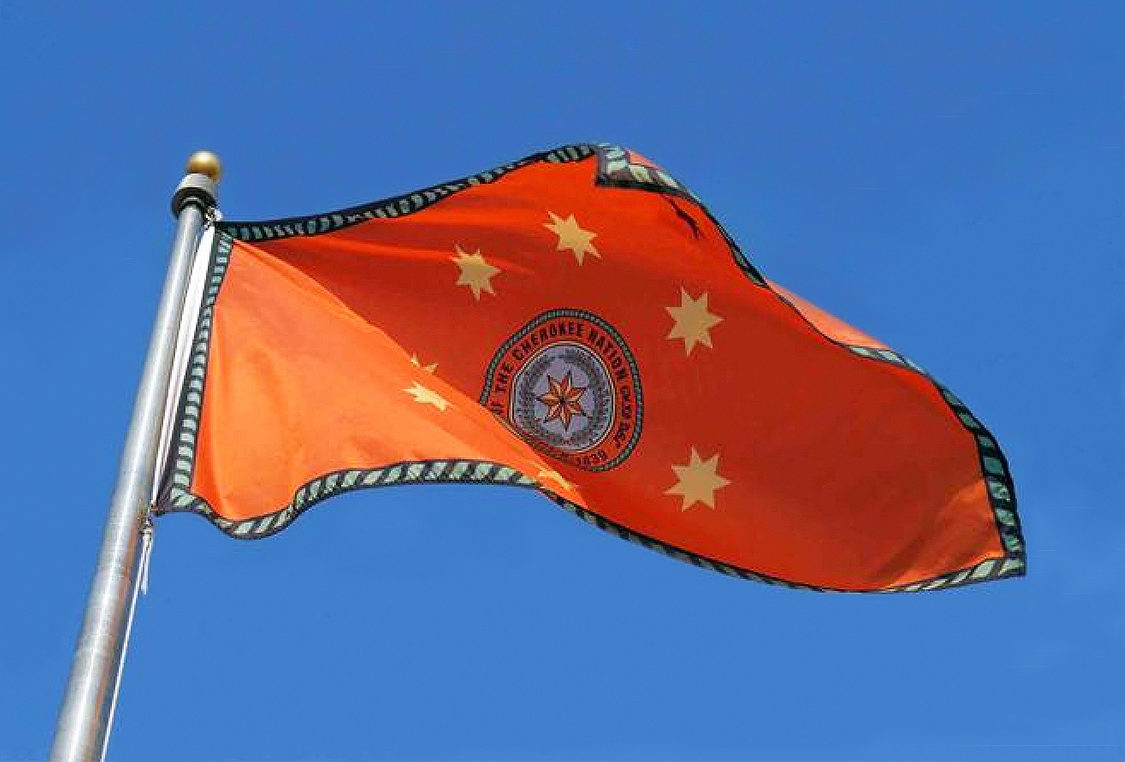
Cherokee Nation Flag REVR

TAHLEQUAH, OK – Cherokee Nation is investing $3 million in the Cherokee artist community as outlined in the Cherokee Artist Recovery Act (ARA) to help recover economically from the COVID-19 pandemic. Signed into law in October 2022, the act is the largest single investment in the Cherokee art community in history.

“Cherokee artists serve a vital role in the preservation and promotion of Cherokee culture,” said Cherokee Nation Principal Chief Hoskin, Jr. “Through their work, we are sharing our story with the world. But the pandemic had a significant impact on their ability to survive economically. The pandemic led to the cancellation of many art shows and festivals, which resulted in a loss of income and put them at risk financially. It is our responsibility to invest in their recovery so that they can continue to invest their time and energy to their art and the promotion of our culture.”

Introduced by Chief Hoskin during his 2022 State of the Nation Address at the 70th annual Cherokee National Holiday, the act boasts various key initiatives, beginning with the acquisition of $1.5 million of original artwork from Cherokee artists over the next two years through a public bid process.

The first public bid is open now for 2D and 3D work and is open to all Cherokee Nation artists, with allocations for both large-scale installations and general art to enhance tribal facilities.

Additional key initiatives include:

  • Cultural Classes – Cherokee artists can apply to be contracted teachers for cultural classes, performances and demonstrations hosted in the community with specific initiatives for youth classes and programming. Artists are paid for their time, supplies and travel.
  • Market Access – Marketing, travel and registration support for Cherokee artists participating in qualifying art shows and markets. 
  • Marketing Assistance – To assist with business development efforts, Cherokee Nation artists can apply for in-kind services supporting the production and printing of approved marketing materials.
  • Facility Enhancements – Rehabilitation or construction of Cherokee Nation facilities that increase access to necessary equipment, tools and space to create and promote Cherokee art.
  • Cherokee Artist Resource Collection – Development of a comprehensive database marketing Cherokee artists with links to individual portfolios and sales platforms.

“We couldn’t be more excited for this investment in the arts and have worked hard to ensure these funds are impactful for artists today and in the future,” said Cherokee Nation Deputy Chief Bryan Warner. “It is with admiration and appreciation that we created the ARA, and we’ve worked hard to develop programs that will benefit our artists, increase the visibility of Cherokee art within our communities, and showcase the talented work of Cherokee artists.”

Artists selling their art or participating in programs under the ARA must be citizens of the Cherokee Nation. Preference is given to Cherokee artists who have been designated as Cherokee National Treasures.

Come and Learn During Reservation Visits, by Travel Writers

Come and Learn During Reservation Visits, by Travel Writers

By Victor Block

The man scowled menacingly as he danced toward members of the crowd who watched him in fascination. Feathers adorned his headdress, and he clutched something that looked like a club in his right hand. Then, prancing just a few feet from the onlookers, he broke into a grin, took several more steps in time to the accompanying drumbeats and sashayed away.

The spectators viewing this colorful spectacle were reliving an ages-old American ritual, one that predates the arrival of the first European travelers to these shores. They were visitors at a Native American reservation watching a modern-day warrior re-create the moves — and moods — of his forebears.

Visits to Native American sanctuaries are a popular way to delve into a chapter of the nation’s past that is part tragic, part heroic and at all times full of fascination and surprises. For example, did you know that more than half of the crops grown on American farms today come from plants that were developed and domesticated by Native Americans? That many highways throughout the country were built over native trading routes? Or that the names of 24 states have Native American origins?

The U.S. government officially recognizes 574 tribes. While many of their members reside outside of designated reservations, those who remain on their ancestral lands live in ways resembling how their ancestors did, and some invite guests to learn about their history, lifestyle and culture.

In return, they ask only that those who come follow some basic rules of courtesy. Ask permission before taking photos or videos. Be respectful of their customs and practices. Remember that you are a guest, so act as you would like visitors to your home to behave.

The first step is to select a reservation to visit. Do you want to stay close to home or travel farther? A wide variety of settings, scenery and things to see and do await you.

Here’s a brief list that provides an introduction to a few of the available choices. Be sure to check in advance to make sure the destination you’d like to visit is open to guests at this time, what health or other restrictions might apply, and what advance booking requirements are necessary.

The Navajo Nation is the largest Native American reservation in the country, spanning an area in Arizona, New Mexico and Utah slightly bigger than West Virginia. It encompasses a number of natural attractions that include Monument Valley, Antelope Canyon and Horseshoe Bend and is known for its stunning red rock formations, ancient petroglyphs and dinosaur tracks. Guests can observe tribal dances, powwows and other ceremonies.

The Standing Rock Sioux Reservation also covers a big area along the border of North and South Dakota. It is home to a number of old burial mounds, rock art and the monument for which it’s named, a natural formation that resembles a mother and child. Chief Sitting Bull, the leader known for defeating Gen. George Custer at the Battle of Little Bighorn, is buried at Fort Yates.

Next door in Montana, the Blackfeet Reservation also is rich in natural beauty, including Glacier National Park, which lies within its borders. Several historic sites and cultural centers offer glimpses into aspects of native culture.

Between 1830 and 1850, the U.S. government forcibly displaced some 60,000 Native Americans from their ancestral homelands in the Southeast to areas west of the Mississippi. Descendants of some of those people who followed the “Trail of Tears” now live in Cherokee Nation.

They cling proudly to their long-established way of life, which is on display at a the reconstructed Diligwa Village (circa 1710), 19th century Rural Village and a moving and meaningful Trail of Tears exhibit.

A very different experience awaits at the Taos Pueblo, one of 19 such complexes dotted around northern New Mexico. That community of earthen structures is believed to be the oldest continuously inhabited place in the country, and life there goes on much as it has for some 2,000 years.

The pueblo’s residents continue to cling to the old ways in the original apartments. They make do without electricity or running water and bake bread in outdoor beehive-shaped ovens called hornos. Some dwellings double as shops selling handmade jewelry and paintings by native artists.

Elsewhere a very different culture is explored at the Big Cypress Reservation in Florida’s Everglades. Native American refugees from northern wars and the encroachment of European colonists migrated into Spanish Florida in the 18th century. Here they established a new culture called “Seminole,” adapted from Spanish for “wild” or “runaway.”

This story is told at a museum that holds more than 180,000 artifacts and archival items. Strolls over a mile-long boardwalk pass through a cypress wetland and lead to a Clan Pavilion, ceremonial grounds, hunting camp and Seminole Village, where artists demonstrate traditional arts and crafts.

If you’d like to explore this fascinating facet of American history, you can begin by checking out lists of tribes located around the country. Then contact those in which you have an interest to see if they welcome visitors. Two lists that might be helpful are available from the Bureau of Indian Affairs (www.bia.gov) and www.legendsofamerica.com/na-tribelist.

WHEN YOU GO

www.discovernavajo.com

www.standingrock.org

www.blackfeetnation.com

www.visitcherokee.com

www.taospueblo.com

www.semtribe.com

A Native American in full regalia dances at a powwow. Photo courtesy of RightFramePhotoVideos/Dreamstime.com.

A Native American in full regalia dances at a powwow. Photo courtesy of RightFramePhotoVideos/Dreamstime.com.
. Taos Pueblo in New Mexico has been the home of Pueblo people for some 2,000 years. Photo courtesy of Victor Block.

. Taos Pueblo in New Mexico has been the home of Pueblo people for some 2,000 years. Photo courtesy of Victor Block.
Residents of Taos Pueblo in New Mexico bake their bread in hornos just like their ancestors did. Photo courtesy of Victor Block.

Residents of Taos Pueblo in New Mexico bake their bread in hornos just like their ancestors did. Photo courtesy of Victor Block.

Victor Block is a freelance writer. To read features by other Creators Syndicate writers and cartoonists, visit the Creators Syndicate website at www.creators.com.

Photo credit: at Unsplash

City Life Org – “Grounded in Clay: The Spirit of Pueblo Pottery” on view at the Vilcek Foundation

City Life Org – “Grounded in Clay: The Spirit of Pueblo Pottery” on view at the Vilcek Foundation
image

Developed in partnership with the School for Advanced Research and the Metropolitan Museum of Art, the exhibition features more than 100 historic and contemporary works of Native American pottery

The Vilcek Foundation is pleased to present Grounded in Clay: The Spirit of Pueblo Pottery, with dual presentations at the foundation’s Manhattan headquarters and at the Metropolitan Museum of Art from July 2023 through June 2024. Developed in partnership with the School for Advanced Research (SAR), the exhibition includes more than 100 historic and contemporary works of Native American pottery originating in the Pueblo communities of what is now the southwestern United States.

The exhibition at the Vilcek Foundation opened July 13, 2023, and is on view through June 2, 2024, by appointment. Tours will be conducted by the foundation’s Native American Art Fellow, Povi Romero (Pojoaque, Cochiti, Santa Clara, and Ohkay Owingeh).

The works included in Grounded in Clay: The Spirit of Pueblo Pottery were selected by members of the Pueblo Pottery Collective from the Vilcek Collection and from the collections of the School for Advanced Research and the Indian Arts Research Center in Santa Fe, New Mexico. The collective, established specifically for the purpose of this exhibition, comprises more than 60 curators of diverse ages, backgrounds, and professions from more than 20 Native American communities, as well as non-Native museum professionals.

Curators wrote about the works they selected for the exhibition and its accompanying catalog. Grounded in Clay is enriched by their voices and the diversity of personal, historic, and cultural insights they bring to exhibition visitors’ understanding of these works. The curators’ essays range from recollections on the practices of gathering clay and preparing pigments to poetry and essays reflecting on the works and their meanings. Several curators wrote about the living traditions of pottery-making and today’s artists and makers whose work links the present and future of pottery-making to the rich and important history of pottery-making in Pueblo communities.

Felicia Garcia (Chumash) of the Santa Ynez Chumash Museum and Cultural Center and of Native American Art Magazine writes, “Exhibitions like this are really pushing the needle forward within the field and changing the way that Native art is presented within these spaces. Through this diverse collective of Native voices, we can see what is possible within these institutions when it comes to representing Native communities in a more honest, positive, and accurate way.”

As Grounded in Clay: The Spirit of Pueblo Pottery opens in New York, the Vilcek Foundation launches a digital experience, Pueblo Pottery: Stories in Clay, online. The foundation worked with Pentagram to develop the experience, which serves to highlight and expand on the curatorial insights that make Grounded in Clay so unique, and to bring these insights to a wider audience. Users can navigate three-dimensional views of selected works of pottery that were captured using photogrammetry with the support of foundation partners at Cortina Productions and Forum One.

Learn more about the exhibition: Grounded in Clay: The Spirit of Pueblo Pottery

Schedule a tour:https://vilcek.co/gic-tour

The Vilcek Foundation

The Vilcek Foundation raises awareness of immigrant contributions in the United States and fosters appreciation for the arts and sciences. The foundation was established in 2000 by Jan and Marica Vilcek, immigrants from the former Czechoslovakia. The mission of the foundation was inspired by the couple’s respective careers in biomedical science and art history. Since 2000, the foundation has awarded over $7 million in prizes to foreign-born individuals and has supported organizations with over $6 million in grants.

The Vilcek Foundation is a private operating foundation, a federally tax-exempt nonprofit organization under IRS Section 501(c)(3). To learn more, please visit vilcek.org.

SOURCE The Vilcek Foundation; PRNewswire

8 Ways to Experience Indigenous Heritage in One Canadian Province

8 Ways to Experience Indigenous Heritage in One Canadian Province

Take a stroll anywhere in Vancouver, British Columbia, and you instantly recognize that you are walking on the Indigenous lands. In the city’s historic Gastown district, art galleries are brimming with colorful Coastal Peoples’ art. The forest-like Stanley Park welcomes visitors with a series of totem poles, each featuring the nation of the artist who carved it. Downtown, the Museum of Anthropology (closed until late 2023 for earthquake-resistant upgrades) tells stories of people who lived there before European contact—and who still live in their traditional territories. 

It’s part of the effort to mend long-standing injustices that the country’s Indigenous populations have endured. Starting in the 1880s and lasting into the closing decades of the 20th century, the Canadian governmentbuilt a residential school system for Indigenous children, who were forcibly taken from their families and raised in boarding schools, often hundreds of miles away from their kin and ancestral territories. The policies, meant to assimilate Native children into Canadian society by destroying their cultural identities, devastated generations of people who lost their families, language, and food traditions.

Advised by the Truth and Reconciliation Commission of Canada, which made recommendations and provided a framework for reconciliation, the government issued a formal apology in 2008. The long journey to make things right includes informing non-Indigenous Canadians and visitors about the cultures and history of the people who lived here long before them. Two years later, the Winter Olympic Games in Vancouver opened that culture to the world. 

“That was the first time an international event showcased so much local Indigenous culture as part of the opening ceremonies,” Keith Henry, president and CEO of the Indigenous Tourism Association of Canada (ITAC), tells Mental Floss. “I really felt the 2010 Winter Olympics was substantial for Indigenous tourism in the country.”

Another reason, he adds, was the fact that many Canadians realized for the first time the tragedies Indigenous communities went through.

The Vancouver skyline at dusk.The Vancouver skyline at dusk.

The Vancouver skyline at dusk. / Benjamin Rondel/The Image Bank/Getty Images

As Canada’s third largest city, Vancouver has the country’s third largest urban Indigenous population—about 52,375 people, which includes Haida, Squamish, Coast Salish, and other nations. The province of British Columbia is home to about200,000 Indigenous people and 200 distinct First Nations whose ancestors have lived there for more than 10,000 years.

In 2014, local authorities designated Vancouver as the City of Reconciliation, including the official acknowledgement that it resides on the unceded territory of the Musqueam, Squamish, and Tsleil-Waututh peoples. The goal is to make Vancouver an all-inclusive place that celebrates the history and culture of all of its citizens, particularly those who have inhabited the lands since time immemorial. Indigenous-led tourism is driving that cultural resurgence.

“For Indigenous people it’s a really important way for cultural sustainability and revitalization,” Henry says. “It provides an actual economy for artists, language keepers, and language speakers. It provides a way for our cultural leaders to sustain a living locally … this a really important, top priority for many of our people.”

Here are eight ways to experience this cultural revival.

In Skwàchays Lodge, Canada’s first Indigenous hotel, each room is decorated according to the artistic traditions of the province’s First Nations. The combination hotel, gallery, and artist community hosts several artists-in-residence, so guests can visit the makers in their studios and watch them paint, carve, or design clothes—and buy their works at the hotel’s shop. Paying guests who stay at the lodge or purchase the artworks contribute directly to the artists’ housing and studio space and support Indigenous cultural authenticity.

“Once you’ve found a community of like-minded artists, it makes sense to maintain that community,” says Mike Alexander, Skwachàys painter-in-residence. Like many First Nations children, he was taken from his biological parents as a child and raised in a foster home. “It’s like a family, so to speak.”

The Coastal Peoples Fine Arts Gallery in GastownThe Coastal Peoples Fine Arts Gallery in Gastown

The Coastal Peoples Fine Arts Gallery in Gastown / Lina Zeldovich

Vancouver’s famed Gastown district, the site of the original village that grew into the city, is named after Captain John “Gassy Jack” Deighton, an English mariner and saloon keeper. (Gassy in this case refers to being talkative.) Today’s Gastown is a lovely maze of coffee shops, posh eateries, and numerous art galleries. Several are dedicated to Indigenous art, displaying vibrant carvings depicting characters from Indigenous mythology, handmade jewelry, and colorful ceramics.

No visitor should miss the Bill Reid Gallery, a space for contemporary Northwest Coast art with a permanent collection of Reid’s pieces. The acclaimed Haida artist was a master goldsmith, carver, sculptor, writer, broadcaster, and painter, whose creations are found in major museums, at the Canadian embassy in Washington, D.C., and on Canadian currency. The gallery displays and sells wood carvings, paintings, and jewelry, and hosts workshops and artists’ talks.

In Sechelt, a charming small town about two hours by car and car ferry outside Vancouver, Jessica Silvey is reviving the traditional skill of weaving with red cedar. For centuries, Indigenous cultures wove baskets, hats, and blankets from the bark of red cedar trees, using a special technique to pull small amounts off the trunk so that the tree could heal itself afterwards. The weavers boiled the strips to soften them. The process was nearly lost to history, but Indigenous women today are rekindling and reinterpreting the tradition. Silvey teaches the craft and sells handmade items at her Red Cedar Woman Studio.

Jessica Silvey in her Red Cedar Woman Studio.Jessica Silvey in her Red Cedar Woman Studio.

Jessica Silvey in her Red Cedar Woman Studio. / Lina Zeldovich

“There wasn’t anyone to teach me; it was all trial and error and reading books, and going to museums and galleries” to examine the artifacts woven by her ancestors, she says. The quest became a family affair. Her father told her how the bark was harvested, and together with her children, she kept experimenting and learning: “They were growing, and I was growing—in my weaving.”

Towering trees in Vancouver's Stanley Park.Towering trees in Vancouver's Stanley Park.

Towering trees in Vancouver’s Stanley Park. / Brian Farrell/Moment/Getty Images

The Talaysay Talking Trees Tour is led by an Indigenous cultural ambassador in the city’s Stanley Park, an oasis that occupies nearly 1000 acres of land on which the local nations have lived for centuries. “Stanley Park is one of our oldest village sites,” says guide Seraphine Lewis of the Haida and Squamish nations. People carved canoes from the large trees that grew in the forest, and built wooden longhouses—communal dwellings shared by multiple families. While these nations were mainly hunters and gatherers, they also planted “forest gardens” that included berry bushes and medicinal herbs. “Even today we sometimes chew the needles of our hemlock trees, not only because they taste good, but because they are high in vitamin C,” Lewis says. “You can eat it right off the branch or can sprinkle it on your fish like seasoning.”

Although not part of the tour, the park’s Brockton Point is worth visiting afterwards—it displays a collection of totem poles hand-carved by the Indigenous people of British Columbia’s coast, along with their stories and legends.

People walk amid the temperate rainforest on the Capilano Suspension Bridge.People walk amid the temperate rainforest on the Capilano Suspension Bridge.

People walk amid the temperate rainforest on the Capilano Suspension Bridge. / Alexandre Deslongchamps/Moment/Getty Images

Another space featuring totem poles and carving demonstrations is Capilano Suspension Bridge Park, Vancouver’s oldest yet very contemporary visitor attraction, famous for its 450-foot suspended footbridge rising 230 feet over the Capilano River. It also features a tree-top walk on several suspension bridges and an adrenaline-boosting cliff walk overlooking a beautiful temperate rainforest and river gorge. The park derives its name from the word Kia’palano, meaning “beautiful river” in the Squamish language.

Nicholas Sonntag Marine Education Centre in Gibsons, another small coastal town accessible by ferry, hosts varying exhibits of creatures that dwell in the local waters. The multicolored sea stars, anemones, fish, and rare glass sponges are displayed in the aquariums with their names written in English and Squamish. “The exhibitions are rotating,” curator Jenny Wright tells Mental Floss. “The animals are there for a few weeks after divers collect them—and then are released back to sea, unharmed.”

Salmon n' Bannock restaurant in Vancouver.Salmon n' Bannock restaurant in Vancouver.

Salmon n’ Bannock in Vancouver. / Lina Zeldovich

Chef Inez Cook owns and operates Salmon n’ Bannock Bistro, Vancouver’s only Indigenous restaurant. She serves culturally inspired dishes such as salmon three ways (ceviche, smoked, and salmon spread) as well as elk and bison, accompanied by a traditional side of wild rice infused with traditional herbs like sage. Meals also come with bannock—a type of rich and filling bread that Indigenous people adapted from European grains.

Cook was brought up by a European couple after being taken from her Nuxalk family as a baby in the Sixties Scoop, the government’s 1960s-era policy to force Indigenous children into foster homes. Years later, after a letter came notifying her that her biological mother passed away from a blood disease, she learned that she had a sister—and reconnected with her family and food traditions. She chronicles her journey in a children’s book, Sixties Scoop.

Aerial view of the coast near Sechelt, British Columbia.Aerial view of the coast near Sechelt, British Columbia.

The picturesque coast near Sechelt, British Columbia. / stockstudioX/E+/Getty Images

In the town of Sechelt, adventurous visitors can take a seaplane tour with Sunshine Coast Air and learn about the region’s coastal peoples. A thrilling 45-minute flight above the awe-inspiring coastline is narrated by Candace Campo, a tour guide and member of the Sechelt nation, who also created the original Talking Trees Tour of Stanley Park. As the plane glides above the whitewater rapids and the forest’s lush green canopy, Campo explains how the Sechelt people fished, foraged, and engaged in their own type of aquaculture.

The small but intriguing tems swiya Museum, which means “our world” in the Sechelt (also spelled Shíshálh) language, celebrates the story of the Sechelt Nation’s resilience. Among the collections of photographs and artifacts, its exhibit kw’enusitsht tems stutula (“face to face with our ancestors”) features a digital facial reconstruction of a Shíshálh chief’s family, based on bones and grave goods discovered in 2010 and estimated to be 4000 years old. The reconstruction took three years to complete and was a joint project of the Shíshálh Nation, Canadian Museum of History, and the University of Toronto.