Native

Native art and cultures celebrated at 31st annual Eiteljorg Indian Market and Festival

Native art and cultures celebrated at 31st annual Eiteljorg Indian Market and Festival
image

INDIANAPOLIS — The 31st annual Eiteljorg Museum Indian Market and Festival was celebrated June 24-25, with more than 4,000 guests enjoying performances and shopping for exquisite art from 122 Native artists from 60 cultures across the U.S. and Canada. This was one of the largest groups of artists to participate in Indian Market and Festival in a decade, cementing the market’s reputation nationally and regionally as one of the major cultural events in downtown Indianapolis each summer.

Artists showed and sold works from multiple disciplines, including jewelry, pottery, basketry, beadwork, carvings, paintings, weavings and cultural items. Visitors could engage with the artists at their booths inside the Eiteljorg Museum and on the grounds, purchase their art and enjoy music, dance and cultural performances during the weekend. The Indiana Corn Marketing Council and Indiana Soybean Alliance were the 2023 presenting sponsors of Indian Market and Festival.

“The 31st annual Eiteljorg Indian Market and Festival was an amazing celebration of Native arts and cultures, featuring some longtime artists whom experienced collectors consistently seek out each year, as well as some exciting young artists who represent the future of the market,” Eiteljorg President and CEO Kathryn Haigh said. “The Eiteljorg staff, volunteers and Board members went the extra mile to make the event a positive experience for artists as well as returning market-goers and first-time guests.”

Many artists entered their works into a juried competition. A panel of three experts in Native art judged the competition, through which $38,000 in cash prizes were awarded, along with ribbons. The museum presented awards for Best of Show and other categories June 24 during the Market Morning Breakfast, held under the Eiteljorg’s outdoor shade structure, The Sails, with artists and the market’s most loyal supporters as guests.

The annual Harrison Eiteljorg Purchase Award is presented for works the museum acquires during Indian Market to add to the its permanent collections. This year, two artists received the purchase award: Kelly Church (Gun Lake Tribe) for a basket titledWhen the Stars & Dawn Collide, and Aydrian James Day (Anishinaabe / Hochunk / Lakota) for a beadwork piece titled Aadizookewin the Storyteller. Aydrian is the first artist in the youth division to win an Eiteljorg purchase award.

This year, the artist whose work won the Margot L. Eccles Best of Show Award received a $7,500 cash prize: Glenda McKay (Ingalik-Athabascan), for a doll she created out of natural materials, including seal fur, mammoth ivory, whale baleen and stone, titled Let Me Tell You a Story. Supported by The Margot L. Eccles Arts & Culture Fund (a fund of the Central Indiana Community Foundation), the Best of Show award is named for the late Margot Eccles, a civic leader, philanthropist, art collector, Eiteljorg Board member and past chair of Indian Market and Festival, who brought passion, vision and generosity to the annual event.

Here are other annual awards presented at the 31st annual Eiteljorg Indian Market and Festival:

  • The Helen Cox Kersting Award is given to an artist whose work exemplifies the highest quality of execution and innovation within a traditional Native art medium. This year’s award, which carries a $1,000 prize, went to Raynard Scott (Diné [Navajo]) for a mixed-media piece, Dinetah-Poly.  
  • The Margot L. Eccles Youth Award encourages the next generation of young artists ages 17 and younger. Thirteen-year-old Aydrian James Day (Anishinaabe / Hochunk / Lakota) of Suttons Bay, Michigan, won for his beadwork piece, Aadizookewin the Storyteller, which also received one of the Harrison Eiteljorg Purchase Awards.

The Friends of Indian Market and Festival sponsored the awards, which included cash prizes for the best entry in each division, as well as for 1st, 2nd and 3rd place entries in multiple categories comprising a division. The 2023 Indian Market and Festival Best of Division award recipients in each category are:

  • Paintings, Drawings, Prints, Photography and Prints:  David Martin (Pokagon Potawatomi) of South Bend, Indiana, for his painting Clarence White, Pokagon Elder.
  • Sculpture: David Farnham (Onondaga) of Ohsweken, Ontario, Canada, for Owl Spirit.
  • Carvings and Dolls: Glenda McKay (Ingalik-Athabascan) of Gallipolis, Ohio, for Let Me Tell You a Story, the piece which also won the Best of Show Award.
  • Jewelry: Tonya June Rafael (Navajo) of Thoreau, New Mexico, for Purse with chain-linked strap.
  • Pottery: Crystal Hanna (Cherokee Nation) of Tulsa, Oklahoma, for Mississippian Bat Bowl.
  • Basketry: Kelly Church (Gun Lake Tribe) of Hopkins, Michigan, for When the Stars & Dawn Collide, which also won one of the Harrison Eiteljorg Purchase Awards.
  • Weavings and Textiles: Leah Mata Fragua (Northern Chumash) of Jemez Pueblo, New Mexico, for 1.6 Degrees.
  • Cultural Items: Glenda McKay (Ingalik-Athabascan) for Beauty from Within.
  • Beadwork: Salisha Old Bull (Salish / Crow) of Arlee, Montana, for a cradleboard titled The Matriarch.
  • Innovative Arts: Raynard Scott (Diné [Navajo]) of Sanders, Arizona, for Dinetah-Poly, which also won the Kersting award

The signature image for the 31st annual Indian Market and Festival depicts a quillwork and beadwork bag, created by artist Monica Jo Raphael (Anishinaabe / Sičáŋğu Lakota), titled Nuh-Mah-Nuh Daawina Akiin (Homelands of the Comanche People). The image appeared on commemorative Indian Market and Festival T-shirts and tote bags. Images of the winning artworks in all categories are at this link: 

https://tinyurl.com/yckus2mx.

This year was the final Indian Market and Festival during the tenure of Eiteljorg President and CEO Emeritus John Vanausdall, who retired June 30 after nearly 27 years at the museum. “To see Indian Market and Festival grow and improve each year has been remarkable, and we have cherished our friendships with the Native artists and performers,” Vanausdall said. “Indian Market and Festival has raised the profile of Native art across the region, and working with the staff, volunteers and Board in presenting the market each year is one of the highlights of my time at the museum.”

In addition to presenting sponsors the Indiana Corn Marketing Council and Indiana Soybean Alliance, the 31st annual Indian Market and Festival was sponsored by the Margot L. Eccles Arts and Culture Fund, a CICF fund; Raymond James and Associates in Indiana; OneAmerica; and the Penrod Society.    

Two longtime Indian Market and Festival artists who died in the past year were remembered during the Market Morning Breakfast on June 24. Shirley M. Brauker (Little River Band of Odawa), who died last Nov. 22 at age 72, was renowned for her Woodland-style carved-and-cut-out pottery technique. She participated in every market from 1993 to 2022. Benjamin Harjo Jr. (Seminole / Absentee Shawnee), who died May 20 at age 77, was a painter and printmaker. His artwork Coyote and the Hummer was the signature image for the 9th Indian Market and Festival in 2001.

First held in 1993, the Eiteljorg Indian Market and Festival has grown into one of the top Native art markets in the nation. Artists must be enrolled members of a federally or state-recognized tribe or members of a First Nation to participate in the market; and their entries must be in compliance with the Indian Arts and Crafts Act, handmade within the past two years, and available for purchase during the market.

Goodman once again hosting spirited Indigenous music and culture gathering

Goodman once again hosting spirited Indigenous music and culture gathering

CHICAGO (WBBM NEWSRADIO) – Local indigenous artists will be showcasing art, culture and music at the Goodman Theatre this weekend as part of a weekend-long celebration.

“Sweetest Season: A Gathering of Indigenous Creativity” started at the Goodman last year as a day of Indigenous spoken word and song.

“This year, it’s grown significantly and is now a gathering of indigenous creativity, so it’ll be a full weekend of performances, workshops, artist markets, and some panel discussions as well,” said Kim Vigue, executive director of the Mitchell Museum of the American Indian.

“We have everyone, from classically trained opera singers who sing in their languages to Blues guitarists, native Hawaiian performers, Chickasaw violinists,” Vigue added.

She said many of these performances are interwoven with contemporary styles.

“There’s this expectation that our performance, our musical styles have to be stuck in the past, and we want people to know that our songs, our culture, everything, evolves just like everything else,” Vigue said.

Listen to our new podcast Looped In: Chicago
Listen to WBBM Newsradio now on Audacy!
Sign up and follow WBBM Newsradio
Facebook | Twitter | Instagram

This Winemaker Is Transforming A Chateau In Southern France Into A Hub For Contemporary Art

This Winemaker Is Transforming A Chateau In Southern France Into A Hub For Contemporary Art

On a mission to raise the profile of wines from his native Languedoc region, French winemaker Gérard Bertrand has proven that his wines are able to compete with those from the prestigious wine regions of Bordeaux or Burgundy. Now the owner of 17 wineries and leader of Demeter-certified biodynamic vineyards in Europe explains how contemporary art is becoming a fundamental part of Château L’Hospitalet, his flagship estate in Narbonne on the Mediterranean Coast.

Why did you decide to bring together the best sommeliers across the globe and the world of art with the Som’Art Festival? How are wine and visual art the perfect match?

Sommeliers and artists have something in common: through their sensitivity, they share messages with their audiences. We think it is a good idea to create the circumstances of a meeting between sommeliers and artists and see them resonate together.

For this year’s summer exhibition at Château L’Hospitalet, why did you decide to pay tribute to Antoine de Saint Exupéry and The Little Prince through the artworks of Jean-Marc de Pas, Cyril Kongo and Cédric Fernandez? What values do you share with Saint Exupéry?

It is important to remember that the emblematic character of the Little Prince can reside everywhere. As Antoine de Saint Exupéry taught us, the Little Prince is above all an idea, a symbol of innocence, curiosity and the search for meaning that resides in each of us. Today, as we face major challenges such as climate change and preserving our environment, the ideals of The Little Prince resonate more than ever. We must all protect nature, preserve our planet and find a harmonious balance between man and his environment. We strive to embody values of respect, sustainability and harmony with nature. As the Little Prince takes care of his rose, we take care to preserve the vines and create wines of excellence using environmentally-friendly practices such as biodynamics. With Nicolas Delsalle, Delegate General of the Antoine de Saint Exupéry Youth Foundation, we came up with the idea of welcoming Jean-Marc de Pas, Cyril Kongo and Cédric Fernandez and their vision of the spirit of The Little Prince.

You initially started your foray into the visual art world at Château L’Hospitalet by exhibiting works by Rodin, Jean-Marie Périer, Jean-Pierre Rives and Hubert Garnier in 2011. How did you select Robert Combas and Louis Jammes as the artists to exhibit last year?

I wouldn’t talk about me selecting artists, but more about wonderful meetings between human beings. At Château L’Hospitalet, we make the link between all kinds of arts: culinary art, painting, sculpture, photography and music! We consider our art exhibition center as a place where artists can feel comfortable to exhibit their creations or to create something special. On this topic, I have had many conversations with my friend Olll, himself a recognized artist. He and his friend Claude Guénard, who exhibited in 2021 at Château L’Hospitalet, introduced me to Robert Combas. He felt at home at Château L’Hospitalet, I fell in love with his art and we came up with the idea of exhibiting all different kinds of his creations: not only paintings but also sculpture, furniture, video mapping and even a concert that he performed with his band at the grand opening. The sculptures of my friend Jean-Pierre Rives are in the vineyards of the estate, music and jazz are celebrated throughout the year through the annual Jazz Festival at L’Hospitalet, and photographs, paintings and pictures adorn the walls of the exhibition room. I am sensitive to all these expressions, each of which brings different emotions.

What are the criteria behind your choice of visual artists? Only French artists? Why is it important for you to support the French visual art scene and bring art into your vineyards? How does visual art enrich the lives of your customers?

I find a very interesting parallel with my approach to wine. There is an element of creation in the blending that is similar to artistic creation. Above all, I have always seen Château L’Hospitalet as a meeting point for all forms of art: wine, music, painting, sculpture, photography and the culinary arts. The Jazz Fridays, the Jazz Festival at L’Hospitalet, the artists’ workshops and the Art Space are all opportunities for encounters and emotions. I do not consider it my mission to promote artists, but I am proud to open the doors of the Château to all different publics who can access the exhibitions every day for free. Finally, our exhibition center is not dedicated to French artists. We could eventually work with foreign artists. Here again, it’s a matter of encounters, as I said before.

What are your future ambitions in terms of visual art at Château L’Hospitalet? Is your aim to become a center for contemporary art like Château La Coste or The Donum Estate?

My ambition at Château L’Hospitalet is to be the most iconic wine resort in the world, committed to excellence at every level, to bring our visitors the best experience possible in terms of hospitality, well-being, wine, food and the arts.

“Grounded in Clay: The Spirit of Pueblo Pottery” on view at the Vilcek Foundation

“Grounded in Clay: The Spirit of Pueblo Pottery” on view at the Vilcek Foundation

Developed in partnership with the School for Advanced Research and the Metropolitan Museum of Art, the exhibition features more than 100 historic and contemporary works of Native American pottery

NEW YORK, July 13, 2023 /PRNewswire/ — The Vilcek Foundation is pleased to present Grounded in Clay: The Spirit of Pueblo Pottery, with dual presentations at the foundation’s Manhattan headquarters and at the Metropolitan Museum of Art from July 2023 through June 2024. Developed in partnership with the School for Advanced Research (SAR), the exhibition includes more than 100 historic and contemporary works of Native American pottery originating in the Pueblo communities of what is now the southwestern United States.

The exhibition at the Vilcek Foundation opens July 13, 2023, and is on view through June 2, 2024, by appointment. Tours will be conducted by the foundation’s Native American Art Fellow, Povi Romero (Pojoaque, Cochiti, Santa Clara, and Ohkay Owingeh).

The works included in Grounded in Clay: The Spirit of Pueblo Pottery were selected by members of the Pueblo Pottery Collective from the Vilcek Collection and from the collections of the School for Advanced Research and the Indian Arts Research Center in Santa Fe, New Mexico. The collective, established specifically for the purpose of this exhibition, comprises more than 60 curators of diverse ages, backgrounds, and professions from more than 20 Native American communities, as well as non-Native museum professionals.

Curators wrote about the works they selected for the exhibition and its accompanying catalog. Grounded in Clay is enriched by their voices and the diversity of personal, historic, and cultural insights they bring to exhibition visitors’ understanding of these works. The curators’ essays range from recollections on the practices of gathering clay and preparing pigments to poetry and essays reflecting on the works and their meanings. Several curators wrote about the living traditions of pottery-making and today’s artists and makers whose work links the present and future of pottery-making to the rich and important history of pottery-making in Pueblo communities.

Felicia Garcia (Chumash) of the Santa Ynez Chumash Museum and Cultural Center and of Native American Art Magazine writes, “Exhibitions like this are really pushing the needle forward within the field and changing the way that Native art is presented within these spaces. Through this diverse collective of Native voices, we can see what is possible within these institutions when it comes to representing Native communities in a more honest, positive, and accurate way.”

As Grounded in Clay: The Spirit of Pueblo Pottery opens in New York, the Vilcek Foundation launches a digital experience, Pueblo Pottery: Stories in Clay, online. The foundation worked with Pentagram to develop the experience, which serves to highlight and expand on the curatorial insights that make Grounded in Clay so unique, and to bring these insights to a wider audience. Users can navigate three-dimensional views of selected works of pottery that were captured using photogrammetry with the support of foundation partners at Cortina Productions and Forum One.

Learn more about the exhibition: Grounded in Clay: The Spirit of Pueblo Pottery

Schedule a tour: https://vilcek.co/gic-tour

The Vilcek Foundation

The Vilcek Foundation raises awareness of immigrant contributions in the United States and fosters appreciation for the arts and sciences. The foundation was established in 2000 by Jan and Marica Vilcek, immigrants from the former Czechoslovakia. The mission of the foundation was inspired by the couple’s respective careers in biomedical science and art history. Since 2000, the foundation has awarded over $7 million in prizes to foreign-born individuals and has supported organizations with over $6 million in grants.

The Vilcek Foundation is a private operating foundation, a federally tax-exempt nonprofit organization under IRS Section 501(c)(3). To learn more, please visit vilcek.org.

SOURCE The Vilcek Foundation

Cherokee artist brings new perspective to Woody Guthrie’s best-known song

Cherokee artist brings new perspective to Woody Guthrie’s best-known song
image

Woody Guthrie’s best-known song is also one of his most-often misunderstood.

Guthrie’s “This Land is Your Land” — or, more specifically, one particular verse about endless skys and golden valleys and the song’s singalong chorus — is “often construed as unofficial national anthem,” said Cady Shaw, executive director of the Woody Guthrie Center.

“But until people come to the center and go through our exhibit, they often don’t realize that this was a questioning song,” she said. “Woody was very thoughtful in writing this song, because he was responding to (Irving Berlin’s) ‘God Bless America,’ and in many of the drafts of the lyrics, he’s asking the question, ‘Is this land made for you and me?’”

James Watts and Jimmie Tramel give an update on the “Killers of the Flower Moon” film, set to debut later this year. Plus, previews of upcoming Scene content.


That phrase from an early version of Guthrie’s song is being used in what Shaw hopes will be a series of images by Indigenous artists, whose interpretations of Guthrie’s work and beliefs will be used in a range of merchandise.

People are also reading…

The first of these images was officially unveiled this weekend as part of the Woody Guthrie Folk Festival in Okemah. Designed by Keli Gonzales, the image is a stylized depiction of a landscape divided in half — one side showing a pristine vision of mountains and rivers, the other containing images of industry, from railroad tracks to oil wells.

“I’m a Woody Guthrie fan, and I knew that the song wasn’t intended to be this happy-go-lucky kind of thing,” Gonzales said. “At the same time, while in the song Woody addresses groups of marginalized people, he did not necessarily include Indigenous people.

“Also, many native people believe that you can’t own the land, but that we are a part of the land — the land is like a relative, our support system,” she said. “That got me thinking about how preserving and protecting the land is such a primary concern for native people, and the image I came up with grew from that.”

Gonzales’ original plan was to have the phrase “Is This Land Made for You and Me?” appear in several Indigenous languages, including Cherokee, Muscogee (Creek), Osage and Caddo.

“I thought it have greater meaning if I could show that this as being a sentiment of more than one person, or one tribe,” she said. “But I wasn’t able to get that done in time.”

Gonzales also created another image, of a fist adorned with Native tattoo that also includes the “Is This Land Made for You and Me?” statement, which will be available as a sticker.

Shaw said the idea behind this project is a result of the Center’s being “very cognizant of where we are. The Tulsa Arts District stands on unceded territories of several tribes, and that is something we note in our land acknowledgement and in our community activities.

“As a member of a native community (Shaw is a member of the Choctaw Nation), I know that there are many native artists whose work touches on the themes Woody was addressing in this song, and I thought it would be good for us to provide those artists with a way to offer a different perspective.”

Gonzales, who lives in the Tahlequah area, said she learned at an early age that art was both a way to express and communicate ideas, as well as a way to forge a connection with her culture.

“I’ve been able to meet with Cherokee people from all over the country through my art, and that makes me very happy,” she said. “Still, it is a little weird to realize that something I’ve created in now going to be displayed and sold at a place as internationally known as the Woody Guthrie Center. But it’s a good kind of weird.”

#lee-rev-content { margin:0 -5px; }
#lee-rev-content h3 {
font-family: inherit!important;
font-weight: 700!important;
border-left: 8px solid var(–lee-blox-link-color);
text-indent: 7px;
font-size: 24px!important;
line-height: 24px;
}
#lee-rev-content .rc-provider {
font-family: inherit!important;
}
#lee-rev-content h4 {
line-height: 24px!important;
font-family: “serif-ds”,Times,”Times New Roman”,serif!important;
margin-top: 10px!important;
}
@media (max-width: 991px) {
#lee-rev-content h3 {
font-size: 18px!important;
line-height: 18px;
}
}

#pu-email-form-breaking-email-article {
clear: both;

background-color: #fff;

color: #222;

background-position: bottom;
background-repeat: no-repeat;
padding: 15px 0 20px;
margin-bottom: 40px;
border-top: 4px solid rgba(0,0,0,.8);
border-bottom: 1px solid rgba(0,0,0,.2);

display: none;

}
#pu-email-form-breaking-email-article,
#pu-email-form-breaking-email-article p {
font-family: -apple-system, BlinkMacSystemFont, “Segoe UI”, Helvetica, Arial, sans-serif, “Apple Color Emoji”, “Segoe UI Emoji”, “Segoe UI Symbol”;
}
#pu-email-form-breaking-email-article h2 {
font-size: 24px;
margin: 15px 0 5px 0;
font-family: “serif-ds”, Times, “Times New Roman”, serif;
}
#pu-email-form-breaking-email-article .lead {
margin-bottom: 5px;
}
#pu-email-form-breaking-email-article .email-desc {
font-size: 16px;
line-height: 20px;
margin-bottom: 5px;
opacity: 0.7;
}
#pu-email-form-breaking-email-article form {
padding: 10px 30px 5px 30px;
}
#pu-email-form-breaking-email-article .disclaimer {
opacity: 0.5;
margin-bottom: 0;
line-height: 100%;
}
#pu-email-form-breaking-email-article .disclaimer a {
color: #222;
text-decoration: underline;
}
#pu-email-form-breaking-email-article .email-hammer {

border-bottom: 3px solid #222;

opacity: .5;
display: inline-block;
padding: 0 10px 5px 10px;
margin-bottom: -5px;
font-size: 16px;
}
@media (max-width: 991px) {
#pu-email-form-breaking-email-article form {
padding: 10px 0 5px 0;
}
}
.grecaptcha-badge { visibility: hidden; }

St. Louis Art Exhibit Counterpublic Closes This Weekend

St. Louis Art Exhibit Counterpublic Closes This Weekend

With articles celebrating its arrival in the New York Times, Forbes and other national outlets, Counterpublic definitely brought St. Louis’ art scene to new heights of awareness.

The triannual public art installation opened April 15 and closes this weekend on Saturday, July 15. This year’s iteration focused on a stretch of Jefferson Avenue running from Sugarloaf Mound at Ohio Avenue to the Griot Museum of Black History, where Jefferson crosses St. Louis Avenue.

It included 30 commissioned art installations and four permanent sculptures.

“The theme [is] about looking out to the past for a lens of repair,” James McAnally, executive and artistic director and part of the curatorial team, told the RFT in April. He explained that the art was created in spaces with histories that illustrate native displacement, Black displacement, inequality and segregation.

“[By] inviting in artists to work in the spaces, we wanted to not just focus on the past but also what could be done in the present to repair what has happened here,” he added.

The closing weekend of Counterpublic also includes a program that celebrates and further explores the exhibition’s intention and impact. Events include:

Thursday, July 13
Jordan Weber Peace Park Groundbreaking
Peace Park from 5 to 7 p.m.

Friday, July 14

Raven Chacon Drum Grid Performance
Benton Park at 5 p.m.

New Red Order and Cahokia Intertribal Noise Symposium Presents: The Gathering (Night one)
Greenfinch Theater and Dive (2525 Washington Avenue) from 6 p.m. to midnight

Saturday, July 15
David Adjaye Asaase III Unveiling + Block Party
The Griot Museum of Black History (2505 St. Louis Avenue), 11 a.m.

Laura Ortman Performance
Pulitzer Arts Foundation (3716 Washington Avenue), 3 p.m.

New Red Order and Cahokia Intertribal Noise Symposium Presents: The Gathering (Night two)
Greenfinch Theater and Dive (2525 South Jefferson Avenue) from 6 p.m. to midnight

Sunday, July 16
Water Acknowledgement with Anita Fields and Performance by The Wah.zha.zhe Puppet Theatre
Sugarloaf Mound (4420 Ohio Avenue), 10 to 11:30am

For more details and a description of events, visit counterpublic.org/programs-2023.

Email the author at [email protected]

Subscribe to Riverfront Times newsletters.

Follow us: Apple News | Google News | NewsBreak | Reddit | Instagram | Facebook | Twitter | Or sign up for our RSS Feed

Gallipolis Native artist takes home Best of Show at Indianapolis festival

Gallipolis Native artist takes home Best of Show at Indianapolis festival

INDIANAPOLIS (WV News) — An artist from Gallipolis, Ohio, took home a Best of Show award from the 31st annual Eiteljorg Museum Indian Market and Festival held recently in Indianapolis.


Winner

Glenda McKay’s “Let Me Tell You a Story” piece won Margaret L. Eccles Best of Show at the 31st annual Eiteljorg Museum Indian Market and Festival. McKay also won two Best of Division awards.


The festival included art from 122 Native artists from 60 cultures across the United States and Canada, and was attended by more than 4,000 guests.


Beauty From Within

Glenda McKay’s piece “Beauty From Within” won a Best of Division Award at the Eiteljorg Indian Market and Festival.


New McEachern Art Center director found passion for art in Macon

New McEachern Art Center director found passion for art in Macon
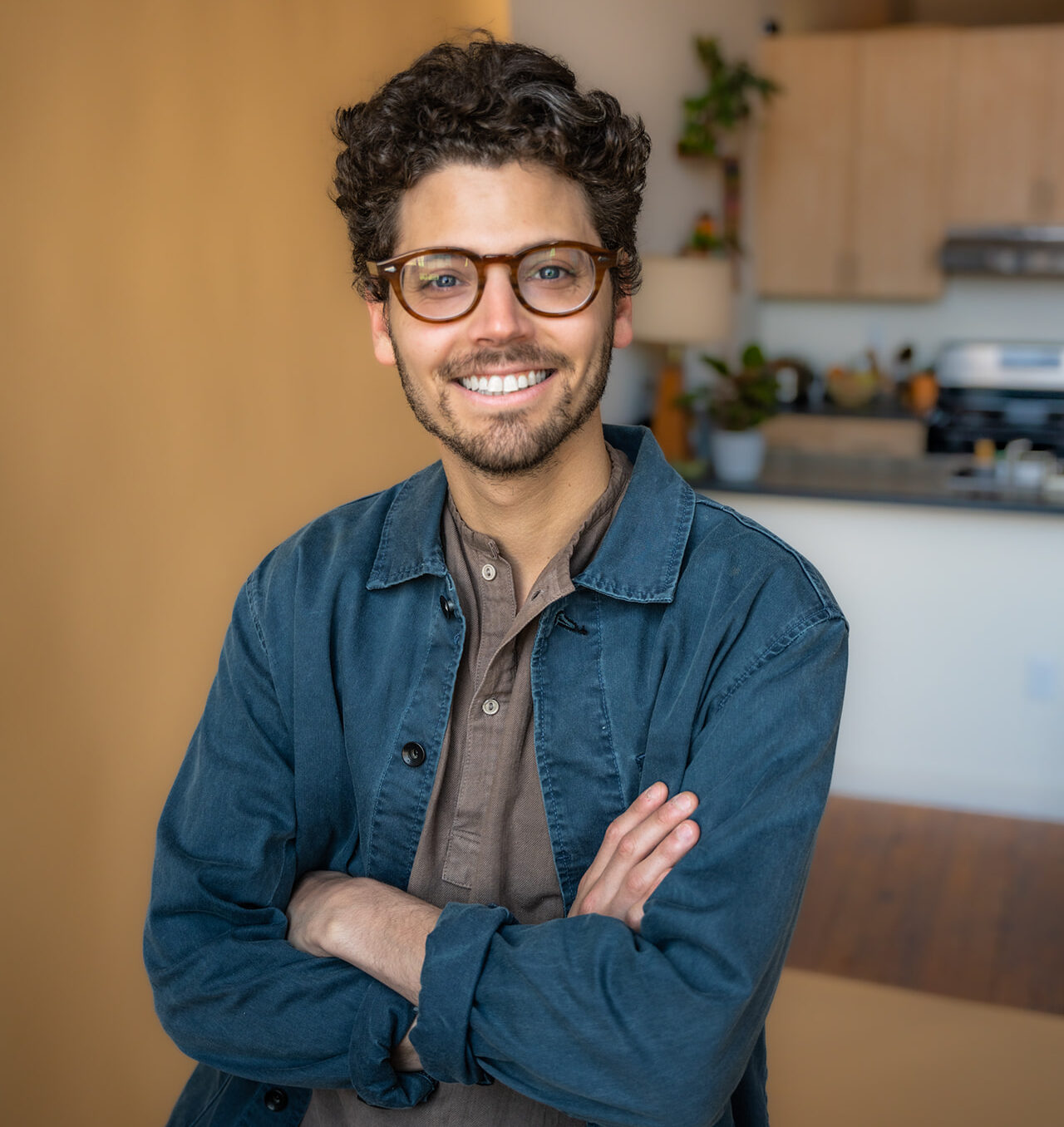
portrait of johnny cohen with his arms crossed
Johnny Cohen, McEachern Art Center Director. Photo courtesy Johnny Cohen

Johnny Cohen has been named the second director of Mercer University‘s McEachern Art Center (The MAC). A Macon native, Cohen earned his undergraduate degree from the University of Georgia and received his Master of Fine Arts in sculpture from Savannah College of Art and Design. His work reflects on consumer and shopping culture using colorful 3D displays. The Den recently sat down with Cohen to discuss his artistic philosophy, his plans for the MAC and his favorite parts of the local landscape.

How did you come to your career as an artist and curator?

From a very young age, I always knew that I had to do something creative, whether it be aspirations of becoming the next Andy Warhol or being cast one day as a tap dancer on Broadway. As a Maconite, I was heavily involved in the art community as both a fine artist and performer in local theater organizations. After graduating from the University of Georgia in 2018 with a degree in advertising, I landed a job as a visual display artist dressing windows and merchandising product on the retail sales floor. I was transforming a space to tell a story, whether it be a particular season or highlighting a specific store product. This experience laid the foundation toward my passion for installation and spatial design. I started to understand the impact of how a well-designed space can truly move people. During my MFA studies, I installed and curated my first gallery show with my body of work. 

My work revolves around the feeling of nostalgia, pulling elements of colors and shapes into a space where people can reflect on their own feelings from the past. I knew that exhibitions aren’t mere works sitting on a white wall highlighting an artist’s technique and process. Instead, curation is an act of transformation. It’s about narrating the story of an artist through an immersive, visually powerful environment.  

What types of artists inspire you? Do you have any mentors who have shaped your point of view?

My biggest inspirations are artists who explore themes of our consumerism and question the meaning of art in their work. I love how Andy Warhol takes images of our culture such as the Campbell’s soup can and identifies these icons as fine art through his own method of silk screen printing.

I also appreciate Marcel Duchamp and Jessica Stockholder, who take objects of everyday life as their primary materials. A bike wheel and a plastic laundry basket have just as much potential to be a piece of fine art as a famous painting on display at the Met. My biggest mentor to this day is Krista Grecco, an Atlanta-based sculptor, former professor and colleague. She taught me how to brand myself, connect with creatives and find a place in an art community. 

What brought you to Mercer? As a sculptor, do you have a favorite feature on campus or in the Macon area yet?

After working as a foundations professor at Savannah College of Art and Design, I had the urge to invest more time in curation. I saw this new opportunity at Mercer as a place for me to continue growing as an art educator. Since I was a kid, I have always loved the vast amounts of public art in downtown Macon and enjoyed going through the exhibitions at the Museum of Arts and Sciences. To this day, my favorite sculpture is the “Gesturing Woman” sculpture by Viola Frey in the permanent collection at the Museum of Arts and Sciences. The colors and cartoon-like qualities bring back those memories of me loving art as a kid in Macon. 

You grew up in Macon. What makes you want to return now?

Macon is where my roots are. If not for Macon, I would have never discovered my passion for art and experienced all the moments that made me the person who I am today. Macon is evolving, and I want to be a part of that growth that the city is currently experiencing. The community is like a family to me, and I want to be give back to all the wonderful things this community has given to me the last 27 years. 

Are there any exhibitions coming up this year that you’re excited to tell our audience about?

I am excited to share some wonderful exhibitions coming to the MAC for the 2023-2024 calendar. We will be hosting a SCAD grad, Gretchen Wagner, in the fall. She is a screen printer that heavily focuses on color relationships. We will also host two Muscogee artists during the Fire Starter Festival in September as the Ocmulgee Mounds are in the works of becoming Georgia’s first national park. In the spring of 2024, we are excited to launch our very first Fluxus exhibit and festival, including works by renowned artist John Cage.

What parts of the contemporary art scene most interest you right now?

I am interested in nontraditional forms of art, including new forms of media since the pandemic. I am interested in following these trends as we continue to evolve in the arts. I also value collaboration. Artists are continuing to work together to promote social causes and gain a voice in the community.

What’s a fun fact about your interests outside of work?

Finn and Fitz. Photo courtesy Johnny Cohen

Outside of work, I am continuing to cultivate my own practice as an artist. I have ventured into making graphic collages and have dipped my toes into furniture making. I also enjoy spending time with my two furry pals, Finn and Fitz. Finn is my minature goldendoodle and Fitz is my cat. They are truly the ones who get me going the moment I wake up in the morning, and I am excited to have Finn as the new studio pup at the MAC. 

Bucks County History: Native Artist Known as One of the Country’s Foremost Portraitists

Bucks County History: Native Artist Known as One of the Country’s Foremost Portraitists

Image via Wikipedia (Public Domain).

The artist painted several famous works, including the official portrait of Thomas Jefferson.

A painter from Bucks County has long been considered one of the most important artists in American history, creating several famous pieces. Staff writers at the Pennsylvania Center for the Book wrote about the artist.

Rembrandt Peale was born at the VanArtsdalen farm, located around the area of Richboro, in early 1778. The son of famed painter Charles Willson Peale, he was named after the Dutch painter Rembrandt Harmenszoon van Rijn.

His three brothers, Raphaelle, Rubens, and Titian, were also similarly named after legendary painters and taught in the craft by their father.

During his career, Rembrandt became known for his portraits of influential American figures, some of whom include DeWitt Clinton, Dr. David Hosack, Vice President John C. Calhoun, and Founding Fathers and Presidents George Washington and Thomas Jefferson, the latter of whom’s depiction by Peale is considered his official portrait.

Peale passed away in his house at Vine Street in Philadelphia in late 1860. The paintings he produced, along with the large collection of work by his father and siblings, has cemented the Peale family as artistic royalty in the United States and the world.

Read more about Peale and his works at the Pennsylvania Center for the Book.

_____

[embedded content]