Native

New collection focuses on Indigenous perspectives on the American Southwest

New collection focuses on Indigenous perspectives on the American Southwest

Tony Abeyta, Citadel. Oil on linen. 40 x 60in.. The Lunder Collection, 2021. Submitted photo

WATERVILLE — More than three years in the making, and with the support of a wide community of collaborators, Colby College Museum of Art presents “Painted: Our Bodies, Hearts, and Village” (May 19, 2023–July 28, 2024), a collection installation centering Pueblo perspectives on the context that informed the social and cultural landscape of Taos from 1915 to 1927, when the Taos Society of Artists, a group of Anglo-American painters, was active. It also sheds light on issues that affect Native people today, in the Southwest and beyond.

The exhibition features paintings by TSA artists from the Lunder Collection in dialogue with works by twentieth- and twenty-first-century Native American artists, including new acquisitions, to illuminate the varied, complex, and rich art histories of the U.S. Southwest, in particular the city of Taos and Taos Pueblo, New Mexico. This collection installation also will include writing, sound, and artworks from the featured artists and other Native culture bearers as part of new research initiated by the museum’s Lunder Institute for American Art, which was established in 2017.

In keeping with its long-term commitment to furthering collaborative methodologies, the Colby Museum is integrating and centering input from Native community partners throughout the project. The reinstallation’s co-curators are 2021–22 Lunder Institute research fellows Juan Lucero (Isleta Pueblo) and Jill Ahlberg Yohe, who worked in collaboration with Siera Hyte, the Colby Museum’s assistant curator of modern and contemporary art. Virgil Ortiz (Cochiti Pueblo) is the project’s exhibition designer. A curatorial advisory council made up of Pueblo and Wabanaki artists and stakeholders provided essential guidance on the installation and its interpretative elements. The council members are Ron Martinez Looking Elk (Isleta Pueblo/Taos Pueblo), Patricia Michaels (Taos Pueblo), Theresa Secord (Penobscot), Sarah Sockbeson (Penobscot), and Dr. Joseph Suina (Cochiti Pueblo). Through this project, and specifically through the advisory council, the museum seeks to facilitate opportunities for intertribal dialogue between Wabanaki and Pueblo communities.

“The Lunder Collection’s great strengths in art of the southwest United States, and especially paintings by Taos Society of Art artists, offered an unparalleled opportunity to open a new path in American art history,” said Jacqueline Terrassa, Carolyn Muzzy Director of the Colby Museum, according to a news release from the museum.

“We were fortunate to partner with extraordinary artists, culture bearers, and experts of many backgrounds to inform this project. Painted: Our Bodies, Hearts and Village moves away from singular interpretations about representation and creativity related to the region and the Indigenous people for whom those lands are home, and instead opens multifaceted avenues for exploration, dialogue, and reflection about American histories and experiences.”

For centuries, Pueblo makers have innovated with clay and other materials. This creative inheritance has been passed down through the generations in an unbroken artistic lineage. In the late nineteenth and early twentieth centuries, Pueblo artists made revolutionary advances in ceramics and developed new techniques that connected Indigenous painting traditions, symbols, and forms with Modernist painting. During this same time period, the construction of the Santa Fe Railroad brought Anglo-American settlers to the Southwest in greater numbers. Taos Pueblo, long a vibrant center for intertribal trade, quickly attracted the interest of these newly arrived settlers. Drawn to the region in pursuit of what they described as uniquely American subjects—distinct from European artistic traditions—the founding members of the TSA traveled to Pueblo homelands and encountered this thriving artistic world with a rich tradition of commerce and exchange. The TSA artists painted their impressions of Taos Pueblo and Pueblo people, their works reflecting a complex network of relationships between the artists and their chosen subject matter.

Advertisement

During their lifetimes, the TSA garnered varying degrees of professional success and scholarly attention, though they were largely overlooked by most museums and art historians outside of the US Southwest. American art institutions gradually incorporated their work into presentations of American art history that promoted a generalized and idealized conception of Native America. More recently, scholars studying the TSA have focused primarily on the artists themselves, sometimes for broader art historical and cultural critiques of romanticism and the Southwest as a place to fortify ideas of a then growing nation state.

Painted: Our Bodies, Hearts, and Village includes these critiques as an important element for understanding how the TSA’s output has traditionally been exhibited, but goes beyond that framework, positioning Taos people as empowered agents within their own lives and own portraits. By centering Pueblo perspectives and worldviews, the exhibition enfolds the Lunder Collection’s TSA paintings into a much longer story about Taos Pueblo. Though their representations came from an outside perspective, the TSA paintings illustrate the central role of Taos Pueblo and its people in trade relations—economic, diplomatic, artistic—within the United States. The TSA paintings are one entry point into the longstanding artistic exchanges that happened in the history of Taos, and were only possible through Taos Pueblo being the hub of exchange for millennia.

“This exhibit highlights our ability as Pueblo people to interpret our own histories, cultures, and art practice. It serves as an avenue to reinterpret and decolonize the identities created by non-Native settlers and establish presence for Pueblo ecologies, which have always been contemporary,” said Juan Lucero, exhibition co-curator.

Painted: Our Bodies, Hearts, and Village emphasizes the sovereignty of Pueblo peoples and the land they steward, inviting viewers to consider how art produced in the US Southwest reflects, or diverges from, the lived experiences of Native community members. The exhibition and its associated programs ask: What can be learned about self-representation, intertribal exchange, settler colonialism, and the causes of climate change by foregrounding Pueblo and other Native voices? And, relatedly, what enduring myths about Native people and Westward expansion might be unlearned through this multivocal approach?

“With this reinstallation, the museum asks visitors to reconsider what they may have previously learned about the US Southwest and the Taos Society of Artists. The project reorients visitors to these subjects through the lens of Pueblo and other Native artists and contributors, presenting an expansive narrative that foregrounds Native self-representation in the telling of American and Native American art histories,” said Siera Hyte, assistant curator of modern and contemporary art at the Colby Museum.

Artists represented in the project include Margeaux Abeyta, Mozart Abeyta, Tony Abeyta, Oscar Berninghaus, Ernest Blumenschein, Gerald Cassidy, Pop Chalee, Berdina Charley, E. Irving Couse, Herbert Dunton, Nicolai Fechin, Jody Naranjo Folwell, Susan Folwell, Jason Garcia, Jessa Rae Growing Thunder, Marsden Hartley, Ernest Martin Hennings, Seferina Herrera, Victor Higgins, Ahkima Honyumptewa, William Robinson Leigh, Albert Looking Elk, John Marin, Patricia Michaels, Robert Mirabal, Thomas Moran, Dan Namingha, Michael Namingha, Madeline Naranjo, Clara Neptune Keezer, Theresa Neptune Gardner, Molly Neptune Parker, Virgil Ortiz, Bert Geer Phillips, Juan Pino, Cara Romero, Diego Romero, Ken Romero, Yellowbird Samora, Mary Sanipass, Joseph Sharp, Sarah Sockbeson, Roxanne Swentzell, Awa Tsireh, and Walter Ufer.

Advertisement

“This path breaking reinstallation serves as a guidepost for the future of American and Native American art curation,” said exhibition co-curator Jill Ahlberg Yohe.

“By centering Pueblo perspectives in all phases of this project, the museum provides a new direction for the study and exhibition of the Taos Society of Artists. This approach offers visitors, and especially Colby students, a much richer, redemptive art historical practice.”

As part of the Colby Museum’s robust schedule of exhibition and projects, Painted: Our Bodies, Hearts, and Village invites visitors to explore the complex relationships between art history, art making, and the American experience. Advancing a notion of American art as pluralistic and open, this project builds upon a sustained effort to use the museum’s collection to present new narratives and to show how art, both historical and contemporary, can illuminate some of today’s most vital questions.

Painted: Our Bodies, Hearts, and Village is made possible with support from the Terra Foundation for American Art, Colby Museum endowment funds provided by the Lunder Foundation, and the Mellon Foundation, which supported the 2021–22 Lunder Institute Research Fellows Program.

The installation will be accompanied by a series of public programs, including a symposium in fall 2023. A publication documenting the installation and including additional reflections, interviews, and research is also planned.

For more information, visit museum.colby.edu.

Check out other upcoming entertainment events!

Comments are not available on this story.

filed under:

Jaune Quick-to-See Smith, Whitney Museum review — Native American artist with a hammer of outrage

Jaune Quick-to-See Smith, Whitney Museum review — Native American artist with a hammer of outrage

Jaune Quick-to-See Smith doesn’t drop hints or murmur suggestions in her massive two-storey retrospective at the Whitney in New York: she wallops viewers with poetic fury, pummels with politics and swings a hammer of outrage. A citizen of the Confederated Salish and Kootenai Nation (which is based in Montana), Smith forges her paintings, collages, drawings and sculptures out of Indigenous themes, fused with the legacies of art history’s white men: Paul Klee, Jasper Johns and Robert Rauschenberg. The result is work that’s lively enough to seduce the eye and sturdy enough to carry a load of environmentalist and anti-capitalist convictions. Subtle, it’s not.

Effective political art often has little use for nuance, and Smith brings up ecological disaster and genocide with single-minded gusto. Salish motifs, such as canoes, buffalo and various traditional garments, act as bait for wordy polemics. “The icon is a ploy in order to pull a viewer into closer range where the brrump-pah-pah happens,” she’s said. “What you see is not what you get.”

In one 12-foot-long collage, the outline of a canoe plies a river of newspaper clippings, flyers and posters. The topic is logging and the disruption of what one sign describes as “the country’s biggest wildlife refuge and calving ground for 150,000 migrating caribou”. An antlered herd marches across the upper part of the frame.

The artist was born in 1940 on the Flathead Reservation in Montana and had a rough childhood. Her mother gave birth at 14 and abandoned the family when Smith was still a little girl. Her father, a much older itinerant horse trader, forced her to work — and to hide her passion for reading by climbing a tree. “If somebody caught me with ‘my nose in a book’, it was a bad thing,” she has said.

She faced constant discouragement: “Indians don’t go to college,” a high-school counsellor informed her. “Women cannot be artists,” a teacher at Olympic College pronounced, even as he acknowledged that she was better than any of the men. Later, she was advised not to apply to the master of fine arts programme at the University of New Mexico. “They said, ‘Indians go to art ed, you can’t do fine art because Indians do crafts.’” She ignored all that advice.

She did, however, take her cues from a different kind of elder: Klee. In a series of semi-abstract landscapes from the late 1970s, rendered in pastel and pencil on paper, she evokes entire landscapes in a few spare strokes of line and dabs of colour. Arrows suggest movement. A dotted path leads through triangles that resemble both tepees and mountains. A tangle of lines resolves into a horse, and a tree emerges out of smudges of green and orange.

Smith renders animals, plants, architecture and topography in a set of idiosyncratic symbols that read as simultaneously personal and universal. The Whitney owns three of these luminous works, which weave together modernist techniques, indigenous traditions, maps and ancient petroglyphs.

A canvas of the 50 states of the US painted rough brush strokes in shades of reds, yellows and greens
‘Indian Map’ (1992) © Jaune Quick-to-See Smith

Unfortunately, the current exhibition is too vast to pick out the greatest hits of the ensuing five decades. Instead, its inclusiveness accentuates the repetitive habits of a long career, during which subtlety gave way to proclamation.

Somewhere along the way, she drifted from Klee’s sphere of influence into Rauschenberg’s and Johns’. At first glance (and maybe even at second), her penchant for newsprint collages, flags and maps makes her work look derivative. But there’s a fine, almost undetectable line between copying and critique, an ambiguity that curator Laura Phipps and several catalogue essayists play up.

“Sovereign Nations” (2002) epitomises her approach. She layers three women’s cut-wing dresses, on top of another, in ever-smaller versions, suggesting sequential generations of women. Each is decorated in a pattern of stars, and the composition recalls Johns’ “Three Flags” (1958) hanging two floors up in the Whitney’s permanent collection. Johns’ intentions remain elusive: did he use the flag patriotically or ironically, as a wry comment on jingoistic imperialism or a full-throated embrace of his country’s freedoms? Ambivalence is the point.

Smith, on the other hand, leaves no doubt about her agenda. She encircles the dresses with collaged copies of the 1855 Treaty of Hellgate, which the US government signed, ratified and repeatedly violated. The seal of the Confederated Salish and Kootenai Tribes hangs like a breastplate on the child-sized topmost garment, a reference to the leadership of Native women.

If Smith turned to Johns for help in making her points, it’s because she admired his knack for speaking to a broad audience through a Pop vernacular. The process of retooling his style into a vehicle for her own ideas constitutes a “direct postmodern appropriation and ironic repurposing of his subject matter”, writes the art historian Richard Hill. In Smith’s art, he adds, “we are directly challenged to read the signifiers from an Indigenous perspective.” In other words, don’t bother trying to interpret her meaning because she’ll just tell you what it is.

An abstract painting in red and blue with printed words pasted on the top of the canvas
‘The Vanishing American’ (1994) © Jaune Quick-to-See Smith

It would be hard to miss the message of “The Speaker” (2015). A woman in a leotard and a feline mask stands on a mountain peak, large feet planted on the animate rock. She brandishes a cruciform stick of the kind, Smith says, that women use to dig bitterroot and which doubles as a sceptre of power. Language pours from the woman’s mouth in the form of a snake, like a word bubble in a comic book. The serpent represents the courage to sound off, the ferocity that an Indigenous woman artist needs to declare her presence in an unfriendly world.

The symmetry, symbolic language and the figure’s pose, parting waves of colour, all imply a one-to-one relationship between gesture and belief. In the end, the exhibition’s doggedly instructional pile-up comes to feel heavy-handed and tiresome rather than urgent. It makes me wish she would insist a little less on the brrump-pah-pah.

To August 13, whitney.org

Find out about our latest stories first — follow @ftweekend on Twitter

LG Electronics and Six N. Five Unveil “Among the Sky”: A Fusion of Digital Art and Advanced Technology

LG Electronics and Six N. Five Unveil “Among the Sky”: A Fusion of Digital Art and Advanced Technology
LG OLED and Lifestyle Screens, is being launched and exhibited during Frieze New York during a private preview held at The Shed May 15-16, and during the fair from May 17-21. / Courtesy of LG Electronics

 LG Electronics (LG) has announced a new collaboration with Six N. Five, an acclaimed Argentinian designer and digital artist based in Barcelona. 

Over the past decade, Six N. Five, led by Ezequiel Pini, has been exploring the use of 3D tools and software to create stunning, contemporary, and elegant imaginary worlds. 

This collaboration aims to showcase the fusion of digital art and advanced technology through a collaborative exhibition called “Among the Sky.”

The exhibition features six specially commissioned artworks, which will be presented on large-scale format LG OLED and Lifestyle Screens. The showcase premiered during Frieze New York at a private preview held at The Shed on May 15-16, followed by public exhibition from May 17-21.

LG’s collaboration with Six N. Five under the LG OLED Arts initiative signifies the company’s commitment to merging digital art and cutting-edge technology. 

By presenting contemporary art experiences through LG OLED screens, LG aims to inspire new forms of artistic expression and broaden the ways viewers engage with visual culture. 

LG OLED TVs are known for their self-lit picture quality and powerful image processing technologies, elevating the viewing and user experience in the display of digital art.

“We believe that LG OLED will break through the limitations of conventional media and open up the possibilities for digital art and artists,” said Kate Oh, vice president of the Brand Communication Division at the LG Home Entertainment Company. “In accordance with our motto, We inspire art, LG OLED will inspire many artists as they advance into new forms of art, transcending the borders of different fields. We could not be more excited in working with the most talented digital native artists – such as Six N. Five who understand this space.”

The series of six commissioned artworks titled “Among the Sky” draw inspiration from landscape paintings, expressionism, and the fantasy realms of surrealist masters. 

Six N. Five’s digital art practice blurs the line between natural and otherworldly expressions, combining elements of the physical and the digital. 

Through the partnership with LG OLED and LG Art Lab, these artworks can be experienced in the physical world while also being made available on large-scale digital platforms. 

LG’s state-of-the-art OLED evo TVs accurately reproduce the textures and colors of the artworks, delivering immersive and detailed images with enhanced brightness and clarity. This collaboration also aims to bridge the gap between Web 2.0 and Web 3.0 user experiences, exploring new possibilities for digital art consumption.

“The sky has no boundaries. Its immensity has always represented a sacred journey beyond perceived limits to me. The world as we know and experience has a finite horizon. It is broken when our vision is raised to connect with the sky,” shares Six N. Five. “For some, it proposes the connection to the beyond, to our divine and spiritual essence. We look up there when we ask for things, when we seek an explanation or simply when we decide to “end” the verticality of our bodies to allow us a physical and mental rest, surrounded by nature.”

In addition to the physical exhibition, the six series of artworks by Six N. Five will be available as NFTs (Non-Fungible Tokens) through LG Art Lab starting on May 25 at 12:00 AM EDT. 

This digital format allows collectors to own a unique piece of the artwork in the form of a blockchain-based token. The exhibition will also continue to be displayed at Frieze New York from May 17-21, 2023, at The Shed 8th Floor, Tisch Skylights, located at 545 W 30th Street, New York, NY. The exhibition is co-curated by Ezequiel Pini and Derrick Li and supported by Triple X.w

Summer preview: The comprehensive guide to Artpark & Company’s 2023 season

Summer preview: The comprehensive guide to Artpark & Company’s 2023 season

Fri, May 19th 2023 10:00 am

Artpark’s anniversary celebration begins with international performers, Indigenous artists, rising musical stars

√ Interview with President Sonia Kozlova Clark

By Joshua Maloni

GM/Managing Editor

Artpark & Company’s focus for this summer – its 50th season – centers on five key words: spectacle, drama, Indigenous & global influences.

Indeed, arts and culture will take center stage this year, as the award-winning venue will host educational and entertaining events across the Lewiston state park’s 150-acre campus.

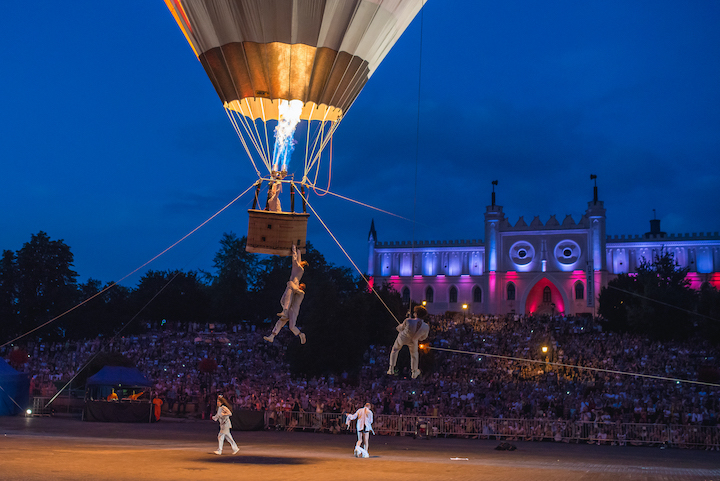
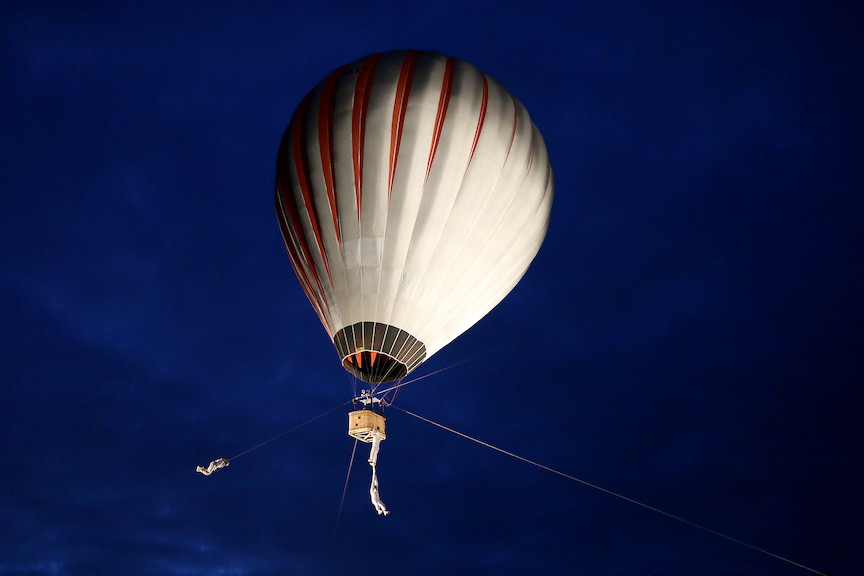
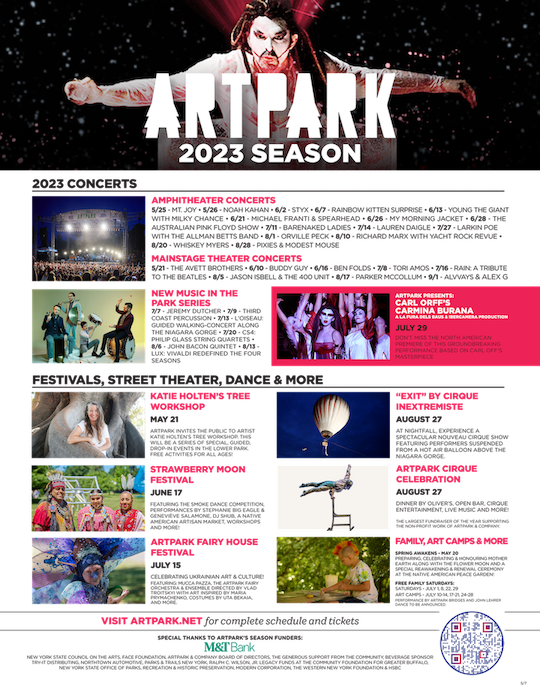
Organizers shared, “Hotly anticipated events this summer include the North American premiere of the spectacular production of ‘Carmina Burana’ by Spain’s La Fura dels Baus; a hot air balloon escape act by the French Cirque Inextremiste and a ‘Cirque Celebration’ fundraiser directed by Sxip Shirey; guitar legend Buddy Guy’s farewell tour; the 13th annual Artpark Fairy House Festival, this year adding a celebration of the culture of Ukraine under the creative collaboration of Kyiv’s theater director Vlad Troitskyi and Tbilisi’s designer Uta Bekaia; concert attractions like Ben Folds and double-headers like Pixies with Modest Mouse; rising music artists like Noah Kahan, Orville Peck and Larkin Poe; and the Artpark Strawberry Moon Festival, celebrating Indigenous cultures of the Buffalo-Niagara Region. …

“Artpark has already announced more than 30 performances and concerts, two festivals, several art installations, six international creative residencies, art camps, and even the launch of Artpark’s ‘Art Ale’ in partnership with Resurgence Brewing Co.”

President Sonia Kozlova Clark previewed the new season in a recent Q&A. This is part one of her interview.

Artpark & Company President Sonia Kozlova Clark (Photo by dellas, traffic east)

••••••••

Q: I would say Artpark probably fared better than most over the pandemic – the site remained open, you came up with creative new programming, and received several grants and awards. You had crowds in thick and thin. What have you learned about your audience in recent years, and how do you best serve them in 2023?

Sonia Kozlova Clark: That’s a very good question – and it is complicated because our audiences are changing – and they are changing more rapidly since COVID.

To define what is our audience today versus what it was three years ago, I would say that, during COVID, we were able to think about our strengths, our unique features, and also our future with support from federal and state funding sources and the local community. We were able to strengthen our partnerships with presenters like Live Nation, AEG Live, Funtime; grow our artistic and management team; and with that take some risks. What we learned in the process of trying some new bands and recalibrating some of our event structures and expectations, is that there’s a tremendous new audience for Artpark, both locally, which includes Lewiston, Buffalo, the rest of Western New York, and as far as Canada, as Canadians are starting to come back.

We learned that our audiences are, indeed, interested in the great diversity of music and other programs. They represent different demographics, segments or pockets of the population that we can serve in very different ways.

Artpark itself occupies a vast territory, and its 150 acres offers some very interesting opportunities for engagement. We have several stages: the well-known Artpark Amphitheater with a large capacity of up to 10,000 people. We also have the Artpark Mainstage Theater, which is the enclosed theater with an open lawn with which Artpark opened in 1974.

We also have the intimate Emerald Grove stage, named after the installation by Jesse Walp that surrounds it. This chamber stage has a garden-like setting and has become the primary setting for the fast-growing “New Music in the Park Series” where the informal atmosphere gives our audiences permission to experience something very new to them.

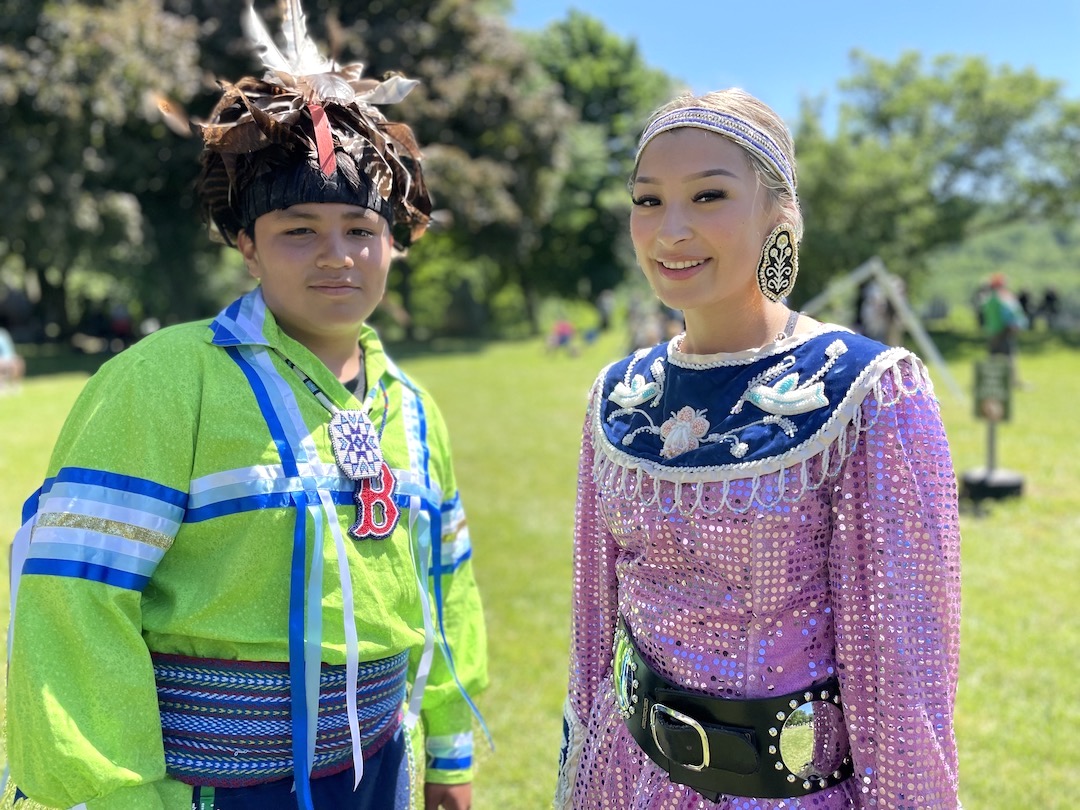
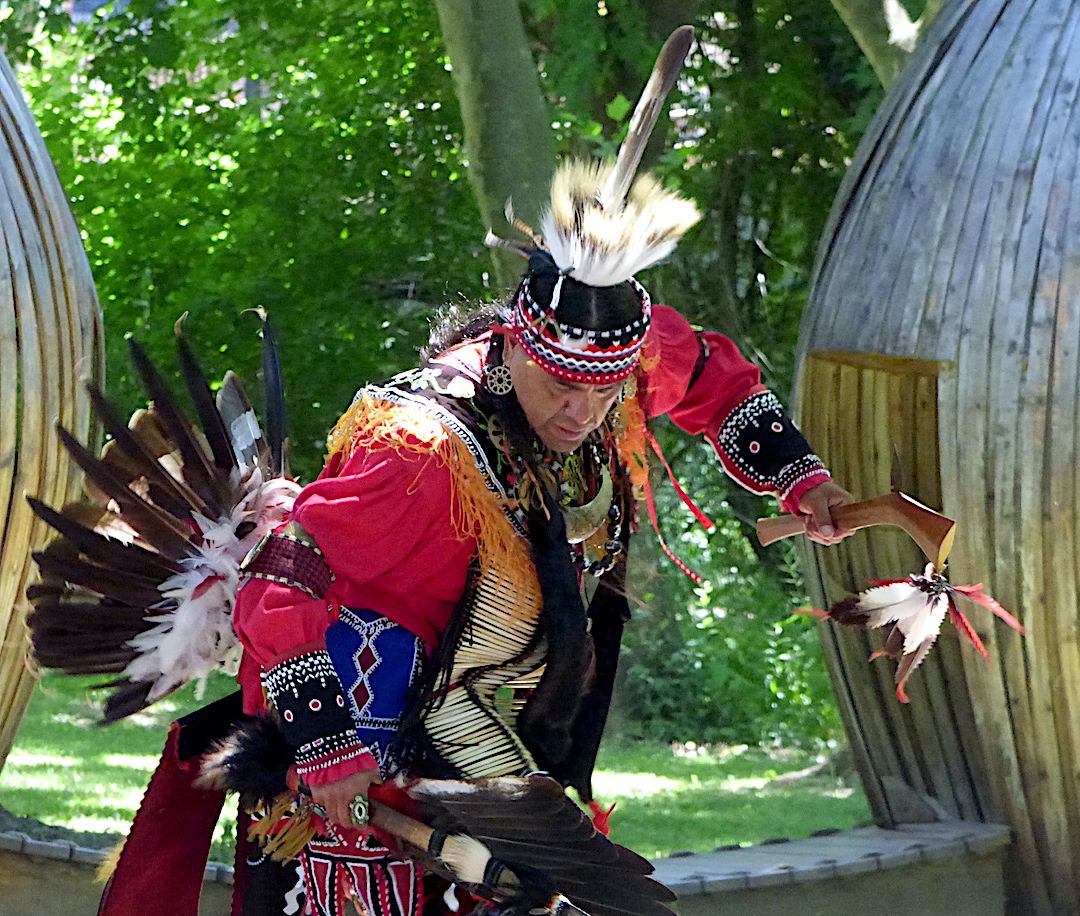
We also have been using the grounds of Artpark, rich with performance and festival opportunities. Both our Strawberry Moon Festival celebrating the local Indigenous cultures and the Fairy House Festival this year focusing on the art of Ukraine mixed with the local fairy house creations in the woods will take advantage of the wonderful nature of the lower park.

The Cirque Inextremiste performance calling for a large outdoor area for the hot air balloon hoisting acrobats up in the air will take place on the upper parking lot B. One of the “New Music in the Park” concerts – “L’ouiseau,” curated by now local conductor Brett Chancellor – will take our audience on a walking music tour on the stunning Niagara Gorge to explore the work of contemporary composers Kaija Saariaho, Iannis Xenakis, Brent Chancellor and Messiaen with dance and Native American spoken word.

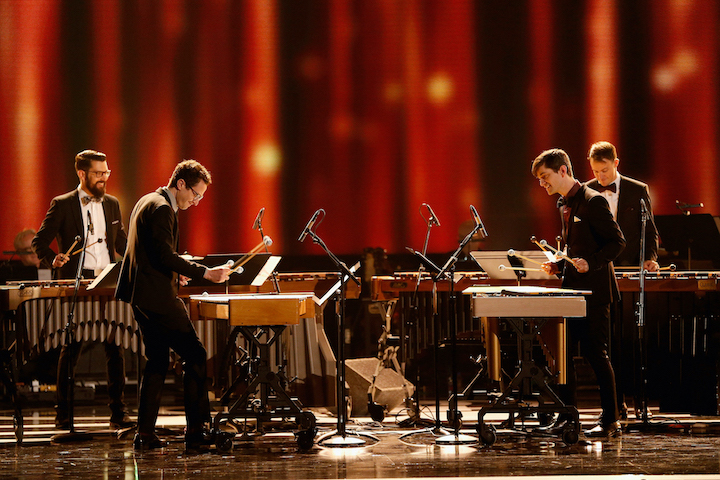
We will have on-stage performances of music by Philip Glass and Vivaldi and take advantage of the natural acoustic dome of the Emerald Grove with Third Coast Percussion.

And, of course, the massive theatrical production of “Carmina Burana” by La Fura dels Baus with Buffalo Philharmonic, Buffalo Philharmonic Chorus conducted by Gil Rose, and 200-plus performers will take place on our exceptional, one-of-a-kind opera stage.

Image: Carnaval Sztukmistrzów // Lublin // Exit fot. Natalia Wierzbicka

Cirque Inextremiste (Photo provided by Artpark & Company)

••••••••

Q: I think, certainly, diversity in programming is something that you’ve been very successful at over the years.

The previous administration, out of necessity – then I would say popularity and practicality – focused on outdoor concerts. There was no indication the cultural programming you’ve initiated would become as well-received as it is today. What led you to believe those programs were possible – and that they could work at Artpark?

Sonia Kozlova Clark: When I first came to Artpark, what I saw was, again, this vibrant palette of opportunities for presentation. I have produced very different types of arts and events in the past, and I could see how Artpark is unique from any other venues I had worked with.

Artpark as a place of nature and as a community presents almost limitless ways to explore the different types of performance, theater, music, Cirque, street theater, or art in public spaces. Also, of course, visual arts is a tremendous legacy and opportunity for Artpark, which we are strategically rebuilding. We are approaching these opportunities in phases and by layering one new discipline at a time.

The opportunities come from the site itself – its history, also its legacy, and, very importantly, from the people around us. It’s the Buffalo community, so fond of innovative music and theater; the Lewiston community, so rich with people who know their history and the memories of coming to Artpark to experience the various types of performances. It’s also the Indigenous people who were here long before any others.

Our understanding of what is diversity, specifically, at Artpark is also a very interesting subject. We often times talk with our board, funders, artistic partners and curators about how to make our organization more diverse, and how to make our audience more diverse. Oftentimes, the fallback is to say, “Well, Lewiston is a pretty homogenous society.” Initially, I thought, the local diversity was economic and maybe educational. But soon I have discovered the incredible depth and richness of the Haudenosaunee and their predecessors, thank you to Eva (Nicklas) and Irene (Rykaszewski) from the Lewiston Art Council, and Michele-Elise Burnett, who I’ve met through our board member Seymour Knox IV.

With their help, some reading, and the stories told by Neil Patterson Sr. of the Tuscarora Nation, or Peter Jamison of the Seneca Nation, and many others, I learned that the Haudenosaunee Nations are in themselves very diverse, but also so present here. Their presence here is not always the most obvious, as we see them through the limited focus of shared festivals or events, but the reality is so much richer.

Through the work of Michele-Elise, Artpark’s Indigenous arts producer and staff member, our relationship has been flourishing now for a number of years, starting with the Artpark Strawberry Moon Festival and expanding now to a summer-long program focused on Indigenous ways of knowing. I am grateful to Kehala and Jordan Smith and all the scholars and artists helping us build a more close-knit relationship, which sometimes feels like family.

The success of attracting an audience is through seeing your community, all its fine tones and different shades of cultural and economic differences, social and even political views. And for us at Artpark, there is such an interesting palette to work with here.

Another path for success is in programming strategy. Layering the new over time, mixing it with the familiar. When you bring something new, the recognition doesn’t happen all at once. You have to adjust the strategy for each particular kind of art and audience. It’s not one-size-fits-all.

Cirque Inextremiste (Photo provided by Artpark & Company)

••••••••

Q: Of course, we know concerts are still a very big draw. What can you tell me, looking at this year’s lineup, that stands out to you – or that people should be excited about or even curious about, with regard to the bands and the acts you’ve booked?

Sonia Kozlova Clark: As you said, it’s a very diverse lineup, and addresses different types of audiences.

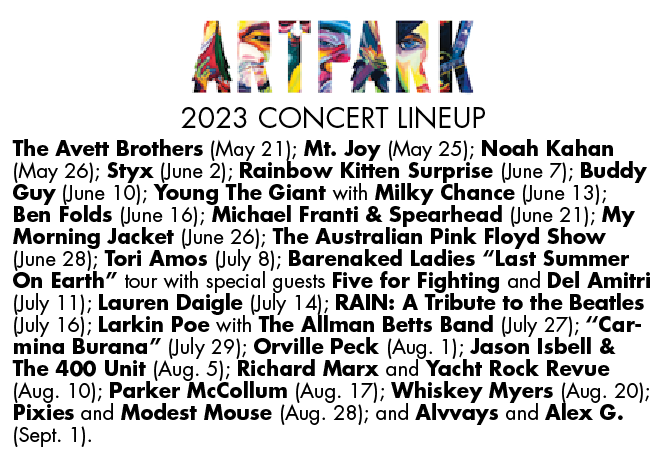
I am, as always, excited about Barenaked Ladies, which now has become a staple event in Western New York. They are more popular here in Western New York, or at Artpark, than practically anywhere else. It’s just a very special relationship that we have developed over time between our community and the band. So, for that alone, it’s absolutely a special to Artpark event, and all of us always look forward to it.

I think, of course, Styx on June 2, is something that so many of us are looking forward to, as well. They’ve been to Artpark now a number of times, and this year it seems bigger than ever.

We rarely ever start that early, but this year our first concert is May 21, with the Avett Brothers. Again, a great band. They’ve been to Artpark twice before. So great to see them back, and it looks like it is going to be a packed house. And it’s great to see the audiences coming back, and then some.

Buddy Guy is an iconic figure in music. It’s his last – or self-proclaimed last – tour. We’ll see. I hope he changes his mind. He will definitely be a highlight, for me personally, and I’m sure for many in the community.

I think Larkin Poe is a fantastic duo that I think everybody should discover, if they haven’t yet – with the Allman Betts Band. Together, it’s a great pairing.

One of my favorite musicians is Ben Folds. To me, it’s definitely a highlight. I’ve followed his career from the very early days, and I’m so glad to see him back with us.

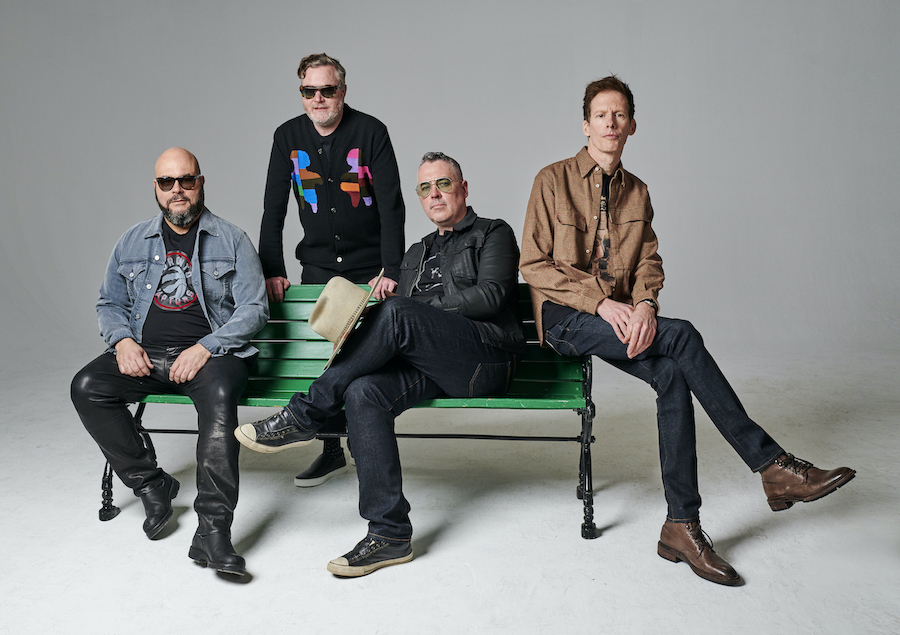
Pixies and Modest Mouse will close our amphitheater season, and what a great, incredible pairing that is. I’m definitely looking forward to that. I was doing the happy dance when we confirmed that particular concert.

And then we have not one but two North American premiers: Carl Orff’s “Carmina Burana,” in a spectacular production by La Fura dels Baus with Buffalo Philharmonic Orchestra, Buffalo Philharmonic Chorus, conducted by Gil Rose. It’s a modern spectacle. It’s a very edgy spectacle based on a medieval collection of poems and songs written in Latin and Middle High German. The texts cover a wide range of themes, such as drinking, gambling, love and the fickleness of fortune.

The poems were discovered in a Bavarian monastery in the 19th century and later set to music by composer Carl Orff in the 1930s. Musically it is extraordinary, recognizable and powerful. I call it the “Heavy Metal of the ’30s.” Its main song, “O Fortuna!,” was recorded and remixed in so many different styles. The Trans-Siberian Orchestra has done a track; in addition to all the classical interpretations, of course. It runs the whole gamut. There’s hardly a human being on this planet that doesn’t know this tune.

The production is by a renowned company in Spain – La Fura dels Baus – who I have been in conversations with over a number of years now – their focus is on opera as a spectacle, oftentimes outdoors with immersive video, flying acts and spectacular stage effects. They’ve been in the United States a number of times. The last time they were at the Mostly Modern Festival at Lincoln Center with a production of Haydn in 2018.

Their Carmina production has toured around the world for over 10 years, but it’s never been in North America. And I’m very excited to be able to present this just at Artpark, just for us, just because we can, and just because it makes sense for us.

We are also fortunate to be working with the visionary conductor Gil Rose with whom we are building a long-term plan for reintroducing opera to Artpark, and, as always, with our friends at the Buffalo Philharmonic Orchestra and the Buffalo Philharmonic Chorus, also the Tanzen Dance and other local performers.

And the second North American premiere at Artpark will be with Cirque Inextremiste on Aug. 27, which we are bringing in partnership with University of Arizona and Rochester Fringe Festival. This French group are completely unique and out of their own kind, they define themselves as “sweet lunatics trapped in spite of themselves in a life-size epic” in one of the wildest shows you will ever see, called “EXIT.”

Barenaked Ladies (Photo by Matt Barnes // provided by Artpark & Company)

••••••••

Q: It’s a big anniversary season. How will that milestone be recognized this summer?

Sonia Kozlova Clark: We plan to celebrate by the continuous growth of Artpark as an institution and exploration of its potential while also recognizing its legacy. We have programs that highlight our Haudenosaunee people through Strawberry Moon Festival and summer-long Indigenous programs. We are restarting the opera program, once so prominent at Artpark, and so well known in this country. We are bringing new voices and international productions, which are impactful not only for our own audience, but for the artists themselves. Through these international collaborations and national partnerships, Artpark’s name is now present in the professional discourse around the world.

I was recently at Carnegie Hall, at a concert, and a number of people I ran into from New York City ran up to me with their memories of Artpark as an opera hub back in the 1980s. It’s still in the memories of people far away from here. So, being able to reinstate this program with a tremendous conductor – we call him a conductor in residence and also a curator of opera – Gil Rose – I think that’s a very momentous kind of occasion.

Being able to produce a series of “New Music” concerts, that’s very much, again, an homage to something that was celebrated and developed at Artpark. It’s what we call “New Music.” Something that was started by Creative Associates in Buffalo, and very much developed in Artpark, as well, and really translated to the very fabric of this cultural organization, and to see it carried forward with the musicians of today. Jeremy Dutcher, Third Coast Percussion – these are very well-known new musicians working, and experimenting with the types of music that are both very new to us today, but also date back to the traditions that were first honed in the 1970s – just when Artpark was established.

So, there are all these kinds of overtones of going back and also moving forward, all at the same time – and building a brand-new program we have not had in the past, is Cirque. So, we’ve done smaller productions as a part of our Fairy House Festival and other special events: Cirque Orange from Hamilton, Cirque Barcode from Montreal, Giraffe Royal from Estonia and others over the past six years.

They all represent the artform known as Cirque Nouveau mixed with street theater, as we’ll call it. It is a fast-emerging popular form of performance, normally not involving a tent nor animals, not necessarily with the kind of acrobatics and clowns that everybody expects from the past – the red nose kind of act. In this new type of cirque, the acrobats and clowns are also actors – they act within the parameters of dramaturgy. They tell stories. It’s half circus, half theater.

And this year, we’re bringing this French production called “Exit” by a circus company called Cirque Inextremiste. Again, it’s quite a feat. It’s a big risk – on many levels. We’re doing it in partnership with two other presenters in North America: the University of Arizona and the Rochester Fringe Festival. We could not do this alone.

But again, it signals the beginning of something new and pretty large-scale going forward.

The Artpark opportunities are tremendous – and the 50th season brings it all together.

I’ll also mention that, next year, we’ll be celebrating our 50th anniversary. So, prepare to party for the next two years.

Images from the 2022 Strawberry Moon Festival at Artpark in Lewiston.

Third Coast Percussion (Photo by Rich Polk // provided by Artpark & Company)

••••••••

Q: We’ve spoken about the various initiatives Artpark is taking to give back to the community – and even to use the word you mentioned, “risk,” as far as some of the programming and events Artpark is undertaking to benefit the community. How can that community – how can patrons – give back to Artpark?

Sonia Kozlova Clark: Thank you for that question. For us, the most important thing you can do is to come. Bring your friends. Bring your children. Bring your parents. Come, come, come. Come to anything you don’t know yet. Come to things you have been too many times and love. Come, be here. Be with us. That’s No. 1.

And, of course, we’re a nonprofit organization. We are a self-sustaining organization. We do work in partnership with New York State Parks, who maintain the facilities; but our park operates with only less than 5% of state funding. The rest is raised by our own team led by our very powerful and dedicated board of directors, through various funding opportunities. And the foundation for these resources is in the individual giving, so every small gift brings a compounded effect.

Our individual donor drive is always on and you can make a difference today by going to artpark.net; there’s a button at the top of the menu that says, “Donate Now & Support.” Any gift is good enough – $5, $20, $5,000 – we will honor it, and use it appropriately, and it will move us forward, and make our programming available to the whole community in the long term.

•For more information on Artpark & Company programming, visit www.artpark.net. Tickets are available online at www.ticketmaster.com.

Artpark’s front outdoor lobby area and ticketing courtyard

Click to download the Artpark & Company schedule (PDF)

Tucson International Airport amplifies indigenous voices with gallery dedicated to native artists

Tucson International Airport amplifies indigenous voices with gallery dedicated to native artists

TUCSON, Ariz. (13 News) – The Tucson Airport Authority (TAA) welcomed Pascua Yaqui representatives and members of the Tohono O’odham’s San Xavier District to Tucson International Airport (TUS) to amplify indigenous voices through dedicated art exhibitions in the terminal’s International Arrivals Gallery. The artwork was installed before the inaugural air service between TUS and five Canadian airports.

The International Arrivals Gallery provides a first impression for travelers who have been cleared by U.S. Customs and Border Protection in the terminal’s Federal Inspection Services (FIS) facility. The gallery is located pre-security, near the Concourse A exit, so all visitors are welcome to enjoy the space.

TAA Board Chair Keri Silvyn joined Bewley in making remarks to those in attendance on Thursday, May 18. Both Pascua Yaqui and Tohono O’odham representatives shared a blessing in the gallery as well.

“As you look around this gallery, you see the exceptional work of many indigenous artists,” said TAA President and CEO Danette Bewley. “It is important to us that this airport provide a sense of place to everyone who comes through the terminal, including these artists. We want travelers to feel like they are in Southern Arizona, and we want locals to feel like they are home.”

Many of the paintings featuring Tohono O’odham artists represent the annual baihidaj or saguaro fruit harvest. The Hasan, or saguaro, is revered and used to produce a ceremonial wine that is used during an annual rain ceremony.

The ceremony celebrates the start of the summer rainy season, which signifies a new year for the Tohono O’odham. Pottery depicts Kehina social dances, and maze designs illustrate challenges overcome and returning home to the Creator.

“Our Wak Community (San Xavier District of the Tohono O’odham Nation) is honored to have these items on display for passengers to view as the arrive in our homeland Tohono O’odham Jewed (Desert People’s Land),” said San Xavier District Chairman Austin Nunez.

While the art has been on display for months, the May 18 event was the first time that everyone involved in the gallery’s development had been in the space together.

Be sure to subscribe to the 13 News YouTube channel: www.youtube.com/@13newskold

Twin Cities events: Art-A-Whirl, rooftop mini-golf and more

Twin Cities events: Art-A-Whirl, rooftop mini-golf and more

Skyline Mini Golf in 2022. Photo: Carina Lofgren/Walker Art Center

More than 1,000 artists will take over 70 Northeast Minneapolis galleries, businesses and breweries Friday-Sunday for Art-A-Whirl, the self-proclaimed largest open studio tour in the country.

  • The annual celebration of local art is free and open to the public. Visitors can explore studios, shop and meet artists, listen to live music and check out local restaurants.
  • Indeed Brewing’s music festival Whirlygig also runs all weekend, or you can watch live car crushing at 4pm Saturday at auto repair shop Turbo Tim’s.

🚋 Tip: Avoid a parking battle by taking the free Art-A-Whirl trolley, which loops through the Northeast Minneapolis Arts District every 30 minutes.

  • Metro Transit is also offering free rides all weekend.

More weekend fun:

⛳️ Putt across the Walker Art Center‘s rooftop Skyline Mini Golf course this weekend. The 10-hole, artist-designed course reopens for the season Thursday. $12

😋 Eat your way through the Asian Street Food Night Market in Maplewood on Friday and Saturday. The all-day event also features live music, local artists, a talent show and beer garden. Free entry

🧒 Minnesota Children’s Museum‘s new exhibit “Emotions at Play with Pixar’s ‘Inside Out‘” opens Saturday. Expect interactive activities that teach kids about the film’s five featured emotions: joy, sadness, anger, disgust and fear. $15+

🗣 Celebrate and learn more about Dakota culture at Dakhóta Omníčiye at Fort Snelling on Saturday, hosted by the Minnesota Historical Society.

  • The all-day event includes hands-on workshops, speakers, book readings and a community dinner. $12, free for Native community members

😱 Shop taxidermy, funeral collectibles, haunted antiques and more at the Oddities & Curiosities Expo at the Minneapolis Convention Center on Saturday. $10 advance, $15 day-of

💕 Autism, mental health and disability nonprofit Fraser has organized a sensory-friendly festival in St. Paul on Saturday with inclusive activities for those with sensory processing difficulties. Free

🧶 Stillwater Flea & Crafter Market returns for the season Saturday–Sunday with about 200 vendors at the Washington County Fairgrounds. Free entry

At Frieze New York 2023, One-Person Shows That Shine

At Frieze New York 2023, One-Person Shows That Shine
image

Exciting work from emerging artists exploring environmental change, and proof that much of the most innovative work of the past half century has been by women.

At its debut in 2012, Frieze New York, a spinoff of Frieze in London, came off as an imperious enterprise. The fair commanded an island in the East River. Getting there could be difficult and expensive. And once there, negotiating the miles of pedestrian aisles formed by some 120 galleries made for a humbling degree of exertion.

This has changed. The fair, which is on view till Sunday, is now reachably moored in Manhattan, a block or so from the Hudson, at the Shed on West 30th Street. At roughly half its original size — 69 galleries this year — it makes for a quite doable walkabout spread over three floors. Apart from now-standard “V. I. P” perks, highfalutin’ is downplayed.

Which, of course, makes sense. Art fairs are trade fairs. On the supply side, professionals gather to market and mingle, to compete and compare, to roll out product and hope that it sells. On the demand side, collectors get a one-stop scan of new retail and a chance to drop cash if they like what they see.

Even for those who aren’t in the business of selling or buying, fairs are transactional events. For the admission fee you put down — and it’s a lot of money now, $55 and upward just to get in the door — you expect a vitalizing viewing experience. And Frieze New York 2023 delivers that, specifically in the form of a baker’s dozen of solid one-person shows, and in a historical group whose quietly impassioned spirit threads through the fair.

From left, Jack Whitten’s “Untitled,” 1976; “Soul Space VII,” 1984; “The Apollonian Sword,” 2014; and “The Mingo Altarpiece: For George Mingo 14 September 1950 – 6 December 1996,” 1996, at the Hauser & Wirth booth.Jeenah Moon for The New York Times

Several of the solos are on the first of the fair’s three levels. And in two, installed close to each other, a history of contrasts plays out. Hauser & Wirth has assembled a small, gorgeous, somber survey of painting, sculpture and drawing by Jack Whitten (1939-2018), a Black artist who early fled the Jim Crow South of his birth, never to return, and who, thanks to an unwelcoming market, has a low art world profile until quite late in his life. Now he’s a huge presence.

Across the aisle from Hauser’s beautiful tribute David Kordansky’s booth is packed with the exuberant carvings and digital collages of Lauren Halsey, a young California artist who makes embattled Black life in her native Los Angeles the very engine of her work and whose career, at 36, is currently, literally, flying high: An installation by her commissioned for the Metropolitan Museum’s roof garden debuted earlier this Spring, and it’s a hit.

Two untitled works from 2023 by Lauren Halsey at the David Kordansky booth.Jeenah Moon for The New York Times

Mary Lovelace O’Neal, who has a show of six large paintings at Jenkins Johnson is from Whitten’s generation and also Southern-born. At an early point she felt compelled to turn gestural abstract, to which she was attracted, into a political as well as personal medium, and the two are inseparable in her art. The young AfricanAmerican artist Naudline Pierre, who shows at James Cohan, follows O’Neal’s expressionist lead but moves it in a mytho-spiritual direction, turning Cohan’s booth into a grotto-like chapel of rich colors and swirling figures.

Elsewhere it’s great to see two very different New York artists showcased in sterling midcareer. The solid, organic abstract forms of the painter Suzan Frecon carve out a zone of formal concentration at David Zwirner. And Nan Goldin, with her gridded photo assemblages at Gagosian, the gallery she recently joined, takes a victory lap after the successes both of the Laura Poitras film in which she stars and the performative activism it documents.

From left, Nan Goldin’s “Red,” 2016; “Veiled,” 2011–14; and “The Back,” 2011–14, at the Gagosian booth.Jeenah Moon for The New York Times

Performance, like video and conceptual art, doesn’t really work in an art fair context. But sculpture does, or can, and it’s good to see some here. The New York artist Matthew Ronay’s solo at Casey Kaplan is a single 24-foot-long work called “The Crack, the Swell, an Earth, an Ode.” Composed of dozens of bruise-colored, organic looking (think fingers, fungi) toy-size components, it stretches across the space like a doomsday horizon line.

Matthew Ronay’s 24-foot-long work, “The Crack, the Swell, an Earth, an Ode” at the Casey Kaplan booth. Jeenah Moon for The New York Times

And a compact show at Silverlens, a gallery with locations in Manila and New York City, distills of the career of Carlos Villa (1936-2013), a San Francisco-based artist, performer and teacher of Filipino descent whose pioneering multiculturalist advocacy and fantastically inventive art — a marvelous feathered coat here is a cross between a shaman’s robe and a chasuble — is only now becoming widely known.

As in the case of Villa, the work of the artist June Clark has had, up to now, limited exposure in New York, although it was once her home. She was born in Harlem in 1941, but relocated to Canada during the tumultuous 1960s. Despite, or because of, this driven departure, native country remains a critical subject of her art, evident in the aggressively spiky assemblages and threadbare Old Glorys brought to Frieze from Toronto by Daniel Faria Gallery, whose booth is part of a section called Focus on the fair’s second floor devoted to one-person shows organized by galleries that have been in existence fewer than 12 years.

I recommend lingering at some of these: at a gallery called Basso, based in Buenos Aires and New York City, which is showing Mónica Giron’s knitted wool forms of endangered birds of Patagonia, where she was born; at Toronto’s Cooper Cole, which has Jagdeep Rainas little handsewn embroideries evoking, in words and images, life in a Kashmiri diaspora; at Capsule Shanghai, populated by Liao Wen’s spookily sleek, wood-carved cyborgs; and at Mitre Gallery where you’ll find Marcos Siqueira’s images of rural Brazil, painted with pigments made from local earth.

Marcos Siqueira’s “Untitled,” 2022, and “Untitled,” 2023, at the Mitre booth. On a shelf are jars of minerals and earth used to make the paint.Jeenah Moon for The New York Times

The fair also has lots of show, some carefully selected and shaped, others — at Victoria Miro, Thaddeus Ropac, Michael Werner — straightforward inventory displays. But one group show, installed at Michael Rosenfeld’s booth (D10) on the fair’s third floor, is exceptional.

All the artists included are women; all the works date from 1973, the year that abortion was legalized by Roe v. Wade. None of the art directly refers to that; in fact, only a few pieces are overtly political in any way: a tiny pistol-packing assemblage by Betye Saar and a fantastic, prophetic drawing by Nancy Grossman of a face turning into a gun.

Nancy Grossman’s “Frontal Gunhead,” 1973, top; and “Sighted Gunhead,” 1973, below, at Michael Rosenfeld.Jeenah Moon for The New York Times

But the sheer formal variety of work at Rosenfeld by still underknown figures like Hannelore Baron (1926-1987), Mary Bauermeister (1934-2023), and Lenore Tawney (1907-2007), is radical, disruptive of art historical norms. Collectively it confirms a reality the market has consistently ignored or suppressed: that much of the most imaginative and innovative work by anyone anywhere in the past half century has been by women.

Is recognition growing? Is the art establishment making some corrective noises? It’s good at doing that. What I can say is that a close, careful sweep through Frieze New York 2023 turns up treasures you probably wouldn’t have found in such quantity just a few years ago.

These include dynamite paintings by Harmony Hammond and Joan Semmel at Alexander Gray’s booth, and an exquisite Bethany Collins text piece there. Jac Leirner’s skinny, spear-like collages at Esther Schipper (Berlin) and Fortes D’Aloia & Gabriel (Brazil) are reminders that this Brazilian artist’s first major New York survey recently opened at Swiss Institute here and is on view through Aug. 27.

Trisha Baga’s “Moths,” 2022, left, and “Sleep Mode,” 2022, right, at Gió Marconi.Jeenah Moon for The New York Times

The painter Trisha Baga, now in space-travel mode, also has a doubleheader (at Société and Gió Marconi). And you’ll find brilliant one-off items tucked away everywhere in the show: a small leather-and-twine hanging by Leonor Antunes at Galeria Luisa Strina; in a luscious lobster-red Mary Heilmann painting at 303 Gallery; in a metal sculpture by Kathleen Ryan at Karma with a crystalline spiderweb hidden inside, and, at Miguel Abreu, a tabletop version of Pamela Rosenkranz’s electric pink “Old Tree,” which stands, at full height, on the High Line outside.

It’s exciting, walking through the show, to experience this slow-building choral effect, worth the price of admission. Now what should change is the current steep price, which puts Frieze New York beyond the reach of a wide audience — including a crucial audience of young artists — just as surely as its island location did years ago.

Pamela Rosenkranz’s “Old Tree,” 2023, at the High Line in Manhattan.Jeenah Moon for The New York Times

Frieze New York

Through May 21, at The Shed, Hudson Yards, 545 West 30th Street (between 10th and 11th Avenues.), Manhattan; 212-463-7488, frieze.com.

The art of conflict resolution in Sudan

The art of conflict resolution in Sudan

Published on 

May 18, 2023

The art of conflict resolution in Sudan

Khalid Kodi’s participatory art projects in his native Sudan and South Sudan aim to bring rival groups together, resolve conflicts and look to a better future. The Northeastern University professor is a mentor to many young Sudanese artists and activists.


group of Sudanese people

Nine years ago, Khalid Kodi returned to his native Sudan to hold an art workshop in a war zone. Rebels in the Nuba Mountains, near Sudan’s southern border, were fighting for religious freedom and autonomy from Sudan’s central government, which responded by bombarding the region. But Kodi, now a Northeastern University art professor, thought the Nuba Mountains were the right place for his projects that invite people to create art.

Khalid Kodi, professor of the practice in College of Arts, Media and Design. Photo by Matthew Modoono/Northeastern University

Teaching in a war zone was “risky, but it’s life-changing and it’s rewarding,” recalls Kodi, who learned the locations of foxholes in case bombers flew over. “It’s [about] how people in this stressful condition can relate to visual creation, and what art can do for them in helping them to overcome the stress and trauma.”

Every summer since 2014, Kodi has traveled from Boston to Sudan to hold workshops for artists, as well as his Flags and Banners as Voices project, which encourages women and children, refugees and religious leaders to collaborate on artworks that express their opinions about their nation’s future.

This summer, Kodi will skip his usual trip to Khartoum, Sudan’s capital, if the fighting that erupted there in April is still raging. He’ll start in Juba, the capital of independent South Sudan, where he holds annual workshops with local artists. From there, he’ll travel north into the Nuba Mountains region—now autonomous—to hold his flags and banners project again. One of Kodi’s main goals is to get people from different ethnic groups or different religious groups to work together. Another is to teach conflict resolution and leadership skills.

In Kodi’s 2022 visit to the Nuba Mountains, funded in part by a summer development grant from Northeastern’s College of Arts, Media and Design, Kodi held his flag and banners workshop in the town of Kauda. A 2019 cease-fire between the rebels and Sudan’s then-new interim government had freed Kauda’s residents to think more about a better future.

The participants—mostly women, children, and disabled people from different religions and ethnicities—produced colorful banners, working with shiny cloth cut into shapes and sewn onto a fabric background. One bright yellow banner protested corruption in government and finance, showing a multi-colored train running up against obstructions on the tracks toward a blue sign labeled, “Prosperity Station.” Another banner, labeled “How to eradicate poverty in Africa,” included warm-colored cloth symbols of a tractor, a school and a factory. The participants presented their banners in a final show in the town square, which attracted 500 people.

During the academic year, Kodi teaches Observational Drawing and Color and Composition courses at Northeastern’s College of Arts, Media and Design, which he joined as a full-time professor of the practice in 2022, after teaching part-time in 2017 and 2021. He cuts a striking figure on Northeastern’s campus: He’s often dressed head-to-toe in black—black shirt and pants, a blank black baseball cap above black-framed glasses.

As an artist, Kodi’s past works have been influenced by Western, African and Islamic art. Two of his pieces hang in his office in Holmes Hall. In one, done in ink and liquid acrylic paint, a female figure contemplates another behind an ornate pattern of blue flowers and stems. It shows the influence of Islamic art patterns, African figure representations, and Western organization of space.

The other depicts a woman standing in an archway, with African decorations and patterns around her. She’s decorated by tribal marks. She holds an ax for self-protection. “I have a lot of interest in African women’s culture and the culture of the marginalized in Africa,” Kodi says. “When there’s war, usually women are victimized the most.”

Kodi has exhibited at Skoto Gallery in New York City and has work in the permanent collection of the Museum of the National Center of Afro-American Artists in Boston’s Roxbury neighborhood. But he’s spending less time on his solo work now. “All of that does not excite me anymore,” Kodi says. He’s shifted his focus to participatory art: “creating art with people who do not have the privilege of looking at art at the Museum of Fine Arts and fancy galleries.”

Inspiration for the Flags and Banners as Voices project came from African-American quilting—which, Kodi says, “addresses issues of memory and longing and relationship with time.” He’s found that creating flags and banners can be a balm for people divided by the region’s many conflicts. “There is a twist in all of my projects,” Kodi says. “I squeeze in the idea of how you can negotiate through the process of creating to solve problems—not to just run to a Kalashnikov [rifle] to resolve that problem.”

In 2016, at a refugee camp in Uganda, Kodi held a Flags and Banners as Voices session with South Sudanese women who’d fled a civil war. “Their husbands, their sons and brothers, they were fighting in South Sudan,” Kodi recalls. “When they came into the room, they didn’t want to talk to each other.” But soon, they began to agree on simple aesthetic elements of the project: some liked the color red, some the color blue. “It’s not threatening. It’s not serious, not direct. So that eased the conversation a little bit.”

Eventually, the women created banners that reflected their common hopes and concerns about South Sudan. “They created artwork about education, agriculture, music and culture,” Kodi says. “You find reasons to have them agree with each other without having very heavy discussions about complexity, politics and war. And at the end, the flags represent all of them and they all get to be at ease with each other.”

One reason Kodi takes his participatory art projects to the autonomous Nuba Mountains region is that he sympathizes with the rebels’ desire for religious freedom. Sharia law has long governed Sudan, but the Nuba Mountains’ residents include Black tribes with different religious beliefs, including Islam, Christianity and animism. Secularism is a key position of the rebel group, the Sudan People’s Liberation Movement-North.

“I do have relationships with the Indigenous groups,” says Kodi, “who I believe are on the right side, if we can say [that]—in war, I think there is no right or wrong side—but I think they are protesting atrocities against them.”

In 2020, a year after a cease-fire in the conflict, Kodi spoke at peace talks between the rebels and Sudan’s interim government. As an expert invited by the rebels, Kodi focused his presentation on ways that a secular state benefits art, science, human rights, and Indigenous rights.

During his summers, Kodi also helps the growing artistic community in South Sudan, which gained independence from Sudan in 2011—making it the world’s newest country. His workshops for young artists in Juba, the capital, include exposure to Impressionism, African American art and contemporary African art.

One goal of his mentorship is to give the young artists a more expansive knowledge of art than he received in Khartoum, where he got his bachelor’s degree in art in 1987. “The formal education [in Sudan] is very much European,” he says. “So there is no education about indigenous sculpture, indigenous African aesthetics, indigenous African art and artists. That’s something you have to do on your own.”

If he can’t visit Khartoum this year, Kodi will keep in touch from afar with the young activist-artists he knows there. In 2019, during a dramatic sit-in just before the collapse of former Sudanese leader Omar al-Bashir’s regime, many artists who Kodi knows painted the walls of buildings near the army headquarters.

“I still mentor artists there,” Kodi says. “And I still talk to them every day, even now, through Zoom.” Amid the fighting between Sudan’s two armies, activists and artists who Kodi knows are documenting atrocities and using spray paint as protest. “Young artists sneak into the different neighborhoods during the night, as the fighting’s going on,” he says, “and spray our slogan, ‘No War.’” 

Erick Trickey is a Northeastern Global News Magazine senior writer. Email him at e.trickey@northeastern.edu. Follow him on Twitter @ErickTrickey.

Spring Art and Art Festivals: Art and The City

Spring Art and Art Festivals: Art and The City
Dominique Paul, “Maquette Damoiseaux,” 2021. Image: Courtesy of the artist

OAS AMA | Art Museum of the Americas
Dominique Paul, “Silent Fall”
April 22-July 20 • www.museum.oas.org

Montreal native Dominique Paul, who now calls Brooklyn home, will exhibit a series of work at the Organization of American States’ Art Museum of the Americas which examines human impacts on the environment, specifically on wildlife. “Silent Fall” is curated by New York-based Ayelet Danielle Aldouby. Paul will use a wide range of mediums including photography and video to address the disappearance of at-risk animal species. The title is inspired by biologist Rachel Carson’s ground-breaking book “Silent Spring.” Aldouby explains that Paul’s work “inspires us to collaborate as compassionate beings and reclaim our role as temporary guardians of a vanishing world.” Paul has spent years researching and evolving this project. 201 18th St. NW. Hours: Tues.-Sun., 10 a.m.-5 p.m. Call (202) 370-0147 or query artmus@oas.org.

IA&A at Hillyer May Solo Exhibitions
Concurrent solo exhibitions by Claudia “Aziza” Gibson-Hunter,
Amber Robles-Gordon and Zhenya Parish
May 6-28 • www.athillyer.org

• Claudia “Aziza” Gibson-Hunter, “Flight School.” Hunter sees flight as “a spiritual technology,” a means to reach an altered state of being which offers both protection and transcendence. Through a series of abstract mixed-media works, Hunter explores this idea by drawing inspiration from Zora Neale Hurston, Alvin Ailey’s “Revelation” and gospel music lyrics.

• Amber Robles-Gordon, “Remnants: A Visual Journey of Memory and Renewal.” Robles-Gordon’s series addresses the bits and pieces in life that make up memory and loss. By examining the notion of “remnants,” “slivers” and “fragments,” Robles-Gordon recompiles found parts into collages which represent “a journey of self-awareness and growth.” “Together,” she explains, “these artworks present a visual telling of love, loss, and healing.”

Claudia “Aziza” Gibson-Hunter, “Dawn Flight_ Flight Dawn” (detail), 2022, acrylic paint, colored pencil, 25 x 30 x 4 inches. Photo: John Woo

• Zhenya Parish, “The Art of Letting Go.” Like Robles-Gordon, Parish examines fragmentation and loss through a series of recent paintings which examine the “symbology of perceived experiences.” Parish hopes that the pieces “will challenge the viewer to find a new point of relation and help create a moment of understanding, appreciation, or feeling. We live in flux. Embrace it.” 9 Hillyer Court NW. Hours: Tues.-Fri., 12-6 p.m., and Sat.-Sun., 12-5 p.m. Call (202) 338-0680 or query hillyerdirector@artsandartists.org.

New Art Installation Connects Art and Urban Farming

A new series of public art funded by the Darryl Chappell Foundation in partnership with Building Bridges across the River and the District government seeks to connect urban farming with the community through visual markers. Created by local artist Sonia Jones while a resident at the National Children’s Center (NCC) Baby Bloomers Urban Farm, the work connects Ward 8 students with the environment and healthy eating. “I’m honored to be a part of the story of this innovative space that is tackling food insecurity and creating inclusive spaces for children with special needs, while serving as an anchor for continued community engagement,” said Jones. “As a mother who enjoyed my first harvest from my home garden this year,” she added, “I wanted to use my artistic talents to support organizations that teach the next generation to be self-sufficient.”

Spring Art Festival Season

With the arrival of good weather, outdoor art festivals abound. Free of charge, these events are the opportunity to see hundreds of artists and artisans, experience live performances and try new food. Here is a chronological listing of events:

Baby mural. Photo: Ayanah George

VisArts’ 11th Annual Rockville Arts Festival
Sat. & Sun., May 6 & 7, from 10 a.m. to 5 p.m.
www.visartscenter.org/rockville-arts-festival

The festival features 130 fine artists and artisans, Raku demonstrations by VisArts instructors and community art projects including printmaking and chalk art. Along Maryland Avenue between Beall Avenue and East Middle Lane, Rockville, Maryland. Metro accessible; public parking garages nearby.

image

Gateway Open Studio Tour | Arts, Beats & Eats
Studio Tour, Sat., May 13, from 12 to5 p.m.
After-party at miXt Food Hall, Sat.,
May 13, from 5 to 8 p.m.
www.artsbeatseatsdmv.com

If you’ve ever wanted to explore the region’s largest art district, this is the day to do it. Over 150 artists live and work between Eastern Avenue and College Park. I recommend targeting a few studios this year and planning to come back in 2024. There are too many venues to see in one day. Then, at 5 p.m., go to miXt Food Hall for an after-party and meet the locals. The Gateway Open Studio Tour takes place in Mount Rainier, Brentwood, North Brentwood and Hyattsville, Maryland. Scroll down the website above for all participating locations. miXt Food is at 3809 Rhode Island Ave., Brentwood, Maryland. After-party parking at Brentwood Fire Station, 3716 Rhode Island Ave., Brentwood.

Bethesda Fine Arts Festival

Sat., May 13, from 10 a.m. to 6p.m.;
Sun., May 14, 10 a.m.-5 pm.

www.bethesda.org/arts/artsfestival.htm

The Bethesda Fine Arts Festival features artists and artisans from around the nation, selling everything from artwork to handmade furniture to clothing. A stage on Del Ray Avenue will feature live musical performances all weekend. The festival takes place on Del Ray, Auburn and Norfolk avenues. Metro accessible; public parking garages available.

Tephra ICA Festival

Sat., May 20, from 10 a.m. to 6p.m.; Sun., May 21, 10 a.m.-5 pm.

www.tephraica.org/festival

Now in its 32nd year, the event was formerly known as the Northern Virginia Fine Arts Festival. It boasts over 200 artisans and artists from around the US and features live music as well. Of particular note, artist Hoesy Corona presents “Hacia la Vida” (Toward Life), a performance piece about climate change and its impact on immigration. The artist has created “sculptural costumes” which will be worn by performers  marching in procession through the festival. Reston Town Center, Market Street. Now accessible by Metro’s Silver Line; parking garages nearby.

Phil Hutinet is the founding publisher of East City Art, DC’s visual art journal of record. For more information visit www.eastcityart.com.