Native

Artpark announces schedule for 50th season which includes music, festivals and more

Artpark announces schedule for 50th season which includes music, festivals and more

LEWISTON, N.Y. (WKBW) — Artpark has announced its schedule for its 50th season which includes music, festivals and more.

“Artpark’s fiftieth season showcases the stunning natural beauty and cultural legacy of the Niagara Gorge with the work of artists both raised in the neighborhood and coming from far across the globe. Their voices, music, colors and points of view will engage us in a multifarious conversation all summer long. We also celebrate this summer in gratitude for the support of our donors, creative and business partners, and the legacy of the people who were here long before us.”

– Sonia Clark, President of Artpark & Company

Artpark said it will continue to announce events throughout the summer, but below you can find the events that have already been announced.

Artpark Mainstage Theater
May 21 – The Avett Brothers
June 10 – Buddy Guy: The Damn Right Farewell Tour
June 16 – Ben Folds
July 8 – Tori Amos
July 16 – Rain: A Tribute to the Beatles
July 29 – La Fura dels Baus: Carmina Burana with Buffalo Philharmonic Orchestra, Buffalo Philharmonic Choir, conducted by Gil Rose [see below under Festivals and Special events]
August 5 – Jason Isbell and the 400 Unit
August 17 – Parker McCollum
September 1 – Alvvays and Alex G

Artpark Amphitheater
May 25 – Mt. Joy
May 26 – Noah Kahan
June 2 – Styx
June 7 – Rainbow Kitten Surprise
June 13 – Young the Giant with Milky Chance
June 21 – Michael Franti & Spearhead
June 26 – My Morning Jacket
June 28 – The Australian Pink Floyd Show
July 11 – Barenaked Ladies
July 14 – Lauren Daigle
July 27 – Larkin Poe + The Allman Betts Band
August 1 – Orville Peck
August 10 – Richard Marx + Yacht Rock Revue
August 28 – Pixies and Modest Mouse

New Music in the Park Series
July 7 – Jeremy Dutcher: Wolastoqiyik Lintuwakonawa (onstage seating at the Mainstage Theater)
July 9 – Third Coast Percussion (Emerald Grove Stage)
July 13 – L’Oiseau: A guided walking-concert along Artpark’s iconic Gorge Trail explores the works of contemporary composers Kaija Saariaho, Iannis Xenakis, Brent Chancellor and Messiaen, body movement, and Native American spoken word(Upper Park Gorge Trail)
July 20 – CS4: Philip Glass String Quartets (onstage seating at the Mainstage Theater)
August 6 – John Bacon Quintet (Emerald Grove Stage)
August 13 – LUX: Vivaldi Redefined (onstage seating at the Mainstage Theater)

Unique Outdoor Festivals, Opera and Cirque:
June 17 – Artpark Strawberry Moon Festival staged on the grounds of the lower park, the four-year-old festival featuring an eclectic lineup of Native artists performing throughout the lower park earlier in the day, and an evening concert in the Painted Parking Lot featuring Stephanie Big Eagle and DJ Shub in the evening.
July 15 – Artpark Fairy House Festival celebrating the culture of Ukraine: featuring Ukrainian theater director Vlad Troitsky, Mucca Pazza, the art of costume by Uta Bekaia and art of living puppetry by Luna Grombert, installations by Bethany Krull inspired by the art of Maria Prymachenko and of course the fairy houses created by 50+ artists and local families.
July 29 – Carmina Burana by Fura dels Baus, Spain. 220 artists lead you into an immersive world of striking imagery and special effects. An international cast of vocalists takes to the air and water. And the Buffalo Philharmonic Orchestra conducted by Gil Rose and Buffalo Philharmonic Chorus perform the powerful, breathtaking score.
August 27 – “EXIT” by Cirque Inextremiste, France (Upper Park) and Artpark Cirque Celebration directed by Sxip Shirey with Ryan Shinji, Jonas Woolverton, Amy Gm, Angela and Yoni of The Muse, Darell Thorn and the Sxip Shirey Band at Artpark Mainstage Theater Terrace.

Installations, Workshops, and Residencies
Artpark Mini Literary Residencies—featuring ten poets and writers in the park from May through September
Spring Awakens – a free event on May 20 to prepare, celebrate and honor Mother Earth along with the Flower Moon and a special Reawakening and Renewal ceremony at Artpark’s Native American Peace Garden
Tree Workshops by Katie Holten on May 21 organized on occasion of the U.S. publication of her stunning new book The Language of Trees (Tin House). Inspired by forests, trees, leaves, roots, and seeds, The Language of Trees: A Rewilding of Literature and Landscape invites readers to discover an unexpected and imaginative language to better read and write the natural world around us and reclaim our relationship with it.
Jon Lehrer Dance residency August 8-17 (an annual residency with the dance company that has evolved into a long standing tradition, this year will focus on creating new work with Artpark Bridges & Parkinson’s Foundation, with final public performance currently scheduled for Saturday, August 17th on the Emerald Grove stage
David Glass, UK: “Alchemy of the Extraordinary”, a Devised Theater and Creative Practice workshop for professional actors and open to public, August 7-12
Katerina Seda, Czech Republic, curated by CS1 Cultural Projects, Claire Schneider: residency toward new work, Part II, August 14-31
Visual Arts Camps, open to students ages 9-14 and taught by professional artists. Three one-week sessions are available: July 10-14, 17-21, and 24-28. Advance registration is required and space is limited.
Free Family Saturdays returns with weekly themed arts and creative activities in July

Mni Sota Arts, in Redwood Falls, one of five organizations selected to participate in Activate Rural project

Mni Sota Arts, in Redwood Falls, one of five organizations selected to participate in Activate Rural project

WILLMAR — Mni Sota Arts in Redwood Falls was recently announced as one of five organizations selected to participate in the Activate Rural project, according to a news release from the Department of Public Transformation in Granite Falls.

051023.F.WCT.DeptTransformation.ActivateRural.png

This map shows the location of the five communities selected to participate in the 2023-2025 Activate Rural project led by the Department of Public Transformation in Granite Falls.

Contributed / Department of Public Transformation

The organization’s goal is to activate a downtown building in Redwood Falls to serve as a place for Native artists to exhibit, gather and connect, and to further serve as a “safe place for truthful historical sharing.”

Activate Rural, led by program director Sarina Otaibi, is a two-year learning lab designed to help cultivate welcoming and creative spaces in rural Minnesota communities. To achieve that goal, five building activation projects in Minnesota communities with a population under 10,000 were selected to participate: Mni Sota Arts, Redwood Falls; the city of Buhl; Manoomin Arts Initiative, White Earth Nation; Reclaim Community, Jasper; and Spring Grove Cinema, Spring Grove.

Each selected project will receive $25,000 for artist-led community engagement projects and program participation, one-on-one technical assistance, access to a supportive cohort peer network, project promotion and documentation support, access to Activate Rural Learning Lab resource guides and workshops, as well as travel and lodging costs for three core team members to attend two in-person cohort gatherings.

Activate Rural is a two-year commitment from May 2023 through May 2025. The program is supported by the Mellon Foundation. For more information, visit

publictransformation.org/activate-rural

Our newsroom occasionally reports stories under a byline of “West Central Tribune staff report.” Often, the “West Central Tribune staff report” byline is used when rewriting basic news briefs that originate from official sources, such as a city press release about a road closure, and which require little or no reporting. At times, this byline is used when a news story includes numerous authors or when the story is formed by aggregating previously reported news from various sources. If outside sources are used, it is noted within the story.

The West Central Tribune newsroom can be reached via email:
news@wctrib.com or phone 320-235-1150.

Artists from all over come to Houston for new gallery show

Artists from all over come to Houston for new gallery show

When Houston native Vincent Nguyen started to miss all his friends from art school in New York City, he came up with an idea: Why not have a gallery show and bring them all to Houston?

That show, called Friend of a Friend, will open May 12 at Reeves Art & Design in Montrose. It has two purposes: to bring a group of up-and-coming and established artists to Houston, where viewers can see their work firsthand, and to introduce Houston as a Southern cultural hub to those artists. The exhibit will feature 21 contemporary artists from across the country, working in mediums that include sculpture, paint, digital art, and more. The idea, Nguyen says, is to show that the old ways of networking, which required living on the coasts or getting formal arts training, no longer apply.

Nguyen, who was born and raised in the Klein area, has spent the past 20 years living and working in New York City and London. “When I wanted to go to art school, I felt like I needed to go to New York,” he says.

After school, Nguyen eventually went on to work in visual development for films and video games, working on movies like Ice Age, before co-founding a mobile games company, where he works as chief creative officer. Throughout art school and his career, he befriended many working artists, some of whom he’s known for more than two decades.

In the early days of the COVID pandemic, before vaccines were available, Nguyen’s parents, who still live in Klein, both got the virus and required hospitalization. That close call prompted Nguyen and his wife to move back home to be near family. Since he owns his own business, Nguyen was able to work remotely, but something was still missing, he says. Like many people, Nguyen responded to COVID by evaluating what was most important to him. “Honestly, I just missed a lot of my friends.”

Friend of a Friend at Reeves Art & Design.

Friend of a Friend at Reeves Art & Design.

Vincent Nguyen

A few months after moving back, Nguyen attended an art show at Reeves, which had recently been converted by its owners from a high-end antique furniture store into a full-blown gallery. There, he met and befriended owner Matthew Reeves, who also introduced him to a friend named Mark. Nguyen later found out the “Mark” in question was reclusive Houston artist Mark Flood.

The initial meeting between Reeves and Flood became the germ of an idea for this show, which marks Nguyen’s first time curating an event. To start, he reached out to a few specific artist-friends he wanted to include, and they in turn reached out to their friends. That includes Flood, who will have a piece in the show.

“I know these guys, and if I’m going to be here in Houston, Houston needs to see their stuff,” Nguyen says. “People were asking ‘Who else is going to be in the show? I’ll do it if they do it.’ The only reason I was able to pull this roster together was because of each other.”

In addition to Flood, the other participating artists include sculptor Austyn Taylor, painter James Jean, ceramicist Natalia Arbelaez, and more. Several of the artists have created pieces specifically for the show, Nguyen says. A lot of them also have ties to the Bayou City, whether through family or having previously shown at one of Houston’s galleries.

Most of all, the show will highlight the power of collaboration in the creative process and the connections that are possible through art. It will also double as a celebration of Houston.

“Houston’s changed so much,” Nguyen says. “I love it. I feel like there’s more access to art. You have more access to everything.”

Friend of a Friend will be on display May 12 through June 3 at Reeves Art & Design, 2415 Taft Street. An opening reception will take place May 12 from 6-9 p.m.

Trinity Heritage Day coming up May 20

Trinity Heritage Day coming up May 20
image

Trinity Heritage Day, an experience honoring the land, peoples and stories of our place, will take place from noon to 4 p.m. Saturday, May 20, in historic downtown Weaverville.

An opening ceremony will be held at noon and a closing ceremony will be held at 3:30 p.m. in the Highland Art Center meadow, 691 Main St., hosted by the Nor-Rel-Muk Wintu Nation. Following the opening ceremony, visitors are encouraged to join in at free drop-in arts, dance and music workshops from 12:30 to 3:30 p.m., courtesy of the Trinity County Arts Council. Featured artists include Trinity Tribal Drum musicians Thomas Burns, Randolph Sanchez and Rosalie Jones, and traditional dancer Olivia Foster.

Amanda Mae Gibbs will teach bear grass weaving and visitors can take home their own works. Ted and Laura Dawson of Nom Sus Wintu will be on hand, and guests are encouraged to talk to Ted and learn first-hand about Native plant ecology, medicinal plant uses and so much more. Culture Bearer George Heinz will teach bow making and have many artifacts to show from our local areas. Phil Harper will show traditional regalia, and visitors can learn about and make art using Petroglyphs.

Artist Jesi Naomi will offer a free jewelry making workshop, and Native artists will have their wares for sale. Indian Tacos by the Nor-Rel-Muk, and BBQ ribs courtesy of U-Rok Bakery, will also be available for purchase.

Across the street, the Joss House State Historic Park invites visitors to explore Chinese history and enjoy tours of the Taoist Temple and museum. Visitors can also explore pioneer history at the Jake Jackson Museum, where the Stamp Mill will be fired up from 11 a.m. until approximately 2 p.m.

Next to the Highland Art Center meadow, the Trinity Congregational United Church of Christ will open its sanctuary to visitors from 1 to 3 p.m. Golden Nuggets will be hidden throughout the merchant’s district, redeemable for gifts at participating locations.

Visitors are invited to dress in historical period clothing for the day. The Trinity Alps Performing Arts Center has graciously loaned their bounty of period clothing to outfit the town. Period clothing is available for rental from May 15-19, the Heritage Day Clothing Shoppe will be at Angela’s Bead Art, 100 Cox Road, next to the Meraki Beauty House before the Weaverville Victorian Inn on Highway 299, and will be open 11 a.m. to 5 p.m. Monday through Thursday, May 15-18, and from 11 a.m. to 3 p.m. Friday, May 19. A $5 donation is suggested; for further inquiries email trinitycountyarts@gmail.com, Attn: Julie.

New Native Art Exhibition at Renwick Gallery

New Native Art Exhibition at Renwick Gallery
Smithsonian Renwick Gallery

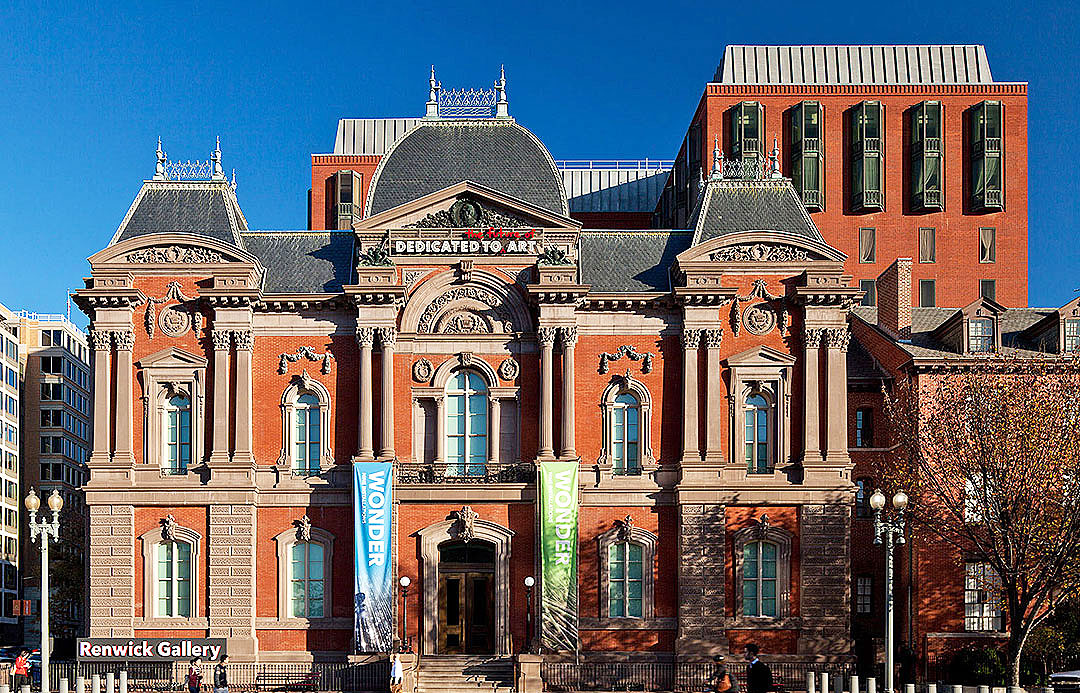
WASHINGTON, D.C. – “Sharing Honors and Burdens: Renwick Invitational 2023” focuses on fresh and nuanced visions by six contemporary Native American and Alaska Native artists who express the honors and burdens that connect people to one another. The exhibition features objects by Joe Feddersen, Lily Hope, Ursala Hudson, Erica Lord, Geo Neptune and Maggie Thompson that speak to the responsibility of ushering forward cultural traditions while shaping the future with innovative works of art. Their works are often culturally specific, yet they communicate across cultural boundaries. The 55 artworks in the exhibition arise from traditions of making that honor family, community or clan and require broad community participation.

The exhibition is on view from May 26, 2023 through March 31, 2024, at the Smithsonian American Art Museum’s (SAAM) Renwick Gallery in Washington, D.C. It is organized by guest curator Lara M. Evans, Founding Director of the Research Center for Contemporary Native Arts at the Institute of American Indian Arts in Santa Fe, NM, and current Vice President of programs for First Peoples Fund, with Nora Atkinson, the Fleur and Charles Bresler Curator in Charge at the Renwick Gallery.

“It is a great honor to spotlight these artists from Alaska, Washington State, New Mexico, Minnesota and Maine at SAAM’s Renwick Gallery, the preeminent center for American craft in the United States,” said Stephanie Stebich, the Margaret and Terry Stent Director of the Smithsonian American Art Museum. “It is also a special burden of responsibility to showcase their artwork in a way that recognizes the past, present and future. As visitors experience groundbreaking craft from these makers, we invite them to embrace a more nuanced understanding of how Indigenous perspectives and experiences are shaping American art today.”

It is the first time that artists chosen for the Renwick Invitational are all Native Americans and Alaska Natives. All are members of separate sovereign nations: Tlingit and Haida Tribes of Alaska, Nenana Native Association, Wabanaki Confederacy, Okanagan Nation and Fond du Lac Band of Lake Superior Chippewa. The artists were selected by a panel of distinguished jurors, including Evans; Miranda Belarde-Lewis, independent curator and the Jill and Joe McKinstry Endowed Faculty Fellow of Native North American Indigenous Knowledge at the University of Washington’s iSchool; and Anya Montiel, curator at the Smithsonian’s National Museum of the American Indian.

The exhibition includes 13 new artworks that were created within the past year in addition to three pieces the museum commissioned specifically for the exhibition: “Between Worlds (Child’s Robe)” by Hope, “Sister Bear” by Hudson and “The Codes We Carry” by Lord. The museum recently acquired Feddersen’s “Horses and Deer” and anticipates acquiring works by all of the featured artists for its permanent collection. 

Making serves as not only a form of self-expression, but also a powerful way of  processing everyday life and expressing ties to community. In doing so, each artist uses traditional forms of making – weaving, beading or sewing – and adapts the materials and techniques to create contemporary works of art. Individually, each craftsperson works in some manner with techniques, materials or concepts embedded within their tribe’s customary practices and history, but their work is also intended to engage with global audiences. Adding to the complexities of making are the unique decisions Native and Alaskan Native artists must often consider while creating, including balancing customary functional forms with beauty and personal narratives, determining which aspects are suitable to share with outside, non-Native audiences, and weighing the risks and benefits involved in adapting historical practices to new uses.

The artists in “Sharing Honors and Burdens: Renwick Invitational 2023” come from communities where making is an honored way of coming to know. For example, Feddersen is a printmaker, glass artist and basket maker who creates geometric patterns sourced from everyday life. Lord, a multimedia artist, crafts beaded burden straps and sled-dog blankets with abstracted representations of the diseases that disproportionately impact Native and other marginalized communities. Neptune is a master basket maker, activist and educator who uses colorful narratives to emphasize the honor and burden of keeping tradition alive. Hope and Hudson, who are sisters, weave labor-intensive textiles that convey Tlingit values of reciprocity and balance, maintaining cultural integrity while experimenting with new forms and materials. Thompson, a textile artist, creates large-scale works that explore the intersections of grief and trauma with honor, beauty and healing.

“In the summer of 2021, as Anya, Miranda and I discussed our selections, we found our way toward two related themes that link these artists’ practice and artwork: honors and burdens,” said Evans. “The artworks themselves make tangible the range of honors and burdens we carry with us, from the grief and trauma of personal and community loss to precious knowledge gained from teachers and ancestors. ‘Sharing Honors and Burdens’ helps us think about these ideas through beautifully crafted artworks, large and small, in stillness and in movement.”

A series of videos was produced for the exhibition, including an introductory video with guest curator Evans and six artist videos that focus on the artists in their studios produced by the Institute of American Indian Arts in collaboration with the museum. The videos are available on the museum’s YouTube channel and are part of the in-gallery presentation. Visitors are encouraged to reflect on the honors and burdens in their own lives via a response wall at the end of the exhibition.

Established in 2000, the Renwick Invitational showcases emerging and mid-career makers deserving of wider national recognition. “Sharing Honors and Burdens: Renwick Invitational 2023” is the 10th installment of the series. It is the latest example of the museum’s commitment to highlighting contemporary Native American artists and Indigenous voices through acquisitions and exhibitions.

Guest column: Native artisans want better access to the Grand Canyon

Guest column: Native artisans want better access to the Grand Canyon

As the executive director of the Hopi Foundation, Monica Nuvamsa’s day job keeps her busy in service to her community. But in her free time, she’s looking to invest in her art. Working in pen, ink, paints, and textiles, and inspired by her culture and heritage, Nuvamsa prints her designs on chiffon scarves, jigsaw puzzles, and more.

“It’s an expensive side hobby,” she says. “I wasn’t willing to take the risk to invest in my art when I went to college. But now that I have some foundation for myself, I can afford to grow.”

Nuvamsa’s dream is to sell her products in every national and state park across her ancestral homelands — places like Grand Canyon National Park, Chaco Canyon, Mesa Verde National Park, Wupatki National Monument, Tuzigoot National Monument, and Montezuma Castle.

“Those places are really important connections to my heritage, and I want my cultures to be represented in those spaces.”

Nuvamsa, a member of the Hopi Tribe, also traces her lineage to the Tewa people of the Rio Grande basin, the Acoma Pueblo, and the Havasupai Tribe within the Grand Canyon.

“I’m literally a swath of the Colorado Plateau. This is my homeland. This is who I am. Every space has a meaning for me and for my people.”

Nuvamsa is on her way toward realizing her dream. The Grand Canyon was the first park to come to her door, well, booth technically, at an art show in Flagstaff, Arizona. Nuvamsa started selling her puzzles to the Hopi House gift shop on the South Rim shortly thereafter.


Selling through middlemen

The park service relies on concessionaires — companies with long-term contracts — to run gift shops, hotels, restaurants, buses, and more. For artists like Nuvamsa, concessionaires are middlemen between them and their customers. But being a vendor selling wares to a concessionaire is limiting, she says. Xanterra, the company that buys Nuvamsa’s puzzles, purchases small quantities from her and caps the price it pays per item.

“They wanted to buy my scarves, but they don’t fit into their cost structure. I don’t want to eat into my value to do that, so I told them no until I am able to find a way to make it work more sustainably for me,” she says. “The cultural value and the significance that an artist adds, that’s really hard to put a number to. And it’s also hard for people to quantify who don’t have the same appreciation of what you structure into your value.”

Often, a lack of transparency exists around concessionaires’ pricing and markups.

“Before I sold to [Xanterra], I asked how much they’d sell it for, and they said, ‘we can’t really share that.’”

Nuvamsa found out by visiting the Hopi House gift shop to look at the pricing and was glad to learn the company stayed within the retail range they had discussed. Not every retailer will provide artists with retail ranges for their work. Some artists have a hard time negotiating these ranges because they don’t know how to value their work to include time and talent, in addition to the raw materials.

Overall, she says her relationship with Xanterra is going well. She’s happy with the display and presentation of her work at the Hopi House and feels her buyer is respectful of her and the other Hopi artists she knows.

Seeking change at Grand Canyon National Park

The challenges Nuvamsa describes are common for Native artists trying to sell their work in national parks and monuments. In August 2022, a group of Native entrepreneurs, tourism professionals, park service staff, concessionaires, and many others came together for the Emergence Intertribal Economic Summit to brainstorm new ways to do business at Grand Canyon National Park. Ideas flowed like the Colorado River in a flash flood.

To strengthen the arts and crafts market in Grand Canyon National Park, Native entrepreneurs want to see increased transparency, artist education (like how to price your products, business 101, marketing, etc.), trade shows, fair and equitable contracts, and more selling locations in the park, among other ideas.

Building a more inclusive Grand Canyon economy

Improving concessionaire support for Native artists is a good start toward building a sustainable and inclusive Grand Canyon economy. But to truly address economic barriers, challenges, and inequities, we need to think bigger.

To build a regional economy around the Grand Canyon, Nuvamsa says we should start by looking at the environments, geographies, challenges, and barriers tribes face in their own backyards.

“There’s a lot of equity building that’s needed,” she says. “I think it becomes a game changer when we ask for what we want, and most importantly, what we need. Because we’ve always given over to somebody else’s power, and that’s not gotten us anywhere.”

An Indigenized Grand Canyon, according to Nuvamsa, would be run by tribes.

“If the parks and the nation want to see this place sustainable, they should invest in tribes to do that. The Grand Canyon is a spiritual place for us, and the people that practice spirituality give it meaning. When we’re absent from that picture, it’s just a very big hole in the ground or simply a playground for recreationists.”

The Emergence Intertribal Economic Summit looks at new ways of doing business at Grand Canyon National Park, with the goal of building a regional economy guided by Indigenous cultural values.

Art Collective Chto Delat’s Members Fled Their Native Russia—But Kept Making Subversive Work

Art Collective Chto Delat’s Members Fled Their Native Russia—But Kept Making Subversive Work
Oxana Timofeeva, Dmitry Vilensky, and Tsaplya Olga Egorova in Berlin.

For 20 years, Chto Delat (“What is to be done?”) has been a leading voice in leftist activism in their home country of Russia, making work about art’s revolutionary potential to galvanize the public and activate political change amid persistent threats to freedom of expression. The collective was founded in 2003 by a working group of artists, writers, philosophers, and organizers from St. Petersburg and Moscow, and its work has been exhibited at institutions across the world, including the New Museum, the Centre Pompidou, and the Museo Universitario Arte Contemporáneo in Mexico City.

Chto Delat’s members—choreographer Nina Gasteva, artist and filmmaker Tsaplya Olga Egorova, writer and musician Nikolay Oleynikov, and artist and activist Dmitry Vilensky—produce video works, radio programs, publications, and public performance actions that center democracy, workers’ rights, and anti-fascism with the intention of suturing together art, activism, and theory. While the organization’s name references a 1902 political text by Vladimir Ilyich Lenin, it was primarily inspired by Nikolay Chernyshevsky’s 1863 novel of the same name, which Vilensky cites as a guide “for how to construct emancipatory collectives and make them sustainable within a hostile society.”

chto-delat-collective-russia

Stalled revolution is a recurring theme for the group—Chto Delat draws on Situationist theory to emphasize the ongoing possibility of self-actualization amid Russia’s tumultuous political shifts. In Chto Delat’s vision, art cannot be divorced from history or politics—rather, it is a tool to rectify narratives of oppression and give a voice to the marginalized. Its art-actions combine realist, surrealist, and absurdist elements with public spaces—city streets, university buildings—insisting that art’s role in society should not be confined to the gate-kept halls of the museum.

Its 2022 film installation, Canary Archives, expands on the metaphor of a canary in the coal mine (a warning sign to alert miners of danger) to underscore its members’ resistance to the military invasion of Ukraine. Among its nods to the Russian avant-garde, a modernist art movement that flourished after the Russian Revolutions of 1917, the collective publishes an English-Russian newspaper on issues central to Russian activist culture. The independent press uses manifestos, leaflets, and communiqués as tactics of democratic communication in an otherwise choked media environment.

In 2013, Chto Delat opened the School of Engaged Art in St. Petersburg, an incubator that invites newcomers to train in its philosophy through seminars and group work. The school became a flashpoint for Chto Delat in 2022, when accusations began to swirl that the collective was, in Vilensky’s words, “a training ground for young activists engaged in subversive anti-state activities.” Soon after, police searched the home he shared with Egorova, and confiscated computers, hard drives, and literature in anticipation of a criminal trial. Vilensky, Egorova, and Gasteva sought asylum in Germany, and now reside in Berlin.

For Vilensky, a key member of Chto Delat, groupwork is a way to resist “individualistic and selfish ideas of artistic genius.” Operating with a Creative Commons license, which allows for the free distribution and use of the group’s work, is a vital tenet of Chto Delat’s commitment to freely transmitting and sharing its message. “We advocate strongly for free access to our artistic production,” Egorova asserts.

Making socially engaged art requires Chto Delat to function as a “democracy of initiatives.” Any three members can act under the collective’s name so long as the project is presented to the wider group first. “Everything happens through collective discussion and is based on trust,” Gasteva says. Together, members edit and revise their ideas, accepting disagreement as a part of the process. “Of course, we have conflicts,” says Vilensky, “and whoever has the most passion is the one that wins.”

Sign Up for the Cultured Newsletter

Sure, we can be close friends. Unfiltered access awaits.

‘We Get the History We Are Ready For’: Meet the Native Women Artists Claiming Their Place in New York

‘We Get the History We Are Ready For’: Meet the Native Women Artists Claiming Their Place in New York
native-women-artist-new-york
Jaune Quick-to-See Smith, “Memory Map” (exhibition view), 2023. Image courtesy of the artist and the Whitney Museum of American Art.

If you’re in the New York area this month, you are poised to experience an unprecedented moment in art history: a burst of independently organized, essential art exhibitions featuring works by contemporary Native American women artists. 

“This is the largest wave we’ve ever had, and it’s more than a wave,” says Candice Hopkins, executive director and chief curator at New York’s Forge Project, which organizes a fellowship for Indigenous culture workers. “I think that this time, it’s going to stick. I’ve been trying to make this space happen for more than 20 years.”

Perhaps the most prominent of the current exhibitions is Jaune Quick-to-See Smith’s retrospective at the Whitney Museum of American Art, the first of a Native American artist organized by the institution. The Whitney will also open a presentation of New Mexico-based artist Rose B. Simpson’s larger-than-life-size concrete figures on June 3, with a billboard on Gansevoort Street opening September 18. Meanwhile, the Smithsonian National Museum of the American Indian in New York is opening the first major retrospective of Mohawk artist Shelley Niro on May 27; sculptor Marie Watt’s solo show at Marc Straus has been extended through May 20; and Sargent’s Daughters is showing Wendy Red Star at the Independent Art Fair this week and in their New York gallery (through May 20). Further up the Hudson River, the Thomas Cole National Historic Site in Catskill is featuring several Native female artists in the exhibition, “Women Reframe American Landscape,” on view through October 29. 

jaune-quick-to-see-smith-artwork-native-american
Jaune Quick-to-See Smith, Genesis, 1993. Image courtesy of the artist, the Whitney Museum of American Art, and Garth Greenan Gallery.

The spring surge offers a small taste of the diversity of art created by Native women, from Smith’s abstract paintings embedded with newspaper clippings and pop imagery to Niro’s humorous films and photographs using herself and her family as models. The spotlight arrives at a time when mainstream museums and galleries say they are looking to incorporate artists and histories they have historically excluded. There’s “a desire to grapple with history at a moment that feels like it is changing rapidly in front of our eyes,” says Whitney curator Laura Phipps, who organized the Smith retrospective. But this is only possible because the artists, and their relentless supporters, have been steadily working to build an ecosystem for themselves while the rest of the art world wasn’t looking.

One key advocate is Smith, who helped form the artist collective Grey Canyon in the 1970s, and organized the first U.S. traveling exhibition of contemporary art by Native women, “Women of Sweetgrass, Cedar and Sage,” from 1985 to 1987. She is also curating the National Gallery of Art in Washington, D.C.’s first exhibition of contemporary Native American art in 70 years, which opens in September. In her own work, Smith flips historical narratives, sometimes literally spinning maps of the U.S. onto their sides, as part of her “life’s work [of] … examining contemporary life in America and interpreting it through Native ideology.”

marie-watt-native-artist-new-york
Marie Watt, Singing Everything: Crescendo (Sustained Note), 2023. Photography by Kevin McConnell and courtesy of the artist and MARC STRAUS. 

“Would I be here without someone like Jaune Quick-to-See Smith?” asks Watt, a member of the Seneca Nation, from her Seattle studio over Zoom. “There have been many trailblazers, and this is just the tip of the iceberg.” Watt’s striking fabric and mixed media work was recently included in the Whitney Museum’s “Making Knowing: Craft in Art, 1950–2019,” where she hosted a series of sewing circles, inviting the public to collectively sew responses to a question inspired by the U.S. Poet Laureate Joy Harjo: What would you like to sing for this moment? The work that resulted is now on view at Marc Straus. 

When Watt was in school in the ‘80s and early ‘90s, she says she could not find a monograph on a Native artist anywhere. But Indigenous art’s influence runs deep. “The histories of modernism in the U.S. have been haunted by Native art, but it’s unacknowledged,” explains Hopkins, a Carcoss/Targish First Nation citizen, citing Jackson Pollock’s interest in Indigenous sand painting as one example. 

Hopkins notes that institutions in select regions—such as the Southwest, the Northwest coast, Denver, and Oklahoma—have focused more deliberately on Native artists, while commercial galleries like Bockely Gallery in Minneapolis and K Art Gallery in Buffalo (one of the only Native-owned spaces of its kind in the U.S.) also provide sustained support. The most powerful platforms in the art world, however, “have been the most reluctant to both self-educate, and realize they cannot tell the history of American art in a partial way any longer,” she says. “We get the art history we are ready for.” 

wendy-red-star-artwork
Wendy Red Star, Strawberry Chief (ishkóoshiite), 2023. Image courtesy of the artist and Sargent’s Daughters.

The many reasons the mainstream art world has not been “ready” for Indigenous history are the same reasons that traditional school curricula and pop culture haven’t been, either. “Indigenous genocide is the unspoken trauma of the founding of the United States, so it continues, because people don’t want to address it directly,” says Hopkins. “It is the one thing that challenges narratives of U.S. nationalism.” (Even today, Indigenous women are far more likely to be raped and murdered than other groups.)

Smith coined the term “buckskin ceiling” to describe the barriers facing all Native artists. And while Indigenous female artists from traditionally matriarchal societies offer a unique perspective on feminist ideology, they face a double bind in an art world that privileges men. 

Newer initiatives to support their work include the Native Women Artists Working Group, funded by arts patron Helen Kornblum and co-founded in 2020 by Hopkins. The self-described “direct-action group” brings together artists and curators, and helped lead to a current Faye Heavy Shield exhibition at the Pulitzer Arts Foundation in St. Louis, according to Hopkins. 

rose-b-simpson-artwork-native-artist
Rose B. Simpson, in collaboration with The Fabric Workshop and Museum, Dream House (installation detail), 2022. Photography by Carlos Avendaño. Image courtesy of the artist.

To Simpson, the current recognition is “a reflection that maybe humanity is willing to grow and look at things we haven’t been comfortable looking at for a long time.” A member of the Santa Clara Pueblo (Kha’po Owingeh), Simpson has been reluctant to exhibit in Native-only spaces, where she sees a higher risk of “objectification and stereotyping.” 

“I want so badly to have a conversation about what it is to be human,” she says. Her thinking is informed by watching her own mother, a contemporary ceramicist, “try to break out in her own way of the Native arts world, where—put a feather on it, or be loud about Native issues,” she says. “I saw that as another form of Othering.” 

It is also the risk this article takes by naming a group phenomenon. But the artists themselves, by virtue of being and making, are the ultimate testament to the contrary: from Niro’s decades of witty photographs to Red Star’s researched retelling of Apsáalooke (Crow) history to Simpson’s sculptures, at once vulnerable and powerful. As Hopkins says: “We need to heal, too.”

Sign Up for the Cultured Newsletter

Sure, we can be close friends. Unfiltered access awaits.

Metro Art commissioned artist Francesco Simeti leads a sketch and collage workshop at the West LA Veterans’ Garden

Metro Art commissioned artist Francesco Simeti leads a sketch and collage workshop at the West LA Veterans’ Garden

Detail of Francesco Simeti’s station artwork design in progress

Learn about artwork in progress for the under-construction Westwood/VA Hospital Station and participate in an art making workshop with artist Francesco Simeti on Tuesday, May 23 in the West LA Veterans’ Garden at the West Los Angeles Veterans Administration (VA) Medical Center. Simeti, one of four artists commissioned to create site-specific, integrated artwork for the station, will lead workshop participants in creating sketches and collages inspired by the Veterans’ Garden. Participants may choose to have their work considered for inclusion in the artist’s final design for the station.

Tuesday, May 23, 2023 
11am-2pm

West LA Veterans’ Garden 
100–138 Davis Ave
Los Angeles, CA 90049

(located behind the Jackie Robinson Stadium on Davis Ave, note: map apps call it the “Grow Native Veterans’ Garden”)

RSVP by Friday, May 19 by email MetroArt@metro.net or call (213) 922-4278 

Art supplies and lunch will be provided to attendees who RSVP by the deadline.


Plan your trip using Transit app. To get there, take Metro E Line (Expo) to Expo/Bundy Station to ride Metro Bus 14 to Montana/Barrington.

For more information, visit metro.net/art


Click here to read more about the artists selected to create artwork for the Purple (D Line) Extension Transit Project.


About Metro Art  

Metro Art enhances the customer experience with innovative, award-winning visual and performing arts programming that encourages ridership and connects people, sites and neighborhoods throughout LA County. A diverse range of site-specific artworks are integrated into the growing Metro system, improving the quality of transit environments and creating a sense of place.  

Click here for more information about the Metro Art program. Follow Metro Art on  Facebook and Instagram, and subscribe for email updates on upcoming meet-the-artist events.

Behind the Artist: Covering 75’s Samantha Lacy

Behind the Artist: Covering 75’s Samantha Lacy
image
[embedded content]

Each month in 2023, we’re asking a local artist to recreate one of our iconic covers from the past 75 years. For May, we tapped our very own Art Director and North County native, Samantha Lacy to reimagine a 1961 cover. You can see her recreation here and learn more about her in the Q&A below:

Tell us about how you found your distinguished style and how you honed your skills?

My mother always said I should be a medical illustrator. Not much money in that, haha, but I’ve always loved old botanical prints and Audobon’s lithographs. I think if I had a different life I’d be happy as an ornithologist. I’m just a bird nerd at heart, and I’ve been drawing plants and animals forever.

I love watercolor because it’s buildable, it’s easy to work with, and it has this dreamy quality that I’m drawn to. I think my style has transitioned over the years to become more realistic, but believe me, there’s a surrealist weirdo inside of me, too.

What artists do you admire or look up to? What makes their art or creations so special to you?

I’m totally obsessed with Tiffany Bozic. Her work would maybe be my ideal for myself if I was a studio artist full-time. It’s full of allegory and double entendre, while also subtle, carefully crafted, and just gorgeous. She’s diligent that the Maplewood panels she uses are sustainable, and that she’s as conservative as possible about her paint usage.

I also love Walton Ford, and Stephanie Brown, who’s an amazing tattoo artist. There are so many others. I admire artists who use nature to tell us stories about ourselves. We’re nothing without it, yet so often we think we’re something else.

How do you think your art reflects the Southern California lifestyle? How does living in San Diego play a role in the way your art comes to life?

Living in Southern California is incredibly inspiring to me, especially in the art that I do, and would like to do more of. We have this Mediterranean scrub climate, that at first seems static and dry throughout the year. But it’s actually dynamic, full of life and biodiversity, and you can be outside almost every day. I try to notice the subtleties, and the differences around me month to month. It helps calm me down and reminds me that everything changes, life isn’t always going to be what it is right now. Be grateful where you are, and look forward to what’s coming.

What are some of the brands you have enjoyed working with the most?

I’m so grateful to be a part of this team at SDM. We’re ambitious, not afraid to take risks, raise the voices of local artists and thinkers. I think we’re at the dawn of a great thing here, and I’m thrilled to be included. I want to take us to new territories in our visual direction, and always keep growing and learning. I have these two parts of me as an artist: the graphic designer side and the illustrator side. I want to continue to build those passions individually, but it’s been exciting to get to show both in the pages of the mag.

Where do you like to go to get away and relax?

I’m definitely a homebody. Nothing beats an evening in with my wife and my cat and a home-cooked meal. But I also get out and walk the beach in North County, go on a run along the rail-trail or a surf north of Swami’s. Getting exercise and being in nature refills my batteries. 

Where can people find your work to admire you?

People can find my work every month in San Diego MagazineThat’s probably the best place to find me regularly, but maybe one of these days I’ll actually make an art website. My focus is on my work as Art Director here, but I’d love to one day explore more avenues with my traditional art. Stay tuned.