Native

Jacobson House Native Art Center to host grand reopening after 3-year closure during pandemic

Jacobson House Native Art Center to host grand reopening after 3-year closure during pandemic
image

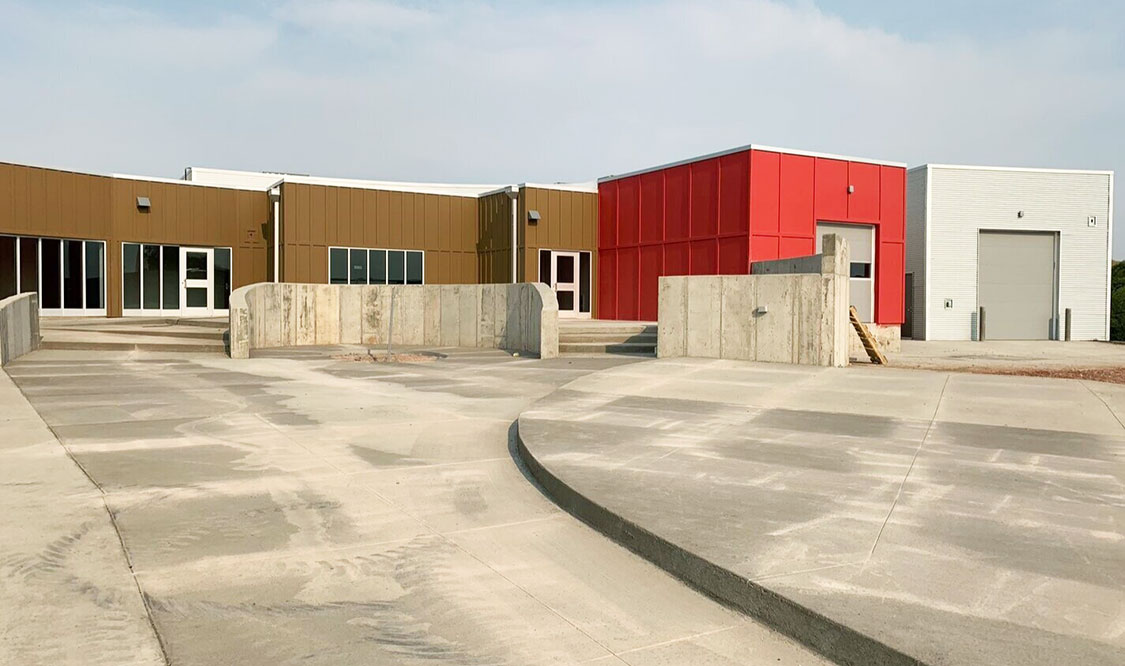
The Jacobson House Native Art Center is hosting its reopening on May 20 and celebrating with a new exhibit, silent art auction and tribal performances.

The center closed when the COVID-19 pandemic hit, and during its closure, the University of Oklahoma reinvested into the property. Now three years later, the Jacobson House Native Art Center is reopening its doors to the public with a new look and new displays.

Chair of the Jacobson House Board of Trustees, Brent Greenwood, detailed the obstacles faced during the center’s closure.

“(The closing) gave us the chance to get some things done to the house,” Greenwood said. “There were a lot of talks and discussions leading up to what has happened, and it’s been years trying to get on the same page to get OU on board with our efforts. I think it’s all about timing, and it all fell into place for us. The investment also created a renewed energy amongst the board and the community.”

The Jacobson House is named after Oscar B. Jacobson, the OU School of Art director from 1915 to 1954. Jacobson and his wife Sophie built the house in 1917 and 1918, raised their three children and kick-started their careers within the home.

The pair co-wrote essays on Native American art, and Sophie published works such as “Berber Art” under the pen name of Jeanne D’Ucel.

Alongside his work at OU, Jacobson taught lectures on Native American art and promoted artists across America and in Europe. During the Great Depression, Jacobson commissioned Native American artists for work through the Works Progress Admistration’s Federal Art Project.

Jacobson is credited for creating a program that led to the group known as the Kiowa Six, a group of six people from the Kiowa tribe who were admitted into OU and whose art was shown around the world by Jacobson.

“What we’re doing today is continuing the mission of the Jacobson House, which was to promote Native arts and culture through programming, services and outreach to the community,” Greenwood said.

The Jacobson House Native Art Center’s reopening will showcase artwork by the Kiowa Six, as well as other Native American artists. The event will also feature singers, a tribal blessing, a reading from a Kiowa Six’s descendant Oscar Hokeah, a food truck outdoors and more.

With the house located within walking distance from the university, the reopening will provide students the ability to witness and draw inspiration from what Greenwood describes as “a moment in time.”

“(Art) documents are the provenance of where our people were at that time,” Greenwood said. “That narrative and explanation isn’t often told through a tribal lens.”

The Jacobson House Native Art Center will reopen from noon to 6 p.m. on May 20. The event is free to attend.

This story was edited by Silas Bales and Emma Blakley. Nikkie Aisha copy edited this story.

‘Keep the medicine going’: Polson teacher inspires boys to wear hair long

‘Keep the medicine going’: Polson teacher inspires boys to wear hair long


Image-1.jpg

Rod First Strike, cultural specialist in Polson, is encouraging young boys to wear their hair long. 


In 2021, when Rod First Strike was working as a cultural specialist at Linderman Elementary in Polson, he noticed a lot of kindergarten and first-grade boys were being teased for wearing their hair long.

Hair holds significance in Indigenous cultures. It’s seen as a source of strength, connecting Native Americans to their ancestors. And often, when a loved one dies, Native people may choose to cut their hair short to symbolize the profound loss. Some say long hair is a sign of resilience, as Native people were forced to cut their hair short as a form of assimilation in government-run boarding schools. And in some places, long hair remains controversial. A network of charter schools in North Carolina has a policy prohibiting male students from wearing long hair, and the Native American Rights Fund intervened, urging the school to “permanently remove the discriminatory and outdated assimilationist policy.”

First Strike said caring for long hair is also a form of meditation.

“It gives you some time to check in with yourself,” he said. “And it can be social, too. You can tell what kind of condition a person is in by the condition of their hair.”

First Strike, who is Blackfeet, Assiniboine and Cree, said the problem with teasing boys for wearing their hair long is two-fold.


Image-1 (1).jpg

Rod First Strike, cultural specialist in Polson, said Indigenous hair traditions deserve respect in schools.


“It’s an insult to culture,” he said. “It’s also a subtle form of gender comparison or sexism. If you are teasing a boy for looking like a girl, it’s implying that being a girl is a bad thing. There’s no shame in being a girl.”

First Strike also saw himself in the boys he teaches. He remembers being ridiculed and mocked when he was young for wearing his hair long. He grew tired of explaining its cultural significance and wished he had a role model or someone who could stand up for him and teach his classmates what it meant to have long hair.

First Strike wanted to change the narrative and be that person for his students.

In 2021, he started raising money to give boys who wore their hair long braided sweet grass and a certificate to “keep the medicine going,” or continue to grow their hair.

First Strike later got a promotion and began working with 400 students from kindergarten through fourth grade. He counted 36 boys — Native and non-Native — who wore their hair long. Last year, he raised money to buy materials so the children could make ribbon shirts for themselves. First Strike said it was important to include non-Native boys who wore their hair long “to knock down gender norms.”

Our favorite photos of the week from May 1 to May 7.


“You can raise awareness, you can push for diversity, but what I really want is inclusion,” he said. “It gives us a stronger community. It makes kids less shocked by differences and more likely to embrace each other’s differences. Instead of saying, ‘That’s weird,’ it’s saying, ‘That’s cool!’”

Now, First Strike is raising money again to commission and pay Native artists to make beaded ropes for each boy with long hair.

He said he’s already seen a change in the community since his initiative began two years ago.

“Most of the boys embrace one another,” he said. “We don’t have as much division. This local community in Polson is very supportive.”

First Strike’s fundraiser is called “Boys with Braids” and can be found on GoFundMe.

Waytula honors elders through Eighth Generation collaboration

Waytula honors elders through Eighth Generation collaboration
image

SAND SPRINGS – After a friend and fellow Cherokee artist suggested he apply for one of Eighth Generation’s 2021 Wool Blanket Design Contests, Cherokee Nation citizen Bryan Waytula did just that.

“My friend, Jules Thornton, sent me a link just randomly … through Facebook Messenger and just said, ‘hey, I think you’d be great for this. I think you should apply,’” Waytula said.

In the midst of the pandemic with multiple art markets being shutdown, Waytula jumped at the opportunity. Waytula entered Eighth Generation’s, an art and lifestyle brand based in Seattle, Elder Wool Blanket Design Contest and submitted a design to honor his family and Cherokee elders through showcasing basket-weaved designs.

“As a Cherokee artist, I always think about our elders. I grew up around so many artists and so many basket weavers and then my grandmother (Cherokee National Treasure Betty Scraper Garner) and mom (Cherokee National Treasure Vivian Garner Cottrell) teaching so many other Cherokees but also the visitors we’d have come in that would take a class,” he said. “So, I was wanting to do something around our Cherokee patterns in basketry.”

Waytula’s winning design is called “Cherokee Treasure” and is a wool blanket that includes patterns such as the noon day sun, chief’s daughter and the double chief’s daughter.

“Mom was working on a basket during that time that really inspired me to collaborate with her on our patterns and the meanings and the color scheme. I didn’t take exactly from her basket but … I came out with a really neat pattern that I thought was eye catching – having mom and my grandmother’s inspiration and all the other elders that have kept our traditional arts alive,” Waytula said. “We don’t own any of these patterns, you know, these are patterns that our people have created, and mom’s just been working tirelessly to save those.”

Since the blanket came out, Waytula said he has received “many” compliments.

“I’ve gotten so many compliments from my peers and artists and art collectors on the design itself. The feedback’s been amazing,” he said.

As for collaborating with Eighth Generation, Waytula said he was “excited” to do so.

“I’m really excited to be collaborating with a company like Eighth Generation, fully owned and comprised of Native American people and working with Native American artists,” he said. “Being able to put those historical patterns that we’ve used for generations is pretty neat to see on the national level.”

To purchase Waytula’s “Cherokee Treasure” wool blanket, visit his Etsy page by searching “BryanWaytulaArt” or Eighth Generation at eighthgeneration.com/collections/blankets/products/cherokee-treasure-wool-blanket.

Waytula added when purchasing the blanket through his Etsy page, buyers will receive the blanket in a signed box.

“So that’s kind of the perk of getting it from me,” he said.

In Focus: Sanford Health Recognizes Native American Youth Photographers

In Focus: Sanford Health Recognizes Native American Youth Photographers
[embedded content]

The halls of Sanford Bemidji Medical Center now feature photographs from local Native American artists.

“Eagles Come Telling Stories,” or Bi-Dibaajimowag, is a collaboration between Sanford Health and the Watermark Art Center that spotlights Native American culture and art.

When it comes to holistic healing, this practice can go past the physical. For area hospitals like Sanford Health in Bemidji, they are considering the cultural aspects of the process. By integrating Native American practices like smudging or photographs by up-and-coming artists, these efforts can work to create a more inviting and educational environment for all patients.

While the main exhibit is through the East Entrance at the hospital, more photographs are scattered around the halls. One other practice To help make things more inclusive, Sanford is also planning is to hold a discussion with patients about their treatment.

Lakeland News is member supported content. Please consider supporting Lakeland News today.

image

Oglala Lakota Artspace To Hold Grand Opening

Oglala Lakota Artspace To Hold Grand Opening
Oglala Lakota Artspace

KYLE, SD – The Oglala Lakota Artspace (OLA) will hold its grand opening on Saturday, May 20, 2023, from 10:00am to 5:00pm. The arts center supports Indigenous artists and culture bearers in and around the Pine Ridge reservation. The grand opening celebration will feature, music, poetry, art workshops, and cultural events and food trucks will be onsite.

“The foundation of FPF’s work is in my home community on the Pine Ridge reservation and where our work began over two decades ago”, said Lori Pourier, President/CEO of First Peoples Fund. “We believe Indigenous arts and culture are vital to solving the systemic, generational, social, and economic challenges faced by Native nations across the country. When we launched the Rolling Rez Arts bus in 2016, we had yet to realize the possibility of the Oglala Lakota Artspace. Today, OLA is the first-ever arts center, classroom space, studios, and credit union dedicated to artists and culture bearers on the Pine Ridge reservation. I am elated to see the building come to life with artists and community members. It is truly the Indigenous Arts Ecology in action – a relationship-based, collective arts ecosystem that is grounded in ancestral knowledge that integrates space, spirit, people and lifeways.”

The grand opening will highlight the local Indigenous community’s rich traditions and creative expressions. Visitors can expect a vibrant and inspiring atmosphere, with opportunities to learn, engage, and connect with community members.

“Artspace is thrilled to celebrate the grand opening of the Oglala Lakota Artspace,” said Kelley Lindquist, President of Artspace. “This creative hub will provide essential resources and connections to help build a more sustainable and vibrant future for the people of the Pine Ridge reservation and beyond. We are proud to be a part of this collaborative effort and look forward to the arts center’s impact on the community.”

The Oglala Lakota Artspace grand opening is open to the public and free of charge.

Artists Collaborate With Outreach Program to Create Connection Among Students

Artists Collaborate With Outreach Program to Create Connection Among Students

May 08, 2023

Photo Submitted

Watson Elementary School students rehearse for a showcase presentation through Arkansas A+ pARTners After School Program.

A U of A outreach program, Arkansas A+, provides after-school arts opportunities for students in underserved schools in the Little Rock School District.

Now in its third semester, pARTners After School Program has expanded to serve students at Watson, Chicot, Mabelvale and Stephens elementary schools. The grant-funded project is a partnership between Arkansas A+ and Little Rock Community Schools. The goal of the program is to increase access to after-school care for families while providing arts enrichment opportunities for students. The spring semester was the first for the program at Mabelvale and Stephens elementary schools. The program will return to all four schools in fall 2023.

Each after-school program runs for eight weeks and includes performing and visual arts modules led by experienced teaching artists. At the close of this semester’s program, Arkansas A+ sponsored a student showcase to share the students’ work with their families and school communities.

Alyssa Wilson, executive director of Arkansas A+, held a professional development workshop with the program teams at which teaching artists worked with art teachers from each school to begin their planning. Wilson said, “During those sessions, the word ‘connection’ kept reappearing as important to our work with the program. Connections across our program team, connections with our program students, connections among the students and connections to the arts that were being explored. This realization led to our adopting ‘Connection’ as our overarching concept for the program.”

Visual artists Jose Hernandez and Syd Carmichael explored layering, color, texture and subject matter with students by creating a mural. They shared, “Something that really stands out for us was the way in which the students both connected with each other and with us. At first, the students would be shy, but as the program went on, we saw them come out of their shells and really flourish. Both their abilities and their self-esteem grew.”

Patty Oeste, a performing artist, focused on music with the students. They learned the Native American flute, composed a class piece and performed the piece with soloists who volunteered to improvise throughout the piece. Harnessing the energy and creativity of the students, they went on to play hand drums and choreograph their own drumline. At the end of the program showcase, students invited their families up to dance with them using a parachute and choreography they had created. One student said, “Music is my life. It is there when I am sad, afraid, happy or alone.”

Arkansas A+ is a U of A College of Education and Health Professions outreach program. It provides schools with ongoing professional development, an intricate network of support and an active research component. In Arkansas A+ schools, teaching the state’s mandated curriculum involves a collaborative, multi-disciplined approach with the arts — dance/movement, theater, music, creative writing and visual arts — continuously woven into every aspect of a child’s learning. The hands-on curriculum ignites student learning and leads to higher achievement.

Art shows hope amid dark history

Art shows hope amid dark history

Dave Kanietakeron Fadden points to a piece of his artwork displayed at BluSeed Studios in Saranac Lake on Friday.
(Enterprise photo — Aaron Marbone)

SARANAC LAKE — Dave Kanietakeron Fadden stood next to the favorite of his paintings in the gallery at BluSeed Studios on Friday, speaking to a crowd gathered in a semi-circle around him about the history of residential schools.

Behind him were hundreds of sullen faces in black and white. He spoke about how these schools in the U.S. and Canada — which were largely established by Christian missionaries and operated by Christian churches with government funding — stripped Indigenous people of their culture for over a century, taking off their traditional clothes and putting them in military uniforms, cutting their hair and severely punishing them if they spoke their native language.

It is a painful part of his history, one which nearly destroyed that language, he explained.

“But this is where we are now,” Fadden said, sweeping his arm across the image. At the right-most edge of the canvas, there’s an explosion of vibrant color, braided hair and laughter.

“We’re coming out of that dark period,” he said. “We’re able to practice our culture. We’re able to wear our traditional outfits, go to our ceremonies. We have self-determination of our own future.”

Dave Kanietakeron Fadden speaks to a group of people about his artwork at BluSeed Studios in Saranac Lake on Friday.
(Enterprise photo — Aaron Marbone)

History

Fadden grew up with artists and creators all around.

His father was an art teacher. His mother, a wood carver and potter. His grandfather, who founded the Six Nations Iroquois Cultural Center in Onchiota — which his family still runs — was a prolific bead worker. On the other side of his family, his grandmother was a basket maker and his grandfather made lacrosse sticks.

“Everyone did something,” Fadden said.

He got his start in the visual arts by drawing on the walls of his parents’ living room in a corner hidden away by the curve of a sectional sofa.

“Caveman art,” he called it.

Inevitably, his mother found his sketchings. But rather than scolding him, he said she bought him a desk and materials. He is thankful for her encouragement.

What were those earliest works, crafted in secrecy and hidden away from sight?

“Who knows?” Fadden said.

He just kept drawing and realized he had a gift. The struggle was to make a living off it. He got his first book illustration job at age 19. He estimates he’s produced more than 400 books by now.

It pays the bills, but his passion is painting portraits. His subjects are Indigenous people and people he knows. Fadden said he has always wanted to show the whole range of emotions in their faces.

“There are lots of misconceptions in popular culture about Indigenous people that we are all stoic,” Fadden said.

There are some grim-faced subjects in his work, but more often there are faces of joy, sadness, excitement and peace.

On the wall opposite the painting of the children is a portrait of a single face, a sub-chief in the Turtle Clan of the Mohawk nation, and Fadden’s cousin. His laughter can almost be heard from the painting.

“Stoic? Not this guy,” Fadden said. He was always telling them dirty jokes.

Inspiration

Scattered around the gallery is a series of mosaic-style paintings — portraits made from intricate networks of smaller tiles depicting native patterns, cultural touchstones and pieces of Fadden’s life in a mix of pointillism and collage.

These images are striking from a distance. But moving closer, close enough to smell the paint, they reward close inspection with hidden treasures, like a “Where’s Waldo” book. Some premeditated, some just representations of what was on his mind at the time he drew it.

He pointed out a couple: “There’s the coronavirus. … There’s Black Lives Matter. … There’s Yoda.”

Many of his paintings have Star Wars references hidden in them, a tribute to his friend Joe Barnes. Fadden remembers the day he visited Barnes and saw his historic Star Wars memorabilia collection — thousands of pieces.

Barnes died in 2018, so now Fadden paints his memory into every piece he can. On the right side of the painting of the children is a young Barnes, grinning and wearing a pendant with the emblem of the Jedi Order.

Fadden said he was inspired by Chuck Close, a New York City painter whose photorealistic works printed in magazines captivated him as a kid, whose large canvases intrigued him as a young adult and whose creativity in mosaic portraits made him want to expand as an artist. In 1988, Fadden said, Close suffered a collapsed spinal artery, which paralyzed him. He could move his arms, but he couldn’t hold a brush. So he would tie a brush to one hand and use the other to guide it.

“I was like, ‘I’ve got everything here. What’s my excuse?’” Fadden said.

This is Fadden’s second solo showing. The first was in 2020, right at the onset of coronavirus pandemic-related lockdowns. But he’s been a part of many group shows, including one at BluSeed last year focused on water. After that show, BluSeed Executive Director Marissa Hernandez asked him to do a solo exhibit.

Fadden’s medium is visual, but he said it speaks to the importance of language in his culture.

His grandmother was in one of these residential schools, and he said she lost the ability to speak Mohawk. If she did, the nuns hit her. She told him about another girl, 6 years of age, who did not speak a word of English. When she spoke Mohawk, the adults would lock her in a windowless closet all night.

She didn’t know why because the nuns didn’t communicate with her, but she realized it happened when she spoke, so she stayed silent for two years, Fadden said.

“We’re at a critical stage in our existence,” he said.

Language is especially important for Native Americans because they did not have a written language. Traditions, history and politics were all passed on verbally. These schools did a lot of damage, he said. They taught shame as children were told they were going to burn in hell for their spiritualism if they didn’t assimilate into Christianity. Residential schools opened after the Civil War and the last school only closed in 1997.

The reference for Fadden’s painting of the children is a class photo from Carlisle, Pennsylvania, which had a class of around 1,000. The man who founded this school is infamous for his motto, “Kill the Indian, save the man.”

But Fadden’s painting is titled “Kill the Indian. Save the man, fail.” These schools failed in killing the Indian, and the evidence is all around at BluSeed.

The free exhibit, sponsored by the Adirondack Diversity Initiative, is open to the public on Tuesdays, Wednesdays and Saturdays from 2 to 6 p.m. Fadden will be back for the exhibit closing and an artist conversation on June 25 from 5 to 7 p.m.

Today’s breaking news and more in your inbox