Native

Quad City Art’s Visiting Artist Series features Martha Redbone May 8-12

Quad City Art’s Visiting Artist Series features Martha Redbone May 8-12

DAVENPORT, Iowa (KWQC) -Since 1974, the Quad City Art’s Visiting Artist Series has engaged residents of all ages in quality arts experiences with professional performing artists.

Native and African-American vocalist/songwriter/composer/educator, Martha Redbone, known for her unique gumbo of folk, blues, and gospel from her childhood in Harlan County, Kentucky infused with the eclectic grit of pre-gentrified Brooklyn, is the artist in residence May 8-12.

Martha’s engagement is supported by the Arts Midwest GIG Fund, a program of Arts Midwest that is funded by the National Endowment for the Arts, with additional contributions from the Iowa Arts Council and the Illinois Arts Council Agency.

Redbone will be performing a full-length public concert 7:30 p.m. on Saturday, May 13 at the Redstone Room, Common Chord, Davenport, presented by Quad City Arts and Common Chord. More information at https://www.commonchordqc.org/event/martha-redbone-in-the-redstone-room-at-common-chord/

Visit Martha Redbone’s website at https://martharedbone.com/

Madras’ Art Adventure Gallery is art central for Jefferson County

Madras’ Art Adventure Gallery is art central for Jefferson County
Art Adventure Gallery is housed in a former restaurant on northbound U.S. Highway 97 in downtown Madras. Photo by: D. “Bing” BinghamArt Adventure Gallery is housed in a former restaurant on northbound U.S. Highway 97 in downtown Madras. Photo by: D. “Bing” Bingham
Art Adventure Gallery is housed in a former restaurant on northbound U.S. Highway 97 in downtown Madras. Photo by: D. “Bing” Bingham

On a cold and wet high desert night, Art Adventure Gallery’s newest board member, Jana Charl, jumps in her Jeep and dodges potholes of legendary proportions as she hurries along the muddy road from her uncle’s ranch to a meeting in Madras.

When Charl left her Los Angeles home in 2017 for her uncle’s Jefferson County ranch, she thought of it as a retreat from the lifestyle and commercial art she used to support herself. She wanted a change in her circumstances, space to seek more international residencies, and a chance to do her art for herself. She assumed she’d eventually make her way to the Portland art scene.


OREGON CULTURAL HUBS: An occasional series


She never made it.

“I came to Oregon for the quality of life and was a bit surprised to find it” in Madras, she said. “Everyone was so welcoming.”

Her first show at the gallery was a feminist exhibition with female forms that exaggerate curves. It wasn’t art that typically conservative Jefferson County had seen before.

“Everyone was just curious, that’s what I loved about the show,” she said. “The difference in showing here is that people aren’t inhibited in asking questions. I love that.”

She sold a painting during the show, and realized, “I can sell art here.”

Art Adventure Gallery is “art central” in Jefferson County, one of Oregon’s most ethnically diverse regions. Official census figures vary slightly, but in the region the gallery serves, including some of southern Wasco County, the population is about equal thirds Native American, Hispanic, and non-Hispanic white.

That was part of the attraction for Portland ex-pat and gallery Director Coralee Popp. “There was such cultural diversity and the things that could happen in a small community were amazing to me,” she said. For example, “I remember when they built the present library and the community lined up in the street and passed books, one by one, to get them to the new building.”

Madras, with a population a shade higher than 8,000, is a small (think: Little Brother of Central Oregon communities) working-class town in an agricultural community. The three-block-long downtown area, including the Art Adventure Gallery, straddles U.S. Highway 26.

Coralee Popp (left), director of Art Adventure Gallery, and Jana Charl, the newest member of the gallery’s board, each found an unexpected artistic home in Madras. Popp created the mosaic horse, “Rocinante,” when she was studying at the Pacific Northwest College of Art in Portland and brought it with her to Madras in a horse trailer. Photo by: D. “Bing” BinghamCoralee Popp (left), director of Art Adventure Gallery, and Jana Charl, the newest member of the gallery’s board, each found an unexpected artistic home in Madras. Popp created the mosaic horse, “Rocinante,” when she was studying at the Pacific Northwest College of Art in Portland and brought it with her to Madras in a horse trailer. Photo by: D. “Bing” Bingham
Coralee Popp (left), director of Art Adventure Gallery, and Jana Charl, the newest member of the gallery’s board, each found an unexpected artistic home in Madras. Popp created the mosaic horse, “Rocinante,” when she was studying at the Pacific Northwest College of Art in Portland and brought it with her to Madras in a horse trailer. Photo by: D. “Bing” Bingham

With 76 members, Art Adventure Gallery is entirely volunteer driven, including the director, and works to exchange ideas and art opportunities among cultures over the entire northern Central Oregon region. Its non-juried shows are open to any art medium, including painting, sculpture, ceramics, photography, and the literary arts.

“This gallery is awesome,” said Natalie Kirk, former curator for The Museum at Warm Springs and director for Tananáwit, a collective of Native American artists. “It’s a wonderful opportunity for the whole community.”

Housed in a former restaurant, Art Adventure Gallery opened in 1986. Marjean Whitehouse, then mayor of Madras, hatched the idea and enlisted the aid of four determined women from the local art world: Camille Green, Terry Black, Alice Brown, and Sharon Dodge, who became known around town as “three colors in a car.”

Sponsor

Oregon Children's Theatre Where the Mountain Meets the Moon Newmark Theatre Portland Oregon
The April opening of the annual All Jefferson County show draws a hometown crowd. Photo by: D. “Bing” BinghamThe April opening of the annual All Jefferson County show draws a hometown crowd. Photo by: D. “Bing” Bingham
The April opening of the annual All Jefferson County show draws a hometown crowd. Photo by: D. “Bing” Bingham

“More exposure to art was something the community needed,” said Green, a visual artist. “I figured it was part of my purpose,” adding, “I knew how to do art; I had no idea I’d be able to run an art gallery.”

The Jefferson County Arts Association, along with Art Adventure Gallery, was born and continues to this day due to community support.

Not long after it opened, the gallery began hosting field trips by local grade school children and started the popular All Jefferson County show, which this year runs through May.

As statewide shows came and went, the gallery’s focus remained on local talent.

In the early 2000s, Jefferson County artist and author Lynn Miller organized an internationally attended auction of horse-drawn equipment that began in Sisters and later moved to the Jefferson County fairgrounds in Madras. To support the auction and his magazine, Small Farmer’s Journal, he regularly displayed his artwork at the gallery.

“I’ve shown my work at high-end galleries up and down the West Coast,” Miller said, “but this gallery is one of my favorites. There’s nothing like showing your work to a hometown crowd.”

Emerging Native American photographer Edward Heath, who has a one-man show running through May 27 at The Museum at Warm Springs, said he got his first public exposure at the gallery’s All Jefferson County show. For him, “it was a little unexpected and pretty exciting.”

Like galleries nationwide, Art Adventure has had to cope with changes brought about by the pandemic. Revenues dropped and attendance was low, even once mandates eased. What had worked was no longer effective.

The board’s response was, once again, to reach out to the community. They asked Charl to join the board and requested she apply her digital and marketing expertise to the situation.

The All Jefferson County show includes a series of busts by Coralee Popp, and paintings by (from top left) ,,,,,, Photo by: D. “Bing” BinghamThe All Jefferson County show includes a series of busts by Coralee Popp, and paintings by (from top left) ,,,,,, Photo by: D. “Bing” Bingham
The All Jefferson County show includes a series of busts by Coralee Popp, and paintings by Stephanie Cissna (bottom left) and Mary Stellar, both of Madras. Photo by: D. “Bing” Bingham

Another sign of shifting patterns comes from the extended art community.

Throughout the years, the Hispanic population of Jefferson County has been reluctant to display art at the gallery. Ask the gallery’s old-time board members why, and some shake their head and others say, “I just don’t know, maybe it’s cultural?”

But like much else after the pandemic, the long cultural dry spell is about to lift.

In July, the Milagro Latino Artist Fund will display work at the gallery by Portland artist Hampton Rodriguez.

The show comes with the board’s fervent hope that the local Hispanic population will be inspired to display their work. Perhaps, this along with other changes will pave the way for Madras’ Art Adventure Gallery into the future.

Time — and community volunteers who support Jefferson County art — will tell.

Counterpublic in St. Louis Pushes the Public-Art Envelope

Counterpublic in St. Louis Pushes the Public-Art Envelope
image

One of the largest civic exhibitions in the United States challenges artists to help invigorate neighborhoods.

ST. LOUIS — Counterpublic, the innovative public art exhibition in this city that is holding its second edition this spring, cultivates its distinctiveness.

Its first iteration, in 2019, was a hyperlocal concept: a triennial at storefront scale, bringing projects by St. Louis and national artists to parks, bakeries and taquerias on Cherokee Street, on the city’s south side.

This year it follows again a geographic method. But its footprint is much bigger, with 37 commissions along a six-mile axis. They range from monumental to barely-there.


Some are made to stay. Damon Davis, who earned notice for his art around the 2014 Ferguson protests, has built a tribute to Mill Creek Valley, the bustling hub of Black St. Louis that the city abruptly razed in 1959. It is a major public sculpture with eight pillars that embed names and memories of residents. They stand on the plaza of a new soccer stadium, with more pillars planned for other sites along a one-mile route.

In long-neglected North St. Louis, the British Ghanaian architect David Adjaye is erecting a sculpture of rammed-earth walls in a pattern that recalls the symbology of Ghana’s Akan people on the grounds of the Griot Museum of Black History, a gift to this strapped community institution. And Jordan Weber, a regenerative land sculptor from Des Moines, is building a permanent rainwater garden for a community land trust.

Rendering of David Adjaye’s sculpture of rammed-earth walls on the grounds of the Griot Museum of Black History.Adjaye Associates

Other projects are more abstract. A performance video by the choreographer Will Rawls, for instance, offers a mood map of the intersection of Jefferson Avenue, the thoroughfare that the show follows, and Interstate 44. It features the dancer Heather Himes Beal and screens in locations where it was filmed, including a library and a McDonald’s. (It’s also online.)

In a riverfront industrial zone, a sound-and-video work by the artist X (previously Santiago X) is projected after dark onto a bluff; it evokes how damming and channeling the Mississippi broke human connection to the river. A newspaper box in front of the city sewer agency holds a publication by Virgil B/G Taylor, a Berlin-based artist who has embarked on a kind of technical-poetic study of the sewer system, also yielding an Instagram chatbot.

In a more participatory register, the local artist Simiya Sudduth has created a mural on Jefferson but also welcomes visitors in her vintage travel trailer turned healing space. Juan William Chávez, also based in St. Louis, has opened up his native bee garden.

Sudduth with her work “Tha Muthaship,” a 1970s Terry travel trailer where she invites visitors for meditation and sound healing sessions.Whitney Curtis for The New York Times

Woven through Counterpublic is some pointed urban sociology. The Jefferson Avenue axis is not arbitrary. With downtown to one side and the wealthier western areas to the other, it traverses the city’s core. Some stretches bear marks of chronic disinvestment, others of creeping gentrification, still others of brutal “urban renewal” clearance.

This isn’t just context for the show: It’s also the creative stakes. Every project seeks to restore erased histories, uphold people or institutions that were or might be displaced, or bolster those who live in the wake. The methods deployed are wildly diverse. This is a program of experiments, pushing the public-art envelope in many directions.

Counterpublic has lofty aims. Its title — drawn from social and feminist theory — refers to parts of the public excluded from official narratives and resources. For public art, this translates to a challenge: Who is really being served? In a time when cities use biennials and other festivals to promote themselves as creative hothouses and destinations, this show seeks to revolutionize the form.

The goal, James McAnally, its executive and artistic director, writes in the catalog, was to create “a triennial that allied itself with generational, cultural, economic and civic change; a post-pandemic, post-uprising exhibition demanding that we, as arts workers and artists, do more to repair our broken world.”

Put that way, it’s a tall order. According to the organizers, over half the $4.5 million budget will “remain in the community” through local assets or commissions. But the commitment is also to method. The show consulted extensively with residents to shape its priorities. It takes pride in collaborations with local cultural activists. It asserts an explicit stand for the return, or “re-matriation,” of Indigenous land.

Study St. Louis a little, and the heightened stakes that Counterpublic declares make some sense — bolstering the implicit argument that this city is particularly well suited to incubate a new exhibition model, responsible and responsive.

“Give it Back: Stage Theory,” a billboard by New Red Order, next to Sugarloaf Mound along the Mississippi River in St. Louis.Whitney Curtis for The New York Times

In developing the show, the “curatorial ensemble” — McAnally, Allison Glenn, Risa Puleo, Katherine Simóne Reynolds, Diya Vij and New Red Order — read “The Broken Heart of America,” a 2020 book by the Harvard historian Walter Johnson that presents St. Louis as the country’s epicenter of violent racial capitalism and imperial expansion. The counterpoint, Johnson argues, is the city’s strong radical tradition, from cross-racial labor activism in the 19th century to the Ferguson protests.

Move along the route, and there’s little denying how blunt power shaped the landscape. Sugarloaf Mound, at the show’s southern tip, is the last remaining Indigenous mound in a city once known for them. (St. Louis is part of the greater Cahokia area, seat of a major pre-Columbian civilization.) You reach it by a side road in the shadow of Interstate 55.

“WayBack,” an installation of 40 wood platforms marked with Osage patterns, adorned with ribbons, accompanied by an audio work. Made by Anita Fields and her son, Nokosee Fields, the work is displayed next to Sugarloaf Mound.Whitney Curtis for The New York Times

In 2009, the Osage Nation purchased back the tallest section of the mound and removed the house that stood on it. It is now fenced off, and not part of the show, but the pivot for several projects. Above the highway, billboards by New Red Order and Anna Tsouhlarakis urge motorists to question their relation to the land. At its foot, the mother-son duo Anita and Nokosee Fields have placed 40 wood platforms marked with Osage patterns, adorned with ribbons, accompanied by an audio work.

After the show, these platforms will be distributed in the Osage Nation in Oklahoma — reinscribing the ties between ancestral land and places where people were sent. As for the mound, Counterpublic has pledged its support to Osage efforts to purchase its remaining sections, on which two private houses still stand.

Moving north, you pass a neighborhood where avenues named for U.S. states cross streets named for Native nations, the grid itself a metaphor for order and conquest. At corners like Cherokee and Tennessee — an association that brings up the Trail of Tears — Counterpublic has installed “Erased History Markers” that retell these facts.

Damon Davis’s “Pillars of the Valley,” part of the Counterpublic exhibition, is a permanent sculpture at the CityPark soccer stadium. The work is a homage to Mill Creek Valley, the hub of Black St. Louis that was demolished in 1959.Whitney Curtis for The New York Times
Davis next to his sculpture “Pillars of the Valley.”Whitney Curtis for The New York Times

Mill Creek Valley too was made to vanish, so much that Davis, the sculptor of the pillars, had not heard of it until recently. The New York-based artist Steffani Jemison tackles this erasure in another vein: Her sound work, a collaboration with the storytellers Jackie and Papa Wright, plays in several gondolas of the Ferris wheel at Union Station. Soaring high, you hear a kind of elegy: names and locations of Black theaters lost in the demolition.

Entering North St. Louis, Jefferson Avenue passes the location of the infamous Pruitt-Igoe housing projects — where many Mill Creek residents landed until those buildings too were torn down in the 1970s. That site remains vacant today. Just beyond it, a military geospatial intelligence campus is under construction.

That facility’s growth at the edge of the once elegant, now rundown St. Louis Place neighborhood has spurred fears of yet another wave of displacement. (Boosters argue that it will benefit the area and spur Black wealth creation.) Counterpublic’s northern cluster here includes Adjaye’s work (to be inaugurated in June) and a massive black sculpture by Torkwase Dyson that looks like a vessel crossed with a giant sundial; enter and you hear sound based on Scott Joplin’s ragtime, a St. Louis invention.

Exterior of Torkwase Dyson’s architectural installation, “Bird and Lava (Scott Joplin)” at St. Louis Place Park. Inside the structure, a sound work plays music inspired by ragtime music by Scott Joplin. Whitney Curtis for The New York Times
Details of “Bird and Lava (Scott Joplin)” includes structures that seem like stools for sitting.Whitney Curtis for The New York Times
Whitney Curtis for The New York Times

Does it all work? There’s no disputing the seriousness. This is a deeply thought exhibition that has set itself a high degree of difficulty. It aims to create tangible effects while treading lightly; to amplify grass-roots activism without overwhelming it; to model a practice nationally while committed to one city.

It is not entirely an insurgent act. Counterpublic’s co-founder with McAnally is Lee Broughton, who is married to Chrissy Taylor, the president and chief executive of Enterprise Holdings and a scion of one of the city’s most prominent business families. The couple are principal backers of the exhibition overall and have funded the $1 million Adjaye project.

Involved too is St. Louis City SC, the Major League Soccer franchise whose stadium hosts the first set of Davis’s memorial pillars. (Broughton is part of its ownership group, and its chief brand architect.) The pillars themselves are commissioned by Great Rivers Greenway, a public agency developing amenities across three counties.

The point here is that Counterpublic, for all its radical aspirations, remains enfolded in the kind of public-private-philanthropic architecture typical for biennials and public art in the United States. It’s fair to wonder whether curatorial, political and funding interests will stay aligned in future editions.

“Renascence,” a sculpture by Matthew Angelo Harrison installed for the duration of Counterpublic at the George B. Vashon Museum Of African American History.Whitney Curtis for The New York Times

For now, the exhibition is particularly affecting when its touch is lightest. Take three sculptures by the Detroit artist Matthew Angelo Harrison, installed for the show’s duration at the George B. Vashon Museum of African American History — another community treasure, in a former mansion and funeral home.

Made by encasing African statuettes in polyurethane resin to compelling visual effect, the works are remarkable. But even more so is the museum’s vast collection of Black St. Louis memorabilia, amassed by its owner, Calvin Riley. That Harrison’s works do not deflect from this trove is part of their success.

In the loveliest project, the New Jersey-based sound artists Mendi and Keith Obadike worked with the St. Louis producer Mvstermind and local car clubs to hold a parade on the opening weekend. Two dozen Jeeps decked in colorful flags led a procession on long loops on the north side, stereos playing an original ballad remixed by 10 local producers.

It was a moment when this ambitious exhibition relinquished control to local culture keepers rarely found in biennials or museums. It was also ephemeral by intention. The aim, the artists said, was to wrap the neighborhood in love. Public art often aims for permanence or impact. The truest trace, it felt as the Jeeps pulled in, is the vibe.

A car procession through St. Louis in April that was part of the exhibition’s opening. via Counterpublic; Photo by Tyler Small

The Power of Humor in Indigenous Activism

The Power of Humor in Indigenous Activism
Native activists are using comedy to fight cultural invisibility and structural oppression.

Native comedy has been around since, well, the beginning. The roots of Native humor are deep and structurally meaningful—and well-known in Native communities. In his pathbreaking (and very funny) 1969 book, Custer Died for Your Sins: An Indian Manifesto, the attorney, activist, and former National Congress of American Indians executive director Vine Deloria Jr. (Standing Rock Sioux) was one of the first to write about Native humor.

Humor in Native culture, according to Deloria, has never been simply about entertainment and fun, but about governance and organizational styles and getting things done—but also, an irresistible response to absurd levels of tragedy. In his book, he recalled singing “My Country ’Tis of Thee” at a Native conference and the room breaking into laughter as they realized that their fathers most certainly did die at the hands of the Pilgrims—a hilariously dark twist on the lines “land where my fathers died … land of the Pilgrims’ pride.”

Well before the “White invasion,” Native communities used teasing and ridicule as a form of functional rebuke when people seemed to go against the broad consensus of a tribe; comedy became an important quality for effective leaders. 

Comedy, not surprisingly given its structural functions in Native communities, is also found in Indigenous activism.

Comedy, not surprisingly given its structural functions in Native communities, is also found in Indigenous activism. In 1969, in one of the most successful and well-known contemporary Native-led uprisings, activists seized control of Alcatraz Island, occupying it for months and demanding rightful land be returned as the 1868 Treaty of Fort Laramie had promised. As attention grew and allies and Natives arrived on-site, the poet John Trudell (Santee-Dakota) “wrote a satirical manifesto that conveys the feelings of the occupation,” as Kliph Nesteroff wrote in his book We Had a Little Real Estate Problem: The Unheralded Story of Native Americans and Comedy (Simon & Schuster, 2021). Trudell was rewarded for his efforts with an FBI file that said, in part, “He is extremely eloquent—therefore extremely dangerous.” Humor was embedded in the resistance itself. 

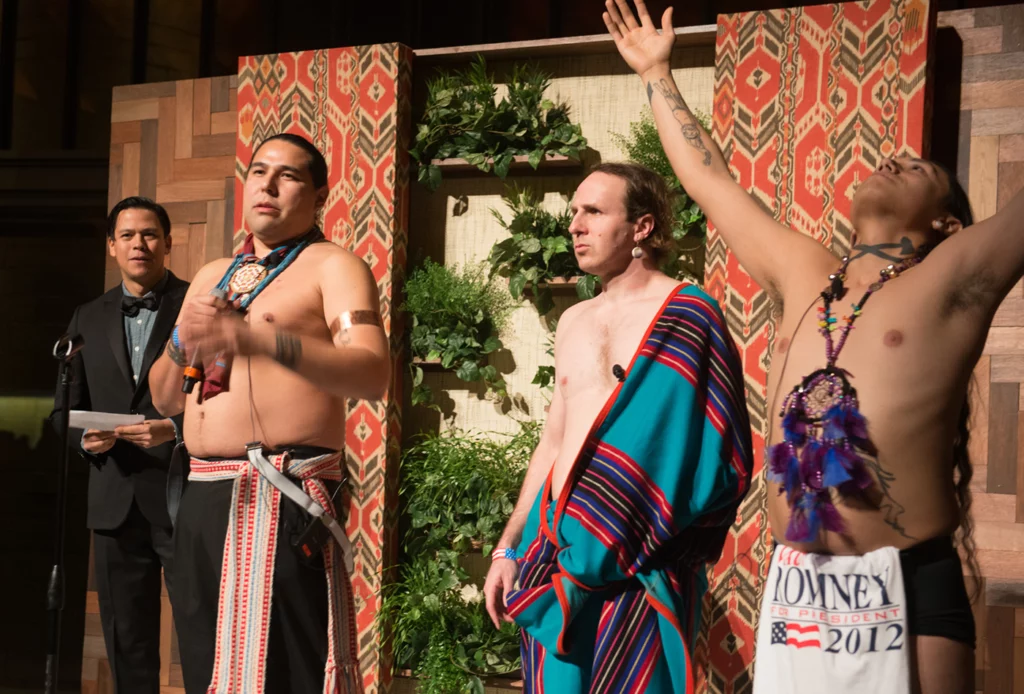
The comedy group, the 1491s are pictured on stage. Photo by Sarah L. Voisin/The Washington Post via Getty Images

Cut to Native activism in the present day, where Crystal Echo Hawk, IllumiNative, the 1491s, and a network of Indigenous artists are fighting cultural invisibility and structural oppression, and, in its place, asserting their identities. They are focused both on the power nucleus of Hollywood and on making and disseminating their own stories, using the participatory media tools of the digital age, striving to change the image and treatment of Native people by disrupting the narrative created by others. Comedy is meaningful here, too, says Echo Hawk: “There are times in our communities when we really faced some incredibly difficult challenges, and there are moments where dark humor is alive and well because it’s sometimes just the way that we cope. It’s the way that we are expressing our resiliency.” 

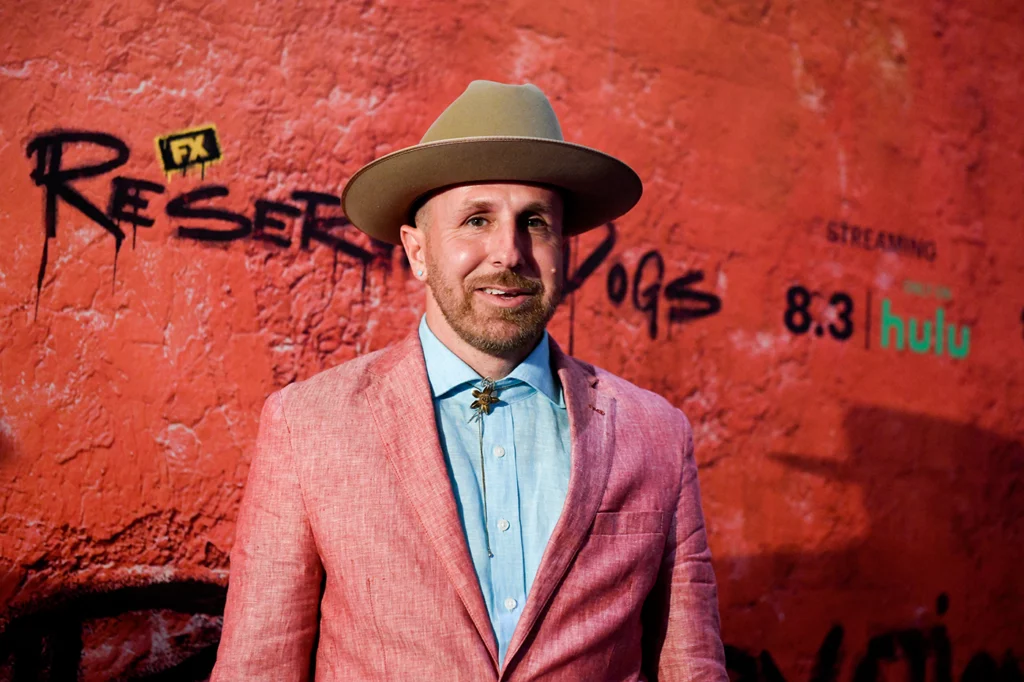
Ryan Redcorn attends FX’s Reservation Dogs Premiere at River Spirit Resort on July 29, 2022 in Tulsa, Oklahoma. Photo by Michael Noble Jr./Getty Images

As the 1491s’ Ryan RedCorn says, “Almost all of my actions are designed to work in service of social justice. They are often heavily disguised.” Incognito activism is where comedy gets to shine. And so it was that a group of us—Natives and allies, comedians and activists—arrived in Oklahoma in the summer of 2019 to see what we might create together. Our task: imagine and produce new comedy to agitate Native invisibility and push against long-standing doors of oppression.

You’re Welcome, America!: Creating Comedy for Native Activism

The drive from Tulsa to the Osage Nation reservation in Pawhuska, Oklahoma, is long, flat, and blanketed with tall grass. Highway signs fall behind as prairie land gives way to smaller winding rural roads, and if there are prominent street signs to mark the path, I have missed them because we are fully trusting our guide, Ryan RedCorn, comedian and son of the Osage Nation’s assistant chief, Raymond Red Corn. RedCorn knows every detail and turn of this place, his lifelong home. The night before, after dinner in old downtown Pawhuska, we looked up from the bottom steps of the old courthouse where most cases of hundreds of murdered Osage—killed by envious Whites for their oil claims in the 1920s—remained unresolved, covered up by the FBI in one of the most scandalous little-known stories of violence perpetrated on Native peoples.

Stuffed into two SUVs, we are a noisy and funny (literally) little caravan: nine joke-cracking comedians—half of them Native, half non-Native—and me, making our way through the plains of Oklahoma on a hot June afternoon. 

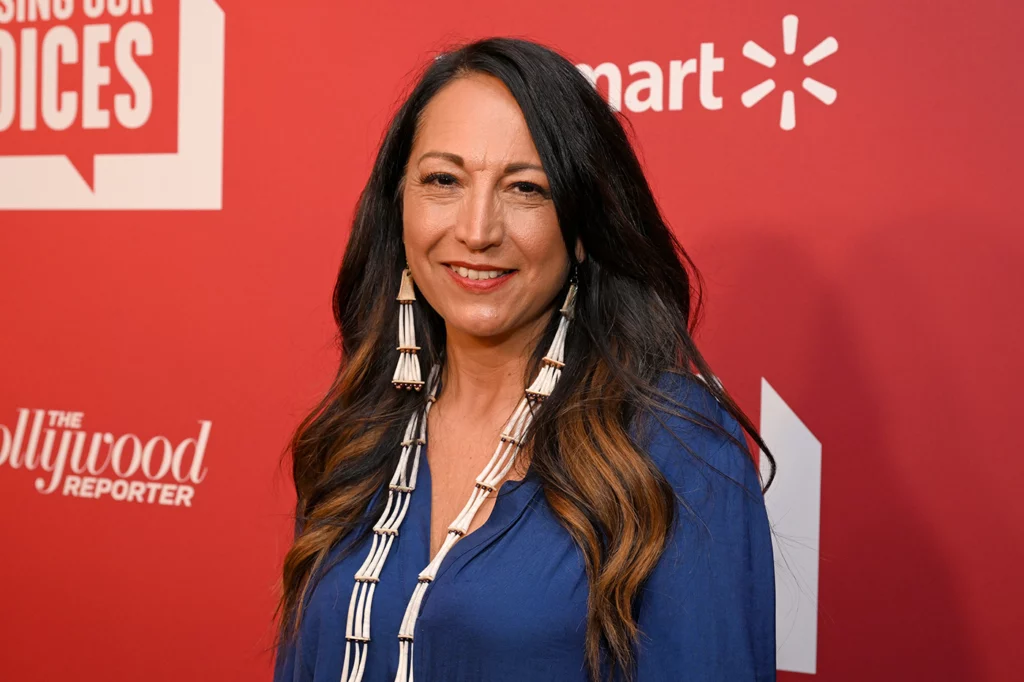
Crystal Echo Hawk attends The Hollywood Reporter’s Raising Our Voices on April 20, 2022 in Beverly Hills, California. Photo by Michael Kovac/Getty Images for The Hollywood Reporter

Our visit was the culminating event in a remarkable week spent co-creating comedy between Native and non-Native comedians, alongside Crystal Echo Hawk and an assembled group of Native leaders, activists, and experts. When Echo Hawk and our team discussed making comedy together as social justice strategy, she knew immediately that she wanted to host our Comedy ThinkTank session on-site in Oklahoma. The learning and the immersive experience, in her mind, would be totally different than in a writers’ room in Los Angeles or New York, where this kind of work usually germinates. She was right. I learned more about Native culture as an invited guest than I had in a lifetime of living in this country, and I know the other non-Natives in our group shared my perspective. 

As RedCorn reflected, “It’s important to understand the geographic context. I live in Pawhuska, Oklahoma, but usually the people writing about Native people or rural Americans don’t live here. It’s a double uphill battle for people trying to write these characters in these spaces. There are so many misrepresentations of people in these spaces. … These stories are totally cut off to [writers’ rooms] because they don’t know the rules of those worlds.” 

We have gathered to co-create comedy together for the first time, our effort part of IllumiNative’s ongoing cultural activism and its first official foray into leveraging comedy. Our group is a real who’s who of hot Native comedy talent—Joey Clift, Adrianne Chalepah, Bobby Wilson, Ryan RedCorn—and some of the best non-Native comedy improvisers and sketch writers and performers in the country: Sebastian Conelli, Shannon O’Neill, Johnny McNulty, Rachel Pegram. Bethany Hall, as always, is our comedy facilitator. 

We begin our week together with a full day of information gathering and presentations from Echo Hawk and other Native leaders who work in and for their communities; the Reclaiming Native Truth research is the heart of our session, and there is a huge amount of information to take in. As Adrianne Chalepah summarized the challenge, “We have to know what we’re talking about if we’re going to write jokes. We’re not just doing it for laughs, but community is on the line, and we have to find something relatable in all of that information.”

Producing comedy for activism purposes is a tricky balance when it comes to Native invisibility issues, as Echo Hawk puts it, because our work has to resonate strongly with Native audiences (and they are well aware of their cultural invisibility, as Chalepah wryly pointed out) even while it reaches non-Native audiences. Non-Native people, after all, are the ones who hold and perpetuate destructive misinformation at worst, or, at best, simply don’t know anything at all about Native peoples, culture, and lived experiences; the comedy has to be funny to both an inside and an outside audience. And if we are following the open artistic process of comedy—that is, not predeciding exactly what ideas should be developed, what facts to reinforce—we don’t know exactly where this will go. 

Following the serious information transfer, the first order of (comedy) business is an exercise in which every comedian in the room shares a story about how and where they grew up: Who were the people and characters in their lives? What is memorable? Where does their comedy derive from? It is alternatively hilarious and serious, but it definitely breaks the ice. Conelli has us on the floor laughing as he recounts stories about “Uncle Rocky”: a ham-handed, gregarious Staten Island man who would sit in his work truck to eat massive sandwiches in between shifts. (Quips RedCorn later, “I need to see better Staten Island representation in comedy!”) But we have to address the truly meta idea in the room itself: Non-Native comedians don’t know much of anything about Native culture or lived experiences. We have to break the ice and allow people to share their stories and ask questions. 

An informal session—“is this racist or is this funny?”—has everyone cracking up. It is hard to imagine this level of levity and honesty happening in “strategy” rooms for activist work, but once the comedians are able to hear each other’s stories and questions, it is an open playing field. As Bobby Wilson pointed out later, the really funny ideas didn’t start to emerge until all of the comedy writers had created a really funny comfort zone together, once non-Native folks “got past all the guilt of not knowing,” as he put it. If the room had stayed “careful” as people tried not to offend one another, the funny would have been suppressed. Joey Clift said, “The stories we told, the things we shared with each other, that’s where the light-bulb moments happened.” 

Was it hard to find the comedy amid traumatic factual information? Not really, particularly given the long-standing role of humor in Native communities; the writers arrived with plenty of it. As Chalepah put it, “When you are dealing with systems of oppression, the comedy writes itself. It’s easy to find the punchlines because we can see what’s wrong with that picture.” The comedy balance was really important to find, though: “People who are never going to seek out Native American facts never will unless we do it like this,” said Conelli. “It was important to make the comedy really funny rather than to work on the social justice topics so heavily.” By the end of the co-creation week, the comedians came up with easily 40 different ideas: TV shows, films, sketches, jokes, social media videos. On the final day, they pitched their final loglines, all centering Native joy and hilarity. Notably, none focused on the trauma or violence reflected in years and years of American culture—but all were designed to blast a hole into the absurdity of distorted Native tropes and celebrate Native truth and stories. 

Excerpted from The Revolution Will Be Hilarious: Comedy for Social Change and Civic Power (NYU Press, 2023) by Caty Borum.

Share

Caty Borum
is executive director of the Center for Media & Social Impact; associate professor of communication at American University; author of Story Movements: How Documentaries Empower People and Inspire Social Change; and co-author, with Lauren Feldman, of A Comedian and An Activist Walk Into a Bar: The Serious Role of Comedy in Social Justice.

The Getty Gives $17 Million to Museums for Pacific Standard Time

The Getty Gives $17 Million to Museums for Pacific Standard Time
image

In 2024, institutions in Southern California will stage some 60 shows on art and science, from climate change to Indigenous futurism.

LOS ANGELES — Almost two decades ago, the artist Beatriz da Costa designed tiny backpacks for homing pigeons, equipped with sensors to track air pollution in California. Next year, her birds will fly again thanks to a survey of the artist’s work at LACE — one of about 60 museum shows in “PST Art: Art & Science Collide,” the 2024 edition of the Getty-organized, regionwide cultural collaboration known as Pacific Standard Time.

On Tuesday, the Getty will announce the participating exhibitions — along with $17 million in grants to support them. PST, as it is known, began in 2011 with the theme of Southern California art history and was reprised in 2017 to focus on Latino and Latin American art. The events will now take place every five years under a new rubric: “PST Art.”

“I was struck traveling to Europe in November by the number of people who heard of PST and thought of it as one of the things that fixed Southern California in their minds as a major art and cultural destination, and I’d really like to build on that,” the Getty’s president, Katherine E. Fleming, said in an interview Monday. “It felt important to me to say: We’ll make this commitment to the L.A. arts scene.”

While the Getty provides funding, museums propose their own exhibitions that fit the overarching theme. Next year, several museums will offer ambitious shows on the climate crisis, including one at the Hammer Museum on “climate and social justice” and at LAXArt on “ecofeminism,” the movement that emerged in the 1970s to counter the exploitation of nature and women. The La Jolla Historical Society will showcase California work by Newton and Helen Harrison, including the couple’s 360-foot-long, multi-part, photo-text mural “Lagoon Cycle,” which begins with the crab-filled lagoons of Sri Lanka and ends with images of global warming in the Pacific.

Beatriz da Costa, “PigeonBlog,” 2006-2008.via Beatriz da Costa Archive

The power of science fiction and alternative world-building also runs through multiple shows. The Autry Museum of the American West is presenting “Indigenous Futures, or How to Survive and Thrive after the Apocalypse,” featuring work by contemporary Native American artists including Cara Romero and Cannupa Hanska Luger. The ONE Archives exhibition celebrates “science-fiction fandom” in L.G.T.B.Q. history, while the University of California Los Angeles has a 12-week film program of independent sci-fi films that dethrone conventional representations of gender, race and ethnicity.

The classic example of art-meeting-science in Southern California, the Light and Space movement of the 1960s and 70s, will be represented by a survey of work by Fred Eversley at Pomona College that explores his history as an aerospace engineer. In Los Angeles the Museum of Contemporary Art will have a solo show of Olafur Eliasson, who is arguably the most popular heir to the Light and Space tradition.

Expect some art to go beyond museum walls: the Broad, for example, will plant trees in public spaces in the city as an extension of the artist Joseph Beuys’s 1982 project, 7000 Eichen” (7000 Oaks).

Most shows will open around the same time, in September 2024. After this edition, Fleming said she would consider partnering with museums abroad to tour the exhibitions.

Culture Rich: An Invitation to Share Our Way of Life

Culture Rich: An Invitation to Share Our Way of Life

About the Author: Mary Goddard is Tlingit, Kaagwaantaan, Eagle/Brown Bear of Klukwan and grew up in Yakutat. She resides in Sitka with her husband and son, creating Tlingit formline designs for her original carved jewelry, public art installations, and more. She runs a film company and an Indigenous cooking blog. Mary has served as Southeast Alaska’s Regional Catalyst for Regenerative Tourism as well continuing to serve on the board of the American Indian and Alaska Native Tourism Association.

Long gone are the days that culture is just stuffed away in a museum. We no longer consider this preservation of cultures (at least, not the only way!). As an Alaska Native, I can tell you that we preserve our cultures by actively sharing, through storytelling, culinary arts, song, dance, and creating and selling artwork.

Our Alaska Native cultures are warm and welcoming. We want to be the first to welcome you to our shores, to our docks when the cruise ships pull up, to be the one serving you our local cuisine; cuisine that is full of our history. We want to encourage you to take in art, with your eyes, with your soul, and even special gifts to take home. This art shares our way of life with you.

But where can you find this? We are woven throughout our communities, we are tour operators, we are totem pole carvers, we are local food producers, we are storytellers, and we are excited to be able to share our own stories – stories that we think will provide you with rich entertainment, authentic experiences, and a hunger to learn more about the diverse and vibrant cultures of our state. We want you to discover for yourself our warmth and generosity.

Tlingit carving shed
Tlingit carving shed. Photo Credit: Alaskan Dream Cruises

Start your journey on a small ship cruise or day cruise owned and operated by a Tlingit family – the Allen family, owners of Alaskan Dream Cruises and Allen Marine Tours. Spanning three generations and over five decades of offering cruises and tours in Southeast Alaska, the Allen family graciously shares their backyard (and perhaps even more importantly, their culture) with visitors. Closely connected to villages throughout the Inside Passage, by diligent relationship building with each community (waiting to enter until an invitation has been extended), their Alaskan Dream Crusies small ship cruise line (76 guests at most, and one cruise is as small as 12 guests!) will take you on an adventure of guided totem trail walks in Kasaan by local Alaska Native guides. You will be taken through glacial waters of Glacier Bay National Park with traditional storytelling. Perhaps you will hear about Raven releasing the moon, or how Raven lost his beak. You will stop in the village of Kake and witness dancers in full regalia (the distinctive clothing and jewelry worn by the Tlingits).

Tlingit demonstration in Kake
Tlingit dancers in regalia in Kake. Photo Credit: Alaskan Dream Cruises

Cruise along on one of their Alaskan Dream Cruises vessels, watching whales, seals, and other wildlife while you nibble on Indigenous foods such as salmon, halibut, and appetizers like smoked salmon spread and kelp pickles on crusty bread prepared by talented onboard chefs. Book the “Inside Passage Sojourn” on the Alaska Dream Cruises’ vessel the Baranof Dream to get a snapshot of Tlingit, Haida, and Tsimshian culture in a matter of a week! Or take a day cruise with Allen Marine Tours, departing from Sitka, Ketchikan, and Juneau, to experience world-class wildlife watching and dine at their lodge, Orca Point Lodge, to feast on local delicacies.

Tlingit, Haida and Tsimshian are just three of the 11 cultures in Alaska. (That’s right, don’t forget that Alaska boasts over half a million square miles – about the same width as the lower 48 states – and is home to 228 of the 574 federally recognized tribes in the United States!) If you want your fill of culture rich vacations, Alaska is where it’s at.

Chief Son-I-Hat Longhouse in Kasaan
Chief Son-I-Hat Longhouse in Kasaan. Photo Credit: Alaskan Dream Cruises

Next, step into the world of Alaska’s Indigenous art. David Angaiak is a traditional Yup’ik and Unangax̂ artist raised in Bristol Bay. His handmade masks and maskettes are riddled with Yup’ik stories he learned as a young adult, such as his Ptarmigan mask that teaches the moral of respecting the animals we harvest. (Fun fact: Ptarmigan is the Alaska state bird!)

Arists David Angaiak with mask
Artist David Angaiak. Photo Credit: Diamond Shoot Photography

Many of us Alaska Natives learned later in life our traditional stories, helping to revitalize our cultures after coming out of a generation stripped of traditional ways, stories, song, and dance because it was not accepted by Western ways. However, not all artists practice strictly traditional art. Iñupiaq and Athabascan artist Caleigha Gotthardt of the Kenaitze Indian Tribe pushes the borders of traditional design in her jewelry, while maintaining use of traditional materials, such as baleen, walrus ivory, and sealskin. Though her jewelry is not directly linked to stories like David’s work, Caleigha tells us that when visitors purchase her art, “They are buying years of history that have been passed down. Ethically harvested. My art comes with knowledge and education.” She continues, “I am always happy to share who I am and the story behind the pieces.”

Arist Caleigha Gotthardt
Caleigha Gotthardt

Caleigha’s artwork can be found in galleries and museum gift stores, proving that museums can be wonderful places to learn, explore, and even purchase authentic and quality Alaska Native art. (Remember, as I said, museums are not the only way we like to preserve our culture.)

Artwork by Caleigha Gotthardt
Artwork by Caleigha Gotthardt

Speaking of museums, let’s explore the Museum of Aleutians, located in Unalaska. This unique nonprofit was established by the City of Unalaska, in conjunction with the Aleut Corporation, the Ounalashka Corporation, and the Qawalangin Tribe, with the following mission: “The Museum of the Aleutians shall collect, preserve, and share the rich cultural legacy of the Aleutian Islands Region.” What’s unique about this museum is that they offer tours that take you outside the museum walls into the city. One tour will guide you up Bunker Hill, a bunker from World War II. Not only will you learn about the history of World War II in Unalaska, but you will also learn about the local flora and fauna used by the Unangax̂ people.

Unalaska, often referred to as Dutch Harbor, is about 800 miles southwest of Anchorage, on the Aleutian Chain. It sits at the intersection of the Pacific Ocean and the Bering Sea. Many visitors arrive via cruise ship and this tour is booked with your cruise line. However, if you are an independent traveler you can fly in on Ravn, a regional airline company based out of Anchorage. Unalaska is about a three hour flight from Anchorage. 

Unalaska
Unalaska

Alaska Native cultures are alive and thriving in Alaska. As a visitor, there are many ways to take part in our cultures, whether it be through small cruise lines, Indigenous art, museum tours, events, and other cultural tours and experiences. However, please keep in mind that many customs and traditions are sacred and revered for tribal members only. While some communities are set up for welcoming guests and eagerly share their culture, other communities are not prepared for visitors. By accepting guests, they would cause a strain on their community. So, I encourage you to travel where invited (where guided tours and experiences are offered), an example put forth by the Allen family. Remember to be respectful of each culture, be open to learning, and be mindful of how each Indigenous person refers to themselves. By following these simple guidelines you are sure to experience the warmth and generosity of our Alaska Native people, as well as our way of life, on your Alaska vacation!

Learn more about practicing Alaska Native values when visiting Alaska.

Totel pole in the Haida Village of Kasaan on Prince of Wales Island
Totel pole in the Haida Village of Kasaan on Prince of Wales Island. Photo Credit: Alaskan Dream Cruises

New Work by Native American and Alaska Native Artists on Display at

New Work by Native American and Alaska Native Artists on Display at

“Sharing Honors and Burdens: Renwick Invitational 2023” focuses on fresh and nuanced visions by six contemporary Native American and Alaska Native artists who express the honors and burdens that connect people to one another. The exhibition features objects by Joe Feddersen (Arrow Lakes/Okanagan), Lily Hope (Tlingit), Ursala Hudson (Tlingit), Erica Lord (Athabaskan/Iñupiat), Geo Neptune (Passamaquoddy) and Maggie Thompson (Fond du Lac Ojibwe) that speak to the responsibility of ushering forward cultural traditions while shaping the future with innovative works of art. Their works are often culturally specific, yet they communicate across cultural boundaries. The 55 artworks in the exhibition arise from traditions of making that honor family, community or clan and require broad community participation.

The exhibition is on view from May 26 through March 31, 2024, at the Smithsonian American Art Museum’s Renwick Gallery in Washington, D.C. It is organized by guest curator Lara M. Evans (Cherokee Nation), founding director of the Research Center for Contemporary Native Arts at the Institute of American Indian Arts in Santa Fe, New Mexico, and current vice president of programs for First Peoples Fund, with Nora Atkinson, the Fleur and Charles Bresler Curator in Charge at the Renwick Gallery.

“It is a great honor to spotlight these artists from Alaska, Washington State, New Mexico, Minnesota and Maine at SAAM’s Renwick Gallery, the preeminent center for American craft in the United States,” said Stephanie Stebich, the Margaret and Terry Stent Director of the Smithsonian American Art Museum. “It is also a special burden of responsibility to showcase their artwork in a way that recognizes the past, present and future. As visitors experience groundbreaking craft from these makers, we invite them to embrace a more nuanced understanding of how Indigenous perspectives and experiences are shaping American art today.”

It is the first time that artists chosen for the Renwick Invitational are all Native Americans and Alaska Natives. All are members of separate sovereign nations: Tlingit and Haida Tribes of Alaska, Nenana Native Association, Wabanaki Confederacy, Okanagan Nation and Fond du Lac Band of Lake Superior Chippewa. The artists were selected by a panel of distinguished jurors, including Evans; Miranda Belarde-Lewis (Zuni/Tlingit), independent curator and the Jill and Joe McKinstry Endowed Faculty Fellow of Native North American Indigenous Knowledge at the University of Washington’s iSchool; and Anya Montiel (Mexican/Tohono O’odham descent), curator at the Smithsonian’s National Museum of the American Indian.

The exhibition includes 13 new artworks that were created within the past year in addition to three pieces the museum commissioned specifically for the exhibition: “Between Worlds (Child’s Robe)” by Hope, “Sister Bear” by Hudson and “The Codes We Carry” by Lord. The museum recently acquired Feddersen’s “Horses and Deer” and anticipates acquiring works by all of the featured artists for its permanent collection. 

Making serves as not only a form of self-expression, but also a powerful way of  processing everyday life and expressing ties to community. In doing so, each artist uses traditional forms of making—weaving, beading or sewing—and adapts the materials and techniques to create contemporary works of art. Individually, each craftsperson works in some manner with techniques, materials or concepts embedded within their tribe’s customary practices and history, but their work is also intended to engage with global audiences. Adding to the complexities of making are the unique decisions Native and Alaskan Native artists must often consider while creating, including balancing customary functional forms with beauty and personal narratives, determining which aspects are suitable to share with outside, non-Native audiences, and weighing the risks and benefits involved in adapting historical practices to new uses.

The artists in “Sharing Honors and Burdens: Renwick Invitational 2023” come from communities where making is an honored way of coming to know: for example, Feddersen is a printmaker, glass artist and basket maker who creates geometric patterns sourced from everyday life. Lord, a multimedia artist, crafts beaded burden straps and sled-dog blankets with abstracted representations of the diseases that disproportionately impact Native and other marginalized communities. Neptune is a master basket maker, activist and educator who uses colorful narratives to emphasize the honor and burden of keeping tradition alive. Hope and Hudson, who are sisters, weave labor-intensive textiles that convey Tlingit values of reciprocity and balance, maintaining cultural integrity while experimenting with new forms and materials. Thompson, a textile artist, creates large-scale works that explore the intersections of grief and trauma with honor, beauty and healing.

“In the summer of 2021, as Anya, Miranda and I discussed our selections, we found our way toward two related themes that link these artists’ practice and artwork: honors and burdens,” said Evans. “The artworks themselves make tangible the range of honors and burdens we carry with us, from the grief and trauma of personal and community loss to precious knowledge gained from teachers and ancestors. ‘Sharing Honors and Burdens’ helps us think about these ideas through beautifully crafted artworks, large and small, in stillness and in movement.”

A series of videos was produced for the exhibition, including an introductory video with guest curator Evans and six artist videos that focus on the artists in their studios produced by the Institute of American Indian Arts in collaboration with the museum. The videos are available on the museum’s YouTube channel and are part of the in-gallery presentation. Visitors are encouraged to reflect on the honors and burdens in their own lives via a response wall at the end of the exhibition.

Established in 2000, the Renwick Invitational showcases emerging and mid-career makers deserving of wider national recognition. “Sharing Honors and Burdens: Renwick Invitational 2023” is the 10th installment of the series. It is the latest example of the museum’s commitment to highlighting contemporary Native American artists and Indigenous voices through acquisitions and exhibitions.

Public Programs

The museum will present a robust set of public programs in conjunction with the exhibition, beginning with an open house Friday, May 26, from 11 a.m. to 3 p.m. featuring all six artists; guest curator Evans will give a gallery talk at noon. A series of artist conversations is planned throughout the run of the exhibition. Evans moderates a virtual conversation between Lord and Thompson Thursday, Sept. 7, at 7 p.m. ET. Belarde-Lewis moderates a conversation between Neptune and Hope Thursday, Nov. 16, at 6:30 p.m. ET that will take place online and in person in the museum’s McEvoy Auditorium at its main building (Eighth and G streets N.W.). Feddersen will lead an in-person-only workshop Thursday, Jan. 25, 2024, at 4:30 p.m. followed by a conversation with Montiel at 6:30 p.m. ET that will be in person and online. The programming concludes with a virtual artist talk with Hudson Thursday, March 7, 2024, at 7 p.m. ET. These programs are free, but registration is required. More information is available on the museum’s website at AmericanArt.si.edu/events.

Book

A beautifully illustrated catalog accompanies the exhibition, co-published by the Smithsonian American Art Museum and the University of Washington Press, with essays by jurors Evans, Belarde-Lewis and Montiel. Each juror highlights two artists: Evans focuses on Lord and Thompson’s processes while Montiel reflects on Feddersen and Neptune’s works and legacies. Lastly, Belarde-Lewis highlights Hope and Hudson’s contributions to craft. It is available for purchase ($35) in the museum store and online.

Credit

“Sharing Honors and Burdens: Renwick Invitational 2023” is organized by the Smithsonian American Art Museum. The Ryna and Melvin Cohen Family Foundation Endowment provides support for the Renwick Invitational. The Cohen Family’s generosity in creating this endowment helps make possible this series highlighting outstanding craft artists who are deserving of wider national recognition. 

Additional support has been provided by the Elizabeth Firestone Graham Foundation, the Lannan Foundation, The Robert Lehman Foundation, the Smithsonian’s National Museum of the American Indian, The Andy Warhol Foundation for the Visual Arts, the Windgate Foundation and the Wyeth Foundation for American Art.

About the Smithsonian American Art Museum

The Smithsonian American Art Museum is the flagship museum in the United States for American art and craft. It is home to one of the most significant and inclusive collections of American art in the world. The museum’s main building, located at Eighth and G streets N.W., is open daily from 11:30 a.m. to 7 p.m. The museum’s Renwick Gallery, a branch museum dedicated to contemporary craft, is located on Pennsylvania Avenue at 17th Street N.W. and is open daily from 10 a.m. to 5:30 p.m. Check online for current hours and admission information. Admission is free. Follow the museum on Facebook, Instagram, Twitter and YouTube. Smithsonian information: (202) 633-1000. Museum information (recorded): (202) 633-7970. Website: americanart.si.edu.

# # #

Note to editors: Selected high-resolution images for publicity only are available through the museum’s Dropbox account. Email americanartpressoffice@si.edu to request the link.

SI-155-2023

Prints and imprints of stalwart artists

Prints and imprints of stalwart artists

Express News Service

Raja Ravi Varma needs no introduction. Millions of Indian households get their daily dose of divine blessings from printed versions of his paintings of Hindu deities, framed straight off a calendar back in the day. Every Indian artist’s journey would have been marked at some unspecified point in time by an attempt or two at replicating his beautiful women on canvas. The man was great not just for his art, but for the way he made sure it seamlessly flowed into ordinary lives. 

The year was 1894. Although riding on a wave of popularity, Ravi Varma was not content with merely painting for the connoisseurs. He started a lithographic press in Maharashtra to mass-produce his paintings of Hindu goddesses, thus allowing the artwork to be accessed by the working class, something unheard of until then. Though critics often dismiss this effort as calendar art, it can be argued that it was his singular idea that brought art into the everyday existence of the public. 

Varma soon decided to take his printing press a step further. Partnering with a local entrepreneur, Govardhan Das, he imported printing machinery from Germany. At this time, a young photographer, Dhundiraj Govind Phalke, from Godhra, Gujarat, was taken in as a trainee by Ravi Varma and gradually became Varma’s most trusted employee and companion. None could match Phalke’s perfect photo-litho transfers. 

All was well until the turn of the century saw the curse of the plague epidemic befall the city of Bombay. In 1896, the dreaded Bubonic Plague broke out and people fled the city in thousands. As businesses fell like stacked-up cards, so did the printing press. By 1899, when the crisis deepened beyond repair and Ravi Varma was weighed down by heavy debts, he was left with no other option but to give it up. In 1901, the press was ultimately sold to Fritz Schleicher, the German technician who supplied the machinery and a close associate.

Before returning to his native state of Kerala, Ravi Varma did not merely bid goodbye to his favourite assistant. Aware of Phalke’s dream to make motion pictures, Varma offered him a large sum from the sale proceeds to fund his desire and to help him make it a reality. With this grand gesture, Varma left Bombay and passed away soon after in 1906. 

Meanwhile, the young man Dhundiraj Govind Phalke, with stars in his eyes went on to make history by directing India’s first full-length feature film, Raja Harishchandra, in May 1913.  From the film sets and the lighting to the characters, the film was undoubtedly influenced by Varma’s art. The father of Indian cinema, fondly called Dadasaheb Phalke today, remained an ardent admirer of the man who believed in him, till the very end.

Raja Ravi Varma was not just an artist. He was a visionary. He believed in a dream that did not belong to him and stood by his conviction till his last breath. On his recently concluded 175th birth anniversary, let us pay tribute to his artistic legacy and his far-sighted generosity. A big salute to the Father of Indian art!

Explore Local Works at Leeward Community College’s New Art Gallery

Explore Local Works at Leeward Community College’s New Art Gallery


The Hō‘ikeākea Gallery is now open at Leeward Community College and will showcase the works of students, faculty members and artists in Hawai‘i and around the world. The gallery’s name speaks to its purpose to provide art experiences that inform, inspire and broaden the mind: hō‘ike (to show/exhibit/reveal, cause to be seen) and ākea (broad, wide expanse, spacious).


“This art gallery will serve as a place of education for the community,” says Reem Bassous, Hō‘ikeākea Gallery coordinator. “It is our duty to expose people to new artists, new works and new curatorial practices. It is time to situate Hawaiʻi within a larger dialogue by creating shows that allow for local and global interaction. The shows are thoughtfully planned and deliberate, always with our students and community in mind.”


Hō‘ikeākea Gallery Opening

Photo: Courtesy of Leeward Community College


Hō‘ikeākea Gallery is free and open to the public. Later, the gallery plans to host an annual juried student show for local high schools and a separate one dedicated to Leeward Community College students.


The gallery’s first exhibition, ʻAi Pōhaku, Stone Eaters, is a collection of multimedia works by Kānaka ʻŌiwi (Native Hawaiian) artists, the fifth of a six-part series and features pieces by the following 14 artists. It runs until Friday, Aug. 25.

  • Nālamakūikapō Ahsing
  • Bernice Akamine
  • Kaili Chun
  • Herman Piʻikea Clark
  • Joy Lehuanani Enomoto
  • Solomon Robert Nui Enos
  • Noah Harders
  • Kapulani Landgraf
  • Nanea Lum
  • Charlton Kūpaʻa Hee
  • Ipō and Kūnani Nihipali
  • Tiare Ribeaux
  • Abigail Romanchak
  • Maikaʻi Tubbs


SEE ALSO: Must See: “ʻAi Pōhaku, Stone Eaters” Native Hawaiian Art Exhibit


Upcoming Artists’ Discussions at the Hō‘ikeākea Gallery


Interested in hearing more about the art straight from the source? Accompanying the ‘Ai Pōhaku, Stone Eaters exhibition is a series of Artists’ Discussions at the Hō‘ikeākea Gallery in which contributors talk about their art, culture and challenges for Kānaka ʻŌiwi.

Hō‘ikeākea Gallery Opening 2

Photo: Courtesy of Leeward Community College


Aia I Hea Ka Pono?: Disrupt, Corrupt, Irrupt

Saturday, July 8, 3–5 p.m.

Artists: Nālamakūikapō Ahsing, Noah Harders, Ipō and Kūnani Nihipali and Tiare Ribeaux

Moderator: April A.H. Drexel

Topic: How Kanaka ‘Ōiwi creative scholarship contributes to the interpretation and resolution of issues that affect the environment and Indigenous futures.


Nā Kuleana O Nā Alaka‘i: Nuances of Re-Righting

Saturday, July 22, 3–5 p.m.

Artists: Kaili Chun, Herman Pi‘ikea Clark, Kapulani Landgraf and Abigail Romanchak

Moderator: April A.H. Drexel

Topic: Critically analyzing and refining creative scholarship to articulate issues, struggles and tensions impacting Kanaka ‘Ōiwi.


‘A‘ole I Pau: Possibilities and Potentialities

Saturday, Aug. 12, 3–5 p.m.

Curators: Drew Kahu‘āina Broderick, Josh Tengan, Noelle M.K.Y. Kahanu

UH Mānoa Director of Museum Studies: Karen Kosasa

Moderator: April A.H. Drexel

Topic: Reflections, trajectories and intergenerational reverberations relevant to the 2023 ‘Ai Pōhaku, Stone Eaters Project and beyond.


Hō‘ikeākea Gallery Opening 3

Photo: Courtesy of Leeward Community College


Hō‘ikeākea Gallery, Pu‘uloa Campus, 96-045 Ala ‘Ike, Pearl City. Open Tuesday to Friday, 10 a.m. to 2 p.m.; Saturday from 11 a.m. to 3 p.m.; closed on Sunday and Monday. leeward.hawaii.edu, @leewardcc


People in Your Neighborhood: La Jolla artist Mieko Anekawa expresses her cultures in color

People in Your Neighborhood: La Jolla artist Mieko Anekawa expresses her cultures in color

La Jolla artist Mieko Anekawa uses two cultures — the one she grew up in and the one she currently calls home — to express her emotions and establish herself in the community.

“I use a lot of colorful expressionism in my art,” said Anekawa, who paints in acrylics. “I use a lot of high-saturated neon colors.”

Anekawa’s images “try to capture the momentary and sensory effect of nature scenes,” she said, while emphasizing her emotions through bold lines and colors in response to what she sees.

Newsletter

Get the La Jolla Light weekly in your inbox

News, features and sports about La Jolla, every Thursday for free

You may occasionally receive promotional content from the La Jolla Light.

“I always loved making art,” Anekawa said. After studying art and design at Kyoto-Seika University in her native Japan, she moved to New York in 2004 and worked in graphic design, eventually transitioning into “something more physical” than sitting at a computer all day.

“I wanted to express myself more in art,” she said.

Anekawa arrived in La Jolla in 2015 and found herself inspired by its natural beauty and cultural diversity.

Her paintings evolved to integrate the Japanese art form Nihonga, which uses many brush strokes of organic inks on traditional washi paper.

“After moving to La Jolla … I tried to combine two styles: colorful expressionism and a lot of fine details [with] the dynamic composition from the Nihonga style,” she said.

The various ethnicities, jobs and lifestyles in the La Jolla community encouraged Anekawa to begin incorporating artistic styles of her native country into her work.

“Before, I didn’t really want to show [Japanese styles] because I wanted to fit in in the U.S.,” she said. “But after seeing diversity here, I actually focused on my background more.

“I felt more confident” and wanted to begin celebrating what’s “unique about myself.”

Her art also helps her connect with people, she said.

Anekawa is a member of the Spanish Village Art Center in San Diego’s Balboa Park and her work has been shown in several countries as well as New York and California.

Most recently, Anekawa was one of eight featured artists in the Mission Fed ArtWalk in San Diego’s Little Italy April 29-30.

Mieko Anekawa's work has been shown in several countries as well as New York and California.

Mieko Anekawa’s work has been shown in several countries as well as New York and California.

(Mieko Anekawa)

Such accomplishments hearten the artist, who said she tries to embolden those around her to create. She has taught art classes for adults at the Spanish Village Art Center and the Mingei International Museum of Art and has led art lessons for children at Torrey Pines Elementary School in La Jolla, which her two daughters attend.

Anekawa’s goal in teaching is to “encourage people to showcase their works, because a lot of people have a creative mind but they are too afraid to show it,” she said.

She has a goal of participating in the annual La Jolla Art & Wine Festival in October and in future years. This year’s festival is fully booked for artist booths, but Anekawa said she is working with organizers on the opportunity to lead a painting workshop.

She’s also open to other artistic endeavors, she said. “I’d like to join and help to have a stronger art community in La Jolla.”

For more information, visit miekoartworks.com or @miekoartworks on Instagram.

People in Your Neighborhood shines a spotlight on notable locals we all wish we knew more about. If you know someone you’d like us to profile, send an email to robert.vardon@lajollalight.com. ◆