Photography

Daniel Blake Has a Relatable Story for New Photographers

Daniel Blake Has a Relatable Story for New Photographers

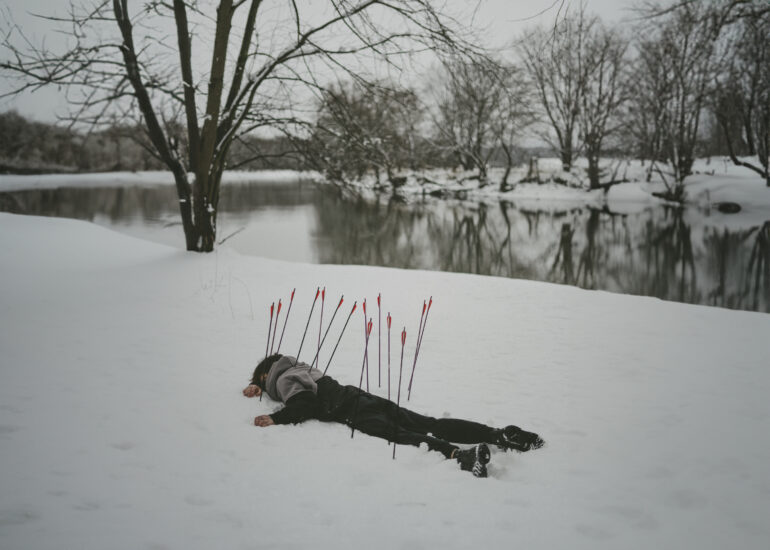
“My identity as a queer artist and my passion for visual storytelling fuel my dedication to capturing these emotions in my work,” says photographer Daniel Blake (he/him/his) to the Phoblographer in an interview. “It’s about showcasing the beauty of vulnerability and the complexities of the human spirit. Being able to evoke emotions and create that bond with my audience is what drives me as an artist.” Dan continues to state that he’s sharing a part of his soul and inviting others to join him on an emotional journey. This idea permeates through his surreal photography.

All images by Daniel Blake. Used with permission. Please visit Dan’s website, Flickr and Instagram.

For Daniel, photography has always been a way for him to express himself when words fail him — and several other artists and photographers can relate. In the way that many readers were beguiled by the words and skill of Shakespeare, it’s easy to become smitten with his conceptual and surreal photography. And for Daniel, it’s always been about expression — specifically around the emotions that he’s feeling.

“Over the last few years, my focus has been on exploring deep emotional themes that resonate with me: heartache, loneliness, love, and melancholy,” he tells us. Daniel’s journey as a queer photographer has shaped his photographic style. It shows a unique perspective that it hard to see or find amongst many photographers.

I’ve been particularly fascinated by the way memory fluctuates and influences our realities. It’s incredible how our minds can warp our perceptions, sometimes in ways we adore, and other times, we despise. This aspect adds a profound layer to my work, inviting viewers to ponder their own memories and emotions.

Daniel Blake

The Creative Journey of Daniel Blake

Dan started out around 2009 — when Tumblr was all the rage. A self-described shy kid, he took a lot of self-portraits. Sometimes his father would help him realize his creative dreams, but otherwise, his work was often created alone. Dan drew inspiration from the surreal artwork on Flickr, which is where we found him.
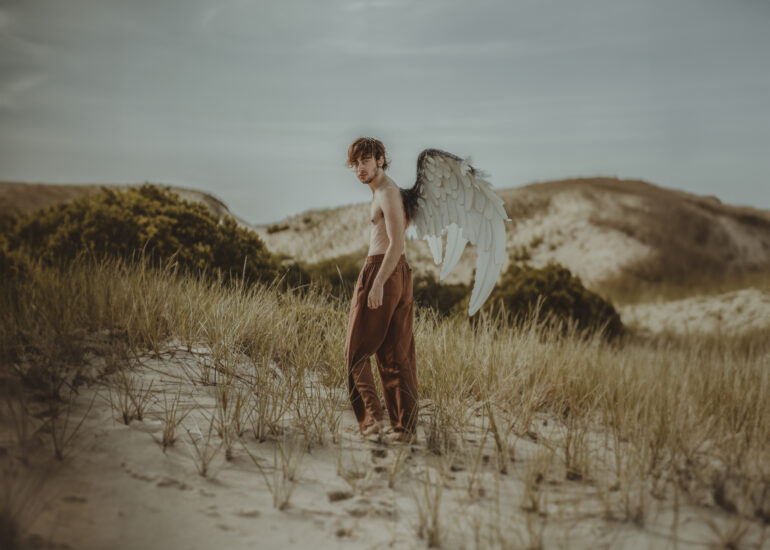
Dan wanted to be a photographer from a young age, but thought that it was an unattainable dream — and he didn’t want to specialize in wedding photography. But as Dan continued to explore emotionally charged themes in his work, he started using it as his primary way to communicate his sense of isolation and vulnerability.

“During high school, I pursued photography courses and even volunteered for a photojournalism program in my senior year,” he tells us. “Around the same time, I was diagnosed with severe panic disorder, which further influenced and deepened the emotional aspect of my art.” From there, he went to community college, took a break while exploring his identity, and then returned to college, focusing on graphic design. But photography was always the main squeeze.

Dan’s embers for photography sparked into flames when he discovered drag culture via his partner at the time. Specifically, it renewed his passion for nightlife photography. “Every weekend, I ventured out alone, documenting moments with my camera,” he tells us. “Although I sometimes collaborated with others for self-portraits, I predominantly captured them on my own still. Surprisingly, I even took the stage, performing in several drag shows and later hosting them through my small project, the Grand Artists Guild (G.A.G.).”

For the money, he assisted a wedding photographer until upgrading his equipment to a Sony a7 III and a few lenses. This eventually led the way to him booking his own weddings until he registered as a legitimate photography business this year in 2023. To help clarify that statement, we mean that he’s gainfully employed this way.

My journey has been one of growth, resilience, and pursuing my passion relentlessly. Through photography, I have found a way to connect with others, express myself, and create lasting memories for my clients. It’s an honor to now be a part of the photography industry and contribute my unique perspective and artistic flair.

Formerly a Canon and Nikon shooter, Dan felt that his gear couldn’t keep up with his creative vision. So he got a Sony a6000 until upgrading to the a7 III. “When I hold and use this camera, it evokes the nostalgic charm of traditional film cameras, which I absolutely adore,” he tells us. “Although I’m not particularly drawn to the process of film photography, the Sony a7 iii captures the essence and style I love.” He pairs the camera with 85mm, 50mm, 24-70mm, 30mm, and 14mm lenses. He also always has an ND filter.

Dan does a combination of in-camera work and Photoshop. In fact, he admits that he used to struggle with Photoshop, but now he’s more comfortable with it. He used to do most of his work in the program, actually, until he realized that it’s sometimes faster to just get things done in-camera. “…I believe both approaches hold significance, but I find myself enjoying the editing process immensely, and it remains a significant aspect of my work.”
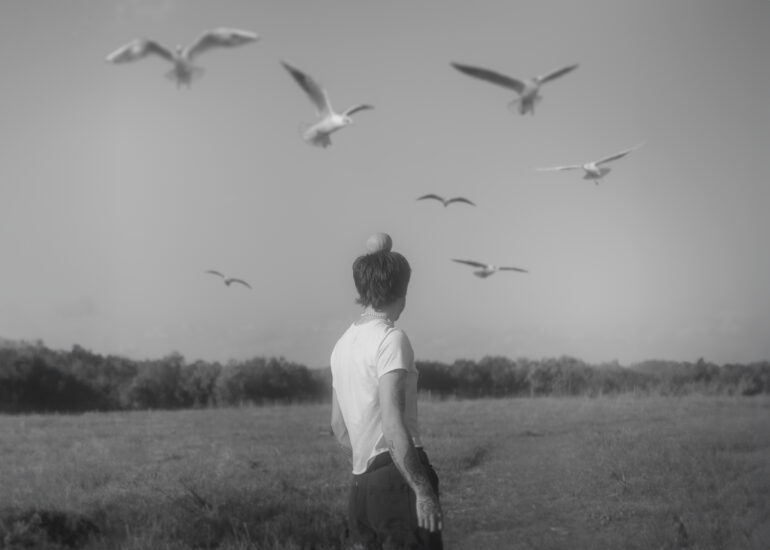
On AI in Photography

Sure, Dan does a lot of work in Photoshop, but he’s also a bit skeptical about AI. When he started seeing the TikTok trends, he thought it would fade away. But it didn’t. “On one hand, I recognize the potential of AI as a powerful tool that can significantly improve workflow, helping with tasks like object editing, clothing fixes, and adding elements not readily available,” he shares. “Art, being subjective, can benefit from AI’s enhancements. Yet, I also notice some individuals using it for their headshots and other purposes, which raises a sense of uncertainty.” Dan hopes that AI serves as an aid in the future to enhance artistry rather than replace it.

Check Out The Finalists for Ocean Photographer of the Year

Check Out The Finalists for Ocean Photographer of the Year
image
Advertisement

Every year, Oceanographic magazine holds a competition for best ocean photographer of the year, and the finalists for 2023 are pretty incredible. Judged by a panel of some of the world’s leading ocean image makers, the competition has nine categories that encompass a wide range of styles and subjects, including Ocean Conservation, Adventure, Wildlife and Fine Art photography. Last year, the award was won by French surf photographer Ben Thouard with a photo of a surfer getting held under in Tahiti.

All category winners, as well as the overall winner, will be announced in September. They will then be featured at an exhibition in Sydney, Australia. The details of the exhibition are to be announced along with the winners.

A selection of the photos are featured above, with a full list of finalists and more information on them available in the Winners Gallery on the Oceanographic magazine website. Of particular interest is the entry from Gergo Rugli. His piece, entitled Warrior, depicts a surfer dropping in to some dramatically stylized Sydney surf.

“This afternoon was one that I am never going to forget,” writes Rugli in his description of the piece, “A big swell reached Sydney’s coastline with some waves reaching over 10 feet in height. Very few surfers had the courage to fight with these monsters. It was just before sunset, and the sky was covered with clouds. I didn’t expect any colors, but just before the sun reached the horizon, a gap opened up, and the setting sun painted the whole sky with mysterious red light. I wanted to create a dreamy feeling and started to shoot with a slow shutter speed to capture the unique scene.”
⁠⁠

Why this British photographer has spent a decade dressing like Dolly Parton

Why this British photographer has spent a decade dressing like Dolly Parton


CNN
 — 

Alice Hawkins has never photographed her idol, Dolly Parton, but she has photographed many Dollys.

One Dolly is on horseback, red heels in stirrups and blonde curls piled high on her head. In another image, two Dollys link their arms around each other’s waists, fingers fanning out with long acrylic nails. Elsewhere, another Dolly — Hawkins herself — dons a crisp white skirt suit to pose outside of the small chapel in Dollywood, the Pigeon Forge, Tennessee-amusement park owned by the Queen of Nashville herself.

Hawkins is a British photographer, born more than 4,300 miles from Memphis, where Parton broke into the music industry. But she’s spent the past decade-plus dressing up as the singer, making multiple series about her own sense of self — and that of other Dolly superfans — through the glittering facet of Parton’s image.

Hawkins’ collaborators have become her friends — all are Parton superfans, and some are impersonators.
Hawkins has photographed “Dear Dolly” in both the UK and the US.

Emulating Parton’s flamboyant style has given Hawkins “a lot of self-belief,” she said in a phone call with CNN, teaching her to “embrace” her femininity and sexuality in a way she hadn’t always felt comfortable with.

Hawkins has long loved the extravagance of Parton’s Americana, and was already a fan of her music when she first saw the country star perform in 2002 at a small venue in London. But there, she found herself “spellbound,” she explained. “I left knowing that I’d found my idol.”

Hawkins says she’s had to deal with assumptions about her intelligence and her ability since she was a teenager, in part because of her blonde hair.

“I’m a country girl myself, from Suffolk,” Hawkins said of the kinship she feels with Parton, despite their geographical and generational distance. “I grew up in a village, didn’t have much money. And I moved to London, my own ‘cup of ambition,’” she explained, quoting the lyric from Parton’s classic 1980 song “9 to 5.” Today, she lives just outside of the city, raising her children while working as a photographer.

Earlier this year, she released “Dear Dolly,” a book that presents several Parton-inspired photo projects, from sumptuous, staged portraits of Dolly impersonators to stripped-down nude self-portraits of Hawkins’ own pregnancy, in which she channels the singer through voluminous hair.

Defiant glamour

Through Hawkins’ lens, being unapologetically feminine can be an act of defiance against gendered stereotypes.

In the intro of “Dear Dolly,” Hawkins writes on some of the moments that have undercut her self-worth: a relative describing her “like a tart in season,” when she dressed for a night out as a teenager; a headmaster questioning her intelligence before an important exam. “(There’s) lots of negative judgments and assumptions, on your intelligence on your ability,” she told CNN. Women like Pamela Anderson and Anna Nicole Smith, whom she also idolized in her younger years, “stuck two fingers up” with their platinum hair and comfort with their sexuality, she wrote.

In “Dear Dolly,” the touchstones of Parton’s style and career, from her guitar to her signature hair, form a visual lexicon.
Stepping into Parton’s shoes has given Hawkins more “self-belief,” she says.

In the blush-hued, bedazzled world of “Dear Dolly,” Hawkins and the other Dollys — Kelly O’Brien, Trixie Malicious and Claire Moore — radiate a sense of joy, freedom and self-assuredness. It’s both a love letter to the country superstar and the sisterhoods formed in her name. For Hawkins, the work has also been an outlet she could turn to in difficult times.

Hawkins first traveled to Dollywood following the funeral of a close friend in the US, and she felt a particular emotional connection to the chapel on the park grounds.

“I’ve made the work when I felt quite desperate or full of grief, or terrified about my future and my identity,” she said.

Hawkins first visited Dollywood in 2010 at the suggestion of her husband while traveling to the US, following the unexpected death and funeral of her closest friend. She was deeply depressed, she said, but found solace in her experience at the park, located near the small cabin where Parton was raised in the foothills of the Great Smoky Mountains. “It was healing,” Hawkins recalled.

The following year, after one of her editors at the early 2010s British fashion magazine Ponystep unsuccessfully pitched a shoot with Parton, Hawkins instead suggested an editorial where she could “walk in her footsteps” in Dollywood, prompting the first project where she began to dress like the country star.

But Hawkins doesn’t consider herself an impersonator, and she doesn’t “go fully Dolly” on a day-to-day basis, she said. “It’s not really me, it’s my work. Sometimes I have acrylic nails, but I’m not that hyper-glamorous. That’s just my fantasy.”

Hawkins doesn't dress as Parton day to day, but says it's more of a “fantasy” she's adopted for the project.
On a trip to Nashville, Hawkins stepped onstage to sing “In My Coat of Many Colors” by Parton.

One of her collaborators, O’Brien, meanwhile, is a Parton impersonator — and a convincing one, at that.

“I’ll never forget that we were in her pub in her little village in the English countryside. She was Dolly down to a tee, sitting at the bar, having a drink while I was shooting,” Hawkins recalled. “And this customer came in, and he was completely convinced she was Dolly Parton. We just could not burst his bubble.”

“She stayed in character, and she was like, ‘Well, thank you, honey,’” she continued. “I hope nobody told him otherwise.”

Kelly O'Brien, pictured here, is a Parton impersonator often mistaken for the country star.

Photographing “Dear Dolly” has changed Hawkins life in many ways, she said. She “found a sense of belonging” through the friendships she’s made through a shared love for Parton. She has memories of things she never would have thought she’d do, like stepping on stage in Nashville to karaoke “In My Coat of Many Colors,” which “was terrifying,” she said with a laugh. “I can’t actually sing but I went for it and (the audience) were very kind to me.”

Hawkins has met Parton, too, several times at her shows, and she hopes she’s seen the book.

“She has taught me that I can be blonde, sexy, and almighty at the same time — and respected,” Hawkins said.

She knows she can always turn to Parton when needed, and step into a pair of rhinestone high heels. “I’m lucky that I’ve got that — her music will be forever.”

DarkSky International Announces Winners of Fourth Annual Capture the Dark Photography Contest

DarkSky International Announces Winners of Fourth Annual Capture the Dark Photography Contest
image
image

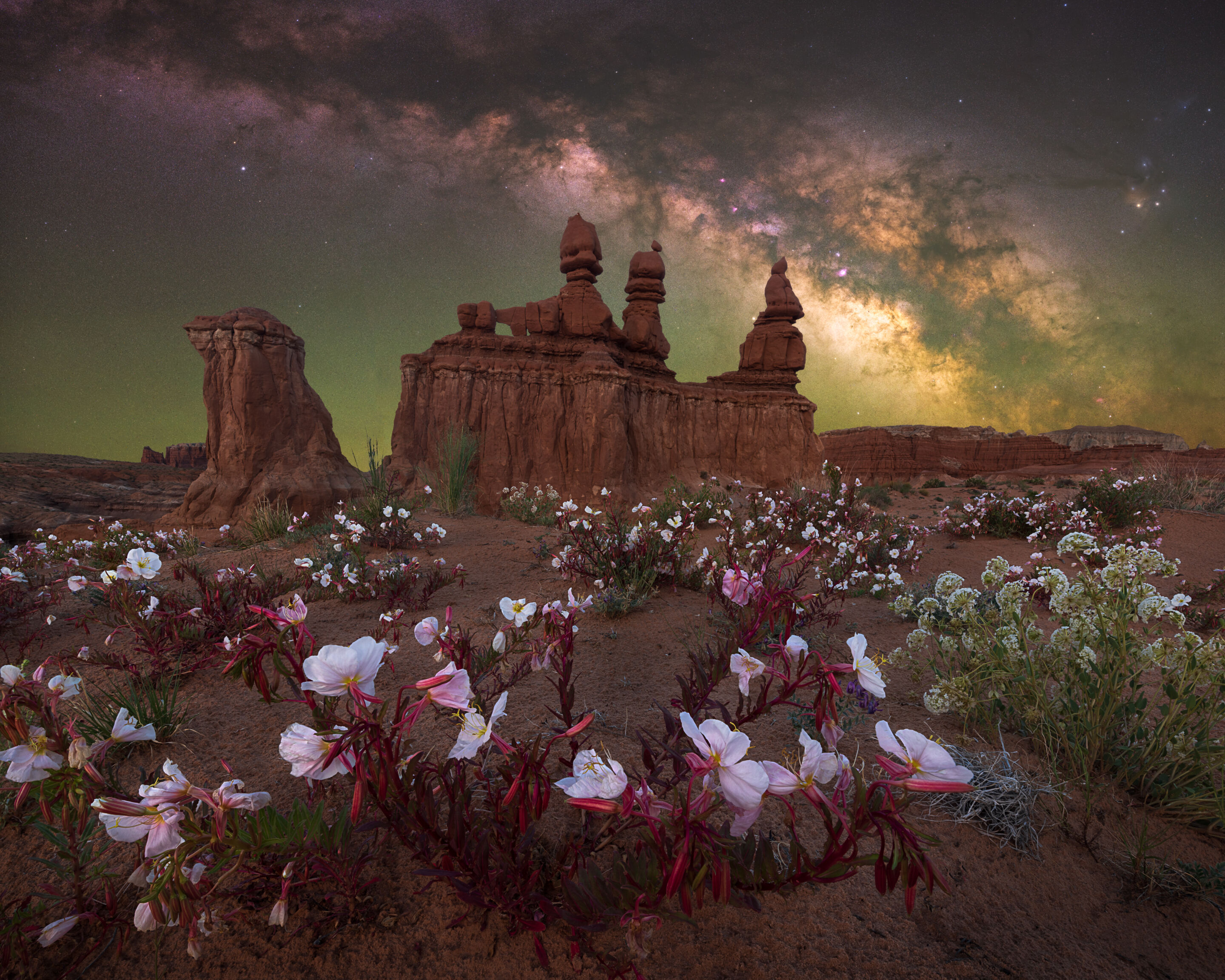
Desert Bloom by Marcin Zajac, 2023 First Place Winner in the Utah Dark Skies Category.

image

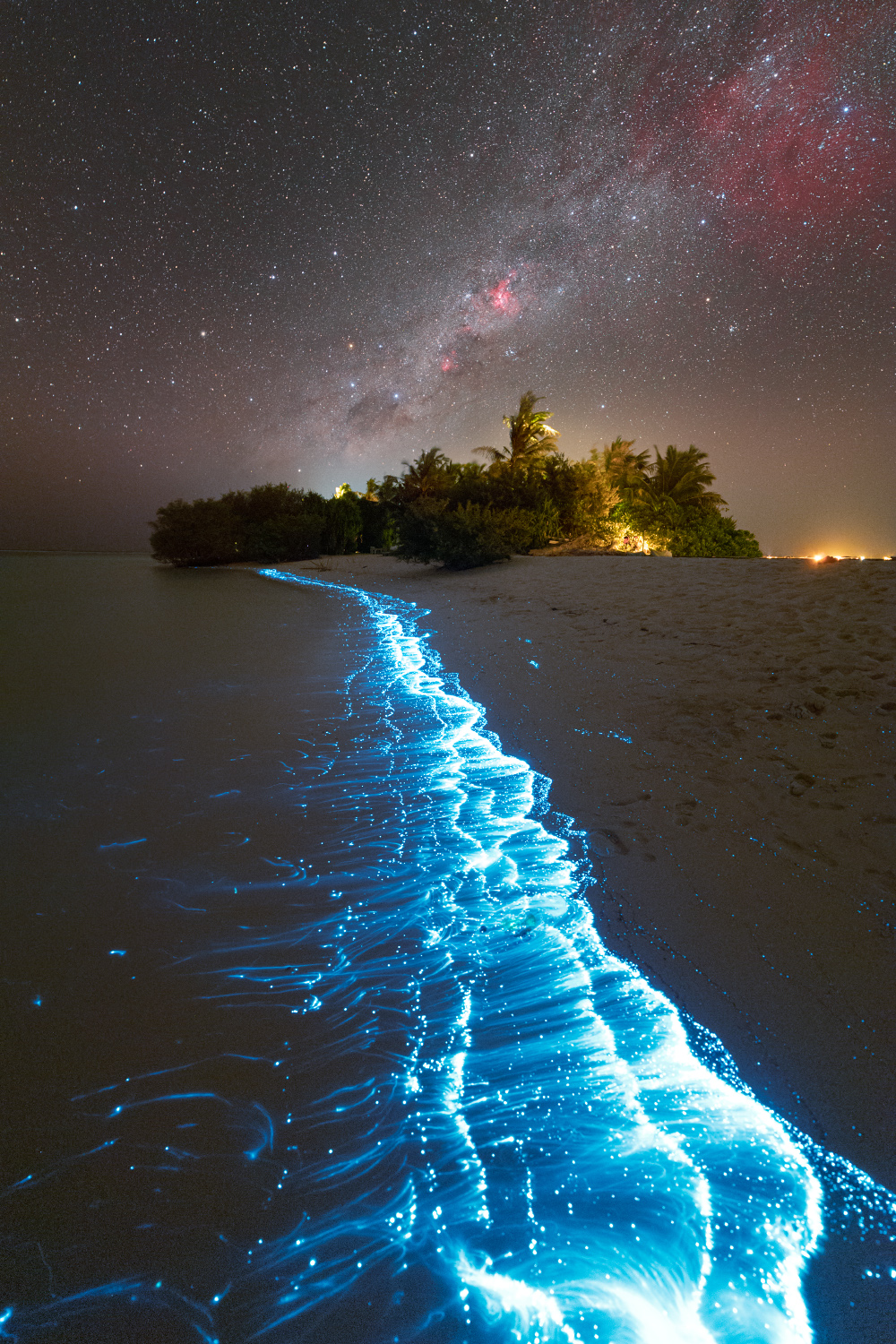
Milky Way above the Turquoise Wonderland by Petr Horálek, 2023 First Place Winner in the Creatures of the Night Category.

image

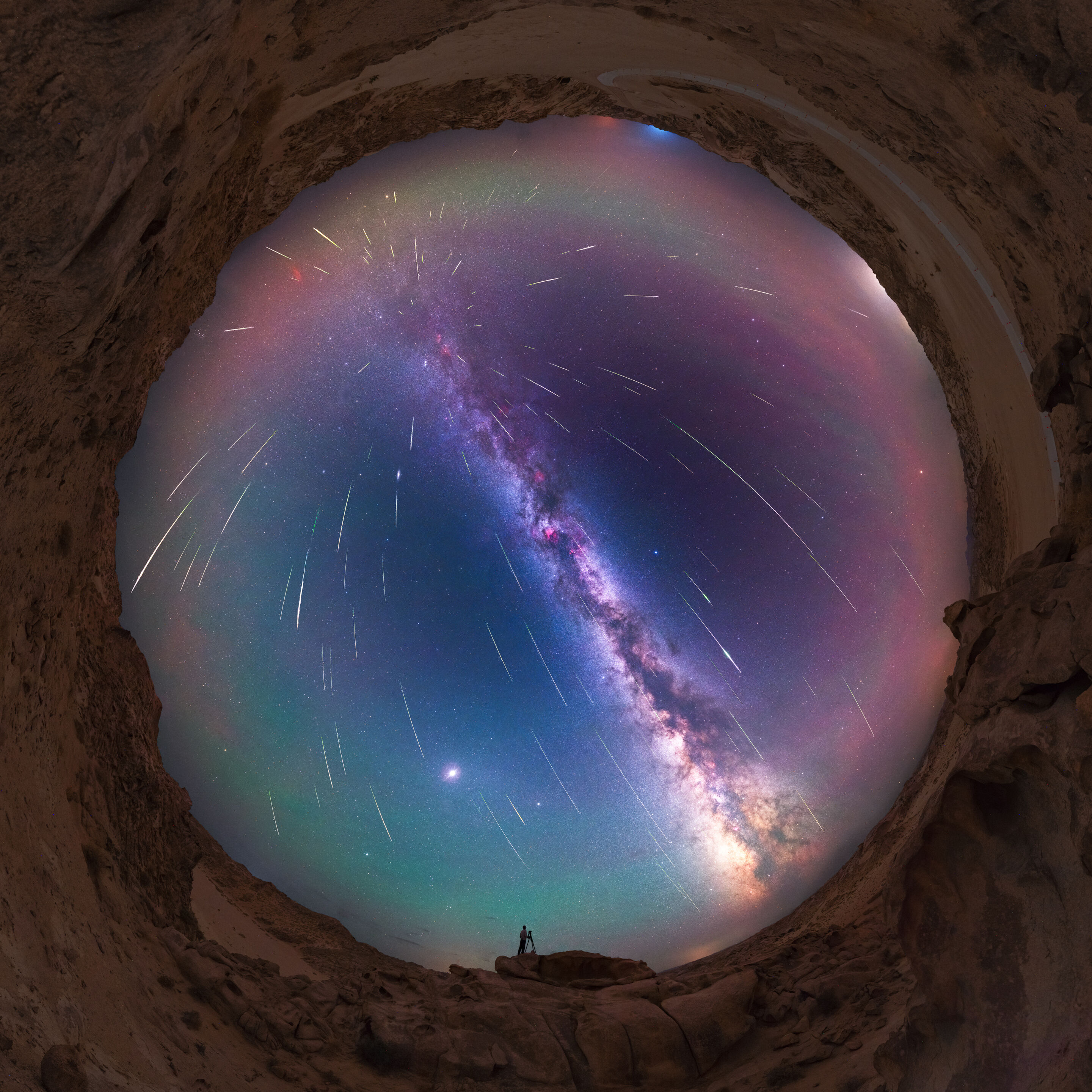
The sky is like a dome, covering field by Wang Tianwei, 2023 First Place Winner in the Connecting to the Dark Category.

The Capture the Dark Photography Contest celebrates photography’s important role in the dark sky movement.

TUCSON, ARIZONA, UNITED STATES, August 22, 2023/EINPresswire.com/ — DarkSky International recently hosted its Fourth Annual Capture the Dark Photography Contest, presented by Visit Utah, to celebrate photography’s important role in the dark sky movement. The contest received 494 entries from participants worldwide to the ten categories:

● Connecting to the Dark – Experiencing a natural night provides perspective, inspiration, and leads us to reflect on our humanity and place in the universe.

● International Dark Sky Place – Now over 200 protected lands and municipalities worldwide have been certified by DarkSky as an International Dark Sky Place, creating havens for astrophotographers.

● The Impact of Light Pollution – Light pollution can significantly impact the environment, human health, and our access to the night sky. This category also includes images of terrible lighting, glare bombs, etc.

● The Bright Side of Lighting – Light pollution can give artificial lighting a bad reputation, but lighting that follows DarkSky’s Principles for Responsible Outdoor Light can be beautiful, healthy, and functional.

● Creatures of the Night – Light pollution doesn’t only erase our view of the stars; scientific evidence suggests that artificial light at night has adverse and deadly effects on wildlife, including amphibians, birds, insects, and mammals.

● Deep Sky – For thousands of years, humans have looked to the night sky and wondered what is out there. Today, we can take photos of deep space objects from our own backyards.

● The Mobile Photographer – No big camera? No problem! A photo from any of the above categories that was taken with a cell phone, tablet, or GoPro. No DSLR, mirrorless camera, or drone shots.

● Youth – A shot for any of the above categories taken by someone 17 years old or younger.

● Utah Dark Skies – A photo taken in one of the most popular destinations to capture dark skies — Utah, U.S.

● People’s Choice – Voted on by the public.

“This year we saw some of the most beautiful photos from around the world that we have ever seen,” said DarkSky International Program Associate Michael Rymer. “These brilliant views of the night sky show how our place in nature does not stop at the horizon, and that the sky above is as much a delicate and beautiful resource that we must protect and reclaim.”

“Congratulations to this year’s Capture the Dark Photography Contest winners and the awe-inspiring photos,” said Vicki Varela, managing director of the Utah Office of Tourism. “Astrotourism and dark sky messaging complement our Red Emerald Strategic Plan, which aims to elevate life in Utah through responsible tourism stewardship. Preserving dark skies helps communities establish long-lasting tourism economies and keeps our places Forever Mighty®.”
– Vicki Varela, managing director of the Utah Office of Tourism

A global panel of esteemed judges composed of Imma Barrera, Ian Lauer, Jeff Dai, Parisa Bajelan, Ben Coley, Dr. Lin Qing, reviewed the photos using criteria that included technical skill, composition, connection to the category theme, and ‘wow’ factor and we have the results!

Winners of each category will receive a prize package that includes a feature in DarkSky’s Nightscape publication, DarkSky’s blog and social media, a DarkSky membership, DarkSky and Visit Utah swag, and a Peak Design Field Pouch. Additionally, one photograph will be presented with a “People’s Choice Award” based on votes by the public. This winner will receive a prize package that includes a $250.00 gift card to B&H, a feature in DarkSky’s Nightscape publication, the organization’s blog and social media, a DarkSky membership, and DarkSky and Visit Utah swag. Review the official contest rules and eligible photographs here.

To see the winning photos, visit the official website for the photography contest at capturethedark.darksky.org and check out the official announcement on the DarkSky blog.

About DarkSky International

DarkSky International, headquartered in Tucson, AZ, USA, is a recognized global authority on light pollution, empowering a global movement to protect the night sky. DarkSky restores the nighttime environment and protects communities from the harmful effects of light pollution through outreach, advocacy, and conservation. Since 1988, our global community of dark sky advocates have protected more than 200 International DarkSky Places, enacted dozens of responsible lighting policies, and raised awareness of light pollution on every continent.

Susan Serven
DarkSky International
susan.serven@darksky.org
Visit us on social media:
Facebook
Twitter
LinkedIn
Instagram
YouTube

image

Chasing M2S: a new drone for underwater photography by Jose Antunes

Chasing M2S: a new drone for underwater photography by Jose Antunes
Support ProVideo Coalition
Shop with
Filmtools Logo

What Do You Think? Let Us Know.

Why Embracing Abstract Photography Will Improve All Your Images and

Why Embracing Abstract Photography Will Improve All Your Images and

Abstract photography, do you hate it or love it? Either way, there’s a lot we can learn from the techniques and utilize them in our other photographic work.

Abstract is central to modern art. Therefore, abstract photography fits very well into that bracket, because it is one of the most modern of all arts. Digital photography, especially so. There is much we can discover from it that will help us develop our broader photographic skills. Plus, it’s a fun genre to dabble in anyway.

What Is Abstract Photography?

The word abstract has two meanings. Firstly, it can be synonymous with extract, and indeed, we can separate parts of an entire scene to create abstract images. Then, the word can be used like we do when we talk about an abstract idea; it’s something conceptual. With abstract art, and therefore abstract photography, both meanings can apply. Either way, it is a type of photography that is not attempting to show an accurate depiction of a visual reality but reveals the world in a way that most people don’t see it. That is what all good photography is about, but perhaps with abstract photography, we are taking that to extremes.

The opposite of abstract art is figurative art. That depicts real-life imagery clearly, without distortion. It’s slightly confusing because figurative otherwise means metaphorical, and the ideas created by abstraction are often metaphors for reality.

With abstract photography, the subjects are often not even recognizable, although sometimes, the subjects can jump out at you after close examination. This sudden realization of the image’s subject is explained in modern Gestalt theory. It suggests that a viewer will look at the whole image, perhaps recognizing its individual elements, and then an understanding of the whole scene will leap forward in their mind.

Often, in all forms of abstract art, including photography, the subject has been simplified or schematized. Abstract art uses the organization of patterns, textures, colors, forms, geometric shapes, and gestural marks to achieve its effect. This is known as ‘pure’ abstraction. That fits well with photography because organization – composition – is one of the essential building blocks of creating a photo.

Abstract Photographer and the Naked Emperor

One criticism of abstract photography is the Emperor’s New Clothes argument. Some fear expressing that they don’t see the purpose or meaning because others might think they are not all that bright, yet, for them, there is no meaning there at all, and it’s all nonsense. If you don’t get abstract photography, I’ll leave it up to you to decide whether it’s beyond your capacity to understand it or whether it is all a load of hogwash. Don’t worry, though. If you don’t get it, you are not alone.

Although many people struggle to see beyond abstraction being just random shapes on a piece of paper, for those that do appreciate it, this area of art is so very much more. It can be representative of reality but can also be understood as having moral attributes and representing virtues such as order, purity, simplicity, and spirituality.

That spiritual aspect comes from it not necessarily representing the material world and therefore must have some meaning beyond that. This idea stems from the ancient Greek philosopher Plato. He suggested that at its highest levels, beauty lies not in the forms of the real world but in geometry. Consequently, many abstract artists believe that artistic effect should be achieved by using pure patterns of form, shape, line, tone, and color.

The Two Types of Abstract Photography We Usually Consider

It is not always the case that abstract photos have meaning. Abstraction is usually subdivided between two art movements, one of which deliberately shuns meaning. That is concrete art, which is entirely free of any observable reality and that has no symbolic meaning. The other is non-objective art, which usually aims to convey a sense of simplicity and purity using geometry. Other forms of abstract art include Abstraction-Création, Cubism, Constructionism, Modernism, and Suprematism. These are less commonly applied to photography, although it’s not impossible to do so.

Is Abstract Art Beautiful?

There are those who believe that art should be purely about creating beautiful effects. This is indeed the most undemanding type of art to like; beauty is easily accessible. I know that if I post an image of a beautiful sunrise on social media, it will get far more likes than an abstract image or one of something sublime.

Furthermore, it is a commonly held belief that photography must be rooted in reality. In some circumstances, that is true. There are photographs that should depict reality as closely as possible, such as those used to illustrate news or if they were taken for scientific or legal purposes. Nevertheless, it’s not a prescriptive rule that every photograph should be made that way.

In fact, it’s possible to accept that a photograph is always a long way from the reality it represents. Firstly, it is two-dimensional, and the image is trapped in time, unlike the four-dimensional world we live in. Furthermore, the length of the exposure rarely stops or reveals movement in the same way that we perceive it. Then, there is the illusion of changing perspective resulting from varying a lens’ focal length.

Similarly, a photo’s depth of field is unlike that of our eyes. On top of that are all the other factors, such as the limited dynamic range and color space of the image, plus that the photo is only visual. It lacks all the other senses that we experience when we observe the world around us.

Of course, those restrictions also apply to the way we see the world and how our brains interpret our limited sensory inputs. There’s a lot more to reality than what our limited senses perceive. For example, dogs, bats, sea urchins, sharks, and flies sense their world in ways that we cannot imagine. The same would be true the other way around.

Once we accept that a photograph, in its limitations, is a poor representation of actuality, we can let go of the naive idea that photos must always be precise interpretations of reality, because they can’t anyway. It’s debatable that the camera never lies, but it certainly never tells the whole truth.

Adding Meaning to Abstract Photographs

Non-objective abstract photographers face a challenge that all experienced photographers tackle. That is to put their desired meaning into their abstract images. If you are setting out to take abstract photos that are more than just a random shape, then that takes considerable thought and a degree of intelligence to do so. However, if you can relate your intention with an abstract photo, it follows that doing the same in figurative photography should be easy in comparison. Consequently, that makes abstract photography a worthwhile pursuit.

Of course, that meaning can be personal, and it doesn’t necessarily follow that your viewers will interpret it in the same way as you.

How to Take Abstract Photos

To create abstracts, we are using the same techniques as we would when shooting any other photograph. It is usually achieved by changing the variables we have when we take a photograph. These variables are light, exposure, focus, the subject, and composition.

Firstly, light can change in intensity, color, and direction. These create varying levels of contrast. That doesn’t just mean the difference between luminosity, but varying contrasts between different hues and saturations.

Secondly, adjusting the exposure settings dictates how the light hits the sensor and that, in turn, affects the image, e.g. shallow depth of field, showing movement, etc.

Choosing what is and isn’t sharp can be a major element of abstract photography. We can decrease sharpness with focus and depth of field, obscuring the lens, and moving the camera and/or the subject.

Finally, what you shoot and how you shoot is essential for creating abstract photos, too. We think about the subject, then our proximity to it, the camera angle, and the overall layout of the frame. As part of that, we seek out patterns, textures, colors, tones, and shapes.

Adding Abstract Elements to Figurative Photographs.

When you have taken on board the idea of abstract photography, you probably realize that success is usually down to simplicity. Try limiting the different elements in the frame. This doesn’t just mean less subject matter, but fewer changes in colors and tones. Learning to use simplicity this way helps when we want to carry it over to our everyday photography.

When we have mastered abstract photography, we can then employ these techniques in other photos we shoot. Moreover, discovering the methods of creating abstract photos enables us to better all our photography by including abstract elements in them. For example, in out-of-focus areas, patterns, and textures are abstract elements.


Is abstract photography something that appeals to you? Is it something you would like to try, but are not sure where to start? It would be great to hear your thoughts in the comments.

Art, Activism And Frederick Douglass At National Portrait Gallery

Art, Activism And Frederick Douglass At National Portrait Gallery

Where would the Civil Rights Movement have been without Martin Luther King Jr.’s oratory and prose? Without pictures and video of firehoses in Birmingham. Without Emmitt Till’s disfigured face.

Or the anti-war movement without images of death in Vietnam?

Black Lives Matter would still exist without camera phones, but George Floyd’s murderers wouldn’t be in prison. Millions wouldn’t have taken to the streets in 2020 or finally woken up to America’s pervasive systemic racism and rampant racially-motivated police brutality.

Art driving protest–speeches, books, photographs–is not a modern invention. Frederick Douglass (1818-1895) used these tools in the service of abolition. The Smithsonian’s National Portrait Gallery in Washington, D.C. explores the relationship between art and protest during the 19th century through prints, photographs and ephemera from the great man’s life.

“He recognized at a young age the power of words and images,” John Stauffer, the Sumner R. and Marshall S. Kates Professor of English and African and African American Studies at Harvard University, and exhibition guest curator, told Forbes.com. “He devoted his life to art and activism, and he saw them as twinned. He was the nineteenth century’s most powerful artist-activist, simply brilliant at using photographs and words as weapons to combat slavery and racism.”

Douglass’ life coincided with the dawn of photography. His activism spanned a golden age of photography, oratory, literature, and journalism.

“He mastered the arts of oratory, autobiography, the journalistic essay, and posing for a photographer,” Stauffer said. “He was the most photographed American of the 19th century, a public face of the nation, projecting a visual voice of democracy. He made every effort to circulate his photographs through engravings cut from them. Through the power and beauty of his images and words, he ‘out-citizened’ white citizens at a time when most whites did not believe that African Americans should be citizens.”

How was this possible for a man born into slavery in a country largely–violently–determined to hold Black people down?

From Slavery to Sensation

Douglass’ ascension into the most preeminent African American voice in the 1800s and one of the handful of most influential and famous Americans in the nation’s history owes itself equally to his merits and good fortune.

“Douglass had an extraordinary work ethic, he was immensely curious and dedicated,” Stauffer explained. “And physically strong and tall–over six feet, a half-foot taller than the average man–which helped him survive slavery.”

Size does matter. George Washington and Abraham Lincoln were also comparative giants for their day. American presidents, on average, stand a great deal taller, literally, than the average citizen.

Douglass’ physical size and strength allowed him to outlast a sadistic “slave breaker,” Edward Covey, in a protracted fight as a teen. After suffering numerous whippings, Douglass stood up to the man. As long as he lived, he referred to the fight as the turning point in his life as a slave.

“He was also lucky to have been born and raised in the upper South and not sold into the Deep South or murdered for his rebelliousness as a slave and his constant battles against slavery and racism as a free man,” Stouffer added. “Had he been born in the Deep South, where most enslaved people lived, his chances of escaping to free soil would have been almost nil.”

Douglass’ circumstances were hardly favorable, but he did win something of a genetic and geographic lottery at birth.

He also caught a rare break, learning to read and write as a young boy, skills most slaveowners prohibited.

“In Baltimore, Douglass asked his mistress, Sophia Auld, to teach him to read, which she did, having never overseen an enslaved person before,” Stouffer said. “Her husband, Hugh Auld, found out and told her in front of Douglass, ‘if you learn him to read, he’ll want to know how to write; and this accomplished, he’ll be running away from himself.’ Hearing this, Douglass ‘understood the direct pathway to freedom,’ as he said.”

He hid books and newspapers, secretly reading them when he could. He practiced writing with chalk on the streets. He saved money to purchase “The Columbian Orator,” a collection of speeches and writings designed for young boys to master the arts of oratory and writing.

In 1836 Douglass tried escaping north, but was caught. Others had been brutalized or sent South for similar behavior. Good fortune smiled on Douglass once again and he was not. He finally did escape in 1838 with the help of Anna Murray, a free Black woman who worked as housekeeper.

They got married and moved to New Bedford, MA where he changed his name to Frederick Douglass.

In New Bedford he discovered the abolitionist paper The Liberator.

“The paper became my meat and drink,” Douglass wrote. “My soul was set all on fire.”

From here on out, Douglass wouldn’t require good luck to change the world. He would do that on his own.

“From (The Liberator) he learned how to use words and punchy verbs to combat slavery. Douglass was urged to speak,” Stouffer said. “His oration was so compelling that he was hired as a fulltime lecturer for the American Anti-Slavery Society, and soon became famous – oratory was then a popular form of entertainment, like sports today. That same year, 1841, he sat for his first photograph.”

For the next five years he traveled throughout the northern states, abolitionizing thousands of listeners.

“By 1844 he sounded nothing like a slave and audiences began accusing him of never having been one,” Stouffer said. “Not giving details about where he came from further fueled doubts about his authenticity as a fugitive. Such doubts threatened his career and so he ‘threw caution to the wind’ and wrote his life story, naming names, dates, places.”

In 1845 the American Anti-Slavery Society published “Narrative of the Life of Frederick Douglass, An American Slave, Written by Himself.” Within three years, it went through eleven thousand copies in the U.S. and nine editions in England.

“He was now nationally famous,” Stouffer explained. “But with fame, his freedom was in jeopardy. (His owners) Thomas and Hugh Auld could easily track his whereabouts in the antislavery newspapers. Thomas publicly called Douglass a liar, and Hugh vowed to, ‘spare no pains or expense in order to regain possession of him’ and ‘place him in the cotton fields of the South.’”

Had the Aulds or hired slave catchers hunted Douglass down, Massachusetts could have done nothing to protect him. He fled to the British Isles for safety, spending almost two years there, speaking to ever larger audiences.

He returned to the U.S. in 1847, a legally free man after British sympathizers purchased his freedom. He moved to Rochester, N.Y. with his family and launched his own paper, The North Star, which became Frederick Douglass’ Paper in 1851 and Douglass’ Monthly in 1860 – the longest running Black paper in the nineteenth century.

“There was great power and beauty in his essays and speeches,” Stouffer said. “He likely spoke to more Americans than anyone else of his time.”

Douglass in Photography

Douglass’ words were powerful; his image, arguably, more so.

“Douglass, along with most Americans, believed that photography was a ‘truthful’ representation and the great democratic art,” Stouffer explained. “He also recognized that the sitter had agency in the outcome of a photographic portrait. He understood his role as an artist or performer, part of a pas de trois with the photographer and the camera. He always dressed up. His photographic portraits, along with those of numerous other African Americans, starkly contrasted the racist caricatures of Blacks created by whites.”

A long American tradition of white artists caricaturing African Americans in prints and paintings influenced public perception. White painters in the antebellum era almost always cast the devil as a Black man. Monkeys and happy slaves were other tropes.

Douglass, meanwhile, always presented himself, in dress, pose, and expression, as a dignified and respectable citizen.

“Photography was a truth-telling medium he emphasized. It bore witness to African Americans,’ and all humans,’ essential humanity, and it countered the racist caricatures by whites drawing freehand,” Stouffer said. “Douglass argued that photography inspired people to eradicate the sins of their society. It led them to activism. It stemmed from the power of imagination, which allowed people to appreciate photographs as accurate representations of some greater reality. It encouraged them to realize their ideals in an imperfect world.”

As Douglass put it: “Poets, prophets, and reformers are all picture-makers–and this ability is the secret of their power and of their achievements. They see what ought to be in the reflection of what is, and endeavor to remove the contradiction.”

This is a key message of the exhibition.

“Poets, prophets, and reformers were artists and activists. Activism inspired art and vice versa. Poets, prophets, and reformers saw their community or nation as it was–with all its gross inequalities, injustices, and prejudices–and they contrasted it with what ought to be. The contradiction inspired them to remove structural inequalities, injustices, and prejudices,” Stouffer explained. “Douglass and most other abolitionists, along with many antislavery advocates, considered themselves poets, prophets, and reformers. As a group, they sat for their photographic portraits with greater frequency, distributed them more effectively, and were more taken with photography, than other groups.”

Douglass went so far as to say that “the moral and social influence of pictures” was more important than “the making of its laws.”

“One Life”

“One Life” showcases over 35 objects from all phases of Douglass’ life. On display are the ledger documenting his birth, a pamphlet of his “What to the Slave Is the Fourth of July?” oration, two of his three autobiographies, a letter from Douglass to Lincoln, portraits of activists in Douglass’ circle such as Harriet Tubman and Sojourner Truth, and portraits by the prominent Black photographers Augustus Washington and Cornelius Marion Battey.

Beyond the National Portrait Gallery, Douglass’ influence in contemporary art can be seen everywhere from television and film, to theatre and fine art.

“Douglass’ 168 photographic portraits have left a vast and important visual legacy, inspiring 21st century artist-activists to portray him in all kinds of public art–especially murals, but also in paintings, prints, drawings, postage stamps, and magazine covers,” Stouffer said. “I did not realize how many artists and writers in the 20th and 21st centuries were hugely inspired by Douglass, nor did I appreciate how frequently Douglass’s portrait, based on a photo, appeared in paintings, chromolithographs, books, as well as in common household items such brooches and lapel pins, spoons, plates, mugs, and other silverware.”

“One Life” will remain on view until April 21, 2024; admission to the National Portrait Gallery is free and the museum is open 11:30 AM to 7:00 PM seven days a week.

Further exploration of Douglass in D.C. should feature a visit to the Frederick Douglass National Historic Site which reopened on July 4, 2023, following its 2020 closure due to COVID and then subsequent renovations.

Anyone interested in Douglass will also surely find worthwhile “Beyond Granite: Pulling Together,” a new exhibition placing a series of six commemorative art installations on the National Mall. On view through September 18, 2023, “Beyond Granite” asked six leading contemporary artists to respond to a central question: “What stories remain untold on the National Mall?”

War Photographer Who Captured Famous Image of President Ford Eating Tamale Has Died

War Photographer Who Captured Famous Image of President Ford Eating Tamale Has Died
Patrick Hamilton
Patrick Hamilton

News photographer Patrick Hamilton — who may have altered an election with his famous image of President Gerald Ford eating a tamale incorrectly — has died at the age of 74.

Hamilton, a photojournalist who specialized in conflict zones, passed away at his home in San Antonio, Texas on August 13 after a long struggle with cancer.

He is survived by his wife of 44 years Sylvia Hamilton and the couple’s three children, and three granddaughters.

Hamilton was a combat veteran of the Vietnam War before joining The Associated Press in 1979 and covering civil wars in Central America as a photojournalist.

Hamilton later worked as a photographer at Reuters in 1985 and covering the first Gulf War in Iraq as well as Operation Desert Storm.

Hamilton left Reuters in 1991 and was hired as photo editor at a Texas newspaper, the McAllen Monitor, where he mentored younger photographers.

“Pat had seen war as a Marine combatant in Vietnam and those experiences in some ways prepared him to return to war; but this time with a different weapon, a camera, and a different mission — to show the world both the horrors of war itself and the quiet dignity of so many whose lives were upended or ruined,” Santiago Lyon, former AP vice president and director of photography tells AP News

A Photographer in a Pre-Digital Age

According to The Washington Post, Hamilton mostly worked in the pre-digital age as a photojournalist.

This meant Hamilton had to lug two heavy silver aluminum suitcases of equipment from assignment to assignment. The photographer would usually set up a dark room, often in the bathroom of his hotel room, sealed with duct tape to keep out the light.

The Washington Post reports that colleagues recall him developing his prints under a red light, with a bottle of Wild Turkey by the bathtub. One of his most frequent remarks was: “Hell, any idiot could do this sober.”

A Photographer Who May Have Changed an Election

In addition to covering combat and war zones, Hamilton also worked as a staff photographer at the San Antonio Express-News in 1976. During that election year, Hamilton photographed President Ford campaigning near the Alamo and biting into a tamale with the corn husk still on.

@forrestfromtexas Did a tamale cost President Ford the state of Texas in the 1976 Presidential election? The Great Tamale Incident of 1976. #ushistory #uspresident #geraldford #jimmycarter #texashistory #sanantonio #satx #tamales #funfacts #thealamo ♬ (Hey Baby) Que Paso – Texas Tornados

The culinary faux pas, sometimes called “the Great Tamale Incident,” was regarded as a factor in Ford losing Texas to the Democratic nominee, Jimmy Carter.


Image credits: Header photo via Facebook.

Golfer in the Clouds Wins the World Sports Photography Awards 2023

Golfer in the Clouds Wins the World Sports Photography Awards 2023
World Sports Photography Awards
“Sky Drive” by Patrick Smith — Golf | 2023 World Sports Photography Awards

The World Sports Photography Awards celebrate the best in professional sports photography worldwide. This year’s 24 winners showcase the incredible athleticism and impactful stories that endear so many people to the world of sports.

This year, more than 700 professional photographers from over 70 countries submitted their images for consideration. The World Sports Photography Awards is the only global photo competition exclusively for sports photography.

“Designed to recognize and celebrate incredible sports images and the photographers who take them, the World Sports Photography Awards tell compelling stories of the emotion, passion, athleticism, and focus that are at the heart of sport,” explains the World Sports Photography Awards.

“As a judge and as a sponsor of the 2023 ‘World Sports Photography Awards’ I was incredibly impressed by the quality of this year’s entries. The art of photography is about encapsulating emotions and feelings in an instant, and being able to tell a compelling story which aims to inspire the spectator long after they’ve experienced it. It’s been exciting to see the new entries in the ‘Pro’ space being shortlisted for the awards too as they have elevated the expectations for next year’s participants!” says Sophie Collins, Chief Marketing Officer at MPB. A popular online marketplace for photographers to buy, sell, and trade used photo and video gear, MPB is the sponsor of this year’s World Sports Photography Awards.

Category Winners

World Sports Photography Awards
“The Final Kick” by Kevin Sabitus — American Football | 2023 World Sports Photography Awards
World Sports Photography Awards
“Sparkle” by Anna Szilágyi — Aquatic | 2023 World Sports Photography Awards
World Sports Photography Awards
“B of the Bang” by Phil Noble — Athletics | 2023 World Sports Photography Awards
World Sports Photography Awards
“Catcher” by Howard Lao — Baseball | 2023 World Sports Photography Awards
World Sports Photography Awards
“Cameron Crazies” by Andrew Hancock — Basketball | 2023 World Sports Photography Awards
World Sports Photography Awards
“Leti Leti (L) v Conor Wallace (R)” by Darren Burn — Boxing | 2023 World Sports Photography Awards
World Sports Photography Awards
“Surrounded” by Philip Brown — Cricket | 2023 World Sports Photography Awards
World Sports Photography Awards
Image by Xavier Pereyron — Cycling | 2023 World Sports Photography Awards
World Sports Photography Awards
“Eyes of the Horse” by Mrs Evo — Equestrian | 2023 World Sports Photography Awards
World Sports Photography Awards
“Alone at Last” by Jesus Alvarez Orihuela — Football | 2023 World Sports Photography Awards
World Sports Photography Awards
Image by Vince Mignott — Formula 1 | 2023 World Sports Photography Awards
World Sports Photography Awards
“Superman on the High Bar” by Tom Jenkins — Gymnastics | 2023 World Sports Photography Awards
World Sports Photography Awards
“Pre-Game” by Kirk Irwin — Ice Hockey | 2023 World Sports Photography Awards
World Sports Photography Awards
“James Ward Breen” by Silek Lanyah — Martial Arts | 2023 World Sports Photography Awards
World Sports Photography Awards
“Pitstop” by Bodo Kraeling | 2023 World Sports Photography Awards
World Sports Photography Awards
“Climbing Silhouette” by Julia Roger-Veyer — Other | 2023 World Sports Photography Awards
World Sports Photography Awards
“Flying Coll” by Aaron Gillons — Racquet Sports | 2023 World Sports Photography Awards
World Sports Photography Awards
Image by Bob Bradford — Rugby| 2023 World Sports Photography Awards
World Sports Photography Awards
“Coco Gauff” by Scott Barbour — Tennis | 2023 World Sports Photography Awards
World Sports Photography Awards
“In the Heaven” by Petr Slavik — Urban and Extreme | 2023 World Sports Photography Awards
World Sports Photography Awards
“Spectacular Finale” by Richard Heathcote — Venues and Views | 2023 World Sports Photography Awards
World Sports Photography Awards
“Justine Dupont” by Octávio Passos — Water | 2023 World Sports Photography Awards
World Sports Photography Awards
Image by Annice Lyn — Winter Sports | 2023 World Sports Photography Awards

The full gallery of winning images, including the top 10 photos in all 24 categories, is available on the World Sports Photography Awards website.


Image credits: All images courtesy of the World Sports Photography Award, individual photographers credited in the captions

Katy Resident Respects Local Wildlife through Photography

Katy Resident Respects Local Wildlife through Photography

KATY MAGAZINE NEWS

August 22, 2023

By Natalie Cook Clark

Wildlife live among Katy residents and are seen everyday. A Katy resident captures local wildlife on camera.

All photos courtesy of David Tumino

David Tumino moved to Katy in 2004 when his neighborhood of Seven Meadows was a long way from being built.

Much Has Changed Since the Tuminos Moved to Katy

Katy Gaston was a 2-lane blacktop with ditches,” says Tumino. “Gaston quit at Legendary and there was no Seven Lakes HS, JH. No Bonnie Holland. No 1093 toll road.”

From the beginning of his family’s time in Katy they saw wildlife such as coyotes, raccoons, snakes, big green frogs, turtles, squirrels, alligators, nutria, rabbits, lots of migrating birds, lots of fish.

Wildlife sightings continued over the years even as the area around them developed. Tumino took his life-long passion for photography and turned the lens to capture these amazing critters that share our community.

Tumino’s passion for photography started as early as 1966 when he was inspired by a younger high school classmate.

“I purchased my first camera in 1968 from my Uncle George, who worked in a camera story in Queens, Woodhaven, NY,” says Tumino. That purchase was his high school graduation gift to himself.

He went on to be the yearbook photographer at the United States Air Force Academy. He has photographed kids sports, wedding, and various events over the years and finally turned to digital in 2005.

Katy Wildlife Gives Him Plenty to Photograph

But Tumino loves photographing nature and Katy gives him plenty to work with.

“What could be more inspirational than local wildlife?” asked Tumino. “They’re innocence, survival, diversity, and beauty. The bird traffic in Katy is also amazing.”

A Visiting Katy Bat

This last weekend they saw a new critter, a bat that took refuge from the heat under their umbrella.

“We went to raise the umbrellas and there he was at the crown,” says Tumino. “He moved around a bit while we were being nosey, but he didn’t seem afraid of us at all.

According to the Texas Parks and Wildlife, Bats are common in the greater Houston area and are great at pollinating and eating bugs.

Tumino continues to photograph Katy wildlife and enjoys it in his retirement.

“I love capturing life as it lives, as it struggles, as it survives,” says Tumnio. “Nothing is contrived…it’s all real.”

Learn more about local Katy wildlife.

MORE KATY MAGAZINE

Follow Katy Magazine on Facebook for more current news.


#CentralGreenPark #ReplacementWindowsofKaty