Photography

Capture One’s photo-editing app arrives on iPhone

Capture One’s photo-editing app arrives on iPhone

Capture One has brought its eponymous photography app to the iPhone. Photographers can connect their camera to their phone and shoot images directly to the app. Capture One works with more than 500 cameras, the company says, including Canon, Sony, Nikon, Fujifilm, Leica and Sigma models.

The app can automatically apply edits to images as your camera sends them to your iPhone. As such, Capture One suggests, photographers can swiftly provide their clients with edited images. You can plan ahead by creating styles on Capture One’s desktop or iPad apps and AirDropping them to your iPhone.

Capture One enables photographers to share a live link of a shoot with their colleagues, who can follow along in real time whether they’re remote or on location. The company suggests this will allow collaborators to quickly select their favorite shots and provide feedback from any device, wherever they might be.
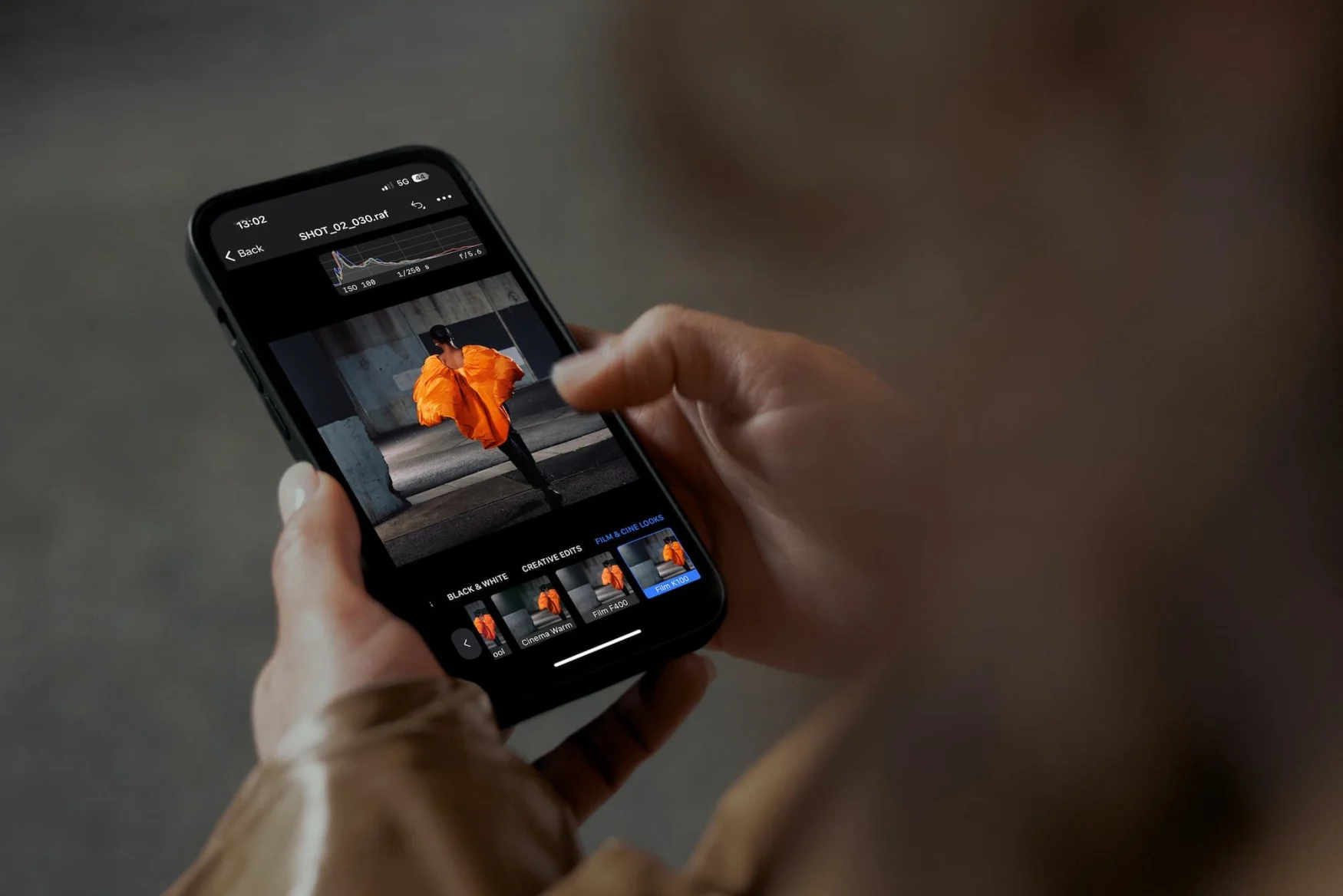
A person uses a photo-editing app on an iPhone.

Gabija Morkūnaitė/Capture One

Other features of the app include RAW conversion and color processing. You’ll be able to transfer shots via the cloud to Capture One Pro and finish editing on your desktop. Capture One says ratings, color tags and edits will remain intact when you transfer your images. You can export images from the app however you like, the company said, including to an external SSD.

Capture One, which is an increasingly popular Lightroom alternative, is available in the App Store now. A subscription costs $5 per month after a seven-day trial, but users who have the iPad app or the All in One bundle can use Capture One on iPhone at no extra cost.

Tish review – gripping portrait of a passionate photographer of Austerity Britain

Tish review – gripping portrait of a passionate photographer of Austerity Britain
image

There’s passion in this heartrending documentary from film-maker Paul Sng, comparable to his excellent earlier film about Poly Styrene, of X-Ray Spex. It is about the Tyneside photographer Tish Murtha who chronicled working-class lives in the north east in the 70s and 80s (and also those of Soho sex workers in London), earning for herself the nickname “Demon Snapper” in the papers.

She showed the reality of poverty and deprivation in communities where the misery of unemployment had been allowed to settle by the Westminster political classes who considered it a price worth other people paying for the boon of undermining trade union power. But in capturing the faces, particularly the faces of children, Murtha showed her subjects’ humour, optimism and refusal to be cowed. The film is presented with enormous humanity and warmth by Murtha’s grownup daughter Ella, who is an eerie likeness of her late mother. It is Ella who mediates the film’s emotional message in talking to Tish Murtha’s relatives and to her friends and teachers at the School of Documentary Photography in Newport.

The centrally important point is that Murtha was not an outsider: she was a part of the people whose lives she recorded, and resented the fetishisation of poverty by middle-class media folk. This was in fact the fateful cause of her split with the Side Gallery in Newcastle, which had been showcasing her work, because of what she called their “poverty is beautiful, maaan” attitude. And the awful truth is that Tish Murtha became a statistic herself: marginalised and misunderstood by the arts establishment, she was in her final years reduced to poverty by Austerity Britain after the 2008 crash, terrified of being sanctioned by the Department of Work and Pensions.

Sng and Ella Murtha tell the gripping tale of a kid who like her brothers and their mates roamed far and wide along the deserted streets and derelict, abandoned houses, discovering a camera in one – and finding her vocation. She also discovered that having a camera deterred the kerb crawlers and child abusers who would creep along beside them. She bought a new camera on hire purchase from Dixons, got a college place (with the help of a grant, presumably) and her talent blazed away, with her eloquent commentary appended to the images. The Side Gallery was her supporter for a while and London’s Photographers’ Gallery commissioned the Soho study.

But this film tells a story very like Clio Barnard’s film The Arbor, about the Bradford dramatist Andrea Dunbar – like Dunbar, Tish Murtha was a brilliant working-class talent who enjoyed early success but did not have that aspirational infrastructure of upward mobility to maintain a long-term career, which her middle-class male contemporaries enjoyed and took for granted, and like Dunbar, the pressure on her physical and mental health was not cushioned by these advantages. The other film which this film reminded me of, inevitably, was Ken Loach’s I, Daniel Blake, about Austerity Britain. Tish is a tremendous, humane tribute to a real artist.

Photographers May Have to Embrace AI, Whether They Want To or Not

Photographers May Have to Embrace AI, Whether They Want To or Not
AI-generated images
All of these photography-style images were generated by AI.

There are many different kinds of photographer. There are passionate hobbyists, professionals, amateurs, and smartphone shooters who have only a passing interest in photography. With very few exceptions, all of them are now using artificial intelligence (AI) in some form or another.

Some won’t even realize they’re using AI. The smartphone photographer who gets vibrant, sharp photos might not realize that their device is relying heavily on computational photography to achieve the image.

The analog photographer who has digitally scanned their negative and is selecting a subject to alter in Photoshop may not understand that a powerful machine-learning algorithm is guiding the quick selection tool.

In many cases, AI has crept up on us. Virtually all recent advancements in photo editing technology are powered by neural networks. Professionals have come to rely upon de-noising tools, content-aware fill, and selecting fiddly objects — these are all powered by AI.

Generative AI

Generative AI programs like Midjourney and the new Photoshop Generative Fill tool are far less subtle. They generate entirely new elements that are based on hundreds of millions of photos — but are more or less totally computer generated.

I’ve been speaking to professional photographers about their views on AI and the potential impact on their livelihood and the general consensus is that it is still too early to tell.

There are some who believe their way of life is threatened and are assuming the absolute worst scenario — that they will be put out of business by the technology.

Some see it as an unfair competition, creating images entirely created on a computer that photographers have to work very hard to achieve.

It really depends on the type of photography you do. Wedding photographers will surely remain untouched for many years to come, but product photographers may find demand lessening in the coming months.

However, it is not easy to generate professional images from the likes of Midjourney and DALL-E. Technicians are needed and photographers have the most obvious transferrable skills.

Despite that fact, I imagine many photographers will balk. After all, the joy of photography is being out in the world, manipulating light, and creating real moments.

This may be true for some, but there are others who love the editing process more — sitting in front of a computer creating stunning images for hours on end. Surely generating synthetic images will appeal to those types of photographers.

Some photographers are already putting in a lot of effort to learn and master generative AI. There are myriad AI programs out there that can produce different results.

I wonder if these photographers who are “getting ahead of the game” will ultimately benefit in the long term.

While many resist AI, photographers who are adding AI image creation to their armory may find themselves in a very privileged position — having the ability to offer clients a mix of photos and synthetic photo-style art could prove lucrative.

The term “AI photo” is repeatedly thrown around, with many unable to stomach the phrase. However, more photo competitions are adding “AI Photo” as a category to enter, and the more I look at AI images the more I can’t help but feel that this new art form is now the closest medium to photography outside of the art itself.

Respected photojournalist Michael Christopher Brown recently turned to AI to illustrate the “inaccessible” story of Cubans fleeing to the United States. Viewing his impressive work generates (excuse the pun) a similar feeling to when I look at his other real photos, wonder and amazement.

I know people will disagree with me vehemently on this topic, it is sensitive and it brings out photographers’ passion. I understand people are angry at how AI image generators were created, it seems all of our work was thrown into an algorithm to make a profit for billion-dollar companies.

But the horse has bolted, technological advancements cannot be stopped, and AI is here to stay. If I was still a professional photographer that relied upon clients and jobs for my income, rather than being a journalist — I would be setting time aside to learn these tools now.


This story is part of PetaPixel’s weekly newsletter Clipped Highlights.


What is Clipped Highlights?

Clipped Highlights is a free, curated, weekly newsletter that will be sent out every Wednesday morning and will focus on a few of the most important stories of the previous week and explain why they deserve your attention. This newsletter is different from our daily news brief in that it provides unique insights that can only be found in Clipped Highlights.

In addition to unique takes on the biggest stories in photography, art, and technology, Clipped Highlights will also serve to feature at least one photo series or art project that we think is worth your time to check out. So often in the technology and imaging space we focus on the how and not the what. We think that it’s just as important, if not more so, to look at the art created by photographers around the world as it is to celebrate the new technologies that makes that artwork possible.

If this kind of content sounds like something you’re interested in, we encourage you to subscribe to the free Clipped Highlights newsletter today. You can read this week’s edition right here, no subscription necessary, to make sure it’s something you want in your inbox.

#mc_embed_signup{background:#fff; clear:left; font:17px Helvetica,Arial,sans-serif; width: 100%;} /* Add your own Mailchimp form style overrides in your site stylesheet or in this style block. We recommend moving this block and the preceding CSS link to the HEAD of your HTML file. */

We’ll also make sure to share each edition of Clipped Highlights here on PetaPixel so if you aren’t a fan of email, you won’t be forced to miss out on the weekly newsletter.

The Best Images from GuruShots “Night Photography” Challenge |

The Best Images from GuruShots “Night Photography” Challenge |

If you’re a photographer and haven’t participated in “The World’s Greatest Photo Game,” hosted by GuruShots, you’ll want to take a peek at their latest challenge. Participants submitted a wide variety of night photography to their latest challenge. Thousands of people entered and cast millions of votes. See the three winners of the challenge as well as hundreds of top rated images below.

GuruShots is a great place for anyone who loves photography and wants to share their work with fellow photographers. If you missed this challenge, don’t worry, they host hundreds of challenges with a wide variety of themes and prizes that turns sharing your photos into a great game for all those who are involved. The best part is that it’s free to join. Simply visit www.gurushots.com to start sharing your work. Also, check out Gurushots’ newest app AI Art Master

Congratulations to the Winners

Viktoria Farkas, United States – Top Photographer Winner

TAMER KUNDURACIOĞLU, Turkey – Top Photo Winner

Vladimir Podrez, Israel – Guru’s Top Pick

Photography + Review: Boston Calling 2023

Photography + Review: Boston Calling 2023

Posted: 14th June, 2023 by The Editor

Boston Calling 2023 will be remembered as a return to normalcy for a multitude of reasons. It was the first year since the pandemic with a brand new lineup – no carryover lineups from lockdown. In 2022, positive covid tests and a rain induced evacuation forced significant lineup changes as well but for this year’s Boston Calling, it was clear skies and one lineup change that brought in Dropkick Murphys.

Attendees were not the only ones making a return to normal at Boston Calling as Friday’s headlining band was the Foo Fighters performing their second show since the loss of their drummer Taylor Hawkins. Leading up to this monumental headlining performance was a stacked opening day lineup that started with Alisa Amador performing on the Happy Valley Red Stage. Amador performed songs in both Spanish and English. Though she often performs solo, the large festival stage called for full band arrangements that even included a cover of Radiohead’s “High and Dry”. Following Alisa was Brooklyn’s own Razor Braids. Rushing out on the Green stage, they brought a high energy set that clocked in as the loudest performance on Friday. Canadian rockers The Beaches and hometown heroes Dropkick Murphys.

Foo Fighters triumphant set was filled with emotion as the band began to put the pieces back together.. During the set, Dave Grohl’s daughter Violet would join him on stage to perform two songs, “Shame Shame” and “Rope”. The peak of this performance was seeing Oliver Shane Hawkins, the son of the late Taylor, come out to perform drums for the tune “I’ll Stick Around”.

Despite Saturday having periodic sound issues, it was also the highest attended day with tickets completely sold out. Perhaps the festival’s biggest draw, New England native Noah Kahan had over 40,000 people at the Green stage for his 6 pm set. Following Noah Kahan, was pop legend Fletcher. We saw Fletcher regain control of the crowd after being struck with sound issues midway through her set by putting together a vibrant set that thrilled members of her loyal fan base. Fletcher is currently touring for her debut album Girl of My Dreams and we can’t wait to see what comes next.

English indie-pop phenom Declan McKenna played a highly anticipated set on the Blue stage that was exciting enough to have fans camping out from the moment festival gates opened. McKenna’s tongue in cheek personality brought a touch of whimsy to the middle of the day as he leaned into his glam rock inspired stage persona. His set was one of those moments at a festival where the right performance goes down at exactly the right time to rejuvenate the crowd. 

To cap off this massive day, all star Alanis Morissette played one of the most anticipated sets of the day. Alanis was subjected to sound issues as the folks further away from the stage complained of not being able to hear well, but this didn’t stop her from delivering a memorable performance.

Boston Calling’s third and final day featured some of the most anticipated sets of the weekend with pop giants Paramore headlining the Green stage as jamband luminaries King Gizzard and the Lizard Wizard simultaneously closed out the festival on the Blue stage. To get the crowds ready for these acts, Boston locals Juice opened things up on the Red stage

Moving into the afternoon of the final day, Bleachers whipped the crowd into a frenzy with some older hits and a high energy performance from frontman Jack Antonoff. He also  mentioned how Bleachers played Boston Calling years ago in the infancy of the band. Large inflatable tomatoes were bounced around like beach balls in a fun finale to their set. 

Maren Morris delivered the festival’s lone dose of country music with an early evening set on the Green stage. During her set she got emotional when talking about her song “The Bones” and how it became a song of hope for many of her fans during the pandemic. The finale of her set was the Grammy winning single “My Church”. It was finally time for pop giants Paramore to play the festival’s final set. Performing several songs from their newest album This Is Why while sneaking in several of the band’s classic hits including “Decode” and “Misery Business”.  Following tradition, they brought a fan on stage to perform the ending of “Misery Business” with them.


_

Jack H//


Photographer Free Dives With Orcas and Captures Incredible Photos

Photographer Free Dives With Orcas and Captures Incredible Photos
Orca
In the water with the orcas.

A photographer got into the water with a pod of killer whales capturing magical photos of the creatures in their natural habitat.

Dan Zafra from Capture the Atlas tells PetaPixel that are “no words to describe the experience of seeing and photographing orcas underwater.”

“Norway is the only place in the world where you can take trips focused on swimming with this cetacean,” he says.

“There are some rules to follow; for example, diving with scuba is banned, you can only snorkel. Also, you can’t get on top of the bait balls of fish since it can be dangerous, not so much for the orcas but because of the humpback whales that also hunt in these areas.”

Baitball hunt orcas
Baitball hunt
Spyhopping orca
Spyhopping

orca

Orcas are very intelligent mammals and there is no recorded attack on a human in the wild — recent boat attacks notwithstanding.

“Some encounters were very quick, as they were traveling across the fjord looking for food, but others were longer, coming closer to us when there were curious youngsters with their mums,” says Zafra.

“However, the most intense experience was seeing them hunting the so-called ‘bait balls’; giants schools of herring that they surround in groups, hitting the fish with their tails to stunl the fish, and then eating them a few feet from us. Seeing them hunting in groups was very special.”

Baitbal fedding orca
Baitball feeding

orca

orca

Zafra says he wanted to dive with the orcas because they are his wife’s favorite animal and it has always been her dream to swim with them.

“There are multiple places to see [the orcas] from boats, and a few where you can find them kayaking or swimming by chance, but no place offers reliable encounters as the Northern Norwegian fjords,” says the photographer.

“It took us a few years to plan the logistics to make it happen, and in November 2022 we took our first trip.”

orca

orca spyhop

Photographer
Zafra with his camera.

Zafra is a professional landscape and natural photographer so he jumped at this special opportunity. Taking his Sony a7 III camera with an astromodification — removal of the LP filter to capture more light beneath the waves.

“There is not a lot of light at this time of year in the fjords and it’s even dimmer underwater, so using a camera with a good low-light performance is recommended,” he adds

The camera was housed in an Ikelite that also held a Sony 20mm f/1.8 and could also fit a 35mm f/1.4.

Photographer

orca

“Swimming with orcas is an otherworldly experience that I recommend to anyone interested in sea mammals and in unforgettable wildlife encounters,” he says.

“I’m sure that this will become a more popular activity over time, but no one knows how long the orcas will stay in these fjords since they migrate following the schools of herring of the North Atlantic.”

Zafra is organizing a photo tour that takes swimming with orcas as well as capturing the northern lights, details here.

More of his work can be found on his website, Facebook, and Instagram,


Image credits: All photos by Dan Zafra.

How Einstein, the Dalai Lama, and Abraham Lincoln Quotes Make us

How Einstein, the Dalai Lama, and Abraham Lincoln Quotes Make us

Certain people from history are inherently quotable. Although their quotes were not necessarily aimed at photographers, they apply to us too and can help us improve our photography.

Applying Albert Einstein’s Wisdom to Photography

We all want to get better at what we do. One of the cleverest and wisest people of the last century gave us some great clues about how we can do that.

Photographic records show Einstein holding a home movie camera. Although he was regularly the subject of pictures and hounded by the paparazzi, he is not widely recognized for any association with the art. Yet, he dabbled in photography and even patented a camera with auto-exposure using a photoelectric sensor, along with his colleague, the radiologist Gustav Bucky.

Nevertheless, in the following quotes, although Albert Einstein was not speaking about photography more generally about the world, most of his principles can be applied in ways to help us get better in our work.

Look deep into nature, and then, you will understand everything better.

Albert Einstein

It is one thing to take an impromptu photo of wildlife or a raging sea, but understanding a creature’s behavior or the way the tides and meteorological conditions interact will increase your chances of getting a good photograph. If you know the character of the portrait you are about to capture, you will have a much better chance of shooting something compelling. Buildings look different in the morning than at midday or in the evening, because the light changes throughout the day. Skilled photographers know this.

This is a circular effect: all the top photographers of any genre are successful because they have extensive knowledge and understanding of their subjects, and the desire to photograph their chosen subject leads to a need to learn even more about it.

The more I learn, the more I realize how much I don’t know.

Albert Einstein

This is one of Einstein’s most famous sayings and it is true for photography. If you speak to any accomplished photographer, they are always seeking new knowledge because there is always more to discover about the art.

The other side to this is the know-it-all who claims to know everything there is to know about photography and is not open to new ideas or approaches. They are stuck with the delusion that theirs is the only approach or opinion worth bothering with. That leads to my final Einstein quote. 

Strive not to be a success, but rather to be of value.

Albert Einstein

Success is measured in a multitude of different ways. For some it is a monetary reward, others think it is becoming famous, or having thousands of Instagram followers.

Many photographers measure their success on a picture-by-picture basis. Are this year’s pictures better than last? As someone who teaches photography, one of my measures of success is when others go on to become successful photographers in their own right. That is of enormous value to me and it’s that value that motivates me.

As photographers, we must always continue to grow and discover what works and what doesn’t. If we stop doing that, then our art stagnates, and we find ourselves and others getting bored with our photos.

What the Dalai Lama Didn’t Say About Photography

Success isn’t achieved by reaching for it. It is a byproduct of our hard work. That is what I read into what the Dalai Lama said:

Judge your success by what you had to give up in order to get it.

The 14th Dalai Lama

Like everything in life, becoming successful in photography isn’t handed to you on a plate. Sitting around and expecting the world to deal you a good hand will deliver the opposite. Success takes a lot of hard work and dedication. That is only achieved by having a deep love for what you do.

The planet does not need more successful people. The planet desperately needs more peacemakers, healers, restorers, storytellers, and lovers of all kinds.

The 14th Dalai Lama

Sadly, some photographers try to achieve personal success by putting others down. This invariably backfires on them.

I’m in the most fortunate of positions of being able to help other photographers along the road to their success. However, I always choose carefully. Recently, I was privileged that a piece of my work was chosen to be included in a joint exhibition of fifty artists. Someone complained to me that they had not been invited to take part, and they said some quite unkind things about the organizers and some of the others whose work was on show. That attitude is why they were not chosen.

Some time ago, someone told me that I had to take them on as a second shooter at weddings. That person was clearly rather full of themselves and had a misguided sense of entitlement. They also had a terrible reputation for their vile racist attitude. Like a spoiled child, they complained bitterly on social media that a wedding photographer hadn’t taken them on to train them for free.

Do you think any other local wedding photographer took them on and trained them?

Compassion naturally creates a positive atmosphere, and as a result, you feel peaceful and content.

The 14th Dalai Lama

It was those photographers’ attitudes that lacked compassion that resulted in them being rejected.

I have interviewed professional photographers here at Fstoppers and it has given them a boost to their profile and their business. Would I bother interviewing someone who is constantly nit-picking or being mean to others?

Those who are great photographers and artists are usually kind to those around them, so they receive that kindness and support in return. It’s one of the basic rules of life that too many people fail to realize. Every culture has a version of the Golden Rule: Do as you would be done by. Even the Ancient Egyptians had a version of this told in a story dating back nearly 4,000 years ago in the story of The Eloquent Peasant.

That was the one rule that the Dalai Lama probably didn’t have in mind when he said the following.

Know the rules well, so you can break them effectively.

The 14th Dalai Lama

In photography, there are many rules, but they are rarely prescriptive. As I mentioned in a previous article, some people get annoyed about the rule of thirds because they don’t realize it means “as a rule.” For example, as a rule, you can divide your picture into thirds to get a pleasing result, but you don’t necessarily have to do it that way.

Knowing the rules of composition leads to us being able to and knowingly break them effectively. If you don’t like a particular rule, then perhaps you might take heed of the following quote from Abraham Lincoln.

Abraham Lincoln’s Words Adapted for Photography

I don’t like that man. I must get to know him better.

Abraham Lincoln

To make this work for photography, perhaps we should add a comma and change “him” to “it.”

I don’t like that, man. I must get to know it better.

Discovering that my subjective viewpoint is malleable and can be changed through learning is a lesson I learned long ago.

Have you gone out of your way to learn more about a type of photography you don’t like? It’s worth doing. As a child, I neither understood nor appreciated a range of artistic styles that I now absolutely appreciate and enjoy. I once consigned to the bin at the back of my mind Salvador Dali, JMW Turner, and Bob Dylan. Because of my lack of knowledge, I thought Dali was weird, Dylan’s voice grated, and Turner’s paintings were a mess of color.

But then, I read about the surrealist movement after being intrigued by a Magritte painting, and that led me to study and see Dali’s pictures with a different eye.

Then, I saw Dylan’s Subterranean Homesick Blues video on the T.V., the one where he is standing in a moodily lit alleyway with scaffolding in the background, and drops the cards with the odd words from the song, while two men chat away in the shadows at the side of the screen. I first recognized its brilliant lighting and how the two extras suddenly became important at the end of the song. I realized this film and the words of the song were surrealism, too. Soon after, I began learning about light and learned that Turner was a true master of it. I studied it, and my tastes changed and it positively affected my other creativity.

[embedded content]

Give me six hours to chop down a tree and I will spend the first four sharpening the axe.

Abraham Lincoln

The studying was all part of the preparation I do for taking photographs now. Far more time goes into learning and planning than it ever does going on a photoshoot. Lincoln was suggesting as much when he made that quote above. Preparation and planning for a photograph bring far better results than just carrying your camera and hoping for the best.

When we finally do decide to take the photo then Abraham Lincoln had another saying that can equally apply to our art.

Be sure you put your feet in the right place, then stand firm.

Abraham Lincoln

Like most of the quotes I have used, this one, of course, had a very different metaphorical meaning when he stated it than how I am using it now. Nevertheless, it very much applies literally to the way we take photos. Putting your feet in the right place is one of those early lessons that all photographers worth their salt learn.

Great landscape photographers won’t turn up on location, put their tripods in one place, and start shooting. They scout the area, looking for the perfect spot. Meanwhile, studio portrait photographers will do the same, moving around to find the exact position to capture the images that put across the aspect of their model’s personality they are trying to relate. Likewise, wildlife photographers will seek the best spots for capturing the yellow-bellied sapsucker or migrating geese.

We can heed it in the metaphorical sense too. If you’ve found a photographic style you like, then don’t be dissuaded from that by others who lack the vision to see the world the way you do.

Whose Other Quotes Could I Have Chosen?

Throughout history, thousands of very wise people said incredibly astute and uplifting things. Many we can apply to photography, even if it wasn’t originally meant that way. For this article, I read through lots of words by Doctor Martin Luther King Jr, Nelson Mandela, Mahatma Gandhi, Bishop Desmond Tutu, Confucius, Winston Churchill, and John F Kennedy. It left me feeling motivated, so maybe it’s a good thing to seek out their thoughts. There are plenty of photographers, artists, and especially songwriters and poets who are quotable too.

Everything looks worse in black and white.

Paul Simon

It’s important to remember that the real world isn’t black and white. All these people were just human, and like you and me, each person had flaws. Some of the people I mentioned may have very different idealistic beliefs from you, but that is no reason why we cannot learn from them. Just like a photograph is limited in the story it can tell, a quote only shows one small aspect of who they are, but it can be valuable wisdom, nonetheless.

Do you have a particular person whose words inspire you in your photography? It could be someone from history or a person you know. It would be great to hear those in the comments.

Photographer Won Photo Awards With Other People’s Pictures

Photographer Won Photo Awards With Other People’s Pictures
A stolen photo that won an award
The stolen photo that won third place in the 2023 WPE Awards Commercial category | Alex Koloskov

A photographer has been awarded multiple prizes in a photo competition for work that was not his own, PetaPixel has exclusively learned.

Italian Davide Francese has entered numerous photos into the WPE Awards and while some of them appear to be his own, others have been stolen from other photographers — including one who found Francese had taken eight of his images.

Francese has apologized for his transgression, telling PetaPixel he purchased an online tutorial operated by Alex Koloskov from Photigy and believed he could use them for any purpose.

“I didn’t know they couldn’t be used,” he says in an email. “I apologize for this, I didn’t know I couldn’t.”

WPE Awards congratulate Francese on Instagram
In a since-deleted post, the WPE Awards congratulate Francese for third place in the 2023 WPE Awards Commercial category for a photo he stole from another photographer.
The original shoe photos
The image belongs to Alex Koloskov. He made a photography course around it which Francese purchased.

However, it wasn’t just Koloskov’s photos that Francese misused, he was awarded the silver badge in the Wedding Details category in 2020 using a photo that was apparently taken from Pixabay. But he had manipulated the stock photo by adding a glass of drink to the image.

Francese’s award-winning images from the 2020 WPE Awards Wedding Details category, left, the photo he apparently used as the base from Pixabay, right. Image by Irfan Haider on Pixabay

Egregious

The WPE Awards, based in Paris, France, had a biography page for Francese, where “his” winning photos were displayed. However, this page has now been deleted by the website after PetaPixel alerted them to the situation.

The biography page
Francese’s now deleted biography page on the WPE Awards. The red dots represent photos that he stole from the Photigy website.
Marked photos from his biography page
All of the red dots represent Alex Koloksov’s photos that were stolen except for the ‘Just Love’ shot that was apparently taken from Pixabay.

Marked photos from his biography page

Marked photos from his biography page

Francese primarily shoots weddings and he insists that the matrimony shots are all his own. For instance, in the 2023 competition, he is still credited as winning third place in the Groom Alone Wedding Day category.

But he entered numerous product photos which were all stolen from Alex Koloskov, the CEO and founder of Photigy — an online photography course portal. A reverse image search with Google Lens quickly led to the source photos.

“I feel proud,” Koloskov jokes to PetaPixel. “I never understood why guys like him are doing this. Good images will always find their owner, this is why I never put watermarks on my work and never suggest [doing so] for my students. The best copyright is the publicity of an outstanding work.”

The Grand Prize

The WPE Awards works on a points system, there are multiple categories to enter and photographers are ranked overall. The grand prize winner receives a $2,158 (2,000 Euros) cash prize, there are no tangible prizes for second or third (apart from free entries into the next competition).

Francese was ranked 25th in 2023’s competition and has an overall world ranking of 32nd which takes in previous competitions so he doesn’t appear to have monetarily gained from stealing other photographer’s work — but was attempting to.

Ranking on WPE
Francese’s ranking on WPE as of June 13, 2023.

But he has scooped multiple awards with other people’s photos, denying other photographers the opportunity the fuzzy feeling of being recognized for their hard work.

In the first half of the 2022 WPE competition, Francese won third place in the Wedding Details category with a photo taken by Alex Koloskov from Photigy.

In the 2022 annual WPE Awards, he was awarded third place in the Commercial category for a gorgeous product photo of a watch — that was taken by Alex Koloskov.

And in the first half of the 2023 awards, Francese once again used Koloskov’s concept photo of a pair of shoes to win third place in the Commercial category.

Fallout

The WPE Awards did not respond to PetaPixel’s emails but has now removed some of Francese’s work from its website.

Both the WPE and Francese have removed Instagram posts celebrating his achievements.

PetaPixel has seen messages from the competition’s organizer saying of Francese: “We warned him, if he does it again, we will terminate his membership.”

Francese has also been in direct contact with Koloskov to apologize for stealing his photos.

“I bought the course from you and you also sent me the files but I didn’t know that I couldn’t [use] them,” he says.

Koloskov remains unimpressed.

In the competition’s terms and conditions, it clearly states that by entering the participant “accepts that he/she is the owner of the photos.”

This Huawei phone might just beat my mirrorless camera for portrait photography

This Huawei phone might just beat my mirrorless camera for portrait photography

I’d heard good things about the Huawei P60 Pro’s camera, but I wasn’t prepared for just how good it is.

It’s a great camera phone for all skill levels: in auto mode it’s a highly capable point-and-shoot, while if you’re a pro it can offer exposure controls like adjustable aperture. That’s right – you can shift the lens aperture from f/1.4 to f/4 to organically change how blurry the background is with no software trickery. This is some serious photography power.

It also has fantastic macro photography capabilities, while night photos look super-crisp, but what I actually had the most fun playing with – and what got me thinking about the limits of my ‘real’ professional camera – is its bokeh effect. 

Real bokeh

Bokeh (there are fun videos about how to pronounce bokeh) refers to the aesthetic quality of out-of-focus points of light in a photo, and it’s super-important for portrait photography in particular.

Close up of the Leica Q3 lens with variable aperture control

(Image credit: Future)

Specialist lenses that pro portrait photographers spend thousands on are heavy and bulky, but crucially offer a shallow depth of field and beautiful bokeh. The effects are achieved with lenses featuring a wide aperture that forms a large circular shape when taking a photo.

Shooting with lens aperture wide open like this give an attractive circular look to background points of light, like dappled sunlight through trees or street lights. Close the aperture down and the depth of field increases bringing more of a scene into focus, and the lens aperture shape (and therefore bokeh effect) changes, usually showing harder edges – both are considered less aesthetically pleasing for portraits.

Crop from a portrait photo taken with the Leica Q3 that shows the bokeh effect close up

Crop from a portrait photo taken with the Leica Q3 that shows the bokeh effect close up (Image credit: Future)

There might be also color fringing around these blurry points of light that can be ugly and hard to correct. Bokeh might even be ‘fussy’ rather than smooth. And I’m not even talking about the cheap kind of lenses you start out using with a beginner DSLR or mirrorless camera.

Put simply, even the best portrait lenses can suffer from lens distortion, or less than desirable bokeh. Phones like the Huawei P60 Pro prove that it doesn’t have to be like this.

AI bokeh

When you select portrait mode in the Huawei P60 Pro, it’s not the phone’s physical aperture control that blurs the background, it’s AI trickery, much like in all phones: it detects the subject and make them stand out from the background by applying blur to everything else. 

The P60 Pro does a much better job than the many other phones in intelligently recognising what is the background and what is your subject, and applying believable shallow depth. But it also goes one step further than the majority of other phones by offering a range of bokeh effects. 

Circles bokeh (expensive lens territory), Swirl bokeh (a whacky effect like in the legendary Helios 40-85mm f1.5 lens), plus more gimmicky effects like Hearts bokeh.

Huawei P60 Pro Price and availability

The Huawei P60 Pro is available in the UK for £1,199 in black or £1,299 in rococo pearl. It won’t officially be released in the US but is available through Amazon for around $1,500, and through preorder in Australia for approximately AU $2,000. 

If you know anything about Huawei, you’ll know that US government sanctions preclude the firm’s tech from accessing Google services including Play Store, nor 5G.

But as someone with plenty of on-location portrait photography experience, it’s the Circles bokeh that had me (see above). I could pay thousands for a lens to get this kind of circular bokeh effect, yet here I am using a $1,500 / £1,200 smartphone that gives me the effect I want on tap, and it actually looks really good.

Bokeh effects are a prime example of how the AI software powers in the best camera phones in 2023 surpass professional cameras that are hamstrung by their hardware. Imagine a dedicated camera that was software based (there’s already the Pixii Camera, plus the Alice Camera still in the pipeline), and could give you the best of both worlds: superior hardware such as a larger sensor paired with a much better lens that’s also backed up by AI tricks like bokeh effects.

The P60 Pro’s bokeh effect is one of thousands of ways that ‘real’ cameras could be transformed by radically changing how they function on a tech level – that is, embracing software. And now I’m giving serious thought to the Huawei P60 Pro as my everyday camera, without even using it as a phone.

80% of the Basics of Photography in 10 Minutes

80% of the Basics of Photography in 10 Minutes

Photography is a tremendously varied pursuit that can take you many different directions, but there are a few fundamentals that every photographer, no matter what they shoot, should have mastered. If you are new to photography and ready to learn, check out this fantastic video tutorial that will teach you many of the basics in just 10 minutes.

Coming to you from Pay Kay, this great video tutorial will show you 80% of the basics of photography in just 10 minutes. If I could give one piece of advice to anyone just starting out and working on gaining comfort with concepts like the exposure triangle, it would be to put it into practice one piece at a time. A lot of people hear that manual mode is the best way to learn and the only mode that professionals use. Not only is it untrue that professionals do not use other camera modes, it can be overwhelming to try to manage all your settings simultaneously when you are just starting out. Pick a semiautomatic mode such as aperture mode and experiment with how changing that one settings gives you different results and creative control. When you are comfortable with all the parameters individually, then you can move on to manual mode as appropriate. Check out the video above for the full rundown from Kay.