What We Wish Visitors Knew about Leelanau County
Leelanau County is home to destinations like Empire, Northport, Leland, and Suttons Bay. The county is even more popular f…
Read More >>

Leelanau County is home to destinations like Empire, Northport, Leland, and Suttons Bay. The county is even more popular f…
Read More >>

Jeremy Lentz with Shafiq Akhtar holding Shafiq’s children Kara and Rafiq. Photograph by Danielle Richards
(TEANECK, NJ) — Teaneck Pride announces the opening of a Photography Exhibition, “This Is Who I Am / This Is Who We Are” at the Puffin Cultural Forum. The exhibition features photography by Teaneck photographer Danielle Richards that present portraits of Bergen County LBGTQ+ families and individuals. It will run from June 20 through July 31, 2023.
Organized by TeaneckPride’s Rev. Dr. Michelle White, this stunning display of black and white portraiture seeks to render visible the otherwise invisible and underrepresented part of our community. Twenty black and white photographs by award-winning photographer Danielle Richards with accompanying text present families from all of the diverse communities that make up our region.
The subjects of this exhibition are our neighbors, our friends, our community. They include rabbis and Christian clergy, teachers and professors, single parents, partners and their children, young people and seniors.
According to Rev. White, “The LGBTQ+ community must confront fear and anonymity here in Bergen County. TeaneckPride intends to create a new narrative and to offer visible and substantial support to our community. We are grateful for flag raisings but we plan to do so much more. The LGBTQ+ community in Bergen County, our friends and our advocates are taking action. This is who we are! We are grateful to the Puffin Foundation who continue to make a commitment to the work. We invite you to join the effort.”
Gallery Bergen director Tim Blunk is curating the exhibition for the Puffin Cultural Forum. “When photography was first introduced in the 1850s,” says Blunk, “Frederick Douglass was one of its strongest proponents, recognizing its power in arguing incontrovertibly for the humanity of Black people. There is an equivalence in returning to this medium to make a similar statement on behalf of the LGBTQ+ community. To this purpose, we consciously chose the black and white format for these images. They ask you to look more closely and see past the surface.”
Photographer Danielle Richards has been one of New Jersey’s top photojournalists for over twenty-five years. Much of this time was spent as a senior photographer for The Record where she covered assignments ranging from the Super Bowl to both Papal visits; from portraits of Fortune 100 CEOs to long-range enterprise projects on juvenile justice, autism, the environment, and documenting local communities. Ms. Richards founded her own stock photography image company, Jersey Girl Stock Images. She is sought after all over the New York metropolitan area as an events and wedding photographer based on her journalistic approach and her commitment to working with our area’s diverse communities.

There will be an Opening Reception on June 20, 2023 from 6:00pm to 9:00pm.
The Puffin Cultural Forum is located at 20 Puffin Way in Teaneck, New Jersey. The exhibition will be shown at Bergen Community College in the fall.
This exhibition is made possible by a generous grant from the Puffin Foundation Ltd. and private donations.

In the 60s, youth culture exploded, spawning pop music, short hemlines and screaming fans. One witness saw this exciting time closer up than almost anyone else. “Millions of eyes were suddenly upon us, creating a picture I will never forget for the rest of my life,” he recalls. Sir Paul McCartney was centre stage in some of the most iconic images of the era, as Beatlemania gripped Britain and beyond. Until now, the period described by McCartney as “bedlam”, “pandemonium” and “mass hysteria” has largely been recorded from the outside looking in. But what did McCartney see as he looked out?
More like this:
– James Bond and The Beatles
– The Beatles’ greatest album
– A wild tale of rock ‘n’ roll excess
Now, a new exhibition, Paul McCartney, Photographs 1963-64: Eyes of the Storm at London’s newly reopened National Portrait Gallery, and a new book, 1964: Eyes of the Storm, feature more than 200 images taken by McCartney, rediscovered by the singer-songwriter in his production company archives in 2020. The images track his time in The Beatles from 1963 to 1964 when the band were taking off, moving from the dingy picture houses of their home city of Liverpool, to the capital cities of London and Paris, and culminating in their electrifying debut in the US, which took place in New York, Washington DC and Miami.

Included in the remarkable collection of photos are several self-portraits (Credit: Paul McCartney)
Younger Beatles fans, who missed the fun and furore the first time round, can soon experience the launch of what McCartney described to BBC Radio 4 yesterday as “the final Beatles record”, created thanks to AI technology extracting John Lennon’s voice from an unused track on an old demo tape. With The Beatles enjoying a resurgence on platforms such as TikTok and YouTube, the unnamed song, to be released later this year, will delight a flourishing fan base of Gen Z enthusiasts.
We know that the band’s frenzied fans have always been enthralled by the four young men, but McCartney’s photos show this fascination to be mutual. As well as off-guard moments of the band relaxing between gigs, they include snaps of the crowds they attracted, taken from a rear windscreen or hotel window − unseen images chronicling an extraordinary time as witnessed through the eyes of one man at the heart of it.
Eyes of the Storm takes its name from the eyes that were everywhere. “Who is looking at who?” writes McCartney in the book’s foreword. “The camera always seems to be shifting, with me photographing them, the press photographing us, and those thousands and thousands of people out there wanting to capture this storm.”
Photography is to play a greater part in the refurbished National Portrait Gallery, which launches with two major photography exhibitions, starting on 22 June with Yevonde‘s colour photographs of the 1930s, and followed by Eyes of the Storm on 28 June. The gallery’s internationally recognised photographic collection will be “much more integrated” into displays, Eyes of the Storm curator Rosie Broadley tells BBC Culture. “This enables us to tell a much more nuanced and layered narrative because the people who sit for photographs are often much more diverse.”

The images by Sir Paul McCartney are exhibited at the National Portrait Gallery, London (Credit: Paul McCartney)
The gallery’s archives include photographs of The Beatles taken by big names such as David Bailey and Don McCullin, but these new images, where the camera has been passed back to the subject, offer a unique insight. “The essential difference is that it’s his perspective on the band and what’s happening. They were never meant to be publicised or shared. They’re private,” explains Broadley. “It’s about what he was interested in, who he wanted to remember, and it’s not really so much about The Beatles – it’s about Paul and the experience that he was having with his friends, who happened to be The Beatles.”
In Liverpool, we meet a fresh-faced Cilla Black, while in Paris, McCartney seems very taken with the French actress and pin-up Sophie Hardy. Intimate pictures of the band also provide rare through-the-keyhole glimpses as John towels himself off after a swim, for example, or George puts on sunscreen. And we are introduced to the offstage players that helped make the madness happen: the roadie, the driver, the manager, the bodyguard… captured smoking, reading or napping, or fooling about with the boys during downtime. “We messed around. It kept us sane,” McCartney writes.
There are surprising discoveries, too. Behind the scenes, the US tour was not always rock ‘n’ roll. We learn that John’s wife Cynthia travelled alongside him, for example. And we meet Paul’s Miami date, a modestly-dressed wide-eyed teenager who he collected, in a gentlemanly manner, from her father’s office.

The images catch candid moments of the iconic band, laughing and messing around (Credit: Paul McCartney)
McCartney, a working-class lad who previously had holidayed in budget resorts in the UK, was just 21 in 1963, and the photographs reflect his unworldliness and his curiosity about the new worlds he was discovering. The novelty of travel is clear from the many photographs taken from planes and his touristy snaps of the Arc de Triomphe and the White House; while shots of posters and billboards with the band’s name on them suggest a baffled pride at their celebrity so far from home. “Looking at these photos now, decades later, I find that there is a sort of innocence about them,” writes McCartney. “Everything was new to us at this point.”
American dream
For McCartney, the United States was synonymous with success. “Everything we listened to was from America,” he writes, describing touring the US as “the big time” and “the big prize”. In many ways it lived up to the band’s expectations. Their performance on the Ed Sullivan Show on 9 February 1963 attracted a record 73m viewers and McCartney drank in the US culture, photographing the skyscrapers and flashing lights of New York and going to a drive-in movie for the first time.
After the monochrome snow scenes of Washington DC, sun-kissed Miami radiates warmth as McCartney reaches for the colour reel, and we get bright green palms, blue skies and canary-yellow beach wear. Described by McCartney as “Wonderland”, Miami was a tropical paradise for the boys, who had the time of their life nipping around in convertibles loaned by MG and lounging by their private pool.
But the US revealed a darker side, too. Kennedy had been assassinated just months before on 22 November 1963 – the band arrived in the US on 7 February 1964 – and a close-up of a gun slung about a police officer’s waist suggests McCartney’s unease. It was, he writes, “the first time I had ever seen something like that”. The band were also shocked by the racial inequality and became part of the ground shift when they refused to play to segregated audiences. “The Beatles were not the first white band to speak out against racial segregation. But no one had a platform the size of theirs,” historian Jill Lepore, who wrote the introduction to 1964: Eyes of the Storm, tells BBC Culture.

John Lennon pictured in Paris – the images are featured in a new book, Eyes of the Storm (Credit: Paul McCartney)
The photographs have significant historical merit. They document a pivotal time in politics, animated, says Lepore, by a “far more purposeful spirit of rebellion”. “Huge structural changes” were taking place, she says, pointing to the end of the draft in the UK and the lowering of the voting age to 18 in the US. The US Civil Rights Act was being passed just as colonies around the world were gaining independence; while the advent of the contraceptive pill coincided with the first steps towards equal pay legislation.
“Reporters were always asking them [The Beatles] to make sense of that world, and all its changes, and I just love how they refused to participate in that,” says Lepore. “There’s this one moment, when The Beatles are in Washington, DC, and a reporter asks, ‘What place do you think this story of The Beatles is going to have in the history of Western culture?’ And Paul says, ‘You must be kidding.’ It’s just so beautiful. The irreverence right back.”
For photographers, however, McCartney had great respect and curiosity. “I often took pictures of them, not so much for revenge, but because they were interesting people,” he writes. The band selected exceptional photographers to tour with them. Harry Benson, Dezo Hoffman and Robert Freeman all feature in McCartney’s photographs, and when they were behind the lens, McCartney would watch them at work, eager to learn from their artistry.
The images in Eyes of the Storm were taken with a 35mm Pentax, and include modern prints made from negatives and enlarged images taken from contact sheets. Several bear the scratchy cross of McCartney’s chinagraph pencil, where he has marked out his favourite shots. Some pictures, such as a grinning Ringo Starr and a self-portrait in the mirror, are blurred. Sometimes this was deliberate and sometimes it was because there was simply no time. “We were moving at such speed that you just had to grab, grab, grab!” he writes.

George Harrison photographed relaxing in Miami, February 1964, during the band’s US tour (Credit: Paul McCartney)
Though an amateur, McCartney’s aptitude is noteworthy. “Not only has he absorbed the ideas around photojournalism… the Cartier-Bresson idea of capturing that decisive moment, he’s already looking to frame shots, looking for interesting angles,” says Broadley, who helped select the photos for the exhibition from a pool of almost 1,000. “He understands what makes a good portrait, he’s quite good at placing a figure in space, [and] he’s interested in architecture and the interesting perspectives you can get.”
Occasionally, he hands his camera to someone – a manager, roadie or bandmate – and there he is, McCartney himself, performing on stage or posing for press shots, the familiar doe-like eyes peeping out from the mop-top haircut.
“We were just wisecracking guys, and we had fun with each other whatever we did and wherever we went. I think this comes across in my photos,” writes McCartney in the book’s closing chapter. “Words cannot describe what happened to us, but imagine every dream you’ve had coming true, and you might get close.”
Paul McCartney, Photographs 1963-64: Eyes of the Storm is at the National Portrait Gallery from 28 June to 1 October 2023. The book, 1964: Eyes of the Storm, is out now, published by Penguin.
If you would like to comment on this story or anything else you have seen on BBC Culture, head over to our Facebook page or message us on Twitter.
And if you liked this story, sign up for the weekly bbc.com features newsletter, called The Essential List. A handpicked selection of stories from BBC Future, Culture, Worklife and Travel, delivered to your inbox every Friday.

This is something I’ve been doing lately as I’ve found fewer opportunities to get out and photograph.
Instead, I’ve been revisiting a bunch of old photos for a book project I’ve been working on, and in doing so dug out old hard drives that go back to the early 2010s with images I’d pretty much forgotten all about.
In getting images ready for the book I found myself regularly cringing at my poor editing efforts, while also realising that a quick spin in Lightroom could fix many of the issues, while also in many cases giving them a much more sympathetic edit.
So, with that out the way, why is it worth revisiting your old shots?
Whether it’s AI powered noise reduction software in programmes like Topaz Photo AI (and now Lightroom), or the ability to neatly and seamlessly drop in a sky with a quick click of a button in Photoshop, image editing software has seen huge advances in the last five years.
It’s also one area where software companies seem to be investing tons of R&D, so if you want to see where photography is going, getting a handle on the latest editing developments is a good place to start.
The other good thing is that most editing software is via subscription these days, so you’ll likely get the benefits anyway without paying any extra, and enhancements work on all photos, old or new.
Here’s an example of how it can help. I shot this image of a sea eagle in 2019 on a Sony A7R IV at ISO 6400 – not all that long ago.

I remember distinctly the feeling of elation that came with actually photographing a sea eagle in the wild, and then the distinct sense of deflation when I realised the shot I captured was incredibly noisy.
In fact, I disliked the results so much I was pretty lazy with my file management and somehow only kept a smart preview of the file at about 2500px.

Today, images like this are the bread and butter of software like Topaz Photo AI, and so it proved. Some noise reduction, and a fair bit of sharpening, and I was left with the above.
Plus, it was also able to generate a much bigger image too – a whopping 10,240px on the long edge if I wanted it.
Further to the point above, I’ve found that older images I’d parked for various reasons can now benefit in other ways from advances in image editing.
Case in point this image below which I captured in 2017. At the time, I’d always felt that the figures in the background were a distraction, but I didn’t have the patience or editing skill in Photoshop to remove them.
This meant the image sat on a hard drive for the next five years until I decided to revisit it recently.

I should add that it helps I kept the original raw file from back then as I probably knew I’d be able to have a proper crack at removing the subjects at some point in the future.
You won’t always be able to keep your raw files, but for certain images it may be worth it.

Have you seen how you first edited your photos? If you were like me, those sliders weren’t doing anything unless they were either all the way to the left or all the way to the right.
But the last few years has taught me the value in editing with a deft hand, and the idea that the sign of a good editor is if their mark isn’t left on an image.
Of course, that’s just my opinion, and if you still love that Trey Ratcliffe HDR thing, that’s cool too. But chances are your editing is much better after a few years of doing it. I know that I’m much more conscious of not overusing global adjustments when local adjustments can give a much more subtle result, as an example.


The other thing that’s worth mentioning is the wealth of educational content available online, and often for free, to help your editing.
Today there really is a YouTube tutorial for everything, and I’ve found my editing skills have developed hugely from both the years of familiarising myself with Lightroom, but also looking up solutions to problems when I’ve had them too. We really are spoiled for choice.
I’d love to hear about some of the images you’ve revisited – let us know in the comments.

SINGAPORE: As a teenager, Ms Trisha Lim gave up on film photography because the hobby was too expensive on her student’s budget.
In 2021, a few years into her career in communications, she thought it might be the right time to get back into the hobby, costly as it was.
But with the price of film steadily climbing, Ms Lim, now 28 years old, is unsure if she will continue pursuing film photography.
“I’m quite on the fence. When I finally use (my stash) up, I guess I’ll see how much film costs at that point,” she said. Ms Lim has around 15 rolls of film that she bought overseas or on online platforms such as Shopee and Carousell.
“I’m kind of hoarding what I have left, and I don’t know if I’ll even continue cause it’s really expensive.”
Yet, at the same time, she recognises that it would be a waste if she stops shooting film, since she has already invested in film cameras.
Digital cameras and mobile phone applications which try to mimic film photography are still missing something, said Ms Lim.
“If the digital solutions can replicate it perfectly, it’s a no-brainer, immediate jump (over to digital).”
As recently as before the COVID-19 pandemic hit in 2020, a roll of film could cost less than S$4 (US$2.96), shop owners told CNA.
One of the cheaper films on the market, the Kodak ColorPlus 200 35mm, now costs between S$11 to S$18, checks by CNA found.
Ms Lim paid around S$12 for a roll of Fujifilm 200 35mm on Shopee last year. Listings today are asking for around S$20.
“Prices keep rising,” said Mr Ong Tee Huat of Whampoa Colour Centre shop in Balestier. “This year, there have been two or three hikes by suppliers already.”
Shop owners said prices increased after a revival in demand three or four years ago, and that most of their customers now are aged between their late teens and 30s.
“Young people are tired of playing with their phones. Since the pandemic, a lot of them have been exploring film,” Mr Ong said in Mandarin.
Mr Ken Ng, co-owner of Joo Ann Foh Colour Service, said the vibrance of digital colours on mobile phones is too much for some of his customers.
“They find film colour very real to them, very relatable,” he said.
Young adults who spoke to CNA also said film photography makes them more intentional about the pictures they take.
“Shooting film makes me think about what I’m doing, and it makes me think more about exactly what kind of image I’m trying to capture,” said Mr Nikolas Lim, 25, who works in the finance industry.
“Also, because it’s expensive, each shot you take can be nearly S$1, you have to be very precise,” he said, comparing it to digital photography where people take many pictures that they may never look at again.
Major companies such as Kodak and Fujifilm may be struggling to meet demand.
“Demand has outstripped supply and manufacturing capacity just cannot meet (this demand),” said Mr Ng.
When factories were shut as digital cameras became popular, many machines were sold or scrapped, he explained.
Even if spare parts are available now, it might make more sense to keep them on hand for repairs rather than using them to make a new machine, he said.
Shop owners also said Tokyo-based Fujifilm appears to be focusing on its other products in optics, electronics, biotechnology and chemicals.
“Fujifilm is making fewer and fewer rolls; there’s not much competition for Kodak,” said Mr Ong of Whampoa Colour Centre.
In response to CNA’s queries, Fujifilm said it will continue to produce photo film to satisfy the needs of enthusiasts, and that is has “made every effort to increase production efficiency” and stabilise the supply of film.
“We are aware that customers face some difficulties purchasing our films in Singapore and we will continue our efforts to meet their needs,” the company said. It attributed the price increases to a sharp increase in the cost of raw materials for film production.
Photography websites have also reported on Kodak raising prices earlier this year. CNA has reached out to the American firm for comment.

In the 90s, my love of rock-climbing found me exploring the jagged peaks of this mountain range, known as the “range of light” as it was called by pioneering environmentalist John Muir.
At the time, I lugged a camera along to document the landscapes on my adventures with 35mm colour slide film. My choice, Fuji Velvia, meant that my ‘post processing’ was fixed ahead of time as a highly saturated, high contrast look. It didn’t handle a wide dynamic range well but wow, the transparencies leapt off the light table! When I got the exposure right, which wasn’t as often as I would have liked, the images transfixed me with their vibrant colour.
Many photographers have captured the Sierra Nevada over the years. Ansel Adams set the bar for monochrome enthusiasts, but it was Galen Rowell (1940 – 2002) who was incredibly influential for me. He wrote extensively about light and colour in the landscape, how to look for it and how to photograph it. I devoured his work and his book Mountain Light: In Search of the Dynamic Landscape holds pride of place on my bookshelf to this day.
Galen sold fine art prints at his Mountain Light Gallery in Bishop and with skills as a trail runner and climber, he was indefatigable in his pursuit of unique, colourful landscape compositions across the region. Mountain Light Gallery continued exhibiting and selling his work for 15 years after his death until it sadly closed in 2017.
I spent last Christmas in Bishop on a pilgrimage to reacquaint myself with Galen’s ethos. I naively didn’t know the gallery had closed, but by chance the walls of my hotel featured many beautiful prints of his work. I crosschecked phone location apps with viewpoints of his images, and on Christmas afternoon I found a spot by the Owens River that looked worthy of a visit on a freezing Boxing Day dawn. With the tripod set and dawn light filtering in, a glimpse of clouds toward the mountains gave me hope for a colourful cloudscape at sunrise. And it was just that – I got lucky.
The post processing of this image is very much a reflection of Galen’s influence over my early years in landscape photography. I like to think he would approve of my digital tribute.


A photographer has used a variety of artificial intelligence (AI) and photo editing tools to imagine what the next James Bond could look like.
Photographer Alper Yesiltas, who is based in Istanbul, Turkey, created the hyper-realistic portraits of how actors touted to play 007 after Daniel Craig — such as Idris Elba, Tom Hardy, and Henry Golding — would look in the role.


The photographer says it took him a few days to make the portraits. He used a variety of AI and photo-editing software including Midjourney, Dall-E, Artbreeder, Faceapp, Gradient, Remini, Photoshop, Lightroom, and VSCO.
Yesiltas’ project shows how photographers are experimenting with AI technology to imagine and depict scenarios that would never have been possible with traditional photography before.


Yesiltas says that he still has a passion for photography. However, he enjoys the way AI allows him to push boundaries with imagery and implement his camera knowledge.
“With AI, I like to simply create a photograph (or an image that is photo-realistically real) that doesn’t exist, only lives in my imagination,” Yesiltas tells PetaPixel.


“My enthusiasm for photography still lives, but I use AI because I can pretend like I have all the [camera] equipment while prompting.”
Actor Daniel Craig recently left the role of James Bond after playing the iconic character for the last 15 years. And intense speculation has immediately turned to which actor will follow in Craig’s footsteps.
As James Bond fans eagerly await news, Yesiltas wanted to use AI to give a glimpse into what some of the most hotly-tipped actors in line for 007 would look like in the films.
“I’m a super fan of the Bond films and I’m so curious to know who will be the next actor to play 007 for 10 to 15 years,” Yesiltas explains.
“I wanted to digitally depict the top known contenders using AI technology and see who will be a better fit for the role.”
According to reports, Aaron Taylor-Johnson appears to have emerged as a frontrunner for the 007 role — with Richard Madden, Henry Cavill, and Bridgerton star Regé-Jean Page also possibilities for the part.
This is not the first time Yesiltas has used AI to depict what previously could have only existed in the human imagination. The photographer used the technology to “resurrect” stars from the dead and show what celebrities like Princess Diana, Kurt Cobain, and John Lennon would look like if they were still alive today.
Image credits: All photos by Alper Yesiltas.

Lara Jackson is an incredible wildlife photographer, conservation biologist, and children’s book author. Over the last few years, Lara has had an incredible journey, becoming highly commended in the Wildlife Photographer of the Year competition to then becoming an ambassador with Nikon and Save The Rhino. I sat down with Lara to discuss this journey in more detail.
I first discovered Lara via social media a few years ago when an incredible image was shared, and ever since then, I have become a huge fan of her work, not just in photography but also in wildlife conservation. Lara is incredibly passionate about all things wildlife and nature, which really shines through in our chat.
Lara’s love for wildlife has been there since the very beginning, but back then, she did not realize what kind of career opportunities were available to her, believing that her options were limited and that she could only become a veterinarian. It was only when Lara arrived at university that she realized there were many more career paths that could open up for her. Lara criticizes the education system in the UK, as there are many potential careers available via different courses that were just not discussed openly, but fortunately for Lara, she settled on Zoology after trying her hand at other courses. This new direction opened up some incredible experiences, which allowed Lara’s passions in wildlife to grow.
As time progressed, through the Zoology course, Lara loved the fieldwork and decided to continue on to do a master’s degree in wildlife conservation. The course enabled Lara to visit Kenya for three months working with Rhinos, and her incredible journeys just continued from there.
Having prolonged periods away from home allowed Lara to develop an interest in photography. It was later when Lara visited Madagascar and jokes: “I only had an action camera, which of course you can’t get any good wildlife images with at all.” This experience prompted Lara to pick up a bridge camera, which she could take on future trips such as Belize and back to Kenya.
Lara admits that she didn’t have her first camera until she was 21 years old, and after travelling to amazing countries and working with incredible wildlife, she gleams: “I was just hooked!” The passion for photography began to overtake the conservation work, but they also worked well hand in hand together, as Lara decided to combine them to help raise awareness for conservation.
I asked Lara who her heroes and influences were growing up and, just like myself, David Attenborough and Steve Irwin were the first names mentioned. Growing up in the UK in the 90s and 00s, Attenborough and Irwin were always on television. It was almost a religion to watch their shows in my house, so I can completely understand why Lara is also a massive fan.
In 2021, Lara became highly commended in the Wildlife Photographer of the Year awards with an iconic image of a Lionesses face covered in fresh blood staring directly at the lens after feeding on a Wildebeest. The eyes of the Lioness are what really draw your attention to this image at first, and then, you begin to see everything else that’s going on. It’s an incredibly powerful image and worthy of all the attention it has received over the last two years, in my opinion.
I asked Lara about how this image was captured and also how it felt to suddenly have all this international attention suddenly put your way.
First of all, it was a complete dream come true and completely surreal about how that even happened to me.
Lara explains that during the COVID pandemic, in the first summer, when cases began to fall and travel restrictions began to loosen, she and her partner George travelled back to Africa to Tanzania. At the time, countries such as Tanzania and many others around the world were struggling. What would normally be full of tourists was now completely quiet, just like other businesses all over the world who were desperate for help, promotion, and income.
July and August is when the incredible Wildebeest migration begins. As Lara and George were waiting for the Wildebeest to cross the Mara river, they caught a glimpse of a Lioness taking down a Wildebeest in the corner of their eyes. They drove closer to the scene, maintaining a safe distance, and Lara captured this incredible scene.
I would like to think that I did all of the work, but it was just her and the situation that I found myself in.
What made this experience even crazier was that the fully grown Wildebeest was still alive while this young Lioness was feasting for 10 or so minutes. The blood was fresh on the lioness’ muzzle, and this scene really captures the beauty and brutality of living in the Savannah.
After gaining notoriety from the image and becoming highly commended, Lara had the incredible experience of attending the Natural History Museum in London to attend the awards, where her work was featured front and center. Many images, including Lara’s, were also displayed in the annual exhibition following the awards.
It is because of that competition that I am here where I am today. Ut enabled me to get my partnership with Nikon. It really did accelerate my career, and I have so much to be grateful for.
It’s a great feeling. I think competitions are really important as well because it helps you curate your own work when you’re limited to how many you can enter. You have to be quite critical of your own work, and it helps you become more critical and trying to come up with new compositions.
Since the Wildlife Photographer of the Year competition, Lara has been welcomed by the Nikon family and has been on a few incredible assignments. Before Lara’s ambassadorship with Nikon, she was shooting on an entry level DSLR with a Sigma lens, but now, she has been fortunate enough to move on to the Nikon Z9 and her go-to lenses, the Nikon Z 70-200mm f/2.8 and Nikon Z 100-400mm f/4.5-5.6 lens.
Lara has had the opportunity to also shoot with the Nikon Z 400mm f/2.8 with the built in 1.4x teleconverter and the Nikon Z 600mm f/4.0.
I am trying to work out how to get my hands on that lens permanently!
Lara names three assignments for Nikon which she has absolutely loved, the first being when Nikon came to the Isle of Mull, Scotland, where she lives. Here, Lara and her partner, George, were able to photograph some of the UK’s most iconic species, such as Otters, Golden Eagles and White Tailed Sea Eagles.
The Isle of Mull is one of the most incredible places left for wildlife left in the UK. It felt really special that Nikon was shining a light on some of the species that we do still have here, as we are notoriously awful at caring for wildlife and one of the most nature-depleted countries in the world.
Second was a trip to Switzerland to understand more about the Lynx, who were reintroduced quietly, and how this has affected the country and attitudes from the residents such as farmers.
Lastly, there was a trip to Dovrefjell in Norway back in February this year. Here, they were photographing Muskox in the snow, which was an amazing experience, but also the opportunity to work with three other incredible female wildlife photographers: Rachel Bigsby, Eeva Mäkinen, and Lina Kayser.
Professional wildlife photography is a male-dominated genre, but thankfully, women such as Lara are inspiring many other women to take that step into professional wildlife photography and also conservation.
There are 100% more women and girls coming into photography and conservation. There are women out there, but they are just so underrepresented when compared to our male counterparts. It will be interesting to follow this space over the next few years to see if companies support women a bit more and give them those opportunities.
In truth, I could possibly only name five female wildlife photographers off the top of my head with Lara being one of them, so I agree that this is a space which is being underrepresented and I hope in the future that this changes and is one of the many reasons why I wanted to conduct this interview.
Last year, Lara released her debut children’s book, Where Did All the Rhinos Go?, which is available on Amazon.
Lara is head over heels in love with Rhinos. Rhinos are quite undervalued by many, as humans don’t seem to feel as connected to these magnificent creatures as they do with other animals. Lara explains that poaching is still very prevalent and is very much a crisis, with us losing a Rhino on average every 16 hours. We are losing Rhinos much more quickly than they can reproduce due to long gestation periods and nursing.
Launching this book for children allows a truthful yet sensitive insight into how us humans can help Rhinos and inspire the next generations to come to put poaching to an end.
I feel really strongly that we should be introducing conservation concepts at a younger age. I think the fact that I didn’t know you could work in conservation until I was at university is an absolute travesty. I feel there are so many children who would want to help save nature or save wildlife or work with wildlife. I wanted my book to be that entry level and explain to children about how we are losing Rhinos in a compassionate way and be a conversation starter.
In the back of the book, there are questions that parents can talk to the children about and resources where they can find out more information. Children are so compassionate and show empathy that if we can tap into that, the world can be a better place.
Looking ahead to the future, Lara mentions that she would like the next opportunities to continue being purposeful and have a net benefit in the world. Lara appreciates that she is privileged in the position she is in that she has the opportunities to travel, but unless there is a true benefit to spread those stories in a positive way and help conservation efforts, then it may not always work out. Sadly, these opportunities can be the hardest ones to come by due to lack of funding from certain organizations.
The Arctic regions, Salmon runs in Alaska, Borneo for Orangutangs are all very much on the bucket list for Lara in the future, and I believe she will make it there, and not only that, Lara will continue to capture amazing images and inspire many men, women, and children all around the world for years to come with her imagery and passion.
My conversation with Lara was recorded with permission, and you can watch the full interview above.

… a change of pace today with the day spent creating a piece of jewelry from scratch for a friend … the photo above shows the nearly completed opal in black jade pendant … just a little cleanup to do and then it is finished. So I had the design floating around in my mind and today I finally put it into a real piece of fine neck wear.
The photo next below shows the large piece of Wyoming black jade that I started with. Black jade isn’t really black, it is a highly over saturated green jade and the trimmings all come out s muddy green. Below that shot is the piece I trimmed off of the large piece and which is the approximate size of the finished piece of jewelry.
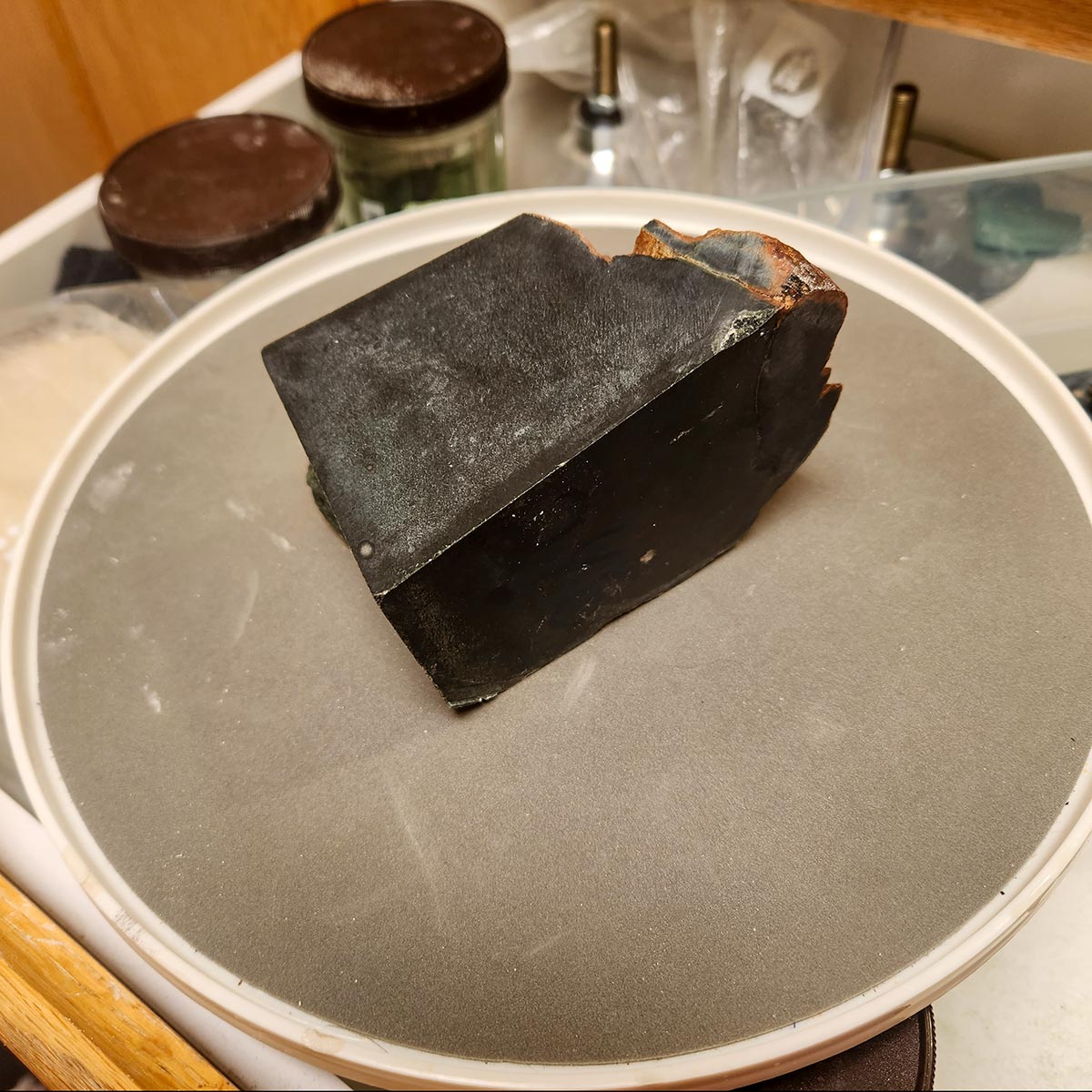

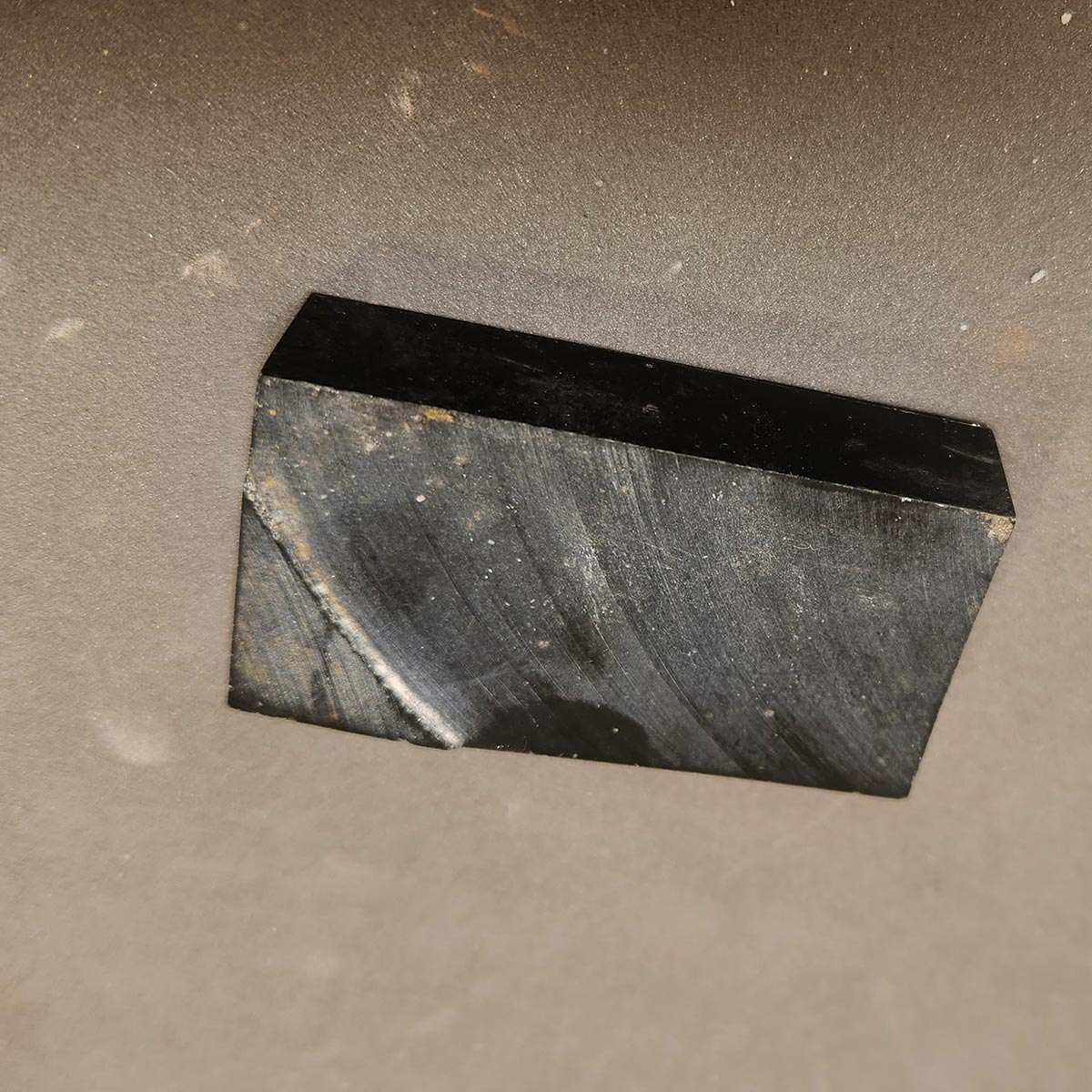
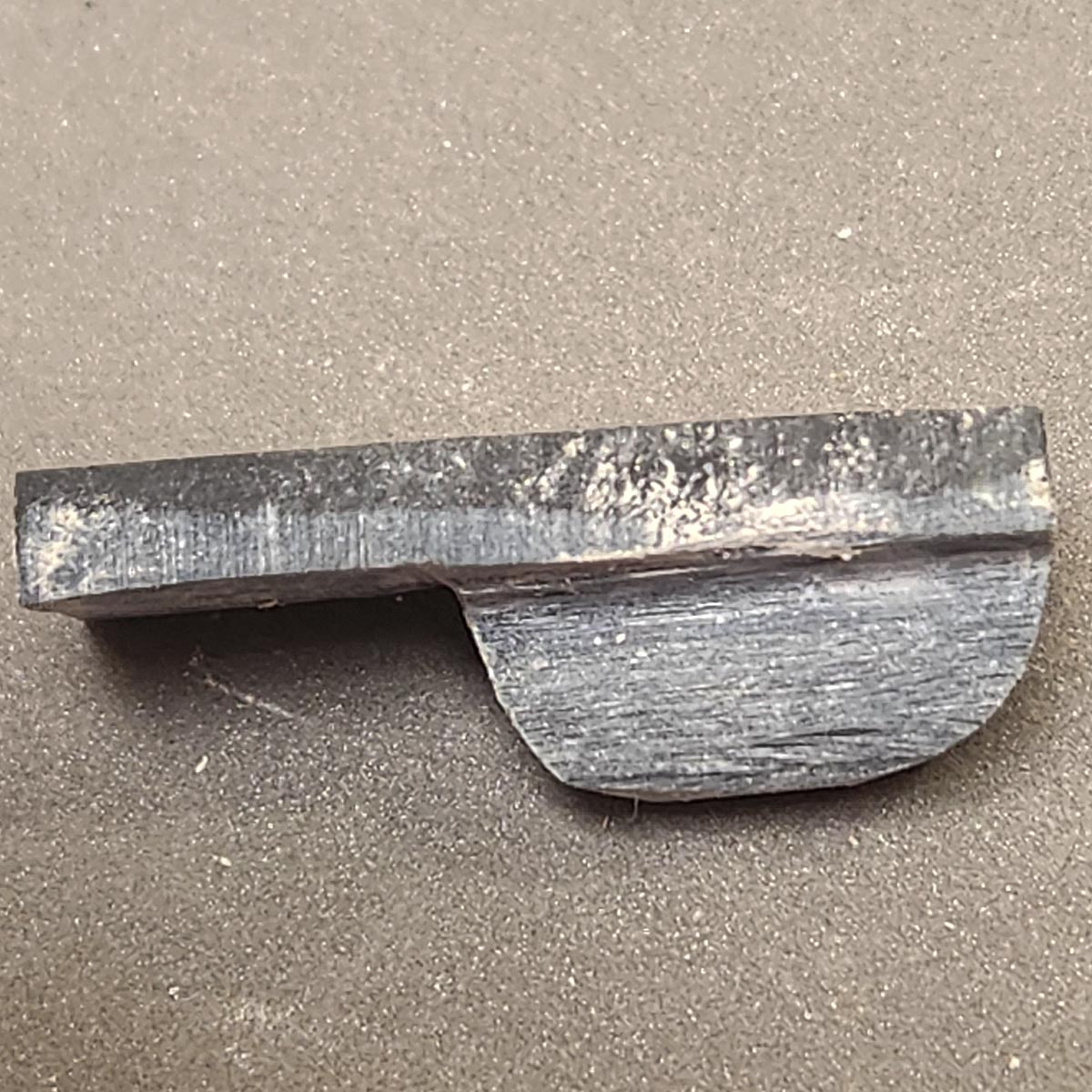
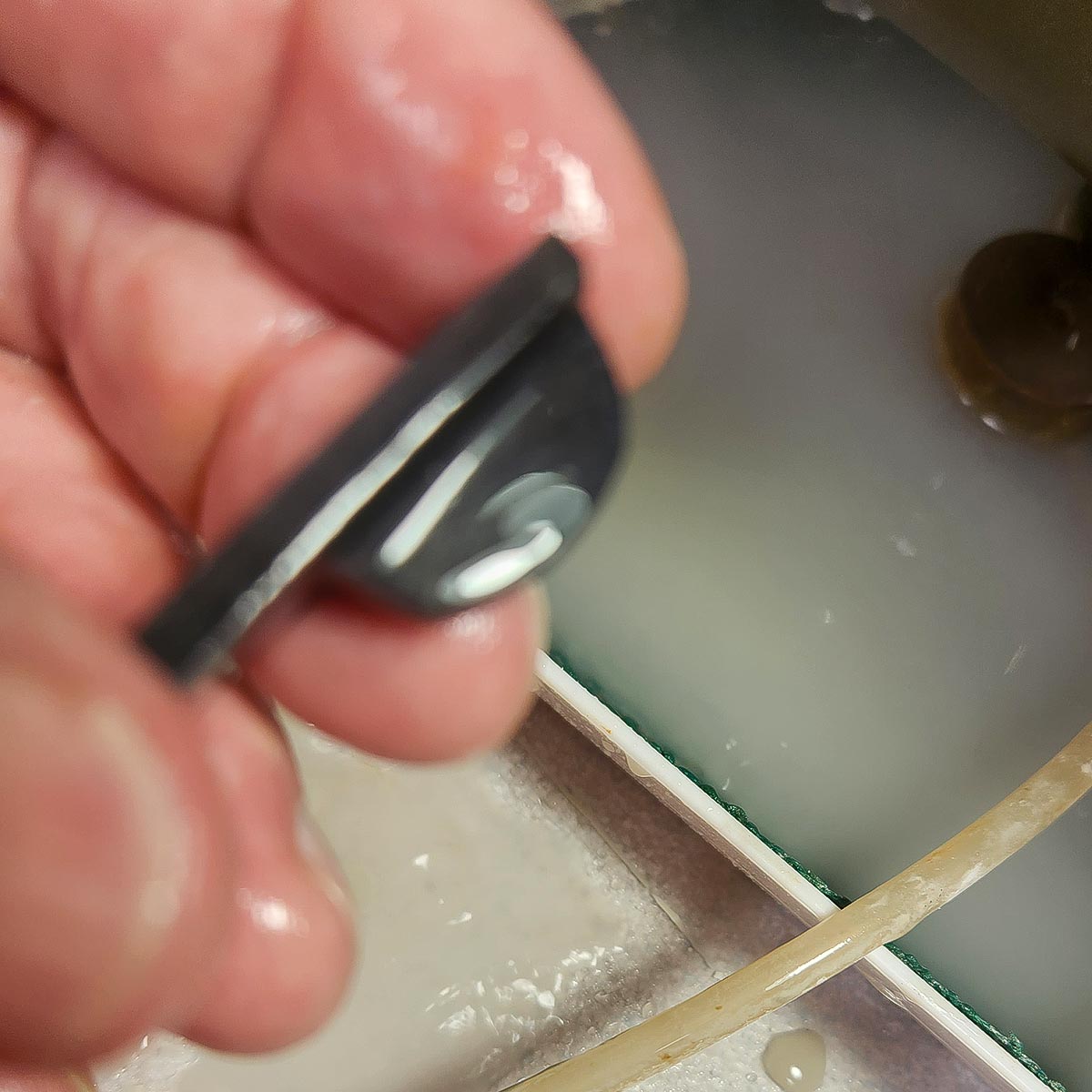
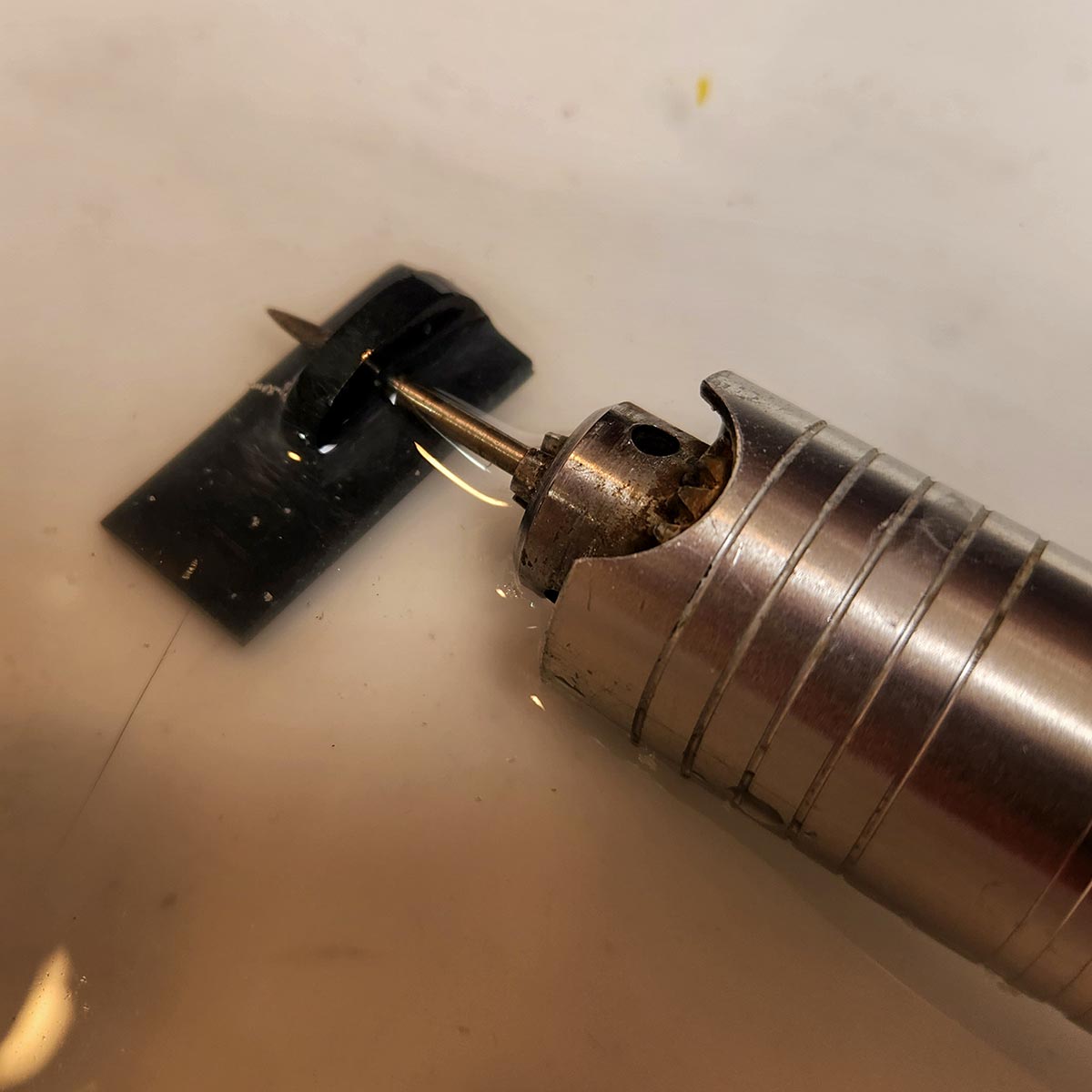
Next it was time to give it an approximate shape of what I was thinking about and the next photo shows the roughed out piece … I had decided to carve the bale of the pendant and the keel looking thing is the roughed out bale (what the chain goes through. Below that is a photo of me piercing it with a 2mm bit to begin the process of carving the bale. and the last photo below shows the roughed out pendant . Still to go, the cleanup, final shaping and setting the opal which happens to be high quality gem opal from the Mintabe opal fields in Australia.




Back on the cliff in about 6 hours so this is a wrap … have a beautiful day and enjoy life and all whom you meet, today and always!
Cheers,
Ted

Filled with dreams and songs and love, I wander
afield.
Meditation, softened by the peaceful lands of grain and
the illimitable blue sea overhead, draws my heart to
my lips as one whose talent is in song.
I yield to the thousand felicities of this transport, like a
child led by his father’s hand; and no questions darken
this day of my content.
Afield by Max Ehrmann
###
 The easiest way to reach Mr. Grussing is by email: ted@tedgrussing.com
In addition to sales of photographs already taken Ted does special shoots for patrons on request and also does air-to-air photography for those who want photographs of their airplanes in flight. All special photographic sessions are billed on an hourly basis.
Ted also does one-on-one workshops for those interested in learning the techniques he uses. By special arrangement Ted will do one-on-one aerial photography workshops which will include actual photo sessions in the air.
More about Ted Grussing …

This is an advertisement

About Photo #4944573: Jeff Bezos is playing the role of personal photographer for his fiancee Lauren Sanchez! The 59-year-old Amazon founder was spotted snapping pics of a bikini-clad…Read More Here





