Photography

Xiaomi’s Top-End Smartphone Will Make Shutterbugs Drool

Xiaomi’s Top-End Smartphone Will Make Shutterbugs Drool

The expensive end of the smartphone market has gone a little crazy. More affordable hardware means mid-range phones are enough for most people, and phone makers are scrambling to justify the premium tier. The answer is impressive camera systems meant to nix your need to ever buy a professional camera, and the Xiaomi 13 Ultra epitomizes this trend.

There are a grand total of four cameras on the back of this smartphone, honed through a partnership with Leica. It’s no one-trick pony either. You might primarily associate Chinese phones with value, but Xiaomi’s flagship boasts quality in every department and is ready to go toe-to-toe with the best smartphones. Sadly, it’s not sold in the US, and you need to jump through hoops to sort out the software, but when the hardware is this good, it may be worth the effort.

Top Class

Xiaomi 13 Ultra smartphone

Photograph: Xiaomi

High-end smartphones tend to be disappointingly conservative in design (aka boring), so the unusual look of Xiaomi’s flagship is refreshing. You can’t miss the colossal circular camera module, but the surrounding golden chamfer is classy against the olive green of the faux leather back (it also comes in black or white). The textured finish is comfortable and enhances grip, which is just as well, because I almost dropped the phone a couple of times trying to get used to the weight—the upper half of the back bulges out, making the device top-heavy when you hold it.

Corning’s Gorilla Glass Victus protects the screen, and the phone has an IP68 rating, meaning it’s decently scratch resistant and can survive a short dip in water. However, I worry about the camera module, which the phone naturally rests on when you lay it down. I suggest using a case. Thankfully, there’s a slim one included in the box that adds a protective rim around the camera.

The 6.73-inch AMOLED display is among the best I’ve laid eyes on. It boasts a top resolution of 3,200 x 1,440 pixels with a 120-Hz refresh rate. Xiaomi claims a peak brightness of 2,600 nits, but this is a bit deceptive, as the entire screen rarely (if ever) goes that high. It doesn’t really matter, as I never had any trouble with it in direct sunlight. Even at the lowest default settings, this display looks great.

With a Snapdragon 8 Gen 2 processor inside, backed by 12 GB of RAM, the Xiaomi 13 Ultra is a smooth operator. Taps and swipes are slick and responsive, as is the in-display fingerprint sensor. It had no trouble running games like Real Racing 3 or Call of Duty: Mobile. The 13 Ultra also has the stamina for long gaming sessions, and it kept cool when I played Kingdom Rush Frontiers for several hours. It handles movie and music streaming equally well, and the stereo speakers offer a surprisingly balanced sound.

UConn Photography Professor Shares Story of Yellowstone in Words and Pictures

UConn Photography Professor Shares Story of Yellowstone in Words and Pictures

Ask Janet Pritchard about her favorite spot inside Yellowstone National Park and she’ll tell you it’s wherever you can find the fewest people that day.

Not that the UConn photography professor abhors standing beside other visitors to take in the magnificence of the country’s first national park.

Rather, she likes to regale others with stories about how, to her ear, the bugle of a bull elk sounds like a double reed instrument in an orchestra and how bison outgassing smells much like marijuana.

She just doesn’t want to be shoulder-to-shoulder with other visitors, preferring the comfort of being behind a camera lens documenting the scenery in near solitude or fixing on others who offer a buffer between her and the wild animals.

“The way I often describe it is, in the park, many of the people are their best selves,” says Pritchard, who over a lifetime has cumulatively logged several years in Yellowstone and the surrounding area and who used that personal expertise in her 2022 book “More than Scenery: Yellowstone, An American Love Story,” which recently was awarded an IPPY silver medal.

That’s also the sentiment written on the back of a turn-of-the-century postcard Pritchard picked up around 20 years ago and provided the impetus for assembling the book. It states, in part, about the park, “in some places it is so beautiful that the men take off their hats & the women are silent!”

Among those beautiful places, Pritchard says, is Lamar Valley in the Northern Range, which is one of the most biodiverse areas of the park – and country, for that matter – with herds of bison and elk frequenting its lush vastness, and bears and wolves on the prowl.

“It’s not quite as spectacular in terms of geothermal features, although the extinct geyser Soda Butte Cone offers quite a sight. Most people don’t bother to walk around the back, but they should. They’ll see a bison wallow in the mud and mud swallow nests tucked up at the top. This kind of stuff is spectacular,” she says.

Park visitors who enter through the northeast entrance go through Cooke City, Montana, with a year-round population of fewer than 100, and into Lamar Valley, which shows evidence of glaciers on top of a volcanic landscape in contrast to the rest of the park.

“Private automobiles weren’t allowed in until 1916. Prior to that, in order to get into the park, you had to take a stagecoach tour,” Pritchard explains, noting that people on those tours often had printed guides specific to one of the five entrances detailing what they would see along the way. “It always makes me think of Stations of the Cross. If you come in at Gardiner, this is what you’re going to see first, this is what you’re going to see next. The souvenir postcards that they made were also numbered to correspond to the guides, so you could buy a set of postcards for the north entrance that would go with your tour.”

By 1916, when private vehicles were allowed, the road system was mostly set – although it has been revamped, rebuilt, and readapted many times in the years since, including after damaging floods last year – Pritchard says, sharing the fun fact that a public relations person in the 1920s nicknamed the main route through the park Grand Loop Road, a name that stuck, specifically in reference to the 19th century idea of the Grand Tour of Europe.

Natural Wonders and Beauty, But Still with Scars

Most of the features visitors see in the park are from the road, in part because of Yellowstone’s 2.2-million-acre expanse, the unquantifiable dangers of the wild the further one goes alone, and the duration of one’s vacation time.

“If you go up to a ranger in the park and say, ‘I’m here for a day, what should I see?’ They’ll say Old Faithful, the Lower Falls, and the wildlife,” Pritchard says – but in conversation she also notes places like Obsidian Cliff, Roosevelt Arch, Overhanging Cliff, Artist Point, and the Madison River Valley.

“The natural wonders are why it was preserved,” she says, adding that economics also figured into the origin story.

She goes on to say that Philadelphia banker Jay Cooke, a financier of the Northern Pacific Railroad, needed a destination for his rail passengers. In search of that location, he funded Thomas Moran’s participation in Ferdinand V. Hayden’s first government-funded survey of the Yellowstone area in 1871.

They returned with evidence of its beauty, in Moran’s watercolor sketches and “proof” of geothermal wonders in William Henry Jackson’s photographs, which persuaded Congress to preserve it through national park status, the first in the world.

Of course, 49 Native American tribes with ancestral connections to the park would have been the first to acknowledge it as a sacred place.

One of the most famous outcomes of the Hayden expedition was Moran’s painting “The Grand Canyon of the Yellowstone” from 1872 – repeated in 1893 for the World’s Columbian Exposition in Chicago – which depicts Lower Falls and hangs in the Smithsonian American Art Museum in Washington, D.C.

Pritchard says the Hayden expedition, which Moran joined, was on the north side of the falls, whereas the paintings show the view from the south, meaning Moran had to have imagined the view from that position simply for the sake of the paintings’ composition – another fun fact she offers.

“People can be really generous and enjoy sharing stories and tips and tricks of things to see,” she says of visitors to the park. “Other times, there’s a tremendous amount of what I call ‘species arrogance’ in terms of how they relate to the wildlife. They don’t appreciate, understand, or even care about the fact that when you go to the park, the park service refers to you as a visitor for a reason. It’s not your home, it’s the animals’ home, their environment. Don’t think we’re superior when we’re just another part of the natural world.”

Perhaps there’s no better way to consider this than through the story of the Yellowstone wolves.

By 1926, federal and state governments had exterminated the last of the wolves that lived in and around Yellowstone, only to realize 20 years later in the mid-1940s they’d made an ecological mistake. Re-establishment didn’t start until the mid-1990s, however, with the use of acclimation pens located in remote areas away from ranchers and others who opposed their reintroduction.

The remains of only one of those pens still exists at Rose Creek, a physical reminder of the story of the wolves that to this day draws pilgrimages of people to the site to pay their respects.

“I’ve seen people standing up there crying they were so moved,” Pritchard says.

She also recalls the story of the pack that lived on Druid Peak in the Lamar Valley, the “rock stars of the wolf world” until they succumbed to disease, mostly mange from dens and caves still infected with parasitic mites from the 1920s extermination project.

Despite the Druid pack’s sad demise, there are many wolves now in Yellowstone, especially in Hayden Valley, another biologically diverse area that draws throngs of people stopping to pull over – or sometimes brake in the middle of the road – to spy on an animal.

“Take binoculars and stop and ask people what they’re looking at. There are some parts of the park where you can see big-horned mountain sheep. The mountain goats are only in the very northern part, just before you go into Cooke City,” Pritchard says, adding, “I think it’s super fun to get stuck in elk and bison jams.”

Bison graze along the Lamar River in 2008.Bison graze along the Lamar River in 2008.

Bison graze along the Lamar River in 2008. The nearly 44-mile-long river is the largest tributary of the Yellowstone River, according to the National Park Service. It was named after Secretary of the Interior Lucius Quintus Cincinnatus Lamar, who served from 1885 to 1888 under President Grover Cleveland. The American bison, meanwhile, was named the national mammal of the United States under the National Bison Legacy Act, which President Barack Obama signed in May 2016. (Photo by Janet L. Pritchard)

A woman sits in the Smithsonian American Art Museum in Washington, D.C., in 2010, looking at paintings by Thomas Moran. His “The Grand Canyon of the Yellowstone” from 1893 is left and 1872 is right. Moran was a member of the first federally funded expedition to Yellowstone, led by Ferdinand V. Hayden, according to the Department of the Interior, and used sketches and black and white photos of the journey to create the paintings. His work to visually capture the beauty of the area that was 500 miles from the nearest train station became strong evidence in 1872 for Congress to name Yellowstone the country’s first national park. “Moran forever carried Yellowstone with him, changing his signature to ‘TYM,’ Thomas ‘Yellowstone’ Moran,” the Interior Department says. (Photo by Janet L. Pritchard)

Anemone Geyser in the Upper Geyser Basin of Yellowstone National ParkAnemone Geyser in the Upper Geyser Basin of Yellowstone National Park

Anemone Geyser in the Upper Geyser Basin of Yellowstone National Park is two geysers that seem to operate independently, but sometimes appear to be connected, according to the National Park Service. The geysers have an average temperature of 184.8 degrees Fahrenheit. Here they are in 2018. The Upper Geyser Basin contains most of the world’s active geysers, including Old Faithful. Molten rock between 3 and 8 miles underground provides heat for the hydrothermal features. (Photo by Janet L. Pritchard)

A vintage Yellowstone Park tour bus travels through the Lamar Valley in 2009.A vintage Yellowstone Park tour bus travels through the Lamar Valley in 2009.

A vintage Yellowstone Park tour bus travels through the Lamar Valley in 2009. The Lamar Valley, in the north part of the park known as the Northern Range, is the winter home of elk, bison, deer, and pronghorn, the National Park Service says. North America’s largest wild herds of bison and elk can be found in this area. It’s also a favorite hunting ground of several packs of wolves and has drawn coyotes, bobcats, cougars, and red fox. “This region now contains every large wild mammal, predator or prey, that inhabited it when Europeans first arrived in North America, though not necessarily in the same numbers or distribution,” the park service says. (Photo by Janet L. Pritchard)

Bison: Primordial, Ominous, and Dark

Just like a traffic jam, only with elk or bison, this happens when herds surround vehicles, forcing traffic to a standstill, or a singular animal decides to stand firm on the double yellow line, clogging traffic and causing a backup.

Pritchard says one time she was stuck in a bison jam for at least an hour, “You can’t be in a hurry. You have to go with the flow.”

While stuck in that jam, Pritchard says she was on a narrow road with a steep shoulder on one side and a drop to the Yellowstone River on the other. The bison were coming through the landscape, in a wave-like now-you-see-them-now-you-don’t flow.

“Being in the midst of bison, they’re primordial like sharks. They’re one of those animals that feels ancient,” she says. “In this jam, as I watched them, this feeling came over me. There was something ominous and dark about their presence. I was describing this to a biologist I was hanging out with, and she said the bison’s eyes are not like ours. They do not reflect light, so there is no catchlight and that’s where a sense of life comes from when you look at another animal or a person. That’s not there, so they feel like they don’t have a soul.”

She admits that having wild animals in such proximity can be frightening, mainly because they’re unpredictable and slow moving – until they aren’t. An adult male bison, the largest animal in Yellowstone, can weigh as much as a compact car.

That’s from where the advice to keep someone else between you and the animals comes and the recommendation from another biologist friend to move away if you’re close enough to change an animal’s behavior.

Distance is key.

“You’ll see people standing around with spotting scopes and a lot of them, if they have something in their frame, will let you look if you don’t have your own,” Pritchard says. “People with high-end binoculars will get only 10x magnification, whereas spotting scopes are more like 60. That’s how you get a really good view.”

Still, some of the tiniest creatures in Yellowstone – the thermophiles that thrive in the heat of the geothermal springs and give places like the Morning Glory Pool its vibrant color –  need only the naked eye to see their brilliance.

Biggest Threat is People

Millions of vacationers visit Yellowstone annually, oftentimes for the trip of a lifetime, putting lodging at a premium especially during the height of the season from mid-June to mid-September when public schools are generally on break.

Pritchard says the roads get plowed, allowing for vehicular traffic, in mid-April and stay open through mid-October, which means the slow season – and by that she means still busy but not as crowded – is generally before Memorial Day and after Labor Day, the best times to avoid masses of people.

People have been the biggest enemy of the park since the 1880s, she explains. Not only have they thrown trash into places like Morning Glory Pool, muting its exquisite colors in the process, but in the late 1800s people were taking home parts of the park as souvenirs.

“There’s a big military history in this area and that was to protect the park,” she says. “While the military is now gone, there are two types of rangers in the park. One of them is interpretive and charged with interacting with people, helping them with information. The other is law enforcement. These folks are not there first and foremost for the people, despite what we think. They’re actually there to protect the park and the animals from the people.”

Just off the Grand Loop Road, west of the Tower-Roosevelt junction, stands a lone petrified tree surrounded and protected by a 6- to 8-foot-tall iron fence. It’s not just a metaphor for the park itself, but a reminder of the damage people can do.

Pritchard explains that when the park was established in 1872 there was no federal funding attached to the designation, and people started looting within its new boundaries, including the piece-by-piece dismantling of a second petrified tree that once stood adjacent to its twin. The iron fence was erected to protect what remains of the first tree, and the military moved in to ensure that type of looting doesn’t happen again.

Everyone Has a Yellowstone Story

During her work on “More than Scenery,” Pritchard spent time at the American Antiquarian Society in Worcester, Massachusetts, researching the park through maps, historic pictures, and artifacts, often seeing the same researchers day after day.

“I can’t tell you how many people, while I’ve been working on this project, have shared their Yellowstone stories with me,” she says, including one woman in that library who professed she had no story to offer only to return a few days later with one.

“She proceeded to tell me that she was at a conference in the Jackson, Wyoming, area and she and her husband had a rental car, so they decided to go to the park. As they started driving in, it got smokey, and they couldn’t figure out why until they got back and checked the news,” Pritchard says. “It was the start of the fires of ’88.”

Pritchard was visiting Boulder, Colorado, in the summer of 1988 and also saw the smoke from the Yellowstone fires. Twenty years later, when she was in the park in 2008, Pritchard says she noticed the trees around her were the same kind of pine and roughly the same size, 12 to 14 feet tall, new growth forest.

“I realized what I was seeing was a burn matrix from the fires of ’88,” Pritchard says, noting that one can still wipe the soot off some burned trees.

Firefighters sought to suppress wildfires in the park before 1988, when 800,000 acres of Yellowstone burned, and they realized that strategy allowed for too much fuel to accumulate in the woodlands. Pritchard says fires now are left to burn themselves out unless historic structures or people are threatened.

Nevertheless, in 2016, a series of fires burned in the park, far sooner than the 100 years expected to yield enough fuel.

“What that said to them was fire management would have to be a lot more aggressive than anyone had ever imagined. We’ve seen what’s happened and played out in California. It’s a huge concern. There are a lot of areas, including parts of Montana and Colorado, where they just expect and accept that August skies will be cloudy from fire smoke the whole month – and that’s thanks to climate change,” Pritchard says.

Despite spending years in the Yellowstone area and gaining the kind of familiarity and understanding of it that only an expert can have, Pritchard says she’s “in a funny place, where I’m not really a local and I’m not a regular visitor, either. I’m in between.”

She adds, “It’s not a place I would have fully appreciated when I was younger, because of the people and the commercialization of it in a lot of ways. But the park is special. It really is much more interesting and complex than one first realizes.”

Heart of Brevard announces photography contest

Heart of Brevard announces photography contest

#inform-video-player-1 .inform-embed { margin-top: 10px; margin-bottom: 20px; }

#inform-video-player-2 .inform-embed { margin-top: 10px; margin-bottom: 20px; }

Heart of Brevard (HOB) has announced a call for photo submissions for its upcoming Shopping and Dining Guide. Amateur and professional photographers are invited to capture the essence of the Heart of Brevard business district through their lens. 

With over 10,000 copies printed each year, the HOB Shopping and Dining Guide serves as a valuable resource for visitors and locals alike providing information about the downtown business community. Guides are distributed in Heart of Brevard businesses, the Brevard/Transylvania Visitor’s Center, Brevard City Hall, the Pisgah Ranger Station/Visitor Center.

The winning photo will be featured on the front page of the upcoming guide, and the photographer will receive a $200 prize and recognition for their work. All submissions will be shared in an on-line gallery.

Heart of Brevard welcomes a diverse range of photos that depict the beauty and vitality of downtown Brevard. Images may include, but are not limited to, captivating images of downtown businesses, bustling events, individual shops, or any scene that encapsulates the spirit of the Heart of Brevard business district.

Submit your photos by June 25. Winner will be announced by June 30.

Photo and Contest Guidelines Requirements:

•Deadline for submissions – June 25 at 5 p.m.

•Photo Size: High-Res, Vertical Image, approximately 5.75″x4.” 

•Photos must showcase the Heart of Brevard (HOB) and can include photos of HOB events, photos of downtown businesses, photos of visitors enjoying downtown, etc.

•Photographers may submit up to 3 images for consideration

•Submit applications at www.form.jotform.com/heartofbrevard/shopping–dining-guide-photo-contes.

#inform-video-player-3 .inform-embed { margin-top: 10px; margin-bottom: 20px; }

Paul McCartney’s photos of early Beatlemania are in a book and on display in London

Beatles fan in New York, February 1964. Taken out of the back of the Beatles’ car on West Fifty-Eighth, crossing the Avenue of the Americas.

©1964 Paul McCartney

©1964 Paul McCartney

This famous moment in music history is now visible from a different angle.

Any capsule history of rock music, or pop music, or the 1960’s will include the Beatles’ arrival in the United States in early 1964. The images are all familiar — young men with bowl haircuts (that they’d later grow out) and businesslike suits (which they’d later trade for more exotic sixties fashions) and their catchy hit songs (which they’d later make weirder and more psychedelic). Also familiar: the screaming fans, who would remain about the same for decades.

What’s different about the photos in Paul McCartney’s book 1964: Eyes of the Storm is the point of view of the photographer: McCartney himself.

Self-portraits in a mirror. Paris, 1964.

©1964 Paul McCartney

©1964 Paul McCartney

One of the most striking images shows a crowd, mostly women, behind police barricades at New York City’s Plaza Hotel. They are screaming directly at McCartney even as he snaps their picture in black and white.

In another image, McCartney photographs two men as they point cameras at him.

Photographers in Central Park, New York City.

©1964 Paul McCartney

©1964 Paul McCartney

McCartney says an archivist brought the photos out of his archives. He hadn’t seen them in decades. “Most of them I don’t remember taking because it was a whirlwind,” he said.

Some of the images capture his fellow band members at rest in hotel rooms. Others show America as it was in 1964 — in particular, New York, Washington D.C. and Miami, the three U.S. cities the Beatles toured. (The book also shows prior stops in Liverpool, London and Paris.) One photo shows a railroad worker watching their train pass; others are portraits of police officers who watched over them.

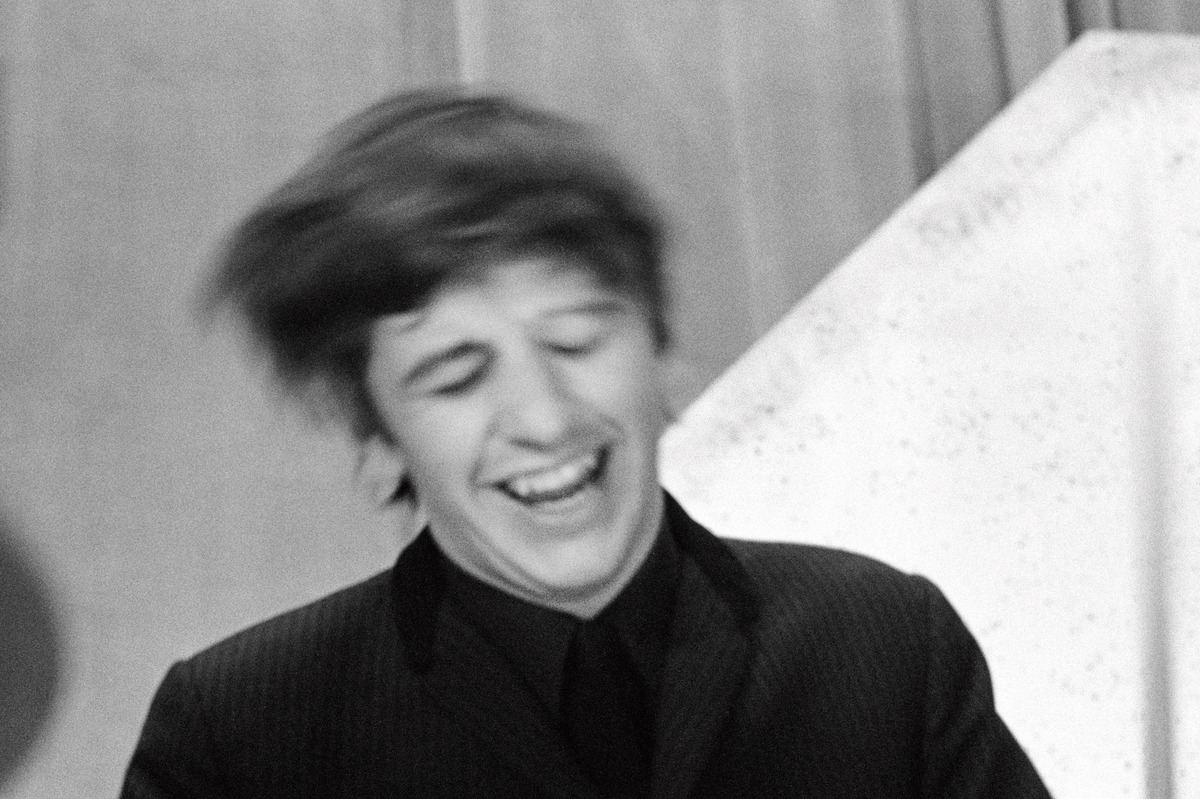
Ringo Starr, in London.

©1963 – 1964 Paul McCartney

©1963 – 1964 Paul McCartney

“I’m very proud of being part of the working class, which I think you guys would call blue collar,” McCartney said, referring to his youth in Liverpool, England. “If you’re looking for photos, they’re often the great faces. The faces where there’s a story behind them.”

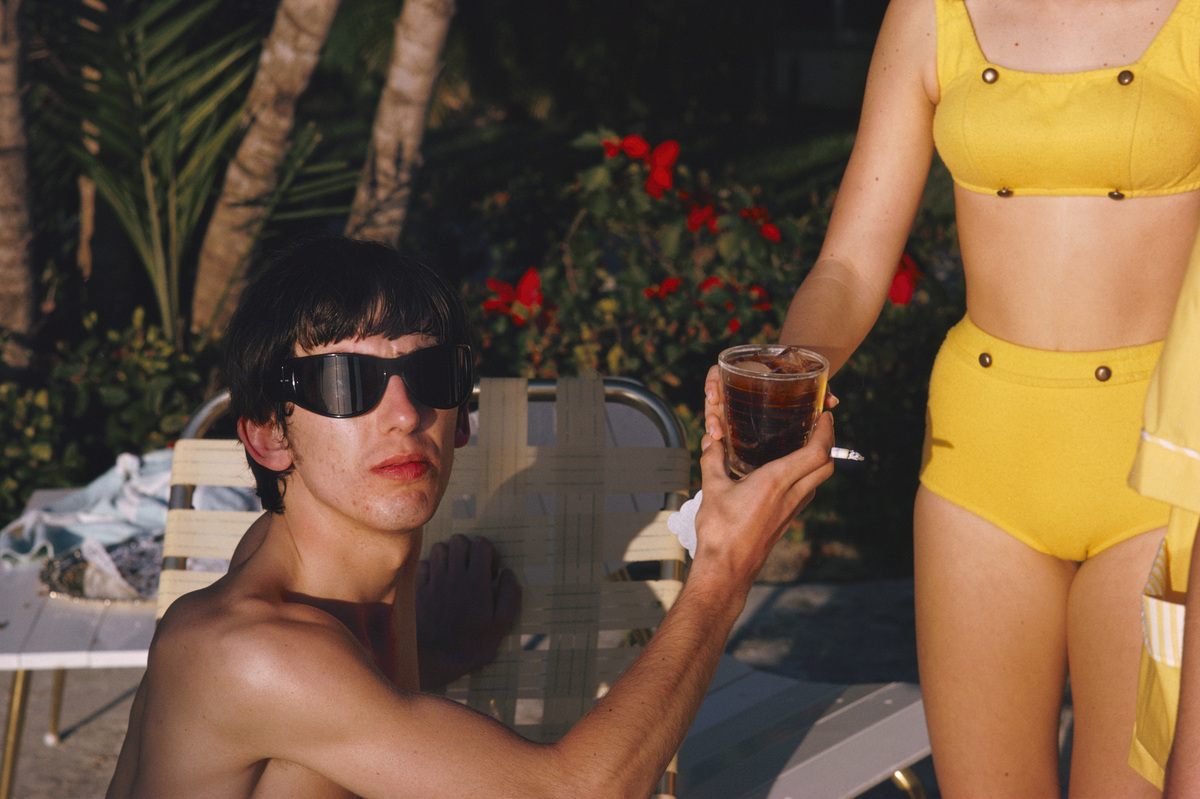
George Harrison in Miami Beach, 1964.

©1964 Paul McCartney

©1964 Paul McCartney

The photos, which now hang in a London art gallery, document a moment when McCartney, not quite 22, was experiencing an almost unprecedented level of fame.

John Lennon in Paris, 1964

©1964 Paul McCartney

©1964 Paul McCartney

He recalls it as “a very special time” in America. It was a few months after the assassination of President John F. Kennedy, and a few months before Congress passed the Civil Rights Act of 1964. “The attitudes that had gone before us were being changed.”

The Beatles changed with the times: their once-cheerful hits evolved rapidly through the 1960’s, at times growing dark, weird, or druggy. Yet their music retains a timeless quality. Though the band had broken up by 1970, much of their catalog remains familiar.

McCartney’s photographic return to an early moment in his journey prompted a question: Is there anything he wishes he could go back and tell his younger self?

Self-portraits. London, 1963.

© 1963 – 1964 Paul McCartney

© 1963 – 1964 Paul McCartney

Get to know the people you work with, he answers. “I think I might have said to my younger self: Look, you know, not only take this moment, but really nurture these relationships.” He said that today he talks regularly with Ringo Starr, the only surviving Beatle besides McCartney.

McCartney then interrupted his own insight. “Oh, wait a minute,” he said. In fact he was close to his bandmates in the early days, “so I’m probably just making it up.”

The audio version of this interview was edited by Reena Advani and produced by Barry Gordemer. Majd Al-Waheidi edited it for digital.

Veterans of Vietnam and the Cold War topic of next Historic Photography Show

Veterans of Vietnam and the Cold War topic of next Historic Photography Show

The Pennsylvania Room of the Ligonier Valley Library has announced the title of this year’s Historic Photography Show, “Faces of Ligonier Valley: Veterans of Vietnam and the Cold War.” The exhibit will be held July 11 through Sept. 12, in the Pennsylvania Room and hallway. Photographs of men and women who served during this era, artifacts and documents are being solicited for loan. Documents and photographs will be copied (with the lender’s permission), and all materials will be returned at the close of the exhibit.

An Opening Reception will be held on Tuesday evening, July 11, from 4 to 7 p.m. in the Pennsylvania Room. Refreshments will be served.

Light up! The best of Photo Basel 2023

Light up! The best of Photo Basel 2023
image

René Burri was a Swiss photographer, known for his images documenting major political and cultural events of the late 20th century. It wasn’t until joining the photographic cooperative Magnum Photos in 1955 that he began the work he would become best known for, documenting key figures in military, political and cultural spheres all across the world for Life, the New York Times, Stern, Paris-Match, and Look

How professional photographers can use AI to elevate their craft and grow their business

How professional photographers can use AI to elevate their craft and grow their business

The world of photography stands on the brink of an intriguing evolution. As artificial intelligence grows more sophisticated, the potential for this technology to reshape photography is clear. However, this need not be seen as a threat to professional photographers. Instead, it should be recognised as an exciting opportunity to enhance our craft, extend our services and expand our businesses.

One of the significant ways photographers can leverage AI is by integrating it into their workflow to reduce time-consuming, repetitive tasks. AI-powered software can assist with everything from sorting and categorising images to sophisticated photo editing tasks like colour correction, skin retouching or background removal. This frees up valuable time, allowing photographers to focus more on the creative aspects of their work, nurturing client relationships or expanding their businesses.

AI can also transform the way photographers handle large volumes of work. For instance, in event photography, where hundreds or thousands of photos are captured, AI algorithms can rapidly sift through these, picking out the images that are in focus, well-composed and contain recognised faces. This ability to process vast amounts of data quickly and accurately will significantly cut down on photographers’ post-production time.

Beyond workflow optimisation, AI opens also up opportunities to create new types of images and services. For instance, AI can generate realistic virtual backgrounds or create composite images that would be costly or impossible to capture in reality. Photographers can leverage this capability to offer innovative, customised solutions to their clients, be it in advertising, fashion or portrait photography.

The ability of AI to analyse and learn from vast datasets also holds promise for market research and strategic planning. AI-powered analytics can reveal trends and patterns in styles, themes or subjects that resonate with specific audiences. This insight can guide photographers in tailoring their work to meet market demands, thus giving them a competitive edge.

Moreover, embracing AI can facilitate photographers to venture into the growing realm of virtual reality (VR) and augmented reality (AR). Whether it’s creating immersive virtual tours for real estate, developing interactive AR filters for social media or producing high-resolution 360-degree images for e-commerce, photographers can offer a wide array of services that were previously inaccessible.

As AI technology advances, the line between photography and digital art is becoming increasingly blurred. Today’s photographers can use AI as a creative partner, producing artwork that combines the best of human creativity and AI’s capabilities. This creates an entirely new genre of art, where photographers are not just capturing reality but reimagining it.

The rise of AI in photography signifies not the end, but a new beginning. It represents a wealth of opportunities waiting to be explored. It’s an invitation to photographers to push the boundaries of their creativity, extend their services and grow their business.

To thrive in this evolving landscape, photographers need to adapt and embrace the change. It’s time to see AI not as a replacement, but as a partner – one that can complement our skills, enhance our creativity and, ultimately, help us tell better stories through our lenses.

“I Want to Go beyond What Is in Front of Me:” In Conversation with Photographer Roland Halbe

“I Want to Go beyond What Is in Front of Me:” In Conversation with Photographer Roland Halbe

“I Want to Go beyond What Is in Front of Me:” In Conversation with Photographer Roland Halbe

Roland Halbe came into photography entirely by accident, discovering it at the age of 15 in a class on optics. His physics teacher presented camera obscura effects, which immediately triggered his fascination. He then started borrowing his father’s old camera quite regularly. While still in high school, Roland worked part-time at a camera shop, eagerly discovering everything there is to know about photography. Those were the circumstances that kindled Halbe’s lifelong romance, first with black and white, and, eventually, color photography with a focus on the built environment.

“I Want to Go beyond What Is in Front of Me:” In Conversation with Photographer Roland Halbe - Image 2 of 35“I Want to Go beyond What Is in Front of Me:” In Conversation with Photographer Roland Halbe - Image 3 of 35“I Want to Go beyond What Is in Front of Me:” In Conversation with Photographer Roland Halbe - Image 4 of 35“I Want to Go beyond What Is in Front of Me:” In Conversation with Photographer Roland Halbe - Image 5 of 35“I Want to Go beyond What Is in Front of Me:” In Conversation with Photographer Roland Halbe - More Images+ 30

Halbe was born in Karlsruhe but grew up in a very small village nearby, also in the metropolitan area of Stuttgart in southwestern Germany. No one in the family had an artistic or architectural background. His father worked at IBM and his mother was at home raising Roland and two of his siblings. The only person who was interested in photography in the family was his grandfather, but only as a hobby. Initially, Halbe entered the University of Tübingen near Stuttgart. But regular trips to Sardinia with an Italian girlfriend led to applying to IED, Istituto Europeo di Design, a local art school in Sardinia’s capital, Cagliari. It was the just-opened branch of a private school in Milan. After 3.5 years of predominantly technical studies, he graduated in 1987. Being the only foreigner at the school, presented an opportunity to master Italian, while subsequent frequent travels also contributed to learning English and French.

“I Want to Go beyond What Is in Front of Me:” In Conversation with Photographer Roland Halbe - Image 34 of 35
Ensamble Studio, SGAE Headquarters, Santiago de Compostela, Spain. Image © Roland Halbe

In the following interview, Roland Halbe discussed his very first commission which came from the father of his childhood friend, a way of working and intentions behind his work, some of the most memorable collaborations and commissions, his busy schedule, and faraway travels that let him experience life in ways that are quite unexpected and stimulating.    


Related Article

“Interesting Things Happen in the Shadows”: In Conversation with Brian Healy


Vladimir Belogolovsky: At what point did you discover architecture as your subject matter? 

Roland Halbe: Not immediately. While I studied photography, I worked as an assistant to a fashion photographer Werner Pawlok in Stuttgart. I even organized one of his photoshoots at archeological sites in Sardinia. Going through that experience I realized that I would want to do something else. And I never liked working inside a studio like staging sets for advertising photography. I enjoyed working outdoors and was fond of photographing landscapes and city life, which eventually brought me to architecture. 

“I Want to Go beyond What Is in Front of Me:” In Conversation with Photographer Roland Halbe - Image 3 of 35
Little Island, New York/USA; 2021; architect: Heatherwick Studio, London/GB. Image © Roland Halbe

I was also lucky to have my friend from childhood; we were neighbors since I was six. His father was a passionate photographer. He happened to be the CEO of the biggest glass manufacturer in Germany, which is now a part of Pilkington. He owned a whole collection of Leica cameras and all kinds of photography equipment. During my adolescence, this school friend’s family invited me to go with them on their summer vacation to Southern France. The father had two sons and both hated his photography hobby, as he was stopping in every village to take pictures of buildings. They were also bored of his slide shows that he liked to do after the family would come back from the trips. And there was I who loved all of that! [Laughs.] 

“I Want to Go beyond What Is in Front of Me:” In Conversation with Photographer Roland Halbe - Image 32 of 35
Casa F, Chiloe/CL; 2018; architect: Mathias Klotz, Santiago/CL. Image © Roland Halbe

He liked lending me one of his cameras, so we would explore the sceneries of a nice little village in Provence together. Later, when he heard that I was studying photography he told me that when I am ready, he would give me my first commission. So, after graduation, I was commissioned by an advertising agency to do the annual report for FLACHGLAS, which was the name of the company. I had to photograph all buildings where their glass was installed. It became a huge job that took six weeks of traveling all around Europe. That’s what finally brought me directly to photographing architecture. Once I had my initial portfolio, I used it to go after other commissions.   


VB: What are you trying to achieve in your work?

RH: If I were to describe my style, I would say it is a blend of accuracy and emotion. I am not too precise but neither I am random. I want to go beyond what is in front of me. I hope the feeling you get when you look at my photographs is that they take you away. In other words, you see the image but you also see something else. You don’t see merely an object. I want to feel emotions. I want to discover those moments that let me get carried away. 

“I Want to Go beyond What Is in Front of Me:” In Conversation with Photographer Roland Halbe - Image 4 of 35
Arvo Pärt Center, Laulasmaa/EST; 2018; architect: Nieto Sobejano Arquitectos, Madrid/Berlin. Image © Roland Halbe

VB: On your website, you have a long list of your photos featured on the covers of some of the most prestigious architectural magazines. Did you work with those magazines directly? 

RH: I wanted to explore great architecture and in 1989, I started reaching out to some architectural magazines. It was the golden age of magazines when they could afford to commission photographers directly and independently from architects whose projects they featured. I first started to work with db deutsche bauzeitung magazine based in Stuttgart. The editor-in-chief was also very passionate about photography and he gave me a lot of work. Soon I started contacting the architects who were published in those magazines.   

“I Want to Go beyond What Is in Front of Me:” In Conversation with Photographer Roland Halbe - Image 2 of 35
Phillips auction house, New York/USA; 2021; architect: studioMDA, New York/USA. Image © Roland Halbe

VB: What is your schedule like?

RH: I typically photograph between 80 and 90 projects every year, at least 50 are outside of Germany. But these projects are often combined. I just came back from Tenerife where I photographed two projects—a house and a passenger terminal for cruise ships—and next week I am going to Southern France where I will be photographing two projects—housing blocks—one in Toulouse and the other one in Montpellier. Then I will be going to Stockholm to photograph a small concert hall and after that, a couple of projects by Morphosis in Europe—a highspeed train station in Galicia and a very large headquarters building for Eni, the Italian energy giant, which is probably the biggest project Thom Mayne with Morphosis ever realized. And when I go to Chile, I spend there about two weeks and I typically photograph 10 projects on a single trip.

“I Want to Go beyond What Is in Front of Me:” In Conversation with Photographer Roland Halbe - Image 11 of 35
SQUARE, St. Gallen/CH; 2022; architect: Sou Fujimoto Architects, Paris/FR. Image © Roland Halbe

VB: What was your most special commission like?

RH: One of the most memorable commissions was my trip to Chile for the first time to photograph the ESO Guesthouse of the world’s largest optical telescope, called the European Extremely Large Telescope on Cerro Paranal in Northern Chile. It is in the central part of the Atacama Desert in the Andes at a height of 2,500 meters. This location was chosen for its optimal weather and atmospheric conditions—it never rains there and the skies are clear overhead for at least 350 nights a year. There are hardly any clouds there ever. In other words, every day is exactly the same—the sun goes up, and then it goes down. Otherwise, nothing changes. It is an extremely isolated and quiet place. I spent five days there, which was quite an experience because anywhere you go every day is different, but not there. It was unique in that sense. And the project, ESO Guesthouse designed by Auer Weber, a practice based here in Stuttgart, was quite interesting, it was featured in the James Bond movie Quantum of Solace with Daniel Craig.

“I Want to Go beyond What Is in Front of Me:” In Conversation with Photographer Roland Halbe - Image 27 of 35
House on the mediterranean coast, Spain; 2022; architect: Nieto Sobejano Arquitectos, Madrid/Berlin. Image © Roland Halbe

This was 20 years ago. On the same trip, I went to Santiago to meet with Alejandro Aravena. That was arranged by the editor of Casabella, Francesco Dal Co. Alejandro introduced me to some of the leading local architects and I photographed some historical projects there for the magazine. That trip has led to many subsequent trips and collaborations in Chile. Since then, I typically go there twice every year.  

“I Want to Go beyond What Is in Front of Me:” In Conversation with Photographer Roland Halbe - Image 6 of 35
Casa roja del pantano, Calas de Guisando/E; 2022; architect: Estudio Entresitio, Madrid/E. Image © Roland Halbe

VB: I am fascinated by a photo you took of a wall mockup for SGAE Headquarters in Santiago de Compostela, Spain designed by Ensamble Studio. It was assembled at a stone quarry. How was that experience?

RH: Shooting the mockup of the SGAE Headquarters wall was fun, as it is always a lot of fun shooting projects for Antón [García-Abril] and Débora [Mesa]. Anton is quite crazy, in a positive way, and there were always adventures involved when shooting for him. Nothing is impossible for him, and I know very few people who look at the world with such enthusiasm as he does. We drove to the quarry by car from Madrid. The most remarkable thing about the mockup is that it was done at all. He convinced his client to do a full-scale mockup of such enormous dimensions. We took Anton’s son with us and he served as the perfect scale model for me to make the structure look even bigger than it was.

“I Want to Go beyond What Is in Front of Me:” In Conversation with Photographer Roland Halbe - Image 5 of 35
Le Nouvel KLCC, Kuala Lumpur/MYS; 2018; architect: Ateliers Jean Nouvel, Paris/F. Image © Roland Halbe

John Light explains in black and white why L.A. Country Club is picture-perfect

John Light explains in black and white why L.A. Country Club is picture-perfect
image

Millions of golf fans will get their first look at Los Angeles Country Club this week, when the North Course plays host to its first U.S. Open.

John Light, a member of the club for the last half-century, has been documenting that undulating terrain through his camera lens for more than a decade.

About 75 of his photographs, many of them black-and-white, adorn the walls of the LACC clubhouse, capturing both the majesty and minute detail of the North and South courses.

“You get back there in some places on the North Course and you can’t see the city,” Light said. “It’s like you’re in the middle of nowhere. It’s gorgeous and stunning.”

Light got his first camera as a young attorney at Latham & Watkins but was mostly an occasional hobbyist through his decades as an antitrust and corporate lawyer. He got serious about photography in retirement and has an extensive portfolio covering all sorts of subjects.

He grew interested in golf photography when architect Gil Hanse restored the course in 2010 and through the 2017 Walker Cup, which LACC hosted.

“I think my favorite picture of the golf course is a black-and-white shot I took of No. 11,” he said. “There was a boiling array of clouds above the hole, and if you look really closely you can see a little plane pulling a banner.”

Light, 82, said he’s energized about the golf world seeing the club and course for the first time this week.

“I’ve been an advocate for this place all of my adult life,” he said. “I’ve told people, `If you haven’t seen it, you’ve missed one of the great gems of golf.’ It’s one of the greatest courses in the world.”

And this week, the pictures come to life.