Morris Museum’s Photography Exhibit Honors Sacrifices by Nation’s Famed and Unsung Heroes


A photographer in the UK has managed to get up close and personal with puffins by wearing a humorous puffin disguise to put the birds at ease.
40-year-old photographer Martin Yelland was on a snorkeling trip at Skomer Island off the coast of West Wales earlier this month when he decided to wear a decoy puffin on his head to approach the real seabirds swimming in the area.

“I was absolutely thrilled to see so many puffins,” Yelland says. “I have snorkeled with big blue sharks off of Penzance before, and seen tiger sharks whilst surfing in Indonesia, but this was an absolutely magical encounter.”
The disguise not only allowed the photographer to approach the birds, but they even attracted curious puffins who ventured near Yelland to investigate the strange-looking (and strangely still) faux bird.


“The decoys we were given to use were brilliant,” Yelland continues. “The puffins became very interested in them and would come up to them to check them out.
“We were told to move the decoys about, and this is what drew the puffins close by. It was one of the best things I have ever done.”


The encounters were so magical that the St Erth, Cornwall-based photographer has already made plans to return with his family in tow.
“Next summer I shall be taking my whole family to see the puffins and other birdlife, such was the impact it had on me,” he says.
Skomer Island is well known for its wildlife and particularly for its puffin colony. The 1.1-square-mile (2.92-square-kilometer) national nature reserve has the largest colony of Atlantic puffins in southern Britain — around 22,000 individual birds were counted on the island back in 2015.
The puffins feature iconic colorful beaks — which can only be seen during breeding season, after which they turn black — and bright orange feet that have given them nicknames such as “sea parrots” and “clowns of the sea.”


Snorkeling is the ideal way to view and photograph puffins, as the birds spend most of their lives in the water. Unlike penguins, which sleep on land and ice, puffins mostly rest on ocean waves.
Visitors to Skomer Island can find the puffins there from April through August, but the peak time for the maximum number of birds is around June through mid-July.
Image credits: Photographs by Martin Yelland / SWNS

2023 marks the return of MoMA’s New Photography series—a biannual presentation of contemporary perspectives on photography—after five years away from the Museum’s galleries. This year, the series has shifted approach to focus on artists working in relation to a specific art scene across the globe. New Photography 2023 features the work of seven international artists—Kelani Abass, Akinbode Akinbiyi, Yagazie Emezi, Amanda Iheme, Abraham Oghobase, Karl Ohiri, and Logo Oluwamuyiwa—each of whom maintains a connection to the art community flourishing in the port city of Lagos, Nigeria.
Over the last year and a half, we have worked with these artists within and beyond the bounds of the city in order to make this exhibition. The following questionnaire provides an opportunity to get to know these artists. It surveys the motivations and creative decisions that shape their practices, articulating the stakes of their works in relationship to the flow of time. These photographers are alert to how images project instant visions into the future, ossifying ephemeral moments into bounded carriers of meaning. They are attuned to the effects of time on pictures—altering them as objects and shifting their messages continually. Their relationships to the picture are inflected with space and poetry, social motivations and political awareness. Engaging the photograph as a site that is ever unfolding, their positions are exemplified in Yagazie Emezi’s statement: “I work with time.”
 Bar Beach, Victoria Island, Lagos from the series Sea Never Dry. 2010. Courtesy the artist” data-image-overlay-item data-image-overlay-src=”/d/assets/W1siZiIsIjIwMjMvMDUvMTUvOGVpNmduMWY5Zl8yX0FraW5ib2RlX0FraW5iaXlpLmpwZyJdLFsicCIsImNvbnZlcnQiLCItcXVhbGl0eSA5MCAtcmVzaXplIDIwMDB4MjAwMFx1MDAzZSJdXQ/2%20Akinbode%20Akinbiyi.jpg?sha=a8c00ed1b083b50f” tabindex=”0″ ontouchstart onerror=”window.MoMA.onImageError(this, 1)”>
Akinbode Akinbiyi. Bar Beach, Victoria Island, Lagos from the series Sea Never Dry. 2010
 Old Secretariat—Stagnation—11 from the series The Way of Life. 2018. Courtesy the artist” data-image-overlay-item data-image-overlay-src=”/d/assets/W1siZiIsIjIwMjMvMDUvMjIvYzFzajNxNjFsXzEuX0FtYW5kYV9JaGVtZS5qcGciXSxbInAiLCJjb252ZXJ0IiwiLXF1YWxpdHkgOTAgLXJlc2l6ZSAyMDAweDIwMDBcdTAwM2UiXV0/1.%20Amanda%20Iheme.jpg?sha=85254efdc824e0e6″ tabindex=”0″ ontouchstart onerror=”window.MoMA.onImageError(this, 1)”>
Amanda Iheme. Old Secretariat—Stagnation—11 from the series The Way of Life. 2018
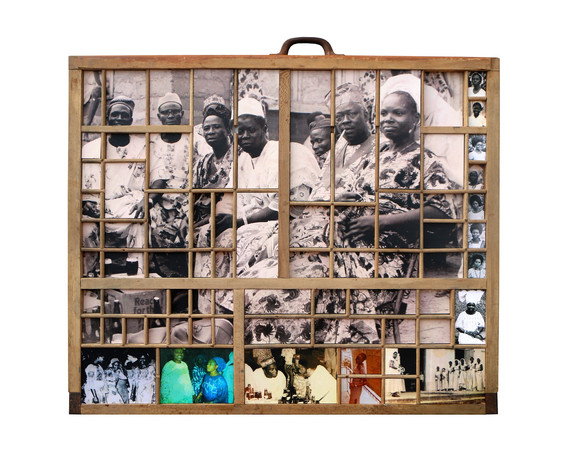 Unfolding Layers 6. 2021. Courtesy the artist” data-image-overlay-item data-image-overlay-src=”/d/assets/W1siZiIsIjIwMjMvMDUvMjIvMnBxemlpN2FiNF9DYXNpbmdfSGlzdG9yeV9VbmZvbGRpbmdfTGF5ZXJzXzZfNTB4NjBjbV8yMDIxX0xldHRlcnByZXNzX3R5cGVfY2FzZV9hbmRfZGlnaXRhbF9wcmludF93ZWJfMi5qcGciXSxbInAiLCJjb252ZXJ0IiwiLXF1YWxpdHkgOTAgLXJlc2l6ZSAyMDAweDIwMDBcdTAwM2UiXV0/Casing%20History,%20Unfolding%20Layers%206,%2050x60cm,%202021,%20Letterpress%20type-case%20and%20digital%20print%20%28web%29-2.jpg?sha=b8fb6a2e5f144172″ tabindex=”0″ ontouchstart onerror=”window.MoMA.onImageError(this, 1)”>
Kelani Abass. Unfolding Layers 6. 2021
 Hazy II, from the series Monochrome Lagos. 2015. Courtesy the artist” data-image-overlay-item data-image-overlay-src=”/d/assets/W1siZiIsIjIwMjMvMDUvMTUvM2FldDFyeTBrbl80Ll9Mb2dvX09sdXdhbXV5aXdhX0hhenlfSUlfZnJvbV90aGVfc2VyaWVzX01vbm9jaHJvbWVfTGFnb3NfMjAxNS4uanBnIl0sWyJwIiwiY29udmVydCIsIi1xdWFsaXR5IDkwIC1yZXNpemUgMjAwMHgyMDAwXHUwMDNlIl1d/4.%20Logo%20Oluwamuyiwa,%20Hazy%20II,%20from%20the%20series%20Monochrome%20Lagos,%202015..jpg?sha=3b6bf241247b1c2b” tabindex=”0″ ontouchstart onerror=”window.MoMA.onImageError(this, 1)”>
Logo Oluwamuyiwa. Hazy II, from the series Monochrome Lagos. 2015
 Constructed Realities. 2019–22. Courtesy the artist” data-image-overlay-item data-image-overlay-src=”/d/assets/W1siZiIsIjIwMjMvMDUvMTUvNjUwNGpwNTduZ181Ll9BYnJhaGFtX09naG9iYXNlX1VudGl0bGVkXzAyX2Zyb21fQ29uc3RydWN0ZWRfUmVhbGl0aWVzX2luc3RhbGxhdGlvbl8yMDE5XzIwMjIuLmpwZyJdLFsicCIsImNvbnZlcnQiLCItcXVhbGl0eSA5MCAtcmVzaXplIDIwMDB4MjAwMFx1MDAzZSJdXQ/5.%20Abraham%20Oghobase,%20Untitled%2002,%20from%20Constructed%20Realities%20installation,%202019%E2%80%932022..jpg?sha=693335334dc4ade3″ tabindex=”0″ ontouchstart onerror=”window.MoMA.onImageError(this, 1)”>
Abraham Oghobase. From Constructed Realities. 2019–22
 Untitled, from the series The Archive of Becoming. 2015–ongoing. Courtesy the artist” data-image-overlay-item data-image-overlay-src=”/d/assets/W1siZiIsIjIwMjMvMDUvMTUvM2Z1NWgzb2dneV82Ll9LYXJsX09oaXJpX1VudGl0bGVkX2Zyb21fdGhlX3Nlcmllc19UaGVfQXJjaGl2ZV9vZl9CZWNvbWluZ18yMDE1X29uZ29pbmcuXy5qcGciXSxbInAiLCJjb252ZXJ0IiwiLXF1YWxpdHkgOTAgLXJlc2l6ZSAyMDAweDIwMDBcdTAwM2UiXV0/6.%20Karl%20Ohiri,%20Untitled,%20from%20the%20series%20The%20Archive%20of%20Becoming,%202015%E2%80%93ongoing.%20.jpg?sha=665c4d7472109996″ tabindex=”0″ ontouchstart onerror=”window.MoMA.onImageError(this, 1)”>
Karl Ohiri. Untitled, from the series The Archive of Becoming. 2015–ongoing
 Untitled, from the series #EndSARS Protests. 2020. Courtesy the artist” data-image-overlay-item data-image-overlay-src=”/d/assets/W1siZiIsIjIwMjMvMDUvMTUvcWY1MXZvOXN3XzcuX1lhZ2F6aWVfRW1lemlfVW50aXRsZWRfZnJvbV90aGVfc2VyaWVzX0VuZFNBUlNfUHJvdGVzdHNfMjAyMC5fLmpwZyJdLFsicCIsImNvbnZlcnQiLCItcXVhbGl0eSA5MCAtcmVzaXplIDIwMDB4MjAwMFx1MDAzZSJdXQ/7.%20Yagazie%20Emezi,%20Untitled,%20from%20the%20series%20%23EndSARS%20Protests,%202020.%20.jpg?sha=6c18a74fd829e81c” tabindex=”0″ ontouchstart onerror=”window.MoMA.onImageError(this, 1)”>
Yagazie Emezi. Untitled, from the series #EndSARS Protests. 2020
New Photography 2023, organized by Oluremi C. Onabanjo, Associate Curator, with Kaitlin Booher, Newhall Curatorial Fellow, and Samuel Allen, MRC Fellow, Department of Photography, is on view May 28–September 16, 2023.

SALEM — In this city, one popular souvenir is both extremely portable and Instagram-able: aura photographs.
An aura photograph looks like a typical Polaroid, except the subject is swathed in blurred, colorful hues. Faces might be shrouded by melded blues and greens or oranges and reds. Those colors are believed to illustrate people’s auras, or “the visual representation of their energetic bodies,” said Melissa Nierman, manager of the newly installed aura photography booth at HausWitch Home + Healing, a popular metaphysical boutique on Washington Street.
Since HausWitch launched its Personal Rainbow aura photography booth in March, visitors have flocked to get their $50 instant film portraits taken in the hopes of self-discovery. The store has done several hundred portraits, Nierman estimates. Aura photography is part of the trending tide of witchcraft and magic, they said. It finds a particularly fitting home in “Witch City” Salem.
According to Nierman, the process for each aura photograph involves placing your hands on metal plates with sensors. The algorithm in a camera called the AuraCam 6000 then takes biofeedback data like temperature and uses software to construe it into colors. The result is an image printed from the camera, much like a Polaroid instant photograph, through a double-exposure process in which the initial exposure renders the image and the second exposure layers the vibrant shades.
Aura photography isn’t new — its origins come from Kirlian photography, which was invented by Russian electrician Semyon Kirlian in 1939 — but social media, namely Instagram, helped revive the concept in the 2010s. Artists like Radiant Human founder Christina Lonsdale photographed celebrities and patrons at the Whitney Museum of American Art. Stores with aura-capturing cameras, like New York City’s Magic Jewelry, drew crowds eager to share their colors.
Kirlian photography involves setting an item on a photographic plate and adding voltage, which generates electrical discharge around the item. That electrical discharge is what is interpreted as a luminous “aura.” Aura photography has its fair share of critics because the mysterious visualized energies have been boiled down to scientific processes rather than mystical origins. Still, the aura photography’s followers have embraced the experience as a personal journey that happens beyond the art form’s technicalities.
HausWitch — which also sells goods of the spiritual and aesthetically pleasing variety: crystals, oracle decks, and home and self-care goods, like soy candles in the scent, A Secret Spell for Re-Enchanting the World — had been planning for the booth since before the store’s opening in 2015. The appeal of aura photography is its capacity to affirm a person’s sense of self, Nierman said.
Like tarot cards, “aura photography is a mirror where it never really tells you things you don’t know. People already know what’s going on. They already know how they feel. They already know what they think about,” Nierman said.
What do the visualized auras supposedly mean? Auras are commonly described as the body’s invisible electromagnetic field, within which colors and shades correspond to different emotions and dispositions. According to a guide published by Cosmopolitan, red means confidence, yellow means playfulness, and white means sensitivity, to name a few examples. The shape and distribution of the colors are also meaningful. Anything above the head represents your “mental space,” Nierman said.
At HausWitch, visitors receive interpretations to help make sense of their auras. The store offers appointments and welcomes walk-ins for individuals or pairs, who enter the booth together and each simultaneously place a hand on one of the two metal plates. The latter option captures “relationship auras,” Nierman said, which are the energies people create together. HausWitch has photographed friends, married couples, and even a first date.
In March, Stephanie Hall, an Everett resident, celebrated her birthday with a HausWitch aura photo session. Hall said she and her friend “just kept looking at each other with our mouths hanging open” when they received their respective aura interpretations. Hall’s photo predominately featured blue and magenta colors, which reflected her creative energy, she added.
“Having someone that I had never met before just take an aura photograph and then be like, ‘hey, this is some of your personality attributes’ … is pretty mind-blowing,” Hall said.
One Instagram user tagged HausWitch in April in photos of their blue, magenta, and red-hazed portrait and a friend’s portrait, and wrote, “got our auras photographed yesterday!! I’ve been wanting to do this for YEARS. thank you @hauswitch for the amazing experience 🥰.”
The boutique also has a separate pop-up aura photography booth available to book for weddings; the cost depends on the time range and volume of portraits for each event.
Other local aura photography services can be found in holistic wellness and spiritual-related specialty boutiques. Fellow downtown Salem shop ASCEND Get Lifted offers $45-69 individual or couples aura photos and $35-50 aura imaging reports which include face and body imaging. Holistic wellness spot EveryBody in Mind Wellness Center in Sudbury offers $65-110 individual or couples aura photos with energy reports, as well as on-site and off-site group aura readings. New Age store Open Doors in Braintree regularly hosts aura photography and reading and chakra analysis events, including one on May 28 that offers $22-65 sessions.
To see your energy is significant, Nierman said. Aura photography is “a different way of getting to know yourself.”
Abigail Lee can be reached at abigail.lee@globe.com.

Roberto Castelli grew up in Argentina – a country of contrasts, where life isn’t easy, but there’s plenty to fall in love with. A small town kid, in Tucumán, he spent his days running on the city’s dusty, hot streets. One word stretches over his entire childhood when he looks back – freedom. But, with freedom came hardship, of the kind that spawned a love/hate relationship between Roberto and his homeland. “Argentina had a deep impact on the way I see the world,” he says. This sentiment becomes evident through his masterful use of self-irony and explorations of the darker side of humour.
Continuing on the theme of contrast, Roberto might have spent the days with bruises on his legs and dust in his hair from playing football, but at the end of it all he always turned to books. “Many times I’d find myself reading politics or biographies at a very young age. I remember being anxious to grow up.” He continues, “On the flip side, I also loved playing soccer – we spent the days playing in the neighbourhood, building our own courts in deserted fields. We then spent the evenings playing board games and inventing our own. I guess we were very creative kids in that way – if we felt we were missing something as a group to play, we would make it ourselves. I’ve always loved to be able to create my own things and be independent.”
Following his care-free and creatively-infused childhood, Roberto went to college where he studied journalism and audiovisual communication, though he never got to finish the degree. In the fourth year of his studies, he started working as a photographer and got into what he looks back on as a ‘crazy project’ called ‘The Mongol Rally’. For it, the team drove an ambulance from Madrid to Ulan Bator, which led Roberto to try and shoot a documentary and that in its own right made him drop out of school.
Off the back of that Roberto says that he has always loved real-life experience more than theory. “College was fun and there were many interesting classes and everything, but what really got under my skin were the crazy passion projects I dove into. Another one of them was a short film I shot with a girl I was trying to impress at the time (it was her script). I had no clue about directing, it was all based on pure intuition, and somehow it worked. The best part of the story is that today that girl is my wife – almost 15 years later.”
So, after dropping out, Roberto got stuck in freelance photography doing pretty much everything he could get his hands on – products, weddings, events, wherever the camera took him. These years cemented his love for photography which he still returns to sometimes. “It feels nice to come back to where everything began. Also, shooting skills are an amazing background for my work as a director today. I speak the same language as my DOPs, I have a very clear insight of the technicalities of production and sometimes it is very useful on the creative side, because I can use those skills and experience to think of creative ways to tell a story.”
Since photography was what Roberto was concentrating on, advertising or technically directing in the advertising industry was not yet on the cards. However, a happy accident changed the course of things somewhat drastically. In his freelance photography journey, Roberto bought the 5D MKII camera with the goal of upping his photography game for events, but quickly realised that it was “one of the most disruptive cameras in the past 20 years”. It totally changed the landscape, almost merging the spheres of filmmaking and photography and allowing pretty much anybody to shoot cinema-grade content with small and low budget equipment.
“It was a game changer,” he says. “As I had the camera, one of my classmates proposed to shoot a couple of short films to enter a contest at college, just to see how it works. Surprisingly, we won.” That win was what made Roberto rethink the possibilities. From that day, he started shooting on the 5D MKII, which turned out to be the first step of the pipeline leading to his own production company and his life as a director.
This beginning means that whatever Roberto knew, was completely self taught. “I was shooting everything I could but I was also editing myself, grading myself, absolutely everything. Some of the classes from my four years of school gave me some background on cinema and a beautiful insight on the reason why certain things are made in some way.” The following months and years were crowned by practice, practice and more practice. “Shooting, shooting and more shooting – every day, until you get paid.”
Some lessons Roberto took away from the beginning of his career were centred around the importance of being clear and brave with your own creative decisions. “Be very clear with what you want and who you are, never be afraid to ask,” he says. “And never be afraid to go crazy on a project. Many times we hold ourselves back, but the reality is that creatives want to have as much fun as you do.”
When looking back on his first professional project, Roberto remembers a music video he and his friends made for a band. “I say ‘we’ because this was an entire passion project which we shot at the time with a group of friends, many of them not even remotely related to the production scene,” he explains. His dad, who has a construction company, also helped with the script. The cast were Roberto’s closest friends (and even he makes an appearance in the video) and everything was hand made by a completely inexperienced group of friends.
An interesting setup for what then snowballed into a very difficult concept – people falling from the roof into an empty room. “I look at the final video today and I see so many things wrong with it,” Roberto laughs. “But mostly I see valuable lessons. Shooting that first music video I learned that if I could achieve that with so many challenges, I could overcome anything. I learned to love the craft and most importantly, that I love working with friends – something I do to this day.”
Lesson after lesson and project after project, Roberto grew as a filmmaker and was finally able to establish his own production company – Le Chuck Studio. One of the first projects they shot was a L’Óreal film with Jessica Goicoechea, which turned out incredible despite the ‘ridiculously small’ crew and almost equally small budget. “With that film, many other bigger projects came along and I feel somehow it was a breaking point in my career. The ambition and work we put into it took us to another level and eventually the company grew to film really big projects.”
Roberto’s wild journey with Le Chuck went on for five years during which he came to truly understand the love he has for creating film. “I feel like what we do as directors is so special. Sometimes I feel like it’s not even a job. Of course, it’s a job, but how much fun is it to be on set, right?! It’s something I deeply love. The darkness, the crew, working with people that eventually become trusted friends. Creating universes each and every time, not knowing what will come next. It feels to me like an adventure, and I feel so lucky that this is my craft.”
However, in saying that, Roberto finds himself somewhat anxious due to its inconsistency. The back and forth swing between having too much to deal with and almost nothing at all is the roller coaster that he has not been able to get off since he got that special camera back in the day. “It can be hard. But it can also be a good thing – it depends on how you are wired internally,” says Roberto. So even though the instability has its impact, he wouldn’t be happier sitting behind a desk day in and day out. He adds, “I love how my line of work is completely free and random. And that has the other side of the coin, which is absolutely necessary for the good part to be as it is.” Freedom and duality – both reminiscent of his childhood in Argentina.
Looking at the future, what is important for Roberto is to continue developing his own style of filmmaking, both visually and from a narrative perspective, and be able to translate it into his work. “Being hired for a project, not only because you are a good director who does a good job, but also because they want specifically your style and how you do things – I think that is what I would call success.”
But, to have a style that people want is to understand how to plug it into the current of the ever-changing industry Roberto works in. And while he follows DOPs, producers, art directors, companies and whatnot, he believes that in such a dynamic digital environment one simply cannot be on top of everything. “I have many inputs per day on what is being done, not only in Spain but around the world. I don’t believe it’s necessary to have this as a guidebook. I think it’s more important to make decisions based on your own personal look and approach rather than this or that trend.” Besides this, Roberto loves the human aspect of his job – so while AI might be the next exciting technological development, the human factor for him will never lose its importance.
When you take him away from his craft, Roberto still loves all he loved as a kid – sports and building things. Beyond that, he shares that he has had a few fiction projects sitting in his bedside drawer for a long time. “Finally, I’m starting to develop one of them, which is currently being pre-produced. So that is an amazing side project I have ongoing at the moment which keeps me really excited.”
Over everything else though, Roberto’s love for creativity has remained and only grown through time, as has his work ethic and need for working with people he enjoys. He leaves us with this: “I’ve always had really high expectations of myself and that has been a huge motor in my life. It has helped to get me started and get me where I am today. Now I feel that all I want to do is enjoy as much time as possible with my wife and kids, so I work hard. Balancing the two is difficult, but it’s important to at least try.”


A photographer whose work has transitioned to being “80% AI” has generated a lifelike social media influencer using artificial intelligence (AI).
Antti Karppinen did not use his camera at all during his latest project for Finnish energy giant Helen where he created a children’s character called Ellen.
“We had to bring Ellen to life and make her appear as realistic as possible, so I started sketching ideas for the character in AI,” Karppinen tells PetaPixel.

“I first used Midjourney to get a good picture of the girl, created variations, and different angles. Once we had the main features down, I created a personalized AI model to make Ellen versatile enough to fit into various situations and environments,” he continues.
“We even had Ellen pose for some real-life photographs with Helen employees and the amazing iconic Finnish actress Seela Sella.”

“To get a lifelike character as possible I used Stable Diffusion AI with ControlNet to get full control over the character with my own personalized AI model,” says Karppinen.
“So the character is fully generated from AI images, it just needed a few steps to get the realism I wanted.”


PetaPixel has featured Karppinen’s pioneering work before, previously reporting how he created a dataset that AI images can be produced from removing the need for any further photography and how recreated his own photos using AI.
While those previous projects still involved some form of Karppinen’s photography, his latest social media influencer undertaking requires no photos whatsoever.
“As an AI specialist, this project was both challenging and thrilling. I had to employ all my skills and tools to make Ellen look as lifelike as possible,” Karppinen writes on his website.
“The results, however, were beyond even my expectations. The project showcased the boundless possibilities that these emerging technologies offer in storytelling and visual productions.”


Karppinen’s trailblazing work could offer a clue as to what might be expected from photographers in the future.
“At the moment 80% of my work is AI related,” he tells PetaPixel. “[There are] some photography projects but I have transitioned quite heavily to this — Big brand clients and lots of consulting and education about AI.”
For further reading, check out Karppinen’s blog about the project. More of Karppinen’s work can be found on his website, Twitter, Instagram, and YouTube.
Image credits: All images by Antti Karppinen.

advertisement


An art gallery received an anonymous package containing two framed photos of a local homeless man with a very unusual request attached.
The unknown photographer who sent the package requested that one of the photos be given to the man, and one sold with the money raised given to him.
Pea Sea Art Galley in Port Chalmers, New Zealand tells PetaPixel that the altruistic photographer themselves noted that it was an unusual request.
“At 14:30 on Tuesday, May 16, the Port Chalmers Postie delivered a parcel to Pea Sea Art,” says gallery co-owner Dallas Henley.
“It had no return address and no information within the parcel to help us identify the sender, just two framed photographs and, a handwritten note, signature illegible.”

In the note, the photographer explains that the portrait is of a Port Chalmers community member often seen asking for change.
“There are two framed copies within, one of which I would like Pea Sea Art to sell at whatever cost you believe is appropriate,” the anonymous photographer says in the note.
“The money taken from that sale to be given to the gentleman in the photo who was very kind to give me permission to take his photo. The second picture to be given to him along with the money.”
The photographer goes on to say that while they do not live in Port Chalmers and was “just passing through” they believe that “Port Chalmers has a wonderful community” and “it would be great if you could make this happen.”
Gallery co-owners Dallas Henley and Robery Scott quickly discovered the whereabouts of the local vagabond who was on the street with a sign asking for spare change and told him about what had happened.
“His name is Allan,” explains Henley. “I showed him his framed portrait and told him about the note. He remembered a man asking to take his photo and said the photographer hadn’t given his name.”

Henley took a photo of Allan holding the framed photo and is now hoping to generate interest in the unusual tale so “a good chunk of money” can be raised for Allan.
“He was as shocked as I was about the whole thing,” adds Henley. “We’ve never ever been involved in anything like this before. We’re thinking of running a silent auction or, something similar, instead of just putting a fixed price on it.”
The auction will most likely take place on TradeMe, a New Zealand auction site. The details will be announced on Pea Sea Art gallery’s website, Facebook, and Instagram in the coming days.
Image credits: Photos courtesy of the Pea Sea Art Gallery.

Tom Wood likes talking. This is not just the exuberant conversation of a man excited at opening his largest-ever UK show. Talking to people and uncovering their stories is central to Wood’s 50-year-long practice. It is how he knows that the two ladies standing proudly in their gardens are called Mrs Leigh and Miss McCabe, and how the close knit, blue-eyed family at Seaview Cafe don’t get to see each other much because the dad doesn’t have many Saturdays off.
Wood started out in the 1970s with a degree in painting from Leicester Polytechnic, but he is known for his photographs of everyday life – many of which were captured in Liverpool and Merseyside during a period of huge social upheaval in the 80s and 90s. He chatted with people, agreed to photograph their weddings, took his camera on buses, to the shops, to football matches. Over his 25 years in Liverpool, Wood even attracted the affectionate nickname “Photie Man”, after which this exhibition is named.

Wood’s familiarity translates into his photography. There is no awkwardness here – only dignity and poise as his subjects stare boldly down the lens. In an early work from 1974, entitled Bird Wing Cape, a woman in a dark cape stands tall with her hair lifted slightly in the wind. Such is the power of her presence that it takes a moment to realise that two young children are dozing in a pram beneath her, and the contents of her home seem to be stashed behind her in the street.
At other times, Wood’s subjects stare straight past him. A picture shot in 1990 features women searching for shoes at the market. Only one of them spots Wood’s lens, the rest are engrossed in the search for a perfect pair. In a 1999 photo of match day, a group of men cross the road around Wood, while a young couple share a tender kiss.

Surprisingly for a man who has spent his life recording the world around him, Wood is a reluctant documentarian. He says in the exhibition notes: “I first wanted to take interesting images. The documentary aspect is to me a bonus.” His images are imbued with intrigue and oftenhumour; a child stands on the back of a cow, a baby has its nappy changed on a putting green, a young girl mimics her sunbathing mother, a sign on the door of a workshop in Cammell Laird shipyard reads: “I don’t know where Sammy is (try the shop).”
That is not to say Wood does not deal with serious subject matter in a respectful way, especially as he regularly focuses on people not traditionally represented in the media – whether that be elderly women in smoking rooms, teenage lads leaning on railings or mothers hauling babes and bags round markets. In a particularly sensitive series from 1988, Wood captures patients at Rainhill psychiatric hospital. Wood was due to spend just six weeks there, but eventually spent two years visiting the patients. A standout image depicts a man standing centrally in a communal lounge, a ray of sunlight shines down on him and smoke from his cigarette fills the air. He is dressed smartly and stares straight at us, an affirmation of his existence despite being hidden away behind the hospital walls.

There are a lot of photographs in the exhibition – including vintage postcards Wood collected as a youth – and at times it feels hard to keep up; the show begins chronologically but then hops between being location- and theme-driven. There are also two video works, an assortment of cameras, snippets of poetry and a display of photobooks, which is all interesting, but cannot compete with the pure, quiet joy of standing and staring at Wood’s handprinted photographs.
At the end of the gallery is an iPad where people can sign up to say if they appear in any of the photographs and to share their stories. Wood is eager to reconnect with many of his previous subjects, and as I leave, I hear a woman telling Wood that her aunt is in one of his images. And so the talking goes on.


New York, NY (May 23, 2023) Gray Malin traveled to the highlands in Jalisco, Mexico to capture once-in-a-lifetime aerial images over Tequila Don Julio’s iconic agave fields. Merging Gray’s love of aerial photography with brand founder Don Julio González’s love of his land, Gray designed custom umbrellas and placed them amongst traditionally dressed jimadors representative of the legacy of one of Mexico’s most beloved tequila brands. The aerial photos are available now to bring the world of Tequila Don Julio into your home by Gray Malin.
“I’ve loved Tequila Don Julio for a long time so it was an honor to capture their stunning agave fields where the tequila-making process all begins,” shares Gray Malin. “This was my first time shooting work above this type of landscape and I was mesmerized by the geometric rows of the teal agave contrasted against the red soil. Experiencing the fields from this perspective, and the care that goes into each plant to produce every bottle, is immensely impressive, it’s an art in itself.”
Enjoy a Margarita for a truly plant to table experience while you take in the 11 different pieces of art at www.GrayMalin.com, which are available now as prints or framed in sizes small to oversized. The images will also be brought to life through an immersive pop-up event in the Hamptons in August that will offer guests the opportunity to experience the worlds of Gray Malin and Tequila Don Julio. More information to be released in the coming weeks.
“In the same way that Tequila Don Julio revolutionized the tequila category, Gray Malin has paved the way in photography with his signature aerial style and celebration of beautiful destinations all over the world,” shares Stacey Cunningham, Director of Tequila Don Julio. “Gray creates for the love of it, just as Don Julio González did, and this partnership is a celebration of just that – creating Por Amor.”
You can also mix up the official ‘Malin Margarita’ and enjoy the beauty of your own surroundings all summer long:

Ingredients
1.5 oz Tequila Don Julio Blanco
.75 oz Fresh Pineapple Juice
.75 oz Fresh Lime Juice
.5 oz Agave Syrup
4 Sage Leaves
Preparation
Combine all ingredients in a shaker with ice and shake well. Strain over fresh ice into a rocks glass. Garnish with a pineapple wedge and enjoy!
Tequila Don Julio encourages consumers of legal drinking age to celebrate responsibly. For more information please visit www.DonJulio.com.
ABOUT TEQUILA DON JULIO
Founded on the pioneering agricultural principles of Don Julio González and his personal pursuit of perfection, Tequila Don Julio revolutionized the tequila industry and set the standard for ultra-premium tequila. The original luxury tequila of choice in Mexico, Tequila Don Julio uses only the highest caliber, fully matured and ripened Blue Agave that has been hand-selected from the rich, clay soils of the Los Altos region of the state of Jalisco. The Tequila Don Julio portfolio includes Tequila Don Julio Blanco, Tequila Don Julio Reposado, Tequila Don Julio Añejo, Tequila Don Julio 70, Tequila Don Julio Rosado,Tequila Don Julio 1942, and Tequila Don Julio Ultima Reserva. For more information on Tequila Don Julio, please visit www.DonJulio.com.
ABOUT DIAGEO
Diageo is a global leader in beverage alcohol with an outstanding collection of brands including Johnnie Walker, Crown Royal, Bulleit and Buchanan’s whiskies, Smirnoff, Cîroc and Ketel One vodkas, Casamigos, DeLeon and Don Juliotequilas, Captain Morgan, Baileys, Tanqueray and Guinness. Diageo is listed on both the New York Stock Exchange (NYSE: DEO) and the London Stock Exchange (LSE: DGE) and their products are sold in more than 180 countries around the world. For more information about Diageo, their people, brands, and performance, visit www.diageo.com. Visit Diageo’s global responsible drinking resource, www.DRINKiQ.com, for information, initiatives, and ways to share best practice. Follow at Twitter and Instagram for news and information about Diageo North America: @Diageo_NA
ABOUT GRAY MALIN + THE GRAY MALIN BRAND
Gray Malin is a celebrated fine-art photographer and New York Times bestselling author and CEO of his eponymous lifestyle brand.
From the shores of Capri to the top of Aspen Mountain, Gray has received commercial recognition for his ability to transport his audience to some of the most breathtaking destinations around the world with his distinct visual style. Shooting from doorless helicopters, Gray has been a trailblazer in aerial beach, ski and park photography, and has photographed conceptual collections at historic properties including The Beverly Hills Hotel, The Plaza Hotel and The Breakers Palm Beach.
Forging his work into a larger lifestyle with the philosophy to Make Every Day a Getaway®, Gray’s photography has since expanded into a line of luxury products for home and travel. Gray has collaborated with global brands including Disney, Google and Tequila Don Julio, engaging diverse audiences to experience his work in new and exciting ways.
Learn more at www.graymalin.com where his bold photographic works forge the synergy between wanderlust and adventure, inviting the viewer to share in his explorative spirit.






