Photography

‘What have I seen?’: Joel Meyerowitz’s life in photography

‘What have I seen?’: Joel Meyerowitz’s life in photography
image

‘This space is covered in a green mesh, so that the people playing aren’t distracted by the people outside, and the people outside can’t really see the game, unless they look in the hole. At this moment, I saw the layers: the screening, the wire fence, and the last bit of the light, and this little hole. It’s a window, it’s a doorway, it’s a way in, and it’s a moment that is so photographic’

Can a photograph change the world?

Can a photograph change the world?

Madrid, May 4 (The Conversation) Portraying injustices is not something novel. From the beginning of the twentieth century to present day, many photographers have been concerned about leaving their mark. But can we try to change the world – even make it a better place – through a photograph? You would be surprised to know how many photographers have tried to use their images to persuade us of the need for change. In these cases, photography is intended to make amends, to denounce certain situations and to elicit a response.

From the world to utopia The term “documentary photography” refers to images made with the aim of reflecting the world, respecting facts and seeking veracity. As such, documentary photography is an image that confirms, certifies an event and is based on its ability to bring reality closer. This does not mean that documentary photography shows the whole truth nor is it the only photographic possibility. On top of that, those photographs need to be disseminated and need an audience to be challenged by them.

Utopian documentary is an aspect of documentary photography, but it goes further. Photographs are not only taken to indicate something, to show reality, but they also rely on an image’s potential ability to convince, its powers of persuasion to improve the world.

How can a photograph have such an impact on us? On one hand, the mechanical component of photography (the camera) makes perceived facts more believable. On the other, photography is socially considered to be more accurate than other means of art. The photographer focuses on reality, obtaining an image that, by analogy with the portrayed subject, will be synonymous with veracity. Moreover, there is another idea that in order to capture said image, the photographer had to be an eyewitness – they had to be there.

The beginnings of documentary photography The first images produced with a camera were obtained nearly two centuries ago. From the very beginning, photography swayed between being documentary, getting closer to reality and representing facts, and being artistic, expressing feelings and building scenes. In other words, truth or beauty.

Documentary intention in photography, however, did not emerge until the late nineteenth and early twentieth centuries. It all began in New York, with Jacob August Riis (1849 – 1914) and Lewis Hine (1874-1940). Both photographed social themes with the ultimate aim of highlighting certain inequalities in order to change them. It is important to understand that during those years the transition to an industrialised society created massive inequalities.

In 1890, Jacob A. Riis, an immigrant of Danish origin who was aware of the limits of the written word to describe facts, began taking photographs to show the vulnerability and living conditions of urban immigrants.

A few years later in New York he published How the Other Half Lives. The book was highly significant and led to urban reform in the city’s less favoured areas, for example with the creation of playgrounds or gardens.

At the beginning of the twentieth century, Lewis Hine, the first sociologist to make himself “heard” with a camera, took photographs of immigrants arriving at Ellis Island, showing how they adapted to a new life. However, his most important works were on child labour in mines and textile factories. Thanks to these images he was able to promote the Child Labour Protection Act.

This intention of reform would be maintained in the 1930s, also in the US, through the Farm Security Administration – a set of reforms and subsidies approved during the Roosevelt administration with the aim of alleviating the suffering caused by the crash of 1929. In this programme, a number of photographers were recruited to raise awareness among citizens, through images, of the need for such aid. Dorothea Lange, Walker Evans and Margaret Bourke-White, among others, are worth noting.

From documentary photography to photojournalism After World War II, documentary photography lost some of its vigour. Photojournalism, however, took up its principles, and illustrated magazines, which were a booming success, published topics of human interest.

Sebastiao Salgado (Brazil, 1944) was one of the noteworthy photographers at the end of the century. His main work focused on portraying the suffering of humans who experienced situations of exile, emigration, hard working conditions or the misery of certain communities. It shows the Western world what life is like in places where our gazes do not fall. The Spaniard Gervasio Sanchez, with his long-term project Mined Lives, and James Nachtwey, with his work in Afghanistan, are notable contributors to this field. Nowadays there are photographers with the same concerns who seek to persuade their contemporaries to change the world and mobilise consciences. Furthermore, it is already fully accepted that documentary photographs can offer many possibilities and that they are not governed by one specific formula.

Since the end of the twentieth century, the meaning of the word ‘documentary’ in photography has been evolving, although the same confidence in the communication capacity of photographs runs through every definition.

It could be said that documentaries that aim to improve and stimulate responses are still valid and relevant. There are still photographers who are interested in reforming and persuading their contemporaries of the need to make the world a better place and who still believe that documentary photography has to be committed to this goal. In short, they have not given up on utopia.

However, wherever there is a photographer, there must also be an audience that recognises those images as documents and is able to read them, giving meaning to the images and acting accordingly.

Obviously, it will depend on each person and the life moment they are experiencing at that time. We will not all be affected in the same way. Nevertheless, as individuals, if we ultimately feel challenged by these photographs and we are moved, even just a little, we can do great good. 

(This story has not been edited by Devdiscourse staff and is auto-generated from a syndicated feed.)

Students showcase their work at the Traces Photography Exhibition

Students showcase their work at the Traces Photography Exhibition

A photography student in an inflatable tyrannosaurus rex costume greeted students and employees entering the Schauerman Library, encouraging them to explore the opening reception of the Traces Photography Exhibition.

Raymond Hashimoto was in costume, garnering laughs and smiles from people passing through the exhibit between 4 and 6 p.m. on Thursday, April 27.

Hashimoto is one of many students and alumni from the El Camino College Photography Department who submitted their digital photos for others to see at the exhibit.

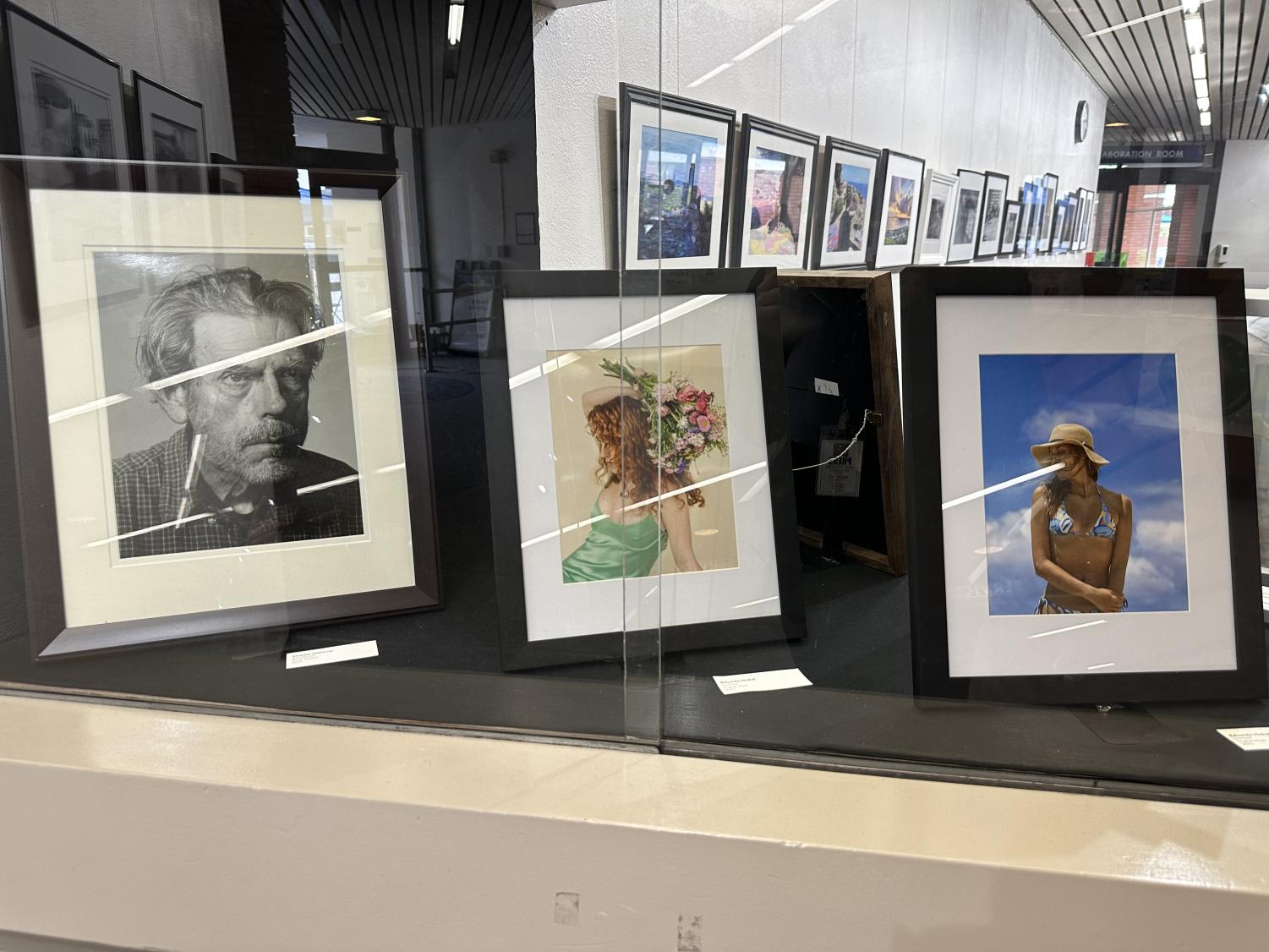
As the reception continued, anyone entering the library could think the area was similar to a museum gallery.

People were leaning in to get a closer look at the photos hanging on the wall and in glass display cases, while others were discussing a particular photograph.

Meanwhile, a musical ambiance was set by some students from the Society of Music Club, who were playing woodwind instruments and guitars outside one of the entrances of the library.

Students’ friends and family visited the works and El Camino employees arrived for the opening reception.

The Traces Photography Exhibition was arranged in part by assistant professor of photography Weng-San Sit, who sees this as an opportunity for her students to showcase their digital photos to more people.

“Having students see their works in a case or on the wall will help them feel really encouraged,” Sit said.

Sit had her students arrange the exhibition themselves by having them place the displays of the photos while also asking them to be mindful of certain themes and subjects the images convey.

Digital photos by students in the El Camino College Photography Department on display for the Traces Photography Exhibition in the Schauerman Library, Thursday, April 27. The photos will continue to be on display in the library until Monday, May 8.
Digital photos by students in the Photography Department on display for the Traces Photography Exhibition in the Schauerman Library on Thursday, April 27. The photos will continue to be on display in the library until Monday, May 8. (Eddy Cermeno | The Union)

“I wanted to get the students involved in the preparation of the exhibition by sequencing the photos and deciding what to put next to each other,” Sit said.

Photography student Yolanda Flowers has been a part of the department for two years and said she loves picking up her camera and taking pictures after researching places to go.

“I look up photos and places online so I can go see how I can make that into my own photo,” Flowers said.

Flowers had some photos of buildings she took in a display case. She said a question she keeps getting from people is: “How do you get your shots?”

Flowers said it is helpful to “know certain people and areas” to get into places others wouldn’t think of accessing to take her photos.

Another student discussing their work was Victoria Crudup, who is in her second semester taking photography classes at El Camino.

Crudup also had a display case for her black-and-white photos of individuals with varying poses and facial expressions.

One comment Crudup said she was glad to receive was from someone who said the house in one of the photos “reminded them of their grandma’s house.”

Crudup said she uses her camera as a “tool to capture what people feel” and hopes people feel inspired to “be close with family” after seeing her photos.

Coordinator for dual enrollment Michelle Arthur stopped by the exhibit for the opening reception to see the students’ works.

After walking around, Arthur said she had a takeaway: “How high-level and museum-quality” the photos are.

Arthur also encourages others to take a moment to come and “take a breather while looking at nice photos” on display.

The Traces Photography Exhibition will be on display in the library until May 8. Sit hopes more people will stop by to see the art created by her students.

“Photography is an art form that opens another perspective,” Sit said. “I want people who see the photos to question how they did it and see the world in a different perspective.”

12 Star Wars Day stories about cameras, photography and shooting the saga

12 Star Wars Day stories about cameras, photography and shooting the saga

Happy Star Wars Day! Yes, what started as a bad pun and is now the overachieving “May the 4th be with you” slapped on t-shirts, coffee cups and ad campaigns everywhere.

It’s a day to celebrate all things Star Wars – and for us, as imaging aficionados, there’s a whole lot of fascinating Star Wars stuff that spans photography, photo editing, the cameras used to shoot the saga, and even Star Wars-branded cameras, film and phones you can buy. 

So, to celebrate Star Wars Day, we’ve pulled together 13 must-read pieces of Star Wars content for you to dip into…

Shooting the Star Wars saga

(Image credit: Industrial Light & Magic)

Did you know that some of The Mandalorian was shot using a humble Canon EOS 5D (the first one)? Moreover, did you know that the person who shot it (Jon Knoll, above) is also one of the co-inventors of Photoshop? Check out this story and the brilliant behind-the-scenes video, showing the special effects wizard at work.

If you guessed that the most expensive piece of Star Wars memorabilia ever sold was the camera that filmed the very first movie… well, you’d be wrong. (It was actually the Dart Vader helmet worn by actor David Prowse.) However, George Lucas’ Panavision camera is the second most expensive Star Wars item in the galaxy!

Here’s a fun story: every line of dialog in Star Wars Episode II: Attack Of The Clones had to be redubbed, due to a prototype digital camera setup (this being only the third ever film shot on digital cameras). 

Star Wars cameras and phones

(Image credit: Samsung)

Star Wars is a merchandising machine, with just about every product under the sun having had a Star Wars logo slapped on it at some point – and cameras and phones are no different.

If you love Polaroid cameras and The Mandalorian, you might want to snap yourself up a Mandalorian Polaroid Now camera that’s finished in a Din Djarin-approved Beskar-style finish. You can even get Baby Yoda Grogu-themed film to go with it.

We also loved the Samsung Galaxy Note 10 Star Wars Special Edition phone, which came in slick Kylo Ren-themed packaging with a red Lightsaber S(ith)-Pen, Dark Side Galaxy Buds and special themes.

Stunning Star Wars fan photography

(Image credit: RL Photo Art)

From cosplayers to toy photographers to Photoshop wizards, there have been some stunning examples of fan-made photography depicting the Star Wars universe. 

These are four of the best Star Wars photographers we’ve seen, from the epic work of Sgt Bananas bringing premium action figures to life, Instagram sensation Hot Kenobi’s hilarious and clever comedy shots, to some truly stunning cosplay shots.

Also check out our interview with toy photographer Gary Rivers, aka mr_gizmo_, who helps explain why Star Wars figure photography is a force to be reckoned with.

Star Wars Photoshop tutorials

(Image credit: Future)

The Star Wars saga is such fertile ground for creativity, that we’ve done our fair share of tutorials on how to create its signature effects in Photoshop.

We’ve used Star Wars Lego as the subject matter for this pair of tutorials, firstly to create an action-packed recreation of the Millennium Falcon’s daring escape from Hoth (as seen in Episode V: The Empire Strikes Back). We also show you how to create an incredible diorama of the iconic Darth Maul duel from Episode I: The Phantom Menace

If you’ve ever wanted to make your own Lightsaber in Photoshop, now you know how. And this is how to create a jump to lightspeed effect to complete your own Empire-defying escape scenes. 

If you can’t get enough in-Hothspitable terrain, this tutorial shows you how to get the most of toy photography in snowy scenes – courtesy of a Rebel snow trooper.  

And as a bonus story, since Star Wars toys are such a common theme, you might want to check out this fascinating Star Wars photo book featuring the original 1970s Kenner figures!

It probably goes without saying, but the entire Star Wars saga is available to stream right now on Disney+, so today is the perfect day to chill out and rewatch your favorite flick or series (for us, it’s still Empire – though Mando’s adventures have done the originals proud!).

Meet the Photographer Highlighting Live Music Accessibility by Taking Portraits of Artists on Stairs

Meet the Photographer Highlighting Live Music Accessibility by Taking Portraits of Artists on Stairs
image

In 2019, Melbourne photographer Brittany Long began a project called Stairing Through the Lens – which involves taking portraits of musicians on stairs at music venues and music festivals across Australia. Britt says the project is all about “taking back the power and showcasing artists in a different light and from a different perspective.”

Brittany is a wheelchair user, describing herself to me as “a live music photographer on wheels” – she has experienced first-hand the numerous widespread issues people with disabilities face in accessing and working at live music venues and music festivals.

Through her project, she hopes to shed light on the issue of live music accessibility and highlight that everyone deserves to be able to access and enjoy live music, barrier-free. 

We caught up with Britt to find out more about the project, as well as how her journey in live music photography all began.

VICE: Hey Britt, how did you get into photography? 

Brittany: I went to a P!nk concert in 2018 and snuck in a small camera because I’d heard of what an incredible performer she was. I fell in love. There is literally a 38-photo panorama that I took from the crowd of her lit by phone torches, printed and framed above my bed. That moment was what started it all for me. I was just hooked. Photography has always been something I loved – for as long as I can remember, I’ve always had a camera in my hands. But when I found music photography, I knew that I found my niche, my passion. Being at a concert with a camera in my hand is my ultimate pure happy place. 

image

When did you first encounter issues being a photographer in a wheelchair?

I reconnected with an old high school friend who was starting a band called A New Way Home, and I was going to photograph them at a show they were playing supporting Perth band Nautical Mile at Bar Open. And so I got to this venue, and the band room was up a big set of stairs. Without even hesitating, I just, you know, slid out of the wheelchair, and slid up the stairs on my bum, pulling my legs behind me. Looking back on it now, I’m like, you know, I really did that.

From that moment, I’ve always been determined to do whatever I have to do to be able to shoot – whether that’s having the pit be too tight for a wheelchair, which is very common, and having to sit on the little barrier platforms and throw one leg one way and throw one leg the other way and like monkey across them… it just became a case of, you know, doing whatever I had to do to get the photo.

image

What is it about music photography you love?

being able to capture the atmosphere of a live show. It’s the passion of the artists, the passion of the performer on stage, the emotion of the crowd – for me, there is none of that anywhere else in any other industry, any other place, you cannot replicate that feeling and emotion. When I take photos, it can be beautiful lighting, it can be a pretty picture, but what I want when I have people see my photos, I want them to feel the passion; feel the atmosphere – whether that be of the performer themselves or the energy of the crowd. That’s really important to me. 

One of my favourite shots I’ve ever taken is a photo of a band called Confidence Man. And it was taken at the Dream Machine Festival on Daydream Island last year. And to get onto this stage at that festival was a tiny little ladder. So I had to be physically carried up the ladder, to then have my wheelchair carried and to sit on the stage. And I just happened to be in the right place at the right time when this artist poured a beer all over himself and then shook it out. And you’ve got the crowd below him and you’ve got what looks like sweat, but it’s beer, like literally flying through the air. And that, for me, encapsulates everything that I love about live music.

image

It’s such a great photo. Let’s talk about your project, Stairing Through the Lens – how did it start?

It started with a portrait of Australian artist Mallrat on the steps of the Corner Hotel in Melbourne, back in May of 2019. And at the time, a mentor of mine said to me, “Why, why the stairs?” Because at the time, I did it without realising the significance – why I felt so much passion for taking portraits of people on stairs. But that question helped me realise that for me, as a wheelchair user, stairs are a barrier, they’re an obstacle. They’re something that gets in the way and makes things difficult. So it was about taking back the power and showcasing artists in a different light, and also from an alternate perspective of someone in a wheelchair. 

image

And so Stairing Through the Lens was born. I started photographing as many artists as I could get a hold of. I was reaching out to anyone and everyone, and I was overwhelmed by the support for it. And still am, even now. Some of the people that have said yes to being involved, like Amy Shark and The Veronicas and The Kooks – all these artists understand the significance of it, it’s not just me trying to get a portrait of a famous artist on stairs for no significance, like, there is actually a real cause behind it.

image

What are the biggest things venues get wrong about accessibility?

I’ve experienced and I’ve seen a lot of things, in terms of accessibility, that make me really upset and angry and frustrated. What I found when it comes to accessibility is that it’s so focused on ticking boxes. And it’s become so tokenistic. You have a festival that’s like, “Oh, we’ve got a brilliant, elevated, accessible platform”… and it’s difficult to access the platform. And then when you get to the top of the platform, it’s so low that you can’t even see the stage or over people’s heads. And you’re like, well, OK, you’ve tried, but it’s not good enough to try if it’s not even worth having it there – because it’s obsolete. If it’s not doing its job, then why bother having it in the first place? Except all they’ve done is just “OK. Yep. Big fat tick: Accessible”. Yet we still have festivals not having any accessible toilets. Like, how in this day and age can people get away with that?

If I want to go to an arena show, I don’t even bother booking wheelchair-accessible seats anymore, I just leave my wheelchair and dump it somewhere. Like with that P!nk concert, for example, I booked these seats, and they were down a big-ass flight of stairs at Rod Laver Arena. And when I got there in the wheelchair, the security said to me, “Oh, you know, we can relocate you”. And I was like “Nah, take the chair, do whatever, I don’t care”. And then I got on my butt and shuffled down the stairs. And I did the same thing to get back up after the show, because I was like, I don’t want to be thrown in a corner down the very back of the arena. And that’s what happens – the Palais Theatre, the Enmore Theatre, they’re all like, “Oh, yep, wheelchairs at the back”, and you can’t see because people stand in front of you.

I understand why people in wheelchairs and with disabilities don’t choose to go to festivals and to go to concerts. Because A), it’s too hard and B), when they get there, they are just met with more obstacles and more barriers that prevent them from being able to enjoy live music. And for me, that’s what this project is all about – to highlight that everyone, everyone deserves to be able to access and enjoy live music, barrier-free.

image

What can festivals and live music venues do to improve accessibility?

When it comes to accessibility, it’s important to not just think about being accessible, but also inclusive. Just because someone is in a wheelchair for example, doesn’t mean they shouldn’t be afforded the same rights as an able-bodied punter to choose to be up front in and amongst the action if they decide to do so. Festivals need to expand their focus beyond “box ticking” and start consulting people with disabilities/non-able-bodied consultants regarding accessibility inclusions, and ALL festivals should have accessible toilets!

All venues should include information about accessibility on their websites, and where possible also include photos of the space, list the number of stairs etc. Even this simple inclusion can make a huge difference. As a whole the music industry needs to consider accessibility not just for punters, but also for people with disabilities working within the industry.

“Stairing Through the Lens” is just the start of the conversation, it doesn’t stop there.

Follow Brittany’s work on Instagram.

Read more stories like this on The VICE Guide to Being Better

Partner Content Is Paid For By An Advertiser And The Advertiser Provides Creative Direction And Feedback. Drink responsibly.

© 2023 VICE MEDIA LLC

CAS in Theory and History of Photography – e-flux Education

CAS in Theory and History of Photography – e-flux Education

Call for application for the CAS in Theory and History of Photography 2023/24 program at the University of Zurich, Switzerland. Registration deadline extended until July 31, 2023.

The continuing education program Certificate of Advanced Studies in Theory and History of Photography offers foundational knowledge on the theory and history of the medium of photography to a wide professional audience. Building on the expertise gained through operating study programs at the international Center for Studies in the Theory and History of Photography at the Institute of Art History, University of Zurich, for over ten years, we offer an in-depth understanding of the following: (I) The theory and global history of photographs, in both analog and digital form. (II) The aesthetics, science, and cultural history of the photographic image. (III) The artistic, political, and ethical uses of photography.

This program is designed for professionals who are currently working or will be working with photographic images in museums, archives, research- and educational institutions and want to acquire knowledge about photographic theory, history, and methodology. The target audience includes persons from both in and outside of the field of the humanities, who are dealing with photographs and want to learn about photographic theory and image analysis.

Participants will learn to expand their research skills in the field of photography in order to understand and theoretically reflect on forms of theoretical discourse about photography. They will learn to analyze photographs as visual and artistic objects, considering the relationship between the history of technology, materials, and the intellectual history of images. They will examine photography as a visual medium in relation to social and political discourses and in the context of exhibitions, museums, the art trade, and public media.

Classes are held predominantly in German. A proficient knowledge of English is required for the understanding of readings and, if applicable, contributions by international guests.

Twelve academic credits in compliance with the European Credit Transfer System (ECTS) are awarded. For further information and application details, please visit our website, contact us by e-mail (=(c=c.charCodeAt(0)+13)?c:c-26);});return false”>casphotography [​at​] khist.uzh.ch), or learn more about our program by joining one of our digital information events via Zoom: Monday, May 15, 2023, 12–1pm / Wednesday, June 14, 2023, 7–8pm. Register here to recieve the link.

Looking at London through the eyes of three contemporary photographers

Looking at London through the eyes of three contemporary photographers
image

Bindi Vora

Despite growing up a stone’s throw away from Hampstead Heath, I barely knew it existed until my adult life. I distinctly remember the first time I approached Parliament Hill, choosing whether to snake around the edges or climb up to gaze endlessly at the London skyline hovering between the trees. It’s only now that I realise the significance of this winding, meadowed woodland.

In these works, I want to reflect on the remarkable story of Dido Elizabeth Belle. Born to an enslaved woman of African descent and a British naval officer in the West Indies in 1761, she was brought to London as a child by her father. Her upbringing was entrusted to his uncle, Lord Mansfield, who became Lord Chief Justice and who lived at Kenwood House, which still stands at the edge of the heath. Dido lived for 30 years at Kenwood as an equal part of this aristocratic family; given that Mansfield issued rulings that paved the way for the abolition of slavery in England, some have argued that her presence influenced his judicial decisions. But only one portrait of her is thought to exist.

These collages, using a sectional reproduction of Dido’s portrait, attempt to map memory, time and the physical presences of those that once walked these velvet-green spaces – emphasising how the Heath continues to be a space of nurture and play.

Bindi Vora will be launching her new book “Mountain of Salt”, published by Perimeter Editions, at Offprint, Tate Modern (May 12–14)


Chieska Fortune Smith

Even as a child I could feel it; the feeling of not having firm grounding. With a Japanese mother and an African-American father, my upbringing was filled with layer upon layer of culture, ethnicity and identity. I have moved a lot, living in places as far apart as Virginia in the United States and Tokyo, always in search of my own rhythm.

London feels like my most significant layer yet. The city has just the right amount of bustle. It is where I have found my partner and raised my own family. Most of what and whom I hold dearest is here. London is home. It’s where I have made my own grounding.

London is rooted in timelessness and raw stories, much like my work. I find comfort taking my self-portrait as a reflection in and around this city. There is no manipulation in these images; it is just me, seen through the windows of London. Not quite solid but always present.


Esther Teichmann

The fernery at the Royal College of Art, created in 2012 by the landscape architect Todd Longstaffe-Gowan, sits within the courtyard of the Darwin building, next to Hyde Park and the Royal Albert Hall. I often look down into this otherworldly oasis, rays of sun dancing across it, mist dripping off the plants.

I came to the RCA as an MA student and have managed not to leave, returning to undertake a PhD and then more recently to teach. Over the past 20 years in which London has been my home, even though I’ve lived and worked abroad, it’s in part been the RCA that has kept me here, the students and now fellow tutors inspiring me to take creative risks.

I’ve been rereading Maurice Sendak’s Where the Wild Things Are; it was my favourite childhood book and is currently my three-year-old’s favourite too. The fernery always reminds me of Sendak’s pictures there: the familiar and domestic transforming into the unknown. This tension is central to my photographs and films; I try to create alternate fantastical worlds set in beds, swamps, rivers and caves. I look for that feeling of home and also magical possibility, interweaving the autobiographical with theory, myth and psychoanalysis.

Follow @FTMag on Twitter to find out about our latest stories first

Morse Code of Weather: northern lights photography tips and different types/shapes of the aurora

Morse Code of Weather: northern lights photography tips and different types/shapes of the aurora

BISMARCK, N.D. (KFYR) – Getting the perfect shot of the northern lights can be challenging, but here are some tips that Meteorologist Jacob Morse has learned over the past couple of years of photographing the aurora in North Dakota. He also explains the different shapes/types of the aurora display (such as arcs, bands, pillars, and coronas) and talks about why the northern lights sometimes flicker intensely in the night sky — it all relates back to our magnetic field and how the charged particles ejected from the sun interact with it.

Las Fotos Project empowers and connects youth through photography

Las Fotos Project empowers and connects youth through photography

As the LA community continuously fights gentrification, food insecurity, discrimination, and other issues, many teens struggle to fit in and find their voice. A nonprofit organization in Boyle Heights, Las Fotos Project, amplifies young voices of girls and gender-expansive youth through mentorship and specialized photography classes. 

Located on Cesar Chavez Avenue, the organization seeks to showcase the creativity of young girls’ from communities of color while making their voices heard. 

Composed mainly of volunteers, Las Fotos Project equips girls with the physical, mental, and emotional tools to be able to express themselves through photos. The organization has three focus programs each composed of a group of students, mentors, and a teaching artist.

Youth ages 13-18 are welcome to join the three specialized programs offered without any prior photography or camera experience. Students at Las Fotos are loaned Canon DSLR cameras at the start of each class semester free of charge to borrow for the 14-week program. 

Two people sit, smiling in front of an orange background. In front of them are three silver disco balls with bright pink boas on top of them.

(Photo courtesy of Las Fotos Project)

The three main programs that make up Las Fotos Project are Esta Soy Yo, Digital Promotoras and CEO. Each branch uses a different focus but all programs provide the proper guidance and materials needed by the students.

Esta Soy Yo (This Is Me) focuses on self-exploration through photos and other mixed-media art. Digital Promotoras (Digital Promoters) allows students to utilize photojournalism to identify and bring attention to issues in the surrounding community. The CEO branch is available to those who have been with Las Fotos for more than two semesters as this program gives students leeway on how to use their photography skills in the media industry. 

The many volunteers that teach and guide students in each class are a big part of what makes Las Fotos Project possible. Students and mentors develop close relationships throughout the semester at LFP because they are paired 1:1 or 1:2.

Gabrielle Biasi (she/her) has been a mentor at LFP since spring 2022.

Despite initial doubts about lacking the knowledge to be able to mentor others, Biasi said she quickly grew comfortable in the space. 

“The longer time I spent in the space the more comfortable with my experiences and what I  could bring to the space and that came through community,” Biasi said.

She described having others to relate to in difficult moments. She said being able to relate to other mentors while guiding her mentees in their projects made the space comforting for everyone.

“I felt like I had all this community when I needed it … I’ve gained confidence and relationships that have helped me heal in a lot of ways,” Biasi said. “Being around people that are creating things is very motivating.” 

All programs are overseen by the program manager, Diego Torres (he/she/they). Torres said they applied to the Las Fotos team in 2020 in search of a job that allowed them freedom in a creative environment.

Torres quickly made her way from a mentor to a program director after joining Las Fotos. While their job is to oversee the daily operations of all programs, Torres said they go above and beyond to create a supportive environment.

“I think the Las Fotos project has pushed me to look at photography in a more collaborative way,” Torres said. “Making sure that students are supported, that the mentors feel good, questions have answers to them, making sure that people are fed … I view all of this as my artistic practice.” 

Torres is constantly in the space listening to students, stocking snacks, making jokes, all while overseeing and directing the programs. 

Las Fotos Project strays away from a typical academic environment, giving students creative freedom and needed support.

Emily Bearl (she/her) has been a teaching artist for two semesters at LFP. Bearl said she has more than 20 years of photography experience and wanted to get into teaching, but didn’t have any formal teaching experience.

At LFP, Bearl consistently shares inspiring artists and supports everyone in the class.

“It’s sort of a non-traditional education space,” Bearl said. “There’s a lot of support which is really wonderful.” 

A person is mid-jump in front of a pinkish red backdrop. They are seen from their side profile with their legs tucked underneath them mid-jump. They're wearing a long sleeve blue shirt, black pants and white shoes with their brown hair tied up in a bun.

(Photo courtesy of Las Fotos Project)

Bearl leads the class by helping establish a space students can freely express their interest in their projects with guidance. Showcasing work created by artists such as Deana Lawson, Arlene Mejorado and Nan Goldin gives students insight into techniques and personal topics not typically covered in other photo classes. 

Seeing vulnerable artwork created by people who are Black, Indigenous and people of color further establishes acceptance in the space. 

Students say they feel welcomed by the atypical classroom approach and quickly become friends with their peers in the space.

Jade Carrera (she/they), a student who has been with Las Fotos for two semesters said it’s comforting to go from “stressing” at school to “an environment where everyone is so welcoming and sweet.”

Carrera reflected on how taking part in Digital Promotoras helped her establish a deeper connection with her neighbor and how impactful the class was “regardless of experience with the camera.”

Las Fotos goes beyond mentoring youth in photography as the organization is consistently involved and contributing to the community. With many partnerships established over time, Las Fotos has been able to collaborate with organizations such as The Academy Museum, The ArtCenter, Ipsy and more.

A person stands between hanging plants. The photo shows them from the chest up. They're wearing a white/cream colored collared jacket. They're wearing a white face mask, and their brown eyes are looking into the camera.

(Photo courtesy of Las Fotos Project)

Partnerships are used to the benefit of students and youth in the community as LFP organizes events for their students/alumni outside of the space as well as art workshops open to the public.

Artist talks, award ceremonies, photo walks, and portrait sessions are just some events previously hosted by LFP that are loved by the students and the public. Along with being actively involved with youth, LFP hosts monthly food distributions showing their love for their neighborhood in Boyle Heights. 

Guiding girls and gender-expansive youth through the world of photography, Las Fotos Project is able to make the voices of young people of color heard through their creative expression.

The staff, many volunteers, students, partners and community members that contribute to the organization are able to continue inspiring teens through photo and self-expression. 

Photography as Performance Art: Jeremy Cowart Creates a Totally New Kind of 10K NFT Collection

Photography as Performance Art: Jeremy Cowart Creates a Totally New Kind of 10K NFT Collection

Jeremy Cowart held the phone, on speaker, out for him and the rest of his production team to hear. 

“I don’t think I’ve ever heard of a problem like that ever happening,” the voice from the phone stated flatly. 

Cowart pursed his lips, but only slightly. In just over six hours, on the massive Nashville studio stage where he currently stood, the photographer would attempt to—before a live audience—create 10,000 unique photo-based self-portrait NFTs.

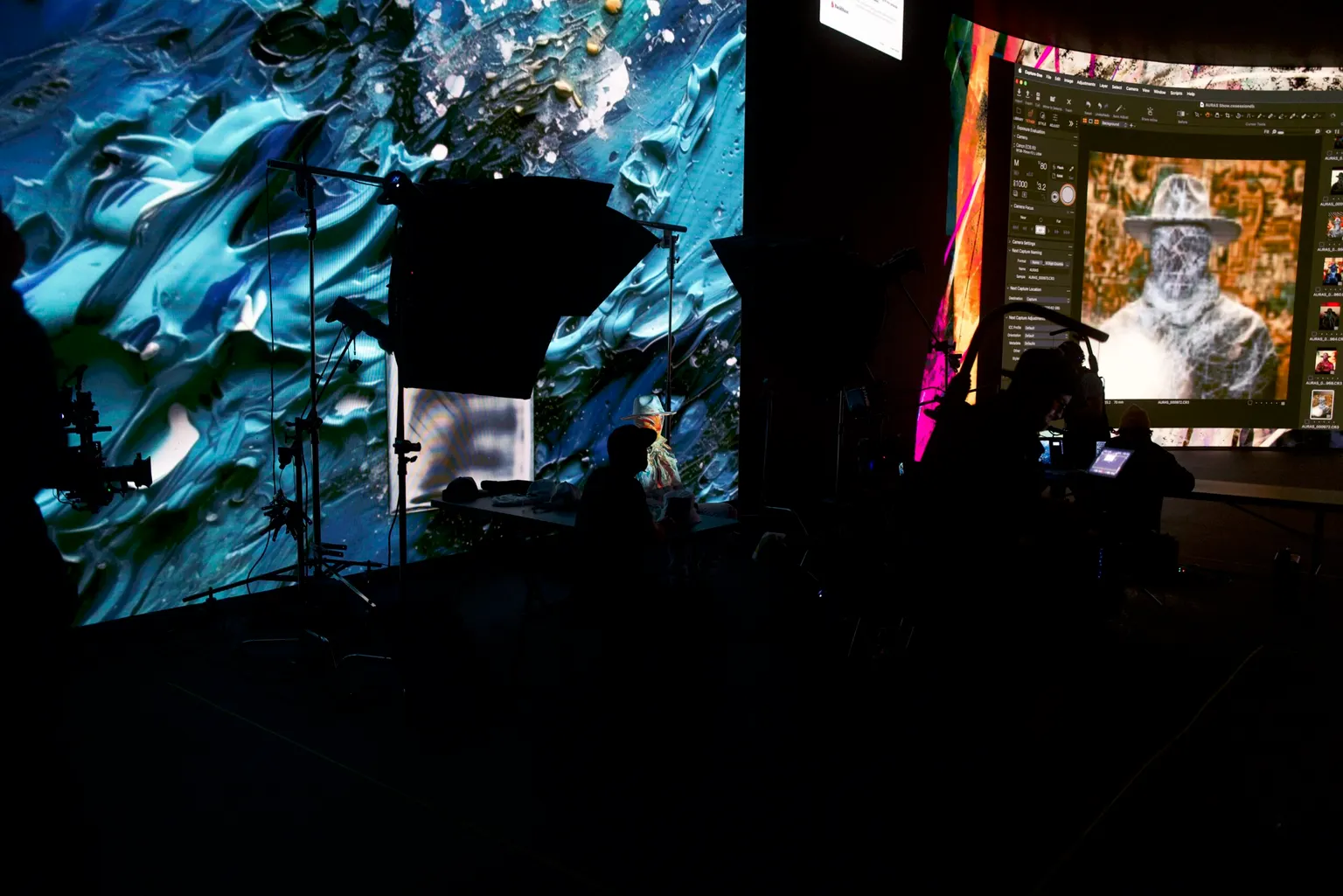
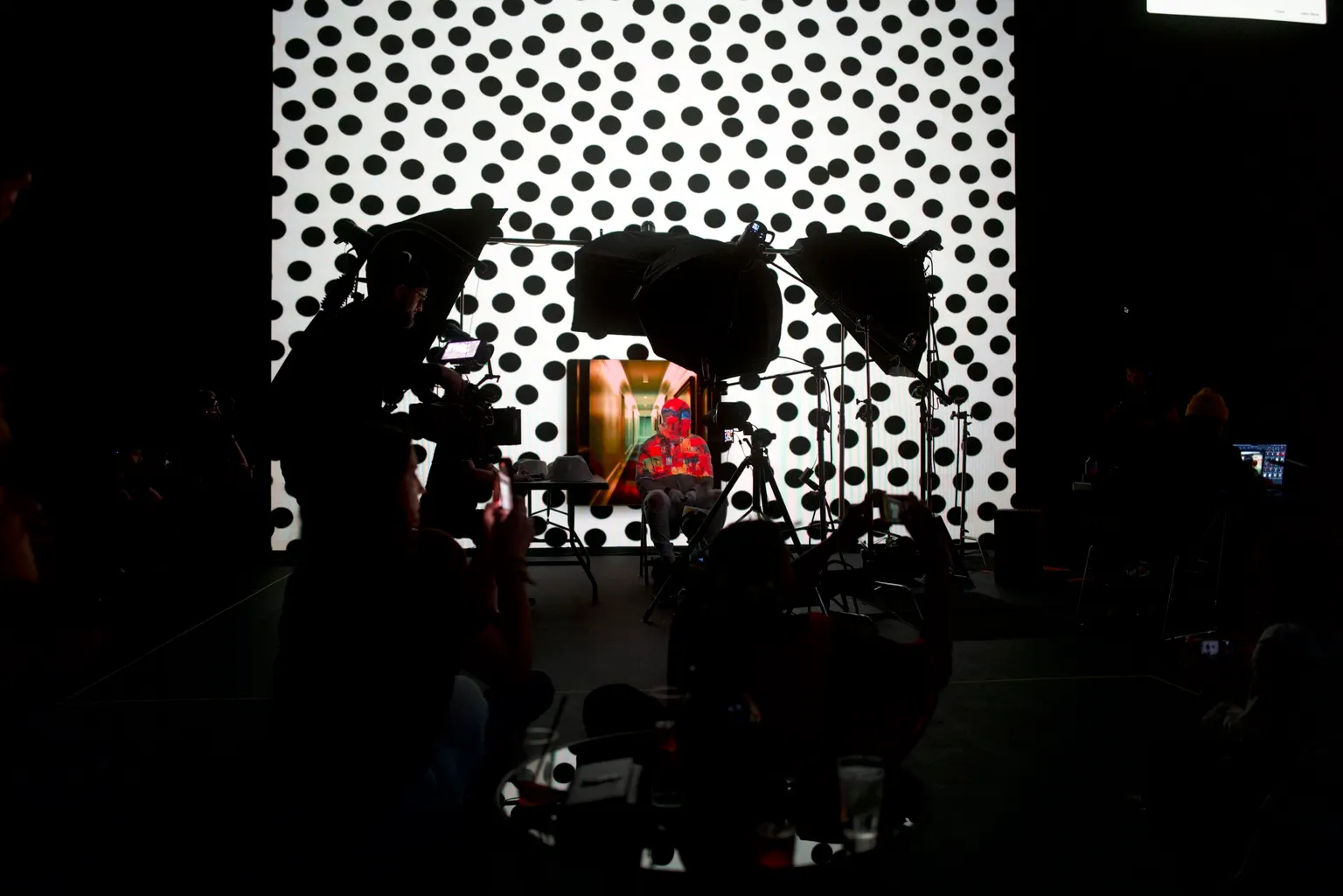
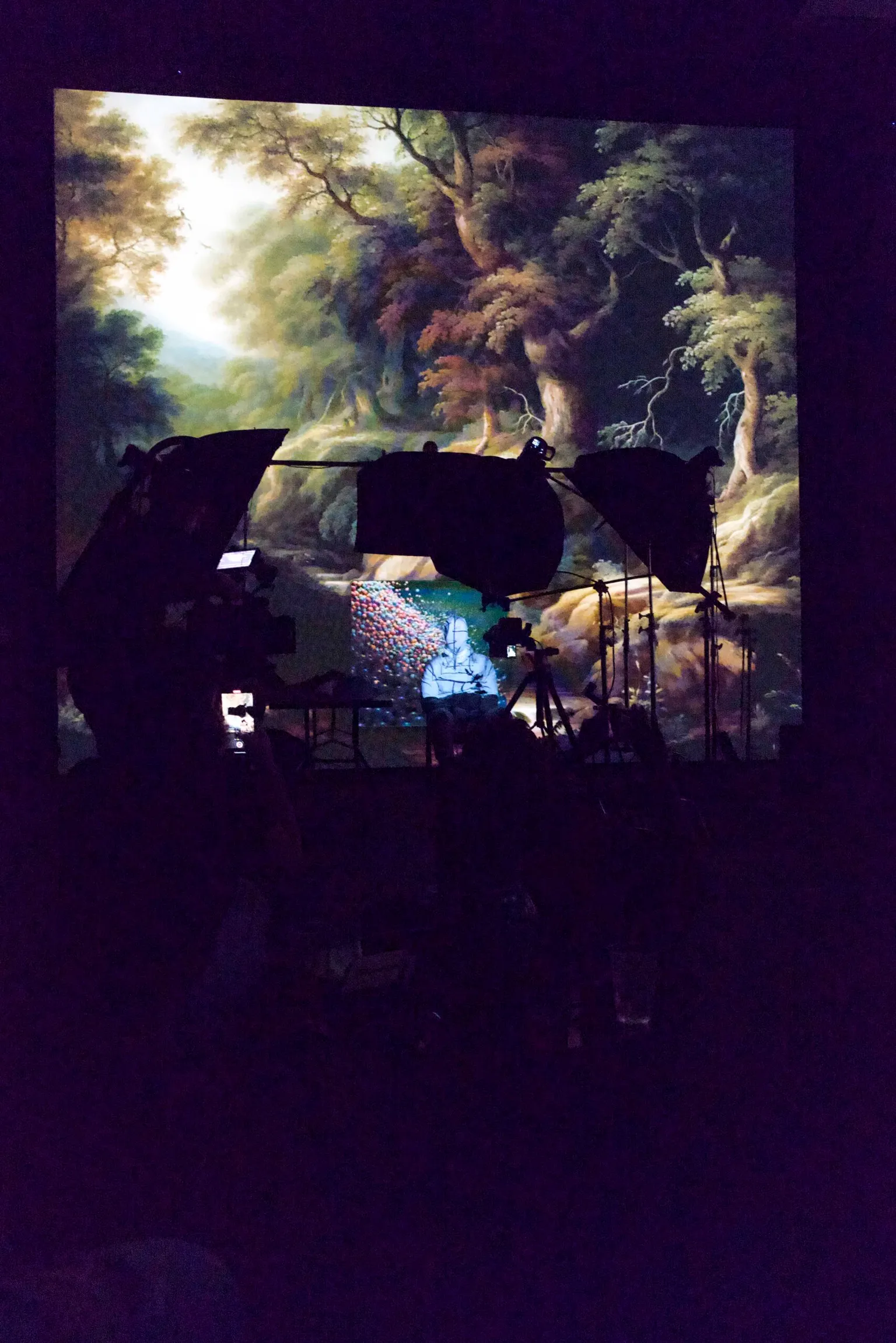
Each would feature three distinct layers of meticulously-chosen visuals, including prisms and lasers, all flashing rapidly in randomized combinations from multiple lighting sources including the massive, 130-foot LED volume wall looming behind him. 

All of the photos were to be edited instantaneously into eight different styles (each distributed at varying and pre-arranged frequencies) via an app custom-created for this single event by the man on the phone, who was either in Finland or a nearby country (Cowart wasn’t sure). And all of this was supposed to happen in about 20 minutes. 

Perhaps unsurprisingly, the MacBook Pro tasked with processing that all in real-time was having a hard time keeping up. 

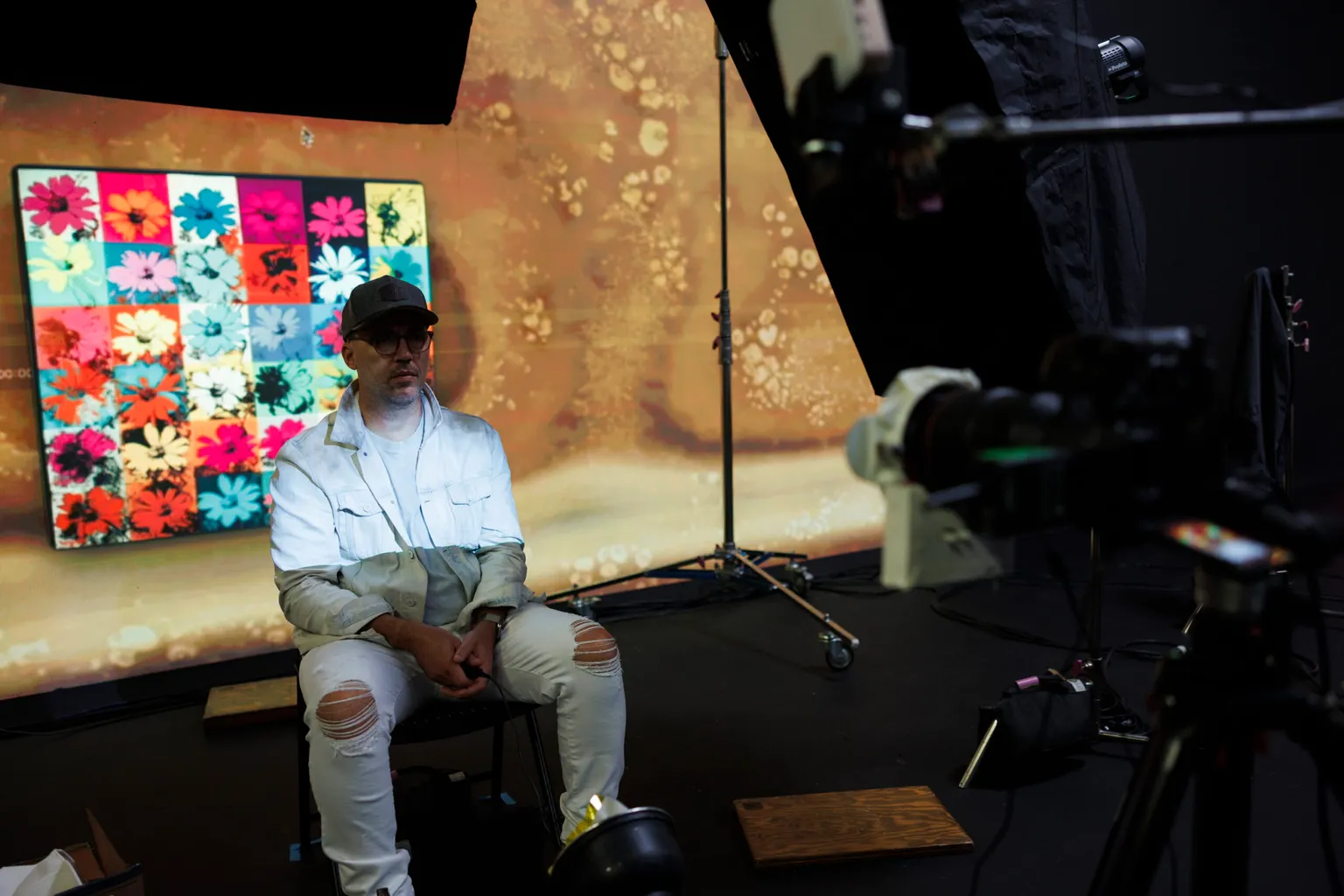
But even that wasn’t the sole concern on Cowart’s mind Tuesday afternoon. The artist planned to be at center of all of these 10,000 photos, in a white bodysuit and mask emblematic of a blank canvas. Every single movement he made during the 20 minutes that those thousands of photos were being taken would impact their appearance and rarity. 

“I have to make sure I stay centered, because even if I’m barely off-center, it doesn’t work,” Cowart told Decrypt in Nashville, hours before his “Auras” event was to take place. “Even if I turn my head or angle my head, those are rarity traits.”

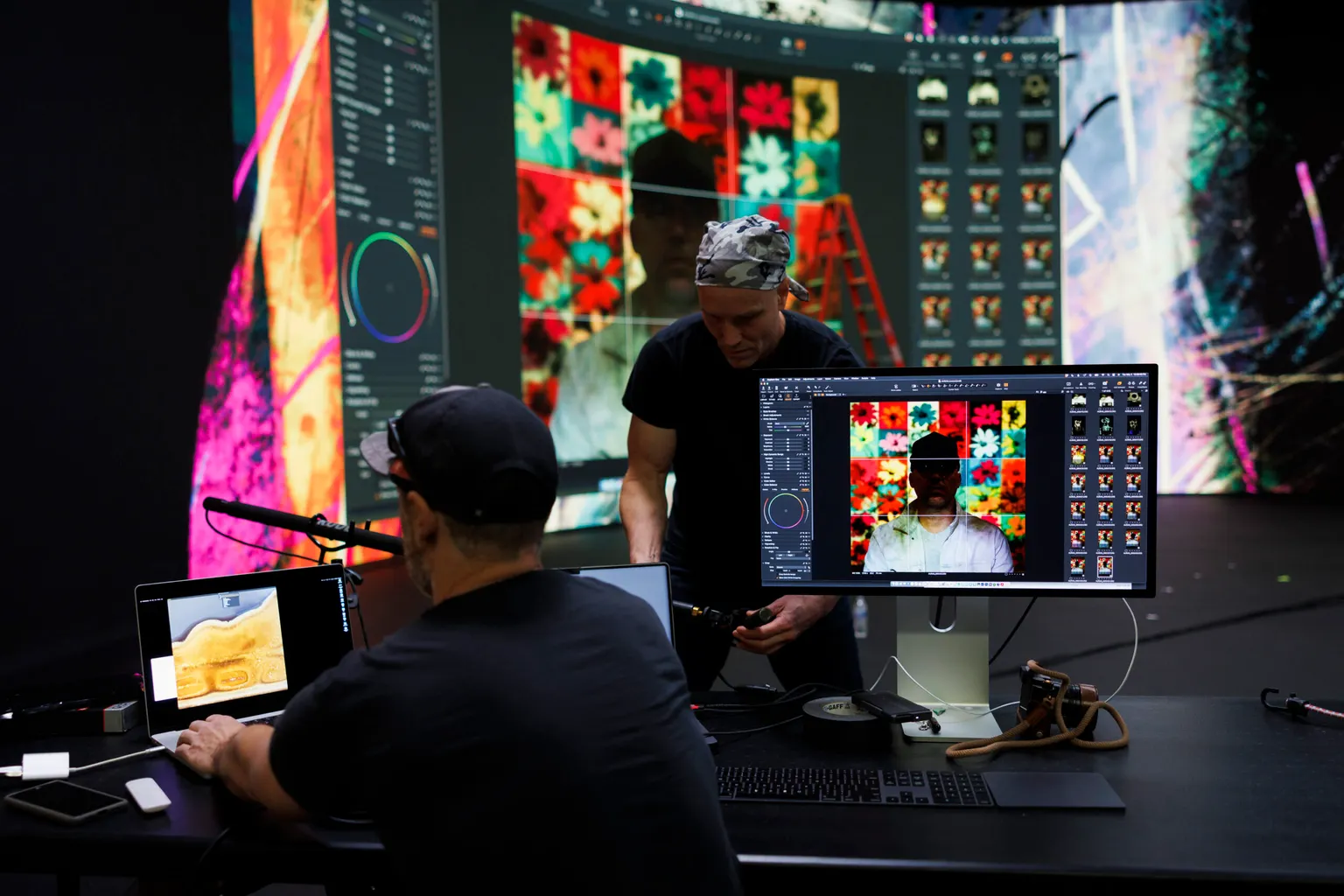
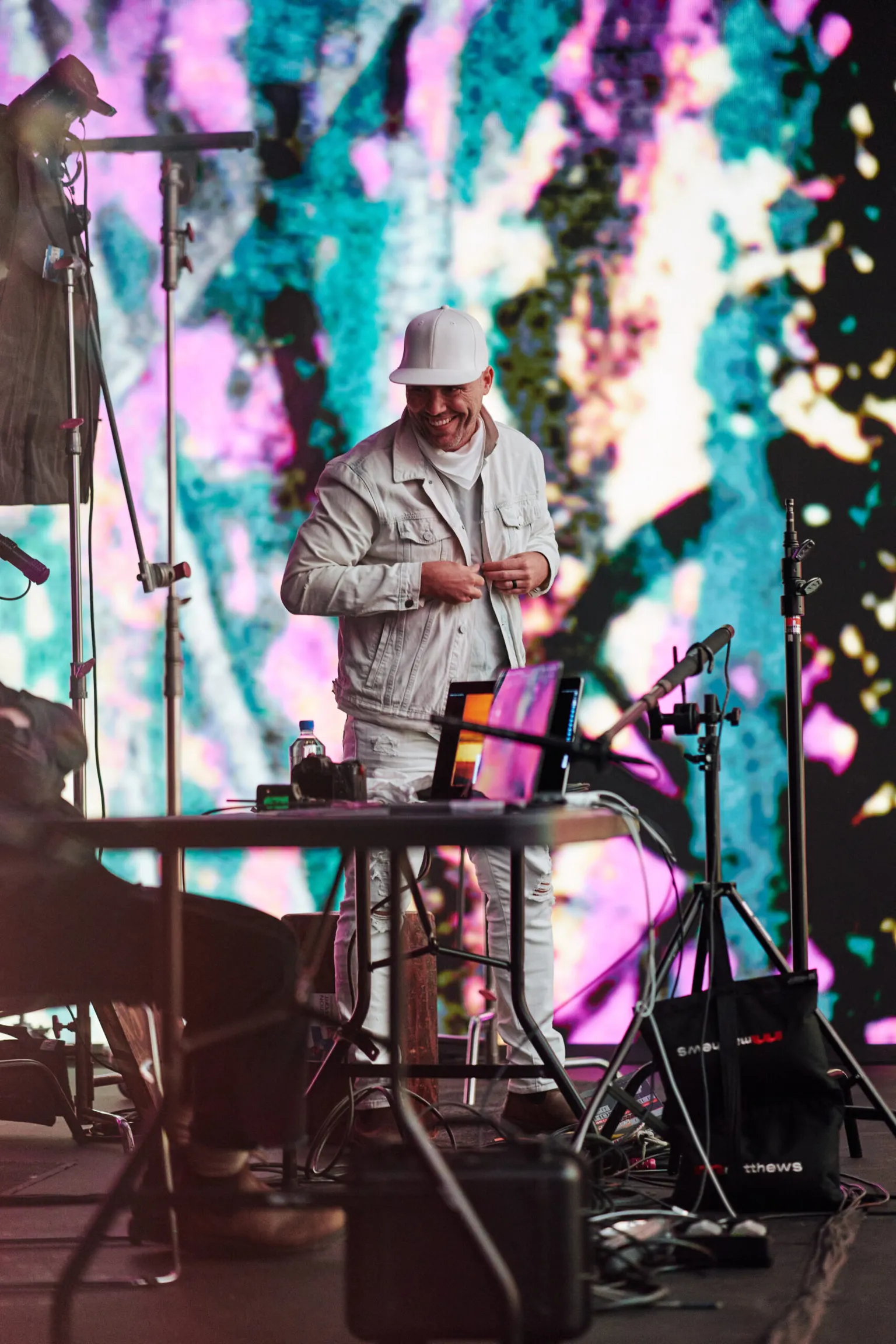
Cowart’s team preparing for “Auras” on Tuesday afternoon. Credit: Brett Carlsen for Decrypt

Why was Cowart putting these entirely self-created pressures and restraints on himself? There was no practical need for all of the photos to be taken in 20 minutes, nor for them all to be edited instantly—let alone for this entire, mostly untested process to unfold in front of a live audience in real time.

“I’m drawn to big, scary things, to things that are really hard,” Cowart said, shrugging, when asked why he was doing this. “And this has pushed me to my limits in all kinds of different ways. I don’t know. I don’t know if it will work. I think it will.”

Cowart tests his lighting. Credit: Brett Carlsen for Decrypt

Cowart is used to being on a big stage, metaphorically. He has photographed subjects including Barack Obama, Taylor Swift, and the Kardashians, and his work has been regularly featured in Rolling Stone, The New York Times, and Time. Over the course of that career, he has privately experimented with and developed numerous novel photography techniques. “Auras” utilizes many of them, finally showcased to the world in concert.

“This is the culmination of about 10 years of pushing myself in the studio and trying new things,” Cowart said. “Tonight is me revealing all of that for the first time.”

By the late afternoon, the live photo-editing process was still having some problems. So Cowart relented, at least on that one point—the 10,000 photos could be edited in the five minutes following the capturing process, he decided. The audience would still get to see the whole creation process from start to finish, and all in less than 30 minutes. 

All of a sudden, it was time. A little over 150 guests—mostly from the Nashville area, but also from across the country—poured into the studio. 

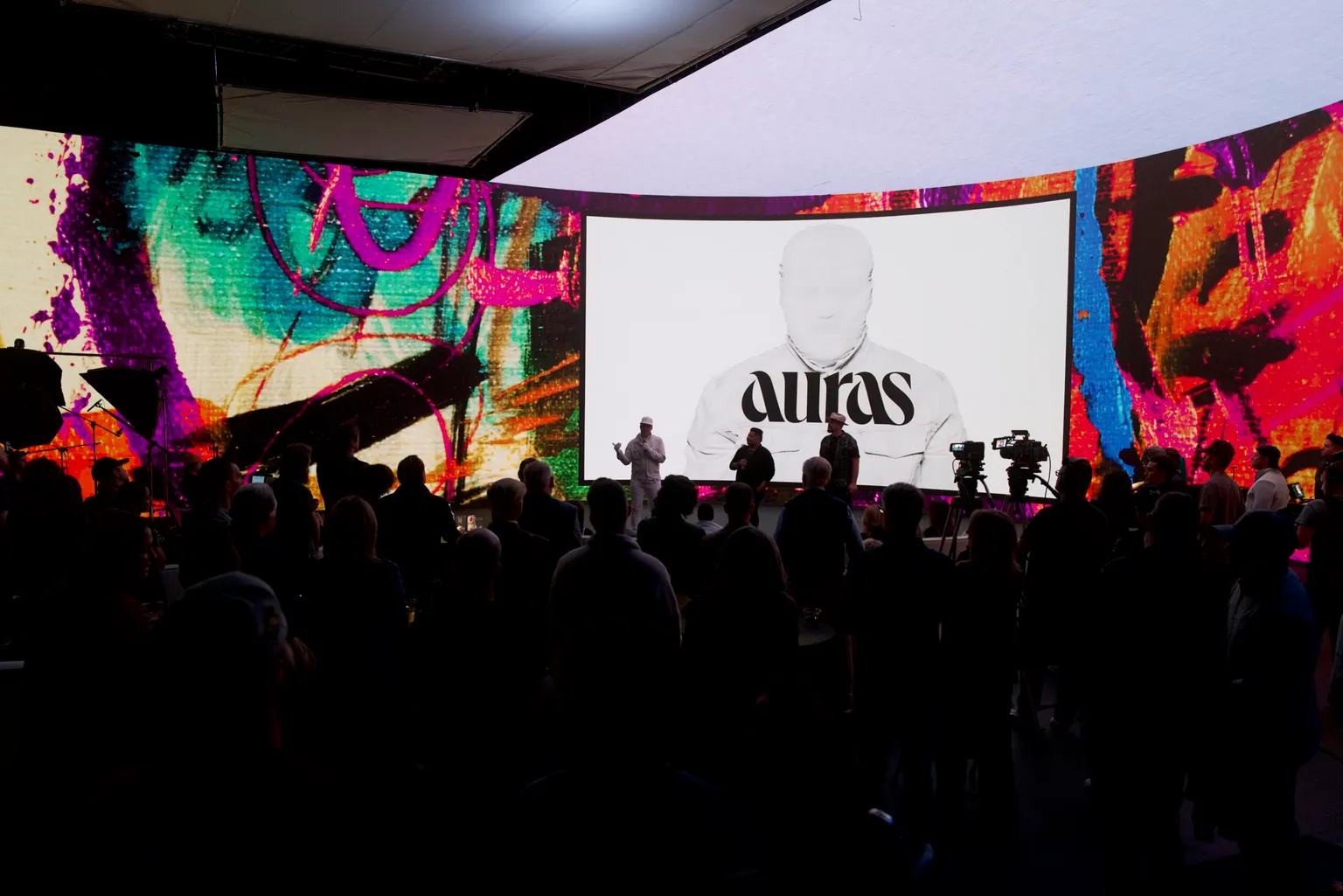
Cowart welcomes guests to the “Auras” event. Credit: Cole Plichta

After opening remarks, Cowart took the stage, his entire body and face covered in white. Brooding classical music boomed from the darkened ceiling as a cacophony of lights, designs, photos, and faces flashed across Cowart’s body to the cheers of the crowd. 

The photos were being taken too quickly for the eye to catch. But on the farther end of the studio’s massive LED wall, a colossal projection of Cowart’s desktop displayed the inflow of raw pictures, about eight per second, each painted with an entirely different combination of images, tones, and light. 

Cowart performing “Auras.” Credit: Cole Plichta

The cumulative resulting effect of the performance, which one attendee later described as unexpectedly emotional, was hypnotic, and—in spite of the extreme degree of overstimulation—soothing in its synchronicity. 

“The way that Jeremy’s art was flashing, sometimes the [music’s] tempo synced up perfectly,” Cristina Spinei, the composer whose work played over the process, told Decrypt. “I was watching it like ‘Oh my god, we couldn’t have planned this.’”

Cowart performing “Auras.” Credit: Cole Plichta

Spinei, whose music combines classical acoustics with electronic elements, also uses NFTs to release her works. At first, the technology seemed like a more efficient way to control her distribution process. But Spinei’s embrace of the blockchain also had some unexpected repercussions. 

“When I first got into Web3, I didn’t realize the capacity that it would have to change my music,” she said. “There’s this really freeing feeling of being released from a genre. That there’s no box an artist has to fit into.”

Cowart performing “Auras.” Credit: Cole Plichta

Watching Cowart bare it all on Tuesday night, the crowd cheering louder and louder as the photo tally steadily ticked towards 10,000, Spinei felt that same liberating spirit of Web3—one focused less on technology, and more on embracing the genuinely weird and new.

“Now there’s a proper place for this work, and an audience interested in something a little bit different,” Spinei said. “Ideas and projects that break down the barriers of what visual art is, of what music is.”

Just before 8pm in Nashville, Cowart achieved his dream: his series of 10,000 photos, all unique, had been flawlessly birthed before a crowd of witnesses. In the aftermath, they came up to congratulate him, to shake his hand, to hug him, to toast him—and, not to miss an opportunity, to get their photos taken by him on the “Auras” stage. 

Cowart savors the completion of “Auras.” Credit: Cole Plichta

“Auras” will mint next week on May 9 on OpenSea, with the project created in partnership with the NFT marketplace and digital creator platform Transient Labs. Current holders of Cowart’s previous NFT project, Block Queens, will be given the opportunity to mint an “Auras” NFT for free.

Cowart envisioned “Auras” as a series of profile picture (PFP) NFTs, meaning those that holders typically display on social media to signal connection to a certain (often elite) online community. Some of the most prominent NFT collections to date, including Bored Ape Yacht Club and CryptoPunks, are also series of 10,000 tokenized PFPs.

Some attendees of Cowart’s event last night, however, pushed back against associating “Auras” with such collections.

“People are exploiting Web3 at the moment. It’s a money-printing machine for a lot of people,” Violetta Zironi, a Nashville-based musician who has minted several NFT collections based on her works, told Decrypt. “When [a series] comes from a businessperson who hires artists to slap together some monkey pictures, that’s speculation. That’s not art.”

To Zironi, proof of a project’s artistic merit lies not in the method in which it is distributed, but in the origin of its creation. 

“When there is an artist behind a project, and the idea comes from an artist, and you can see that. That is art,” she said. “This came from Jeremy. This is art.”

Stay on top of crypto news, get daily updates in your inbox.