Photography

Joan Fontcuberta: Redefining Photography and Taming Monsters

Joan Fontcuberta: Redefining Photography and Taming Monsters

Joan Fontcuberta discovered photography at school, when a teacher introduced him to the inner workings of the dark room. He saw it as a real magic trick. He reproduces this magic when he engages in unorthodox experiments in the photochemical laboratory installed in his home. “You talk about working, I talk about having fun,” he says when asked about his photography. Blind spoke with the photographer Joan Fontcuberta at the Rencontres de la Jeune Photographie Internationale.
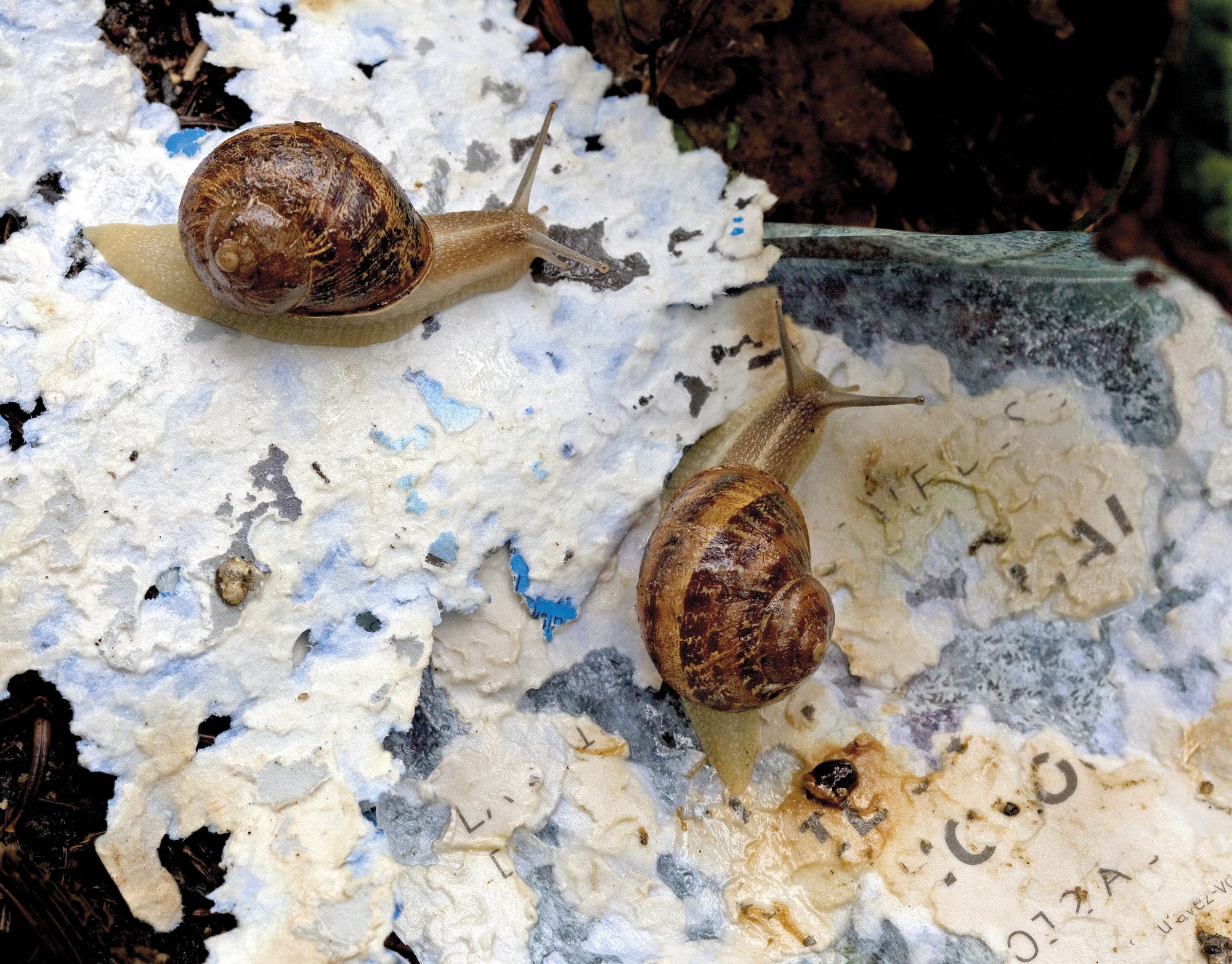
Gastropoda © Joan Fontcuberta

Joan Fontcuberta, you are the guest of honor at the 2023 Rencontres de la Jeune Photographie Internationale in Niort. Is it important to you to support younger generations of artists?

I have been teaching all my life. Teaching is an important part of my creative work. I am as much an artist as a teacher. When I create, I want to transmit, and finally, I teach to learn. I am constantly in contact with different worlds with which I make new connections with my own work. It is in dialogue with the new generations that I can bring my ideas to life.

In Monsters, your exhibition featured at the Villa Pérochon, you use artificial intelligence. How do you envision its role in the artistic field?

It is a new tool that will allow a wider range of possibilities of expression. 

“The old world is dying, and the new world struggles to be born: now is the time of monsters.” Can you explain this quote from Antonio Gramsci that accompanies your exhibition?

For Gramsci, the revolutionary horizon is shifted to the world of the image. Here, analog photography is in transition to a new visual order. Algorithms are the monstrosities. 

Is it possible to tame these monsters? 

We must try to make the transition from a natural stupidity to an artificial intelligence. Humans are stupid: we need prosthetics to achieve greater intelligence. Technologies such as artificial intelligence can help us, but they may not be able to do this. It is a political, philosophical, spiritual, social question… 

To rethink photography is to tame the monsters. Because photography, born during the industrial revolution, was also born with an original sin: to transmit an ideology. And I think that it is necessary to critique it. 

And the image is the origin of this critique?

The image is that which our imagination conforms to, it has a very important role. This is not an opinion, it is an observation made by anthropologists and historians. It has always been that, at the foundations of our civilization, interpretation is visual. Let’s take the transition from ape to human. In the beginning, the human communicates through gestures. He generates a sign system that can only be captured by means of the eye. Thought has a visual nature, it is the image that configures the way to organize our idea of reality.

Concerning artificial intelligence, the question of intellectual property is at the heart of the concerns, since a work created by AI is made from other works whose provenance is unknown. What do you think about this?

If we rethink photography, we must also rethink the condition of the author. We must not forget that, historically, this condition is based on the notion of capitalism: it is a question of property. So, do we envisage keeping this notion of property or do we develop an idea of sharing? 

I think that the work is much more important than the artist, but every type of technological innovation poses problems for the economy of images. In the future, image professionals will necessarily have to find new methods. What we can eventually do is slow down the arrival of these technologies, or else look for ways to adapt to this situation. But their impact is inevitable, like that of a meteorite. 
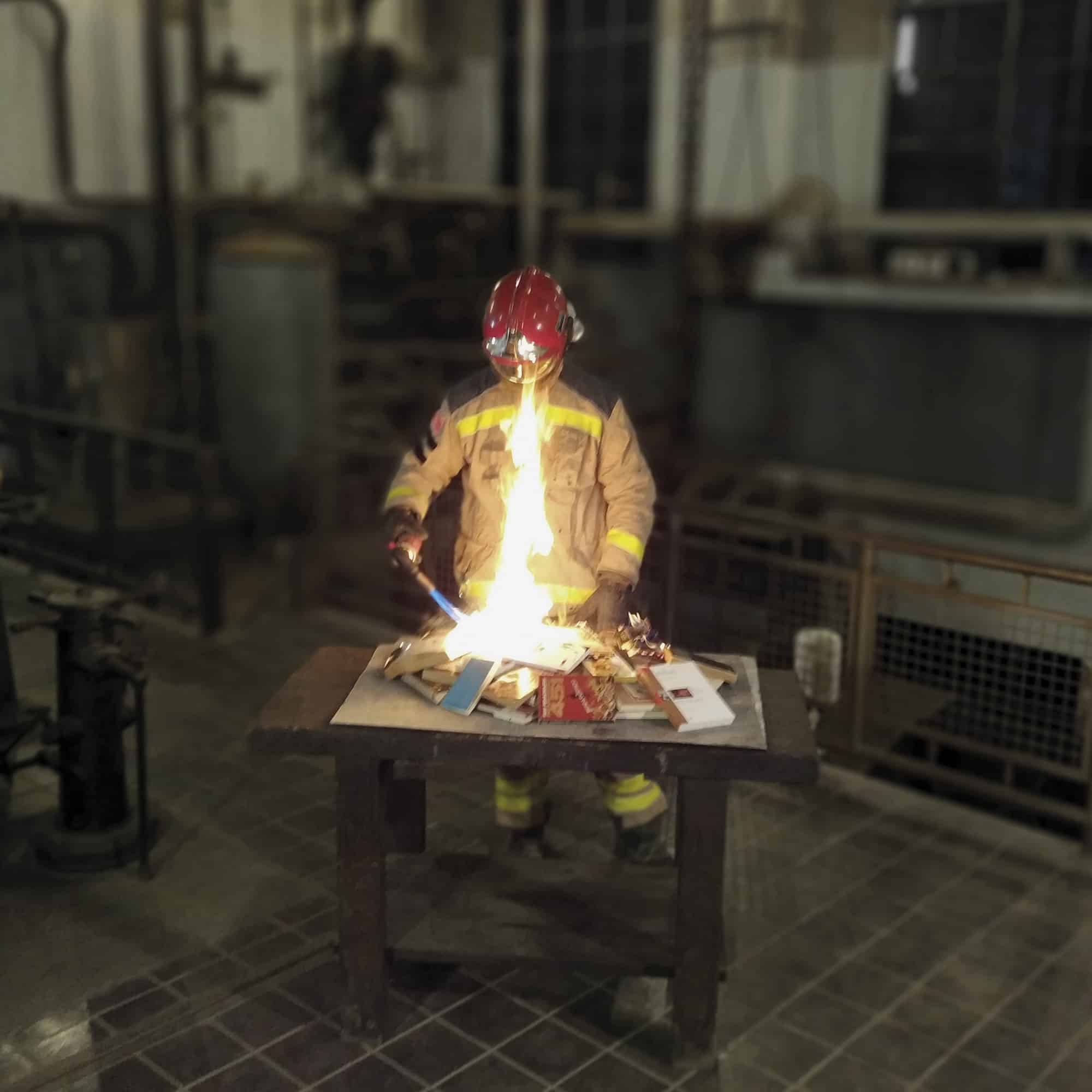
Fahrenheit © Joan Fontcuberta

What do you think photography will look like in a decade or so?

I think that, in the future, today’s categories of the image will undergo change. Painting, drawing, photography … everything will mix together. Already, with the digital camera, we juggle between photo and video. There is already a certain hybridity.  

You have said that photos are not eternal. In the future, could the image disappear to make room for the virtual?

Photography has engaged in a battle with time, but the latter has taken its revenge. First of all, the photo as a physical object is kind of a relic. In the past, it replaced the presence of a body. There was a magical, religious, and superstitious attachment to the image. In the nineteenth century, it was an archival tool. But what happens to memory when pictures can be erased? Every image is now condemned to die, just like people. In my work, I am interested in “suffering” images. They come from archives, often degraded by floods or a hostile environment. Damaged, they will soon disappear; but, above all, speak to memory which has almost disappeared.

The relationship between algorithms and memory is the opposite: they anticipate what is to come, while the photograph archives memories and freezes them. Algorithms are a regime of prediction. They are a way of traveling in time but in a different manner.
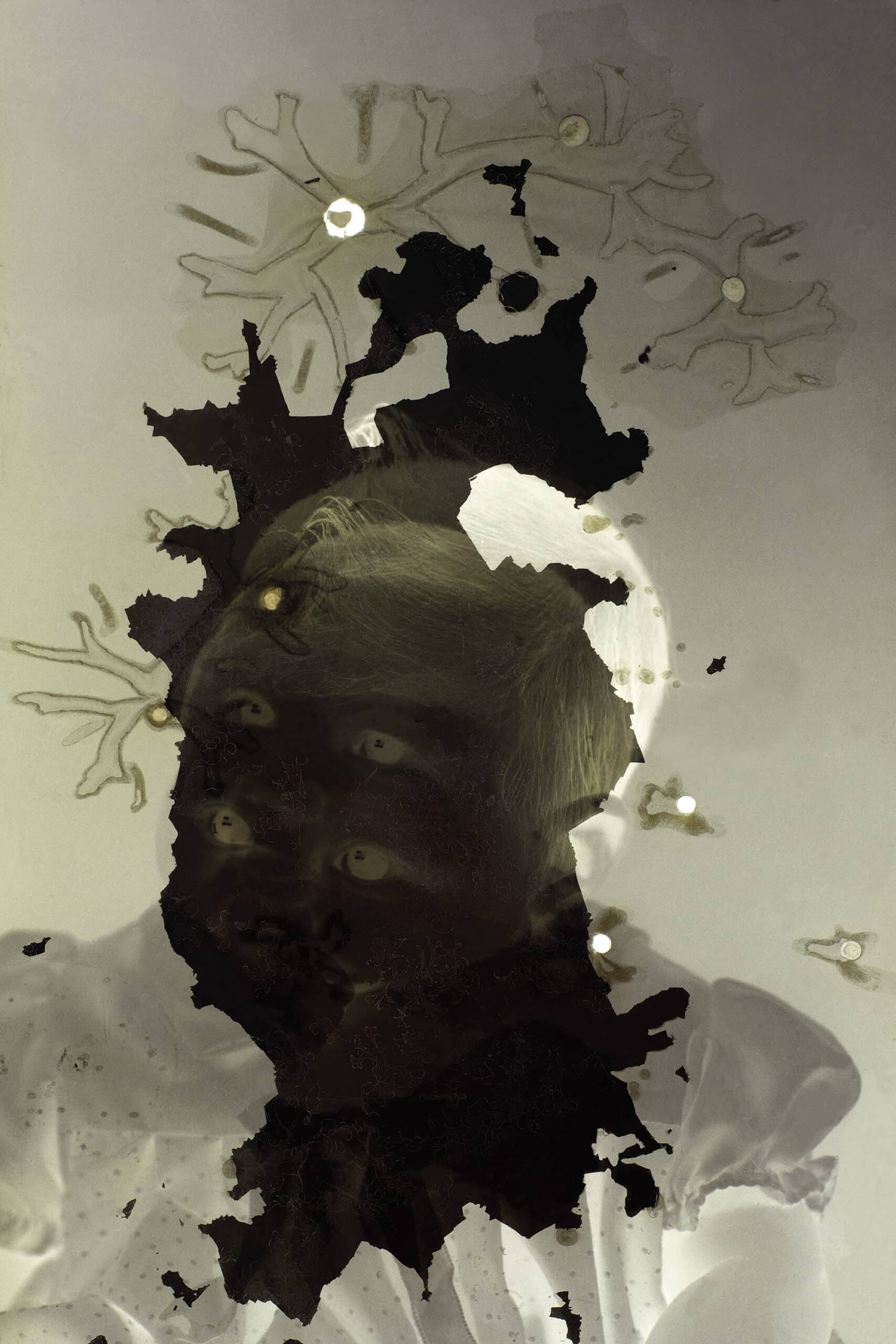
Trauma © Joan Fontcuberta

Joan Fontcuberta, Monsters. March 25 to May 27, 2023. Villa Pérochon, 64 rue Paul-François Proust, 79000 Niort, France. The exhibition is part of the Rencontres de la Jeune Photographie Internationale.

Japanese Photographer Has Taken The Cutest Pictures Of His Then 4-Year-Old Daughter (26 Pics)

Japanese Photographer Has Taken The Cutest Pictures Of His Then 4-Year-Old Daughter (26 Pics)
image

Once a photographer becomes a parent – especially to a baby daughter – he no longer has to look for a model to work with. This was once again proved by Japanese photographer Toyokazu Nagano, taking just the most adorable photos of his youngest daughter, 4-year-old Kanna. The photo series is well described by its laconic name – My Daughter Kanna – as the girl and her natural charm is just enough to fill an entire frame. Each picture is taken on the same road, with little Kanna giving all of her into each pose and mood.

Even though each picture is enhanced with some cute costumes and props, like a tiny piano, a plush panda, or a giant gelato tower, what draws you the most is how photogenic Kanna is, and what wild facial expressions she can pull off. The girl doesn’t seem to be the least bit intimidated by the camera and seems to be especially fond of making some noise.

More info: Instagram | flickr.com | Facebook | twitter.com

AI imagery goes against everything I believe photography is about

AI imagery goes against everything I believe photography is about

I recently came across a succinct description of what us photographers do… “lens-based practice”. Although, “camera-based practice” is arguably just as accurate. 

With the rise of AI, it’s going to be even more necessary to distinguish photography – i.e. image making using a camera and lens – from the frightening prospect that is AI-based image generation. This is machine learning software that simply uses a short text description to make up a picture from elements that it has absorbed from millions of tagged sample images. 

There several AI image generators (opens in new tab) available – such as Dall-E 2, Stable Diffusion, Picsart, Craiyon and Midjourney – which have varying capabilities and applications. Dall-E, for example, even allows users to specify the lens focal length and aperture in their AI-generated images… and the results have been described as “shockingly realistic”.

The results look very convincing, convincing enough that an AI-generated image – meant to look like it was taken by a camera drone – actually won a photo competition in Australia. Submitting the image was a stunt by its creator – Sydney- based company Absolutely Ai – and it came clean after the results were announced… but a point was emphatically made. As it happens, a close examination of the image would have revealed some visual anomalies which means, just for starters, competition judges will have to be a lot more alert.

More alarmingly, a spokesperson for Absolutely Ai, quoted elsewhere, said, “We didn’t need to wake up at sunrise, drive to the beach and send the drone up to capture the image. We created this image from our couch in Sydney by entering text into a computer program”. 

I don’t know about you, but frankly that appals me as it is the antithesis of everything that photography is about… namely the physical, technical and creative efforts that go into realising an idea or vision. It’s cheating on a breath- taking scale, and the potential for AI art to be deceptive or downright dishonest is immense. 

We have, of course, sown the seeds for this with our embrace of image manipulation in programs like Photoshop, but because artificial intelligence is now involved, it’s going to be a lot harder to spot the fakes. Additionally, a lot of Photoshop work is pretty obvious – and mostly always acknowledged by its authors – but an image created by AI looks more like a genuine photograph, such as you might take at sunrise on a beach after making the effort to be in the right place at the right time. 

Then there’s the little issue of copyright, which will be impossible to police because components of the image have come from everywhere and there could be hundreds of different inputs. It’s very likely most of the source images would have been plundered without their authors’ knowledge or permission. 

I remember the furore a few years ago when the now- defunct Australian Institute Of Professional Photography (AIPP) stripped a photographer of her awards and membership for, among other things, using some unattributed elements in images submitted for competition. These elements were tiny, but traceable, which is something that’s going to be much harder to do – if not impossible – with an AI-generated image. What we’re facing now is child’s play compared to those misdemeanours. 

Not surprisingly, major stock libraries are using AI-generated images to gain additional revenue from their existing libraries or making licenses available to AI art companies. However, stock libraries are potentially also victims and, for example, Getty Images is currently taking legal action in the UK against Stability AI (the owner of Stable Diffusion), citing that it unlawfully copied and processed millions of images protected by its copyright.

AI art is not going to affect photography specific to a particular event or subject matter – such as a wedding, portraits, product or sports – but for ‘generic’ imagery that’s more conceptual or thematic, it can deliver results that would otherwise take a lot of time and effort to produce. Incidentally, Midjourney – currently one of the most popular AI image generators – can create pictures that include celebrities or public figures, but others prevent it, along with inappropriate content.

AI art is problematic for professional photographers because – at least as far as public perceptions are concerned – it undermines and devalues every aspect of what we do, most specifically the creative input. One thing is certain: it’s not going to go away any time soon.

Read more

Insect Week photography awards

Insect Week photography awards
image

A pink grasshopper with a genetic mutation known as erythrism, which causes a reddish discolouration. This species, the meadow grasshopper (Pseudochorthippus parallelus), shows a wide variation in colours from greens, browns through yellow and black to pink/purple. The rarer pink-purple form occurs in females

Center for Railroad Photography & Art to Acquire ‘World-Class’ Art Collection

Center for Railroad Photography & Art to Acquire ‘World-Class’ Art Collection

By Railfan & Railroad Staff

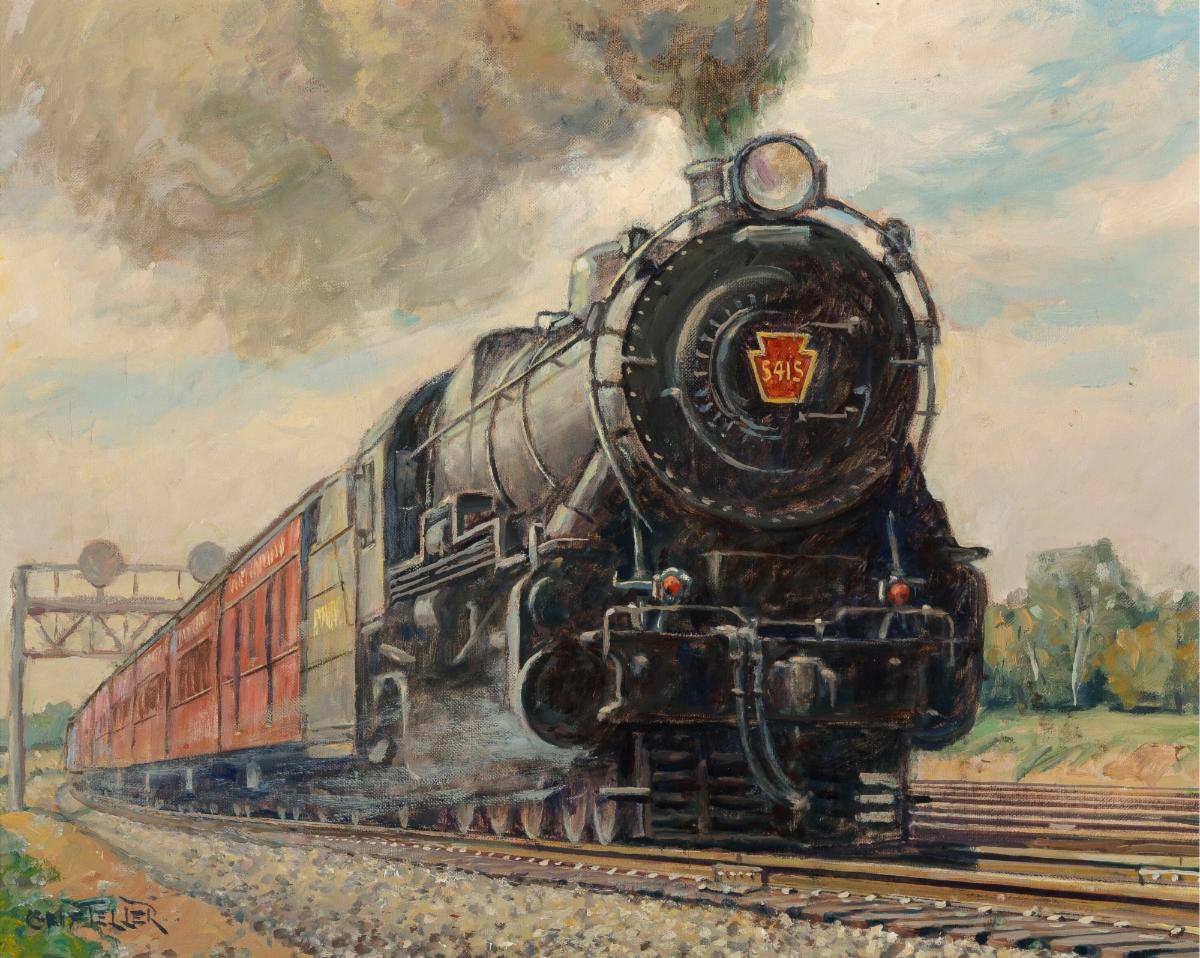
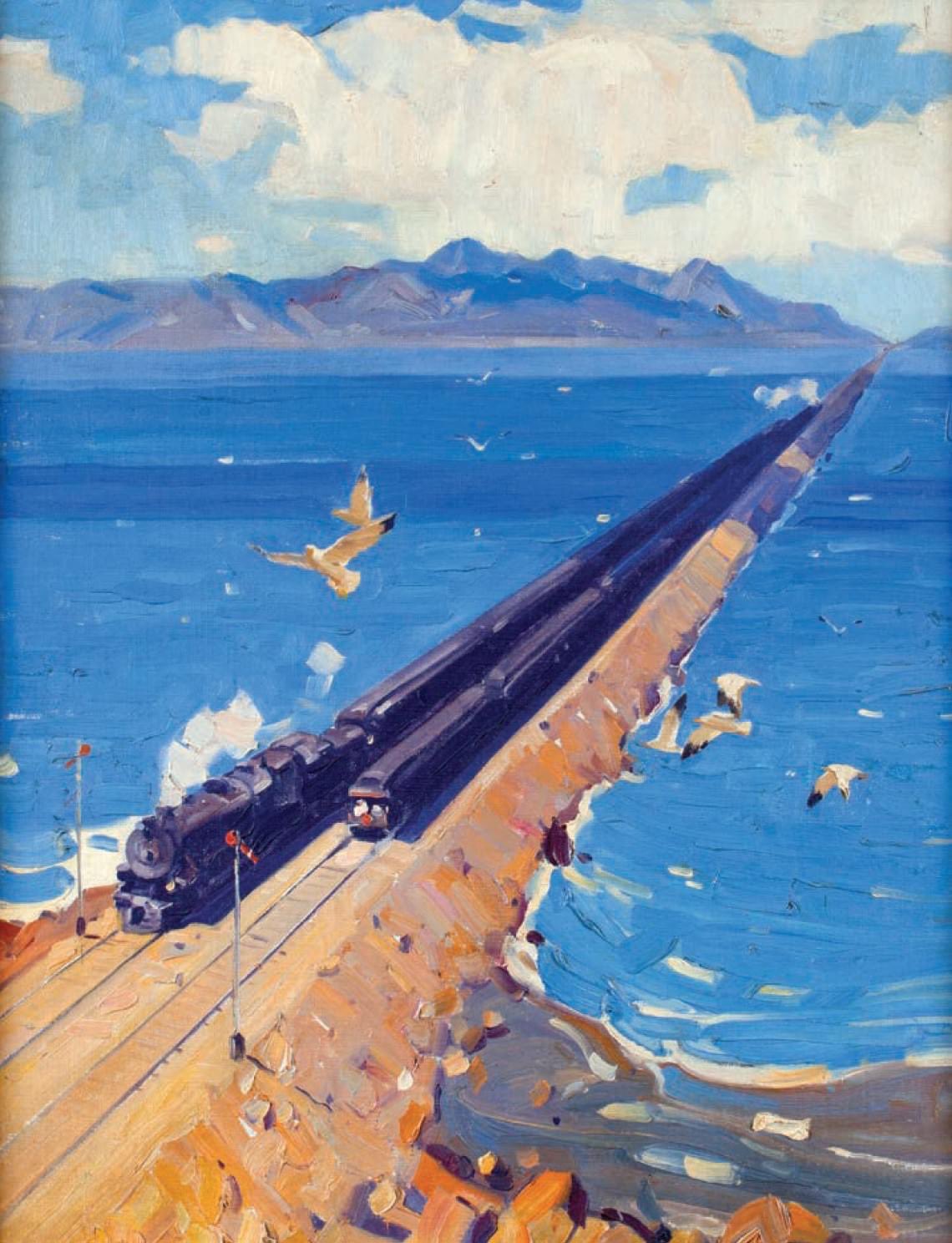
The Center for Railroad Photography & Art has announced that Peter and Christine Mosse have promised their landmark collection of railroad paintings to the non-profit dedicated to the preservation and interpretation of railroad imagery. According to the Center, the Mosse collection is “considered one of the world’s largest and finest private collections of rail-related art” and includes close to 250 original works. 

Executive Director Scott Lothes and Board Chair Bon French announced the acquisition during the Center’s annual “Conversations” conference at Lake Forest College in Illinois, on April 15. Transfer of the majority of the collection will take place years from now, at a date (or dates) to be determined by the Mosses, although some pieces may arrive sooner.

“With the single addition of the Peter and Christine Mosse Art Collection, we will go from having a modest representation of railroad paintings in our archive to a truly world-class collection,” Lothes said. “We are thrilled and humbled by their generosity and confidence.”

Peter Mosse purchased his first railroad painting around 1980 and today the priceless collection represents a sweeping variety of mediums and styles from artists worldwide. The earliest painting dates from 1843 and the most recent is dated 2022. The collection was spotlighted in Fine Art Connoisseur last summer and featured in the Fall 2015 issue of Railroad Heritage, the CRP&A’s quarterly magazine.


“The 5415” by Grif Teller. Collection of Peter and Christine Mosse.

“The CRP&A impresses me as an exceptional organization,” Mosse said, who has been a member since 2006 and has served on the Center’s board of directors since 2016. “It was the only organization I could think of whose mission aligned with what I was doing.” 

Choosing CRP&A was largely influenced by a desire to keep the collection together, he added.

“There are some works that I believe might be of interest to mainstream museums, and others that might be of interest to railroad museums,” Mosse continued, “but breaking up the collection would destroy what I view as one of its key attributes: namely its diversity across time, artistic styles, and countries of origin, unified solely by the subject.”

While the Madison, Wis.-based CRP&A doesn’t have gallery space, Lothes noted that he and the rest of the staff are eagerly considering future traveling exhibitions, which could visit art museums and other venues where the CRP&A could reach new audiences. Digital images of selected works could also be shared online, subject to copyright and the artists’ wishes.

The Center for Railroad Photography & Art was founded in 1997 to preserve and interpret significant images of railroading. It does that through exhibits, publications and conferences. For more information, visit railphoto-art.org.

“By Rail Across Great Salt Lake Overland Route” by Maurice Logan. Collection of Peter and Christine Mosse.

Griffin Museum of Photography : Rohina Hoffman : Embrace – The Eye of Photography Magazine

Griffin Museum of Photography : Rohina Hoffman : Embrace – The Eye of Photography Magazine

Isolated in the confinement of her Los Angeles home during the covid lockdown, Indian-born American artist Rohina Hoffman takes us on a metaphorical journey connecting her roots to food through the rituals of daily meals. Embrace combines two deeply personal photographic series.

In Gratitude is an homage to food and family. Created during the early days of the pandemic, it is a series of portraits of Rohina and her family holding the fresh produce they used to create their daily meals. The act of creating photographs and preparing food became an almost meditative practice, offering structure and grounding during unsettling times. The work is “seasoned” with Hoffman’s poetry.

Generation 1.75 is a visual memoir that explores identity, belonging, and the complexities of acculturation. Born in India in 1968, Rohina was raised by her grandparents until age 5 when she was reunited with her parents in America. Her essay in the book, ‘Not All Peacocks are Blue’, published in English and translated into Hindi, provides a deeper look into the photographer’s background from her early childhood through the present and serves as a bridge between the two projects.

The Griffin will also host an online talk with Rohina on Wednesday, May 17 at 7pm EST.

The book Embrace also includes essays by Paula Tognarelli, the former Executive Director of the Griffin Museum of Photography, and Geeta Kothari, senior editor of the Kenyon Review. The book is designed by Caleb Cain Marcus, head of the design studio Luminosity Lab.

About the Artist:
Rohina Hoffman is an Indian-born American artist whose narrative work focuses on themes of identity, home, adolescence, and the female experience. Raised in New Jersey but now residing in California, Rohina received her BS in Neuroscience and MD both from Brown University. She also studied photography at the Rhode Island School of Design. Rohina published her first monograph Hair Stories with Damiani Editore (February 2019) accompanied by a solo exhibition at Brown University’s Alpert Medical School. Hair Stories is held in many public collections and university libraries. Her photographs have been exhibited widely in juried shows and in 2021 she was the winner of the Purchase Award with Atlanta Photography Group and several of her prints were acquired by the High Museum of Art in Atlanta, Georgia.

For more information about Rohina Hoffman visit her website: https://rohinahoffman.com where you can order a signed copy of Embrace.

Exhibition
Rohina Hoffman : Embrace
April 21-May 28, 2023
The Griffin Museum of Photography
67 Shore Rd
Winchester, MA 01890
https://griffinmuseum.org/

Book Details:
Rohina Hoffman : Embrace
Published by Schilt Publishing
Format: 8 x 0.8 x 10.2 inches.
144 pp with approx 50 photos
ISBN 9789053309544
$60 | €60 | £55

https://www.schiltpublishing.com/shop/books/new-releases/embrace/

Photographer Allen Morris Plays with Light

Photographer Allen Morris Plays with Light

Meet the 2023 Hal Prize photography judge

Allen Morris. Photo by Skott Chandler.

We are only days away from the opening of the 2023 Hal Prize, and this year, we’ve been working with our partners – Write On, Door County and Peninsula School of Art – to create what we hope will be one of the best contest years yet.

Each month leading up to the contest’s close, we’ll introduce you to our four judges: Toya Wolfe, fiction; Edward McPherson, nonfiction; Sean Hill, poetry; and Allen Morris, photography, who is the featured judge this week. 

Morris is a photographic artist and an assistant professor at Black Hills State University in South Dakota. His bodies of work examine the relationship between humans and their environments, with a particular interest in the impact they have on the creation and evolution of human identity on social, personal and political levels.

What follows is an excerpt from a recent Door County Pulse podcast episode with Morris that has been condensed and edited for clarity. Listen to the full episode below.

Grace Johnson (GJ): Your style is described as “alternative processes,” which is different from what we have usually had in the photography category. Can you explain that style?

Allen Morris (AM): I have been a certified photo nerd for a very long time. One of the things that I think is really amazing about being a photographer is that, no matter what approach we take to the medium – whether we’re shooting editorial photos or more fine-art work – we’re kind of wizards, and we get to manipulate things with chemistry and light. 

In contemporary-art circles, it’s become this sort of space in photography where you don’t necessarily have to make printed images anymore. You can expand to light-based manipulation onto sculptures or drawings or paintings. That’s kind of in my wheelhouse these days.

GJ: Has there been anything that you’ve discovered along the way that has really stuck with you – something that you have wanted to try to get into?

AM: I think, for me, the world of photography is so wide open, and I get super excited about any aspect of it. I’m so happy to do any workshop or any class about any facet. But I think what really excites me is when students start to see and experience the photograph outside of the frame – whether that’s the printed frame or the viewfinder frame – and start to really think about not necessarily what a photograph is, or has been, but what it can be.

GJ: Do you have any advice for people entering the Hal Prize competition in the photography category?

AM: I think any opportunity that we have as self-described artists, or certified and pedigreed artists, to get our work in front of a jury or our peers – and fresh eyes – is absolutely worth its weight in gold. There’s something really amazing that happens in that process, when you put your work out into the world. 

Give it a try, and in the best-case scenario, you might win a prize. Worst-case scenario, you’ve got the experience of submitting work and working within those guidelines that are so common for galleries and competitions and those sorts of venues. I think it’s always worth a shot.

The 2023 Hal Prize competition opens May 1. Submissions are accepted in fiction, nonfiction, poetry and photography. Learn more about the contest and how to submit at thehalprize.com.

Namibia: Tips for a Photography Road Trip Across Southern Africa |

Namibia: Tips for a Photography Road Trip Across Southern Africa |

Preparation is key when it comes to planning a trip to Namibia — a true land of extremes that can only be fairly described using hyperbole. As beautiful as Namibia is, to get the most out of your trip, you need to be prepared and well organized. Here are my tips for bringing back the best wildlife and landscape photographs from a trip across Southern Africa. 

Drive, Don’t Fly

Most flights into Namibia land in Windhoek, the capital. There are a handful of direct flights from Europe, or you can fly through Johannesburg. By choosing to fly through Johannesburg, you can rent a car in South Africa and drive to Namibia. It’s a long journey — a minimum of two full days — but you’ll get the chance to see the wonders of southern Namibia, which is an area that doesn’t make many itineraries.

Namibia is an experience enhanced by self-drive. If you fly from one place to the next, you’ll miss the spirit and scope of the land. Namibia is one of the most sparsely populated countries in the world, and the distances are vast. To make the most of your time, a detailed itinerary is vital to determining how long you’re going to spend on the road.

If you’re staying in any of the off-the-beaten-track lodges along the Hoanib Valley or Skeleton Coast, a 4×4 is critical. You will have to navigate riverbeds, salt roads, and sand roads, some very deep. Visiting the shipwrecks on the Skeleton Coast requires driving on deserted beaches. There, you’ll need a vehicle with high clearance and robust tires. Even if you’re not heading into remote areas, a 4×4 is encouraged; the storms we drove through in Etosha, the country’s prime national park, would have pushed a sedan or saloon car to its very limits.

Nobody wants to get stuck in the muck. You can’t really get out for a push in places like this.

If you’re going to Sossusvlei, particularly Dead Vlei, for sunrise, you’ll need to drive yourself or hire a guide. The tour buses don’t leave the main car park until after sunrise. The trail beyond the main car park to get to Dead Vlei is best described as a sandbox, not a road, so make sure you’re comfortable driving a 4×4 and understand how to drive in sand. If you deflate your tires a little, you’ll get better grip, and it’s less likely you’ll dig yourself down to the axles. Once you’ve deflated your tires for the sand, make sure you have a pump to inflate your tires again for when you’re heading back out on the tarmac.

Finally, don’t rely on picking up a map in Namibia or on accessing the internet while you’re on the road. The country is not as well signposted as you might think, and cellular service is spotty at best. A lot of the shipwrecks along the Skeleton Coast are very difficult to find. Even online maps won’t point you to particular wrecks. So, bring a map that you’ve marked up or take screenshots of online maps showing verified satellite views of the ships you’re looking for.

Camera Equipment

Lenses

Like much of Southern Africa, Namibia’s wildlife viewing is based around waterholes. In Etosha, many waterholes are positioned far from the trail, and since you can’t drive off the track, at least a 300mm lens is critical to capture wildlife portraits. If you have the budget, consider bringing an extender as well. I took a Canon 300mm or 400mm f/2.8L alongside a 1.4x III extender. Combining this with the megapixel count of the new Canon mirrorless well let you crop in tight for portraits of distant animals, such as this tired cheetah.

If you are bringing a 300mm or longer lens, don’t try to handhold your shots. Brace yourself on something solid — a bean bag will help you to balance large lenses on your vehicle’s window or door frame.

Rain Covers

Be sure to bring rain covers to protect your cameras from the rain and from the sand.

Those fine particles aren’t friends to the electronics in your equipment. Rain covers will also help if you end up in a storm, which is likely during the rainy season. See my reviews of rain covers, here and here.

Intervalometer

One of Africa’s largest reserves, the NamibRand Nature Reserve, lies in a designated dark sky preserve. Conditions here demand a tripod and intervalometer to get steady and dynamic time-lapse shots. Newer cameras, again, have built-in intervalometers, which make packing much easier.

Drones

Read up on the rules if you’re going to bring a drone. All drones must be registered with the Namibian Civil Aviation Authority and certain hotspots, such as Dead Vlei, have very restrictive rules. I’d love to have had a bird’s-eye view of the dunes and dead camel thorn trees, but you need to enjoy these places without breaking the rules. This shot was taken over the Salt Works in Walvis Bay, with permission of the landowner. 

Sound

Consider bringing a sound recorder if you have room in your bag. The sounds of the massive seal colony and crashing waves at Cape Cross or the singing dunes at Sossusvlei are things you’re going to want to remember. If you’re shooting video, it’s certainly worth getting some properly recorded audio to overlay your images. Namibia is notoriously windy, so splurge on a DeadCat windshield; this will make all the difference by deadening the sound of the blow.

Camera Settings

Wildlife is always much quicker than it appears. Even slow-plodding elephants cover much more ground than you’d expect, never mind a quick-walking cheetah.

Double check your shutter speed; you should be shooting moving animals at fast speeds, around 1/1,600th of a second. Anything slower is going to drastically reduce your keeper rate. Likewise, consider stopping down. I realize that soft bokeh is all the rage, but at a shallow depth of field like f/2.8, a cat’s eyes will drift in and out of focus as they breathe. Consider stopping down to ensure tack focus. If you’re able, get closer to eye level through a window instead of a pop-up roof. This will help the background blur out even if your aperture is stopped down a little. 

Planning and Itineraries

I know that we all try to cram as much in as possible, but consider spending more than one day at each location, as this will give you time to scout out your best shots. For example, I’d suggest getting two permits for Kolmanskop, the ghost town that is now being taken over by the dunes. Wandering around at sunrise or sunset will be difficult if you haven’t scouted in daylight and so don’t know where you’re going.

Likewise, if you have the opportunity, try to visit these incredible locations at different times of the day. Sossusvlei, for instance, deserves a visit in the early morning and the late afternoon. The turn of a few hours makes it feel like a totally different place.

What Images to Look For

Namibia is home to many uniquely adapted desert animals, such as desert adapted elephant, lion, and giraffe.

Try to capture the animals in their environment to differentiate your images from those taken in other spots on the continent.

As noted, and unlike east Africa, Namibia’s wildlife viewing is centered around waterholes. If you don’t immediately see something, resist the urge to drive from hole to hole, be patient. From my perspective, this is one of the most important skills related to wildlife photography. The animals need to drink, and eventually, they will come to the holes for water. Driving in circles means you’ll spend time on the trails when you could be setting up in wait for the animals, and you could miss your opportunity. If you can, talk to a local expert about which holes are seeing the most action during your visit. It’s also not a bad idea to consider hiring a wildlife guide or spotter to make sure you’re at the right locations.

While driving, consider stopping to take images of signs and roadside attractions. These b-roll images will help to tell the story of your trip as much as a prized lion or elephant shot.

Editing Midday Sun

When you get to the editing stage, try out a black and white edit to accentuate textures. It’s always great to shoot in the hours around sunrise and sunset, but you’re still likely to be out midday. Sure, the landscape and wildlife are colourful, but you might be surprised at what the sun’s strong contrast can illuminate in black and white.

A Few Notes on Namibia’s Fragility

Namibia’s most stark and beautiful places are fragile, so consider your impact.

  • Stay on the roads or approved tracks to avoid destroying lichen that could be thousands of years old.
  • The trees at Dead Vlei aren’t props. Don’t touch or lean on them; IG is full of fools doing this. At 600+ years old, they will break.  
  • Don’t graffiti or leave marks in the ghost towns: these places aren’t playgrounds. Respect the environment as it is, without shoveling or throwing sand about to get “the shot.” Leave these fragile places as you found them. 
  • Finally, be mindful of where you stop to get out. Even the desert has lions and other dangerous wildlife.

All images provided by let us go photo.

The Best Camera For Photography And Videography

The Best Camera For Photography And Videography
image

SLR Lounge helps over 1.5 million photographers master their craft. Real world education & resources from the most successful wedding photography studios in the world.


Watch anywhere
Learn online, anywhere, anytime.


Access Tutorials & Resources
Exclusive content and more!


Submit to awards
Have your work recognized.


Join the Conversation
Ask questions, seek inspiration
and contribute to our community.

Photographer’s decade-long, 600,000 mile journey shows indigenous life in new book

NPR’s Melissa Block talks with Matika Wilbur about her new book Project 562: Changing the Way We See Native America.


MELISSA BLOCK, HOST:

Say hello to Matika Wilbur.

MATIKA WILBUR: Oh, hello. Thank you so much. I’m so happy to be here.

BLOCK: She’s a photographer based in Seattle.

WILBUR: I’m from the Swinomish and Tulalip Tribes here in Washington State. My Indian name is Tsa-Tsiq. It means she who teaches.

BLOCK: It’s a fitting name. About 10 years ago, Wilbur set out to photograph members of all of the then 562 federally recognized Native American tribes in the U.S. So with Kickstarter backing, she spent the next decade traveling 600,000 miles on her quest. Here are just a few voices of those she met along the way.

(SOUNDBITE OF MONTAGE)

AUTUMN HARRY: (Non-English language spoken). My name is Autumn Harry. I’m a member of the Pyramid Lake Paiute Tribe here in northern Nevada. And I am Paiute and Navajo.

ETHAN PETTICREW: Hello, my name is Ethan, and my Unangax name is Qanglaagix. And I am Unangax from Alaska.

ADRIENNE KEENE: (Non-English language spoken). Hi, everyone. This is Adrienne Keene. I am a citizen of the Cherokee Nation, and I come from California.

BLOCK: Matika Wilbur’s portraits of Native elders and kids, rappers, professors, artists and activists, and her interviews with them are now published in a huge book titled “Project 562: Changing The Way We See Native America.” Wilbur calls her project narrative correction work aimed at countering insipid and toxic stereotypes of Native Americans.

WILBUR: When I was talking to folks, I was aiming to understand – what are some of the true stories about your people that you want people to know? And also, you know, we talked about the effects of colonization and assimilation, termination, relocation, the experience of boarding schools, and then, of course, the best parts – how we’ve healed from that and what our people are doing to move forward and to develop healthy and strong and thriving indigenous nations in their own community.

BLOCK: Matika Wilbur’s photographs are stunning. We see two world champion hoop dancers, their bright regalia popping against a threatening sky, a woman peering out impishly through her fingers, inked with traditional Inupiaq tattoos and a comedy troupe, the 1491s, standing in profile in a line. We see just their dark silhouettes.

WILBUR: The 1491s are these five really, like, hilarious and brilliant men – Bobby Wilson, Ryan RedCorn, Sterlin Harjo, Migs (ph) – Migizi Pensoneau – and Dallas Goldtooth. You know, in the image, Bobby is picking his nose, and Sterlin is strangling Migs, and Ryan is tickling Sterlin, and Dallas wasn’t there that day (laughter). But, you know, I even love that, like, Bobby’s braid is sticking straight up at the end. And the 1491s happened when the internet first happened. And honestly, for me, watching the 1491s put out content was so meaningful for me because there was not a lot of Native humor that was accessible to us. Our humor is so prevalent in our communities, you know? It’s like joy goes hand in hand with justice. So if you come to one of our doings, there will be laughter and loud laughter.

BLOCK: Yeah. I’m thinking about generational divides. And one of the things that an elder, Ralph Burns, said to you – he’s been very active, I understand, trying to preserve Paiute culture. He said, sometimes I feel I should give up because kids seem not to really care, which has got to be such a daunting prospect for people of his generation.

WILBUR: Yeah. Ralph Burns is a member of the Pyramid Lake Paiute Tribe, where I photographed him in front of a rock formation known as Stone Mother in the photo, an incredibly important figure. The dine people call her White Shell Woman. People from several different tribes throughout the territory, they make these pilgrimage to that place to honor the Stone Mother or White Shell Woman. And so for me, I felt really, really deeply honored to get to spend time with Ralph. And it did make me very sad to hear him talk about the difficulty of passing on his cultural traditions to young people and to his community. And I think it’s a common thread throughout many different communities, not just Native people, you know, like, elders saying – these young people, you know (laughter)?

BLOCK: Yeah, kids these days. Yeah, yeah.

WILBUR: Kids these days, you know? And I certainly can remember my grandma saying that about me, you know? So – and actually, you know what? When I look back on it – because Ralph has gone on now to the spirit world. And so I feel a little sad right now in this moment talking about him. And I hope that he was able to find somebody that would listen, and I wish that I would have been a better listener when my grandma was still alive.

BLOCK: Well, your book, the project, is dedicated to your young daughter, Alma Bee, and there’s an image of her on the dedication page. She looks to be really young. She may be 1 in this photo. Can you describe the photo, what she’s wearing, where she is?

WILBUR: Before the book begins, there’s the dedication page, and it says – for Alma Bee, may your children hear and breathe the words of our indigenous ancestors, and may we all be so lucky to know an indigenous future. And Alma is standing in a place that’s very significant to us on our traditional homelands here in Tulalip, but it’s overlooking and pointing towards Skagit Bay with Swinomish in the background. And so, you know, I’m Swinomish and Tulalip. Alma is Swinomish and Tulalip, and so I wanted to take the photo somewhere where we represented both of our communities. She’s wearing a traditional cedar headband that my Auntie Judy made for her. She has on a ribbon skirt. She’s wearing dentalium. She has on a little kokum, a little grandma scarf. But yeah, she’s just so precious in that little photo.

BLOCK: And when you talk to her – I mean, she is very young, but when you talk to her about this project and what your hopes are for her, what do you think she takes from that?

WILBUR: Well, she’s 3 at the moment. But, you know, when I talk about an indigenous future, I’m talking about imagining a new world, a modern world that celebrates and uplifts our indigenous intelligence. And what would it mean for our children to know our languages and to incorporate that into their everyday lives? What would it look like for my baby, for Alma Bee, if she was able to be raised with a pedagogy that our cultural traditions, our belief systems, our value systems are incorporated into each of the lesson plans? You know, how profound would that be? And hopefully, you know, Alma will not have to carry the same shame, you know, that my grandmother had to carry for being a Native woman. Hopefully, she’ll never see signs that say – no Indians or dogs allowed. Hopefully, she won’t feel that – those feelings that my grandmother felt, that my mother felt and that even I felt. You know, like, what if she doesn’t know that? What if she’s free of that? And I have to believe that it’s possible for her.

BLOCK: I’ve been talking with Matika Wilbur. Her book of photographs and interviews is “Project 562: Changing The Way We See Native America.” Matika, thank you so much.

WILBUR: Oh, yeah. Thank you so much for having me, (non-English language spoken). Thank you, relatives, for letting me share with you today.

(SOUNDBITE OF MUSIC)

Copyright © 2023 NPR. All rights reserved. Visit our website terms of use and permissions pages at www.npr.org for further information.

NPR transcripts are created on a rush deadline by an NPR contractor. This text may not be in its final form and may be updated or revised in the future. Accuracy and availability may vary. The authoritative record of NPR’s programming is the audio record.