Photography

Kareena Kapoor turns photographer for Saif Ali Khan at home: ‘Why so handsome?’

Kareena Kapoor turns photographer for Saif Ali Khan at home: ‘Why so handsome?’
Apr 26, 2023 07:10 PM IST

Kareena Kapoor penned a short and sweet appreciation note for Saif Ali Khan. It also captures a part of their house.

Actor Kareena Kapoor is making use of her photography skills for her husband Saif Ali Khan. Seemingly the couple was chilling on the rooftop of their house when Kareena captured Saif while smiling at his best. She treated her Instagram fans to the same photo and called Saif ‘handsome’. Also read: When Kareena Kapoor was told ‘itna mat khao’ during pregnancy

Kareena Kapoor shared a photo of Saif Ali Khan.

Kareena Kapoor shared a photo of Saif Ali Khan.

The photo featured Saif smiling while sitting by the poolside. He wore a black T-shirt with green pants. It also captured a corner of their rooftop area which comes with a lavish pool, and lots of indoor plants. Sharing the photo, Kareena wrote in the caption, “Why so handsome?” with lots of loved-up emojis.

Saif Ali Khan cannot stop smiling as he turns muse for Kareena Kapoor.

Kareena keeps sharing pictures from her everyday life on her Instagram account. Kareena and Saif Ali Khan got married in 2012 after years of dating. Saif was previously married to Amrita Singh and also shares two kids–Ibrahim Ali Khan and Sara Ali Khan with the Kalyug actor.

After tying the knot with Kareena, Saif embraced fatherhood with their two sons–Taimur and Jeh. While the couple welcomed Taimur in 2016, Jeh was born in 2021. Only a few days ago, Kareena had posted a cropped photo of Jeh sitting on the floor. She said her weekend breakfast was served to her by her younger son Jehangir aka Jeh.

The photo had a plate of poha (snacks) kept on the floor next to a cup of tea and bowls of coriander sauce, and a piece of lemon. Jeh sat near the breakfast platter and served the sauce on the plate. The little one wore a striped white and blue T-shirt and grey shorts. Kareena captioned the photo, “Sunday breakfast is served by my Jeh baba (red heart emoji) @rujuta.diwekar.”

Kareena has now started filming for her next film, The Crew. It also has Kriti Sanon, Diljit Dosanjh, and Tabu. Directed by Rajesh Krishnan, the film is a story of three women.

Besides The Crew, she also has Sujoy Ghosh’s upcoming film, based on the book The Devotion Of Suspect X, with Vijay Varma and Jaideep Ahlawat in key roles. She is also the lead actor of Hansal Mehta’s next untitled film.

Get more updates from Bollywood, Hollywood, Musicand Web Seriesalong with Latest Entertainment Newsat Hindustan Times.


  • ABOUT THE AUTHOR


    Dedicated professionals who write about cinema and television in all their vibrancy. Expect views, reviews and news.

Shooting cannons and rescuing horses: Wednesday’s best photos

Shooting cannons and rescuing horses: Wednesday’s best photos
image

An Indigenous man from the Xukuru tribe wears a towel that features a photo of Brazil’s president, Luiz Inácio Lula da Silva, during a protest by the Terra Livre camp, which is calling for the demarcation of land and to defend cultural rights

Niort Celebrates Emerging and International Photography

Niort Celebrates Emerging and International Photography

For twenty-eight years, the Rencontres de la Jeune Photographie Internationale has extended an invitation to eight (sometimes seven) young people and hosted them at the Fort Foucault, an artists’ residence in the city of Niort. When the festival was launched in 1994, the guest photographers worked with photochemical film and applications were sent by mail. The general idea, however, was already the same: to offer time and place dedicated exclusively to photographic creation. Patrick Delat, artistic director of the Rencontres, sums up the event as “a sort of creative laboratory, all in a spirit of goodwill.”

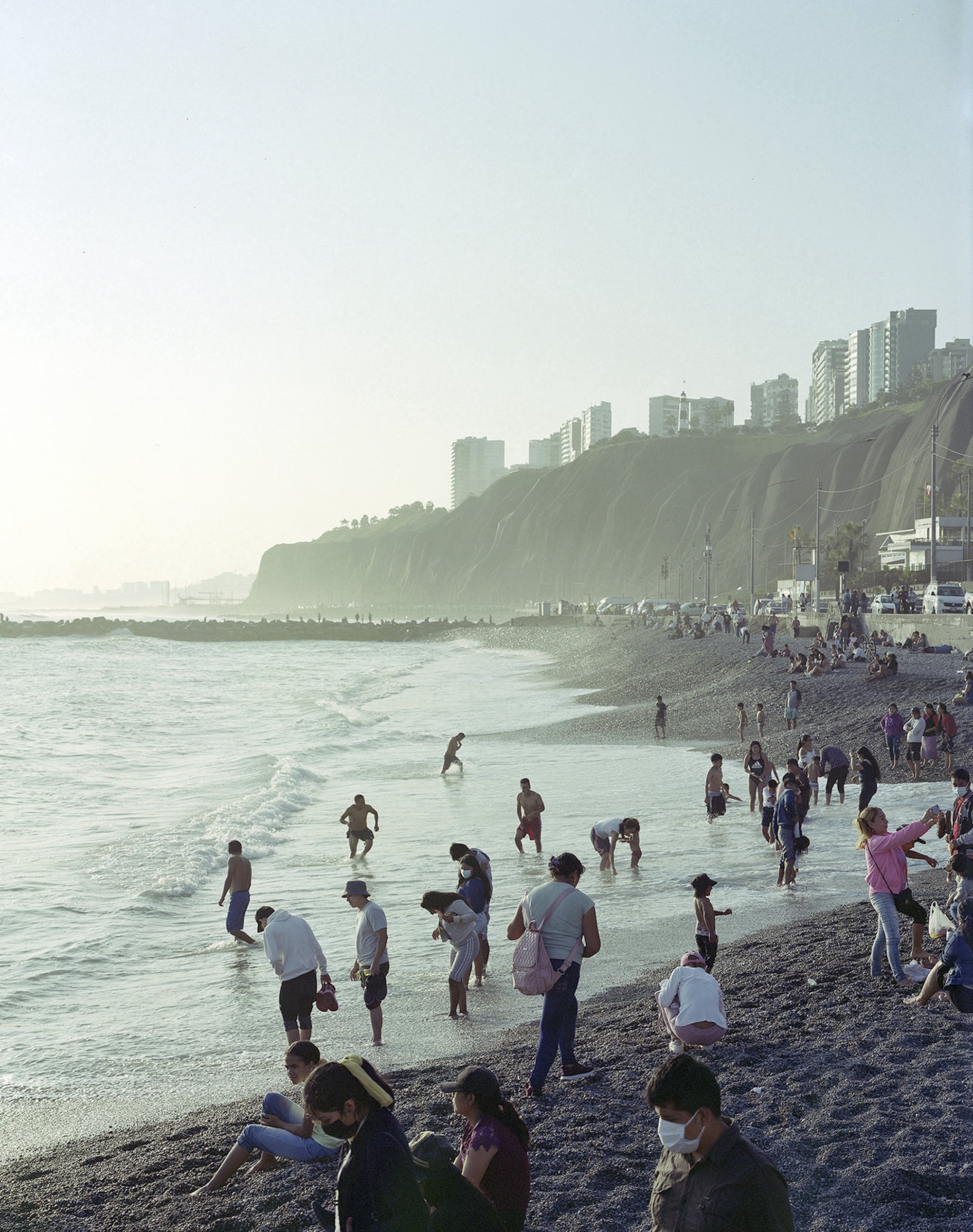
© Victor Manuel Gamarra Goicochea

“Every year, I put together a program that allows the general public to discover all facets of photography, whether it be photojournalism, as with Philip Blenkinsop; classic analog photography, as with Descamps or Françoise Huguier; or visual arts, as with Corinne Mercadier,” says Delat. 

This year, Joan Fontcuberta is the guest of honor of the Rencontres. The Spanish artist occupies the Villa Perochon with his exhibition Monsters. A true “image recycler,” he recovers “orphaned” images from archives and puts them into dialogue with others, produced by artificial intelligence. Fontcuberta, who is also the sponsor of the 2023 residency, mentors the seven young artists-in-residence in their creative process.

Time to experiment

The Rencontres are organized in two phases. From March 25 to April 14, the Médiathèque Pierre-Moinot exhibited the works of the 2023 guest artists which they had submitted in their applications. Following fifteen days of creation, the first exhibition dedicated to the earlier works of the seven residents is replaced with the work they completed during their residency. The new works are now on view until May 27.

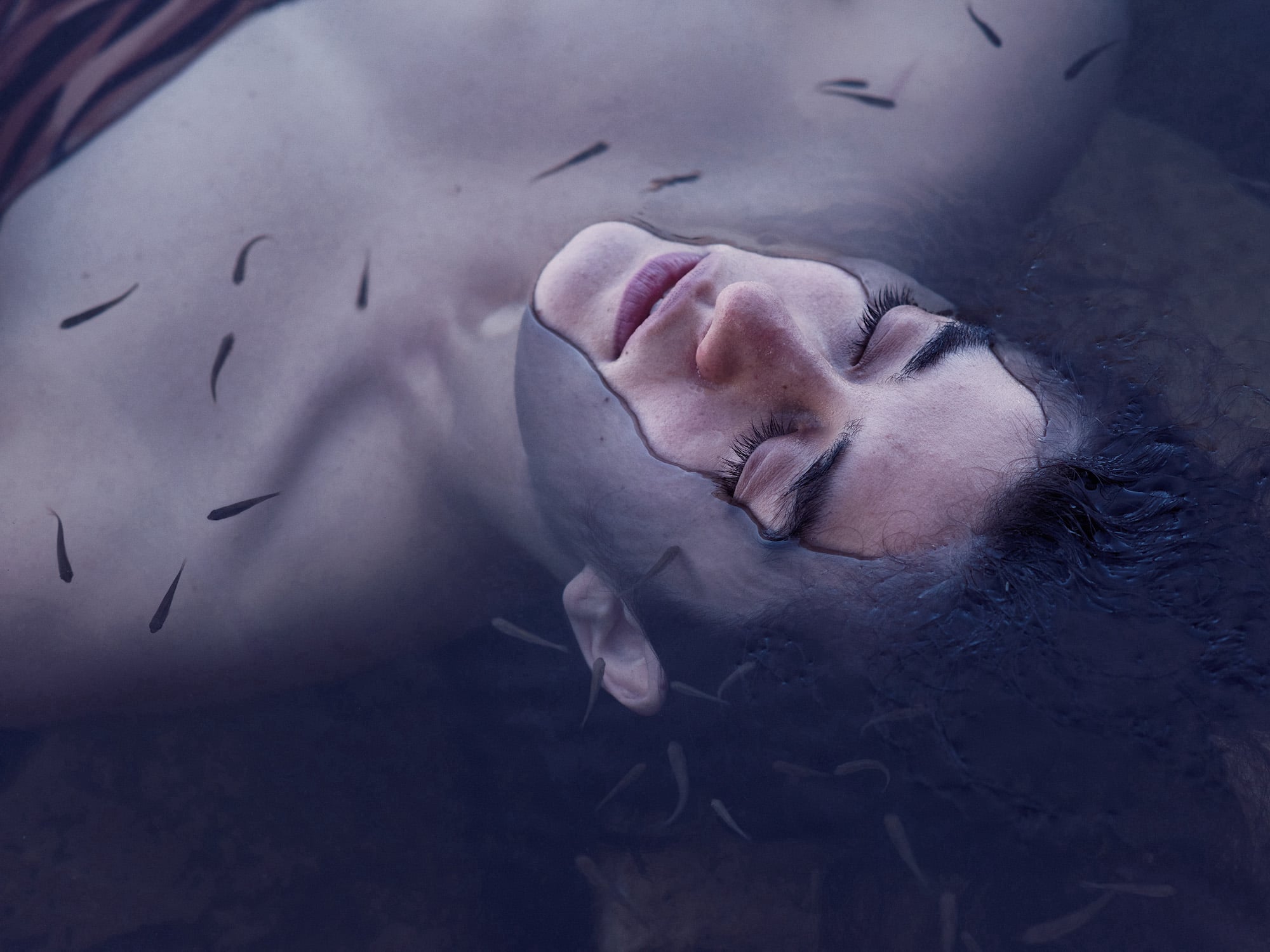
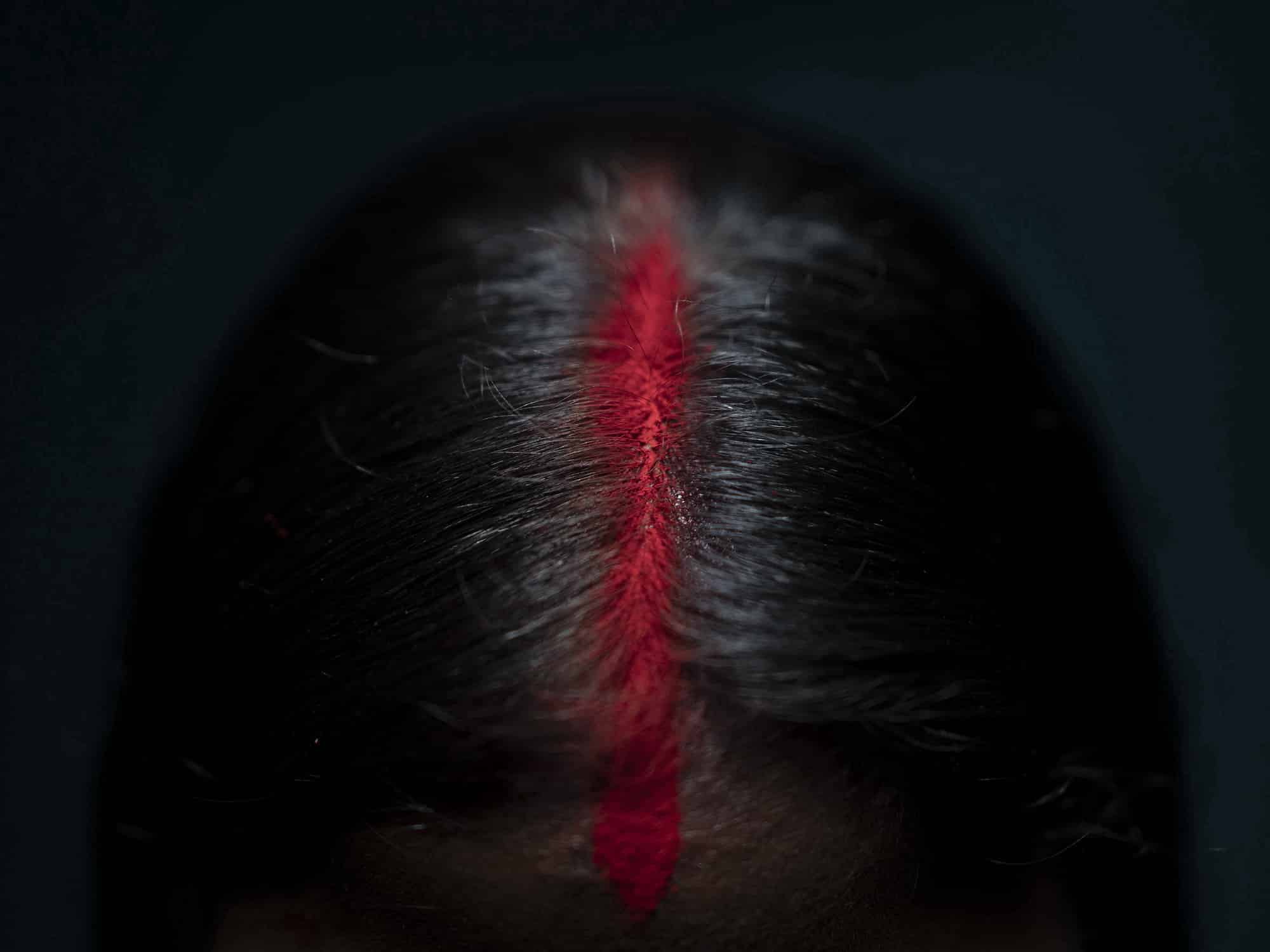
The 2023 residency offers a very varied selection in terms of creation. Representing France, Romy Alizée takes a feminist look at sexuality in her erotic, transgressive, black-and-white prints. Chloé Milos Azzopardi, through her almost supernatural pictures, questions our relationship with the natural world, between domination and servitude.

Autoportrait avec Celio, 2020 © Romy Alizée
Self portrait with Celio, 2020 © Romy Alizée
© Chloé Azzopardi
© Chloé Azzopardi
© Chloé Azzopardi
© Chloé Azzopardi

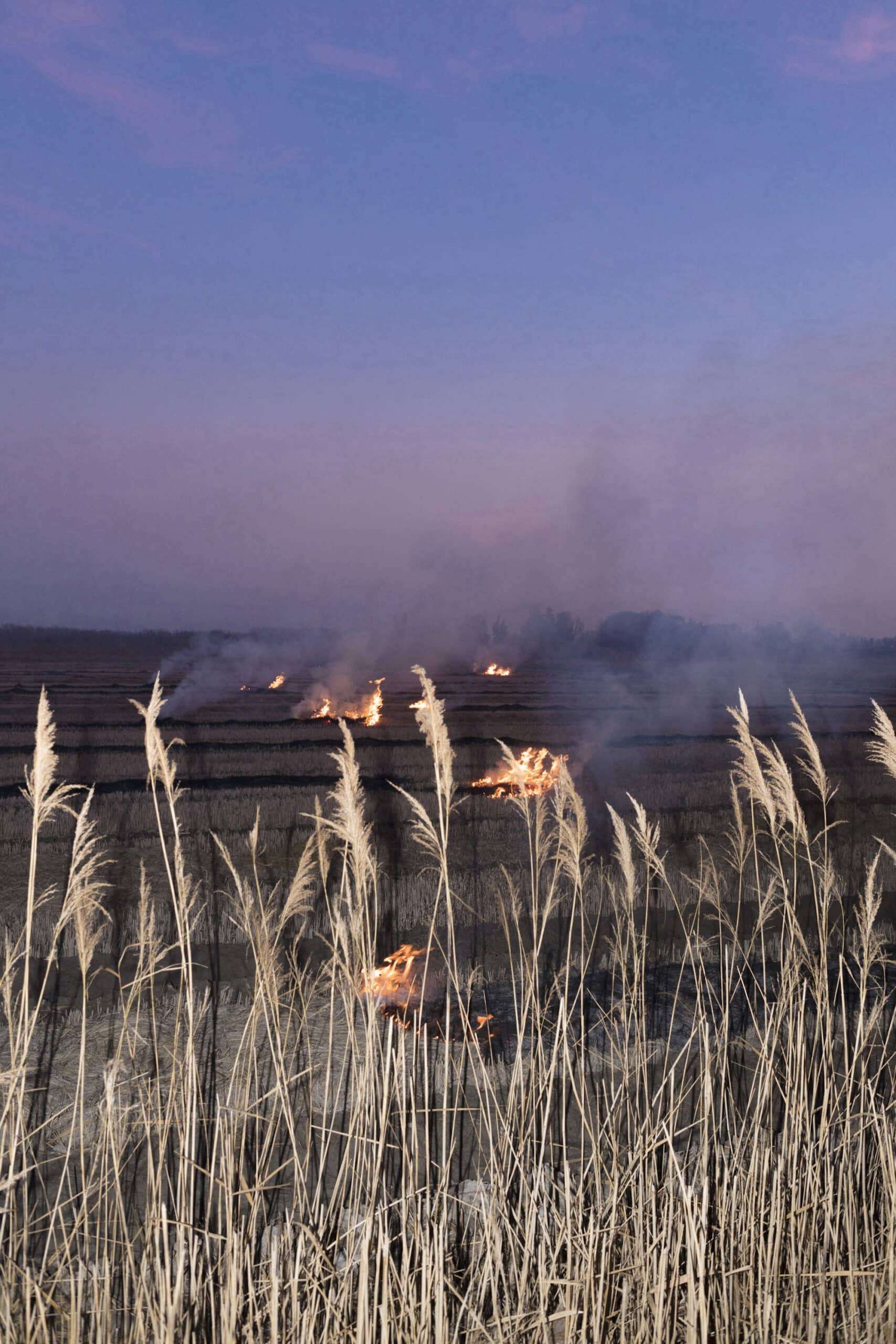
Valia Russo approaches the concept of collapse. Between 2021 and 2022, she created a photographic documentation of the early signs of this collapse, which according to her, has been unfolding for some time. Soft and poetic, her flash photographs of night subvert the idea of chaos that they foreshadow. Finally, France-Lan Lê Vu’s photographic installations are a reflection on the reprisal of natural techniques and alternative modes of photography in the face of ultra-modernity.

Here, the world comes to an end more quietly © Valia Russo
© France Lan Lê Vu
© France Lan Lê Vu

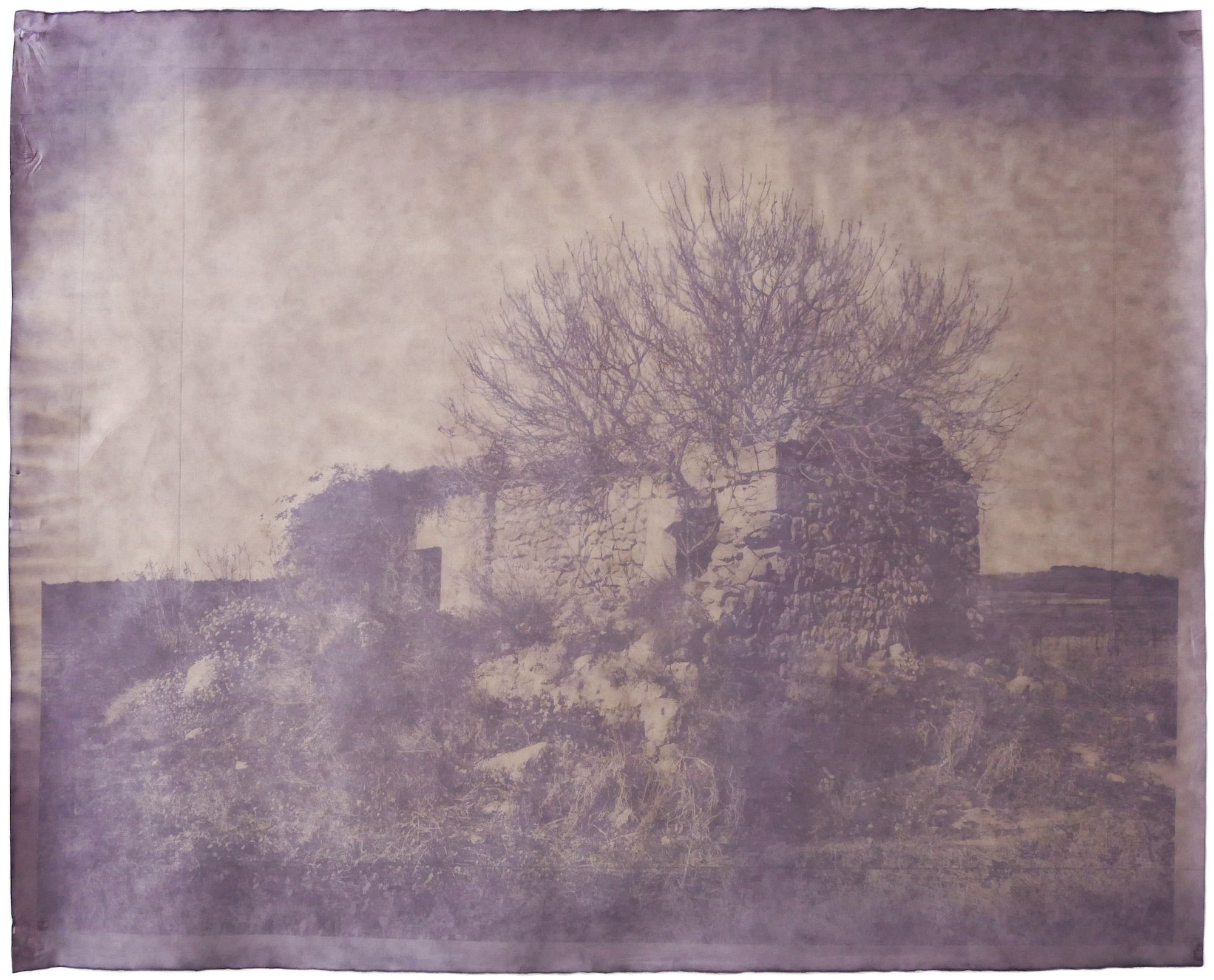
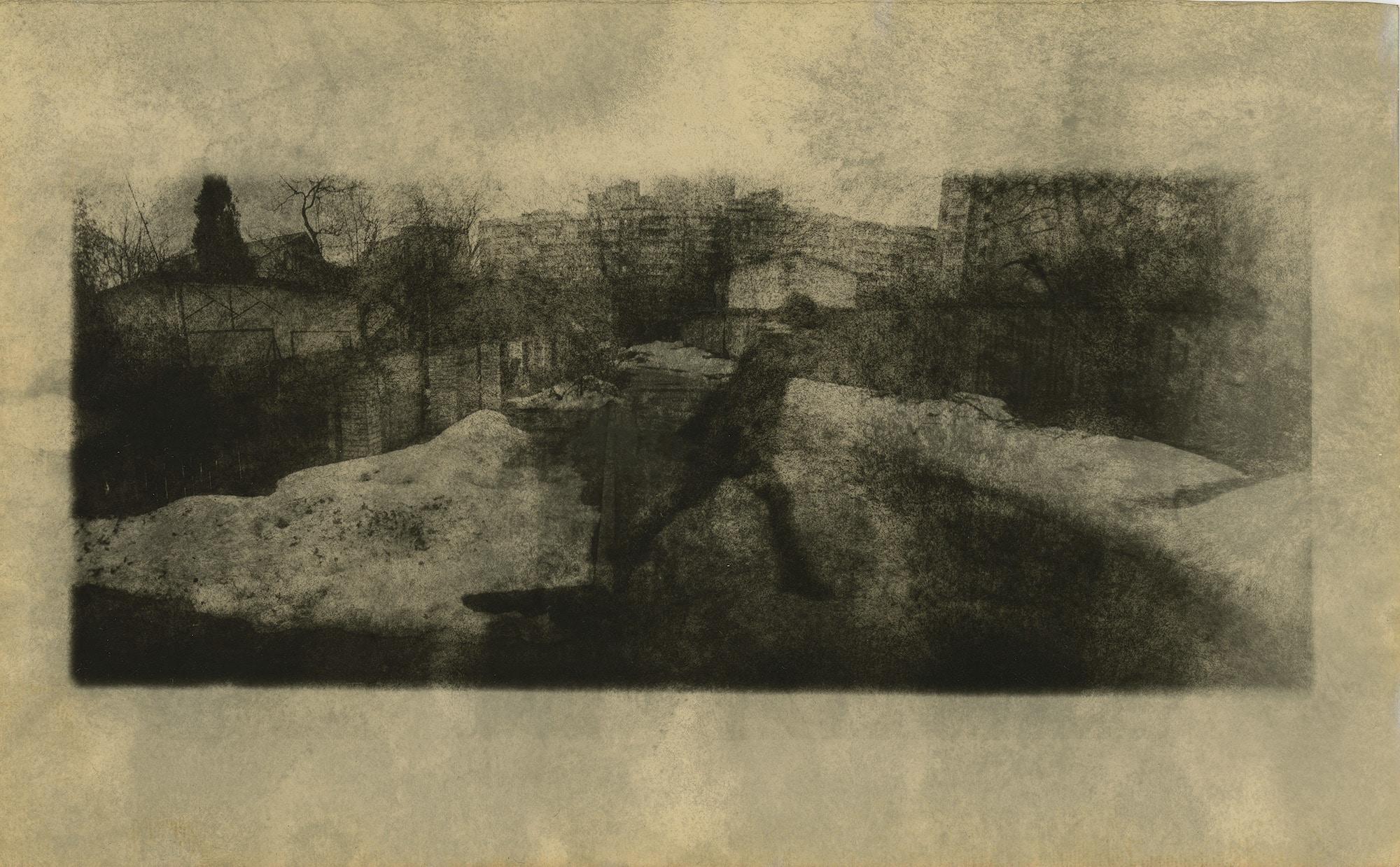
As for the international artists, three photographers have come to settle down in Niort. Md Fazla Rabbi Fatiq approaches the colonial history of Bangladesh and the reality of tea cultivation. Victor Gamarra retraces his childhood in Peru, on the beaches of Lima; while the Ukrainian photographer Yehor Simakov develops his memory on old Soviet paper, like a puzzle of archives and films.

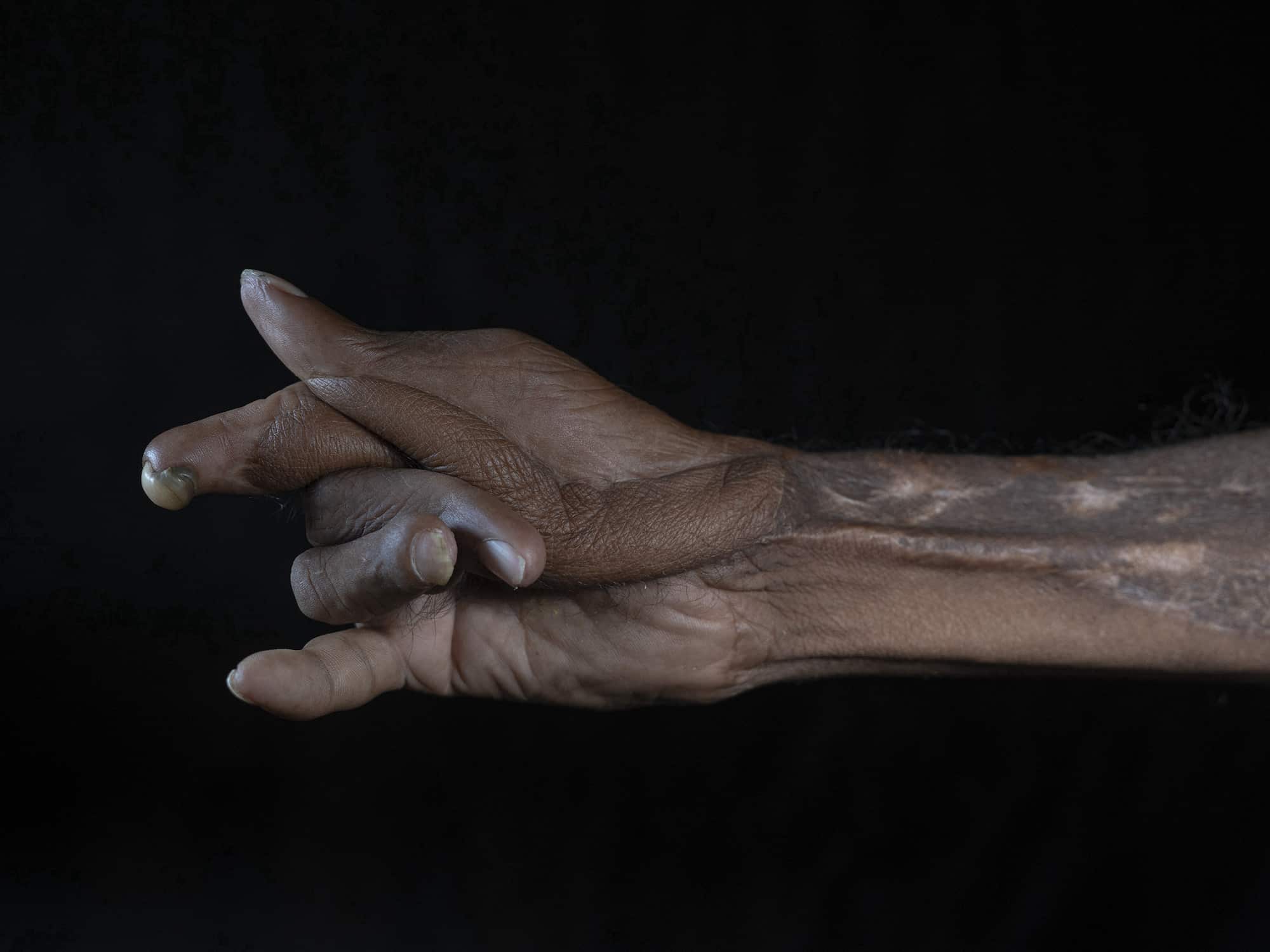
© Md Fazla Rabbi Fatiq
© Victor Manuel Gamarra Goicochea
© Yehor Simakov
© Yehor Simakov

A journey into the heart of the city

In parallel to the residency, the Rencontres hosts a panel of exhibitions, made up of works by former residents and guest artists. This is an opportunity to discover the emblematic sites of Niort, “a city built on a human scale,” points out Delat.

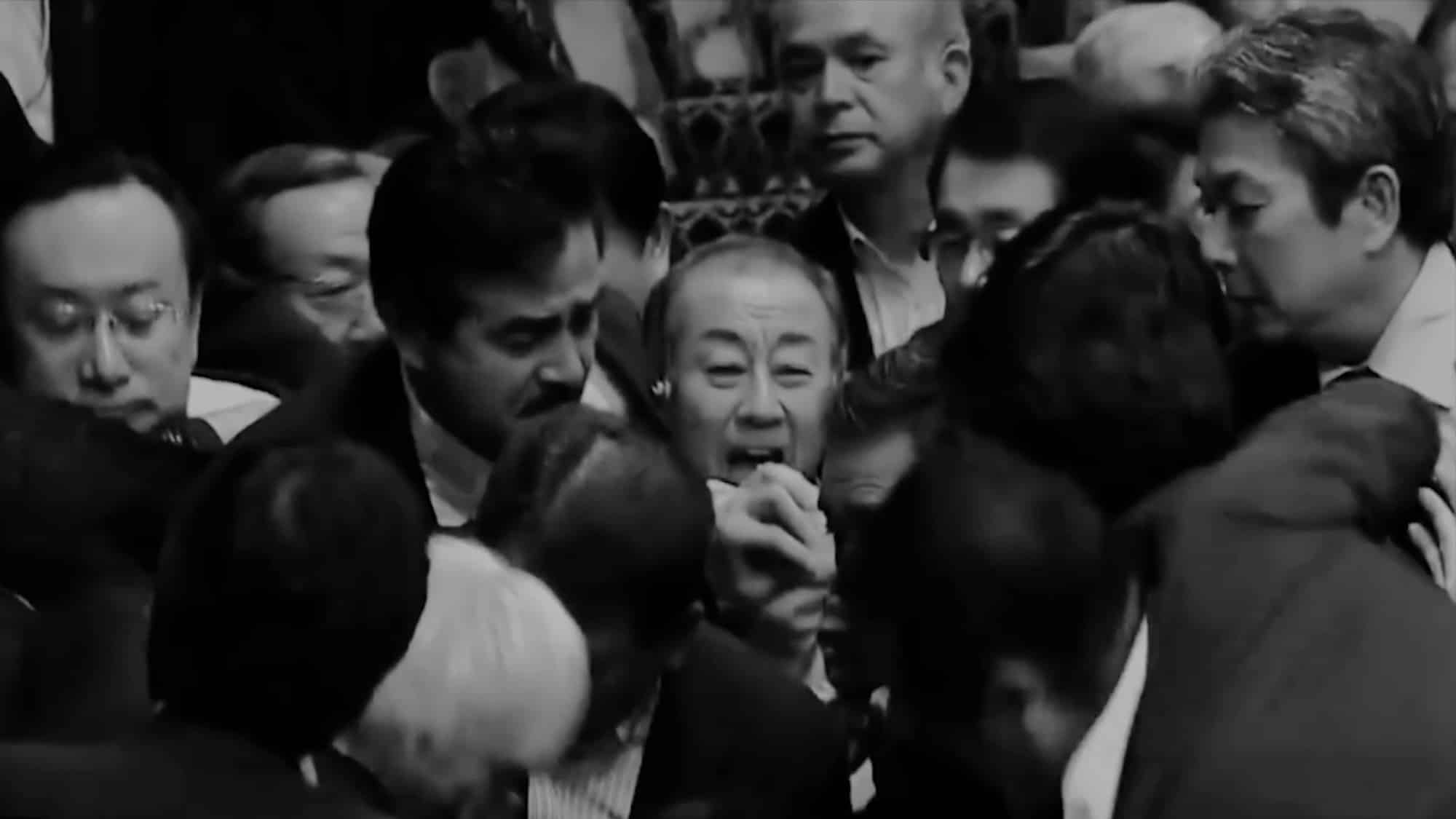
Niort’s former city hall and now visual arts space, Le Pilori showcases the works of former residents, Soham Gupta and David Fathi. Artist in residence in Niort in 2015, David Fathi presents his new project The Dead Govern the Living. Combining photographic images and archival videos of politicians fighting with their bare hands, the artist reflects on the future, order, and progress.

David Fathi - Les morts gouvernent les vivants 02
Les morts gouvernent les vivants © David Fathi

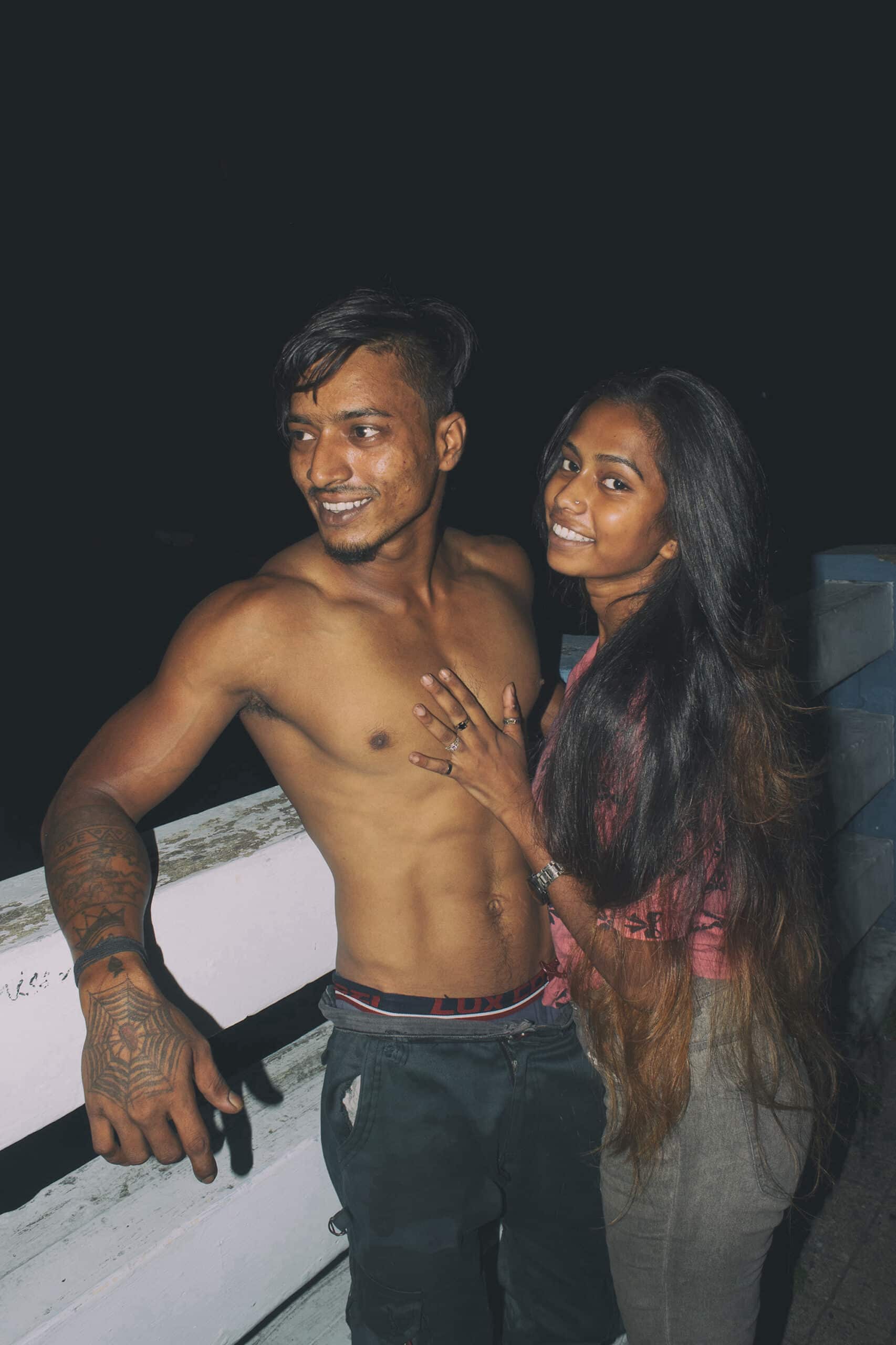
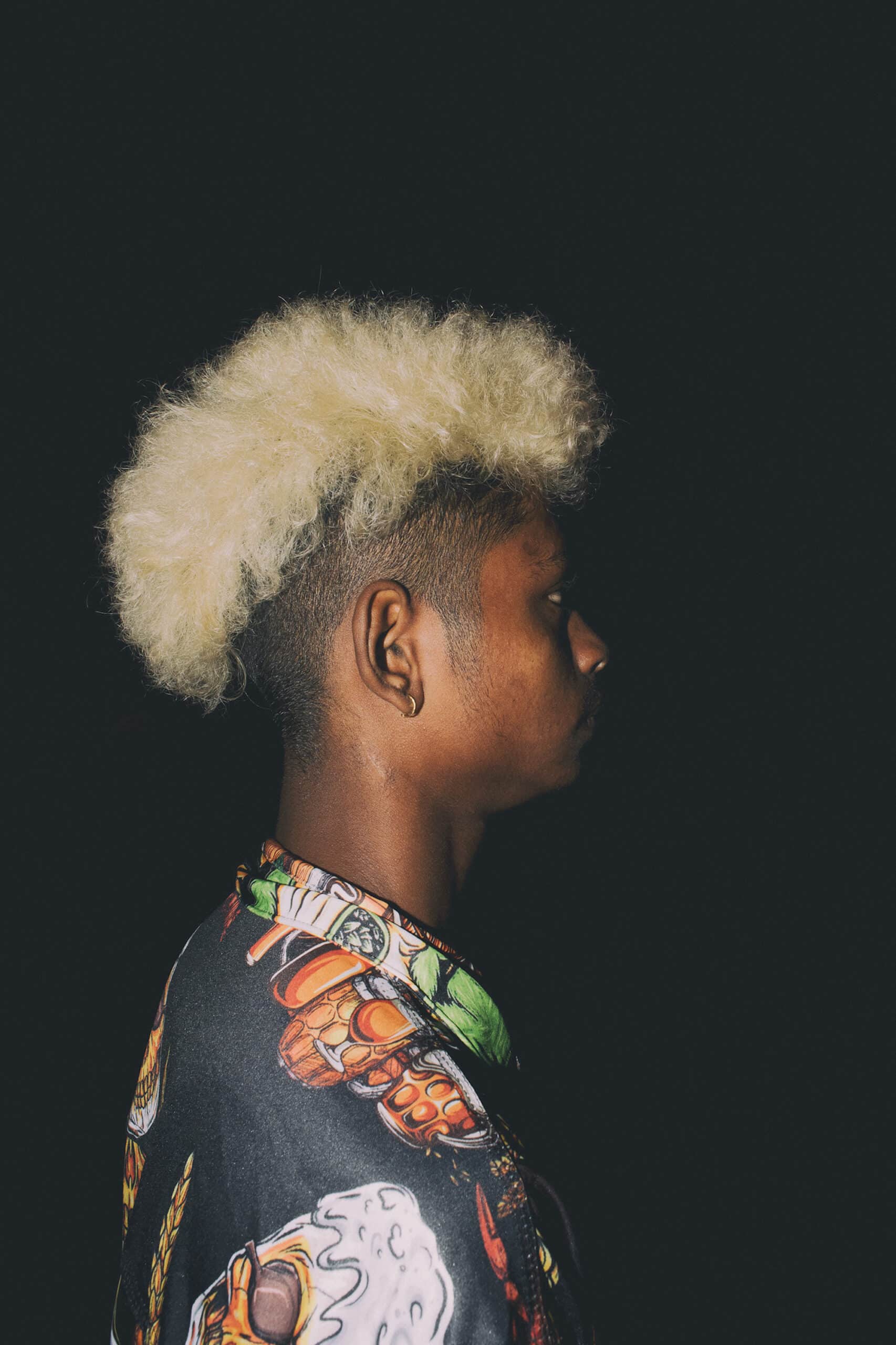
Similarly, in his photographic archive Desi Boys, Soham Gupta focuses on marginalized Indian youth and victims of xenophobia, as they confront the Hindu nationalist right, new technologies, and globalization. A photographer whose work straddles documentary, art, and writing, Gupta also exhibits Angst, a series of portraits of the poor in Calcutta, his hometown, which had already been presented during his residency in 2016.

Desi Boys © Soham Gupta

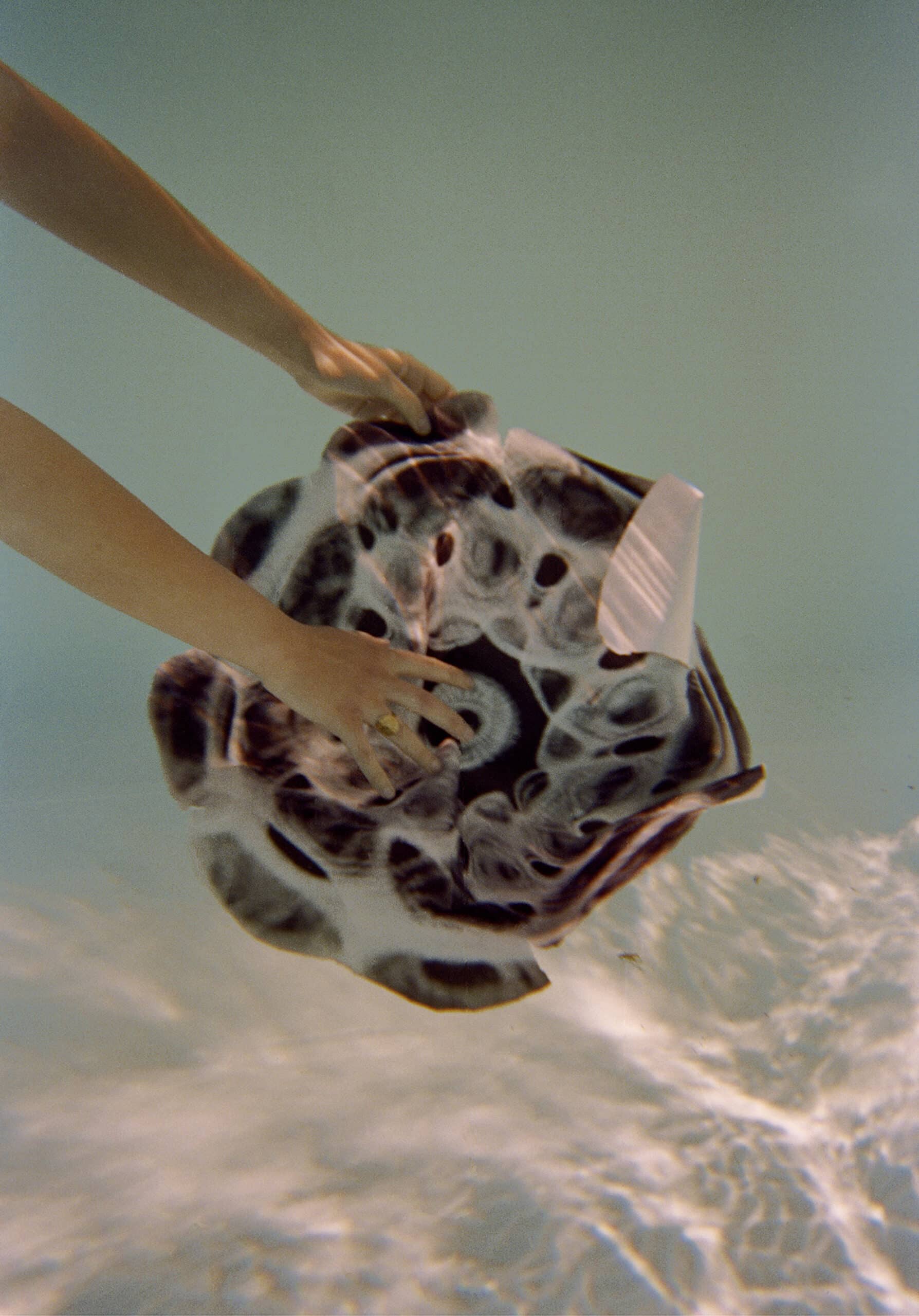
Silver gelatin prints on photosensitive paper from the 1970s, reproductions of letters and archival documents on original Chinese paper. It is at the Pavillon Grappelli, former school of drawing and now a digital arts space, that Rachele Maistrello presents her series Blue Diamond. The Italian photographer plunges us into a fictitious universe more real than life itself. Reality or science fiction? It is up to the visitor to make up their own mind.

Blue Diamond © Rachele Maistrello

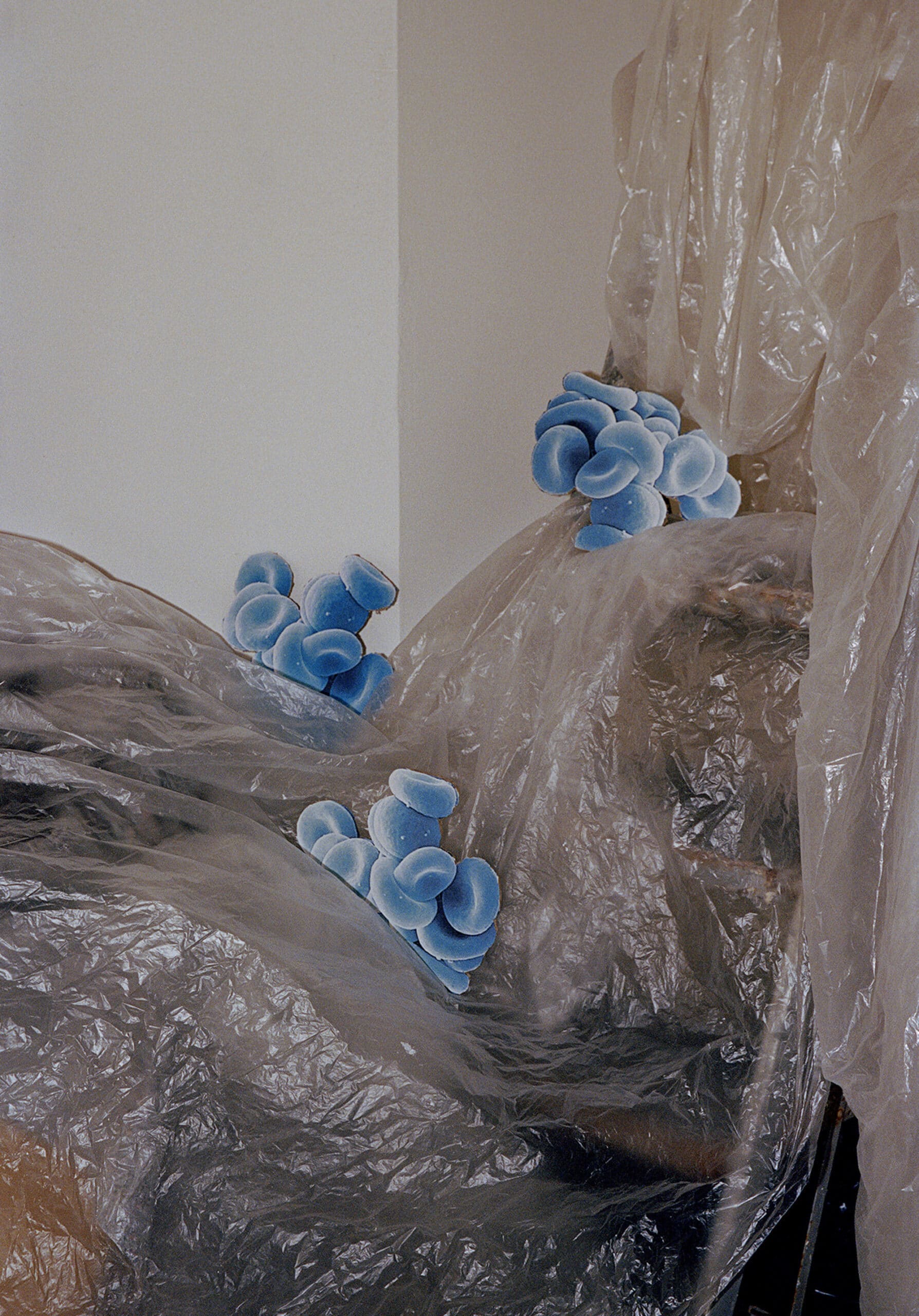
Not far from there, in the green island of the Desmettre gallery, the artificial botany gives way to an anarchy of wild grass. In this place, entirely surrounded by water, Sylvie Bussières combines botany, photographic images and graphite mines. Created during the confinement, her works give life to the weeds that proliferate in the absence of human presence.

Weeds © Sylvie Bussières

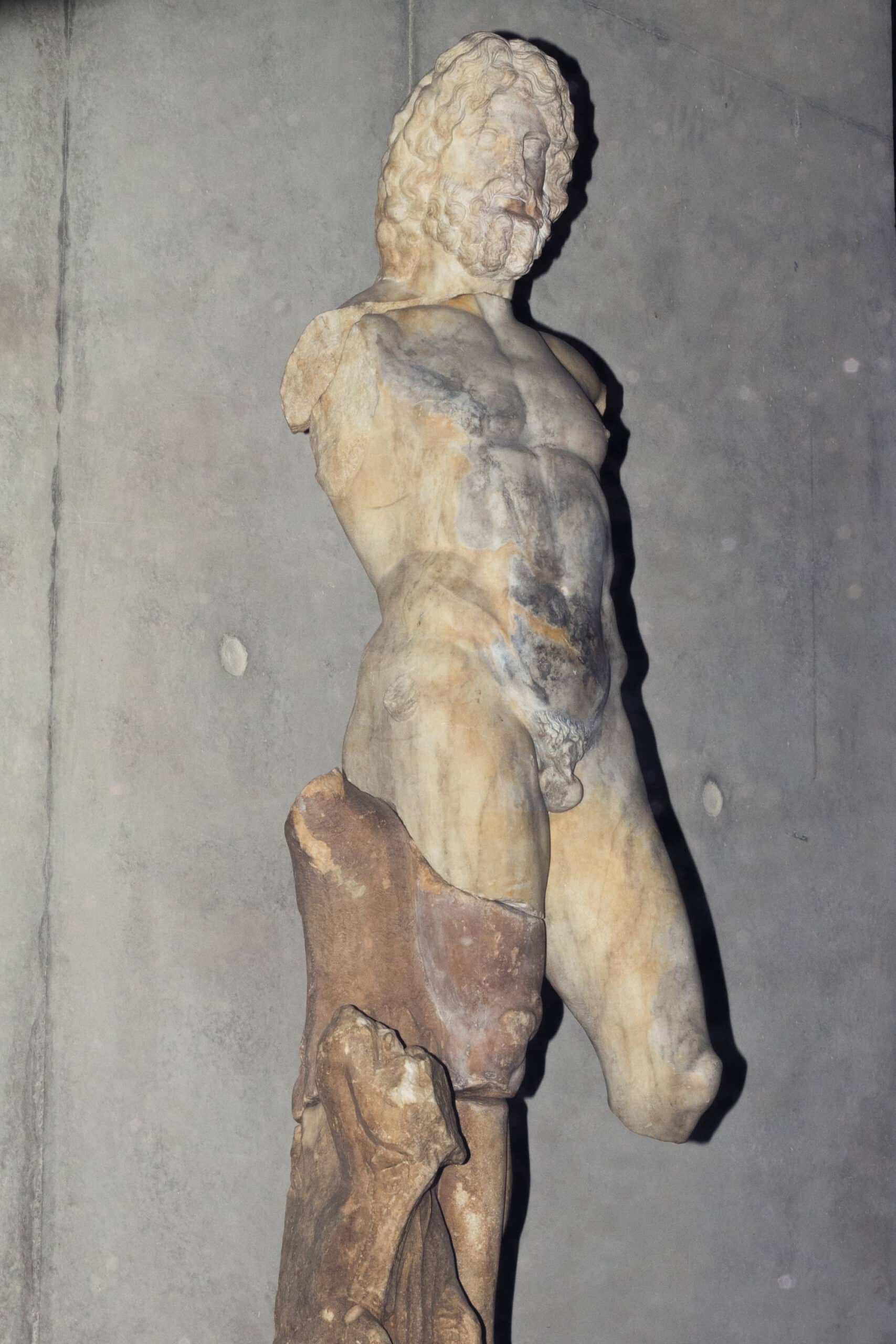
Finally, Greece is invited to the Séchoir, with the works of six Greek photographers curated by Manolis Moresopoulos, director of the Athens photo festival. The exhibition Rites of Passage questions the culture and identity of Greece, a country with a considerable historical past, but with an uncertain future. Whether it is about the impact of the industrial crisis, spirituality, mourning, or the rituals of the afterlife, each artist reveals the intermediate space between presence and absence.

The Truth is in the Soil © Ioanna Sakellaraki
Iconostases © Marilia Fotopoulou
Eleu sis © Myrto Papadopoulos

Rencontres de la Jeune Photographie Internationale. Exhibitions on view Tuesday to Saturday, 1:30 p.m. to 6:30 p.m., free admission.

3 Fun and Easy Spring Photography Ideas for Beginners

3 Fun and Easy Spring Photography Ideas for Beginners

Spring is here, and it brings with it a veritable plethora of fun and interesting photography opportunities. If you are ready to bust out your camera and shake off the rust from winter, check out this great video tutorial that will show three fun and easy spring photography ideas to get you rolling, along with some helpful advice for improving your images.

Coming to you from Park Cameras, this helpful video tutorial discusses three fun and straightforward spring photography ideas. One of the best parts about spring is how rapidly everything changes, which means an ever-rotating range of image opportunities. As such, you can easily go to the same location multiple times, as you will often get different weather, blooms, and wildlife with each successive visit. One thing to bring along to increase your opportunities is a macro lens. With all the blossoming plant life, it is worth getting some close-up shots as well. And the great thing about macro photography is that there are image opportunities all around us; you often do not have to travel far, if at all, to find worthwhile photos. Check out the video above for the full rundown, and get outside with your camera!

GET THE PICTURE: Disadvantaged focused on photography with mentors

GET THE PICTURE: Disadvantaged focused on photography with mentors

Members of the homeless community are often the focus of photojournalists cameras as they sometimes can be found sleeping on cardboard boxes or creating shanties under city scaffolding.

The lens gets turned around as the new CameraCares Photography Mentorship program in conjunction with the New York Press Photographers Association and the Bowery Mission equips some of these same people with cameras of their own. Professional photographer mentors will help these disadvanaged individuals learn a skill that might allow them to earn a living and express themselves as they never had before.

These skills will culminate in an exhibit by those who are served at the Bowery Mission entitled, “the Bowery Collection,” on Saturday, May 6 at the Mission headquarters at 227 Bowery in Manhattan. The exhibit is open to the public.

Richard Liebowitz, founder and director of the program, started doing volunteer work at the Bowery soup kitchen one year ago and discovered many disadvantaged people just needed direction and mentorship.

Liebowitz, a copyright attorney and avid photographer, said that while volunteering, he discovered that many poor people in the shelter programs “just needed to get back on their feet and improve their lives.”

“I found that while feeding people, many were just looking for support and guidance in their lives – many don’t have families and are living day to day,” Liebowitz said. “At the mission, people are getting three hot meals a day, but we can give them more and a light bulb went off – wouldn’t it be great if we could help Bowery Mission clients, interested in photography – help them learn composition, lighting, visual storytelling. They are on the streets all day and they see life and may be they have an eye for it.”

Liebowitz joined the mission with the New York Press Photographers Association and four working photographers became mentors. Canon USA loaned out cameras to the participants and Liebowitz provided backpacks and Amazon Kindles loaded with the editing application “Photoshop,” so that mentees could upload and manage images.

Richard Liebowitz with Chanel Caple.

Bruce Cotler, president of the NYPPA and a professional photographer for 40 years, has served as a mentor to Bowery client Heriberto Juarez, a Mexican immigrant with limited English, has already visited Central Park, The Metropolitan Museum of Art and plans to accompany Juarez to Chinatown.

“We are usually photographing everyone so it’s nice to be helping people to get on their feet and give them something they may become passionate about and even make a career from,” Cotler said. “They are now out there trying to make beautiful art and meet people – this will help them get their lives back on track.”

Photographer Bruce Cotler with
Bruce Cotler (r) with Heriberto Juarez at Ground Zero at the site of the World Trade Center.

Currently, sessions for participants run weekly for 10 weeks. Each mentoring session can run two hours and up to an entire day. In addition to helping clients learn photography, they also create “mentorship bonds,” that expand discussions to life experiences.

“They are not just talking about cameras, but what is going on in their life and how a mentor can help – even just to lend a friendly ear,” Liebowitz said. “The mentee relates about difficult times, leaping hurdles of life – they often have heart-to-heart talks about life’s obstacles. At the same time, they learn a skill of setting up portraits, understanding depth of field or just knowing when to take a photo – reading emotions. They can go on to become freelancers, pro photographers just by learning personal skills and how to interact with people.”

Liebowitz said the exhibit on May 6 will allow the public to purchase pictures or even license them for publication with the profits going to the photographer.

Debra Rothenberg, a pro photographer known for entertainment, concerts and most notably Bruce Springsteen pictures,said she finds mentoring, “rewarding that someone I’m mentoring not only is learning but enjoying taking photos.”

“I like giving back to people – I believe in paying it forward,” said Rothenberg, who is also vice president of the NYPPA.

Rothenberg mentored Chanel Caple, a resident of the Women’s Center of the Bowery Mission.

“It reminds me of the first time I was in a darkroom making black & white prints and you say OMG when the print comes out,” Chanel said. “It’s now the same thing in the digital world, when you look at the print on the computer – it takes me back. And I can’t wait to see the excitement when they see the pictures on the wall of the exhibit.

As for her relationship with Chanel, “pretty freak’n awesome.”

“Chanel has the drive, energy, passion and I know Chanel will do well whatever They put their mind to,” Rothenberg said. “I haven’t seent hat much drive in anyone in a long time. And our friendship will not end – when our schedules are open, we will still get together to take pictures – that’s a real success.”

Photos taken by Chantel Caple during her mentorship with Debra Rothenberg.

Caple, 31, born and raised in Brooklyn, felt the same way about her mentor.

“From the moment we spoke on Zoom, it seems our relationship was effortless, almost like I knew her long before I met her,” said Caple, who currently lives at the Bowery Women’s Mission in Harlem for the past year, having lost her job and home after a “mental crisis.”

“She was so kind and giving of her knowledge – we’d meet up and I’d give her an idea of what I’d want to create and she was more than willing to be supportive and share ideas and vision of the things I wanted to work on and assist me in being able to capture what I saw in my mind.”

“This has been a great opportunity to get back on my feet in a place where I can be stable again.”

Caple believes her photography will help her move towards getting a job and becoming independent again.

“I am grateful to have met Debbie and build upon our relationship – I have so much to learn, can’t wait for the opportunity to learn and at the same time, I’m job searching trying to get back into customer service with fitness as my passion. I’m trying to become stable again with financial needs and my further knowledge in photography, it’s all like a breath of fresh air.”

Greg Vadala Vocational Specialist at the Bowery Mission that serves the homeless and hungry since the 1870s, said the mentor program is a boon to his clients.

“Anytime you can offer a new skill and possibly turn it into a full-time or at least part-time income, may be sell some pictures – if they are passionate about it, it can be an income stream or even a hobby that gives a sense of well being to live,” said Vadala who deals with 45 men at the Bowery Mission in lower Manhattan.

“Boosting self esteem, while building skills while developing an enrichment to life is beautiful. People who’ve done it, enjoyed the process of what they got to learn, and we look forward to others who want to do it.”

Anyone interested in mentoring, sponsoring or purchasing any of the pictures from the Bowery Mission at the exhibit on May 6, may contact [email protected]

Mentor Bianca Ortero and Luckenson on their first day of the CameraCares Mentorship.
Pro photographer Anthony Behar with Heriberto Juarez.


Seascape photography guide: How to photograph beaches and coastlines

Seascape photography guide: How to photograph beaches and coastlines

Coastal and seascape photography can be such a wonderful genre to shoot, but there’s a lot more to it than just pointing your camera at the ocean and pressing a button. When it’s not done right, you’ll end up with reflections on the water and sand in your shoes. Like any other style of photography, there’s much more to consider than you might think, so we’ve put this guide together to help you get the most out of your seascape images.

In this beginners guide to seascape photography we’ll be covering things to looks for in a camera and lenses, as well as accessories, tips on finding locations, and some settings to use to achieve the results you want.

Coastal photograph of long grass on the beach bathed in warm sunlight. (Image credit: Kimberley Lane)

You might find taking a peek at our beginners guide to wildlife photography helpful too (and perhaps our list of the best wildlife photography cameras) if you want to photograph some seaside animals. Or, if you’re interested in nighttime photography, then you can shoot for the stars with our beginners guide to astrophotography and night for day astrophotography guide.

What camera should you use?

There’s a good chance that you might get wet whilst pursuing the perfect seascape, so you’ll want to make sure your camera is weather sealed. (Image credit: Kimberley Lane)

When it comes to choosing a camera for shooting seascapes, one of the most important factors is making sure the camera is weather sealed. Cameras can be subjected to splashes, wind, and sand when shooting seascapes, so it’s really important to make sure your camera is protected against the elements when you’re out shooting.

Sensor size doesn’t necessarily matter too much here — most beginners will likely be using four-thirds or crop sensors which is more than adequate. The size and weight of the camera is generally down to personal preference. Small, compact mirrorless cameras are easier to carry around, which is particularly beneficial if your location isn’t very accessible. On the other hand, heftier cameras, like DSLRs, would be more stable in windier, coastal weather, so there’s a trade-off with either option.

A distant lone surfer standing in gentle waves on the beach. (Image credit: Kimberley Lane)

In terms of the camera’s capabilities, there aren’t many features that are specific to seascapes to think about, which is good. However, we’d always recommend getting a camera that has good autofocus and tracking (you never know when you might want to photograph surfers), and a decent FPS rate for shooting in drive mode. A tilt or fully articulating rear screen can also come in handy if you’re shooting low down to the ground and want to see your composition.

What lens should you use?

Watch out for those waves! (Image credit: Kimberley Lane)

Like cameras, you really want to make sure your lens is weather sealed from the elements, not only to prevent dust spots and splashes on the glass, but to also protect the inner workings of the lens. Seascape photography is one of the photography styles where your equipment is most exposed to multiple elements, so it’s really important to take the steps to protect your gear. 

When it comes to focal length, zoom lenses tend to be favored here due to their versatility. To start off with, something like a 24-70 mm would be ideal. You want to be able to shoot wide enough to fit everything in if you’re shooting an entire scene, but the higher 70 mm end will enable you to isolate certain subjects or details. While telephoto lenses do have their place in seascape photography, they usually play second fiddle to the wider focal lengths.

A wide coastal landscape bathed in a golden glow. (Image credit: Kimberley Lane)

The aperture of a lens doesn’t matter too much for beginners, but we’d always recommend going wider so your camera doesn’t struggle in low light conditions. Plus, if you want to be able to freeze the movement of the water, a faster lens will definitely help with that.

Prime lenses are undoubtedly fantastic quality, however, we wouldn’t recommend them to beginner photographers due to their fixed focal length. That said, prime lenses are a great way to challenge yourself and improve your creativity by only bringing one focal length lens with you on a shoot.

What settings should you use?

To capture those gentle, milky waves lapping at the beach you’ll need to find the right shutter speed. (Image credit: Kimberley Lane)

With seascape photography, you’re generally going to be creating one of two effects in the water: freezing the movement of the crashing waves, or slowing the movement to create flowing, milky water. Both of these effects are achieved by adjusting the shutter speed. 

If you’re looking to freeze the movement of the water to capture dramatic waves, you’ll want a fast shutter speed (as fast as your camera can handle depending on the amount of light). However, if you’re looking to create the look of soft, flowing water, you will need a slower shutter speed. Generally, anything from around 1/50 and under will do the trick, but do experiment with different shutter speeds as each one will create a different effect. There’s no right or wrong answer, it just depends on what you prefer. 

To start off with, try putting the camera into shutter priority while you experiment with shutter speeds, and the camera will choose the correct aperture and ISO for you. For freezing the action of crashing waves, it can help to have the camera on drive mode so you can capture multiple frames at a time.

What to look for

Sea stacks make for great photo opportunities. (Image credit: Kimberley Lane)

Taking seascapes isn’t just photographing the water, though. Think about the scene as a whole, and what the focal point of your image is going to be. There’s an abundance of subjects to shoot at the coast: beaches, cliffs, sea stacks, natural arches, lighthouses, shipwrecks… the list goes on!

Try looking for textures and patterns that add to the scene, and ask yourself: “What’s the story here?” Adding people into your images is a great way to add scale, especially if they are stood on top of a cliff, and you can easily add texture by including patterns in the sand or some long grasses.

Location & weather conditions

You can capture stunning shots even on the grayest of days at the coast. (Image credit: Kimberley Lane)

Another important thing to consider is your location and the weather conditions. Flat light or bright sunny days don’t tend to make the best photos, so it’s great to practice seascape photography when it’s either dark and stormy or in the warm and soft evening light. Windy days are great for capturing crashing waves against rocks and sea stacks for those really dramatic shots.

Think about how your location will look at different times of the day: Where does the sun rise and set? What parts of your scene will be lit by the sun at certain times of day? What are the tide times? By taking the time to plan out your shoot, you can get a variety of different images all from the same spot.

There are some really useful apps to help choose a location, and many of them even tell you where the sun is going to be in your scene. Google Maps (opens in new tab) is great for location scouting, and for sunrise and sunset information and locations, try The Photographer’s Ephemeris (opens in new tab) (sign up for free) or PhotoPills (opens in new tab) (costs $10.99, but full of fun, helpful features).

What accessories are useful?

The bright sunshine causes glare on the water. (Image credit: Kimberley Lane)

A problem you often find with seascape photography, as well as when shooting any kind of moving water, is you’ll get glare and reflections off the water that can be very distracting in your image. Using a polarizing filter can eliminate the reflections and give you a much cleaner image, and it also makes the colors pop more. You can also make use of a neutral density (ND) filter which acts a bit like sunglasses for your camera. If it’s a really bright day or you want to slow down the movement of the water without letting too much light in — the ND filter will reduce the amount of light going in. They’re available in different intensities, and the type you get will depend on how long of an exposure you want to shoot.

If you want to slow down the movement of the water, you’ll also need a tripod. Two handy tips here; firstly, bring a bottle of water to rinse off any sand from the tripod, and this will also get rid of any salt left from the sea water; and secondly, when you’re putting your tripod on the sand, make sure you extend the bottom feet section, so if there is any sand left once you’ve rinsed it off, it will only be in that bottom section (we learned this one the hard way).

Don’t forget about protecting yourself too. If you’re going to be shooting with your tripod in the water, then wellies or waterproof shoes are a must. A waterproof jacket won’t go amiss either.

Finally, in post you can transform your snaps by touching up your photos using photo editing software (such as PhotoShop (opens in new tab)) and one of the best laptops for photo editing. It’s great for helping to fix any wonky shorelines or blown out clouds in the sky.

39 Funny Accidental Images That Were Taken At The Right Time And Place By This Street Photographer (New Pics)

39 Funny Accidental Images That Were Taken At The Right Time And Place By This Street Photographer (New Pics)
image

Accidental photos are the funniest type of images found on the internet. And the beautiful thing about this, so to speak, genre of photography is that you can be either a professional or an amateur and still get attention-worthy images.

Though some images are truly taken by accident, others take a bit of planning and waiting around. This street photographer, Edas Wong, has been taking coincidental images for a while now. In a previous post, he shared: “When I go out on the streets, I just watch every detail in front of me. If the coincidences are with objects, it’s easy. However, if they aren’t, I’ll also need luck. Sometimes I wait a while to register the right moment.” He added: “The longest waiting time was several months. I repeatedly went back to that targeted location and waited, re-observing and re-imagining.”

No matter how much time it takes to capture one image, the end result is always worthwhile. That is why this isn’t our first time sharing Edas’s work, so if you’d like to check out his previous posts on Bored Panda, you can find them here, here, here, and here.

More info: Instagram | Facebook | flickr.com

▶️ Longtime Smith Rock eagle nest photographer gives close-up of new eaglets

▶️ Longtime Smith Rock eagle nest photographer gives close-up of new eaglets

>>> Have you checked out Central Oregon Daily News on YouTube? Click here to subscribe and share our videos.

It’s that time of year at Smith Rock State Park when the resident bald eagles have mouths to feed in the nest. Three chicks have hatched this year — a rarity for eagles.

George Lepp, a Bend wildlife photographer, has been recording nature for more than half a century and taking pictures of this nest for the last decade.

“The first time I came here I didn’t even have a camera with me a friend brought me here to show it to me,” George said of the nest. “And then the next year I came and started to photograph it.”

And he has barely stopped since.

“I spent several hundred hours out here,” said George.

He figures 300-500 hours, which he has edited down to a 10 minute film running in the park visitors center.

“Back in 2017, there weren’t very many people here. You would see deer walking around down below there,” George said. “Marmots would come up next to you all kinds of different birds would show up. When you’re here that many days and you watch a merganser family on the river, that kind of stuff, it was wonderful to spend a long period of time and see day after day how things change here that was the best thing of all about this.”

RELATED: WATCH: Bald eagle wakes up under blanket of snow

RELATED: The Great Outdoors: Smith Rock Spring Thing

Photography has changed in the decade that he’s been shooting here. The digital world has opened up everything — and making it easier for him to share his work.

“Especially when I’m using the iPad, I’m showing people and explaining what’s going on. Because they can’t really see what going on unless they’ve got good binoculars or a spotting scope,” said George.

For just the second time in a decade, the nest has welcomed three little ones.

But with nature being nature, the smallest one is not likely to survive. Video from George shows that a bigger chick blocks the smaller one from his parents’ beak-to-beak feeding.

George is still hopeful.

“Every once in a while they’ll feed the youngster. But they seem too be pretty good about making sure the little guy is getting food,” said George.

The birds seem to accept the nearby audience. After all, they come back and birth babies here every year. But park manager Matt Davey doesn’t want the humans to disrupt the domestic scene.

“Like the canyon trail that passes below the nest right now, we reduce group size to four or less and request that noise be kept to a minimum. And we close off the campsites along the rim here,” said Davey.

If you visit the park, Davey asks that you try to limit your movement and visibility on the rim. Keep your voice down, too. But most importantly?

“No dogs. Absolutely no dogs. Absolutely no dogs out on the rim. That can really stress these birds out,” said Davey.

For George, every visit, every still shot and every piece of soaring video is a pleasure — and is personal.

“You get to feel like they’re kind of your birds kind of thing,” said George.

If you’re interested in seeing the eagles, just ask a park ranger or park host where they are. They can tell you where to go and give you advice on how to view the birds without bothering them.

And if you want to see more of George’s work, check georgeleppimages.com.

He has been at it for 50 years, has trained generations of photographers, traveled all over the world and even been named a “legend” by Canon cameras.

[embedded content]

FacebooktwittermailFacebooktwittermail