Photography

Photographer admits prize-winning image was AI-generated

Photographer admits prize-winning image was AI-generated
image

A photographer is refusing a prestigious award after admitting to being a “cheeky monkey” and generating the prize-winning image using artificial intelligence.

The German artist Boris Eldagsen revealed on his website that he was not accepting the prize for the creative open category, which he won at last week’s Sony world photography awards.

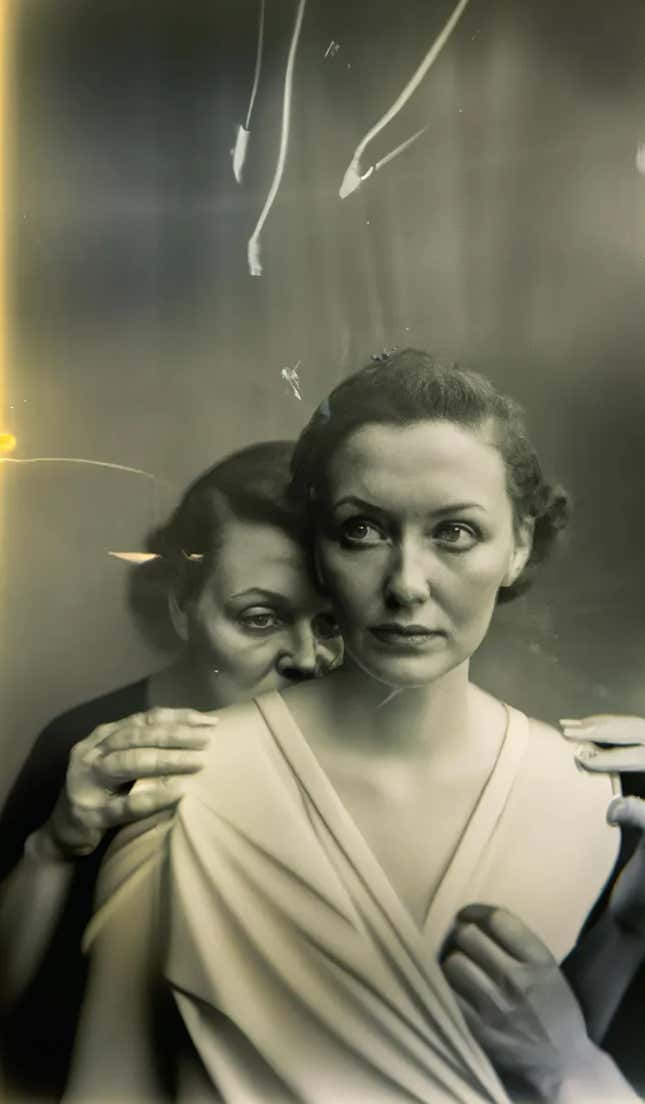
The winning photograph depicted two women from different generations in black and white.

In a statement on his website, Eldagsen, who studied photography and visual arts at the Art Academy of Mainz, conceptual art and intermedia at the Academy of Fine Arts in Prague, and fine art at the Sarojini Naidu School of Arts and Communication in Hyderabad, said he “applied as a cheeky monkey” to find out if competitions would be prepared for AI images to enter. “They are not,” he added.

“We, the photo world, need an open discussion,” said Eldagsen. “A discussion about what we want to consider photography and what not. Is the umbrella of photography large enough to invite AI images to enter – or would this be a mistake?

“With my refusal of the award I hope to speed up this debate.”

He said this was a “historic moment” as it was the first time an AI image had won a prestigious international photography competition, adding: “How many of you knew or suspected that it was AI generated? Something about this doesn’t feel right, does it?

“AI images and photography should not compete with each other in an award like this. They are different entities. AI is not photography. Therefore I will not accept the award.”

Eldagsen suggested donating the prize to a photo festival hosted in Odesa, Ukraine.

The stunt comes at a time of intense debate over the use and implications of AI with some issuing apocalyptic warnings that the technology is on the brink of irreversibly damaging the human experience.

Recent advancements in the use of AI in chatbots, driverless cars, song-writing software and the development of pharmaceuticals has spurred the discussion. Google’s chief executive, Sundar Pichai, said concerns about AI had kept him awake at night and warned that the technology can be “very harmful” if incorrectly deployed.

A spokesperson for the World Photography Organisation said Eldagsen had confirmed the “co-creation” of the image using AI to them before he was announced as the winner.

“In our correspondence, he explained how following ‘two decades of photography, my artistic focus has shifted more to exploring creative possibilities of AI generators’ and further emphasising the image heavily relies on his ‘wealth of photographic knowledge’. As per the rules of the competition, the photographers provide the warranties of their entry.

“The creative category of the open competition welcomes various experimental approaches to image making from cyanotypes and rayographs to cutting-edge digital practices. As such, following our correspondence with Boris and the warranties he provided, we felt that his entry fulfilled the criteria for this category, and we were supportive of his participation.

“Additionally, we were looking forward to engaging in a more in-depth discussion on this topic and welcomed Boris’ wish for dialogue by preparing questions for a dedicated Q&A with him for our website.

“As he has now decided to decline his award we have suspended our activities with him and in keeping with his wishes have removed him from the competition. Given his actions and subsequent statement noting his deliberate attempts at misleading us, and therefore invalidating the warranties he provided, we no longer feel we are able to engage in a meaningful and constructive dialogue with him.

“We recognise the importance of this subject and its impact on image-making today. We look forward to further exploring this topic via our various channels and programmes and welcome the conversation around it. While elements of AI practices are relevant in artistic contexts of image-making, the awards always have been and will continue to be a platform for championing the excellence and skill of photographers and artists working in the medium.”

The amazing winning images of the 2023 Sony World Photography Awards

The amazing winning images of the 2023 Sony World Photography Awards

From a forest lit up by fireflies to raccoons prowling a San Francisco park: The spectacular winners of the 2023 Sony World Photography Awards revealed

Advertisement

The victorious photographers in the 2023 Sony World Photography Awards have been revealed – and the images in this year’s winners’ gallery are as remarkable as ever. 

Each year, the prestigious contest, which receives entries from across the globe, runs several competitions, including the professional contest and the open competition. Standout images include a photo of a forest in India lit up in spellbinding fashion by fireflies, a hypnotic image of raccoons on the prowl in San Francisco, a breathtaking image of an Alpine meadow in Italy and a picture that shows the Milky Way framing Chureito Pagoda, a pagoda that overlooks the Japanese city of Fujiyoshida and faces Mount Fuji.

Reigning supreme overall, the Photographer of the Year title and the $25,000 (£20,220) cash prize were awarded to the Portuguese photographer Edgar Martins for his series ‘Our War’, which paid tribute to his late friend, photojournalist Anton Hammerl, who was killed during the Libyan Civil War in 2011.

Commenting on his win, Martins – who submitted his winning series to the Professional competition – said: ‘It is quite an emotional experience because I get to honour my friend on a world stage… there’s no award that has the reach of the Sony World Photography Awards.’

Sharing his thoughts on Martins’ winning project, Mike Trow, Chair of the 2023 Professional competition, says: ‘Photography is so often about memory and its nature… Our War by Edgar Martins has used memory and invention to give us a powerful, personal set of portraits that attempt to explain the last days of his friend, the photojournalist Anton Hammerl. His work highlights the lengths photographers will go to tell a story and create meaning; each image giving a sense of the journey Anton took without ever being explicit about how his life ended. The entire jury this year was fulsome in their appreciation of the work and its narrative force.’

Exhibiting the work that captivated the judges, the Sony World Photography Awards 2023 exhibition opens at Somerset House, London, until May 1, featuring over 200 prints and hundreds of additional images from winning and shortlisted photographers. Scroll down to see some of the category-winning and shortlisted images from the overall contest – with Martins’ award-winning work at the very bottom…

This extraordinary picture shows black bear cubs playing on a rope swing in the backyard of a home in Asheville, North Carolina. It's part of a series - 'Cities Gone Wild' - by U.S photographer Corey Arnold, who says: 'Urban black bears in Asheville are becoming more bold and fearless, resulting in a large influx of bears wandering residential neighbourhoods.' Shedding light on the series as a whole, Arnold says: 'Cities Gone Wild is an exploration of three savvy animals - black bears, coyotes and raccoons - that have uniquely equipped to survive and even thrive in the human-built landscape while other animals are disappearing. I tracked these animals in cities across America to reveal a more intimate view of how wildlife is adapting to increased urbanization.' The series is the overall winner in the 'Wildlife and Nature' category of the Professional Competition

This shot, a second from Corey Arnold's prize-winning Cities Gone Wild series, shows raccoons in Golden Gate Park in San Francisco. The American says: 'Reliant on humans for food, these raccoons have been habituated with feeding by raccoon lovers. On two occasions, I witnessed cars pulling up with many pounds of dog-food, sour cream, chicken, chips and other snacks, dumping them on the ground and in the bushes. The practice is illegal, but still common. Coyotes also arrived at times when regular feedings seem to occur just after dark. Raccoons and coyotes are thriving in the urban environment that is San Francisco because of the abundance of food left by humans'

'In the area surrounding Nordenskjold Land National Park in Svalbard [a Norwegian archipelago], a lone polar bear is exposed on rocks where a decade ago there was a glacier.' So says Australian photographer Mark Fitzsimmons of this poignant picture, titled 'Climate Change'. He adds: 'Despite relatively healthy numbers in the Svalbard region of the Arctic, polar bears face many issues, including increased human/wildlife conflict, warmer summers and receding glaciers.' Impressing the judges, the image was shortlisted in the 'Natural World and Wildlife' category of the Open Competition

Entered into the 'Landscape' category in the awards' Open Competition, this picture shows the sunrise over Seiser Alm, a high-altitude Alpine meadow in Italy. It was captured by Slovenian photographer Ales Krivec, who says of the houses in the frame: 'The cottages are idyllic and I can just imagine living here, waking every day to a stunning view like this'

This moody shot shows earth pyramids that 'were formed millions of years ago' in the Dolomite mountains in Italy's Percha region. 'On this particular morning they were in low clouds, which adds to the atmosphere,' says photographer Robert Bilos. The image was shortlisted in the 'Landscape' category of the Open Competition

This magical image - a composite of several pictures taken over 16 minutes - shows fireflies illuminating Anamalai Tiger Reserve in southern India. Photographer Sriram Murali says: 'Anamalai Tiger Reserve is a biodiversity hotspot known for its megafauna and flora, but for a few days every year it is this tiny insect that steals the show at night.' It's part of a wider photography series focusing on these fireflies, which snapped up third place in the 'Wildlife and Nature' category of the Professional Competition. Murali explains: 'In April 2022, I set out to a remote area of the reserve with forest officials. Flashes of green started appearing at twilight and as the place grew dark, millions of fireflies started synchronising their flashes across several trees. The flashes would start in one tree and continue across other trees like a Mexican wave. Such large congregations of fireflies are very rare, and this series captures the phenomenon of fireflies turning an entire forest into a magical carpet of yellowish-green light'

Putting a spotlight on the women's peace movement in the Democratic Republic of the Congo, this picture is part of a series by British photographer Hugh Kinsella Cunningham. In the shot, captured in the country's North Kivu Province, peace activist Liberata Buratwa can be seen speaking to communities that were displaced by an M23 rebel offensive. Cunningham says: 'Liberata arrived to host a meeting where she received updates on the security situation to share with her network. Shifting frontlines mean that it is often unclear which areas are unsafe for civilians. Activists also speak to recently displaced civilians to collect testimonies of human rights violations they may have witnessed.' Of the wider series, he says: 'Nearly 20 years on from a conflict that killed five million people and upended tenfold more lives, the Democratic Republic of Congo is once again sliding into chaos. As renewed conflict with the M23 rebels, massacres and regional militarisation caught the world’s attention this year, the vital contribution of women to peace remains invisible. Despite escalating violence, some women are working to create [a] dialogue between armed actors and communities. They track human rights violations, warn of impending violence and plead with rebel leaders to stop attacks. In doing so, they take immense risks.' The series took the top prize in the 'Documentary Projects' category of the Professional Competition

This picture by photographer Maria Camila Ramirez Castaneda shows the Colombian city of Medellin, the country's first Special District of Science, Technology and Innovation. The image was shortlisted in the awards' Student Competition

This mesmerising picture shows the Milky Way framing Chureito Pagoda, a pagoda that overlooks the Japanese city of Fujiyoshida and faces Mount Fuji. Photographer Yukihito Ono notes that the cherry blossoms were in full bloom when the picture was taken, adding: 'It is rare that full bloom cherry blossoms, a new moon and clear skies coincide.' The image was shortlisted in the 'Travel' category of the Open Competition

This striking shot is one of a series that focuses on the Tieshan Cement Factory, set in Guilin City in south China. Photographer Fan Li explains: 'The factory was built in 1996 and played an important role in Guilin’s economic development and urban construction. However... the cement factory has now been relocated, leaving behind the old buildings, water towers, pools and railway tracks.' The series has snapped up first place in the 'Architecture and Design' category

In this dynamic shot, Kelsie Whitmore, the first female professional baseball player to play in an all-male pro league, pitches in the bullpen before a game at Richmond County Bank Ballpark on Staten Island, New York. It's part of a wider series focusing on Whitmore, which was captured by photographer Al Bello. He explains: '[Kelsie] plays outfield and pitches for the Staten Island Ferryhawks in the Atlantic League of professional baseball... on September 3, 2022, Kelsie became the first woman to record a hit in association with Major League Baseball.' The series took the top prize in the 'Sport' category of the Professional Competition

This vibrant picture by photographer Gabriela Timo shows an amusement park in Santa Cruz, California, in the summertime. It was entered into the 'Motion' category in the awards' Open Competition

This is one captivating picture from the photography series that earned Edgar Martins the title of Photographer of the Year. It shows a dissident freedom fighter in a makeshift burka in Libya. Sharing the story behind the series, Martins says: 'In 2011, my dear friend and the photojournalist, Anton Hammerl, travelled to Libya to cover the conflict between pro-regime and anti-Gaddafi forces. On April 5 he was forcefully abducted and killed by government militia. Frustrated by the lack of progress in the investigation to find his mortal remains, in 2022 I took matters into my own hands and travelled to Libya. This previously unseen body of work is structured as a self-portrait of Anton Hammerl through the people he photographed and met, and others involved in the conflict (freedom fighters or their descendants, ex-militia, local residents, Gaddafi loyalists or lookalikes, and so on). They were selected because they resembled him, espoused similar ideas and beliefs, or reminded me of him at different stages of our friendship.' The series was entered into the 'Portraiture' category of the Professional Competition

This jarring shot, a second image from Martins' winning portfolio, shows a fighter demonstrating what it's like 'being shot in the head'

An artist who won an award at a world-renowned photography competition says the winning image was actually generated by AI

An artist who won an award at a world-renowned photography competition says the winning image was actually generated by AI


Boris Eldagsen with DALL-E 2. Courtesy Photo Edition Berlin


  • Boris Eldagsen’s image “The Electrician” came first in a category at the Sony World Photography Awards.
  • But there’s a catch – the image was actually generated using DALL-E 2, the artist said.
  • He said he wouldn’t accept the prize and the awards appear to have scrubbed him from their website.

An artist says his image that won first prize in a photography competition was actually generated by AI.

German photographer Boris Eldagsen said that he wouldn’t be accepting the prize because his image “The Electrician” wasn’t a real photo. It had come top in the creative category in the open competition at the World Photography Organisation’s Sony World Photography Awards 2023.

“AI is not photography,” Eldagsen, who has been a photographer for around three decades, wrote on his website. “Therefore I will not accept the award.”

Boris Eldagsen said that the image “has all the flaws of AI.”

Boris Eldagsen with DALL-E 2. Courtesy Photo Edition Berlin


The 1940s-style black-and-white image shows a woman stood behind another with her hand on the other woman’s shoulders. Other hands appear to be adjusting the dress of the woman in the foreground. Both women’s gazes are averted.

Though the image looks photorealistic, there are some signs that it has been generated by AI, such as the position of some of the fingers, the appearance of some fingernails, and the shape of one of the women’s pupils. Her dress also appears to blend into her arm.

“It has all the flaws of AI, and it could have been spotted but it wasn’t,” Eldagsen told Insider, adding that he was surprised the image won. After hearing of his success in early March, he immediately told the competition’s organizers that the image was AI-generated, he said.

AI image-generation sites such as DALL-E, Midjourney, and Stable Diffusion have boomed in popularity over recent months. In their prompts, users can ask the sites to create artwork in the style of a particular artist or images of events that never happened — leading to deepfake images of former President Donald Trump being arrested going viral. Users can also ask the platforms to edit existing images.

Eldagsen told Insider that he generated the image in September using DALL-E 2 in a process he referred to as “promptography.”

“For me, working with AI image generators is a co-creation, in which I am the director,” he wrote on his website. “It is not about pressing a button – and done it is. It is about exploring the complexity of this process, starting with refining text prompts, then developing a complex workflow, and mixing various platforms and techniques.”

Eldagsen told Insider that he wanted to start a conversation around the relationship between AI and photography. Competition organizers should create separate categories for AI-generated art, which is becoming increasingly realistic, he said.

Three images, each of two women, created by Boris Eldagsen with DALL-E 2

Some of the images Boris Eldagsen generated with DALL-E 2 in the process of creating “The Electrician.”

Boris Eldagsen with DALL-E 2. Courtesy Photo Edition Berlin


“Midjourney 5 really looks like photography,” he said.

“The Electrician” has since been removed from the Sony World Photography Awards 2023 and no longer features on the World Photography Organisation’s website or at the physical exhibition in London.

A spokesperson for CREO, the company behind the awards, told Insider that the category “The Electrician” won “welcomes various experimental approaches.”

“As such, following our correspondence with Boris and the warranties he provided, we felt that his entry fulfilled the criteria for this category, and we were supportive of his participation,” the spokesperson continued, adding that the image was removed after Eldagsen declined the award.

“The Electrician” is part of a series by Eldagsen called “pseudomnesia,” the Latin term for “fake memory.” The images are “fake memories of a past, that never existed, that no-one photographed,” created by putting them through AI image generators between 20 and 40 times, Eldagsen says on his website.

Two images of a woman generated using DALL-E 2

Images from Boris Eldagsen’s “pseudomnesia” series.

Boris Eldagsen with DALL-E 2. Courtesy Photo Edition Berlin


“The photographic language of photography has now separated itself from the medium,” Eldagsen told Insider.

“It’s free floating. It’s an entity in itself and got all the knowledge and the quality of the image making from the photographic medium. But is it photography? That’s a debate I just wanted to start. I don’t have easy answers.”

.content-lock-lock .hidden {
display: none;
}

AI Art Piece Wins Sony’s Photography Contest, Artist Refuses the Award

AI Art Piece Wins Sony’s Photography Contest, Artist Refuses the Award
Image for article titled AI Art Piece Wins Sony's Photography Contest, Artist Refuses the Award
Image: sizsus art (Shutterstock)

An entry into the World Photography Organization’s Sony World Photography Awards has brought new attention to the conversation around AI-generated art. After artist Boris Eldagsen entered his AI-generated piece “The Electrician” into the art contest and won, he opted to turn down the prize.

Image for article titled AI Art Piece Wins Sony's Photography Contest, Artist Refuses the Award
Image: Boris Eldagsen
Advertisement

“The Electrician” features two women—one leaning her face on the other’s back—in a grainy sepia tone with streaks of light that recall the “spirit photography” of the early 20th century. It’s a beautiful work of art that showcases clear talent from the artist, except the work was created in collaboration with an AI used by Eldagsen, who refers to himself as a “photomedia artist” on his website. Eldagsen entered the Open Category at the Sony World Photography Awards according to his website and won with “The Electrician.” As a winner, Eldagsen would have received photography equipment from Sony, inclusion in a World Photography Organization’s book and exhibit, as well as plenty of exposure for his career.

“I have been photographing since 1989, been a photomedia artist since 2000. After two decades of photography, my artistic focus has shifted to exploring the creative possibilities of AI generators,” Eldagsen wrote on his website. “The work SWPA has chosen is the result of a complex interplay of prompt engineering, inpainting and outpainting that draws on my wealth of photographic knowledge. For me, working with AI image generators is a co-creation, in which I am the director. It is not about pressing a button—and done it is.”

Advertisement
Advertisement

As Peta Pixel reports, the World Photography Organization announced the awards winners on March 14, with Eldagsen being among the finalists. A month later, on April 13, Eldagsen announced on his website that he would not accept the award. As Eldagsen writes in his announcement, he applied to the contest as a “cheeky monkey” looking to test if “competitions are prepared for AI images. They are not.”

The World Photography Organization decried Eldagsen’s stunt in a statement sent to Gizmodo, saying Eldagsen had claimed “co-creation” of the image in conjunction with an AI prior to winning. “Given [Eldagsen’s] actions and subsequent statement noting his deliberate attempts at misleading us, and therefore invalidating the warranties he provided, we no longer feel we are able to engage in a meaningful and constructive dialogue with him,” the statement reads.

Advertisement

The conversation around the applications of AI has seemingly come to a head in recent months, and Eldagsen was not the first artist to win a competition with AI. In August of last year, Jason Allen submitted his piece, titled Théåtre D’opéra Spatial, to the Colorado State Fair Fine Arts competition, and he won. In that case, the artist was happy to accept the accolades.

As the AI boom continues, there has been a substantial rise in AI-generated art, with Runway’s Gen-2, and the infamous DALL-E 2 from OpenAI demonstrating how easy it can be for a computer to create video and images from text. The issue with most of these generators is their clear tendency to lift pre-existing (often copyrighted) material from other sources, only to Frankenstein it into an original piece of art.

Advertisement

Want to know more about AI, chatbots, and the future of machine learning? Check out our full coverage of artificial intelligence, or browse our guides to The Best Free AI Art Generators, The Best ChatGPT Alternatives, and Everything We Know About OpenAI’s ChatGPT.

Update April 17 11:50 a.m. EST: This article was updated to include a statement from The World Photography Organization.

Artist Refuses Top Photography Prize for AI-Generated Image

Artist Refuses Top Photography Prize for AI-Generated Image

A German artist whose AI-generated image won first prize at one of the world’s top photography competitions has declined the award 

Berlin-based “photomedia” artist Boris Eldagsen submitted his image, “The Electrician,” to the Creative category of the 2023 World Photography Organization’s Sony World Photography Awards open competition.

The picture, which appears to be a dated black-and-white portrait of two women, is part of Eldagsen’s “Pseudomnesia: Fake Memories” series(Opens in a new window). Based on the Latin term for fake memory (“such as a spurious recollection of events that never took place, as opposed to a memory that is merely inaccurate,” the project page said), the images were “co-produced” using artificial intelligence generators.

The photo—which, if you look long enough, will reveal itself to be just a little bit wrong—was shortlisted in the Creative category, and eventually selected as the overall winner on March 14.

At the time, Eldagsen, who’s been a photographer since 1989, wrote in a blog post(Opens in a new window) that he was “very happy” to have won, while also acknowledging that the work “is the result of a complex interplay of prompt engineering, inpainting, and outpainting that draws on my wealth of photographic knowledge.

“For me, working with AI image generators is a co-creation, in which I am the director,” he said. “It is not about pressing a button—and done it is. It is about exploring the complexity of this process, starting with refining text prompts, then developing a complex workflow, and mixing various platforms and techniques. The more you create such a workflow and define parameters, the higher your creative part becomes.”

A month later, Eldagsen took to the same blog to announce his refusal of the prize, asking audiences and judges how many “knew or suspected” the image was artificially generated.

“AI images and photography should not compete with each other in an award like this,” he wrote last week. “They are different entities. AI is not photography. Therefore I will not accept the award.” Instead, he suggested the World Photography Organization donate his prize—$5,000, Sony digital imaging equipment, a trip to the award ceremony in London, and more—to Fotofestiwal 2023, an international festival of photography in Poland.

“I applied as a cheeky monkey, to find out if the competitions are prepared for AI images to enter,” Eldagsen continued. “They are not. We, the photo world, need an open discussion. A discussion about what we want to consider photography and what not. Is the umbrella of photography large enough to invite AI images to enter—or would that be a mistake? With my refusal of the award I hope to speed up this debate.”

Recommended by Our Editors

The WPO was, it turns out, aware of Eldagsen’s AI “co-creation,” a spokesperson told PCMag in an emailed statement, adding that “as per the rules of the competition, the photographers provide the warranties of their entry.

“The Creative category of the Open competition welcomes various experimental approaches to image making from cyanotypes and rayographs to cutting-edge digital practices,” the organization said. “As such, following our correspondence with Boris and the warranties he provided, we felt that his entry fulfilled the criteria for this category, and we were supportive of his participation.”

But “in keeping with his wishes,” the WPO removed Eldagsen from the competition—including replacing the display copy of “The Electrician” at the exhibition in London.

“We recognize the importance of this subject and its impact on image-making today,” the group says. “We look forward to further exploring this topic via our various channels and programmes and welcome the conversation around it. While elements of AI practices are relevant in artistic contexts of image-making, the Awards always have been and will continue to be a platform for championing the excellence and skill of photographers and artists working in the medium.”

PCMag Logo This AI robot was made to be your best friend
What’s New Now to get our top stories delivered to your inbox every morning.”,”first_published_at”:”2021-09-30T21:30:40.000000Z”,”published_at”:”2022-08-31T18:35:24.000000Z”,”last_published_at”:”2022-08-31T18:35:20.000000Z”,”created_at”:null,”updated_at”:”2022-08-31T18:35:24.000000Z”})” x-show=”showEmailSignUp()” class=”rounded bg-gray-lightest text-center md:px-32 md:py-8 p-4 mt-8 container-xs” readability=”30.769230769231″>

Get Our Best Stories!

Sign up for What’s New Now to get our top stories delivered to your inbox every morning.

This newsletter may contain advertising, deals, or affiliate links. Subscribing to a newsletter indicates your consent to our Terms of Use and Privacy Policy. You may unsubscribe from the newsletters at any time.

Hill Country Photographer uses her craft to create legacies

Hill Country Photographer uses her craft to create legacies

Kim Ortiz, a photographer and mixed-media artist in the Hill Country Galleria, said she hopes to inspire everyone to do what they love to do.

Ortiz was a certified public accountant before being laid off in 2012; she had been taking photography courses on the side since 2008 and saw it as an opportunity to start a new career.

“It was like a turning point, and I said, ‘I’m going to do what I love,’” she said.

Ortiz then built a new photography studio in Dallas in 2014 and ran a successful business for five years before deciding to move to Austin in 2019; she eventually opened a new studio at the Galleria in January 2020. At the beginning of February, Ortiz relocated her studio to a new spot in the Galleria that she said is “more central.”

“I’ve already noticed more people stopping to look through my windows since I changed locations,” Ortiz said.

Her photography and gallery mostly features dogs; however, she said this is only part of her business as she also photographs families, families with their dogs, headshots for executives and high school seniors.While she does do traditional photography, Ortiz said her specialty is as a mixed-media artist and photographer.

“Mixed-media paintings are my signature product, and I’m the only one in Lake Travis who does them,” she said.

Mixed-media paintings are a three- to four-month process that involve taking the photos, painting the photo in a special software on the computer and then printing the photo and placing it on canvas to paint the photo by hand, she said.

Because the process involved in mixed-media art is so time-consuming, Ortiz only sees around 30-50 clients a year.

“What I do is a luxury,” she said. “But it’s also important because of the story I’m creating.”

Ortiz, who owns six rescue dogs, said she had this revelation when one of her dogs, Lexie, died in 2017.

“Dogs are like family, and they don’t live forever, but if you have a portrait done of your dog, they live forever,” she said.

She said everything she does is about creating a legacy.

“Portraits are all we have of our family when someone dies,” she said.

Ortiz also said she hopes to create lasting legacies through her work and donations to nonprofit organizations. In the last 10 years, she has raised $30,000 for various organizations, and she is working on raising money through her business for the American Heart Association and the Austin Humane Society.

“I’m very fortunate to be here at the Hill Country Galleria because I live here,” she said. “I’m very active in the community, and anyone who asks for a donation, whatever nonprofit it is, I will donate.”

Kim Ortiz Portrait Art

12700 Hill Country Blvd., Ste. S-120, Bee Cave

512-817-4996

www.kimortiz.com

Hours: Tue.-Fri. 1-5 p.m., Sat. by appointment only, closed Sun.-Mon.

How to Make Money with Photo Art

How to Make Money with Photo Art
Photo by Zoe on Unsplash
Photo by mansour ehsani on Unsplash
Photo by Towfiqu barbhuiya on Unsplash
Photo by Krists Luhaers on Unsplash
Photo by Tim Mossholder on Unsplash

Four Inane Questions with photographer Roy Inman

Four Inane Questions with photographer Roy Inman
0 1

Courtesy photo

Just ask, and Roy Inman will be quick to tell you about his—as he jokingly puts it—“checkered photography career.” His lifelong stint as an ace photojournalist has taken him “on board America’s first nuclear-powered aircraft carrier, to the White House, and to Fashion Week in New York,” he says. “And, of course, all over my hometown of Kansas City, Missouri.”  

Inman tells us he worked as a city desk photographer after graduating from the University of Kansas and earning an MA in photojournalism from the University of Missouri-Columbia. (Fun fact: he was director of photography for the Kansas City Star’s Sunday Star Magazine for a total of 17 years.)

His work has been published in plenty of well-known publications, including Time, The New York Times, and Better Homes and Gardens, but he says his favorite thing to photograph is “what’s in front of his camera at the moment.”

He’s also the resident photographer at Union Station and can often be seen with a camera in hand at the iconic tourist attraction. (Yes, you probably have his famous parade crowd shots from the Royals’ World Series or Chiefs Super Bowl hanging in your mancave.) In fact, Union Station is so near and dear to Inman’s heart he spent five years documenting the building’s pristine restoration. He even produced a book showcasing that work: Kansas City’s Union Station: Reflections After 100 Years.

We caught up with Inman in between a hectic day of shooting to query him with our four whackadoo questions. Fortunately, he only made us carry his gear for seven of his nine shoots that day. 


The Pitch: What’s the single best photo you’ve ever taken?

0 1 2

Photo by Roy Inman

Roy Inman: So, I was shooting this ginormous event at our beloved Union Station, a benefit for something or other, people in costume and all that. I saw one person dressed as King Kong and had in tow a flashy, big-bosomed blond woman resembling Fay Wray. Quite the scene it was. 

But then—then, I spied this amazing, gorgeous (in her own way), obviously self-actualizing creature with spiked hair and eyes that resembled a Star Trek character. Love at first sight for a roving photographer. She embodied all of the joy, laughter, and unbridled enthusiasm that is humankind. 

What’s your favorite, impossibly perfect, go-to, on-the-run photography snack?

That’s an easy one—Oreo Mint Thins. Not a big fan am I of the big glob of filling found in regular Oreos. In addition, the thin ones suggest to me that by eating them, I will actually get thinner! What a genius marketing idea! 

The only drawback to eating thin mint Oreos in the car is the little black crumbs that tend to collect on everything, including me. Fortunately, when I am out shooting, I typically wear black to blend into the background, the goal of every photojournalist.

You get a one-hour coffee klatch with any photographer. Who are you choosing to kibitz with?

One hour coffee with Ansel Adams would be my choice. He was well-grounded in life and photography—and an absolute master at black-and-white printing. Along with Fred Archer, Adams invented the Zone System, a complex formulation that virtually guaranteed every B&W final print to be sheer perfection. 

Who do you think the world’s most impossible celeb would be to shoot? (You know, a true diva, but not in a good way.)

Sean Penn. Don’t like the cut of his jib. 

He always looks as if he just sucked on a lemon. Or maybe ate a raw potato that had stayed in the ground too long. Uck! I know, I know, he probably has millions of adoring fans, and he has probably won some award or other, but I have never seen a film or even an interview with him that I liked. 

However, being a freelancer and always trying to stay ahead of the rent, I would take on the task for enough money. I mean, a lot of money. Then, take a shower afterward.

Categories: Culture

SA Photographer wins 1st place in World Photography Awards

SA Photographer wins 1st place in World Photography Awards
sony-world-photography-awards
© Lee-Ann Olwage from South Africa has won 1st Place in the Professional competition, Creative. 2023 Sony World Photography Awards.
Image Credit:

Lee-Ann Olwage, a visual storyteller from South Africa, has won 1st place in the professional creative category at the World Photography Organisation. The winners of the various categories of the prestigious Sony World Photography Awards 2023 were announced at a special gala ceremony in London, hosted by broadcaster and art historian Kate Bryan.

In Lee-Ann’s award-winning submission, The Right to Play, she features Maasai girls from Kenya where the majority (over 80%) leave school at the age of 12 to get married. Lee-Ann seeks to reveal what’s possible when these girls are given the chance to choose a different path.

Lee-Ann, who uses photography as a mode of co-creation and celebration, says:

«What do girls dream of? And what happens when a supportive environment is created where girls are empowered and given the opportunity to learn and dream? The Right to Play creates a playful world where girls are shown in an empowered and affirming way.»

The multi award-winning photographer says that worldwide, it is estimated that around 129 million girls are out of school and only 49 percent of countries have achieved gender parity in primary education, with the gap widening at secondary school level.

« Every day, girls face barriers to education caused by poverty, cultural norms and practices such as FGM, poor infrastructure and violence, » she says, adding:

« For this project, I worked with girls from Kakenya’s Dream in Enoosaen, Kenya who have avoided FGM and child marriage, showing what the world can look like when girls are given the opportunity to continue learning in an environment that supports them and their dreams. »

Acclaimed photographer Edgar Martins from Portugal won the overall Photographer of the year title, scooping a $25,000 (USD) cash prize, and a range of Sony digital imaging equipment Additionally, Martins receives a solo presentation of his work as part of next year’s Sony World Photography Awards exhibition.

Also announced at the event were the 10 category winners, and those who placed 2nd and 3rd in the Professional competition, as well as the overall winners of the Open, Youth and Student competitions and the first-time winner of the Sustainability Prize.

To view Lee-Ann’s prize-winning photographs, the Sony World Photography Awards 2023 exhibition is at Somerset House, London until 1 May 2023, featuring over 200 prints and hundreds of additional images in digital displays from winning and shortlisted photographers.

Or view her photos on the World Photographer’s page here.

6 Common Wildlife Photography Mistakes and How to Fix Them

6 Common Wildlife Photography Mistakes and How to Fix Them

Wildlife photography is a challenging genre that requires sound technique, specialized equipment, particular knowledge, and heaps of patience, often for just a few seconds of prime opportunity for a shot. Whether you are new to the genre or a seasoned pro, this helpful video tutorial will show you six common mistakes wildlife photographers make and how to fix them or avoid them in the first place. 

Coming to you from Steve Perry, this awesome video tutorial discusses six common mistakes wildlife photographers make and how to fix or avoid them. One that many of us are often guilty of (myself included) is not checking the background. This is a common problem across many genres: events, portraits, weddings, and more. It is a natural thing: we tend to focus closely on ensuring we get the shot of the subject, particularly when it is in a narrow time window, and as such, we lose focus of what is going on in the background, often not even noticing a distraction in the frame until we look at the images on our computer later on. Getting in the habit of checking the background more often will help you create better images and avoid that aforementioned frustration. Check out the video above for the full rundown from Perry.