Photography

Charlotte’s Latino photographers build community with group show

Charlotte’s Latino photographers build community with group show

A dozen Latino and Spanish-speaking photographers will exhibit their work this month at the VAPA Center. “Los Fotógrafos 2” (“The Photographers 2”) is the second group photography show by Charlotte’s OBRA Collective, dedicated to promoting Latino and immigrant creatives.

For many of the photographers, this show will be their first exhibition. For others, it’s their first since emigrating to the United States.

OBRA Collective’s Hector Vaca Cruz says the show is a way to both elevate Latino creators and help them connect with the broader Charlotte community.

“One photographer told me he jumped three feet up in the air when he heard that he was in the show,” he said. “This is an opportunity for people to really get to showcase their talent, and since it’s a small gallery, they don’t have to be so nervous.”

Featured photographers gather Tuesday at the OBRA Collective Gallery to discuss the upcoming show.

Kayla Young

/

WFAE/La Noticia

Featured photographers gather Tuesday at the OBRA Collective Gallery to discuss the upcoming show.

Vaca Cruz exhibited in the first edition of “Los Fotógrafos,” a five-person show in June 2022. This year he’s curating, alongside Peruvian photographer Ernesto Moreno and Venezuelan artist Keudis Sánchez.

“Creating a space where creatives who come from Latin America can actually engage in their creative practice, that’s amazing,” Vaca Cruz said. “That makes us feel so warm on the inside, just knowing that we can create a space so they can pursue what they were able to do at home.”

Juan Manuel Mejía is exhibiting his work for the first time. He moved to the U.S. from Colombia as a child. For a long time, he practiced photography as a hobby. Now he’s producing portraits of Latino community members through an Arts and Science Council grant.

“We are marketing entrepreneurs, artists, refugee advocates and, here, you’re seeing that we’re also photographers, creatives, and we’re all within the Latino community,” Mejía said. “I feel like it’s a perfect spot to have my first exhibit.”

Photographer Lara Jaruchik holds up a portrait of her daughter and captures the reflection of other OBRA Collective photographers who will exhibit in the group show.

Kayla Young

/

WFAE/La Noticia

Photographer Lara Jaruchik holds up a portrait of her daughter and captures the reflection of other OBRA Collective photographers who will exhibit in the group show.

Photographer Lara Jaruchik will be showing her work publicly for the first time since she left Spain. She uses her photography to document family life and the growth of her daughters in a photojournalistic style.

“When I became a mother, I started to think all about what it means to be human. It was a little like rediscovering life for me,” she said. “Taking photos was also a way of expressing that discovery. My daughter here, you can see how she’s discovering life at the same time as me.”

The show will feature work by:

The best time to see the exhibition will be Friday from 6 to 8 p.m. at the OBRA Collective Gallery in the VAPA Center at 700 N. Tryon Street. Photographers and other OBRA Collective members will be at the opening to discuss their work. Viewings are available after opening night by appointment.

Zora Sicher Captures Flirty Fashion From the New Season

Zora Sicher Captures Flirty Fashion From the New Season
image

Lead ImageFanny is wearing a top in georgette with buckles in eco leather by ANIYE RECORDSPhotography by Zora Sicher, Photography by Rebecca Perlmutar

Hair: Alexandry Costa at Artlist Paris. Make-up: Satoko Watanabe at Artlist Paris using MAC. Manicure: Alex Feller at Artlist Paris using MANUCURIST. Models: Fanny Patarin at Premium Models, Fanta Sy, Margaux Chevalier and Océane Seraline. Casting: Midland Agency at MA+Talent. Photographic assistants: Maximilian Mair and Matheus Agudelo. Styling assistant: Maria Bonfà. Hair assistant: Yusaku Nakahara. Make-up assistant: Elisa Piras. Production: Lotti Projects. Executive producer: Mathilde Carlotti. Production manager: Ines Saccani. Production co-ordinator: Leonardo Specchia. Production assistant: Jonathan Z’aou. Printing: LSD Paris

This story features in the Autumn/Winter 2023 issue of AnOther Magazine, which is out now. Order here

Ghost Mannequin Photography Tampa- EtherArts Product Photography Offers The Key to Effective Apparel Marketing

Ghost Mannequin Photography Tampa- EtherArts Product Photography Offers The Key to Effective Apparel Marketing
Ghost Mannequin photographer showcasing Ghost apparel photos of Men's pullover garment shot done for home page

Ghost Mannequin Apparel- Mens Pullovers

Infographics for Grass Mat product sold on Amazon

Grass Mat Infographic Photography For Amazon store

Amazon product photography on a model scrunching her hair with the towel

Hair Towel Amazon Photography on a Model

Apparel photographer EtherArts Product photography offers extensive insights in to how effective ghost mannequin photography is done for Amazon FBA products.

A picture may be worth a thousand words, but a professionally captured product photo can be the key to unlocking a world of sales success on Amazon.””

— EtherArts Product Photography

MIAMI, FLORIDA, USA, December 8, 2023 /EINPresswire.com/ — In the world of fashion and e-commerce, high-quality product photography is crucial for driving sales and attracting customers. One particular technique that has gained popularity in recent years is ghost mannequin photography, which creates a seamless and professional look for apparel. However, achieving effective ghost mannequin photos requires the expertise of professional product photographers.

Ghost mannequin photography, also known as invisible mannequin or hollow man photography, involves photographing clothing on a mannequin and then editing out the mannequin in post-production. This technique creates a 3D effect, making the clothing appear as if it is being worn by an invisible model. This not only gives a more realistic representation of the clothing but also allows customers to see the fit and details of the garment more clearly.

While some may attempt to create ghost mannequin photos themselves, it is a highly specialized skill that requires professional equipment and expertise. Professional product photographers have the necessary knowledge and experience to create high-quality ghost mannequin photos that will effectively showcase apparel and attract customers. They have access to advanced editing software and techniques that can enhance the images and make them stand out in a competitive market.

The impact of high-quality ghost mannequin photos on sales cannot be underestimated. In a study by Shopify, it was found that 67% of consumers consider product images to be “very important” when making a purchase decision. With the rise of online shopping, customers rely heavily on product images to make informed buying decisions. Therefore, investing in professional ghost mannequin photography is crucial for apparel brands to stay competitive and increase sales. EtherArts Ghost Mannequin Photography Tampa serves many a clothing boutique and apparel stores online and locally with their highly skilled product photographers.

Ghost mannequin photography is a powerful tool for showcasing apparel and attracting customers. However, it is a specialized skill that requires the expertise of professional product photographers. With the impact of high-quality product images on sales, it is essential for apparel brands to invest in professional ghost mannequin photography to stay ahead in the ever-evolving world of fashion and e-commerce.

So, why is ghost mannequin photography preferred by clients over flat lay styling? Firstly, it allows for a more realistic representation of the clothing. With the use of a mannequin, the clothing is able to maintain its shape and structure, giving customers a better idea of how it will fit and look on them. This is especially important for online shoppers who are unable to physically try on the clothing before making a purchase.

Moreover, ghost mannequin photography also allows for a more professional and consistent look. With flat lay styling, the clothing may appear wrinkled or distorted, depending on how it is laid out. This can be a turn-off for customers and may affect their perception of the product’s quality. Ghost mannequin photography, on the other hand, ensures that the clothing is presented in a clean and uniform manner, creating a more polished and attractive image.

How does it help selling on Amazon store? A question many ask and debate. The professional Amazon Photographer at EtherArts Photography Studio is Amazon Approved Photography Vendor since 2014. They are well versed with the requirements as well as its effect on the sale of an apparel as they serve at their Product photography Tampa location.
Here’s how ghost mannequins can help enhance apparel product listings on Amazon:

Professional Appearance: Ghost mannequins create a clean and professional look for your product images. They allow customers to focus solely on the clothing item without distractions, providing a more polished and appealing presentation.

3D Effect: The unique design of ghost mannequins allows to showcase clothing items in a three-dimensional way. This is important for online shoppers who want to see how the garment fits and looks from different angles. It provides a more realistic representation of the product compared to flat-lay or simple hanging images.

Consistency: Using ghost mannequins ensures consistency across product images. This uniformity is crucial for creating a cohesive and professional brand image. Consistent visuals make it easier for customers to navigate your Amazon store and understand product offerings.

Highlighting Features: Ghost mannequins allows to highlight specific features of the clothing, such as the neckline, sleeves, and overall design. This is important for customers who want a detailed view of the product before making a purchase decision.

Time Efficiency: Using ghost mannequins can save time during the photography process. Since these mannequins are designed to make it easy to insert and remove, you can streamline apparel photo shoots, reducing the time and effort required to capture quality images.

Increased Trust: Professional-looking product images contribute to building trust with potential customers. When shoppers see high-quality, well-presented images, they are more likely to perceive products as reliable and of higher quality.

Amazon Requirements: Amazon has specific image requirements for product listings. Using ghost mannequins can help meet these requirements by ensuring that the images are clear, well-lit, and focused on the product itself.

Competitive Advantage: As not all sellers may invest in professional photography, using ghost mannequins can give a competitive edge. Apparel brands will stand out with visually appealing and informative images, potentially attracting more customers.

In conclusion, ghost mannequin photography has become the preferred choice for clients over flat lay styling due to its ability to provide a more realistic and professional representation of clothing. As the e-commerce industry continues to grow, it is important for businesses to invest in high-quality product photography to stand out in a competitive market. Ghost mannequin photography offers a cost-effective and efficient solution for businesses to showcase their products in the best possible way.

EtherArts
EtherArts Product Photography & Graphics
+1 770-690-9389
email us here
Visit us on social media:
Facebook
Twitter
LinkedIn
Instagram
Other

image

Focusing on the “Belt and Road”, 2023 “SHOW JIANGSU” Photography Project Successfully Concluded

Focusing on the “Belt and Road”, 2023 “SHOW JIANGSU” Photography Project Successfully Concluded

NANJING, China, Dec. 8, 2023 /PRNewswire/ — On November 13, the “Belt and Road Initiative, China and the World” 2023 “SHOW JIANGSU” Photography Project, jointly organized by the Information Office of Jiangsu Provincial People’s Government, the Foreign Affairs Office of Jiangsu Provincial People’s Government, and Xinhua News Agency’s News and Information Center, was officially launched at the Oriental Metropolitan Museum in Nanjing. Media reporters and photographers from various countries and regions along the “Belt and Road Initiative (BRI)” were invited to participate. From Nov 13 to 16, they have explored four cities – Nanjing, Changzhou, Huai’an, and Yancheng in Jiangsu Province, capturing the unique perspectives and documenting Jiangsu’s role in promoting open development, expanding new spaces for domestic and international openness, and experiencing the vigorous pulse of high-quality development at the intersection of the BRI. It aims to further share the “Jiangsu Chapter” of China’s story with the global community.

This year marks the 10th anniversary of the BRI. Situated at the intersection of the BRI, Jiangsu leverages its geographical advantage to facilitate both eastward and westward openings, becoming a crucial window for “Two-Way Opening” in the new development pattern.

2023 “SHOW JIANGSU” Photography Project, focusing on international dialogue under the theme of BRI, is set to explore industrial development, cultural heritage, and people’s lives. Through captivating images, the project aims to portray the modern landscapes of Jiangsu, showcasing its role in building an open province and contributing to the mutual learning and connection of civilizations along the BRI.

“SHOW JIANGSU” Photography Project, which began in 2018, has been held continuously for six years. It has invited more than 30 international media reporters and photographers to explore Jiangsu. The works have been featured in major international media outlets, including The Wall Street Journal, The Washington Post, The Guardian, and the Financial Times, with over 600 related articles, reaching nearly 200 million audiences globally.

With refreshing autumn winds and picturesque scenery, the time is right for capturing the beauty of Jiangsu. The 2023 “SHOW JIANGSU” picture scroll showcasing Jiangsu’s poetic landscapes, rich cultural atmosphere, and harmonious urban development is now unfolding.

Image Links: https://iop.asianetnews.net/view-attachment?attach-id=443689

SOURCE Information Office of Jiangsu Provincial People’s Government

New photography exhibit explores history of Rosenwald schools; direct air capture coming to La.

New photography exhibit explores history of Rosenwald schools; direct air capture coming to La.
image

The Museum of the Southern Jewish Experience in New Orleans has a new photo exhibit that tells the story of Rosenwald schools, a joint project started by Jewish philanthropist Julius Rosenwald and Black educator and activist Booker T. Washington in the early 1900s. Together, they built schoolhouses for Black children throughout the South, which for many, provided their first educational opportunity.

Andrew Feiler traveled throughout the region collecting stories and taking photos of the more than 100 Rosenwald schools that remain. Most buildings have long been abandoned, while others have seen new life. He joins us for more on the schools and stories he captured on his journey.

To combat climate change, Louisiana has been at the center of a movement to capture carbon produced by industrial plants and store it underground. Now, the urgent need to lower planet-warming emissions also has companies looking to vacuum carbon dioxide directly out of the air in a process known as direct air capture. A project proposed in southwest Louisiana would be one of the first in the country to do that.

The Coastal Desk’s Halle Parker spoke with Floodlight investigative reporter Pam Radtke to learn more about the $600 million project and the national push to capture carbon.

Today’s episode of Louisiana Considered was hosted by Alana Schreiber. Our assistant producer is Aubry Procell and our engineer is Garrett Pittman. 

You can listen to Louisiana Considered Monday through Friday at 12 and 7 p.m. It’s available on Spotify, Google Play, and wherever you get your podcasts. 

Louisiana Considered wants to hear from you! Please fill out our pitch line to let us know what kinds of story ideas you have for our show. And while you’re at it, fill out our listener survey! We want to keep bringing you the kinds of conversations you’d like to listen to.

Louisiana Considered is made possible with support from our listeners. Thank you!

Google won’t say how (or if) it will enforce watermarks for gAI photography

Google won’t say how (or if) it will enforce watermarks for gAI photography

At Google I/O 2023, the company had much to say about generative AI. For example, we saw Google’s chatbot, Bard, roll out to more countries/languages and learned how the tool can now integrate with other Google services, such as Maps and Sheets. Google also announced a new “Help me write” tool in Gmail, which does exactly what you’d expect. One of the more controversial announcements, though, was Magic Editor, a new system that can create generative AI images using photos you’ve already captured.

Only a few days after I/O, we published an opinion piece about the problems we saw with Magic Editor. Essentially, the tool begs the question: What even is a photo? If a photograph is a captured moment of reality, isn’t manipulating that moment to reflect a wholly different reality a substantial ethical problem? In other words, if you take a photo of your family on a cloudy day and alter it with Magic Editor to incorporate a sunny sky instead, doesn’t that change a core aspect of the memory that photo reflects? Where is the line for this manipulation?

Generative AI is changing how we capture memories. We need a way to know an image has been altered.

This is a significant dilemma we face in the developing AI age. Thankfully, we were happy to hear Google is taking the issue seriously. On stage, Google emphasized its focus on keeping generative AI tools safe and ethical. More recently, it’s incorporated guardrails into Magic Editor that prevent you from editing faces and people, for example.

The company has also, on numerous occasions, committed to watermarking media that includes generative AI elements so anyone can see if it’s wholly real or not. A few weeks ago, we went looking for this watermark — but we couldn’t find it. This led us to message Google directly.

What we asked Google and how it responded

Google Logo as seen at Google Store Mountain View

C. Scott Brown / Android Authority

At the beginning of November, we contacted a Google PR representative working within the Google Photos division. We asked them for explicit instructions on finding the watermark associated with photos manipulated using Magic Editor, Magic Eraser, and similar Google tools.

In a reply only a few hours later, the PR rep told us that the metadata is based on standards from the International Press Telecommunications Council (IPTC). To see this information, you need to use a web-based tool provided by the IPTC. The free service requires you to provide an image’s URL, upload a photo, or provide a website’s URL to pull a list of images located there. We tried this by uploading a photo captured by a Pixel 8 Pro and then manipulated by Magic Editor. Sure enough, we could see that information listed:

Google Generative AI Images Watermark Metadata from IPTC

For the record, we also uploaded the original image and found it lacked the “AI-Generated with Google” tag. This proves the IPTC can distinguish a photo that incorporates Magic Editor-style AI-generated elements from one with just AI-based editing tweaks, such as those made by the Pixel 8 Pro for clarity, color, focus, etc.

While this system works, it’s not very convenient. How many people know this site even exists? Shouldn’t this information be clearly listed inside Google Photos itself? Why can’t I just right-click on a photo in Chrome and see this information? Keep these questions in mind as we move to the second question we asked Google.

Google does not have a dead-simple system for watermarking AI images or checking the watermark of an existing image.

In our original email, we also asked Google about its policies related to generative AI images from its partners. For example, will an Android manufacturer need to abide by specific rules for its own AI systems to continue using Google Play Services? Will these partners also be required to provide a similar watermark for AI media? Rumors suggest Samsung has AI systems in the works for the Galaxy S24 series, so this will become important quite soon.

Google’s response to this question was to link us to its AI-generated content policy and a blog post from October about AI. You can feel free to read both articles, but I’ll save you some time: There is nothing on either page about mandating watermarks for AI-generated imagery and AI-altered photography created by Google’s partners. However, Google does have a different page outlining its policies on deceptive behavior, which includes a section about manipulated media (note: not specifically AI-generated). Here’s a relevant bit:

Apps that manipulate or alter media, beyond conventional and editorially acceptable adjustments for clarity or quality, must prominently disclose or watermark altered media when it may not be clear to the average person that the media has been altered.

The interesting bit there is “…prominently disclose or watermark altered media.” I’m not a lawyer, but it would seem to me that Google is violating its own policy by burying its watermark behind the IPTC Photo Metadata tool.

Unanswered follow-up

After receiving these answers from Google, we issued a follow-up email with a new question. Here it is, verbatim:

Will there be updates to existing Google products to allow users to see the relevant AI metadata without needing to visit a third-party site? This seems like a lot of extra steps to find out if an image is AI-generated, and I expect most users won’t do it, which will give more room for the spread of misinformation. As an example of what I mean, will there eventually be relevant metadata shown in Google Photos directly? A right-click within Chrome?

The Google PR rep did not respond to this email. We followed up with a reminder but still heard nothing back. Since then, we haven’t seen any new information about Google’s watermarking policies for AI content nor any updates to Google services that would make it easier to see the company’s own watermark.

Generative AI images: What we think Google should do

google pixel 8 pro photos magic editor

Rita El Khoury / Android Authority

The way we see it, there are three things Google needs to change here.

The first is obvious. Google needs to make it easier for the average person to find out whether or not an image has been created or manipulated using generative AI. There shouldn’t be any need for a third-party tool, especially one like the IPTC’s that so few people would know about. Furthermore, this watermark needs to be secure. I have no expertise in the matter, but it would seem that it wouldn’t be too difficult for someone to wipe the “AI-Generated with Google” tag from a piece of media to fake out the verification. This could, theoretically, lead to a spread of misinformation.

Google needs a strict watermarking policy for itself and its partners, and it needs to enforce those policies rigidly.

Secondly, Google must force its partners to follow these same watermarking policies. With how massive Google is in multiple industries, it is uniquely situated to police thousands of other companies and millions of developers by simply mandating they follow watermarking rules.

Finally, Google must enforce these hypothetical policies with an iron fist. Considering it has no publicly available mandate specifically related to AI-generated media watermarking — and it is very likely in violation of its own existing policies for manipulated media — it would seem we have a Wild West situation on our hands at the moment. If Google is lenient now, it will be much harder to be strict and rein everyone in later.

Google can start right now with Android and Chrome

Android 14 logo on Samsung Galaxy S23 Ultra

Damien Wilde / Android Authority

Because of how prominent and influential Google is, it has a responsibility to do whatever it can to prevent AI-generated media from getting out of control. As the saying goes, getting the toothpaste back into the tube is difficult. There are no better places to start with preventative measures than Android and Chrome, the world’s largest mobile operating system and the world’s most popular internet browser, respectively. With over three billion active Android devices globally and a similar number of Chrome users, no other company holds as much sway as Google in this regard.

We are not the only ones who think this, either. Judd Heape, a VP at Qualcomm, had this to say when we asked about Truepic, a Qualcomm partner company working to bring transparency to the world of AI:

Qualcomm as a whole isn’t saying ‘OEMs, you must [use Truepic]’, but this is something that will protect the end-user. And you know who’d be good at doing this is Google. As a part of Android, they’ve mandated things. They can mandate in their testing. They’ve mandated things in the past for teens…doing beautification of photos, you can turn that feature off. Something like that can be done here too with C2PA. But let’s see, I think in the next few years we’ll see how that plays out.

We agree with Mr. Heape’s thoughts here, but we feel the idea of waiting for “the next few years” is not at all feasible. Things are moving way too fast for that. Just look at ChatGPT — it is only one year old. In one year, it has dramatically altered not just the tech industry but the entire world. We don’t have the luxury of time to suss out what to do about generative AI — we need action now.

Still, we are encouraged by Google’s start here. Even the small gesture of adding a watermark to Magic Editor/Eraser photos is more than a lot of other companies would do without regulations forcing them to. But a mostly hidden watermark isn’t nearly enough, and Google can’t sit idle if its own partners don’t follow similar rules.

What do you think? Answer the poll below and tell us in the comments why you chose your answer.

Is watermarking AI-generated media an important safeguard?

0 votes

Creative writing portfolios and photography displayed during Life Thro

Creative writing portfolios and photography displayed during Life Thro

The Earle N. Wright Community Room was filled with the buzz of conversations and excitement
for those exhibiting their creative writing portfolios and photography during the
annual Life Through Word and Lens event held Thursday on Cowley College’s main campus
in Arkansas City. 

Life Through Word and Lens is a collaboration between creative writing and mass communication
programs. The event exhibited portfolios of work students have completed during the
semester. 

According to Meg Smith, director of mass communications, more than 20 works of art
were sold to supportive and generous family, friends, and community members.

“The students in the digital photography class wanted to display their work in the
Wright Room instead of the Life Through Word and Lens Gallery this year,” Smith said.
“It worked out well as they gathered in the open community room well past the intended
close of the show.” 

This annual event allows the community to view, discuss, and support student endeavors
across disciplines, including film, photography, and writing. 

“It was another fun and successful evening,” Smith said.

Participants from digital photography were Jonica Cruz, Tynell French, Britt Hunter,
Aigiza Nasyrova, Anna Sade, and Cadence Shivey.

Rama Peroo | Director of Institutional Communication
Cowley College
125 S. 2nd Street
Arkansas City, KS 67005
rama.peroo@cowley.edu

Masconomet Regional School District to Host Temporary Photography Exhibit “Evidence and Artifact: Documenting the Holocaust Through Images

Masconomet Regional School District to Host Temporary Photography Exhibit “Evidence and Artifact: Documenting the Holocaust Through Images

For immediate release

BOXFORD – Superintendent Michael Harvey and Social Studies Department Head Eva Urban Hughes would like to share that Masconomet Regional School District is hosting a temporary photography exhibit titled “Evidence and Artifact: Documenting the Holocaust Through Images” by artist Richard Wiesel.  

MRSD, in collaboration with the Salem State Center for Holocaust and Genocide Studies, will be holding the exhibit at Masconomet Regional High School, 20 Endicott Rd., through the month of December and is open to students, staff and the community. 

The exhibit will display 10 objects that were recovered after the liberation of the women’s concentration camps in Germany, Ravensbrück and Sachsenhausen. The objects tell the various stories of the atrocity and horror of the camps, but also highlight the resilience and humanity of those who were imprisoned there. Each object is carefully contextualized, allowing the viewer to contemplate and reflect on the Holocaust, while building upon the historical perspective on the issues of genocide.  

Salem State will also be conducting workshops around the images for junior high school students who are studying World War II and the Holocaust, and for those taking World War II electives.  

The artist Richard Wiesel is from Australia and is a distant relative of Elie Wiesel, the renowned author of the memoir “Night,” which depicts his own experiences at concentration camps during the Holocaust. However, the two have never met.  

Richard Wiesel has an extensive background in marketing and the film industry, and has recently been exploring the use of images in storytelling. 

For more information about Wiesel and his work click here

This exhibit and experience are funded by the Massachusetts Department of Elementary and Secondary Education Genocide Grant, awarded to the Masconomet Social Studies Department last year.  

“I would like to thank Richard Wiesel for helping us put together this exhibit for our community to learn about and remember those affected by the Holocaust,” said Superintendent Harvey. “I would also like to thank Salem State for collaborating with us on this project, as well as DESE for grant funding which allowed us to host and open this exhibit. A special thank you to thank Eva Urban Hughes, for bringing the exhibit and the genocide education grant to Masconomet. This exhibit is a reminder of those who sacrificed so much and the determination of the men and women who were there.” 

### 

Call for entries: National Geographic Traveller (UK) Photography Competition 2024 is now open

Call for entries: National Geographic Traveller (UK) Photography Competition 2024 is now open
Photo Competition 2024

natgeotv.com/uk/competitions

LONDON (8 December 2023) — National Geographic Traveller (UK)’s Photography Competition 2024 is now open for entries.

Highlighting the best in travel photography, this highly regarded annual competition, celebrating its 12th year, is open to entrants from across the UK and Ireland. Photographers of all levels are invited to submit travel images taken during the past year in any of the six categories.

Pat Riddell, editor of National Geographic Traveller (UK), said: “From spectacular landscape shots taken high above from a drone to close-ups of some of nature’s most intriguing wildlife, the National Geographic Traveller (UK) Photography Competition has amazed us every year with the quality and creativity of the winning entries.

“This year, I’m sure, will be no different as thousands of photographers compete for the chance to be published in National Geographic Traveller (UK) and demonstrate to the judges that they’ve got that all-important attention to detail, curiosity about the world around us and technical ability to get the shot that nobody else can.”

One grand prize winner and all six category winners will receive a year-long subscription to National Geographic Traveller (UK) and tickets to a full suite of Masterclasses travel photography panel discussions in 2024. Selected entrants will also be included as part of a national press and media campaign and featured on nationalgeographic.com

Entrants can submit travel imagery in any of six categories: Food & travel, Urban environments, People, Landscape, Wildlife and Portfolio. Full descriptions of the categories and detailed entry criteria is available online, along with a digital platform through which entries can be submitted.

Entries should be submitted before midnight on 25 February 2024. The winners will be announced in early June 2024 and will be published in the Jul/Aug 2024 issue of National Geographic Traveller (UK).

The judging panel, featuring high-profile photographers, brand ambassadors and photography editors, will be announced in September.

Enter here: natgeotv.com/uk/competitions

————–

The closing date is 25 February 2024 at 23.59 GMT.

National Geographic Traveller (UK) has a cover price of £5.25, is available via subscription and on newsstands and is published 10 times a year. Visit nationalgeographic.com/travel for more information.

Current subscription offer: Get three issues of National Geographic Traveller (UK) and one issue of Food by National Geographic Traveller (UK) for just £10: subscriptions.natgeotraveller.co.uk

Website: News, features and more.
nationalgeographic.com/travel

Find us on Facebook: facebook.com/NatGeoTravelUK

X (Twitter): twitter.com/NatGeoTravelUK

Instagram: instagram.com/NatGeoTravelUK

The National Geographic Traveller (UK) digital edition is available for Apple, Android and Kindle devices: ngtr.uk/NGTdigital

###

Notes

National Geographic Traveller (UK) is published under licence by APL Media Limited, from National Geographic Partners LLC in Washington, DC. The travel and lifestyle magazine launched in December 2010, and is packed full of you-are-there photography, authentic travel experiences and inspiring narratives. nationalgeographic.com/travel

Nat Geo Media is a worldwide digital, social and print publisher, operating in more than 170 countries, with several print and digital products and more than half a billion followers on social media. Our mission is to inspire curious fans of all ages through bold and innovative storytelling about people, places and projects that shape our world, and enable our fans to connect, explore, engage with and care about the world.

For more information, visit nationalgeographic.com, find us on the National Geographic app or visit us on Facebook, X (Twitter), Instagram, YouTube, LinkedIn, Pinterest and TikTok

CONTACT:

For editorial enquiries:
Tel: +44 (0) 20 7253 9906
editorial@natgeotraveller.co.uk

Pat Riddell, editor
Tel: +44 (0) 20 7253 9906
pat.riddell@natgeotraveller.co.uk

Maria Pieri, editorial director
Tel: +44 (0) 20 7253 9906
maria.pieri@natgeotraveller.co.uk

Matthew Jackson, managing director
Tel: +44 (0) 20 7253 9909
matthew.jackson@natgeotraveller.co.uk

Anthony Leyens, CEO
Tel: +44 (0) 20 7253 9909
anthony.leyens@natgeotraveller.co.uk

Snag Your Own 4K Photography Drone for $120 Off and Take Some Seriously Fantastic Footage

Snag Your Own 4K Photography Drone for $120 Off and Take Some Seriously Fantastic Footage

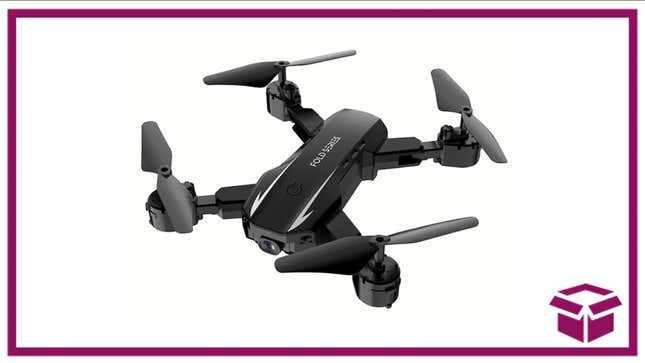
The Ninja Dragons Blade X 4K Dual-Camera Drone is simple to use for all ages and skill levels.

Ever wish you had a photography drone to take great images with high above the ground? It’s true that some can be prohibitively expensive. But they aren’t all unaffordable. The Ninja Dragons Blade X 4K Dual-Camera Drone is an affordable option that lets you watch images in real time as you take to the skies and use its remote control to snap photos with 120-150m control distance. It has a 360-degree flight angle to get a great view of your surroundings for fanastic photos. And best of all, it’s just $80 right now at StackSocial. That’s a savings of 60% and $120 off its normal price of $200.

Ninja Dragons Blade X 4K Dual-Camera Drone | $80 | StackSocial

That’s a small price to pay for this remote controlled drone that uses one-click take-off and landing tech so you get foolproof photos every time. It also uses an electronic stabilization system so it can level out on its own and you can get some seriously great footage and images, no matter how good of a flyer you are. If this all sounds great to you, you’re going to want to lock in your drone ASAP, because there’s no way this deal will last long.

Advertisement