About

Posts by :

Crystal Bridges offering free teen photography mentorship program

Crystal Bridges offering free teen photography mentorship program

Teens are encouraged to register for the program, regardless of experience level. No special equipment is required. The program is designed to help teens amplify their portrait photography skills, including everything from practical photo-taking techniques to how to exhibit their work.

Download the 5NEWS app on your smartphone:

Tell Me More: Colossal Releases a Limited-Edition Print with Liz Flores

Tell Me More: Colossal Releases a Limited-Edition Print with Liz Flores

Liz Flores, “Tell Me More”

We’re beyond excited to announce our latest limited-edition print collaboration with Chicago-based artist Liz Flores (previously). “Tell Me More” features one of Flores’ signature color-blocked figures in warm shades of pink and neutral tones. Lounging on a patterned rug with delicate tassels lining the perimeter, the woman lets her long braids drape over her body as she entreats the viewer for more.

The giclée print is signed and numbered and available in an edition of 100 from the Colossal Shop.

Do stories and artists like this matter to you? Become a Colossal Member today and support independent arts publishing for as little as $5 per month. The article Tell Me More: Colossal Releases a Limited-Edition Print with Liz Flores appeared first on Colossal.

Book marketing group available through Watermark Art Center

Book marketing group available through Watermark Art Center

BEMIDJI — Watermark Art Center is offering a book marketing support group where authors can learn how to market their books on the third Thursday of every month starting in September.

The monthly membership club will offer authors the opportunity to focus on necessary marketing tasks, have accountability to get their marketing done and receive tutelage from an expert book marketing coach.

The group is for serious authors of all publishing paths, a release said. Authors will learn from Emily Enger, founder of Good Enough Book Marketing, and spend time working on the marketing strategies they choose.

The club will hold meetings from 10:30 a.m. to 12:30 p.m. on the third Thursday of every month starting in September and running through April 2024, at Watermark’s education studio. Preferred participants are authors of creative genres such as fiction, creative narrative nonfiction or poetry.

Due to limited space, participants must submit an application prior to registration, the release said. If accepted, applicants will receive further instructions to complete the course registration.

ADVERTISEMENT

The application process is free. If accepted, the cost for the course is $500. Apply online at

watermarkartcenter.org.

Our newsroom sometimes reports stories under the byline “Pioneer Staff Report.” This byline is used when reporters rewrite basic news briefs that originate from official sources, such as an email or press release that requires little or no reporting.

Other times, this byline is used when a news story includes numerous authors or when the story is formed by aggregating previously reported news from various sources. If outside sources are used, it is noted within the story.

For questions about a staff report, call (218) 333-9796 or email news@bemidjipioneer.com.

What Camera Lens Should I Buy? A Guide for Beginner Photographers

What Camera Lens Should I Buy? A Guide for Beginner Photographers

Many photographers will say that your camera lens is as important (or even more important) than your camera body. All of the light that your camera body captures has to go through some sort of lens, which affects sharpness, distortion, amount of light, perspective, and many other variables.

Although your camera body is important and you may benefit from different features with different styles of photography, having the right lens is often key to making many great shots – regardless of what body you have. This guide will provide you with the information you will need to decide what camera lens(es) you should buy. Fair warning: lens acquisition can be addicting!
Table of Contents

What Is a Lens?

First things first: what even are lenses, and why do photographers obsess over them? Lenses direct the light from the scene you want to capture toward the camera’s sensor. In film cameras, lenses direct light onto the film. Lenses are typically characterized by their focal length, in millimeters, and their aperture, in f-stops.

Today, many entry-level cameras are what we call “point-and-shoot” cameras. They usually have built-in, non-interchangeable lenses that can zoom. Although these have greatly improved in quality in the past decade, there are still limits to having a built-in lens that can’t be changed. On the other hand, DSLRs and mirrorless cameras dominate the professional market right now and usually allow photographers to change lenses depending on their situation. To find out if your camera’s lens can be changed, read its manual or search the internet.

A sports photo captured with a 12mm lens.

Lens Characterization: Focal Length

In basic terms, the focal length of a lens is how “zoomed in” or “zoomed out” your lens can be. This is very important when deciding what lens to get. The actual measurement is in millimeters, and it is the distance between your lens’s optical center and your camera’s image sensor when the lens is focused.

The higher the number, the more zoomed in your image will be. The lower the number, the more zoomed out your image will be. On a zoom lens, you’ll see focal length written as “##-##mm,” where the lower number is the most zoomed out and the higher number is the most zoomed-in focal length that a lens can achieve.

For reference, if your eyes had a focal length, it would be somewhere around 20mm, which is fairly wide. On the other end of the spectrum, many sports and wildlife photographers that you’ll see with large lenses are using focal lengths somewhere around 300-800mm.

Captured with a 24-105mm lens at 24mm.
Captured with a 24-105mm lens at 50mm.

You can easily find lenses that go as wide as 18mm and zoom in to 300mm, but mechanical limitations mean that it’s less common to have a lens that “does it all” with great quality. Yes, 18-300mm lenses exist (and many combinations in-between), but they might be heavier, lower quality, more expensive, or perform worse in low light than other focal lengths.

In the lens world, you’ll often hear people refer to “kit lenses.” These are usually less-expensive lenses that come with a camera body when you buy a kit. The most common kit lens is an 18-55mm lens, which goes from fairly wide to slightly zoomed in.

While many lenses zoom, some lenses don’t. These are called prime lenses, and they have a single, fixed focal length.

Read more: Prime vs Zoom Lenses: A Beginner’s Guide

Prime lenses often have wider maximum apertures than zoom lenses, which will be discussed later in this article. They’re also sometimes lighter, more compact, and sharper because their components don’t need to move. They tend to have fewer mechanical errors because there are fewer moving parts. Their biggest downsides are that they don’t zoom in or out at all, so you might need to carry more than one lens to a shoot if you’re using any prime lenses.

A prime lens (left) has a simpler construction and does not feature a zoom ring, whereas a zoom lens (right) is generally larger and more complex and features a zoom ring.

The most common prime lens is a 50mm lens that many photographers call the “nifty-fifty.”

A portrait captured with a “nifty fifty” 50mm lens.

A note about sensor crop: Sensor size affects a lens’s field of view, which can be confusing. A full-frame sensor camera, which is usually more expensive, will produce images without any crop (hence full-frame). A crop sensor camera, also called an APS-C sensor (common in entry-level DSLR and mirrorless cameras), produces images with ~1.5x relative crop.

In other words, an image shot at 50mm on an APS-C sensor would have the same field of view as an image shot at 75mm on a full-frame sensor camera. Many sports and wildlife photographers opt for APS-C sensors because of the increased relative zoom. Many landscape photographers opt for full-frame sensors because they give wider relative images.

The resulting photos captured using the same focal length on full-frame (red), an APS-C sensor with a 1.5x crop (blue), and a Four Thirds sensor with a 2.0x crop (green). Illustration by Compumundo and licensed under CC BY-SA 3.0.

To figure out your camera’s sensor size, check your camera’s manual or search the internet. To learn more about different sensor sizes, check out this article.

A nighttime cityscape photo captured with a 500mm lens.

Lens Characterization: Aperture

Aperture is an opening inside a lens that light travels through, and it’s another very important consideration when choosing a new lens. It can be wider and let more light through, or smaller and let less light through. Additionally, wider apertures create more of a blurry background (more depth of field). Some lens apertures can go wider than others, letting more light through and thus being easier to shoot with in dark environments. Some apertures are fixed, and can’t open and close. Either way, lenses are often more expensive if they have wider apertures – mostly because that requires more glass. If you want to learn more about what aperture actually does and how to use it, check out this guide.

Lenses will most often be named with their focal length followed by their maximum aperture. Aperture is written in f-stops, and will look like “f/#.#.” Due to mechanics, some zoom lenses have variable maximum apertures. They’ll be written something like “f/#.#-#.#.” This denotes the maximum aperture that the lens can achieve at each end of its zoom range (zoomed out to zoomed in). For example, the most common kit lens mentioned above is an 18-55mm f/3.5-5.6 lens.

To give you an idea of how much aperture affects lens cost, a used Canon EF 70-200mm f/2.8 L lens is somewhere around $600-800 in the current market, with obvious variations in age and quality. A used Canon EF 70-200mm f/4.0 L lens is somewhere around $300-400. The extra stop of light is worth double the price to many people. There are other considerations about lens sharpness and other features, but the aperture is the most important in this case.

Other Lens Parameters

Aside from focal length and aperture, there are other features that you may come across when deciding what lens to buy.

  • Autofocus and manual focus. This is often abbreviated using an “AF/MF” button on most lenses. This isn’t just a matter of old versus new lenses, as some manufacturers produce new lenses that are manually focused for a variety of reasons. The biggest reason is to cut lens costs, and manual focus lenses can often be much more economical.
  • Image stabilization. Different manufacturers use different abbreviations for this, but you may see it referred to as IS (Image Stabilization), VR (Vibration Reduction), or something more simple such as Stabilization. This technology essentially uses electronics to stabilize a lens, reducing the amount of handheld camera shake that is present in an image. Lenses with stabilization are harder to make, and therefore they are usually more expensive. When paired with a camera body that has in-body stabilization, shake can be reduced dramatically.
  • Minimum focusing distance. Every lens has a minimum distance at which it must be from a subject in order for the subject to still be in focus. Macro lenses, for example, have very low minimum focusing distances so that photographers can get inches (or even closer) from their subjects and still focus properly. Some older, larger lenses have minimum focusing distances of many feet.
  • Lens diameter. This is often confused with focal length because it is also measured in millimeters. This is usually found on the end of a lens barrel and denotes the inner diameter of the front of the lens. This is useful for finding filters that will fit correctly, amongst other things.
  • Lens weight. Although it may not seem fully necessary for everybody to consider, lenses can get quite heavy because they’re often made of a lot of glass. Shooting with a lens that’s too heavy for hours on end can be exhausting, so many photographers like to compare lens weights when looking at different lenses. Although a tripod can help alleviate exhaustion, tripods can’t always handle really heavy camera and lens weights. Tripods also can be cumbersome to set up and move around.
  • Special uses. Some lenses are designed to create special effects or be used for certain things. Tilt-shift lenses, for example, have special components that allow the photographer to straighten lines (often used in architectural photography). Fisheye lenses are usually very wide lenses that create interesting, properly-named effects. Macro lenses can allow for incredible magnification of subjects that are fractions of an inch away from the end of the lens.
A photo of a bee captured with a macro lens.

So, Which Lens Should I Buy?

After learning about different lens terms and parameters, you need to find a lens that will do what you want on your budget. Many people swear by lenses that come directly from your camera manufacturer (i.e. Canon, Nikon, Sony), but they’re usually a bit more expensive.

Others believe in the power of third-party lenses (i.e. Tamron, Sigma, Rokinon, Samyang, Tokina), and some even claim that certain models are sharper or better than the same lens coming from the camera manufacturer.

Another option is to buy a used lens, although it can come with risks. New lenses usually come with warranties, return periods, and the assurance that the lens is high-quality. Old lenses can have cracks, mold, faulty mechanisms, and more. However, used lenses can also be fantastic deals on gear that someone is simply not using anymore. Manufacturers usually make lens editions, and buying a first or second edition of a lens can often be much less expensive than the latest edition with similar quality. Newer lenses tend to have faster autofocus and better stabilization, but if you don’t mind waiting a bit longer for autofocus or keeping your camera more steady, older used lenses might be the way to go.

If you’re really torn between two or more lenses and you want to really make the right decision, there are many lens rental services available locally or online. Some rental services will ship you a lens with a return shipping label, and all you have to do is pay for shipping plus the days that you’re using the lens. The process is streamlined and very useful when deciding what to invest in.

If you’re looking for a lens based on a certain type of photography, here are a few pointers. Keep in mind that these are just starting places, and many people have gotten great results using unconventional lenses in different scenarios.

Landscape: You probably want a lens that can zoom pretty wide (called a wide-angle lens). Something as wide as 12mm might be a bit overkill, but popular landscape lenses are the 24-70mm lens or something a bit wider like a 16-35mm lens.

Portrait: Your biggest priority should be a wide maximum aperture so that you can create a nice blurry background. The most widely used portrait lens is a “nifty fifty,” which is a 50mm f/1.8 lens. They’re usually cost-effective, lightweight, and produce great shots. Anything with a maximum aperture around f/1.8, or even around f/2.8 would be good for portraits. Other fantastic portrait lenses include 85mm lenses, which can often flatter subjects more due to their compression at a higher focal length and greater distance from the subject. Some photographers use 70-200mm lenses to achieve a similar result.

85mm

Wildlife and Sports: Usually, you’ll want a lens that can make your subject fill the frame. This might be a telephoto (zoom) lens, like a 75-300mm or 100-400mm lens. You may also want something with a faster maximum aperture and with greater image quality, so you could look into getting a prime lens such as a 300, 400, or 500mm lens. Many professional sports photographers shoot with really fast prime lenses, which is why their lenses are so large.

500mm

Street: A lot of street photography is at times when there is little light. You’ll probably want something versatile, like a zoom lens with a fairly wide maximum aperture. A 24-105mm f/4 lens might be a good place to start. A 24-70mm f/2.8 might suit others better.

Macro: This one pretty much writes itself. You’ll probably want a macro lens, which is specifically designed to have a small minimum focusing distance. These come in lots of shapes and sizes, so consider what you’ll actually need for what you want to do.

Macro

Astrophotography: You need as much light as possible entering your camera, so go for a lens with a really wide maximum aperture. Something like f/2.8 is pretty fast, but even f/1.8, f/1.4, or f/1.2 just gets better. The faster the lens, the more detail that can be captured in the stars.

50mm

Conclusion

There are lots of factors to consider when buying a camera lens. The two most important factors are focal length and aperture, which can have great impacts on price and quality. Decide what you’re trying to achieve with your new lens, and look at lenses that will help you achieve those goals.

Remember that, although there are many traditional uses for certain lenses, people have made names for themselves by using lenses in new ways. Wide-angle sports images or telephoto landscapes often help people stand out from the crowd. Lenses will help you achieve your creative goals, but they may also force you to expand what your goals are.

Once you’ve decided what lens you’re looking to purchase, remember that there are many options for purchasing lenses. You can buy name-brand lenses from the manufacturer, third-party lenses, or take a look at used lens options.

Regardless of what you decide, buying a lens carefully is likely to help you take your photography where you want it to go with impressive results.


Image credits: Header photo licensed from Depositphotos

Phlog, Sony MEA offer 45 photographers opportunity to showcase their talent on World Photography Day 

Phlog, Sony MEA offer 45 photographers opportunity to showcase their talent on World Photography Day 

Phlog, Egypt’s pioneering online photography platform, has joined hands with Sony MEA to mark World Photography Day by orchestrating three photography walks capturing the breathtaking essence of the Nile. The initiative aimed to showcase Cairo’s most significant aesthetic attributes while providing a platform for talented photographers to unveil their skills, nurture their potential, and contribute to the advancement of the photography sector in Egypt.

Phlog is always keen to support the photography community in Egypt in various ways. Through its partnership with Sony MEA, Phlog provided an exceptional opportunity for 45 photographers to participate in three photo walks along the Qasr El-Nil Bridge. The first walk captured the beauty of sunrise, the second the enchanting sunset, and the final one ventured into the mesmerizing night. Equipped with Sony cameras, these walls were led by a team of seasoned photographers, including Ahmed Mansour, a professional street and documentary photographer, Roger Anis, a renowned photojournalist with international newspaper and news agency experience, and Ahmed Naguib, a studio and portrait photography expert.

On this occasion, Khaled Taher, Founder and CEO of Phlog, stated: “We are delighted to collaborate with Sony MEA in creating opportunities for photography talents. We firmly believe in nurturing the skills of emerging photographers and empowering them to make a positive impact on society through art, thereby advancing the photography sector in Egypt.”

Mostafa Aidaros, Egypt Country Manager for Sony MEA, expressed: “Sony MEA takes great pride in partnering with the Phlog app to celebrate World Photography Day. This comes as part of the company’s ongoing efforts to support Egyptian photographers in their diverse fields by providing them with opportunities to enhance their skills.”

Along with the photo walks, Phlog celebrated World Photography Day by unveiling a series of videos featuring photography tips provided by Salma El Kashef, Sony MEA Ambassador. These videos were designed to offer guidance to aspiring photographers, enabling them to infuse their shots with professional flair and fresh visual perspectives.

It is worth mentioning that Phlog is the first of its kind in Egypt that builds a community that equips photographers with the tools to uniquely capture their world, and to monetize their work without compromise, through two applications, photographers’ application, which was launched on a trial basis in March 2022 and succeeded in reaching more than 34,000 users. This application had more than 34,000 photos uploaded to the application, and more than 65 campaigns with an average of 122 winners in the first year of its launch. The other application is for image buyers.

A Photographer’s Frank, Tender Portrait of Her Parents’ Final Year

A Photographer’s Frank, Tender Portrait of Her Parents’ Final Year

A Photographer’s Frank, Tender Portrait of Her Parents’ Final Year

When the pandemic came, Becky Wilkes moved her enfeebled mom and dad into her own home. Her series “Till Death Do Us Part” documents that time.

August 21, 2023

Two people napping on a bed holding hands
“Just hold my hand for a while,” June 8, 2020.Photographs by Becky Wilkes

The old couple lies belly up on a white duvet, linked at the hands like a pair of chained paper dolls. Their slack faces have the look of Greek masks: slits for shut eyes and black sockets for nostrils, mouths turned down like sickle moons. Is this eternal rest or an afternoon nap that just resembles it? The portrait appears midway through “Till Death Do Us Part,” a tender, visceral series of Bob and Mary Behrens, octogenarians from Texas in the sixty-seventh year of their marriage. The photographer, their daughter Becky Wilkes, captured the shot a few months into the coronavirus pandemic, during what turned out to be the final year of her parents’ lives.

Two people sit side by side in walkers reading
“God, this sun feels good!,” November 30, 2020.
A person removing their shirt while sitting on a bed
“This used to not be so hard,” February 16, 2021.

The Behrenses were born a mile apart, in 1931. They met in high school, through the Catholic Youth Organization, and wedded in their early twenties, after Bob served in the Korean War. He made a career at the telephone company Southwestern Bell, working his way up from installer to executive. She bore four children, got a graduate degree as a young mother, and taught fifth grade in Houston. In retirement, the Behrenses earned real-estate licenses and volunteered at a hospital in Waco—Mary manning the gift-shop register, Bob pushing gurneys in the E.R.—before ending up there as patients. Bob was admitted in January, 2020, with congestive heart failure. Shortly after, Mary suffered a stroke. For a few weeks, they healed in adjacent suites, but, while Mary improved, graduating to an independent-living unit, Bob deteriorated and was moved to hospice care. Then came COVID. Wilkes, who’d been visiting the hospital with her siblings, made a prompt decision to relocate their parents to her own home. Her brother and sister drove them over with some of their belongings, and that night Bob ate his first full meal in weeks, tomato soup and a grilled cheese.

A naked man holding onto a walker with one foot on a scale
“Have I moved that needle yet?,” April 10, 2020.
A naked woman photographed from behind standing with a walker
“I look pretty damn good for an old woman,” April 8, 2020.
Two people lying on a bed side by side one puts their arm around the other
“Bob, It’s gonna be ok,” November 19, 2020.

Wilkes and her siblings didn’t expect their father to last more than a few weeks. Bob, at six feet one, had shrunk to about a hundred pounds. Mary could barely get up from the couch. Some of their strength returned, though, in the course of mornings spent resting together in bed or rolling their walkers down the wooden dock behind their daughter’s home. As a child, Wilkes rarely witnessed her parents’ affection, but “Till Death Do Us Part” consecrates it. Bob and Mary tag-team crossword puzzles, FaceTime with great-grandchildren, and help squeeze each other’s feet into orthopedic shoes. To accommodate the couple, Wilkes and her husband scrounged up waterproof bedding and installed bars in the bathroom. Puttering about the house, Bob and Mary often look less like senior citizens than like unself-conscious kids. Wilkes’s father, whom her brother describes as a “professional piddler,” is pictured fussing with dominoes or shelling a plastic tub’s worth of pecans. Her mother appears tart and playful, bringing the nozzle of a handheld nebulizer to her lips as though it were a party streamer. Their geriatric accessories are the primary reminder of their frailty. In one portrait, Bob and Mary sit side by side on wooden rockers, their backs to the camera as they admire the secluded view of a lake. Their walkers are set behind and beside them. Like all of the shots in “Till Death Do Us Part,” this one takes its title from the couple’s own words: “Should I tell Daddy that we’re dying?”

Photograph of two people under the covers of a bed
“Our afternoon delight,” November 2, 2020.
Two people doing a crossword puzzle at a wooden table
“Does a-s-s-i-s-t work,” August 16, 2020.

Wilkes, a stay-at-home mother who studied chemical engineering in college, didn’t pick up photography until her own children were grown and out of the house. Her early work includes elegant studies of shoreline litter—golf balls and beer bottles, rusty nails and takeout containers—plucked from the waterfront and compiled in taxonomical collages. Before her parents moved in, she had little experience with portraiture, and for “Till Death Do Us Part” she established a single ground rule. If Bob and Mary closed a door behind them, she was not to open it. Otherwise, as an artist’s statement takes care to note, she considered them “fully compliant”—even while canoodling under the covers in a portrait cheekily titled “Afternoon delight.” One wonder of the series is Wilkes’s frank treatment of her parents’ bodies. Bob mounts a scale with a single leg, like a flamingo stepping onto a flat rock (“Have I moved that needle yet?”). Mary, shot from behind, strips down for a steam shower (“I look pretty damn good for an old woman”). Under Wilkes’s lens, her parents’ bare complexions resemble everything from pale, under-proofed dough to crisp parchment paper. Mary, towelling off her breast, wonders at her own dark veins, as visible and sinuous as country roads on an old map.

Person signing a form on a clipboard wearing a sweatshirt and a coat over their shoulders
“Bob, I’m signing your life away,” January 2, 2021.
A person holding a photograph in their hands while in a hospital bed
“Take me with you,” January 2, 2021.

On New Year’s Eve, nine months after the pair moved in, Bob fell while doing yoga with his great-granddaughters. “That’s what you call an accident,” he said, trying to laugh it off, but his hip was broken. A few days later, back at the hospital, Wilkes captured her father’s last moments from her mother’s perspective. Mary authorized the doctors to discontinue his life support (“Bob, I’m signing your life away”) and, at the very end, pressed a wallet-size photograph of herself into his limp, familiar fingers (“Take me with you”). She survived two more months, dressing and undressing alone (“This used to not be so hard”) or reading under Bob’s blanket in his old spot on the sofa (“Maybe if I sit right where he sat”), before succumbing to complications from pneumonia.

Person lying in a hospital bed with a tube under their nose waving to the camera
“Bye, I love you,” March 5, 2021.

Bob and Mary loved sunshine, fresh coffee, and square dancing. They left behind four kids, nine grandkids, and more than a dozen great-grandkids, including, as Wilkes put it in the obituaries, one or two “unnamed imminent arrivals.” Wilkes shot the memorial. She kept shooting afterward. She shot her parents’ idle walkers, folded up in the garage, and the golden boxes that hold their cremated remains. She staged a local exhibition of those photographs alongside “furniture” that she fashioned from Kleenex and incontinence pads. On the gallery’s windows, she stuck vinyl transcriptions of text from the condolence cards that her family received. She didn’t realize until too late that she had almost no photographs of herself with her parents from their last year together. “In retrospect,” she writes in her artist’s statement, “I recognize there were times when I used the camera to separate me from the moment I was witnessing.” “Till Death Do Us Part” preserves those moments in a compendium of caregiving: Bob and Mary for each other, and their daughter for them.

Two people sit side by side looking out at a body of water
“That water just talks to you,” May 29, 2020.

Registration Now Open for 2023 Delaware Arts Summit

Registration Now Open for 2023 Delaware Arts Summit


Registration Now Open for 2023 Delaware Arts Summit – State of Delaware News


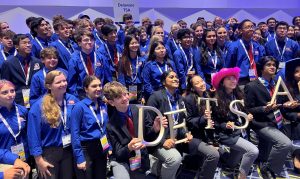
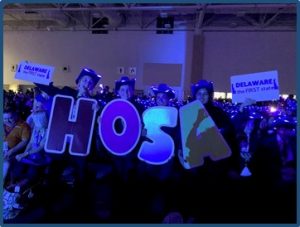
Over 200 creative professionals to convene in Dewey Beach

STATEWIDE, Del. (August 21, 2023) – The Delaware Division of the Arts has announced that registration is now open for the highly anticipated 2023 Delaware Arts Summit, a momentous gathering of Delaware’s arts community including arts professionals, artists, creative minds, and art enthusiasts. This exciting event will take place on October 8 and 9 at the Hyatt Place in Dewey Beach, Delaware, and promises to be inspirational and enlightening. To register and explore the detailed schedule of events, please visit the official Delaware Arts Summit website at Arts.Delaware.Gov/Summit.

Reflection, Renewal, and Rejuvenation are goals for this year’s Arts Summit as we move beyond the challenges of the past several years. The Summit will provide time, sessions, and experiences designed to make us stronger individually and as organizations by promoting mindfulness, stress reduction, better internal and external communications, and methods to manage uncertainty. The arts community is invited to come together to unify and strengthen our creative collective, because the stronger we are, the greater our impact!

“We are delighted to announce the opening of registration for the 2023 Delaware Arts Summit in Dewey Beach,” said Kristin Pleasanton, Deputy Director of the Delaware Division of the Arts. “This summit promises to be a celebration and acknowledgement of the importance of the arts in Delaware and all who play a role in their creation and presentation. We encourage everyone to secure their spot and join us for this exceptional event.”

“Professional development opportunities play a crucial role in advancing Delaware’s creative sector, nurturing talent, and fostering a vibrant and sustainable arts community,” says Jessica Ball, Director of the Delaware Division of the Arts. “Such opportunities provide artists, creators, and arts professionals with access to specialized training, knowledge, and information. Workshops offered by nationally recognized speakers provide valuable learning experiences that empower individuals to assess, refine, and grow. This, in turn, enhances innovation and cultivates a culture of continuous improvement within the creative sector.”

Key highlights of the 2023 Delaware Arts Summit include:

  • Inspiring Speakers: Esteemed experts and artists will share their insights and experience.
  • Interactive Workshops: Attendees will have the opportunity to participate and engage with speakers and colleagues.
  • Artistic Showcases: The summit will feature performances spotlighting the exceptional talent within the Delaware arts community.
  • Networking Opportunities: Participants can forge meaningful connections with fellow artists, art organizations, and potential collaborators.

Details of the event are:

Location: Hyatt Place Dewey Beach: Hyatt Place Dewey Beach, 1301 Coastal Hwy, Dewey Beach, DE 19971

Dates: Monday, October 9, 2023, with an optional pre-conference on Sunday, October 8, 2023.

Registration Fees: $55 for the conference, $20 add on for the pre-conference.

For media inquiries, partnership opportunities, or further information, please contact Andrew Truscott at Andrew.Truscott@delaware.gov.

##

About the Delaware Division of the Arts
The Delaware Division of the Arts is an agency of the State of Delaware. Together with its advisory body, the Delaware State Arts Council, the Division administers grants and programs that support arts programming, educate the public, increase awareness of the arts, and integrate the arts into all facets of Delaware life. Funding for Division programs is provided by annual appropriations from the Delaware General Assembly and grants from the National Endowment for the Arts, a federal agency. For more information about the Delaware Division of the Arts, visit arts.delaware.gov or call 302-577-8278.

Contact: Andrew Truscott, Program Officer, Marketing and Communications

302-577-8280, andrew.truscott@delaware.gov

image_printPrint

Related Topics:  , , , , ,

Graphic that represents delaware news on a mobile phone

Keep up to date by receiving a daily digest email, around noon, of current news release posts from state agencies on news.delaware.gov.

Here you can subscribe to future news updates.

Our Creative Collective overlaid on an abstract painting that looks like a beach.

Over 200 creative professionals to convene in Dewey Beach

STATEWIDE, Del. (August 21, 2023) – The Delaware Division of the Arts has announced that registration is now open for the highly anticipated 2023 Delaware Arts Summit, a momentous gathering of Delaware’s arts community including arts professionals, artists, creative minds, and art enthusiasts. This exciting event will take place on October 8 and 9 at the Hyatt Place in Dewey Beach, Delaware, and promises to be inspirational and enlightening. To register and explore the detailed schedule of events, please visit the official Delaware Arts Summit website at Arts.Delaware.Gov/Summit.

Reflection, Renewal, and Rejuvenation are goals for this year’s Arts Summit as we move beyond the challenges of the past several years. The Summit will provide time, sessions, and experiences designed to make us stronger individually and as organizations by promoting mindfulness, stress reduction, better internal and external communications, and methods to manage uncertainty. The arts community is invited to come together to unify and strengthen our creative collective, because the stronger we are, the greater our impact!

“We are delighted to announce the opening of registration for the 2023 Delaware Arts Summit in Dewey Beach,” said Kristin Pleasanton, Deputy Director of the Delaware Division of the Arts. “This summit promises to be a celebration and acknowledgement of the importance of the arts in Delaware and all who play a role in their creation and presentation. We encourage everyone to secure their spot and join us for this exceptional event.”

“Professional development opportunities play a crucial role in advancing Delaware’s creative sector, nurturing talent, and fostering a vibrant and sustainable arts community,” says Jessica Ball, Director of the Delaware Division of the Arts. “Such opportunities provide artists, creators, and arts professionals with access to specialized training, knowledge, and information. Workshops offered by nationally recognized speakers provide valuable learning experiences that empower individuals to assess, refine, and grow. This, in turn, enhances innovation and cultivates a culture of continuous improvement within the creative sector.”

Key highlights of the 2023 Delaware Arts Summit include:

  • Inspiring Speakers: Esteemed experts and artists will share their insights and experience.
  • Interactive Workshops: Attendees will have the opportunity to participate and engage with speakers and colleagues.
  • Artistic Showcases: The summit will feature performances spotlighting the exceptional talent within the Delaware arts community.
  • Networking Opportunities: Participants can forge meaningful connections with fellow artists, art organizations, and potential collaborators.

Details of the event are:

Location: Hyatt Place Dewey Beach: Hyatt Place Dewey Beach, 1301 Coastal Hwy, Dewey Beach, DE 19971

Dates: Monday, October 9, 2023, with an optional pre-conference on Sunday, October 8, 2023.

Registration Fees: $55 for the conference, $20 add on for the pre-conference.

For media inquiries, partnership opportunities, or further information, please contact Andrew Truscott at Andrew.Truscott@delaware.gov.

##

About the Delaware Division of the Arts
The Delaware Division of the Arts is an agency of the State of Delaware. Together with its advisory body, the Delaware State Arts Council, the Division administers grants and programs that support arts programming, educate the public, increase awareness of the arts, and integrate the arts into all facets of Delaware life. Funding for Division programs is provided by annual appropriations from the Delaware General Assembly and grants from the National Endowment for the Arts, a federal agency. For more information about the Delaware Division of the Arts, visit arts.delaware.gov or call 302-577-8278.

Contact: Andrew Truscott, Program Officer, Marketing and Communications

302-577-8280, andrew.truscott@delaware.gov

image_printPrint

Related Topics:  , , , , ,

Graphic that represents delaware news on a mobile phone

Keep up to date by receiving a daily digest email, around noon, of current news release posts from state agencies on news.delaware.gov.

Here you can subscribe to future news updates.

Photographer’s Striking Minimalist Fine Art Photos Invite Introspection

Photographer’s Striking Minimalist Fine Art Photos Invite Introspection
García de Marina
© García de Marina

Spanish photographer García de Marina’s work blurs the line between the camera and the subject. Marina’s photographic style is minimalist, and his subjects are fascinating objects. His fine art begs the question, where does the photography end and the subject itself begin?

Marina’s work has been celebrated by many, and he has been featured in exhibitions worldwide. He is currently hosting a retrospective exhibition in his native Spain, where he is showing 250 of his works.

Alongside this exhibition, de Marina is the subject of a documentary, Crónicas de un Viaje. Well-known photographers, including famous Nat Geo photographer Steve McCurry, have collaborated for the documentary.

[embedded content]

“Since 2011, I use objects as a means of expression. I am interested in their symbolism, that random connection of elements that a priori lack of relation, condensation, or essentiality, in order to translate them into an emotional burden. My work revolves around intuition and ideas, surrealism, and the world of the subconscious and dreams,” de Marina tells PetaPixel in an email.

García de Marina
© García de Marina

He adds that his work seeks to transform objects and give them new identities. He aims to play with expectations and beliefs and challenge what may seem at first glance to be obvious.

“The basis of my photography is imagination and to find a point of union between objects that are very different from each other,” de Marina explained to Phlearn in a 2018 interview.

García de Marina
© García de Marina

Although many excellent photographers make images evocative of a time and place, de Marina’s artwork is very much connected to an object and how the viewer interacts with not just that object itself but the idea of the object.

García de Marina
© García de Marina

The minimalist approach and the heavy use of negative space within de Marina’s prolific body of work leave significant room for the viewer to assign meaning to each photograph. With so much space for interpretation and interaction between the viewer and an image, a person’s cultural background and experience can significantly affect how they think about de Marina’s work.

García de Marina
© García de Marina

His photographic techniques are similarly straightforward. He told Dodho that he uses natural light through a window. In a presentation, “The Other Side of Things,” de Marina explains that he does not perform any digital manipulation on his images. Instead, he transforms real objects and photographs them in different ways to deliver his artistic vision.

García de Marina

His still-life photos are simultaneously basic and extremely high concept. His straightforward composition, simple backgrounds, and naturalistic approach to lighting lend a certain intensity to every image.

It can be tempting to confuse minimal with simple, but that would be doing a great disservice to the amount of effort and thought required to reduce any object and image of that object to its essential components.

García de Marina
© García de Marina

More of García de Marina’s photography is available on his website and Instagram.


Image credits: All images © García de Marina