Native

Celebrating Complexities: Native American Art at Ucross

Celebrating Complexities: Native American Art at Ucross

The current exhibit at the Ucross Art Gallery “Celebrating Complexities,” is on view through May 17.

The exhibition features art by the 2022 and 2023 recipients of the Ucross Fellowship for Native American Visual Artists, including Gerald Clarke (Cahuilla Band of Indians) of Anza, California; Savannah LeCornu (Tsimshian, Haida, and Nez Perce) of Bellingham, Washington; Mikayla Patton (Oglala Lakota Nation) of State College, Pennsylvania; and Cara Romero (Chemehuevi Indian Tribe) of Santa Fe, New Mexico.

William Belcher, Ucross President and Executive Director said this about the artists whose works are on display.

The exhibition is guest curated by Brenda Mallory (Cherokee Nation) of Portland, Oregon, a recipient of the Ucross Fellowship for Native American Visual Artists in 2018, the first year of the program.

Savannah LeCornu

He said that what they have is a mix, more established artists along with very emerging young artists like Savannah LeCornu “You get a little bit of everything here, it shows the arc of our award winners in this fellowship. That’s always nice to see. The winner of those awards are not always one type of artists in one type of their career. They come from a wide variety.”

Display by Mikayla Patton some of the materials were gathered around Ucross

Belcher added that some of the artwork was created while the artists were at Ucross. He mentioned the artwork by Mikayla Patton.

Cara Romero

Belcher talked about the upcoming reception on May 3, there will be an artist’s panel with some of the artists and the curator at Sheridan College at 11 a.m., and then at 6 p.m. there will be a reception at the Ucross Art Gallery, and some of the artists will be on site as well. The talk and reception are free and open to all. Ucross Chef Jackie Vitale will craft many of her tasty creations for all to enjoy.

Work by Gerald Clarke

The exhibit closes in Ucross on May 17, but it will travel to the Yellowstone Art Museum in Billings, Montana, from June 21 – October 6.

Belcher talked about some upcoming events at Ucross this summer.

The Ucross Art Gallery Hours are Monday-Saturday 10 a.m. to 4 p.m., and the Ucross Cafe, located inside the art gallery, is open Wednesday – Saturday from 10 a.m. until 2 p.m.

Olympian Billy Mills and Running Strong for American Indian Youth To Host Native American Arts Festival in Downtown Sacramento

Olympian Billy Mills and Running Strong for American Indian Youth To Host Native American Arts Festival in Downtown Sacramento

Olympic Gold medalist Billy Mills (Oglala Lakota) announced that Running Strong for American Indian Youth will host the SACRED Arts Festival in Sacramento on Saturday, April 13, and Sunday, April 14. Mills said the arts festival will celebrate Native American arts and culture in the region.

“Our traditions and our culture are passed down through generations through art,” Mills said. “Sacramento and northern California have beautiful tribal communities, but Native people often lack representation and visibility. This event will bring the entire community together, Native and non-Native alike, to celebrate the diversity of our Indigenous art and culture.”

The SACRED Arts Festival will be held at Cesar Chavez Park, in the heart of Sacramento. The two-day event will include live mural painting, artist vendor booths, film screenings,live musical performances, and food and beverage.

Never miss Indian Country’s biggest stories and breaking news. Sign up to get our reporting sent straight to your inbox every weekday morning. 

“Native artists are valuable contributors to the contemporary American art world and protectors of their traditions and culture. Running Strong is proud to support Native American artists and Northern California tribal communities,” states Sydney Mills-Farhang (Oglala Lakota), Executive Director of Running Strong.

After winning the 10,000-meter race at the 1964 Tokyo Olympics in an upset, come-from-behind victory, Mills used his fame to raise millions of dollars to improve the lives of Native Americans, particularly Native youth. He co-founded Running Strong for American Indian Youth in 1986 to help support Native youth and their communities through clean water access, food sovereignty and security, culture and language revitalization, and more.

Click here for more information about the SACRED Native Arts Festival. Additional information about Running Strong can be found at www.IndianYouth.org.

More Stories Like This

10,000 Books in Five Days Across Navajo Nation
Artesian Arts Festival Set for April 13
Lily Gladstone: Paving the Way
9th Annual Native American TV Writers Lab Fellows Announced

Native Perspective.  Native Voices.  Native News. 

We launched Native News Online because the mainstream media often overlooks news that is important is Native people. We believe that everyone in Indian Country deserves equal access to news and commentary pertaining to them, their relatives and their communities. That’s why the story you’ve just finished was free — and we want to keep it that way, for all readers.  We hope you’ll consider making a donation to support our efforts so that we can continue publishing more stories that make a difference to Native people, whether they live on or off the reservation. Your donation will help us keep producing quality journalism and elevating Indigenous voices. Any contribution of any amount — big or small — gives us a better, stronger future and allows us to remain a force for change. Donate to Native News Online today and support independent Indigenous-centered journalism. Thank you.
About The Author
Native News Online Staff
Author: Native News Online StaffEmail: This email address is being protected from spambots. You need JavaScript enabled to view it.
Native News Online is one of the most-read publications covering Indian Country and the news that matters to American Indians, Alaska Natives and other Indigenous people. Reach out to us at [email protected].


His Art Was Real. His Native American Heritage Wasn’t.

His Art Was Real. His Native American Heritage Wasn’t.
Texas History

His Art Was Real. His Native American Heritage Wasn’t.

Texas writer, poet, critic, and artist Roxy Gordon loved Native culture so much that—at least in his own mind—he “became” an Indian.

Texans You Should Know: Roxy Gordon

Roxy Gordon in front of the Bone House, in Dallas.

Courtesy Paradise of Bachelors

Nobody could tell a story like Roxy Gordon. He would stay up all night on the porch of his house in East Dallas—this was in the eighties and nineties—surrounded by artists and musicians, spinning tales, singing songs, drinking vodka. Roxy, who wore his dark glasses even at night, had the charisma of a rock star, with long black hair spilling out of his cowboy hat, a coyote-tooth necklace, and a tattoo of an eagle on his left forearm. In his deep West Texas drawl, he would talk about growing up in a small town near San Angelo, going off to Montana to live on the Fort Belknap Indian reservation, or the time he met Willie Nelson. The books he’d written, the albums he’d made, the magazines he’d started. Roxy knew his Western history and told about the Indians in Texas, their struggles with Anglo settlers, and his own journey as a man of mixed blood. Some of his stories would change with the telling, but no one seemed to mind.

His home, which he shared with his wife and two young sons, was well known in Dallas as the Bone House because of all the skulls, femurs, and vertebrae from cattle, horses, and sheep hanging from the ceiling on the front porch. Almost every night there was some kind of gathering under the bones, with Roxy holding court. Sometimes the famed songwriter Townes Van Zandt would come over and the two would stay up all night drinking. They shared the same birth date and were similar characters: stubborn, whimsical, alcoholic, doomed. “Roxy Gordon is a brother of mine,” Van Zandt said once. “I don’t like the word ‘poet’; it is usually used too lightly. Roxy, however, is a real one.” Van Zandt died of hard living on January 1, 1997, at age 52. Roxy met the same fate three years later and two years older.

While many Texans know Townes’s dramatic story, few have heard of Roxy, an outsider who enjoyed bewildering everyone he met. From the start, as an imaginative boy in a small town, Roxy was determined to do his own thing—writing, drawing, painting, storytelling. He grew up to be, in the words of his friend Sally Wittliff, “one of the world’s first hippies,” a subversive and literary troublemaker. “Roxy Gordon is one of the great outlaw artist misfits,” artist and songwriter Terry Allen once said. Roxy made albums, though he wasn’t really a musician, and wrote songs, though he wasn’t really a songwriter.

He worked as a Native American activist, though he wasn’t really a Native American. He said he was—and he might have believed he was—but Texas Monthly was unable to find any evidence that he had Native heritage. Today Roxy, who was intent on creating his own artistic identity, no matter the cost to himself or those around him, would be called a “pretendian” or a liar. He would say he was just telling stories. “I don’t know the difference,” he once wrote. “Truth, lie, all the same thing. I’ll use either one that’ll work. Either one I can get away with.”


Roxy Lee Gordon was born March 7, 1945, in tiny Ballinger (35 miles northeast of San Angelo), and grew up in tinier Talpa, a few miles away. He was an only child. His mother ran the post office and played piano in the Methodist church, and his father was a World War II vet who spent much of his time drawing and painting. Roxy was an artistic kid, always drawing and writing, something of an oddball in a town where most of the other boys played sports. He loved history, often immersing himself in stories about the Alamo and the Civil War. He had plenty of Texas history in his lineage, including several Texas Rangers, one of whom was his great-grandfather. His grandparents owned a house about six miles east, in the area near Bead Mountain, and he spent a lot of time there. He called it the Hill and wrote about it in mythic terms. “The Hill was rugged and close, always in my sight, drawing me the way hills and mountains have always drawn human beings. I was both fascinated and afraid.”

Inspired by the Beat poets and writers, he played guitar and read Jack Kerouac. Roxy was determined to be a writer, and at Talpa-Centennial High School, he and his friend Mike Rush published a zine with their stories. Roxy was, he would later write, “always thinking and talking about writing, trying to discern what a writer might be, how a writer might approach life and experience.” He published another zine as an English major at the University of Texas, where he’d enrolled because he’d heard “that Austin was full of communists, and it sounded pretty good to me.” For the four-page newsletter, Ramblings, Roxy wrote fiction and poems; his new wife, Judy Nell Hoffman, created the art; and friends of theirs wrote nonfiction and poetry. Roxy was an early agitator against the Vietnam War, excoriating world leaders in a 1965 essay: “Murderers! I wish you eternal nightmare.” He also wrote for the Texas Observer, penning a sweet, evocative short story about a meeting in downtown Dallas between two men from West Texas. When Roxy wasn’t playing the guitar with his folk singer friends, he was hanging out with writers, and he soon became editor of the student literary magazine Riata, working with young bucks such as Larry McMurtry and Dave Hickey. Roxy and his friends sat around the Chuck Wagon, a cafe in the UT student union, and told stories about what they would do when they got rich and famous.

Anxious about the draft, he and Judy joined the Volunteers in Service to America program in 1968 and were sent to tiny Lodge Pole, Montana, where the Assiniboine and Gros Ventre tribes lived on the Fort Belknap reservation. The couple resided in a one-room log cabin and published the tribes’ weekly newsletter, Fort Belknap Notes. They also became friends with an older Assiniboine couple named John and Minerva Allen; he served on the tribal council, and she was a poet. The two would become crucial to Roxy’s Native American journey.

After a year on the reservation, the Gordons moved to San Diego, where Roxy—full of the hubris of youth—worked on a book about his life so far. In 1969 he attended a writer’s conference in San Diego and befriended hippie poet Richard Brautigan, as well as rock star poet Jim Morrison. Roxy and Judy met more poets and musicians when they moved north to Oakland, California, and hung out in the Haight-Ashbury neighborhood of San Francisco.

After their son John Calvin (known as J.C.) was born, in 1970, the Gordons moved to Moriarty, New Mexico, near Albuquerque. In 1971, Bill Wittliff (later of Lonesome Dove fame) published the autobiography Roxy had been working on, titled Some Things I Did. It got good reviews; Texas Observer critic Steve Barthelme wrote of “the mean beauty of Roxy Gordon’s mind” and said that his gift is “to be self-conscious without being so terribly serious.”

During this time, Roxy wrote poems and criticism for the Observer in which he wasn’t afraid to go after his peers—including by taking potshots at Bud Shrake’s Strange Peaches (“a combination rich-Texan joke/liberal horror story”) and Larry McMurtry’s All My Friends Are Going to Be Strangers (“another of McMurtry’s elegies for the west. He’s been killing off the west for years now.”). Roxy seemed to be going somewhere, writing essays for the Village Voice and Rolling Stone. In August 1973, Rolling Stone published a list of one hundred poets to watch, and his photo was under Nikki Giovanni’s and to the right of Louise Glück’s.

Roxy loved the progressive country music coming out of Texas, so in 1974 he started a magazine dedicated to the scene and called it Picking Up the Tempo, after the Willie song. Roxy did a lot of the writing, and he published up-and-coming journalists such as Joe Nick Patoski, Ed Ward, and Richard Meltzer. Like the artists he profiled—Willie, Van Zandt, Billy Joe Shaver—his own writing could be rebellious and inventive. In 1978 he penned a nine-thousand-word review of Butch Hancock’s debut record, West Texas Waltzes and Dust-Blown Tractor Tunes, for a British magazine called Omaha Rainbow. It’s a remarkable piece of criticism about an album that would later be considered a classic, with Roxy laying out—in four separate sections—the physical and cultural landscape of West Texas before going into the songs, all of it seen through the lens of his own West Texas upbringing. “Maybe,” he wrote, pondering reincarnation, “I’ve always lived on these prairies and maybe I will, for centuries to come.”

Texans You Should Know: Roxy GordonTexans You Should Know: Roxy Gordon
Roxy and Judy Gordon.Courtesy Paradise of Bachelors

Ever since his time in Montana, Roxy had been fascinated with Native Americans, the ultimate outsiders. In 1979, he and Judy, now living in Dallas, named their second son, Quanah Parker Gordon, after the child of Cynthia Parker, an Anglo woman who was abducted as a child in 1836 by a Comanche band in East Texas. Roxy was immersed in Indian history, reading every book he could find and writing his own dark and bloody stories and poems about the battles between Indians and Anglos. Several times he traveled back to Lodge Pole to spend time with the Allens, who became his mentors. Roxy often reached out to them, said J.C. “He always leaned on John and Minerva when he himself was probably trying to find direction in his life.” In a Texas Observer book review, he had once written about “white Indians,” Anglos whose lives were changed after meeting Native Americans. In a few instances, he wrote, these Anglos “actually become Indians.” Roxy—child of West Texas, scion of a Texas Ranger—was determined to understand the Native American way of life.

So he “became” an Indian. Roxy’s poems and short stories began appearing in anthlogies of short fiction by Native Americans, such as Earth Power Coming. He cowrote a couple of plays with Choctaw author LeAnne Howe; their comedy Indian Radio Days would be performed dozens of times all over the country. He began reading his poems in bookstores and clubs in Dallas and Fort Worth. “He started getting a reputation,” said J.C. “If you wanted a counterculture opinion or if you wanted the Indian side of something, people just called. The phone was constantly ringing.”

Roxy and Judy were part of Dallas’s vibrant underground literary scene, self-publishing their own chapbooks of art and poetry as well as those of other artists. In 1984, a small Austin press put out a book of his Indian-themed poems, stories, and drawings called Breeds. The book featured a blurb from famed songwriter and poet Leonard Cohen. The couple had started their own publishing company called Wowapi Press and, in 1985, published Roxy’s book Unfinished Business. That same year Roxy worked with artist and songwriter Terry Allen to record a voice-over for his installation China Night, which explored how Native Americans who went to war in Vietnam encountered ancient relatives of theirs from thousands of years before.

Roxy had always loved music, and in the mid-eighties he started performing his poetry with various musicians behind him at local art galleries and punk clubs, the perfect venues for his confrontational pieces about Indians. Friends such as Bill Johnston on fiddle and Frank X. Tolbert 2 on washtub bass would join him, and Judy or young Quanah would sometimes play a hand drum.

After the shows, the party would continue at the Bone House, in Lower Greenville, where artists and musicians hung out on the porch and listened to Roxy. His friend Mike Rush remembered how Roxy’s charisma drew people in. “He would turn an ordinary experience into an exploration. He had this ability to create these little zones that other people wanted to be part of.”

And they would stick around, sometimes for days, said J.C., who spent a lot of time in his childhood bedroom, away from the drinking and drugs. “There were people coming and going night and day, seven days a week. My dad was always playing real hard at cowboys and Indians. He passionately lived that lifestyle. It was the essence of his storytelling as an artist. That never shut off; that was 24-7.” Van Zandt, who would play Poor David’s Pub, just down the street, would crash on the Gordons’ couch for days at a time. Roxy was a huge fan of Van Zandt’s—he had once written about the “perfect darkness of his music”—and the two would stay up all night, telling stories and drinking vodka. Hard drinking ran in Roxy’s family, he wrote, and though friends such as Howe tried to get him to temper his excesses (sometimes including a quart of vodka in a day), he wouldn’t listen. Howe remembered, “He was like, ‘This is my life. This is the way I want to live.’ ” The drinking eventually drove her and other friends away.

Roxy started releasing albums of his poetry with music: Unfinished Business, in 1988, and Crazy Horse Never Died, a year later. Crazy Horse was a dark, intense affair, the music sometimes antagonistic (screechy keyboards) and other times sublime (fingerpicked acoustic guitar). His sympathies were plain to hear, from the title poem (“The white man came to Crazy Horse’s home and wanted buried resources there to run their white men’s world, but Crazy Horse said no.”) to “The Texas Indian,” a rewriting of the old folk song “The Texas Rangers,” giving the Indians’ point of view about a battle on the Rio Grande. The highlight of the album is “I Used to Know an Assiniboine Girl,” a bleak, heartrending story of a battered Indian woman who fought back against her abusive white husband and was sentenced to prison. 

By this point he was saying openly what he had mostly only hinted at before: that he was Native American. He appeared on a public access TV show in Tyler and avowed that he was Choctaw on both sides of his family, though on his mother’s side he was also a fifth-generation Texan. “So I’m a genuine breed—lots of white and lots of Indian.”

Culturally, psychologically, and politically, yes. But biologically? Roxy had never talked about being Choctaw when he was growing up, nor did he write about it in his autobiography, and J.C. has never found any documentation of it. “I cannot find any evidence that my father was Choctaw or had Choctaw lineage in the family beyond what he expressed through his writings, art, and music,” he said. According to the Choctaw Nation of Oklahoma membership department, Roxy was not an enrolled member of the tribe. Today, everybody from Bandcamp to the Texas State Historical Society to the Austin radio station KUTX calls Roxy Choctaw, but if he were alive, he would also be called a pretendian, like politician Elizabeth Warren, pop singer Buffy Sainte-Marie, and Canadian novelist Joseph Boyden.

To Roxy’s credit, he didn’t use his alleged heritage to game fain or wealth. To his friends, the whole thing was a natural progression of his artistic personality. “He saw in the tribes people who were leaning into the past and living the past in their lives,” said Rush. “Seeing himself as a Native American gave him a unifying point of view to his written, visual, and spoken art.” Terry Allen agrees. “He was totally caught up in what was happening to Indigenous peoples in the West. That’s where his heart was and that’s where his visions came from.”

But art is different from life, said J. Todd Hawkins, a Fort Worth poet and citizen of the Choctaw Nation: “There has to be a genetic connection if you’re going to claim to be a Native.” Hawkins said he welcomes cultural allies who can write from an outside perspective without saying they are Indians. “I write a lot of blues poetry. I love blues music. But if I were to assume the persona of being Black, that would be problematic. That’s the thing about writing—you can pick up any persona you want to write a poem from. But once you step outside that persona and you’re the poet again, that’s where that line needs to be drawn. This appropriation is a part of what has been systematically done to erase a people.”

Anglos who take on Native identities are part of a long tradition of “playing Indian,” says Kim Tallbear, a citizen of the Sisseton-Wahpeton Oyate nation and professor of Native studies at the University of Alberta, whether they are dressing up in football stadiums or around Boy Scout campfires. “This is part of a long-standing problem of appropriating our stuff,” she said, “our material resources and our voices.” She acknowledges that many who do it are well-intentioned, like Roxy: “Sometimes people find a more profound meaning in Native cultures, and there’s also a desire to belong to this land, not feel morally complicit in colonialism, in ongoing colonialism and the theft of Indigenous land. We have lots of people who do good things with our communities without lying about who they are.”

Roxy, the eternal outsider who had finally found his place in the world, did both. He falsely appropriated an identity for his own benefit—and he genuinely cared for and was embraced by his Native friends. He organized and played at benefit concerts and readings to help the American Indian Movement and to advocate for the release of Leonard Peltier, a Native American convicted in 1977 of murdering two FBI agents in South Dakota. Calling himself a “militant Indian poet,” Roxy helped put on a special day at the Kerrville Folk Festival that featured Native American acts. His good works and good intentions didn’t go unnoticed, at least by John and Minerva Allen. In 1991 they invited him to Montana and adopted him into their family, meaning he became an honorary member of the Assiniboine tribe. At the end of a four-day Sun Dance ceremony, Roxy was given a new name, and, at least for him, his transformation was complete. From then on, he was Roxy Gordon, First Coyote Boy.

Texans You Should Know: Roxy GordonTexans You Should Know: Roxy Gordon
Roxy would sometimes read his poems with friends backing him—here Jim Richmond (left) and Frank X. Tolbert 2.Courtesy Paradise of Bachelors

Even as Roxy lived his artist’s life—self-releasing three more albums and several homemade books of poetry, as well as performing and speaking at workshops all over the state—he would travel back to Coleman County to visit his parents and the Hill. Once again, he would wander the terrain, feeling the presence of the past. “We spend as much time as we can there,” he wrote, “amongst ghosts and other mysteries and memories and a south wind that blows forever.”

In 1992, he started writing a column for the Coleman Chronicle & Democrat-Voice, and over the next eight years he would publish more than 125 stories. For thirty years he had been writing—as a callow journalist, a rock star poet, a strident activist—and now he seemed to find his voice as a seasoned veteran of Texas letters, writing in a wry, minimalist style about his wild life, the world around him, and his plans for the future: “All I want to do is write songs, prose, and plant a garden, maybe paint strange things on the side of the house.” You can hear Roxy’s love of history and his curiosity about people and why they do things as he tells stories his grandmother had told him—and relates adventures with Brautigan, Hickey, and Van Zandt, who (a week before he died) called Roxy and said he’d had a dream about moving nearby and starting a donkey ranch.

After his father died, in 1997, Roxy moved back to Coleman County for good, to help take care of his mother and aging grandmother. But Roxy himself was in terrible shape. He had always hated going to the doctor, and his final year was a difficult one, some of it spent in a wheelchair. He died February 7, 2000, of cirrhosis of the liver. “He drank himself to death,” Howe said.

Roxy was only 54, and it’s hard not to feel sadness at what could have been. “Bill in particular thought he had a lot of unused talent,” said Sally Wittliff, referring to her husband, who died in 2019. Mike Rush hated seeing Roxy’s self-destruction and thinks his charisma ultimately hurt him. “I wished he could have been able to stay focused on storytelling rather than being the wizard of this little cultural niche that he created.” Roxy was stubbornly Roxy, and Brendan Greaves of Paradise of Bachelors records, which rereleased Crazy Horse last year, thinks that has a lot to do with why so few today know of him and his work. “Part of his obscurity was willful,” Greaves said. “I think he self-sabotaged a lot.”

Roxy’s reputation probably suffered from his refusal to focus on one type of art—he was a writer, critic, poet, and visual artist. He was a bit of a trickster, said Rush, a shape-shifter. “He was an artist,” said Terry Allen. “I think Roxy lived pretty true to his desires, and you can’t say that about everybody.”

Greaves says he will be releasing some of Roxy’s other obscure albums, and J.C. is also trying to get more of his dad’s work out into the world. Growing up, J.C. had a sometimes fraught relationship with his distant father, and when he finally left home, he was resentful. “I wanted to leave and not look back,” he said. But a few years ago, after raising a son of his own, J.C. made a conscious choice to let go of his anger and get to know the man who had always been a mystery to him. He began looking through boxes of old stories, poems, and drawings, and he was so moved by what he saw that he set up a website to host them as well as photos of his mom (who died in 2022) and dad. He pored over the hundreds of stories from both the Coleman Chronicle & Democrat-Voice and Picking Up the Tempo. While he wants to find a publisher for them, he’s not in any hurry. “I miss my father,” he said, “but I have found a way I can cheat his death and meet him as a person, not as a dad.”

Review: Indigenous artists take charge of the camera at MoCP

Review: Indigenous artists take charge of the camera at MoCP

Fabulous fashion spreads open “Native America: In Translation,” a thoughtful and wide-ranging group show of nine Indigenous artists at the Museum of Contemporary Photography. Slim, sexy models wear chic clothes, posed against backdrops ranging from a tropical paradise to the white non-space of a commercial studio.

Look carefully, though, and the glossy veneer cracks. The dark-haired mannequins appear to be the same woman throughout, and her makeup goes beyond avant-garde to bizarre. That lush jungle is just a backyard with exotic animals pasted on. An ad for knee-high mod boots seems to be selling flexible notions of identity in addition to patent-leather footwear. And there are a surprising lot of traditional textiles on view, too. Vogue Latinoamérica this is not.

The series is the work of Martine Gutierrez, a queer artist of Mayan heritage who staged, styled, modeled and in every other way created these images, originally publishing them alongside dozens of others in “Indigenous Woman,” her 128-page parody of women’s fashion magazines.

Such self-presentation — of identity, but also of history, daily practices, inspiration and surroundings — is at the heart of “Native America: In Translation.” Who points the camera is key. The traveling show originated as a special issue of the legendary photography journal Aperture, copies of which serve as the MoCPS’s de facto catalog. Inside is some fascinating work unfortunately not up in the galleries, including historical community portraiture by Richard Throssel and Horace Poolaw that provides artistic precedent for the contemporary artists on view. Also missing is Syilx Nation artist Krista Belle Stewart’s immersion in the bizarre world of “Indianthusiasm,” German hobbyists who reenact Native American crafts and rituals during weeklong summer camps, and the piercingly annotated archival materials and decorated snapshots of Wendy Red Star, the Apsáalooke artist who guest edited Aperture 240 and also curated the exhibition.

Aperture had done something similar in 1995, dedicating its summer edition to Native American photographers and writers. Omaskêko Ininiwak artist Duane Linklater was impacted by the copy he had then and intervenes in it here, in the imperturbable series “ghostinthemachine.” Choice pages of the periodical are torn out, folded, sketched on and then scanned, in configurations that allow Linklater plenty of leeway. He highlights a cuttingly sage paragraph by Paul Chaat Smith and a witty self-portrait by Zig Jackson, makes his own contributions via overlaid geometric line drawings, and keeps some things neatly tucked away. Not everything can or should be revealed to everyone.

Four Polaroids from “Indian Handsigns,” an undated series by Kimowan Metchewais. Part of “Native America: In Translation” at the Museum of Contemporary Photography in Chicago organized by Aperture, curated by Wendy Red Star. (Tom Nowak)
image
“Molly Alexie and her children after a harvest of beach greens in Quinhagak, Alaska,” 2018,by Nalikutaar Jacqueline Cleveland, from her series “Ethnobotany.” Part of “Native America: In Translation” at the Museum of Contemporary Photography in Chicago organized by Aperture, curated by Wendy Red Star.

Nalikutaar Jacqueline Cleveland, an Alaskan native of Yup’ik descent, addresses an extension of this question — how and for whom to photograph the people, places and practices of a community — in her 2019 series, “Ethnobotany Project.” She notes that the intended audience for this work, which forms part of a study funded by the National Science Foundation about variations in diet among Native communities on either side of the Bering Strait and the impact of climate change on their foraging traditions, are local people and students in the field. A small selection of Cleveland’s images shows what might matter to them: a blackberry specimen, labeled in Yup’ik; a 90-year-old elder of Toksook Bay, at home in her qaspeq tunic, bulk cases of Cup Noodles ramen stacked nearby; a mom and her two kids foraging for wild beach greens in Quinhagak; the breathtaking vista and modest structures of Umkumiut, a seasonal hunting and fishing camp. Between the lines of these documentary pictures can be read a text about survival, resistance and negotiation — of traditional language, dress and subsistence practices that continue today, as part of contemporary lives.

Somewhere between documentary and performance stands three immensely powerful images by Rebecca Belmore, a Lac Seul First Nation artist celebrated since the 1990s for artworks orchestrated both for live audiences and for the camera. In “nindinawemaganidog (all of my relations),” she restages key moments from her repertoire, creating striking portraits linked to the lives of Native women real and mythical. “Matriarch” sits with her back to the viewer, face in profile, black hair tumbling down a cloak of blood-red roses hemmed with brown fur. In “keeper,” a woman intently washes the floor with a clay-soaked rag; it stains her garments and becomes the cracked ground on which she kneels. Stories can’t help but attach themselves to these women, stories that recognize their strength, their labor, their centrality and their pain.

By far the most approachable works in “Native America: In Translation” are the exquisitely sincere but never humorless explorations of identity produced by Kimowan Metchewais. The Cree artist amassed a huge personal archive of Polaroids, which he shot, organized, and often cut up, taped together and rephotographed to make small and large-scale artworks. Everything of his at the MoCP is a revelation: a glowing, surreal panorama of himself and his brother fishing while immersed in the infinite blue ripples of Cold Lake, the namesake body of water of their nation; self-portraits in a white tank top, blue jeans and endless hair extensions; Polaroids of his right hand making simple gestures, some with words written underneath, referencing Native traditions of sign language but also, having been erased and rewritten, likely of his own concoction.

Metchewais died in 2011 from a brain tumor at age 47. Like him, we all, whatever our heritage, ultimately must take some charge in our own creation — out of historical traditions, communal norms, but also our own invention.

Lori Waxman is a freelance critic.

“Native America: In Translation” runs through May 12 at the Museum of Contemporary Photography, 600 South Michigan Avenue; more information at 312-369-8067 or mocp.org/exhibition/native-america-in-translation

The forthcoming Milwaukee Public Museum is seeking an Indigenous artist for an installation

The forthcoming Milwaukee Public Museum is seeking an Indigenous artist for an installation

In Milwaukee, Wisconsin, a 200,000-square-foot building, inspired by rock formations and the confluence of the city’s rivers, will open its doors in 2027 as the home to the new Milwaukee Public Museum (MPM). In preparation, the Museum is seeking to hire an Indigenous artist to design and oversee an installation that honors Wisconsin’s First Nations.

Referred to as the Future Museum, the new Ennead Architects–designed building will be MPM’s third home in its 140-year-old history. Inside the five-story building there will be four exhibit floors, as well as a planetarium, an enclosed butterfly garden, and a community green space called “the Plaza,” to inspire visitors to explore the intersection between nature and culture.

The installation will be located within the outdoor plaza. Sited nearby to the primary entrance, inspired by Milwaukee’s three river convergences. It will live alongside native plants, a stormwater bioretention pond, observation deck, and outdoor classrooms.

The Museum is now taking project proposals that follow the theme of “You are welcome, you are home,” prompting a work of art that welcomes visitors and conveys a connection to the land. The selected artist will receive a $150,000 total budget to cover expenses like the artist fee, materials, transportation, construction, installation, and other project costs. According to the Request for Proposals, the final installation is expected to be no more than 12-foot in diameter and weighting in at 7,500 pounds.

The installation will be based on home structures from the Great Lakes signifying the past and present presence of Native people in the region. Proposals are expected to capture “the physical representation of traditional Indigenous dwelling with a modern twist,” the Request for Proposal stated. Forms of traditional dwellings may include flags or emblems of Tribal Nations, depictions of different languages, imagery representative of different clans, and designs affiliated with specific tribes like floral designs or sky domes. In an effort to not perpetuate stereotypes, proposals are asked to not be based on people or native imagery.

Installations are also expected to be interactive to bring some sort of community use. Examples of community uses may include featuring a fireplace available for tribal visits, a space for vegetation to grow, interactive art components, or seating on the installation.

Project proposals are due on April 15.  A subcommittee of the Museum’s Native American Advisory Committee will select the artist by May 3, based on their knowledge of Indigenous traditions, history and present culture; their response to the vision statement; and their status as an enrolled member of a Tribal Nation.

More information regarding proposal requirements and submission information is available at the MPM’s Indigenous Art Installation Request for Proposal page.

Positive Street Art seeks support for ‘Echoes and Shifts,’a multi-year exhibition in the works

Positive Street Art seeks support for ‘Echoes and Shifts,’a multi-year exhibition in the works


downloadWe’re over the moon to present Echoes and Shift, an international Indigenous exhibition hosted on two sites in Manchester and Nashua. Positive Street Art (PSA) and the Greater Manchester Chamber will work with curators Margaret Jacobs (Akwesasne Mohawk) and Yasamin Safarzadeh (Iranian-American) to encompass the throughline of identity in artists who grapple with the duality of multiple nationhood and disrupted genealogies. 

The artists are actively challenging stereotypes within the narrative of contemporary Native art, pushing the boundaries in their field and offering a multiplicity of voices, perspectives and narratives that broaden the understanding of contemporary Native art. With this exhibition, we aim to challenge dominant discourses around Indigenous art and creative practice in New England. We believe this exhibition will help to break stereotypes and misconceptions about Native peoples and to share accurate and authentic narratives. 

Hosting Echoes and Shifts over multiple years is crucial for Positive Street Art (PSA) to amplify Indigenous arts and voices. By consistently showcasing Indigenous artists and their works, PSA not only provides a platform for these creators to share their stories and perspectives but also creates a lasting impact on the community. PSA will build relationships with Indigenous artists, fostering trust and collaboration, while also educating the public about Indigenous cultures and histories. This ongoing commitment not only celebrates the diversity of Indigenous artistic expression but also challenges stereotypes and promotes cultural appreciation and understanding within the community. Moreover, by hosting the show annually, PSA demonstrates its dedication to promoting inclusivity and diversity in the arts, contributing to a more vibrant and equitable cultural landscape.

Currently, there are no federally or state-recognized tribes in the state of New Hampshire. By bringing in an exhibition of contemporary works to the region, we believe that it will unfold a wealth of knowledge and insight that would help shift the conversation from past and stereotype, to contemporary artistic conversations in Native communities. Alongside the exhibition, we will be developing a programmatic component to run concurrently including: artist talks, workshops, and youth enrichment. At the moment, we have youth programming specific to this show with West High School and youth and young adult service organizations in Nashua and Manchester. 

With this in mind, we are reaching out to you in hopes that you would consider sponsoring this exhibition and the resulting programming. While we are grateful for any level of support, we hope you may consider reaching out to y’all’s network to find funding for the 2024 Echoes and Shifts exhibition which would list your name and logo on all of our print and digital marketing materials and primary access to programmatic elements open to the public for contributions over $1,000.

Look out for an upcoming feature-length article at 603 Diversity on the how of this exhibition. Check-in to keep up with the upcoming dates of exhibitions.

The show will be on display from June – September 2024 with an opening reception in early June and programming throughout the run of the show. Co-curated by Margaret Jacobs, Akwesasne Mohawk, and Yasamin Safarzadeh, Curatorial and Projects Coordinator at Positive Street Art, this exhibition encompasses the throughline of identity in artists who grapple with the duality of multiple nationhood and disrupted genealogies. 

The visual artists chosen for this exhibition are actively challenging stereotypes within the narrative of contemporary Native art, pushing the boundaries in their field and offering a multiplicity of voices, perspectives and narratives that broaden the understanding of contemporary Native art. With this exhibition, we aim to challenge dominant discourses around Indigenous art and creative practice in New England. Currently, there are no federally or state recognized tribes in the state of New Hampshire. By bringing in an exhibition of contemporary works to the region, we believe that it will unfold a wealth of knowledge and insight that would help shift the conversation from past and stereotype, to contemporary artistic conversations in Native communities.

The artists for the exhibition were carefully selected to represent a range of emerging, mid-career and established creatives; who are using a variety of media in their work; and who are exploring different issues in their work, so there is a diversity of storytelling, demonstrating the continuum of Native art. Exhibiting artists include: George Longfish (Seneca/Tuscarora), Erin Lee Antonak  (Oneida) and Katrina Brown Akootchook (Oneida Nation of the Thames). These artists were chosen to showcase the breadth of contemporary native work on a national level with artists working off their reserve/ancestral homelands. 

We are hoping to secure the following artists: Niio Perkins Carrie Hill, Kaiahtenhtas Thompson, Carrie Fogt and Marjorie Skidders, all of Akwesasne Mohawk Nation were chosen to showcase the wealth of talent and artistry coming from Akwesasne, a Mohawk territory situated on both sides of the St.  Lawrence River near Cornwall, Ontario.


Please consider sponsoring or donating to ensure we can have the breadth and scope for this exhibition we are hoping to achieve. Donate here. Skip through the second donation section by zeroing out the automated donation selection. Thank you!! 


Alongside the exhibition, we are developing a programmatic component to run concurrently including artist talks, workshops, and youth enrichment. Currently our event/program contains the following dates:

June 13:

5-7 PM: Opening Reception at Manchester Chamber of Commerce Gallery

June 10-13th:

Youth mural led by Akwesasne Youth Leader, Ansley Hill

June 14:

3-5 PM: VIP event with West High School

6-8PM: Opening Reception at Positive Street Arts, Nashua NH. Reception will include performances an curator talks

June 15: 

2-5 PM. Black Ash Basket Weaving Workshop with Carrie Hill, master basketmaker and exhibiting artist from Akwesasne.

June 17: Private tour of sites for youth service partners

TBD: Artist Talk with Co-Curators Margaret Jacobs and Yasamin Safarzadeh.


In Alaska, a crackdown on misrepresented Indigenous art is testing a unique U.S. law

In Alaska, a crackdown on misrepresented Indigenous art is testing a unique U.S. law
image
Open this photo in gallery:

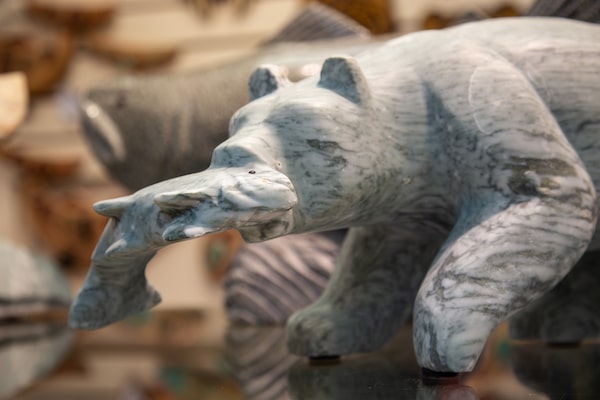
This carving at a shop in Ketchikan, Alaska, was made in the Philippines and engraved with the name of a nonexistent Tlingit artist, part of an operation that ran afoul of the U.S. Indian Arts and Crafts Act. The artist’s two-year prison sentence is the longest of its kind in U.S. history.Photography by Nathan VanderKlippe/The Globe and Mail

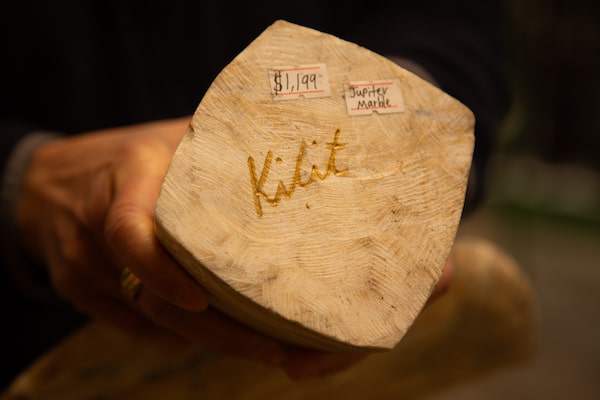
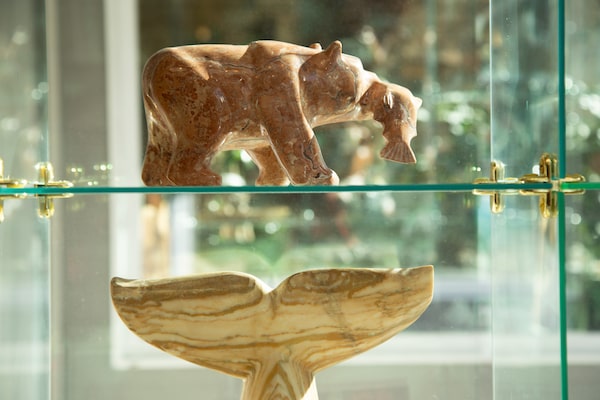
The stone carving depicted a bear grasping a fish in its mouth, its supposed authenticity sealed with the engraved name of its Tlingit artist, Kilit. It was sold at a shop in Ketchikan that catered to the millions of cruise ship tourists who pass through this coastal town eager to bring home a piece of coastal Alaska. The price: US$3,200.

But Kilit did not exist, and the carving did not originate in Alaska. It was made in the Philippines, as part of a sophisticated operation that, for many years, stocked two shops in Ketchikan with humpbacks, bears, dolphins and eagles sculpted 10,000 kilometres away.

The arrest of the family accused of misrepresenting the sale of Indigenous-made goods, a violation of the U.S. Indian Arts and Crafts Act, marks a milestone in the prosecution of a crime that, for many decades, has had little enforcement. It comes at a moment when Indigenous groups in the United States are taking new interest in enforcing artistic traditions they see as their intellectual property, with lucrative potential.

Open this photo in gallery:

Artworks like the ones sold in Ketchikan have become test cases for how to enforce U.S. laws around Indigenous craftsmanship.

The case has underscored the potential effectiveness of a unique U.S. law designed to protect Indigenous-made art, a law nearly a century old.

It has also brought to the fore the complexity of enforcing rules based on artistic identity, and the limitations of legislation without enforcement.

According to the U.S. Attorney, Cristobal Rodrigo, the real identity behind Kilit, began to teach Alaskan art styles to Filipino artists beginning a quarter-century ago, in 1998. He and his wife, Glenda, then formed a company in the Philippines that manufactured carvings and totem poles and shipped them to the U.S., where his store staff told customers, including undercover federal agents, they were made by local artists.

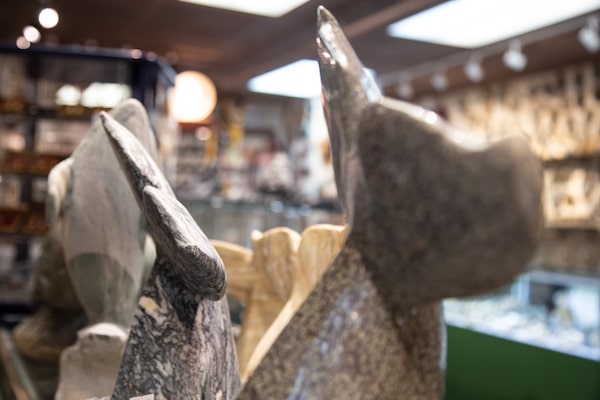
The stone was marble rather than soapstone, the wood mahogany instead of cedar. But the designs were often well crafted, and the price negotiable. Tourists bought pieces by the hundreds.

Open this photo in gallery:

U.S. authorities discovered that ‘Kilit’ is a pseudonym for Cristobal Rodrigo, who is now serving prison time.

Mr. Rodrigo is now serving a two-year sentence in an Oregon prison, in what the U.S. Justice Department called a “monumental sentence” that is the longest of its kind in U.S. history. His wife and son, Christian, await sentencing later this year. An employee, Jessie Reginio, was ordered to pay a fine for calling himself an Indigenous carver named Sonny. At least three others have been charged.

“It’s good to see the powers of the state are being activated, as they should have been for almost 100 years now, to use this law,” said Jacob Adams, an attorney who has worked with Sealaska Heritage Institute, a non-profit dedicated to furthering the cultures of Alaska’s Tlingit, Haida and Tsimshian people.

“It’s nice. Is it making an impact on the market? No.”

The drafters of the U.S. Indian Arts and Crafts Act, first enacted in 1935, were concerned that rampant theft of Indigenous designs and motifs could “lead to the loss of entire peoples and cultures. And that’s not hyperbole,” said Mr. Adams. The law, updated in 1990, mandates truth in advertising: Art must be made by Indigenous hands if it is marketed that way.

For much of its existence, however, it has been little enforced. A 2011 report by the U.S. Government Accountability Office found that from 2006 to 2010, 649 complaints were made to the Indian Arts and Crafts Board, which concluded that 150 appeared to be violations of law. It referred 117 of those to law enforcement, “but no cases were filed in federal court as a result.” No one knows the size of the market for such art, nor the extent of misrepresented works, the report found.

The years since have brought some new enforcement. In 2019, two men in Albuquerque, N.M., pleaded guilty to selling jewellery fashioned in the Philippines and agreed to US$300,000 in fines, as well as community service hours. In 2021, a Juneau man forfeited carvings worth more than US$1.5-million and was fined for selling Philippines-made art. Last year, a man selling art near Seattle’s Pike Place Market was sentenced to 18 months of federal probation after misrepresenting himself for a decade as a member of the Nez Perce peoples.

Indigenous organizations have contemplated more assertive action. Sealaska is moving toward an “offensive approach,” said Lee Kadinger, the institute’s chief operating officer. Lawyers have begun to examine the potential for trademark and copyright claims to certain designs. Civil suits, however, can be expensive.

Building recognition of intangible properties amounts to a new frontier in assertion of Indigenous rights. First came steps to secure land and resources. “But there’s only so much land. There’s only so much natural resources,” Mr. Adams said. Indigenous intellectual property – culture and artistic traditions – provides the potential for “unlimited economic growth and economic foundation for Indigenous groups.”

But fakes, like those that were being sold in Ketchikan, have proliferated. Mr. Rodrigo, according to a charging document, formed a company in the Philippines in 2003 to manufacture carvings. Work on the totems began in 2015. The family did a robust business. The imported carvings were cheap, but sold for thousands. In one year alone, they made at least US$1-million in sales, according to Assistant U.S. Attorney Jack Schmidt.

Other local vendors were furious, but powerless. “Look at the money he’s making. Unbelievable profit margin there, it’s hard to fathom,” said Michael Peters, who owns Scanlon Gallery in Ketchikan. It features works from 120 Indigenous artists.

Indigenous art sales in southeastern Alaska total tens of millions of dollars a year, Mr. Schmidt told the sentencing hearing last year for Mr. Rodrigo. But knockoffs are “way more widespread than your typical white-collar offence,” he said. “Half the businesses probably misrepresent at some point or another to make a sale.”

At the hearing, Richard Peterson, president of the Central Council of the Tlingit and Haida, removed his shirt to show his traditional tattoos. “This tells you who I am,” he told the court. “Our art is everything to us. It’s not just symbols. They are not just items.”

Tlingit totem carver Wayne Price, who teaches at University of Alaska Southeast, was among those who spoke to the court. The visual traditions of the northwest peoples are “hallowed ground,” he said in an interview. “Our art is our culture and it belongs to us.” Yet deciding who can legitimately make that art, he said, is not simple. His students include people who are not Indigenous. “I know a lot of non-natives doing art, and they’re my friends. We’ve done a lot of art together. Is that right or is that wrong?”

Open this photo in gallery:

Nathan Jackson designed this cedar panel in Ketchikan, where he lives. The Tlingit artist is wary about using a standard of Indigenous identity to police other artists: ‘I can’t be discriminatory and I would like to stay that way.’

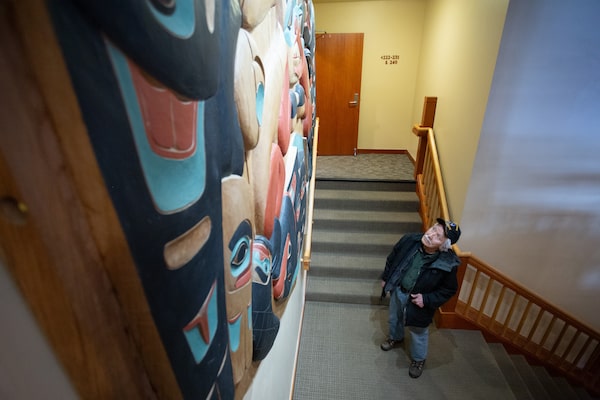
In Ketchikan, the Totem Heritage Center displays work by Nathan Jackson, a Tlingit man who lives in Ketchikan and is celebrated as one of Alaska’s most influential Indigenous artists. It also includes an intricate Chilkat robe woven by Mr. Jackson’s wife, Dorica. She is not Indigenous, but is credited with being one of the first contemporary weavers to complete such a robe, at a time when that art form was considered all but extinct.

Mr. Jackson, 85, has personal experience with fakes. Counterfeit jewellery bearing his name has appeared in Ketchikan. Early in his career, he remembers trying to sell small totem poles to shops, only to be turned away. His finely-honed creations were too expensive and so well-crafted they made other work look bad.

“It was a lot of trials trying to do my own work,” he said. Years later his art, now coveted, is displayed at the local airport, on city property, in totem parks and in local hotels.

Yet he preaches caution about aggressively targeting work produced by people based on meeting a standard of Indigenous identity. One of his own ancestors is Black. “I can’t be discriminatory and I would like to stay that way. Because to me, it makes sense to not stir the water,” Mr. Jackson said. “For me, it’s one of those things where you wrestle water, it gets pretty rough.”

Even sales staff selling Mr. Rodrigo’s Philippines-made art were native Alaskans.

Open this photo in gallery:

Filipino-made art is still available at Ketchikan stores, though explaining their real origin is likely to reduce the chance of a sale.

The family’s two Ketchikan stores are now closed. Some of their art, however, remains on display. At Tom’s Treasures, bears and whale tail carvings sit on glass shelves, some signed with the false Kilit name used by Mr. Rodrigo.

Shop owner Tam Rayner is quick to tell a visitor they are made in the Philippines, saying Mr. Rodrigo fooled her, too, about their origins. If she lies about where they come from, “I’m finished,” she said. But customers lose interest when they discover the pieces are foreign-made.

“I can’t sell them,” Ms. Rayner said.

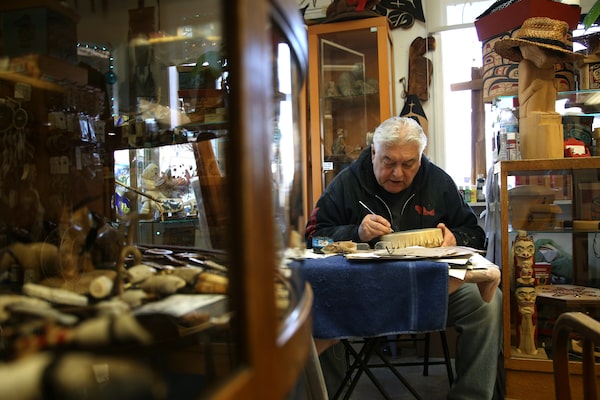
Ken Decker, a Tsimshian carver who owns the Crazy Wolf Studio down the street, welcomes the scare caused by recent enforcement, although he doubts it will last. “As soon as things cool off, people will go back to their old ways again,” he said.

He regularly confronts inauthentic art, often in the hands of customers demanding to know why his goods, like the drum he was painting on a recent afternoon, are so much more expensive.

“It’s killing me, all that fake stuff,” he said. “There’s so much junk out there.”

Open this photo in gallery:

Ken Decker paints a drum at the Crazy Wolf Studio in Ketchikan store, where he has to field quetions about why his wares are more costly than inauthentic art. ‘It’s killing me, all that fake stuff,’ he says.

8 Spots for Exploring Indigenous Art in the American Southwest

8 Spots for Exploring Indigenous Art in the American Southwest
indigenous art american southwest


Few places around the world hold such an astonishing collection of Native American art as the American Southwest. This region is the ancestral home to several nations and Indigenous Peoples who have created award-winning and renowned spaces for visitors to enjoy their traditional and contemporary art. Below, you’ll find some of the best locations in the Southwest to experience the region’s deep-rooted Indigenous art and culture. From the heavenly open spaces of Monument Valley to the well-curated museums of Santa Fe, the American Southwest is an art lover’s paradise.

8. Indigenous Art at the Museum of Indian Arts and Culture

thomas cromwell earl of essex
Doris and Arnold Roland Sculpture Garden, photo by Kitty Leaken. Source: New Mexico Department of Cultural Affairs

An incredible museum dedicated to Native American art is right in the center of Santa Fe in New Mexico. Located on the famous Museum Hill, the Museum of Indian Arts and Culture houses around 70,000 works by Native American artists, making it one of the largest Indigenous Art collections in the world. Inside the beautiful building, you’ll find revolving exhibits and galleries from thousands of years of Native American art history from the southwest to brand-new contemporary art. The museum hosts workshops, events, and outreach programs that help preserve, educate, and foster new talent in the southwest’s Indigenous communities and beyond.

The museum was built from a $2.7 million fund from the state of New Mexico in 1977. It was conceived as a way to showcase the impressive indigenous art collection of the nearby Laboratory of Anthropology, which at the time was the most comprehensive and methodically gathered collection of anthropological artifacts from New Mexico and the Southwest. The museum officially opened its doors in 1987.

On top of the revolving collections are weekly events like lectures, workshops, speeches, and live art demonstrations. Every third Wednesday of each month, the museum’s knowledgeable curators meet the public to identify any local Indigenous art pieces or artifacts that people bring in. Other fun activities include live music during community days and dances.

7. Heard Museum

indigenous art heard museum photo
Heard Museum Entrance. Source: Heard Museum

Get the latest articles delivered to your inbox

Sign up to our Free Weekly Newsletter

Few museums dedicated to native American art can top Pheonix’s Heard Museum. Since 1929, this beautiful space has showcased works by Indigenous artists and worked to champion their work through educational programs and various events. A visit to the Heard Museum will take you through twelve galleries and a courtyard that hosts events and art festivals throughout the year. There are around 44,000 pieces of art, many of which go on display during the rotating seasonal exhibitions.

Dwight Bancroft Heard and Maie Bartlett Heard founded the museum in 1929 to house their enormous collection of global Indigenous art. After Dwight Heard’s death that same year, Maie Heard continued running the museum until she died in 1951. Since then, it has outgrown its place as a museum and become one of the great centers preserving classic pieces and fostering new modern artists and their work.

If you visit the museum in March, you can attend the annual Heard Museum Guild Indian Fair & Market. This special event is one of the world’s leading art markets for Indigenous works. You can buy all sorts of pieces from over 500 Indigenous artists and enjoy food and beverages prepared by local businesses. Ticket sales go directly to the not-for-profit Heard Museum.

6. Museum of Contemporary Native Arts

last supper stevens
Last Supper by Charlene Maxx Stevens, 2011. Source: Museum of Contemporary Native Arts, Santa Fe

Few cities in the United States have as many museums, galleries, and education centers dedicated to Native American art and artists as Santa Fe. One of the most celebrated museums to see modern Indigenous art is the Museum of Contemporary Native Arts. The museum and its parent organization, The Institute of American Indian Arts, aim to be the top organization promoting indigenous arts and cultures around the world. The museum supports artists by hosting education fellowships, residencies, workshops, and events to give talented Indigenous artists access to materials and a platform for success.

On top of the cultural and educational leadership, the museum features a rotating exhibit of local and international Indigenous artists. Almost 10,000 works by artists such as Jean LaMarr, Lloyd Kiva, Lynnette Haozous, and many others are displayed inside. Once you enter the museum, the amount of fine art and priceless modern collections will ensure you stay for several hours. From film, ceramics, and paintings, to other traditional mediums like jewelry and sculptures, there’s an endless amount of art to experience.

5. Red Earth Art Center

indigenous art red earth festival
Red Earth Festival 2023. Source: Red Earth Art Center, Oklahoma City

Located in the heart of bustling Oklahoma City is the Red Earth Art Center. This special non-profit is one of the best places to see and buy Native American modern and traditional art. There are several galleries Inside the art center that feature a rotating selection of local and national Indigenous artists. You’ll find everything from travel-size hand-carved pieces to murals, textiles, and sculptures, all available for purchase.

On top of its incredible collection of Native American masterpieces is its world-famous festival known as the Red Earth Festival. This hugely popular festival is held every year in June and features powwows, art exhibits, competitions, and fun for the whole family. Tribes, nations, and artists from around the country come to take part in the exciting cultural event.

Another popular festival held at the center is FallFest, a public celebration of Oklahoma City Indigenous People’s Day. If you’re visiting the center during this October festival, you’ll get to experience parades, art shows, powwows, and dancing, with plenty of art vendors selling their work.

4. Taos Pueblo, New Mexico

jeff burak new mexico
Photo by Jeff Burak. Source: Unsplash

Nestled in the arid and alluring foothills of the Sangre de Cristo mountains you will find Taos Pueblo and the modern city of Taos right next to it. The small town is one of the oldest communities in the United States, with a recorded history of over a thousand years. Amongst the Puebloan architecture and desert landscapes are well-curated art galleries and markets. You can purchase works by some of the region’s top Indigenous artists and see some of the most stunning architecture and facades in the United States.

Nearby in Taos City, which was founded in the 17th century by the Spanish, you can visit dozens of art museums and markets dedicated to the region’s Native American artists. Establishments such as the Millicent Rogers Museum feature huge collections of local Indigenous art.

Downtown Taos is full of art markets and vendors throughout the year. Perusing the center of town, you’ll meet local artists and find incredible pieces around every corner. Every autumn, you can experience the annual Taos Fall Arts Festival where hundreds of local artists come to share their work. There is also music, food, and cultural festivities.

3. Monument Valley

andrew coelho desert
Sunrise in the Desert by Andrew Coelho. Source: Unsplash

Few regions in the Lower 48 are as mesmerizing and energetic as Arizona and Utah’s Monument Valley. This stunning landscape is full of natural wonders, towering red-rock formations, and a long Indigenous history. Many travelers to Monument Valley will marvel at the natural scenery, only to find the cultural wonders even more breathtaking. The valley is home to the Navajo Tribal Park, a large stretch of Navajo land that’s full of sacred spaces.

The best place to find local Navajo artists and art vendors is along the shoulder viewpoints of Highway 163. Here, you can find exquisite handmade carvings, jewelry, paintings, and everything in between.

If you want to look at the area’s historical sacred art, you can book a tour that will take you deep into the valley. Expert guides will take you through the ancestral spaces and geologic marvels covered in ancient polygraphs. For anyone interested in art history, this tour is an absolute must.

2. Salt River Art Trail

indigenous art sculpture tour
Fire Keepers, Jeffrey Fulwilder. Roadhouse Cinemas I 9090 E Talking Stick Way

Just a few minutes east of the big city of Phoenix is Scottsdale, Arizona’s Salt River Art Trail. This trail starts at the Talking Stick Entertainment District and continues along Pima Road, through the Salt River Pima-Maricopa Indian Community. Here, members of the Maricopa and Pima People run several galleries and art stores that showcase their traditional art.

You’ll find incredible photography, paintings, sculptures, and displays by local artists like Dwayne Manual, Anthony Collins, Jeffrey Fulwilder, and many more. Starting at the Talking Stick Entertainment District, you’ll see the Fulwilder’s popular exhibitions at the Pima Center and Dwayne Manuel’s Gifts of a River at the Discover Salt River Visitor Center. Just down the road is the Arizona Boardwalk, where you can find beautiful works by Jacob Butler before looping down to the Talking Stick Resort to experience a revolving collection from local artists.

Further south, head to the Residence Inn by Marriott and the Courtyard by Marriott to see pieces by Collins and Fulwilder. From here, end your tour at the fantastic Huhugam Ki Museum. Here, you can check out traditional architecture and a community garden outside and weavings, paintings, and pottery inside the well-curated museum.

1. Indigenous Art at the Hopi Arts Trail

hopi arts trail
Grand Canyon Sunset from Hopi Point during summer monsoon. Source: IStock

In the high desert of northern Arizona, there is a 70-mile stretch of State Route 264 known as the Hopi Arts Trail. This beautiful drive is home to Hopi artists and art galleries that sell and showcase Hopi artworks. The trail starts in the town of Moenkopi on State Route 264, just past Tuba City, AZ. From here you’ll pass traditional homes, many of which have home galleries and roadside shops. Here, you can find all kinds of traditional hand-made Hopi art like Katsina carved dolls, baskets, silverwork, and traditional pottery.

Although you can drive alone, it’s advisable to hire a local guide who will educate you about Hopi culture and introduce you to local artists. You can find guides at the Moenkopi Legacy Inn. The Hopi Reservation stretches out over 1.6 million acres in beautiful northern Arizona. The trail offers many local artists a chance to sell their artworks and educate visitors about their culture, history, and way of life. For visitors, it’s a chance to learn about the Hopi People and support their artists.

Art exhibit captures complexities of modern indigenous life

Art exhibit captures complexities of modern indigenous life

UCROSS When Brenda Mallory one of the inaugural recipients of the Ucross Foundation’s  Fellowship for Native American Visual Artists in 2018  was invited back to curate the organization’s 2024 “Celebrating Complexities” exhibit, she had her work cut out for her.

Stretched out before Mallory and visitors to the Ucross Art Gallery was work separated by geography, artistic medium and the Indigenous tribes from which they hailed.

This page requires Javascript.

Javascript is required for you to be able to read premium content. Please enable it in your browser settings.