Native

Cincinnati Art Museum’s Newest Exhibit Features Over a Hundred Glass Works from Indigenous Artists

Cincinnati Art Museum’s Newest Exhibit Features Over a Hundred Glass Works from Indigenous Artists

This story is featured in CityBeat’s Jan. 10 print edition.

A new exhibit at the Cincinnati Art Museum is celebrating the culture and achievements of Native American and Indigenous Pacific-Rim artists through a non-traditional medium. 

Clearly Indigenous: Native Visions Reimagined in Glass is a striking display of more than 100 glass works from 33 artists that exemplify Indigenous traditions and knowledge through the medium of glass. Interpretations of Indigenous basket, textile and pottery practices are expertly crafted through various glass-working techniques and styles.

The pieces range from grand sculptures and complex installments to intricate vases and glass mosaics, creating a scope of art and artists that represent 26 Native nations from the United States and Canada. 

Clearly Indigenous is curated by Dr. Letitia Chambers. It originated at the Museum of Indian Arts & Culture in Santa Fe, New Mexico and was influenced by the Native Glass Art Movement of the 1970s. The movement was sparked by Lloyd Kiva New (Cherokee) – founder of the Institute of American Indian Arts – when he initiated a collaboration with the Rhode Island School of Design to create an art program that included glass-blowing courses. The program sparked interest in generations of Indigenous artists to work with glass, which inspired Dr. Chambers to write a book and curate an exhibition on the subject.

“Glass is not a traditional medium for American Indian artists,” Dr. Chambers tells CityBeat. “Each new generation of Native artists moves the art of previous generations forward as artists honor past traditions while finding their own creative voices and adopt new methods and materials as they become available. Native artists who have chosen to work in glass have created an incredible body of work which combines the intellectual content associated with the expression of their cultures with the beauty and technical expertise of studio glass artists.”

The traveling exhibit follows a book by Dr. Chambers, which details how glass art was introduced to Native artists and the beginnings of the contemporary Native American art movement at the Institute of American Indian Arts. The book shares a title with the exhibit and was published by the Museum of New Mexico Press in 2021.

“The book is organized around the artists and their methods and techniques, as well as their histories,” Dr. Chambers says. “In choosing images of the artists’ works to be included in the book, I was struck by the strong intellectual content of the work, and so I chose to build the exhibit around that content, rather than organizing it by artist.”

As a result, Clearly Indigenous is a powerful collection of work that elevates traditional art, emphasizing its messages and beauty through various glass-working methods. Although fragile in nature, Clearly Indigenous glass works transcend their anatomy, yielding breathtaking, meaningful compositions that have been blown, cast, slumped, sand-blasted, melted or kiln-fired, among other methods. The glass constructions can also be ground, etched, engraved, polished or fused. 

Works range from grand installations to delicate statements. Sculptures that embody the sacred animals of the “land, air and sea,” are prominent throughout the gallery along with baskets, vessels, bowls, statues, vases and astonishing pieces that mock fabric and woven natural elements. 

The gallery’s lighting in Clearly Indigenous is also used to display the striking nature of the art. Not only can glass be transparent or translucent, it can also be solid or layered yet still reflect and absorb light in ways that inflate the works’ already impactful presence. 

“Lighting of glass art is so important to its visual effect,” Dr. Chambers says. “Focusing the light so that it is the objects and their shadows that are highlighted, rather than the case or the room, is a key to the display of glass art.”

Preston Singletary of the Indigenous Tlingit tribe of Alaska created one of the most eye-catching, graceful pieces of the collection. Lighting creates movement and repetition surrounding “Killer Whale Hat,” Singletary’s piece which consists of blown and sand-carved glass that resembles an upside-down, wide-brimmed hat. The work’s golden hue deepens at the rim, while the shallow bowl bears an elegant pattern, which sails onto the brim and is repeated in soft shadows where the light peaks through the design. 

A handful of Singletary pieces appear in Clearly Indigenous, but “Killer Whale Hat” is part of a larger Singletary collection of glass works inspired by traditional Tlingit hats. Another outstanding Singletary inclusion is “Raven Steals the Sun,” which is another impressive display of blown and sand-carved glass that appears to be anything but the delicate medium. The raven’s head is black with deep red reliefs that outline its features. At a glance, it appears to be a wood carving and prompts wonder at how an artist can accomplish such a creation out of glass. 

According to a placard in the exhibit, artists depict creatures as decoration on practical objects to display respect for birds and other animals. In origin stories of some northwest coast nations, the raven is said to have brought light to the world. 

“The artistry and beauty of the objects in the exhibit contribute to the first impression of the viewer. The aesthetics of the exhibit certainly create a wow factor. But the ultimate message conveyed relates to values inherent in indigenous cultures,” Dr. Chambers said. “This can be seen in the importance of caring for living things and the world we live in as depicted by the sections focusing on the creatures of the land, sea and sky. Honoring the ancestors is an important value in Native cultures and there is a section devoted to this more spiritual content. A number of the objects reflect the bridging of two worlds, that of tribal tradition while living in today’s contemporary society.”

Many of the works inspect contemporary issues that are connected to Native identities such as social and environmental justice. In partnership with the Urban Native Collective, the Conversations Gallery on the first floor of the museum is dedicated to generating dialogue and a deeper understanding of Indigenous People’s contemporary experiences. One might re-interpret “Raven Steals the Sun,” for more than its superficial beauty after considering the information available in the Conversations Gallery. 

This extension of Clearly Indigenous will be on display throughout the run of the exhibit. The REDress Project, a part of which is on view in the Conversations Gallery, calls attention to thousands of missing or murdered Aboriginal women across Canada. Placards in the gallery highlight resources and ways to take action against these injustices. 

Programming surrounding Clearly Indigenous is scheduled throughout February and March. On Feb. 1, Dan Friday – a member of the Lummi Nation and a Seattle-based artist who has numerous works and collaborations included in the exhibit – will visit the Cincinnati Art Museum.

“Dan Friday has a compelling personal story, as well as being a leading glass artist,” Dr. Chambers says. “His totems in glass carry on his own family’s tradition as his grandfather’s carved totems of wood.”

Friday’s lecture, Future Artifacts: Artist Talk with Dan Friday, will explore how he combines Native traditions and contemporary glasswork.

“I hope viewers go beyond the stunning visual effect of this body of artworks to appreciate the values of the cultures that created them,” Dr. Chambers says. “For viewers who are not familiar with Native cultures, it may be an introduction to American Indians’ contemporary cultures, rather than seeing them as artifacts of the past.”

Clearly Indigenous: Native Visions Reimagined in Glass is on view in the Thomas R. Schiff Gallery at the Cincinnati Art Museum through April 7. Info: cincinnatiartmuseum.org

Subscribe to CityBeat newsletters.

Follow us: Apple News | Google News | NewsBreak | Reddit | Instagram | Facebook | Twitter | Or sign up for our RSS Feed

Sitka museum calls for applications for Native Artists in Residency Program

Sitka museum calls for applications for Native Artists in Residency Program
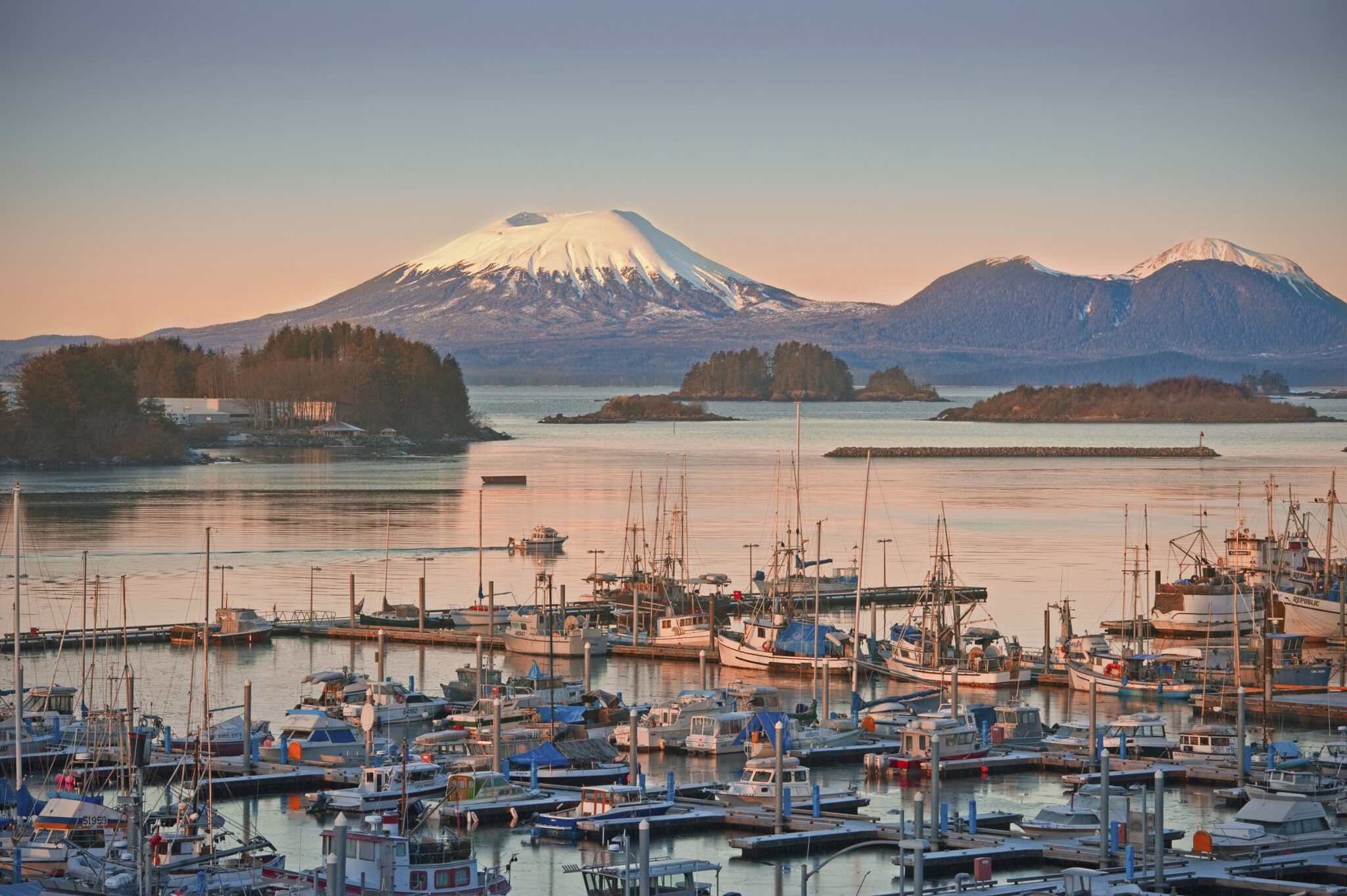
Sunrise over Thomsen Harbor in Alaska. Mt. Edgecumbe, Sitka Ranger District, Tongass National Forest, Alaska. USFS photo by Jeffrey Wickett

The Sheldon Jackson Museum in Sitka is looking for applicants for its 2024 Alaska Native Artist Residency Program. During the residency, artists will be expected to create art in an open-studio format and engage with the community through talks, cultural consultations, and educational programming. 

The Friends of Sheldon Jackson Museum is an organization that supports the historic museum through advocacy, acquisition, and educational programming. The group is leading the call for Native Artists to apply to the program. 

Residencies can range from 20 to 22 days in length. Residency dates are already set, and will happen June 10 to July 2, July 29 to Aug. 18, Aug. 19 to Sept. 8, Sept. 12 to Oct. 2, and Oct. 3 to Oct. 24. Artists can request time off to attend the Alaska Federation of Natives Convention in the fall.  

Each residency position will include a $2,000 artist stipend, $840 food stipend, and travel to and from Sitka. Positions will be filled as grant funding allows. 

Artists may make traditional or contemporary Native art from any medium including carving, beading, sewing, dancing, weaving, and drum making. At the end of the program, artists will present what work they completed during their residency. 

The Friends of Sheldon Jackson Museum said that artists will benefit from exposure to and time with collections at the museum, and from meeting people from all over the state and world while working in the museum gallery. The cultural consultations will be paid time where the Native artists can provide information and insight into the museum’s artifacts, and help further document those artifacts. The group said this time to study the museum’s collection can be inspiring to the artists.  

Advertisement

Application packets can be found online at https://museums.alaska.gov/artist_opportunities.html and www.friendsofsjm.com, or can be requested by calling 907-747-8981. 

Questions about the program or application can be directed to Jacqueline.Fernandez-Hamberg@alaska.gov or by calling 907-747-8904. 

The due date for the application is Jan. 15. 

Advertisement

imageimage

For the Lakota, Creativity Thrives Where There’s No Word for Art

For the Lakota, Creativity Thrives Where There’s No Word for Art

There is no word for art in the Lakota language. But the power of art, in every facet of life, has drawn a boisterous group of moccasin beaders, painters, regalia artists and producers of Native hip-hop down a two-lane road that undulates through the tawny hills of the Pine Ridge Indian Reservation, eight miles from the nearest intersection.

The setting is the new Oglala Lakota Artspace, a Native-run studio space that’s the first of its kind on the Pine Ridge reservation, and since its debut last May, it has liberated scores of artists from their kitchen tables. It’s a place where mothers hover over sewing machines fashioning ribbon skirts for their daughters to wear at powwows, while young hip-hop artists in requisite black T-shirts record music videos and mixtapes under the tutelage of a 30-year-old rapper and producer.

Helene Gaddie, the instructor for the Warrior Women Sewing Circle, is one of five Artspace artists-in-residence; she’s also co-founder of an organization bringing science, math and cultural education to Lakota youth. “There are a lot of statistics about our community,” she observed. “This place is a beacon of hope, a safe, welcoming space where community members excel.”

A strip of two-lane highway with a 40-mile-per-hour speed limit sign.
Main Street heading into Kyle, a town at the center of the Pine Ridge reservation, some 3,469 square miles. Its geographic isolation is compounded by spotty broadband.Tara Weston for The New York Times

The Pine Ridge reservation, home to the Oglala Lakota Nation, spans some 3,469 square miles — a distance twice the size of Rhode Island — including a swath of canyon-colored tablelands within Badlands National Park. In recent decades, the reservation has contended with a litany of social ills tied to deep poverty, including alcoholism and substance abuse, overcrowded, dilapidated housing and youth suicide. The unemployment rate on the reservation as of 2022, according to the 2022 American Community Survey’s five-year estimates, was 10.8 percent. Its geographic isolation is compounded by spotty broadband and dirt roads that become impassable with mud in heavy rains.

The Oglala Lakota people on Pine Ridge are part of an ancient confederacy called the Oceti Sakowin, or Seven Council Fires, whose members speak three dialects of the same language with seven bands spread across reservations primarily in North and South Dakota. All Lakota tribes were once part of the Great Sioux Nation before the government divided them into separate reservations shoehorned onto greatly reduced lands.

Kyle, which many here still call by its traditional name, Medicine Root, is at the center of the reservation, not far from the site of the 1890 Massacre at Wounded Knee, when U.S. soldiers killed nearly 300 Lakota people, most unarmed and at least half of them women and children. As a tribal report notes, the collective weight of these atrocities, along with a lack of trust in mainstream society, endures today.

Helene Gaddie, an instructor for the Warrior Women Sewing Circle, with a fringed shawl she designed and made, adorned with metallic threads and cowrie shells.Tara Weston for The New York Times

The Artspace is the latest manifestation of a resurgence of Native cultural traditions and ceremonies and the increased national and international visibility of Indigenous artists. The creative force behind it is Lori Lea Pourier, who grew up on Pine Ridge (one grandmother was a pioneering art teacher, and the other a quilter). She is the president of First Peoples Fund, a nonprofit dedicated to preserving the cultural wealth of Indigenous artists from Alaska to Maine. When Pourier joined First Peoples in 1998, artists with ambitions were moving to the Southwest and the state arts council “didn’t come to the Rez,” she said.

Protecting the legacy is especially important, given efforts to extinguish it in boarding schools that forced assimilation and by the removal of sacred objects. “When you suppress culture, you take the spirit out of your soul,” Pourier added. “Through art, we’re bringing that spiritual and cultural knowledge back to the community.”

A striking artwork itself, the Artspace was designed by Tammy Eagle Bull, who grew up on Pine Ridge and is considered the first licensed Native woman architect in the United States. The Lakota worldview imbues every inch, starting with the East-facing courtyard echoing the entrances to tipis, their traditional name for dwellings. The circular layout evokes the sacred hoop of the stars, or Lakota Star Knowledge, the belief that the stars are mirrored on Earth and align with seven sacred sites in the Black Hills.

The Artspace structure was designed by Tammy Eagle Bull, and the Oglala Lakota worldview imbues every inch, including the shadow cast by a blue canopy and the Lakota words on the wall to “The Morning Song Prayer.”Tara Weston for The New York Times
Lori Lea Pourier, who helped shepherd the Artspace. She runs the First Peoples Fund, a nonprofit that supports the cultural wealth of Indigenous artists. “Through art, we’re bringing that spiritual and cultural knowledge back to the community.”Tara Weston for The New York Times

Eagle Bull, a professor in the Indigenous Design Collaborative at the Herberger Institute for Design and the Arts at Arizona State University, is one of a growing roster of Native architects helping tribes “reshape their built environment to accurately reflect their culture and values,” she said.

The opportunity to revive a cultural practice inspired Shyla White Lance to make the 170-mile round trip from Rapid City to the Artspace, where she took a beading class, threading riotously colored glass specks onto needles to make moccasins. “I didn’t have anyone to teach me or learn from,” she said. “It’s comforting to have this time to just sit and bead.”

The focus here is on teaching and expanding ceremonial and artistic traditions, with a subtle dose of social service. A recent Saturday found Leslie Mesteth, the Artspace program manager, chopping carrots and onions for a lunchtime soup. First Peoples Fund provides meals and prepaid gas cards for artists and community members, a nod to everyday realities: In Oglala Lakota County, where the Artspace is located, the median household income was $32,279 and over half of the residents lived in poverty, according to 2022 American Community Survey estimates.

Lamira Ferguson, left, and her mother Shyla White Lance, near right, in the beadwork class at the Artspace. The opportunity to revive a cultural practice inspired White Lance to make the 170-mile round trip from Rapid City.Tara Weston for The New York Times
Shyla White Lance beading moccasins in the Artspace.Tara Weston for The New York Times
Hanks of beads and supplies in the beading class at the Artspace.Tara Weston for The New York Times

The artists in residence here are a Renaissance bunch: Cat Clifford is a former rodeo bronc rider who hand-tools rodeo chaps and other leather pieces and does stunt work for Hollywood. He is also a singer and composer who appeared in “Nomadland,” strumming his guitar in a pickup while his song “Drifting Away I Go” accompanies footage of Frances McDormand walking through the Badlands. His studio has the luscious smell of oiled leather.

The Artspace, built for $3 million from mostly philanthropic grants, evolved from a survey commissioned a decade ago that included extensive conversations with artists. It found that more than half of Pine Ridge households ran home-based small businesses — the vast majority related to the arts. But artists were struggling financially and the growth of a local arts economy was stymied by a lack of access to credit, capital and supplies. With the reservation’s acute housing shortage, artists desperately needed space for creating work.

Help came first in the form of a bus, the Rolling Rez, a mobile arts studio, bank and credit union. (It is currently waylaid with mechanical woes.) Today, the Lakota Fund, which provides microloans and other services for artists, is based at the Artspace and offers workshops and coaching sessions on how to run a business.

Talon Ducheneaux produces albums, music videos and mixtapes in the studios at the Artspace.Tara Weston for The New York Times

Many artists at the Artspace and on the Pine Ridge reservation sell their work at the annual Northern Plains Indian Art Market in Sioux Falls and similar shows. Nearly all rely on Instagram, which has flipped the script on the old-school trading post by letting artists control prices, relationships with customers and how their work is presented.

The Native artist Dyani White Hawk, recently named a MacArthur Fellow, received an Artists in Business Leadership fellowship from the First Peoples Fund and has mentored others at the Artspace. “These grants can be pivotal to an artist’s career,” she said. “Most people who are curators or reviewing grant applications are not Native,” she added, and can’t always evaluate a Native artist as well as an organization like First Peoples can.

“A lot can be missed without that library of knowledge,” said White Hawk, who is convinced that other tribes, including her own Rosebud Sioux, will eventually replicate the idea of an Artspace where talent can flourish.

That includes Marty Two Bulls Jr., one of the first Artist Laureates of the Oglala Lakota nation. He led a team of artists in creating the visual touchstone of Artspace: a stainless-steel outdoor sculpture in the shape of two inverted triangles representing Star Knowledge. The facets of the triangles are engraved with constellations and corresponding sacred sites.

Marty Two Bulls Jr., an artist laureate of the Oglala Sioux Nation, with the sculpture he designed with other artists in the sculpture garden at the Artspace. The facets of the triangles are engraved with constellations and corresponding sacred sites on Earth.Tara Weston for The New York Times
“Dominion,” by Marty Two Bulls Jr., at the Academy Art Museum in Easton, Md. He uses imagery of bison and beer bottles in his works to critique consumerism and squandered resources.Marty Two Bulls Jr.
Marty Two Bulls Jr.

“Our nomadic ancestors used the stars the way I use my phone, following the buffalo herds and using stars to navigate the Plains,” he said at his home in Rapid City. Recently he created an immersive installation at the Academy Art Museum in Easton, Md., a critique of consumerism and squandered resources, told through the metaphor of the bison, whose extinction by settlers devastated the livelihood and culture of the Lakota peoples.

Artmaking here is highly collaborative: The outdoor sculpture was planned by the four artists during the pandemic, in Zoom meetings, in consultation with Richard Two Dogs, a medicine man and traditional healer whose teachings on Star Knowledge — lost to Lakota culture years ago — had been preserved by his family.

Two Dogs, who regularly works with suicidal youth, says that red paint applied to a young person’s forehead by elders in a ceremony can be an effective form of spiritual intervention and healing. “Art has helped us as far back as we can remember,” he said. “It plays a large role in how we painted our tipis, our horses, ourselves and in our way of praying. We believe you are recognized by the spirits by the paint you use.”

Cat Clifford, an artist in residence, in his studio for leather-working at the Artspace. A former rodeo bronc rider, he appeared in the movie “Nomadland.”Tara Weston for The New York Times

That healing spirit runs deep in the Black Hills, where the Lakota people are said to have emerged and where important ceremonies and traditional stories take place.

On a chilly mid-October day, Pourier, the First Peoples Fund president, and her colleague Lynette Two Bulls, a cultural leader from Montana, drove through sleet and snow in the Black Hills to ground a reporter in Lakota values. On the way to Black Elk Peak, a sacred site, we passed Mount Rushmore, regarded by many tribal people as a desecration of the most sacred lands. As we neared the Peak, a barricade blocked the main road. “We should have driven through it,” Pourier said wryly. “It’s our damn land!”

At Mato Paha, or Bear Butte, the grasses took on autumnal colors and fog hugged the summit. Tree branches were swaddled with prayer offerings: bright cloth bundles as far as the eye could see, filled with traditional tobacco. Many had been placed there before Sun Dance ceremonies, a summertime practice involving days of fasting that was banned by the federal government and went underground until passage of the 1978 Indian Religious Freedom Act. Two Bulls lit a prayer offering, the fragrant smoke curling with the wind. It didn’t take long to absorb a key teaching: Art and beauty are all around us.

Keith BraveHeart was one of many artists whose insights informed the Artspace. During his childhood in Kyle, he sketched the landscape and the people around him and showed a natural talent for art so promising that a teacher raised gas money to help him attend the Oscar Howe Summer Art Institute 300 miles away at the University of South Dakota. It is named for the artist (1915-1983) who broke the clichés of Indian art with an abstract style called “Dakota Modern.”

Today BraveHeart, a tribal Arts Laureate, is on the faculty of Oglala Lakota College and is a working artist. Storytelling imbues his painting of a 1950s blonde vacuuming a buffalo hide, oblivious to the searing history of skinned buffalo outside her window. Others, of Lakota leaders, often bear the graphic icons for Bluetooth and Wifi.

Keith BraveHeart in his studio in the Artspace.Tara Weston for The New York Times
Richard Red Owl with some of his works in the Artspace.Tara Weston for The New York Times
Keith BraveHeart, descended from a Wounded Knee survivor, is inspired by cultural history as in “Wowicala Iciwayankapi” (“Differences in Worldviews”), of a selfie-taking visitor to a sacred site.Keith Braveheart

A descendant of a female Wounded Knee survivor, BraveHeart created a large-scale painting, titled “Wowicala Iciwayankapi” (“Differences in Worldviews”), an arch look at selfie-taking tourism at the revered massacre site.

Another artist whose insights informed the space was Dwayne Wilcox, whose often-whimsical ledger drawings of modern life on and off the reservation, from dialysis hookups to Greyhound buses, now reside in the Beinecke Rare Book & Manuscript Library at Yale.

“I think of it as a camera for Native people before the camera,” he said of ledger art, the 19th-century pictograph chronicles by tribal artists made by recycling settlers’ ledger pages. Once a recording of hunting, battles and other rituals, the Plains art form has been revived as an expression of contemporary life and resilience.

Ledger art has been revived by Lakota artists like Dwayne Wilcox and Wade Patton, above, as an expression of protest and resilience. Patton incorporates luminous clouds seen billowing across the Great Plains and is among the Indigenous artists represented in “Grounded,” a traveling exhibition coming to The Cathedral Church of St. John the Divine in New York City in March.Wade Patton

The landscape in and around Kyle is imbued with deeply unsettling memories for those who recall firsthand the suffering that took place there. Richard Red Owl, an 83-year-old self-taught Lakota artist, lives on Bombing Range Road, named for the huge swath of Pine Ridge seized by the Army as a practice range during World War II. He grew up poor, but learned to hunt deer, chop wood and dry meat.

His parents, migrant farmworkers in Nebraska, sent him to the Holy Rosary Mission boarding school in Pine Ridge. “It was wicked,” he recalled. Even the youngest children had to mop the floors, “and if you didn’t you were spanked with a leather strap. At school they never let you talk Indian.”

A respected elder, Red Owl now counsels young talent at the Artspace but works from his home studio, where an eagle feather and a gourd rattle dangle from his paint-splattered easel. “Indian art wasn’t always ‘art,’” he pointed out. “Everything had a use.”

Several of his works address Wounded Knee, with concho belt ornaments and elk teeth representing items culled by U.S. soldiers from the dead. “It was something terrible: the soldiers stripping the bodies and taking what they could,” he said.

The entrance to the cemetery and fenced mass gravesite at Wounded Knee Massacre Monument on the Pine Ridge reservation. It is a place of remembrance for Native Americans.Tara Weston for The New York Times

The site is held close by many people here, much like the Sept. 11 site in Lower Manhattan, said Craig Howe, founder and director of the Center for American Indian Research and Native Studies (CAIRNS), which organized a 2018 exhibition on Wounded Knee. Roughly 80 percent of Native people on Pine Ridge have a connection to the massacre, passed down through family narratives, Dr. Howe said.

“When we pray in ceremonies we call on the people buried there to come and help us,” said Mesteth, the Artspace’s program manager, who is sixth-generation Lakota. “We still hold them in our hearts.”

While art can hardly be expected to assuage the legacy of violence and its aftermath, it is having a positive impact, especially on young people, said Tatewin Means, the executive director of the Thunder Valley Community Development Corporation, which offers programs focused on youth leadership, food sovereignty and homeownership. “It’s reframing and shifting the narrative, so that we become the storytellers of our own community,” she said.

It can also provide solace at difficult personal moments. Talon Bazille Ducheneaux, 30, who runs the Wicahpi Olowan Music Program in a wing of the Artspace, says it was music by Maniac the Siouxpernatural and other Native hip-hop artists that helped carry him through a series of family crises involving opioid addiction, divorce and neglect, and parenting his little brother while he himself was still a child. He did well enough in school to attend the University of Pennsylvania but said “survivors’ guilt ate me up inside.” Later he lost his beloved little brother to a gun accident.

Light/Hearted, an indie band from the Pine Ridge reservation, jamming at the Oglala Lakota Artspace, with Jar Cottier (keyboard) and Daeshawn Dreamer (drums). The mural was painted by Lakota youth.Talon Ducheneaux

Now a First Peoples staffer, Ducheneaux produces albums, music videos and mixtapes and recently shepherded the talents of Santee Witt, a 50-year-old ceremonial musician who hankered to branch out. He just released his first album of folk and R&B.

Though the Artspace is still young, the garage stage adjoining the studio has taken on a life of its own. Audiences flock to hear young musicians jamming near a mural of a Plains woman encircled by dragonflies that was painted by Lakota youth. The Warrior Women are sewing fabric with Lakota Star Knowledge motifs to jazz up the studio’s acoustic panels. As Ducheneux, the Artspace’s young impresario, observed: “We have all this art bursting at the seams here needing a place to get out.”

Lily Gladstone rocks earrings made by Montana Indigenous artist at Golden Globes

Lily Gladstone rocks earrings made by Montana Indigenous artist at Golden Globes


awd3.jpg

The earrings Lily Gladstone wore at the Golden Globe Awards can be worn in several different ways. 


When Lily Gladstone made history Sunday evening, becoming the first Native American to win best actress in a motion picture drama, Indigenous people nationwide celebrated while simultaneously trying to figure out who beaded her black-and-white earrings.  

The answer is Lenise Omeasoo, Montana-based Ermineskin Cree and Blackfeet artist.

When Gladstone reached out a few weeks ago, Omeasoo said she knew she had the perfect earrings to match her style.


lg.jpg

As Lily Gladstone made history at the Golden Globe Awards, she wore beaded earrings by Montana-based Blackfeet and Ermineskin Cree artist Lenise Omeasoo. 


The earrings, like many of Omeasoo’s pieces, can be worn in several ways — as a rectangular stud or with a dangling butterfly attachment. At the Golden Globe Awards, Gladstone wore the top post of the earring set, showing a black-and-white mirrored Blackfeet design framed by pink and gold glass beads.

People are also reading…

Omeasoo said she was honored Gladstone wore her work, adding that the earrings perfectly complemented Gladstone’s Bulgari diamond necklace and white Valentino dress.

“I’m incredibly proud of my fellow Blackfeet sister,” Omeasoo said.


awd.jpg

Lenise Omeasoo, founder of Antelope Women Designs and Montana-based Indigenous artist, beaded the earrings Lily Gladstone wore at the Golden Globe Awards Sunday evening.


Since Gladstone’s historic win, Omeasoo said she’s received overwhelming support for her company, Antelope Women Designs.

“The amount of followers and fans that are sharing the work makes me feel very inspired,” she said. “I plan to take this energy and create something with it.”

In her publicity for “Killers of the Flower Moon,” Gladstone has intentionally uplifted the work of local Native artists.

On the cover of “British Vogue” last September, Gladstone wore a large Apsáalooke-style breast plate with vintage brass beads and pink conch pearls by Crow artist Elias Jade NotAfraid. Another photo in the spread shows Blackfeet artist John Pepion’s “Butterfly Dreams” blanket. The blanket, made of cotton, is inspired by butterfly images often painted on tipis or found in the beadwork of Blackfeet people.

Find Lenise Omeasoo’s work on Facebook at AntelopeWomenDesigns or Instagram at Antelope_Women_Designs.

You must be logged in to react.
Click any reaction to login.

#lee-rev-content { margin:0 -5px; }
#lee-rev-content h3 {
font-family: inherit!important;
font-weight: 700!important;
border-left: 8px solid var(–lee-blox-link-color);
text-indent: 7px;
font-size: 24px!important;
line-height: 24px;
}
#lee-rev-content .rc-provider {
font-family: inherit!important;
}
#lee-rev-content h4 {
line-height: 24px!important;
font-family: “serif-ds”,Times,”Times New Roman”,serif!important;
margin-top: 10px!important;
}
@media (max-width: 991px) {
#lee-rev-content h3 {
font-size: 18px!important;
line-height: 18px;
}
}

#pu-email-form-breaking-email-article {
clear: both;

background-color: #fff;

color: #222;

background-position: bottom;
background-repeat: no-repeat;
padding: 15px 0 20px;
margin-bottom: 40px;
border-top: 4px solid rgba(0,0,0,.8);
border-bottom: 1px solid rgba(0,0,0,.2);

display: none;

}
#pu-email-form-breaking-email-article,
#pu-email-form-breaking-email-article p {
font-family: -apple-system, BlinkMacSystemFont, “Segoe UI”, Helvetica, Arial, sans-serif, “Apple Color Emoji”, “Segoe UI Emoji”, “Segoe UI Symbol”;
}
#pu-email-form-breaking-email-article h2 {
font-size: 24px;
margin: 15px 0 5px 0;
font-family: “serif-ds”, Times, “Times New Roman”, serif;
}
#pu-email-form-breaking-email-article .lead {
margin-bottom: 5px;
}
#pu-email-form-breaking-email-article .email-desc {
font-size: 16px;
line-height: 20px;
margin-bottom: 5px;
opacity: 0.7;
}
#pu-email-form-breaking-email-article form {
padding: 10px 30px 5px 30px;
}
#pu-email-form-breaking-email-article .disclaimer {
opacity: 0.5;
margin-bottom: 0;
line-height: 100%;
}
#pu-email-form-breaking-email-article .disclaimer a {
color: #222;
text-decoration: underline;
}
#pu-email-form-breaking-email-article .email-hammer {

border-bottom: 3px solid #222;

opacity: .5;
display: inline-block;
padding: 0 10px 5px 10px;
margin-bottom: -5px;
font-size: 16px;
}
@media (max-width: 991px) {
#pu-email-form-breaking-email-article form {
padding: 10px 0 5px 0;
}
}
.grecaptcha-badge { visibility: hidden; }

Six Nations artist and curator Tom Hill was ‘a champion for Indigenous artists’

Six Nations artist and curator Tom Hill was ‘a champion for Indigenous artists’

When Tom Hill told his father in the 1960s he wanted to be an artist, his father was dismissive.

“His comment was sarcastic, ‘What do you want to do? Put on a blanket and sell trinkets to tourists all your life?” the Six Nations band member told The Spectator in 2004.


Hill

Tom Hill became curator of the Woodland Cultural Centre in 1982, and remained there until he retired in 2005.


ARTICLE CONTINUES BELOW

7 Indigenous and Native Music Artists You Need To Hear in 2024

7 Indigenous and Native Music Artists You Need To Hear in 2024

Last year, we set out to highlight the voices and sounds of Indigenous and Native artists from across the North American continent. Now we’re revisiting our growing list to introduce you to some of our new favorites: budding singers/songwriters and indie-pop crooners, as well as those reshaping rock and hip-hop.

From words of pain and healing — which echo the shared experiences of people of color in a post-colonial world — to urgent calls for environmental justice, music remains one of the many ways they’ve fiercely preserved a connection to their culture and language despite centuries of oppressive assimilation. Let this serve as your reminder that celebrating and supporting Indigenous and Native communities starts with listening to them.

Words by Steven Ward

Produced by Sandra Burciaga Olinger

Elisapie at School Night by Asha MonéElisapie at School Night by Asha Moné
Elisapie at School Night by Asha Moné

Those of you who read last year’s feature should already be familiar with Inuk singer/songwriter Elisapie. Her first two albums — There Will Be Stars and Travelling Love — overflow with propulsively vibrant rollickers of indie-pop design sung in both English and Inuktitut. Whether you find yourself hopelessly enamored by the breezy rhythms that oscillate on “Turning My Back” or scintillating riffs that jump from “Life Is What You Make It” (a song that calls to mind the beguiling punchiness of Rilo Kiley), you won’t find anything but jams buried in her catalog.

Steeped in pensive alt-folk soundscapes, The Ballad of the Runaway Girl saw Elisapie confronting with agonizing honesty the individual and collective trauma that led her to leave her home behind. More recently, she released a truly ethereal covers album in the form of Inuktitut — an at times haunting and searingly triumphant reappropriation of songs by Blondie, Queen, Cyndi Lauper, and others that illuminates the memories these classic hits came to define in her youth living in Salluit, Nunavik, Quebec.

Stream and follow Elispaie.

TwoLips at The Goldfish by Asha MonéTwoLips at The Goldfish by Asha Moné
TwoLips at The Goldfish by Asha Mone

The project of Los Angeles-based Kianah LongChase, an enrolled member of the Native Village of Eklutna located in Alaska, TwoLips discography is one replete with songs that crisscross R&B/soul and hip-hop. Her debut EP, Yellow Gold, gilded her lambent vocals in funkily spiraling rhythms and silky smooth textures. Subsequent releases like Psychowave and FRIEND ANTHEM signaled an evolution in her sound, ornamenting her self-explicating and hypnotic bars with heady beats and suave instrumentals.

She also possesses a prolific collaboration streak — teaming up with Def Sound and Tolliver on her SixDollarSage Mixtape. The release of her most recent single, “Nations, finds her sinking her teeth into a rallying anthem made all the more rousing by its rush of shuddering drums. A sight to see live, if you ever come across TwoLips on a lineup, be sure to get yourself a ticket to the show.

Stream and follow TwoLips.

most anticipated tours of 2024 concertsmost anticipated tours of 2024 concerts
Ruby WatersRuby Waters
Ruby Waters by Shandra Romanoff

It’s hard to pinpoint which is the more affecting quality of singer/songwriter Ruby Waters’ 2019 debut album Almost Naked. Maybe it’s her stirring lyricism and the ease with which she arouses existential weariness and hope alongside heartbreak and unabashed desire. Or perhaps it’s how she gives life to the poetic nature of her words, enveloping them in soaring rock choruses as on “Sweet Sublime,” or riff-sizzling confessionals like “Last Cigarette.” Whichever the case, the whole album is rife with hits.

Waters, who is originally from Ontario and is of Métis and Slovak heritage, returned a year later with her sophomore effort If It Comes Down To It. All seven songs arrived aglow and burning with a melodic resonance that lent greater urgency to her driving folk-rock. “Fox” and “Difficult” are just two instant favorites you’ll find tucked away within.

Stream and follow Ruby Waters.

XiuhtezcatlXiuhtezcatl
Xiuhtezcatl by Josué Rivas

From the moment Xiuhtezcatl released his self-titled debut in 2018, he established himself as a notorious collaborator, eventually co-founding the hip-hop trio Voice Runners with Tru and producer Jaiia Cerff, and a fearless lightning-rod of political and environmental activism. Just this year he’s provided his code-switching flow to tracks like the sublime “La Cura” — featuring Tonina and Sam Pine — teamed up with BARDO for the revelatory feel-good groove anthem “We’re All Just Stars,” and enlisted Oglala Lakota artist Mato Wayuhi on new single “Veils.”

With Aztec roots, Xiuhtezcatl was raised in the tradition of the Mexica (one of the native peoples of México). His family has passed down the traditional knowledge of seeing an individual as part of a greater whole and emphasizing the connection between all aspects of the natural world. Xiuhtezcatl has spoken about the impact of fossil fuels on indigenous and other marginalized communities. He has delivered speeches at the United Nations and gained notoriety after delivering a multilingual speech in English, Spanish, and his native language, Nahuatl, during the 2015 United Nations General Assembly.

Stream and follow Xiuhtezcatl.

Chloe StarChloe Star
Photo Credit: Jordan Keith

CHLOE STAR might only have a handful of singles out, but every single one of them is a banger. First came the bombastic alt-pop “Element,” a bass-bumping and swaggering track that showcased the Los Angeles-based artist’s intoxicating bravado. They’ve since edged closer toward driving pop-punk with the release of “Fool” and “Found My Peace” — her recollections of toxic love finding ecstatic fulfillment in their blistering sincerity. Her latest single “Happy Place” stays true to the pop-rock sound she has so vibrantly cultivated.

Growing up, Chloe Star spent much of her adolescent years between Los Angeles and her family’s reservation in San Bernardino. Despite a chaotic childhood that was often unstable, she found peace in journaling and writing poetry. After teaching herself piano and guitar, she soon started transforming those personal words into lyrics.

Stream and follow Chloe Star.

Shawnee KishShawnee Kish
Courtesy of Shawnee Kish

Mohawk singer/songwriter Shawnee Kish started out singing Shania Twain songs, her dulcet vocals undoubtedly tapping into previously unplumbed depths of the country singer’s hits. Unsurprisingly, her self-titled debut EP is a cascade of invigoratingly soulful pop (“Light Me Up,” “Got It Bad”) and rapt ballads resounding within colossal soundscapes (“I Left, but I Never Lied”). This year brought with it her follow-up Revolution — a jubilant, gutting, but altogether ravishing display of heartwarming wonder. Its closing track, “For Me, encompasses the staggering beauty that’s now synonymous with Kish’s music.

Stream and follow Shawnee Kish.

Cassidy MannCassidy Mann
Cassidy Mann by Kiandra Jeffery

Cassidy Mann unveiled her debut EP, If It’s Not Forever, just last year. Its six tracks are awash in her melancholic but effervescent style of indie pop. Whether she’s singing about ex-lovers or lost friends — as on her latest single, “Everblue” — the Winnipeg singer/songwriter views her music as a means of preservation. A sentiment that stems from her family’s roots in the Sagkeeng First Nation and the importance of storytelling in conserving everything from memories to culture. Cocooned by gleaming folk acoustics and her translucent vocals, songs like “Along for the Ride” revel in the gentle splendor evoked by her intimate lyrics.

Stream and follow Cassidy Mann.

Klee Benally, Navajo Activist and Artist, Dies at 48

Klee Benally, Navajo Activist and Artist, Dies at 48
image

He helped found a punk-rock band when he was 14. That led to a long career as an advocate for Native American and environmental causes.

Klee Benally, a dynamic Navajo activist, artist and punk-rock musician who championed Native American and environmental causes, died on Dec. 30 in Phoenix. He was 48.

His death, in a hospital after a short illness, was confirmed by his sister, Jeneda Benally.

For decades, Mr. Benally, who lived in Flagstaff, Ariz., fought the expansion of the Arizona Snowbowl Ski Resort on one of the San Francisco Peaks, a mountain range just north of Flagstaff that 13 tribes consider sacred. He also fought the resort’s use of treated wastewater to make snow, a practice that Native Americans and environmental groups said was poisoning the ecosystem. He protested against a pumice mine on those same peaks, and against uranium mining and transport in the area.

He campaigned for the rights and care of Indigenous homeless people and against racial profiling. He made films and art about his activism.

He was a community organizer and a youth counselor; he taught media literacy and film to Indigenous teenagers; and he marched against the celebration of Thanksgiving. Late last year he published a book, “No Spiritual Surrender,” about his efforts practicing what he called Indigenous anarchy, and he created a board game, “Burn the Fort,” in which Native American warriors fight off colonizers (and learn some history while doing so).

He chained himself to an excavator, was charged with trespassing and joined numerous legal complaints.

But his first foray into activism was through music, in 1989. He was 14 when he and his siblings, Jeneda and Clayson, formed Blackfire, a high-velocity punk band that mixed traditional Navajo chants and music with protest songs about the oppression of Indigenous people.

Mr. Benally embraced the middle-finger-to-the-world punk ethos — he loved the Ramones, whose music he introduced to his mother, a folk singer — and he could really shred a guitar. The Ramones loved Blackfire back: C.J. Ramone produced the band’s first EP, “Spirit in Action” (1994), and Joey Ramone sang on two of the songs on “One Nation Under” (2002), its first full-length album.

Critics were admiring, too. In 2007, David Fricke of Rolling Stone touted Blackfire’s fourth album, “[Silence] Is a Weapon,” as “pure ire, CBGB-hardcore-matinee protest with jolts of ancient chorale.”

The band played at South by Southwest and other music festivals but declined to play in bars, at least at first. Mr. Benally thought it would be hypocritical, given that alcohol abuse was an issue on reservations. In addition, at the time the Benally siblings were all under 21.

“Some people watch too many movies and think John Wayne killed all the Indians or they’re out dancing with wolves,” he told The Albuquerque Journal in 2003, explaining Blackfire’s mission to educate audiences. “But in reality there are over 500 nations throughout the U.S. carrying on their cultures, their own individual ways of life, their own languages and their own ceremonies.”

Mr. Benally in 2005. He spent decades protesting the expansion of a ski resort on a mountain range that 13 tribes consider sacred.Jill Torrance/Arizona Daily Sun, via Associated Press

Klee Jones Benally was born on Oct. 6, 1975, in Black Mesa, Ariz., on the Navajo reservation near Flagstaff. Music and activism ran in the family. Klee’s father, Jones Benally, is a traditional Diné (as the Navajo call themselves) medicine man; his mother, Berta Benally, is an activist and folk musician of Russian-Polish Jewish heritage who grew up in the folk scene of Greenwich Village. The couple met in Los Angeles, where she was working with Hopi elders.

Klee and his siblings were brought up with their father’s Diné traditions, and they grew up performing traditional dances. Their mother introduced them to the folk canon; Blackfire would later set some of Woody Guthrie’s poems to music. The area where they lived was part of a land dispute that forced the relocation of thousands of Navajo people, and attending protests became a family affair.

In addition to his sister and his parents, Mr. Benally is survived by his wife, Princess Benally, and his brother.

Blackfire disbanded after two decades, mostly so the Benally siblings could concentrate more directly on advocacy and activism.

Mr. Benally often framed his environmental work in terms of religious freedom. “As Indigenous people in the so-called United States, we don’t have guarantees for our religious freedoms like the rest of you,” he told The Arizona Republic in 2013. “This is a struggle for cultural survival — the struggle to protect sacred spaces.”

Mr. Benally was a local hero in Flagstaff, where he founded a number of nonprofit organizations and aid groups. He was both angry and pragmatic; he liked to say that everyone was indigenous to somewhere.

“He was a powerhouse of anticolonial thought and action — ever ready to protect the land,” Dallas Goldtooth, a Native American activist and actor, wrote on X, formerly known as Twitter.

Mr. Benally explained his worldview in a 2020 interview with Spirituality Health magazine: “As an artist, there’s no dichotomy between art and life with our traditional teachings as Diné people. There’s no separation; our life is creation. So our creative expression comes in many different ways. What I look at is: What are the issues facing our communities, and what strategies can be most effective? Is it going to be through song? Is it going to be through prayer or action? Or can it be all of them?”

Phillips Showcases ‘New Terrains’: A Landmark Exhibition of Contemporary Native American Art

Phillips Showcases ‘New Terrains’: A Landmark Exhibition of Contemporary Native American Art

Phillips Showcases ‘New Terrains’: A Landmark Exhibition of Contemporary Native American Art

Phillips, the esteemed auction house, is ushering in a groundbreaking exhibition, ‘New Terrains’, a landmark showcase of contemporary Native American art in New York. The exhibition, running through January 23, is a grand spectacle of over 120 works spanning painting, sculpture, photography, video, jewelry, pottery, and weaving. More than 60 Indigenous artists from mid-20th century to the present day have their works on display, reflecting the creative diversity and artistic prowess of the Native American tribes.

Curatorial Brilliance behind ‘New Terrains’

Bruce Hartman, former executive director of the Nerman Museum of Contemporary Art, curated this exhibition alongside Tony Abeyta and James Trotta-Bono. Together, they have assembled a diverse collection that mirrors the multifaceted creative responses of Indigenous artists to modernism, post-war, and pop art movements. Their artistry is interwoven with their social and political experiences, lending the exhibition a uniquely resonant depth.

Artists and Artworks in Spotlight

The exhibition features revered artists like Jaune Quick-to-See Smith and Fritz Scholder, while also spotlighting emerging artists such as Navajo weaver Calvin Toney. Scholder’s ‘Sitting Indian, 1972’ and Monkman’s ‘Death of Adonis, 2010’ are among the notable works. These masterpieces reflect the rich tapestry of Native American art and offer a profound commentary on their societal context.

Recognition for Contemporary Native American Art

‘New Terrains’ seeks to be inclusive of various tribes from the U.S. and Canada and crosses boundaries of gender and tribal affiliations. This broad representation has already piqued the interest of museums and private foundations, marking a significant moment for the recognition and market appreciation of contemporary Native American and Canadian First Nations art. Artwork prices at the exhibition range from approximately $8,000 to nearly $1 million, suggesting a promising future for Indigenous art in the global art market.

Contemporary Native American Art Is Hot. Phillips Will Show Why in a Huge Exhibition.

Contemporary Native American Art Is Hot. Phillips Will Show Why in a Huge Exhibition.

Kent Monkman, Death of Adonis, 2010, is among featured works at Phillips “New Territories” exhibition in New York from Jan. 5-23.


Courtesy of Phillips

Phillips is bringing an expansive selling exhibition of contemporary Native American art to New York beginning on Friday that will showcase a diversity of expression from more than 60 artists practicing since the middle of the 20th century. 

The show of more than 120 works of painting, sculpture, photography, video, jewelry, pottery, and weaving at Phillip’s Park Avenue gallery arrives at a time when the market for art by Native Americans and Canadian First Nations people “is so fast moving,” says Bruce Hartman, a curator of the exhibition, who retired as executive director of the Nerman Museum of Contemporary Art in Overland Park, Kan., in 2021. 

Hartman, whose parents were collectors of Native American art, had shepherded the acquisition of about 350 major contemporary works by Indigenous artists when he was at the museum, recognizing an opportunity to create a diverse collection when the institution was conceived in 2003 on the campus of Johnson County Community College. It was a visit to the collection a few years ago by Scott Nussbaum, Phillips deputy chairman, Americas, that sparked the idea of bringing this art, many by artists unknown to the wider market, to Phillips. 

The exhibition, “New Terrains”—which runs through Jan. 23—offers a wide-ranging creative response by Indigenous artists to the modernism, post-war, and pop artistic movements of their eras as seen through their own social and political experience. Hartman brought on two more curators, the Dine artist Tony Abeyta and James Trotta-Bono, a gallerist in Los Angeles whose parents were longtime Native American art dealers, to assist.

“We all started contacting sources, and I have to say it’s kind of miraculous that we were able to pull together such extraordinary pieces for this show with the majority of them being available,” Hartman says. 

Calvin Toney, Untitled Red Background Textile, 2022.


Courtesy of Phillips

The aim of the exhibition was to include tribes from across the U.S. and into Canada, and to be as inclusive as possible. “We looked at gender, we looked at tribal affiliations, we looked at modes of expression,” he says. 

The artists range from well-known practitioners who have been the subject of museum shows, such as Jaune Quick-to-See Smith—a citizen of the Confederated Salish and Kootenai Nation—and Fritz Scholder of the Luiseño, in addition to lesser-known artists.

Calvin Toney, is a Navajo artist born in 1987 in Fort Defiance, Ariz., who was trained in weaving by his mother and grandmother on the Navajo reservation, but whose works reflect artistic influences from the Italian Renaissance to Jean-Michel Basquiat. Two “extraordinary textiles” by Toney are included in the exhibition, Hartman says.

“We wanted to say, if weaving is a primary means of artistic expression for the Navajo, then we must include weaving. We must include silversmithing. You’ll see some gorgeous pieces of jewelry; it’ll be a treat for people coming through that are so used to the kind of the usual contemporary expressions to suddenly walk into a space and, ‘oh, my God here are these extraordinary bracelets!’ he says. 

Fritz Scholder, Sitting Indian, 1972, is among a series that broke stereotypes and that the artist called his “Monster Indians.”


Courtesy of Phillips

Scholder, who died in 2005, long ago broke the boundaries of what was perceived as Native American art with a series of paintings created from 1970-80 that he referred to as “Monster Indians,” Hartman says. 

These huge, extraordinary paintings revealed a more honest, painful picture of the Indigenous experience than the “movie stereotypes and romanticized versions” prevalent in the middle of the 20th century. “He was fearless,” Hartman says. “A lot of the depictions are verging on the grotesque.” 

The exhibition includes the artist’s 7-foot-tall, soulful, Sitting Indian, 1972, from this period. 

Also included is a color-field abstraction, Summer Spectrum II, 1958, by the late George Morrison, an Ojibwe who was a contemporary and friend of Willem de Kooning, Franz Kline, and Jackson Pollock, among other artists, whose work was shown regularly at the time but was largely ignored after he returned to Minneapolis, Minn., to work, Hartman says. 

One reason for beginning the exhibition with works from 1950 was “because we wanted to show that there were these early practitioners … groundbreaking Native American artists who were working within these genres and these styles that we only know of Anglo artists working within,” Hartman says. 

Smith is an artist whose works—which regularly appear at auction—directly respond to Western contemporary art movements and individual artists, such as Jasper Johns and Robert Rauschenberg. They reflect her stated belief that her “life’s work involves examining contemporary life in America and interpreting it through Native ideology,” according to the Whitney Museum of American Art, which held a retrospective of Smith’s work from April 19 to Aug. 13 last year. 

Smith’s My Heart Belongs to Daddy, 1968, is included in the show. 

Another significant work is Death of Adonis, 2010, by Kent Monkman, a Canadian Cree—a monumental painting that shows his gender-fluid alter ego, Miss Chief Eagle Testickle, cradling a white cowboy who is dying amid what appears to be a battle in a dramatic Western landscape. The 6 by 10 foot painting evokes Albert Bierstadt’s The Last of the Buffalo in a painting of the same size that “sexualizes, decolonizes, and Indigenizes Bierstadt’s iconic depiction,” Phillips said in a news release. 

Museums and private foundations across the country have already expressed interest in acquiring many of the works, which range in price from about US$8,000 to close to US$1 million, Nussbaum says. 

“It’s apparent that some of these great works are going to end up on public view and that’s truly exciting,” Hartman says. “And it extends across the United States—it’s not as if it’s just a localized type of interest. … Tony, James, and I take a lot of pride in the fact that we were able to bring extraordinary pieces out of the woodwork, so to speak, and look at what the response is already.”

Art Gallery: Jaune Quick-to-See Smith

Art Gallery: Jaune Quick-to-See Smith

A comprehensive retrospective showcases the work of the groundbreaking Indigenous artist.

It was game-changing when the West came east in the exhibition Jaune Quick-to-See Smith: Memory Map, which opened at New York’s Whitney Museum of American Art in 2023, establishing Smith (Confederated Salish, Kootenai) as the first Native American artist with a retrospective that the prestigious institution has itself organized. Show curator Laura Phipps believes Smith just might be the most important Native artist alive, having had almost 100 solo shows and major museum acquisitions.


Genesis, 1993. Oil, paper, newspaper, fabric, and charcoal on canvas, two panels, 60” Å~ 100”.


“She’s both the most prolific and the most influential artist of her generation, and that has meant that there are subsequent generations of artists that have platforms that allow them to also be prolific and influential,” Phipps says. A curator herself and an activist, Smith recently put together The Land Carries Our Ancestors: Contemporary Art by Native Americans, a show of nearly 50 intergenerational Indigenous artists, for the National Gallery of Art, on view in Washington, D.C., through January 15.

Smith, now 83 and still working at her studio in Corrales, New Mexico, is known for her abstract expressionist and modernist mixed-media paintings that emphasize Indigenous presence. She places newspaper clippings, found images, and fabric within the same frame as larger painted icons to express the pro-Indigenous, eco-aware mindset that she’s referred to as her “rap.” For Smith, the political is personal. “Her politics are really based on understanding the importance of land and also this nonhierarchical relationship between humans, plants, and animals,” Phipps says.


Survival Map, 2021. Acrylic, ink, charcoal, fabric, and paper on canvas, 60” Å~ 40”.


No doubt considering Robert Rauschenberg’s newspaper collages, Jasper Johns’ abstracted map paintings, and Andy Warhol’s advertising iconography, Smith builds on art history by fusing it with her ironic messaging. Take her repurposing of the U.S. map, sometimes adding to it with clippings, sometimes flipping it sideways, inevitably diminishing its dominion. These pieces convey a message of stolen land, she told CBS News’ Sunday Morning. “I used clippings to show that Indian people do live here,” she explains in the segment. “We’re still here, right? We are here.”

Born in 1940 on the Flathead Reservation in Montana, Smith and her sister were raised by their horse-trader father after their mother left. When a teacher told Smith she drew better than men but couldn’t become an artist because she was a woman and needed to know her place in life, Smith got an art-education degree instead, married, and had two sons. It took until her 30s for her to pursue an advanced art degree at the University of New Mexico. She applied three times before gaining admission.


[1] Survival Suite: Tribe/Community, 1996. Lithograph with chine coll., 36 1/16” Å~ 24 7/8”. [2] The Vanishing American, 1994. Acrylic, newspaper, paper, cotton, printing ink, chalk, and graphite pencil on canvas, 60 1/8” Å~ 50 1/8”. [3] Survival Suite: Humor, 1996. Lithograph with chine coll., 36 1/8” Å~ 24 13/16”.


Among the artworks in the 130-piece Memory Map show are two collaborations with her son Neal Ambrose-Smith, one of which is a poignant installation of a canoe filled with plastic water bottles, single-use plastics, wooden crosses, and hypodermic needles. “It’s piled high with all these things that are the product of colonization: the inequities of trade, the disruption of traditional foodways like the bison being replaced with government rations like Spam,” Phipps says. “The loss of land and displacement that disrupts your ability to gather plants to practice traditional medicine. The introduction of Christianity, which had mixed but many negative effects within many tribes. So piling the canoe with the refuse and product of all this colonization, they’re attempting to trade it back.”


War Horse in Babylon, 2005. Oil and acrylic on canvas, two panels, 60” Å~ 100”.


Canoes appear as frequent imagery in Smith’s work, having been significant to American Indian trade routes. “She sees her work as an artist as a continuation of that tradition of trade,” Phipps says. “As an artist, she trades in ideas. So the canoe is important for her to use. Canoes move things, and she’s moving ideas throughout the world using this icon.” Horses appear in Smith’s art as a personal reference and emblem of mobility. Bison signify a source of food, shelter, and clothing that was targeted by the U.S. government to displace the Indigenous population.

Over the four years that Phipps worked with Smith on the Memory Map exhibition, she has learned that Smith — who looks the artist, often clad in jeans, boots, and a black brimmed hat — drinks strong coffee, has a good energy level, and is dedicated to advocating for other Indigenous artists. But the most potent conveyance of her presence might just be in her work and what Phipps has observed when people stand in front of one of her works. “You see people putting together in their minds what it is that an artist can do with their work, and what they can learn from these beautiful and complex paintings.”


This article appears in our January 2024 issue.

The exhibition Jaune Quick-to-See Smith: Memory Map is on view at the Modern Art Museum of Fort Worth in Fort Worth, Texas, through January 21, 1924. It travels to the Seattle Art Museum February 29, 2024–May 12, 2024.

Images: Courtesy of Jaune Quick-to-See Smith. Photograph courtesy of the artist and Garth Greenan Gallery, New York.





