Photography

The History of Extreme High Speed Photography

The History of Extreme High Speed Photography

What does an atomic detonation look like with a 1/1,000,000 s exposure? If you drop milk onto a red table, do you make art? This article holds an interesting discussion about high speed photography.

Eadweard Muybridge was commissioned to use photography to determine whether a horse lifted all four hooves off the ground when galloping. This led to the famous Horse in Motion images, created in the late 1800s. Photographer Alex Kilbee discusses select iconic images from the beginnings of high-speed flash photography and throughout its history. 

High-speed flash photography is a specialized technique that involves capturing fast-moving subjects with the aid of short bursts of flash. This technique is essential for freezing rapid motion or capturing events that occur in a fraction of a second, such as a droplet splashing or a bursting balloon. Photographers can effectively eliminate motion blur and achieve remarkably sharp images even in challenging lighting conditions. High-speed flash photography finds applications in a wide range of fields, from scientific research to crime scene analysis, sports, and creative artistry, enabling us to witness and appreciate moments that would otherwise be invisible to the naked eye.

High-speed flash photography captivates many of us. As Alex explains in this video, he was fascinated from an early age thanks to a Disney annual he owned as a child, where he learned about Harold “Doc” Egerton, who pioneered the art of high-speed flash photography.

Photography itself began as a scientific process and has evolved into a tool for artists and visual storytellers. With that in mind, it is only natural that images which begun as a scientific record now often stand as works of art.

Lead Image: Horse In Motion, Eadweard Muybridge.

AI Has Taken One Year to Produce as Many Images as Photographers Did in 150 Years

AI Has Taken One Year to Produce as Many Images as Photographers Did in 150 Years

AI camera

A study has found that 15 billion AI images have been produced in one year, it took 150 years for as many photographs to be taken.

The study by Everypixel Journal looked at how many AI images have been generated by DALL-E, Midjourney, Stable Diffusion, and Adobe Firefly and compared it to how many photographs were taken since photography was invented circa 1826.

It concluded that 15 billion images have been generated by AI so far and, according to a study from 2011, it took photography until 1975 to produce as many photos.

How the Study Reached the 15 Billion AI Image Number

The study draws on OpenAI’s reporting that users generate more than two million images on its DALL-E 2 platform which they estimated to be 916 million images generated in roughly 15 months.

ai image graph

Meanwhile, they took Midjourney’s assertion that its server receives 20 to 40 jobs per second to estimate that its 15 million registered users create 2.5 million images daily, resulting in 964 million images in total since its launch in July 2022.

Stable Diffusion is the most difficult AI image generator to judge because it is an open-source software meaning multiple platforms and apps harness its synthesizing power. Stable Diffusion’s own platforms are estimated to have produced 690 million images but the multiple companies that use its technology are estimated to have generated more than 12.5 billion images — 80 percent of all AI images created.

Lastly, Adobe Firefly announced in July that one billion images have been generated using its technology just three months after its launch.

A Pinch of Salt

The study is not entirely accurate. The authors themselves admit that there are “limitations” as their work is based on “available data and extrapolations.”

Ai image graph

Plus, digital photography had not been invented in 1975. And analog photography is a laborious (but rewarding) process and is nothing like as straightforward as whipping out a smartphone to take a snap or even opening up an AI image generator to create an imaginative picture.

To put this into context, a recent study found that 1.8 trillion photos are taken each year. That’s a staggering 196 million photos taken per hour.

So, while AI images are proliferating they are still dwarfed by real photos.

Pokemon Scarlet and Violet DLC alludes to practical photography feature

Pokemon Scarlet and Violet DLC alludes to practical photography feature

With the first part of the Pokemon Scarlet and Violet DLC (The Teal Mask) now set to release in September, new information provided by the Pokemon company has alluded to an exciting new feature and mission for players to experience. The trailers and information released indicate that there may be a practical photography feature on the way.

As players explore the contents of The Teal Mask portion of the Hidden Treasure of Area Zero DLC, they will come across a character named Perrin, a photographer who is visiting Kitakami to take photos of a certain, so far unnamed Pokemon. According to the information provided so far, the player will journey into the Timeless Woods with Perrin in search of said Pokemon, while also taking snapshots of the other inhabitants of the forest. The location itself has a certain mystique surrounding it, as the story indicates it is a place rarely visited by the locals themselves.

In addition to this new mission, the Teal Mask portion of the DLC will also add a roto-stick as an obtainable item, which expands upon the base Scarlet and Violet camera feature already available for use. This will allow the player to take more creative photos with their Pokemon partners. Pokemon can also be told to stand still when following their trainer, which will offer the opportunity for photos to be taken from many different angles. These photos can also be shared during Union Circle sessions.

This of course isn’t be Pokemon’s first brush with photography as an in-game concept. For many who grew up with the series, Pokemon Snap was a game that, while missing the usual adventure aspect of main line Pokemon games, was a very relaxing escape that allowed players to take photos of their favorite Pokemon and complete tasks based on said photo requirements.

Blending main-line games and the photography feature is something that should breed excitement, as the possibilities for such an addition are quite expansive. While a complete blend between Pokemon Snap and the main-line Pokemon games is unlikely, taking certain elements could open the possibility for another system through which the player’s can receive rewards.

A collection-based quest line similar to the Hyrule Compendium in The Legend of Zelda: Tears of the Kingdom for example would be an interesting feature for Game Freak to add. Taking photos of Pokemon in certain environments, doing certain poses, or even photographing their shiny variant for special rewards could open up an entire new aspect to the game that we’ve yet to see in a main-line title. It could add hours of gameplay and encourage the player to re-explore old zones, and possibly lead to more discoveries should Game Freak wish to expand on the concept.

Many previous Pokemon games have had an “outbreak” function for non-native species to appear in any given region, so adding a more complete photography feature could see the player go to zones across the map to try and capture images of said Pokemon, which could then be added to the Pokédex; a feature that would rectify the fact that quite a few Pokemon, despite transferrable from home, do not have an entry in the Pokédex at this time.

Returning to the concept presented by Game Freak through Perrin and her storyline, it seems as if her story arc will predominantly focus on the ideas we’ve already mentioned; it will be a vehicle through which the player will be able to meet new and special Pokemon that we have yet encounter. Luckily for us, with the new features Game Freak is adding via the DLC, we’ll likely be able to retain more than just a mental snapshot of our play-throughs as we explore the new, unraveling stories the Teal Mask has to offer.

  • Published on 08/17/2023 at 1:26 PM EDT
  • Last updated on 08/17/2023 at 1:26 PM EDT

The Ringling’s New Photography Exhibit Explores the Nature of Work

The Ringling’s New Photography Exhibit Explores the Nature of Work
Lewis W. Hine (American, 1874-1940), Breaker Boys in a Coal Chute, South Pittston, Pennsylvania, 1911, printed later. Gelatin silver print, 10 9/16 x 13 ½ in. Gift of Warren J. and Margot Coville, 2012.” data-image-selection=”{“x1″:254,”y1″:220,”x2″:8326,”y2″:6518,”width”:8072,”height”:6298}”>image

The John and Mable Ringling Museum of Art  will present a new exhibit called Working Conditions: Exploring Labor Through The Ringling’s Photography Collection from Aug. 26, 2023, through March 3, 2024, in the museum’s Searing Wing.

Culled from The Ringling’s extensive collection of photography, the images featured in Working Conditions explore and conceptualize labor from the 19th century to present day. The exhibition’s approximately 50 photographs represent a diversity of perspectives on labor, from the belief that it is a manifestation of industrial progress to the concern that it exploits society’s most vulnerable people.

Margaret Bourke-White (American, 1904-1971), Industrial Rayon Corporation, Painesville, Ohio, 1939. Gelatin silver print, 13 9/16 x 10 ¼ in. Gift of Warren J. and Margot Coville, 2020, 2020.1.30. © Estate of Margaret Bourke-White” data-image-selection=”{“x1″:232,”y1″:232,”x2″:6224,”y2″:8256,”width”:5992,”height”:8024}”>Margaret Bourke-White (American, 1904-1971), Industrial Rayon Corporation, Painesville, Ohio, 1939. Gelatin silver print, 13 9/16 x 10 ¼ in. Gift of Warren J. and Margot Coville, 2020, 2020.1.30. © Estate of Margaret Bourke-White

Artists include documentary photographer Lewis Hine, whose images of child labor and poor working conditions spurred social change; Soviet-era photographer Dmitiri Baltermants, whose photographs of workers emphasize the nobility of their contributions; and contemporary artist Endia Beal, who explores the ways in which young Black women must navigate often-hostile corporate culture. Other artists of note are Walker Evans, Arthur Rothstein, Manuel Álvarez Bravo, Margaret Bourke-White, Danny Lyon, Lewis Baltz, Sebastião Salgado and Bill Owens.

Walker Evans (American, 1903-1975), Coal Dock Worker, 1933, printed later. Gelatin silver print, 7 11/16 x 6 1/8 in, Gift of Stanton B. and Nancy W. Kaplan, 2019, SN11678.2. © Walker Evans Archive, The Metropolitan Museum of Art.” data-image-selection=”{“x1″:0,”y1″:0,”x2″:4806,”y2″:5973,”width”:4806,”height”:5973}”>Walker Evans (American, 1903-1975), Coal Dock Worker, 1933, printed later. Gelatin silver print, 7 11/16 x 6 1/8 in, Gift of Stanton B. and Nancy W. Kaplan, 2019, SN11678.2. © Walker Evans Archive, The Metropolitan Museum of Art.

The exhibit is curated by Christopher Jones, The Ringling’s Stanton B. and Nancy W. Kaplan curator of photography and media arts. His conception of the exhibition was inspired, in part, by recent gifts of Bill Owens photographs to the museum. The Owens photographs are on view for the first time since their donation to The Ringling, and include the artist’s series Working, in which Owens portrays people at their jobs during the mid-1970s and explores how the work they perform shapes their identities.

Bill Owens (American, born 1938), Industrial burger maker, Tri-Valley Area, Northern California, from the series Working, 1974-1976. Gelatin silver print, 6 7/16 x 9 1/16 in. Gift of John Chatzky and Debbie Mullin, 2021, 2021.51.31. © Bill Owens” data-image-selection=”{“x1″:246,”y1″:233,”x2″:6086,”y2″:4909,”width”:5840,”height”:4676}”>image

“Owens’ photographs in Working capture the visual culture of that era,” Jones explains. “They present an amusingly tongue-in-cheek approach to the subject matter that is both anthropological and familiar. The images in that series provided the initial idea for the exhibition: to explore the ways in which photographs have communicated ideas about labor since the 19th century, and how our concept of work has evolved as the medium has evolved over the decades.”

Working Conditions also offers a meta-commentary on the nature of photography itself as a form of labor and production. Photography, which was developed toward the end of the Industrial Revolution, was a result of a process by which a task—in this case, image-making—was made easier by machines. Yet almost as soon as it was conceived, photography also became a medium through which artists could express ideas and explore aesthetic questions. The exhibition acknowledges this duality, presenting a far-reaching selection of work-related photography that examines how labor has been featured throughout the past century of visual culture.

To commemorate Labor Day, Jones will provide a curator-led Gallery Talk of Working Conditions on Tuesday, Sept. 5, at 11 a.m.  For more information and to reserve tickets, visit ringling.org.

The Polaroid poet: Susan Mikula captures time passing in ‘Anthology’

The Polaroid poet: Susan Mikula captures time passing in ‘Anthology’

PROVINCETOWN — Empty seaside cottages, a ferris wheel, parking lots, and demolition derbies are among the subjects in Polaroid photographer Susan Mikula’s retrospective “Anthology” at the Provincetown Arts Society’s Mary Heaton Vorse House.

“I look at 30 years of work,” said Mikula, 65, whose partner is MSNBC anchor Rachel Maddow, “and I realize that although it wouldn’t be true for any other person — not even Rachel, who has seen everything — I think every one of these is about beauty. I know lots of people would be like, ‘Well, that one’s beautiful, but I don’t see the beauty in this parking lot.’ But for me, that’s my driving force.”

The show sets more than 70 photographs in a house once owned by the activist and journalist who helped bring modern theater to Provincetown a century ago. Interior designer Ken Fulk, who now owns it, restored its rustic charm and turned the house into an arts center in 2020.

Photographer Susan Mikula’s exhibit “Anthology” is on display at the Mary Heaton Vorse House in Provincetown. Several works sit on a mantel above a fireplace in the dining room. John Tlumacki/Globe Staff

All the works are were naturally lit, except one group that Gene Tartaglia, director of the Provincetown Arts Society and curator of “Anthology,” installed over the dining room fireplace. Those images are yellow, with shadowy figures and forms suggesting stories or dreams. The artist lit some of them in a dark bathroom holding a flashlight in her mouth.

“One of the things that really moved me when I saw Susan’s work was the light, how special it was,” Tartaglia said. As he designed the show, he added, “it was important to recognize the light in whatever the series was and call it out.”

Mikula’s photographs — all Polaroids, most of them scanned and enlarged — have a vintage feel. Staged in the rooms and crannies of an historic house, they’re almost spectral. A visitor may glimpse a photo over a bed and momentarily see a window into the Cape’s past, or stop by a haunting image from the artist’s “Hawthorne Barn” series, shot during a 2017 residency in the building where abstract expressionist Hans Hofmann painted and taught in the mid-20th century.

“I could totally feel him there,” Mikula said.

Photographer Susan Mikula works with Polaroid cameras and film. Her exhibit “Anthology” is now on view at the Mary Heaton Vorse House in Provincetown. A photograph, one of her larger ones called “Moons of Neptune: Naiad #1,” is on a wall at the foot of the bed. John Tlumacki/Globe Staff

The artist described the colors of original Polaroid prints as “fugitive.” They disappear. That stands for the film, too. Polaroid stopped manufacturing cameras in 2007 and shut down film production in 2008.

That installation above the fireplace, she said, “is the only evidence I have of using one of these kinds of films that you can’t get anymore. It’s historic.”

“Will Susan Mikula become the world’s last Polaroid artist?” Christopher Bonanos, author of the 2012 book “Instant: The Story of Polaroid,” wrote in a catalogue essay for Mikula’s 2013 exhibition “u.X” at George Lawson Gallery in San Francisco.

Polaroid Originals brought the film back in 2017. Mikula called the intervening years “a dark valley.” Still, she found old film and kept taking pictures.

Susan Mikula, “Hawthorne Barn N-1 (Pink Flask),” 2017.Susan Mikula

“When you shoot digital on your camera, you could shoot 100 pictures and pick one from the 100. I would never have enough film,” Mikula said, “I try to game out an idea for a long time.”

Her aesthetic embraces volatility and chance. The old and new films she uses, and the old cameras (she has “a million,” she said), produce images marred by chemicals, streaked with light, and crackling with patterns of the film’s degradation.

Mikula fell for Polaroids as a child. She grew up in Perth Amboy, New Jersey, and moved to Francestown, New Hampshire with her family at the age of 14, when her father, an airline pilot, was transferred to Logan International Airport. He was an avid photographer who had several Polaroid cameras.

“Maybe I was captivated as a child because you could watch [a picture] develop,” she said. “The light from the world and the chemicals meet in the mechanism which is the camera. That simple yet super-complicated idea might have been my first scientific understanding.”

She doesn’t use a tripod, but instead holds the camera during exposures that range from a fraction of a second up to five seconds.

“I am capturing time passing, my breathing, and the light moving, the earth moving,” she said.

Susan Mikula, “Moons of Neptune—Triton II,” 2022. Susan Mikula

The sense of breathing through time is tender and mortal. Mikula endured a bad bout with COVID-19 in 2020 that prompted an emotional plea from Maddow to viewers to be cautious.

The photographer lost her 92-year-old mother in 2022. These brushes with death have not changed her art, she said, but they have changed her.

“I am not afraid to say, ‘I love you’ to people who are not used to hearing that from me,” she said.

The photographer and Maddow have homes in Western Massachusetts and on the Outer Cape. A concurrent exhibition of Mikula’s work, “Moons of Neptune,” shot here over the last two years during the off-season, is up at Rice Polak Gallery. The title likens the blue, windy atmosphere on Neptune to that of the wintry Cape.

In both shows, every shot is high stakes — and not just because the film is chancy.

“Am I getting the feeling there? Am I getting it so that you can look at it, take it and synthesize it for yourself?” Mikula asked.

“That’s the 100%, when you look at it — not that you feel what I felt,” she said, “but that it triggers something in you.”

SUSAN MIKULA: ANTHOLOGY

At Mary Heaton Vorse House, Provincetown Arts Society, 466 Commercial St., Provincetown, through Sept. 10.www.provincetownartssociety.org/provincetown-arts-society, www.facebook.com/photo?fbid=213503528337373&set=a.129864980034562

SUSAN MIKULA: MOONS OF NEPTUNE

At Rice Polak Gallery, 430 Commercial St., Provincetown, through Aug. 30. 508-487-1052, www.ricepolakgallery.com/artists-exhibitions-provincetown-gallery/


Cate McQuaid can be reached at catemcquaid@gmail.com. Follow her @cmcq.

World Photography Day: Exhibitions to showcase some best moments captured by shutterbugs in Visakhapatnam

World Photography Day: Exhibitions to showcase some best moments captured by shutterbugs in Visakhapatnam

This weekend, shutterbugs around the world will be sharing their favourite frames across exhibitions and social media platforms. For, August 19 is the annual celebration of the art and science of photography. To mark the occasion, photography exhibitions will be held in Visakhapatnam, a city that has seen burgeoning interest in photography with many clubs and groups coming up.

Visakha Camera Club

A picture shot at Tegalalang in Bali by B K Agrawal of Visakha Camera Club.

A picture shot at Tegalalang in Bali by B K Agrawal of Visakha Camera Club.
| Photo Credit:
SPECIAL ARRANGEMENT

One of the most active photography clubs of the region, Visakha Camera Club (VCC) will be organising a photography exhibition at Hawa Mahal on August 19 and 20. Around 400 photographs of the members will be showcased during the two-day exhibition. The highlights include pictures from the less frequented places of Visakhapatnam and the world, wildlife, landscapes, travel, Nature, portraiture and drone photography. “The exhibition will not only promote the art of photography but it will also be a platform for the photography enthusiasts to interact with the experts and to learn the nuances of photography,” says VCC chairman BK Agrawal.

The exhibition will be inaugurated by Commissioner of Police, CM Trivikrama Varma, on August 18 at 5pm.

Visakha Photojournalist’s Association

Visakha Photojournalist’s Association, a club comprising photographers from leading media houses of the region, will be exhibiting some of the best journalistic pictures clicked in the recent years in a two-day exhibition at Visakha Museum. The exhibition that will be held on August 19 and 20 will showcase some award-winning images depicting Visakhapatnam’s beauty.

More than 250 pictures clicked by 25 photojournalists will be on display. The highlight of the exhibition will be a series of thought-provoking images captured during the pandemic and iconic places of Visakhapatnam and its surroundings. An award-winning picture with the theme ‘Cities of Tomorrow’ organised by the Ministry of Urban Affairs will also be on display.

The exhibition will be inaugurated by GVMC Commissioner CM Saikanth Varma on August 19.

5 Common Beginner Landscape Photography Mistakes

5 Common Beginner Landscape Photography Mistakes

Landscape photography is a challenging but rewarding genre that requires the confluence of several different facets of technique and knowledge in order to produce a winning shot. If you are new to the genre and ready to improve, check out this fantastic video tutorial that features an experienced pro sharing five common mistakes beginners make and how to fix them. 

Coming to you from Mark Denney, this awesome video tutorial discusses five common mistakes new landscape photographers make and how to fix them. One that I particularly agree with is only editing globally. One of the best habits you can get into is using local editing tools to draw attention to your subjects, enhance things like contrast, and adjust color. And this does not have to be done with overly complex tools or techniques. Lightroom has some very useful and straightforward tools for accomplishing even intricate edits. Be sure to take advantage of the program’s powerful automated masking tools and other features like the radial masking tool, which enable precise and efficient post-processing. Check out the video above for the full rundown from Denney. 

And if you really want to dive into landscape photography, check out our latest tutorial, “Photographing the World: Japan With Elia Locardi!” 

Directing and photography team Marc and David sign with Casey

Directing and photography team Marc and David sign with Casey
image

Marc and David joined forces in 2013 combining their practices in, respectively, transportation and people photography. The duo often shoots from two angles simultaneously to capture both crafted and honest lifestyle moments. They have worked for virtually every major car brand and magazine all over the globe.

Frequent clients include Volkswagen, Citroën, Hyundai, Opel, Renault, BMW, Audi, and Porsche. Some of CASEY’s selected clients are Nike, Apple, Samsung, Lexus, Starbucks, Glossier, Vogue, Levi’s, HBO, and Meta.

Exploring the roar of the wild: Capturing the essence of wildlife photography

Exploring the roar of the wild: Capturing the essence of wildlife photography

Wildlife photography is a thrilling and rewarding genre that allows us to immerse ourselves in the untamed beauty of nature.

The challenge lies in capturing the essence of the wild and bringing it to life through our lenses. In this article, we will delve into the art of wildlife photography. These five tips will help you embark on your journey of capturing the roar of the wild.

1. Research and plan

In wildlife photography, research and preparation are the foundations of a successful shoot. Before embarking on your photographic adventure, take the time to research the wildlife species you intend to capture thoroughly. Dive into books, documentaries, and online resources to understand their behaviors, habitats and patterns. Knowledge about your subjects will empower you to predict their movements and increase the likelihood of capturing unique and captivating moments.

Furthermore, familiarize yourself with the specific locations where your chosen wildlife species can be found. Seek information from local experts, park rangers, or experienced photographers who have worked in the area. Discover the best times of day or seasons when the animals are most active. By immersing yourself in this knowledge, you can plan your photography excursions with precision. This will ensure that you are in the right place at the right time to witness extraordinary scenes and secure remarkable photographs.

Remember, wildlife photography is about capturing images and understanding and appreciating the subjects you photograph. By conducting thorough research and preparation, you lay a solid foundation for your artistic journey into the untamed world of wildlife.

2. Patience and observation in wildlife photography

Patience and observation are the cornerstones of successful wildlife photography. It is crucial to understand that wildlife follows its rhythm and timeline, often unpredictable and beyond our control. Whether you are waiting for a particular behavior or searching for a rare sighting, patience becomes your closest companion. Be prepared to spend long hours in the field, waiting for the perfect moment to unfold before your lens.

During this waiting game, take the time to observe and understand the behaviors of the animals around you. Wildlife has its own language of communication through body language, sounds, and interactions. By keenly observing and interpreting these cues, you can anticipate and capture extraordinary moments that epitomize the essence of the wild.

Remember to stay still and blend into your surroundings as you wait and observe. Wildlife is sensitive to sudden movements and human presence. Create a sense of camouflage by wearing appropriate clothing and minimizing any disruptive noises. Immersing yourself in the environment and adopting a patient and observant mindset, enhances your chances of witnessing and capturing magical moments. These moments will translate into stunning wildlife photographs.

3. Master your equipment

When it comes to wildlife photography, choosing the right lens can significantly affect your image quality. The ideal lens choice depends on various factors such as the type of wildlife you photograph, the distance between you and your subject, and the desired composition.

A few lens recommendations

Telephoto Lens (70-200mm or 100-400mm): A telephoto lens is a must-have for wildlife photography. It allows you to capture subjects from a distance without disturbing them. This makes it perfect for photographing shy or easily startled animals. The 70-200mm lens is versatile, offering a wide range of focal lengths. And, the 100-400mm lens provides even more reach, making it suitable for wildlife that tends to stay far away.

Super-Telephoto Lens (300mm or longer): If you want to get up close and personal with distant wildlife or capture intricate details, consider investing in a super-telephoto lens. These lenses from 300mm to 600mm offer incredible reach and magnification. This reach and magnification allow you to fill the frame with your subjects. They can be quite heavy and expensive, so be sure to consider your specific needs and budget before making a purchase.

Wide-Angle Lens (24-70mm or wider): While telephoto lenses are often the go-to choice for wildlife photography, don’t forget about the potential of wide-angle lenses. They can be useful for capturing animals in their habitat, and showcasing their surroundings. Wide-angle lenses can also offer a unique perspective when you are closer to your subject. A wide-angle lens can help you tell a broader story and add context to your wildlife images.

Remember, lens choice is subjective and depends on your shooting style and the wildlife you encounter. It’s recommended to have a versatile lens combination that includes a telephoto lens for most situations and a wide-angle lens for creative opportunities.

By mastering your equipment and selecting the appropriate lens, you will have the flexibility to adapt to different wildlife scenarios and capture captivating images that showcase the beauty and intricacies of the animal kingdom.

4. Composition and storytelling

Composition is the visual language that allows you to create compelling wildlife photographs that go beyond mere documentation of the subject. When it comes to wildlife photography, pay attention to your main subject and the surrounding elements that contribute to the overall composition.

Consider your shot’s background, foreground, and framing to create a harmonious and balanced image. A cluttered or distracting background can take away from the impact of your subject, so look for clean and uncluttered backgrounds that help your subject stand out.

In addition to the technical aspects of composition, storytelling is a powerful tool in wildlife photography. Every animal has its unique behaviors, interactions, and characteristics that can tell a story. Look for those special moments that reveal the essence and personality of the animal you photograph. It could be a nurturing interaction between parent and offspring, a captivating display of courtship, or a fleeting expression that conveys a range of emotions.

These moments allow your audience to connect with the subject on a deeper level and provide a glimpse into the fascinating world of wildlife.

Remember, composition and storytelling go hand in hand. When you compose your shot thoughtfully, you create a visual narrative that engages the viewer and evokes emotions. By capturing the animal’s behaviors, interactions, and unique moments, you transport your audience to the wild and allow them to experience the story behind the image. So, keep an eye out for those defining moments that convey the true nature of the animal. Let your composition and storytelling skills bring those moments to life in your wildlife photographs.

5. Respect and ethical wildlife photography

As a wildlife photographer, it’s your responsibility to prioritize the well-being and conservation of the subjects you photograph. Ethical wildlife photography ensures that we do not harm or disturb the animals or their environment for the sake of a photograph. Respect their space and maintain a safe distance. Use long lenses to bring them closer while preserving their natural behavior.

Follow local regulations and guidelines for wildlife photography. They are in place to protect both the wildlife and their habitats. Avoid baiting or feeding wildlife, as it can disrupt their natural foraging and hunting behaviors. Be conscious of your impact on the environment and leave no trace behind. Refrain from altering or manipulating the scene to create a more dramatic image.

In addition, focus on creating images that promote awareness, empathy, and appreciation for the natural world. Highlight the beauty, fragility, and importance of wildlife and their habitats through your photographs. Share your images to educate and inspire others to protect and conserve our precious biodiversity.

Love of wildlife

Wildlife photography captures stunning images and fosters a deep connection with the natural world. It requires dedication, persistence, and a genuine love for wildlife. Remember, it’s not just about the result; it’s about the journey and the experiences you encounter along the way. Embrace the challenges, learn from each encounter, and let the wild guide you toward breathtaking moments that will forever be etched in your photographs.

Your wildlife photography assignment

Now that you have learned the fundamental tips for wildlife photography, it’s time to put your knowledge into practice. Choose a local wildlife sanctuary, national park, or any nearby natural setting where you can encounter wildlife. Spend a day observing and photographing the animals, applying the techniques and principles you have learned. Return with a collection of images that truly capture the essence of the wild. Reflect on your experience and select your favorite photograph, sharing it with others to inspire a deeper appreciation for the beauty of the natural world.

Remember, the essence of wildlife photography lies in the result and the profound connection you establish with the creatures that inhabit our planet. Happy shooting, and may the wild always ignite your passion for capturing its untamed glory.

Share your wildlife images with us in the Photofocus Community. We would love to see them and hear how you created them.

[embedded content]

Senior Curator of Photographs John Rohrbach Retires from the Amon Carter Museum of American Art

Senior Curator of Photographs John Rohrbach Retires from the Amon Carter Museum of American Art

The Amon Carter Museum of American Art (the Carter) in Fort Worth has announced the retirement of longtime photography curator John Rohrbach.

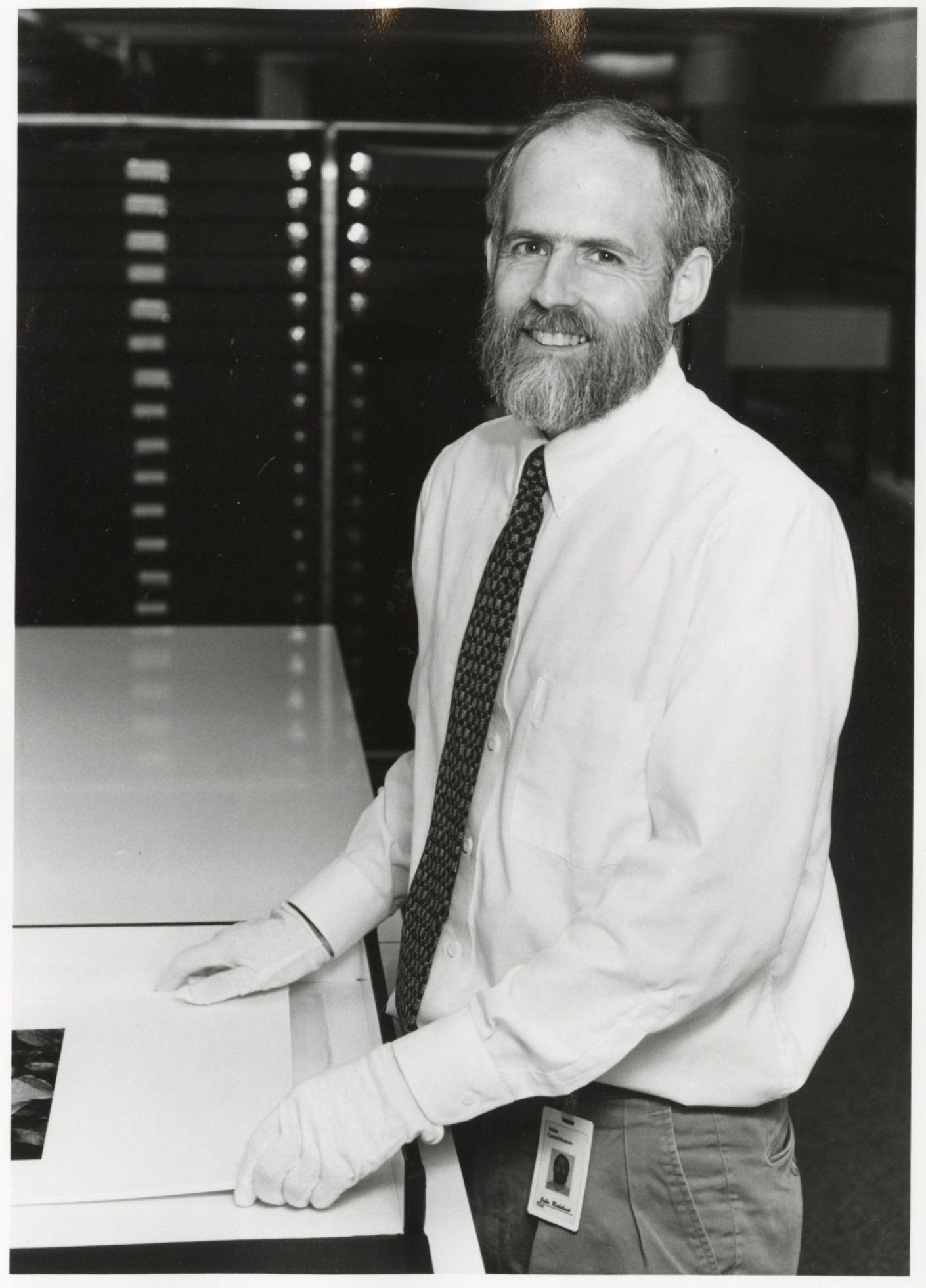
A black and white photograph of curator John Rohrbach from 1996.

John Rohrbach, 1996. Image courtesy of the Amon Carter Museum of American Art.

Mr. Rohrbach joined the Carter in August 1992 as Assistant Curator of Photographs, a temporary position which was funded by the Mellon Foundation. In this role, he was tasked with organizing and rehousing the museum’s Eliot Porter Collection, a bequest that included more than 8,000 prints, 100,000 transparencies, and other ephemera. During his time at the museum, Mr. Rohrbach was promoted to the positions of Associate Curator of Photographs (1995), Curator of Photographs (1999), and ultimately Senior Curator of Photographs (2003).

Prior to his work at the Carter, Mr. Rohrback served as the Director of the Paul Strand Archive at Aperture Foundation in New York, NY, after having previously held positions at the George Eastman House in Rochester, NY, and the Photographic Archive and Exhibitions Program at Apeiron Workshops, Inc., in Millerton, NY. He holds a BA in Government from Wesleyan University (1979) and a PhD in American Civilization from the University of Delaware (1993).

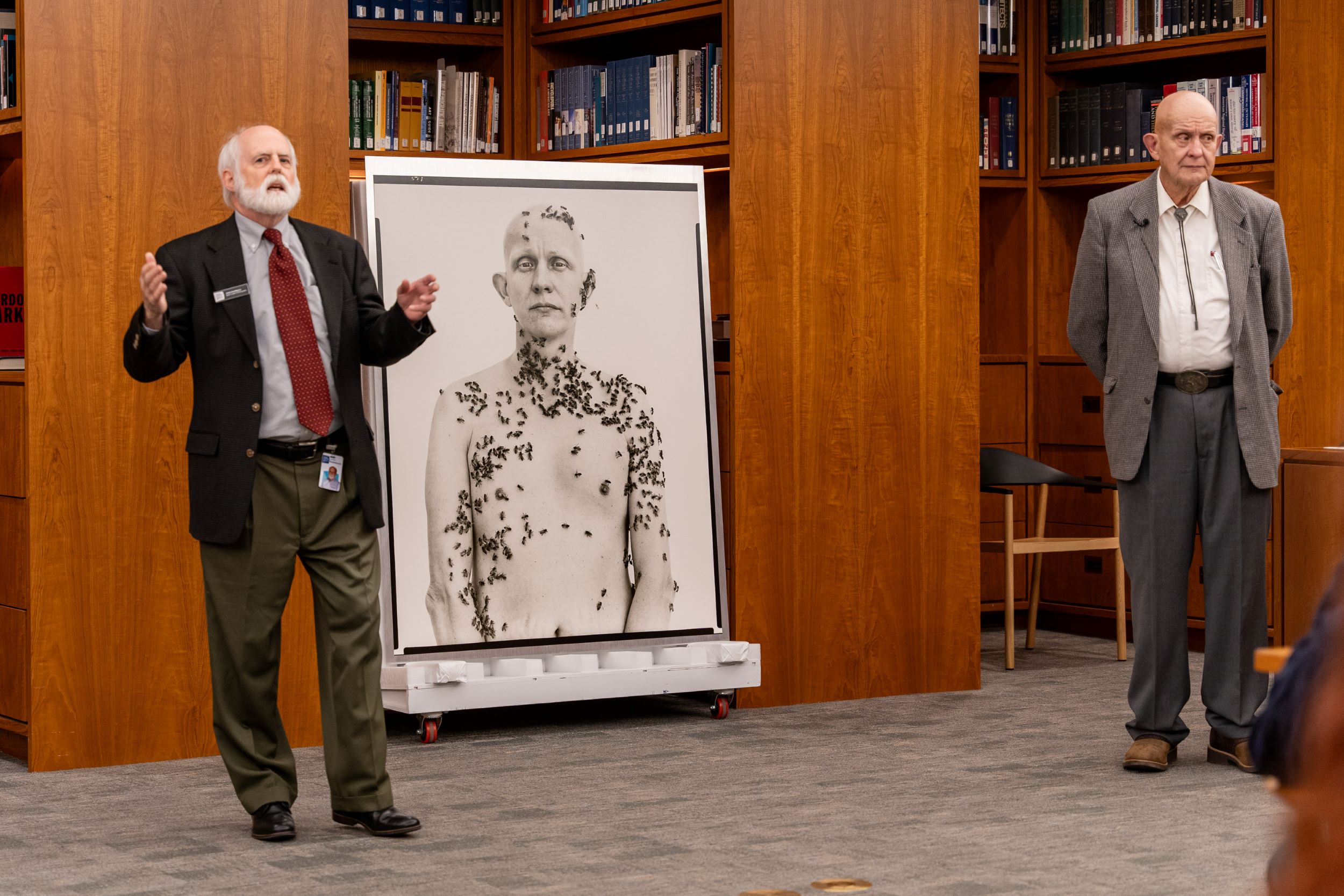
A photograph of curator John Rohrbach discussing a work by Richard Avedon.

John Rohrbach discusses a work by Richard Avedon for the Carter’s Photo Forum, 2021. Image courtesy of the Amon Carter Museum of American Art.

During his 31-year career at the Carter, Mr. Rohrbach spearheaded significant acquisitions that built on the museum’s strong 19th century holdings and photographer archives. Some key pieces include rare full-plate daguerreotypes by Albert Sands Southworth & Josiah Hawes; complete sets of Alfred Stieglitz’s art publications Camera Notes, Camera Work, and 291; and a complete set of Edward S. Curtis’ 20-volume work The North American Indian, which aimed to document traditional Native American cultures.

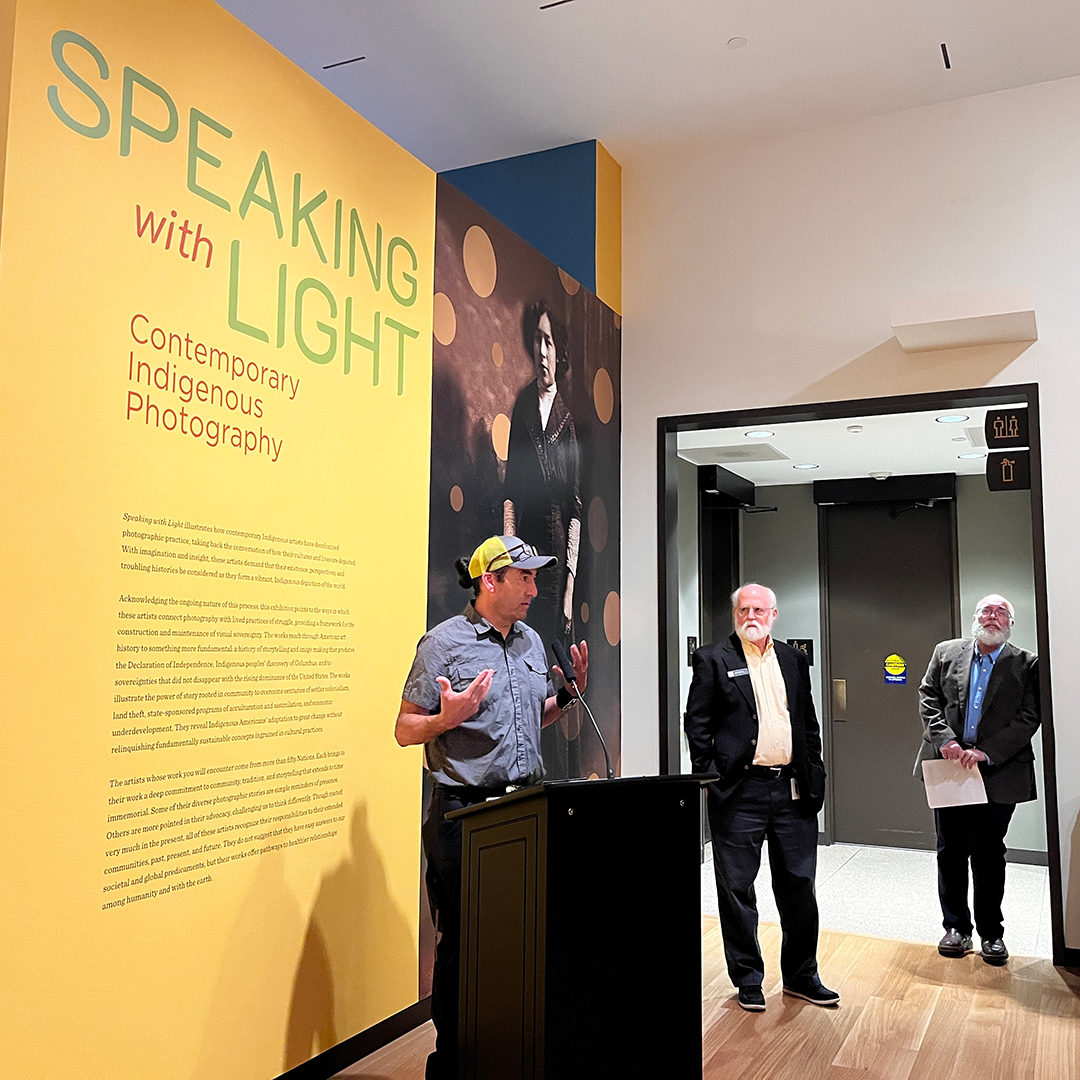
A photograph of Will Wilson standing at a podium and speaking about co-curating an exhibition with John Rohrbach, who stands in the background.

Will Wilson and John Rohrbach speak at a press preview for “Speaking with Light: Contemporary Indigenous Photography” at the Amon Carter Museum of American Art.

Because the documentation done by early American photographers like Mr. Curtis’ has been revealed to be romanticized and often inaccurate portrayal of Indigenous peoples, Mr. Rohrbach has also worked to diversity the Carter’s collection and expand on the idea of what an “American” art museum’s holdings should encompass. Specifically, he spent a significant amount of time acquiring works by contemporary Indigenous photographers. These efforts culminated in the 2022 co-curated exhibition and publication Speaking with Light: Contemporary Indigenous Photography. This was just one of his more than 80 exhibitions for the Carter, which also included the first critical studies of the careers of Frank Gohlke, Robert Glenn Ketchum, and Eliot Porter; a commission of photographer Terry Evans to photograph Fort Worth’s Trinity River; and groundbreaking studies of cabinet cards and American color photography.

As a steward of and advocate for photography, Mr. Rohrbach’s contribution to the museum extended beyond acquisitions and exhibitions. He also led the Carter’s cold storage initiative, which led to the implementation of a state-of-the-art storage facility to better maintain the museum’s photography collection. 

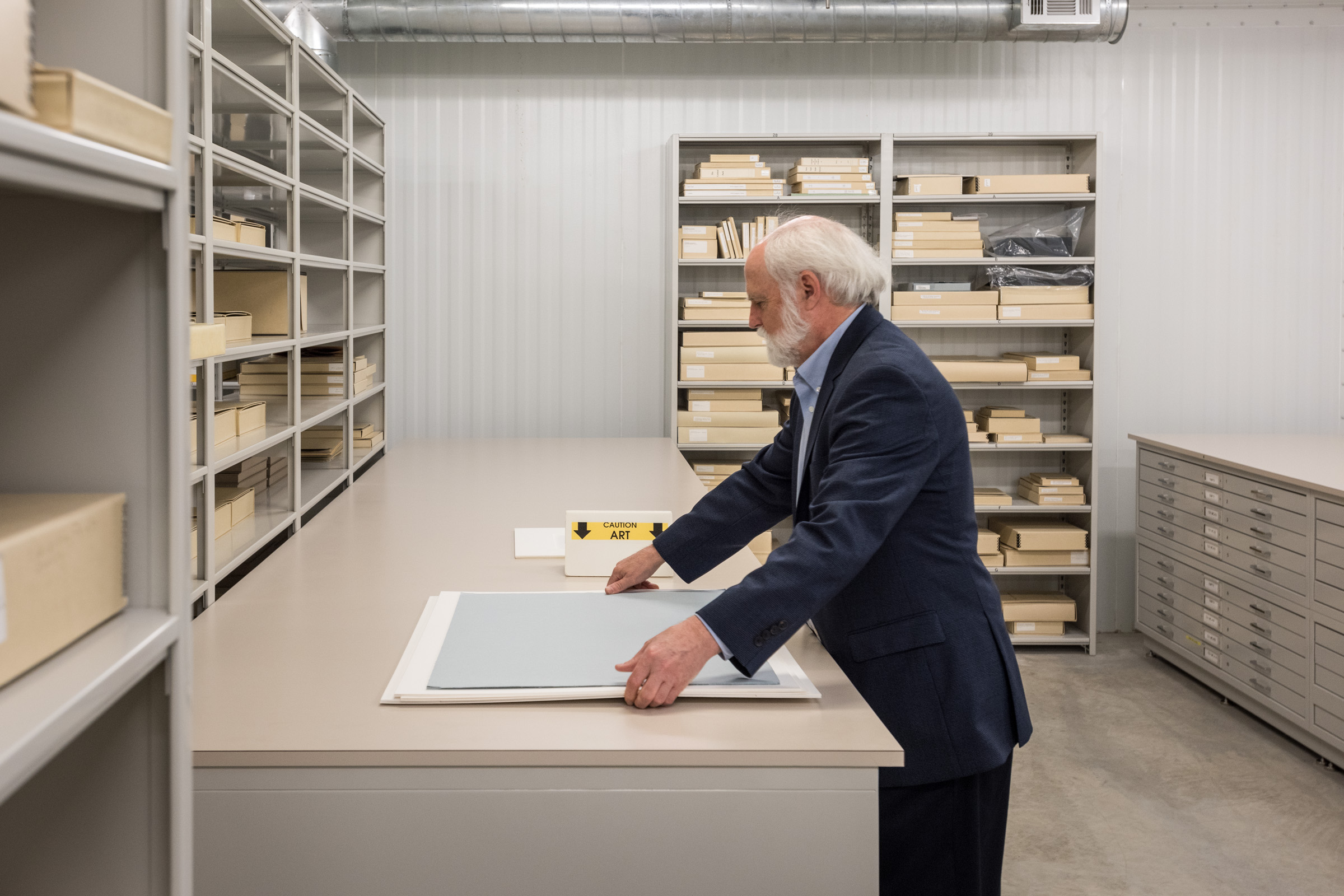
A photograph of curator John Rohrbach handling artworks in storage at the Amon Carter Museum of American Art.

John Rohrbach handles artworks in storage at the Amon Carter Museum of American Art. Image courtesy of the Amon Carter Museum of American Art.

Andrew J. Walker, Executive Director of the Carter, told Glasstire, “The Carter will greatly miss John Rohrbach upon his retirement, both as a colleague and as a friend. His impact is felt in the additions to the collection under his tutelage and the numerous exhibitions he curated including popular shows such as the 2003 Eliot Porter: The Color of Wildness to last year’s Speaking with Light: Contemporary Indigenous Photography. John has introduced generations of visitors to the importance and magic of photography.”

A photograph of curator John Rohrbach discussing works at the Carter's Photo Forum.

John Rohrbach discussing works at the Carter’s Photo Forum in 2019. Image courtesy of the Amon Carter Museum of American Art.

Mr. Rohrbach’s last day at the Carter will be Friday, September 1, 2023. Following his retirement, he plans to serve as a guest curator in a forthcoming exhibition at the museum that has not yet been announced. In the meantime, he plans to focus on repairing his yard after a long, hot, dry Texas summer; completing home repairs; organizing, digitizing, and sharing with his family his parents’ thousands of family photographs; returning to making art; and traveling.